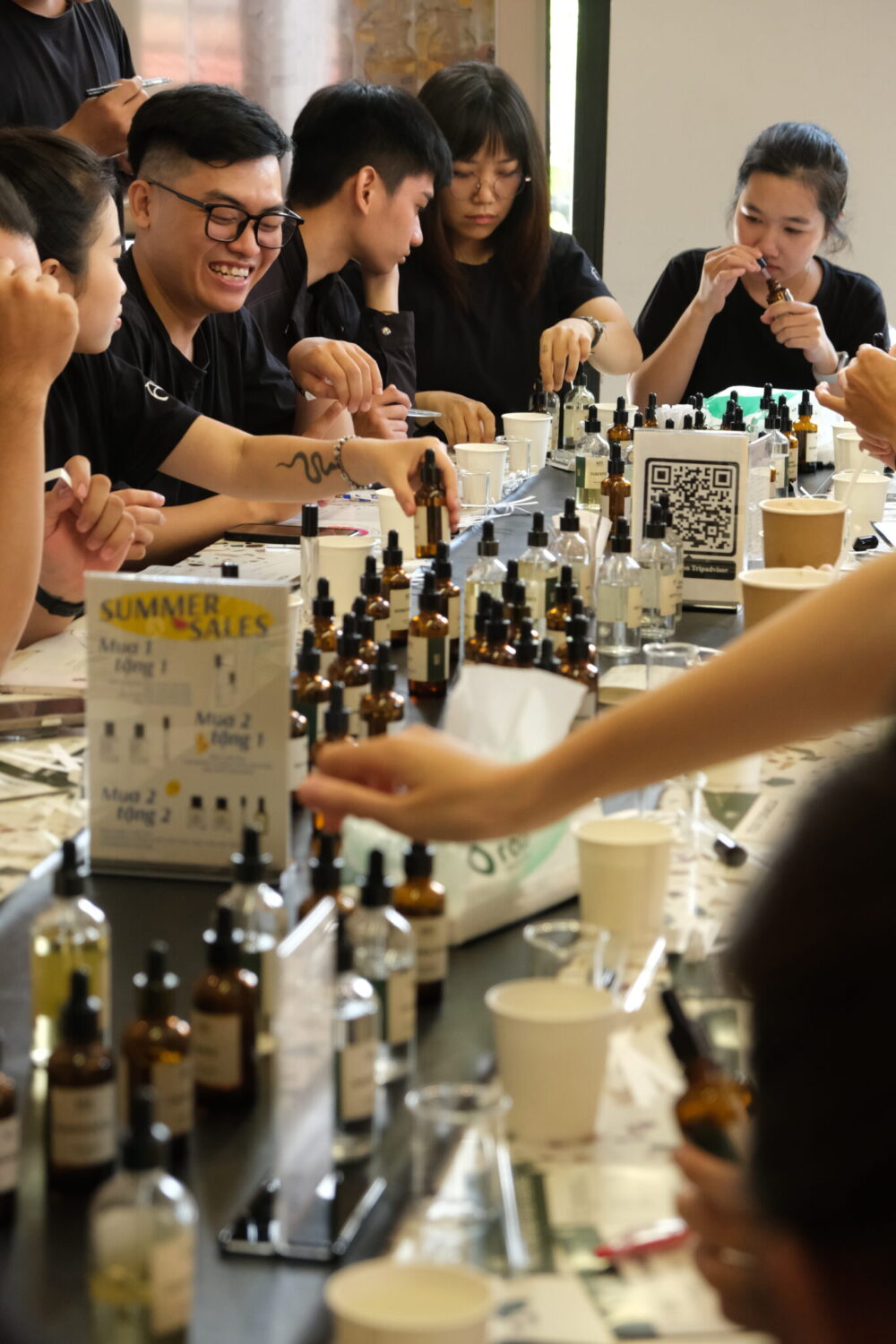
There’s a 120-minute experience in Saigon that keeps appearing in Vietnam travel stories — in blog posts, TikTok videos, and the “what was the highlight of your trip?” conversations that happen at airport gates. NOTE – The Scent Lab, a perfume making workshop in Ho Chi Minh City and Hanoi, has quietly become one of Vietnam’s most reviewed travel experiences — 4.9 stars from on TripAdvisor. This best experience Vietnam guide covers everything you need to know.
What’s remarkable isn’t the rating. Plenty of activities have high ratings. What’s remarkable is what people write. They don’t say “it was nice.” They write paragraphs. They name their workshop instructor by name. They describe the exact moment they realized the perfume smelled like a memory they’d been carrying but couldn’t articulate.
This article isn’t a sales pitch. It’s a pattern analysis. Here’s what 500+ independent reviews reveal about why this particular experience resonates so deeply.
Pattern 1: People Remember the Staff, Not the Brand
In, specific staff names appear hundreds of times: Zang, Vy, Long, Chloe, Suzee, Sarah, Nhi, Tu, Jenny, Ner, Baro. This almost never happens with tourist activities. Visitors don’t write “the company was great” — they write “Suzee changed how I think about fragrance.”
“Great experience! Our tutor Long is the greatest story teller.”
“Amazing workshop! First analyze scents then combine your own perfume.”
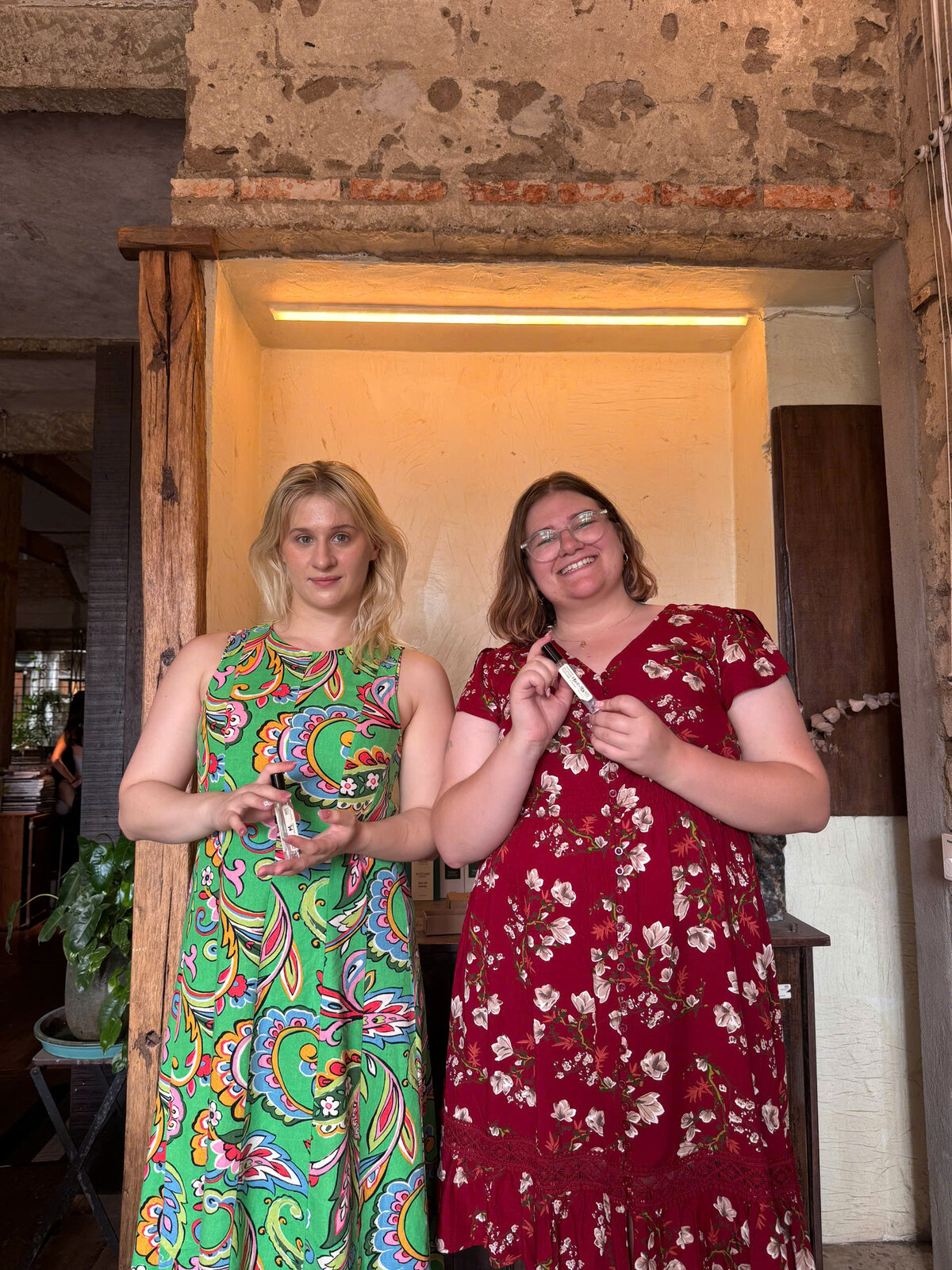
“Chloe was an excellent instructor — patient and skilled. Ensures you are 100% satisfied with your scent.”
What this tells you: The experience is human-powered, not formula-driven. Each session is genuinely different because each workshop instructor brings their own personality and expertise. When reviewers mention a name, it signals that the interaction felt personal — not scripted. This is rarer than you’d think in the world of tourist activities.
A Deeper Look at the Review Patterns
When you analyze as a dataset rather than individual testimonials, clear themes emerge that no single review captures on its own:
| Review Theme | Frequency | What It Reveals |
|---|---|---|
| Named a specific workshop instructor | ~80% of reviews | Personal connection, not transactional |
| Mentioned “learned something” | ~60% of reviews | Educational value — not just entertainment |
| Used word “unique” or “one-of-a-kind” | ~45% of reviews | Differentiation from other activities |
| Mentioned bringing perfume home | ~40% of reviews | Tangible souvenir value |
| Said “highlight of the trip” | ~25% of reviews | Competes with major landmarks for top spot |
| Mentioned coming back / repeat visit | ~10% of reviews | Unusually high repeat rate for tourist activity |
The most telling statistic: roughly one in four reviewers calls it a “highlight.” That’s extraordinary. These same travelers visited the War Remnants Museum, ate at the best street food stalls, rode motorbikes through Saigon at night — and they singled out a 120-minute indoor workshop as the thing that stood out most.
Pattern 2: First-Timers
Become Converts

The phrase “first time” appears in dozens of reviews — always followed by surprise at how accessible and enjoyable it was. People walk in knowing nothing about perfumery and walk out understanding top notes, heart notes, and base notes. The education is real, not decorative.
Why 120 Minutes Is the Sweet Spot
There’s a reason the workshop is exactly 120 minutes — not 60, not 120. It comes down to how the brain processes creative work and sensory input.
On rainy afternoons, the Cafe Apartment corridors fill with petrichor — wet concrete mixing with coffee from the shop next door and the sandalwood lingering from our last session.
The first 15 minutes are education: you learn the fragrance pyramid (top, heart, base notes), smell raw ingredients, and begin to understand what draws you in. This is the “opening” — your nose is fresh, your curiosity is high.
Minutes 15-30 are concept design: you and your workshop instructor talk about what you want your perfume to represent. A memory? A place? A person? This is the part that feels like a conversation with a friend who happens to understand fragrance chemistry.
Minutes 30-60 are blending: the meditative core. You work with drops and ratios. The room goes quiet. This is where the workshop earns the word “experience” — it stops feeling like a tourist activity and starts feeling like creating art.
Minutes 60-90 are naming, labeling, and bottling: the satisfaction of completion. You’ve made something. You name it. You hold it. It’s yours. The dopamine hit of finishing a creative project in a single session is powerful — and it’s why people write such detailed reviews afterward.
Shorter workshops (30-45 minutes) feel rushed — you blend but don’t learn. Longer workshops (2-3 hours) risk olfactory fatigue — your nose can only process so many scents before it stops distinguishing them. 120 minutes hits the intersection of depth and freshness.
Pattern 3: The “Rainy Day” Effect
Multiple reviewers mention booking the workshop as a rainy-day backup — then calling it the highlight of the trip. In Saigon, where afternoon rain is almost daily from May to November, this matters. The workshop is indoor, air-conditioned, and strangely enhanced by the sound of rain outside while you’re blending scents inside.
There’s a psychological layer here too. Rain creates what environmental psychologists call “cocooning” — the instinct to settle into a warm, enclosed space and focus on something intimate. A perfume workshop channels that instinct perfectly. You’re surrounded by scents, concentrating on something tactile and creative, while the city outside does its thing. Several reviewers describe this combination as “meditative” or “meditative” — words you rarely see attached to a tourist activity.
Pattern 4: Repeat
Visitors Exist

Perhaps the strongest signal: people come back. Not because they lost their perfume, but because they want to create something new — different season, different mood, different chapter of their life.
Repeat visits to tourist activities are exceedingly rare. People don’t go back to the War Remnants Museum twice. They don’t take the same cooking class again. But perfume creation is different — because you are different each time. Your mood shifts. Your preferences evolve. The second perfume you make is informed by the first one, and the third by the second. It becomes a creative practice, not just a one-off activity.
Pattern 5: It Works for Everyone
The reviews come from solo travelers, couples, families, corporate teams, student groups. There’s no “ideal visitor” — the workshop adapts to whoever walks in.
| Visitor Type | What They Say | Why It Works |
|---|---|---|
| Solo | “Fun activity for yourself to figure out your scent” | personalized attention from workshop instructor |
| Couples | “I made my gf’s and she made mine” | Create for each other — intimate and personal |
| Groups | “We had so much fun!” | Shared creative experience, compare scents after |
| Corporate | “Staff is very knowledgeable and professional” | Team bonding that produces a tangible outcome |
| Non-English speakers | “Very patient and friendly instructor” | Hands-on format transcends language |
| Families with kids | “Even our 12-year-old loved it” | Creative, safe, educational for all ages |
What Makes 120 Minutes the Perfect Duration
The 120-minute format is not arbitrary — it’s the result of years of testing and guest feedback. Here’s why it works better than shorter or longer alternatives:
The Attention Curve
Research on creative workshops shows that adult attention peaks around 20-30 minutes into a new activity, plateaus through the middle section, and begins declining after 75-120 minutes. The 120-minute window captures the full arc: the initial excitement of learning something new, the deep focus of the blending phase, and the satisfaction of completion — all before fatigue sets in. Shorter workshops (45-60 minutes) cut the arc short, forcing you to rush through blending. Longer workshops (2-3 hours) push past the natural attention window, turning a pleasurable experience into an endurance test.
Olfactory Fatigue Is Real
Your nose can distinguish approximately 10-15 distinct scent groups before olfactory fatigue sets in — the phenomenon where your brain simply stops differentiating between smells. In a 120-minute session, you work with enough ingredients to create a complex, layered perfume without overwhelming your sense of smell. By the time you reach the naming and bottling phase (the final 30 minutes), your nose has done its heaviest work and you can enjoy the creative, non-olfactory stages of the process. Studios that run 2-3 hour sessions often need to include “nose breaks” with coffee beans — an acknowledgment that the format is fighting against biology.
It Fits Any Schedule
From a practical travel perspective, 120 minutes is the sweet spot between “quick stop” and “half-day commitment.” It slots naturally between breakfast and lunch, between a morning excursion and an afternoon flight, or between hotel checkout and airport transfer. You don’t need to sacrifice other activities. A cooking class (3-4 hours) or a motorbike food tour (4-5 hours) requires restructuring your entire day around it. The perfume workshop fits into your day rather than replacing it.
The Completion Effect
Psychologically, finishing a creative project in a single sitting produces a stronger satisfaction response than projects that span multiple sessions. When you walk out of the studio 120 minutes later with a named, labeled, packaged perfume in your hand, you experience what psychologists call “closure” — the sense of having started and completed something meaningful within a defined timeframe. This is a key reason why review quality is so high: people write about the workshop while the completion high is still fresh.
Pattern 5 Extended: How Different Visitors Experience the Workshop
The “it works for everyone” pattern deserves deeper examination, because different visitor types don’t just enjoy the workshop — they experience fundamentally different workshops.
Solo Travelers
Solo visitors get the most intimate version of the workshop. With personal attention from a workshop instructor from their workshop instructor, the session becomes almost meditative — a quiet, focused space to process everything they’ve experienced in Vietnam. Many solo reviewers describe the workshop as a “pause button” in what is otherwise a fast-paced trip. The scent they create often becomes deeply personal, encoding not just travel memories but a moment of self-reflection. Solo travelers also tend to spend more time on the concept design phase, exploring what scent means to them rather than negotiating with a partner or group.
Couples
Couples experience the workshop as a collaborative creative project — something rare in typical tourist activities, which are usually side-by-side consumption (eating together, watching together) rather than side-by-side creation. The most popular couple format: each person creates a perfume for the other. This requires paying attention to your partner’s preferences, memories, and reactions — a form of active listening that doubles as a romantic gesture. Many couples report that the workshop revealed something new about their partner: “I didn’t know she associated vanilla with her grandmother’s kitchen” or “He chose notes I never would have expected.”
Families with Teenagers
Families with teens find that the workshop bypasses the typical “teenager doesn’t want to do tourist activities” resistance. The creative freedom — choosing your own ingredients, designing your own concept, naming your creation — appeals to adolescents who resist structured or educational activities. Parents report that the workshop is one of the few travel activities where the whole family is equally engaged, without anyone checking their phone.
Corporate and Team Groups
Corporate groups experience the workshop as team building that doesn’t feel like team building. There’s no forced trust falls, no awkward icebreakers, no competitive pressure. Instead, colleagues discover each other’s creative sides in a low-stakes, enjoyable environment. The shared experience — comparing scents, sharing stories about ingredient choices, laughing at unexpected combinations — creates genuine bonding that carries back to the workplace. Several corporate reviewers note that the workshop was “the only team activity where everyone participated willingly.”
How It Compares
to Other Saigon Activities

| Activity | Duration | Souvenir? | Weather-proof? | TripAdvisor Rating | Best For |
|---|---|---|---|---|---|
| Perfume workshop | 120 min | Custom perfume | Yes | 4.9 (500+) | Everyone — solo, couples, groups |
| Cooking class | 3-4 hrs | Skills only | Partly | 4.7-4.9 | Food lovers with half-day free |
| Motorbike tour | 4-5 hrs | No | No | 4.8-4.9 | Adventurous travelers, clear weather |
| Pottery class | 1-2 hrs | Ceramic piece | Yes | 4.5-4.8 | Hands-on creatives, families |
| Market tour | 2-3 hrs | Purchases | Partly | 4.5-4.7 | Shoppers, foodies |
| Museum visit | 1-3 hrs | No | Yes | 4.5-4.8 | History enthusiasts |
| Rooftop bar | 1-2 hrs | No | Partly | 4.3-4.6 | Sunset seekers, social travelers |
The perfume workshop’s unique position: shortest committed time, strongest souvenir, highest review consistency. It’s also the only activity on this list that works equally well on a rainy afternoon, a sunny morning, or your last day before a flight.
See why can’t stop talking about it.
120 minutes. Your scent. Your story. Your souvenir.
📍 3 locations · 🧪 120 min · ⭐ 4.9★ TripAdvisor · 📸 @notethescentlab
Not traveling yet? Follow @notethescentlab on Instagram for behind-the-scenes workshop moments. Or browse NOTE’s ready-made collection. Find us on Facebook too.
Take the Scent Home
Can’t make it to a workshop? Explore the full NOTE perfume collection — crafted with the same ingredients you’d use in our workshop.
Related Reading
- What is a perfume making workshop? Everything you need to know
- Last day in Vietnam? Why a perfume workshop is the best way to end your trip
- Beyond coffee at the Cafe Apartment — hidden gems on every floor
- Why a custom perfume is the best souvenir from Vietnam
How to find us at 42 Nguyen Hue (Cafe Apartment, 2nd floor):
Frequently Asked
Questions
What is the most talked-about experience in Saigon?
Based on review volume and detail, the perfume making workshop at NOTE – The Scent Lab is one of the most reviewed activities — averaging 4.9 stars on TripAdvisor.
Is the perfume workshop worth 120 minutes?
Overwhelmingly yes, according to reviewers. The most common feedback: “I learned something new, created something unique, and left with a souvenir I actually use.”
Why is 120 minutes the right length for a perfume workshop?
120 minutes allows for proper scent education (15 min), concept design (15 min), blending (30 min), and naming/bottling (30 min). Shorter sessions skip the learning. Longer sessions risk olfactory fatigue — your nose can only distinguish so many scents before it needs rest.
Where is NOTE – The Scent Lab?
Three locations: Thao Dien and Cafe Apartment District 1 in Ho Chi Minh City, plus. See on Google Maps.
How do I book?
Book and pay online at workshop.thescentnote.com. Pre-booking guarantees your spot.
Can I see reviews before booking?
Yes — TripAdvisor reviews, on-site reviews page, and Instagram stories from visitors.
Is the workshop good for couples?
Yes — one of the most popular configurations. Many couples create perfumes for each other, making it both a shared experience and a personal gift. The intimate setting and creative focus make it naturally romantic without being staged.
Further reading: International Fragrance Association (IFRA) | Wikipedia — Perfume
Related Articles
- What Is A Perfume Making Workshop
- Couple Perfume Workshop In Saigon
- Last Day In Vietnam Perfume Workshop
- How to Bottle Your Vietnam Memories as Perfume
- Complete Guide to Perfume Workshops in Vietnam
- Cooking Class vs Perfume Workshop in Saigon
Find NOTE – The Scent Lab
- 42 Nguyễn Huệ (2nd floor, Cafe Apartment) — Google Maps → · TripAdvisor
- 34 Nguyễn Duy Hiệu (Thảo Điền) — Google Maps → · TripAdvisor
How to find us:
- 📍 42 Nguyễn Huệ — Watch direction video on TikTok →
- 📍 34 Nguyễn Duy Hiệu — Watch direction video on YouTube →
- 📍 — Watch direction video on YouTube →
Practical info: check current pricing
Practical info: how to find us