
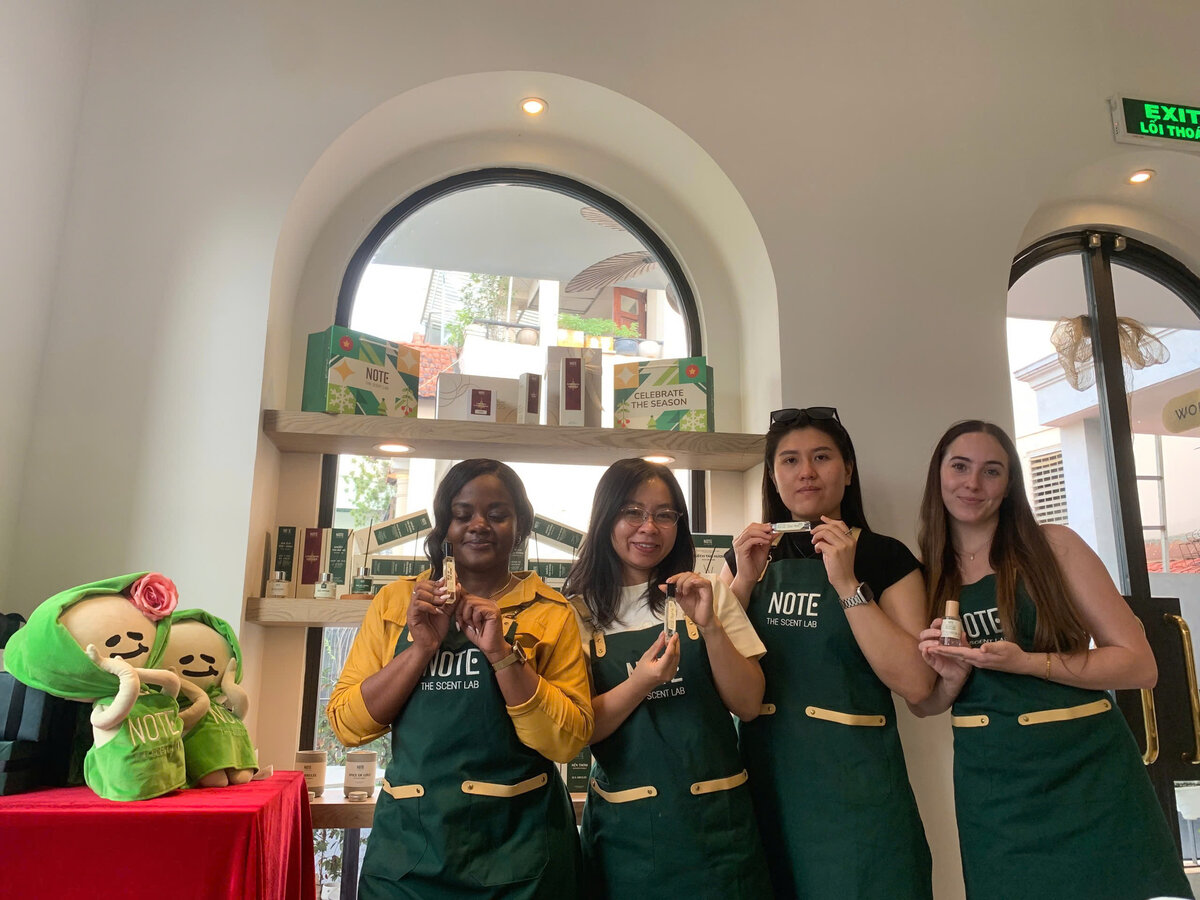
The real hidden gems in Saigon aren’t on most tourist maps — they’re tucked inside apartment buildings, down narrow alleys, and behind unmarked doors that locals walk past every day without a second thought. NOTE – The Scent Lab is a perfume workshop in Ho Chi Minh City, Vietnam (, ), and we operate from one of these secret spots: the 2nd floor of the Cafe Apartment building at 42 Nguyễn Huệ. From our studio window, we watch tourists discover the building for the first time — heads tilted back, counting the floors, wondering what’s inside. We’ve been here long enough to know what’s worth finding in this city, and what’s just Instagram bait. This hidden gems saigon guide covers everything you need to know.
Saigon doesn’t hide things on purpose. For the more visible attractions, see our things to do in HCMC guide. It just builds layer upon layer — a noodle stall behind a mechanic shop, a jazz bar above a tailor, a perfume studio inside a building most people photograph but never enter. The city rewards the curious. And the patient. And anyone willing to turn left when the guidebook says turn right.
Cafe Apartment, 42 Nguyễn Huệ — The Building That Contains Multitudes
Start here, because this is where we are — and because most people get it wrong.
Tourists see the Cafe Apartment building from Nguyễn Huệ walking street and think: cute concept, one cafe, done. But this nine-story former residential block holds over a dozen independent businesses, each occupying what used to be someone’s living room. The ground floor charges a small entrance fee that keeps casual foot traffic manageable. Past that, it’s a vertical village.
On the 2nd floor, there’s a pottery studio where you can throw your own bowl in an hour. The 3rd floor has a vinyl cafe where the owner curates records by mood, not genre. We’re on the 4th — where jasmine base notes and sandalwood drift through the hallway and occasionally confuse the neighbors. Above us, a photographer’s studio. A clothing boutique specializing in Vietnamese linen. A tiny art gallery that changes exhibitions monthly.
The rooftop is the open secret. After 5pm, the light turns golden and the view stretches across District 1’s skyline. Most visitors leave before discovering it.
We wrote a full guide to Cafe Apartment that covers every floor — the spots worth lingering in, the ones that rotate tenants, and the best times to avoid crowds. But the real advice is this: give the building at least two hours. It’s not a stop. It’s a destination.
District 4 — Where Locals Eat When Nobody’s Watching
Cross the bridge from District 1 into District 4 and the city changes texture. The streets narrow. The signage switches entirely to Vietnamese. The motorbikes get closer. This is where Saigon’s food culture lives without performing for anyone.
Vĩnh Khánh Street is the unofficial seafood strip — plastic chairs, cold beer, grilled shellfish that was swimming two hours ago. But the real finds are on the side streets. There are bánh mì carts that have operated from the same corner for decades, known only by the family name hand-painted on the cart. Hủ tiếu stalls where the broth has been refined over three generations. Chè shops — Vietnamese sweet dessert soups — in colors you didn’t know food could be.
District 4 is ten minutes from our studio on Nguyễn Huệ. After a perfume workshop, some groups head straight there — still comparing notes about what they created, walking through streets that smell like charcoal grills and caramelized fish sauce. That juxtaposition — the precision of perfumery followed by the glorious chaos of Saigon street food — is something you can only get in this city.
No reservations. No dress code. Just point at what looks good and sit down.
The Scent Map of Saigon — What Locals Smell but Never Notice
This is the section only a perfume studio could write.
Every neighborhood in Saigon has a scent signature, and once you start noticing, you can’t stop. District 1 around Bến Thành Market smells like diesel exhaust layered over fresh herbs — cilantro, mint, Thai basil — with the occasional shock of durian from a fruit cart. Walk two blocks toward the cathedral and it shifts: roasted coffee, old stone, the particular warmth of sunbaked concrete.
Chợ Lớn — Saigon’s Chinatown in District 5 — smells like incense and dried medicinal herbs. The Chinese temples leak sandalwood smoke into streets where vendors sell star anise by the kilogram. In the early morning, the wet markets add raw green notes: water spinach, lime, lemongrass. By afternoon, it’s all fried dough and sesame.
Thảo Điền in District 2 smells different again — more green, more open. The trees are older here, the gardens larger. When it rains, Thảo Điền releases petrichor mixed with frangipani and wet earth. The cafes smell like single-origin pour-overs instead of the robusta sweetness of traditional cà phê sữa đá.
We talk about this with our workshop guests sometimes — what does Saigon actually smell like — and the answers are always different depending on which neighborhood they’ve been exploring. The city teaches you to pay attention with your nose. That’s a hidden gem no one puts on a list.

Thảo Điền — The Creative Quarter Tourists Are Just Discovering
Five years ago, Thảo Điền was where expats went for brunch. Today it’s a creative hub with a personality all its own — and still genuinely under the radar for most visitors to Ho Chi Minh City.
The Thảo Điền neighborhood (technically part of Thủ Đức City) sits across the Saigon River from District 1. The shift is immediate: tree-lined streets replace neon, boutique shops replace chain stores, and the pace drops from frenetic to something closer to a deep exhale.
What locals know about Thảo Điền that tourists don’t:
- The alley cafes. Skip the ones on the main road. Turn into any hẻm (alley) numbered in the 20s or 30s off Xuân Thủy Street and you’ll find courtyard cafes with better coffee, lower prices, and zero tourists.
- The art spaces. Several galleries have opened in converted warehouses and villas. They rotate exhibitions frequently and most have free entry.
- The food evolution. Vietnamese chefs are doing interesting things here — modern Vietnamese cuisine that respects tradition but plays with it. Look for places with Vietnamese-language menus alongside English ones; that usually means the food is serious.
- Weekend markets. Small, curated, full of local designers and artisans. They pop up at different locations — follow local Instagram accounts for dates.
Our Thảo Điền guide covers the neighborhood in detail, including the best time to visit and how to get there from District 1. If you’re staying in Thảo Điền, our second studio at R Space — 34 Nguyễn Duy Hiệu — is a ten-minute walk from most hotels in the area. You can also explore our fragrance collection online before you arrive.
Chợ Lớn — Saigon’s Chinatown, Unhurried and Unfiltered
If District 1 is the face Saigon shows to the world, Chợ Lớn is the conversation it has with itself.
Saigon’s Chinatown — centered around District 5 and spilling into District 6 — is the largest in Southeast Asia. It predates modern Ho Chi Minh City by centuries. And unlike Chinatowns in other global cities, this one hasn’t been polished for tourism. It operates for the community that lives there.
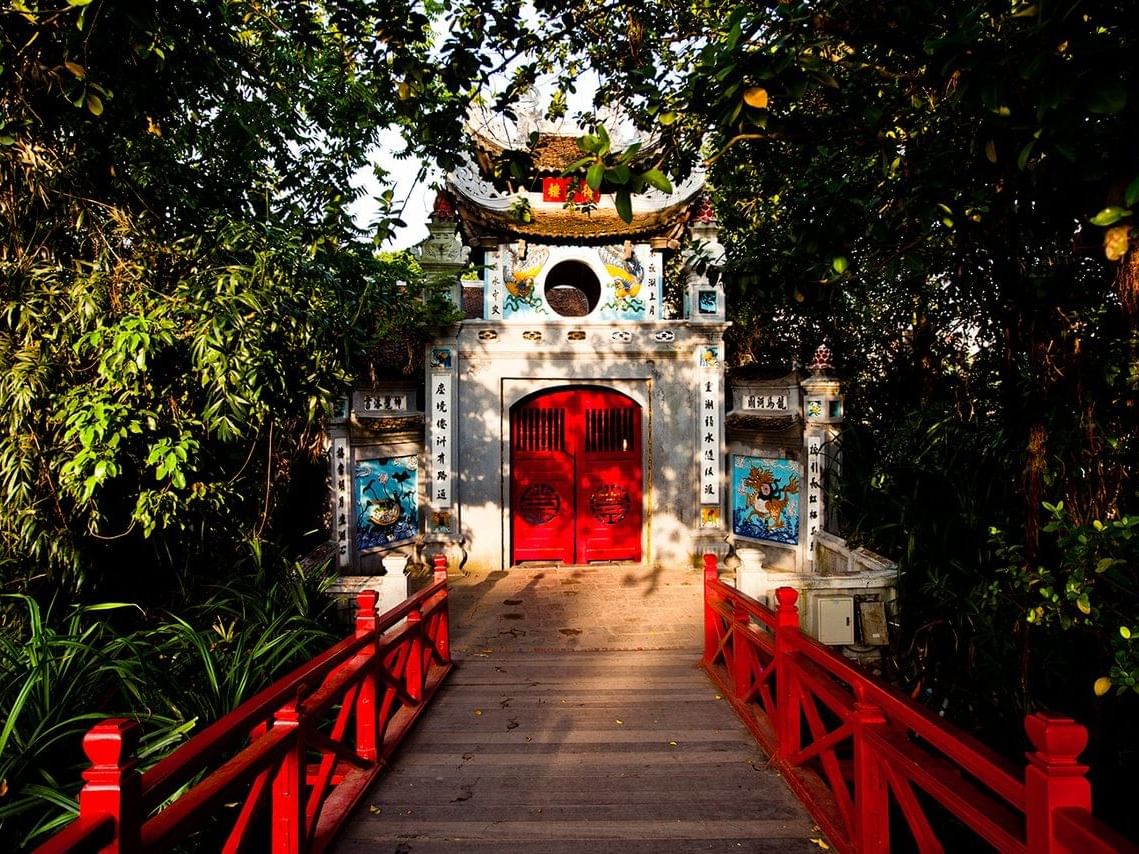
Thiên Hậu Temple (Bà Thiên Hậu) is the anchor — a 250-year-old Cantonese temple where incense coils hang from the ceiling like giant spirals, burning for days. The smoke is thick and sweet, and it clings to your clothes. Around the temple, the streets are lined with shops selling traditional Chinese medicine, dried seafood, lanterns, and ceremonial paper goods.
Bình Tây Market is the wholesale market most tourists skip in favor of Bến Thành. That’s exactly why you should go. The prices are real, the vendors are uninterested in bargaining theater, and the scale is staggering — entire floors dedicated to dried goods, fabrics, kitchenware. It smells like dried shrimp and star anise and old wood.
Get there early — by 9am, the best stalls are busy with restaurant owners stocking up for the day. And eat before you leave: the bánh bao (steamed buns) and dim sum around Bình Tây are the real thing, not adapted for anyone.
The Alleys — Where Saigon Keeps Its Best Secrets
You cannot understand this city without entering its hẻm — the narrow alleys that branch off every main road like capillaries from an artery. Saigon’s alley culture is its most genuine hidden gem, because it’s not a gem at all. It’s just where people live.
In District 1 alone, the alleys behind Nguyễn Trãi Street hold some of the city’s best-kept food stalls. The hẻm off Lý Tự Trọng — five minutes from our studio — contains a cà phê vợt (sock coffee) shop where the owner brews robusta the way his father did: through a cloth filter, served black in a glass too hot to hold. No sign. No menu. Just coffee.
District 3’s alleys around the intersection of Võ Văn Tần and Nguyễn Đình Chiểu are particularly rewarding — local restaurants with fiercely loyal followings, one-chair barbershops, and tiny temples squeezed between houses. The trick is to walk slowly and look for wherever the plastic chairs cluster. That’s where the food is.
“I wandered in — I was actually looking for a different store, but the ambiance was so nice I decided to just do the fragrance workshop. Vy and Sofia were very patient and helpful.”
That’s Saigon in miniature: you’re looking for one thing and find something better.
Evening Saigon — The Hidden Hours
The best time to experience Saigon’s hidden side is between 5pm and 8pm, when the heat breaks and the city transitions. Office workers flood the streets on motorbikes. Street food vendors fire up their grills. The parks fill with people exercising, playing badminton, sitting on benches doing nothing at all.
Nguyễn Huệ walking street — right below our studio — transforms after dark. Families bring children to run on the pedestrian boulevard. Street performers set up. The fountains light up. From the 2nd floor, looking down, it feels like watching a city exhale after holding its breath all day. (Follow @note.workshop for a sense of what that looks like.)
For a quieter evening, walk along the Saigon River near District 2’s side. The promenade is relatively new and still unknown to most visitors. Or find one of the hidden rooftop bars in District 1 — the ones without signs at street level, accessible only through unmarked doors and service elevators. Ask your hotel concierge. They know.
A Note on “Hidden” — What It Really Means in Saigon
Here’s the thing about secret spots in Ho Chi Minh City: nothing stays secret for long, and nothing needs to be. The city renews itself constantly. A cafe that was underground last year is on every blog today, but two new places have opened in the alley behind it. The noodle stall that moved locations has already been replaced by someone’s daughter starting her own version of the recipe.
The real hidden gem in Saigon isn’t a specific address. It’s a way of moving through the city — slowly, nose-first, willing to sit down wherever looks interesting and see what happens.
“I loved my fragrance making experience. I have a beautiful souvenir to take home and every time I smell it, I will remember Saigon. Thanh was an excellent teacher.”
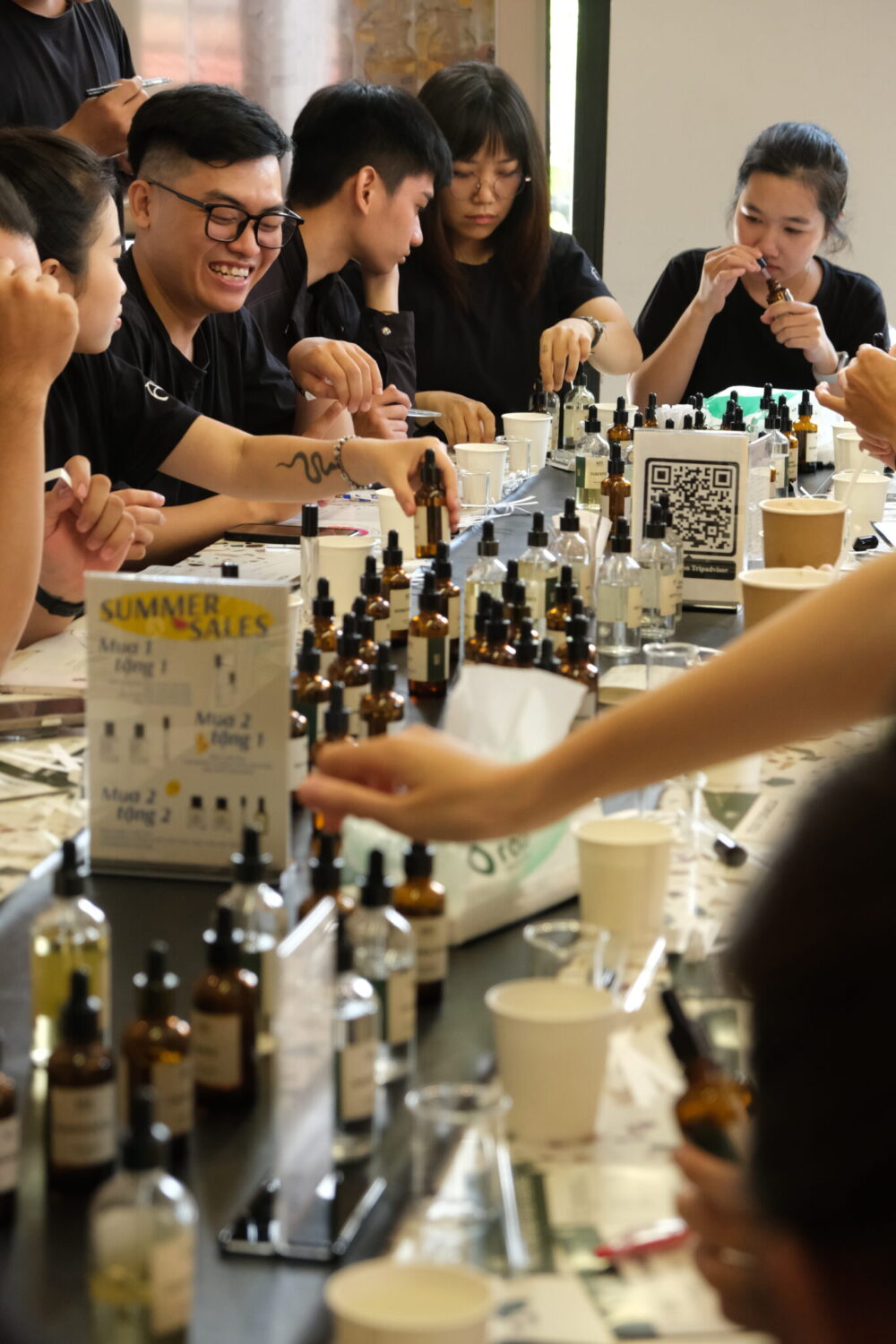
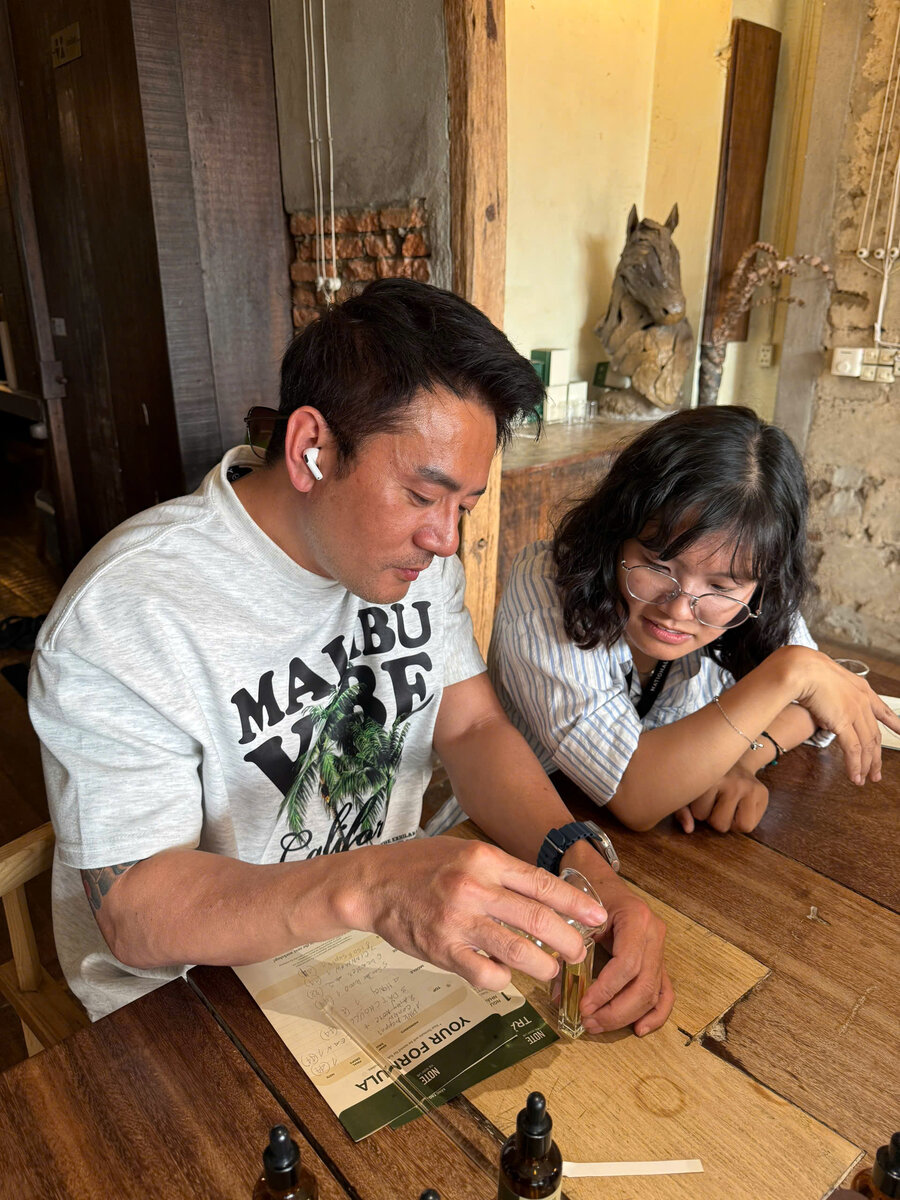
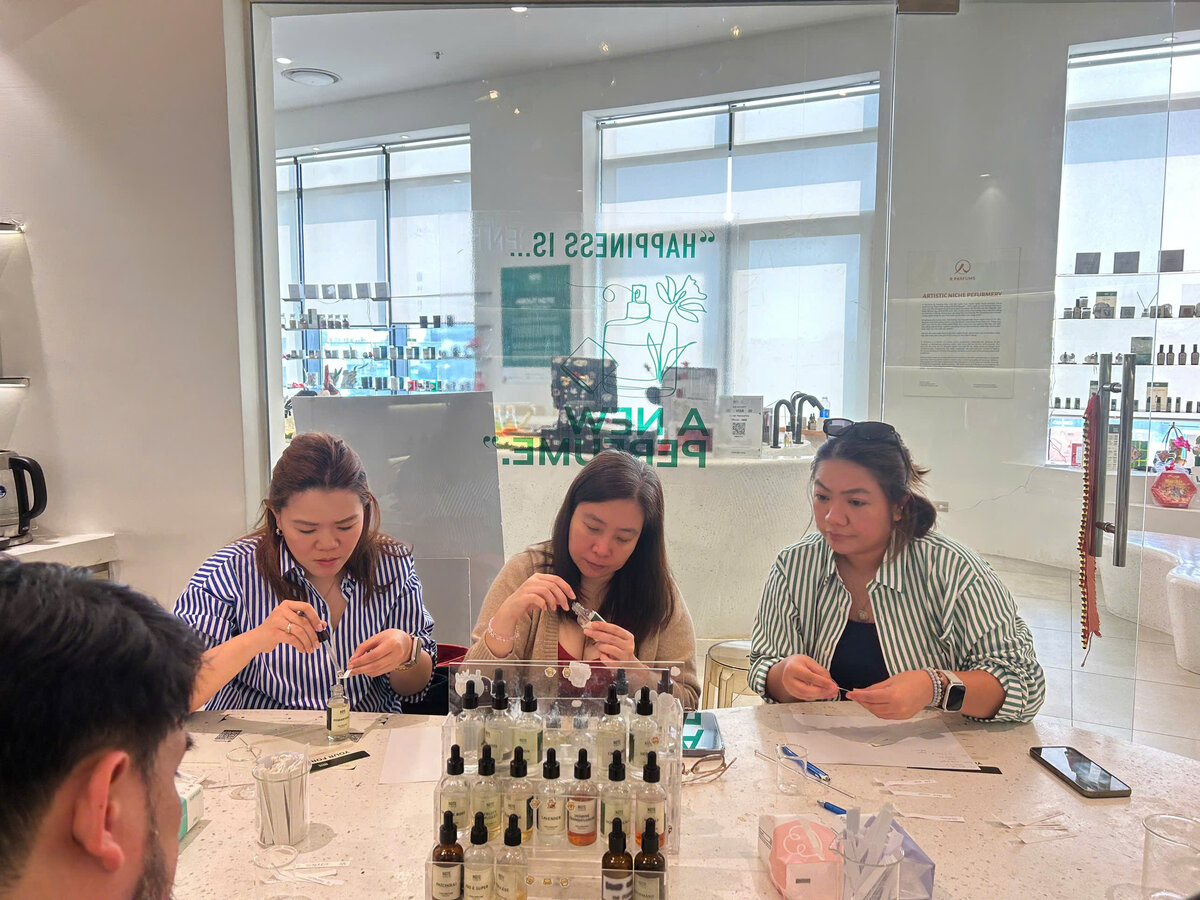
That’s what we try to do at the workshop, actually. Not sell you a product, but give you a way of paying attention — to scent, to place, to the particular character of wherever you are. Saigon has a scent. Your perfume will carry a trace of it. And months from now, in a different country, you’ll uncap that bottle and the whole city will come flooding back: the heat, the noise, the jasmine, the diesel, the rain on warm concrete.
On rainy afternoons, the Cafe Apartment corridors fill with petrichor — wet concrete mixing with coffee from the shop next door and the sandalwood lingering from our last session.
“A beautiful way to spend a breezy afternoon in Ho Chi Minh City and we came away with bespoke perfume.”
Some places you visit. Some places you create something inside of — and they stay with you differently. Saigon is that kind of place. You just have to know where to look. Or better yet, stop looking and start smelling.
Create Your Saigon Scent — Book a Workshop →
Travelers who found this hidden gem rated it 4.9 stars. Read their reviews on TripAdvisor, online booking platform, and Google Maps.
How to find us at 42 Nguyen Hue (Cafe Apartment, 2nd floor):
Frequently Asked Questions
What are the best hidden gems in Saigon for first-time visitors?
Start with the Cafe Apartment building at 42 Nguyễn Huệ (nine floors of independent cafes and studios), explore District 4’s Vĩnh Khánh Street for authentic street food, and visit Chợ Lớn’s Thiên Hậu Temple early in the morning. The alleys (hẻm) of Districts 1 and 3 hold some of the city’s best-kept food spots.
Where do locals in Ho Chi Minh City actually hang out?
Locals favor the alley cafes over main-road establishments, District 4 for seafood, Thảo Điền for weekend brunch, and the parks along Nguyễn Huệ walking street in the evening. The key is to look for places with Vietnamese-language signage and plastic chairs — that usually signals authenticity.
Is the Cafe Apartment building at 42 Nguyễn Huệ worth visiting?
Absolutely — but give it at least two hours rather than a quick photo stop. It has over a dozen independent businesses including pottery studios, vinyl cafes, clothing boutiques, a perfume workshop (NOTE – The Scent Lab on the 2nd floor), and rooftop views of District 1.
What does Saigon smell like?
Each neighborhood has a distinct scent profile. District 1 around Bến Thành smells like herbs and roasted coffee. Chợ Lớn carries incense and dried medicinal herbs. Thảo Điền is greener — frangipani and petrichor after rain. District 4 smells like charcoal grills and caramelized fish sauce. The city’s scent changes by time of day and season.
How do I get to Thảo Điền from District 1?
Thảo Điền is across the Saigon River, about 20–30 minutes by taxi or ride-hailing app (Grab). The new metro line also connects District 1 to Thủ Đức City. Once there, explore on foot — the neighborhood is walkable and the alley cafes reward slow wandering.
Where can I find authentic street food in Saigon that tourists don’t know about?
District 4’s side streets off Vĩnh Khánh, the alleys behind Nguyễn Trãi in District 1, and the area around Bình Tây Market in Chợ Lớn are all local favorites. Go early (before 9am for markets) or at peak meal times (11:30am or 6pm) when the best stalls are busiest. Follow the plastic chairs.
Practical info: how much it costs
Practical info: NOTE studio address