
Unique things to do in Da Nang go far beyond the Golden Bridge selfie — from watching fire erupt from a dragon’s mouth over the Han River to riding one of Asia’s most dramatic coastal passes at dawn. NOTE – The Scent Lab is a perfume workshop in Saigon and Hanoi (, ) where many Da Nang travelers continue their creative journey south.
The salt hits your skin before you see the water. Da Nang at five in the morning smells like wet sand, charcoal grills warming up somewhere behind the casuarina trees, and the faint sweetness of frangipani from a pagoda you haven’t found yet. Most visitors arrive for the Instagram bridge shot and leave within a day. That’s a mistake. The real Da Nang — the one that stays with you — hides in the hours before the tour buses start their engines.
Here are 12 experiences that will reshape how you remember this coastal city in 2026.
unique things to do in Da Nang: 1. Sơn Trà Peninsula at Sunrise — Monkeys, Pagodas, Ocean Silence
Drive up Sơn Trà Peninsula before 6 AM and you’ll share the road with exactly no one. The red-shanked douc langurs — often called the most beautiful primates on earth — feed in the canopy along the road’s edge, their grey-and-amber faces turning toward your headlights with an almost regal calm.
At the top, Bãi Bụt pagoda sits above a cove so quiet you can hear the fishing boats’ motors a kilometre out. The air up here is different from the city below — cooler, thinner, carrying eucalyptus and damp bark. Bring a jacket. Stay until the sun clears the ridgeline and paints the whole peninsula copper.
This is the best thing to do in Da Nang that most travelers never discover. By 8 AM, the magic window closes.
2. Mỹ Khê Beach at 5 AM — The Locals’ Morning Ritual
Forget Mỹ Khê at noon — that’s the resort version. The real beach belongs to the 5 AM crowd: grandmothers doing tai chi in matching tracksuits, fishermen hauling nets heavy with silver, teenagers playing football in the half-dark. Nobody is taking photos. Everyone is just there.
Wade in and the South China Sea is bathtub-warm, even in February. The sand underfoot is the kind of fine that squeaks. If you walk south past the lifeguard towers, you’ll find vendors setting up bánh mì carts — the bread still hot, the pâté still being sliced. This is Da Nang before it puts on its tourist face.
3. Dragon Bridge Fire Show — Weekend Nights Over the Han River
Every Saturday and Sunday at 9 PM, the Dragon Bridge does something no other bridge in Southeast Asia does: it breathes fire. Real fire. And then water. The 666-metre steel dragon arcs across the Han River and erupts in orange flame while thousands of locals and visitors crowd both banks, phones raised, mouths open.
It’s theatrical, it’s loud, and it’s completely free. The best viewing spot is the east bank, near the APEC sculpture park — arrive by 8:30 PM to claim your position. After the show, walk north along Bạch Đằng Street for grilled squid and sugarcane juice from the night stalls. The smoke from the grill mixes with the river breeze. That’s the scent of Da Nang after dark.
4. Non Nước Stone Carving Village — Four Centuries of Artisan Tradition
At the base of the Marble Mountains, a village has been carving stone since the Chăm dynasty. Non Nước’s workshops line both sides of a dusty road — marble dust floats in the air like snow, settling on Buddha statues mid-chisel and garden ornaments waiting for export containers.
Walk past the tourist-facing shops and into the back alleys. That’s where the masters work: men in their sixties shaping a block of white marble into a face with nothing but a hammer and a memory of ten thousand previous faces. The sound — rhythmic, metallic, patient — is unlike anything you’ll hear in a Vietnamese city.
If you’re drawn to artisan experiences in Vietnam, this is an essential stop. And if you want to continue creating with your own hands, craft workshops in Ho Chi Minh City offer another way to make something rather than just buy something.
5. Marble Mountains — Caves, Pagodas, and a View That Earns Its Climb
Five limestone peaks named after the elements — Thủy, Mộc, Hỏa, Kim, Thổ. Most visitors climb Thủy Sơn, the largest, and that’s enough. The cave pagodas inside are genuinely otherworldly: shafts of light piercing through holes in the ceiling, incense curling past stalactites, the sound of Buddhist chanting bouncing off wet rock.
The climb is steep — 156 steps to the main viewing platform — but the panorama at the top stretches from Mỹ Khê Beach to Sơn Trà Peninsula. Early morning or late afternoon light is best. Avoid 10 AM–2 PM when tour groups arrive in waves.
6. Bà Nà Hills on a Weekday Morning — The Golden Bridge Without the Crowds
Yes, the Golden Bridge. You came to Da Nang partly because of it — that’s honest. The trick isn’t to skip it. The trick is timing.
Take the first cable car up on a Tuesday or Wednesday morning. At 7:30 AM, the bridge sits in cloud. The giant stone hands emerge from white mist. You might have it to yourself for ten minutes before the first tour group crests the hill. Those ten minutes are worth the early alarm.
The temperature at Bà Nà sits 8–10°C below the city. In that mountain chill, the French Village feels less theme-park and more ghost-village-in-the-fog. Walk past the main attractions and find the forest trails behind the gardens — moss, ferns, the smell of damp earth and pine. That’s the Bà Nà the brochures don’t sell.
7. Hải Vân Pass by Motorbike — Vietnam’s Most Scenic Road
Twenty-one kilometres of hairpin turns between Da Nang and Huế. The Hải Vân Pass — “Pass of the Ocean Clouds” — is routinely listed among Asia’s greatest motorcycle roads, and for once the hype is accurate.
Rent an automatic scooter in Da Nang. Start before 7 AM. Ride north — the sea views are on your left, dropping straight to the coastline hundreds of metres below. Cloud rolls through the pass at elevation, thick enough to taste. At the summit, an old French bunker and a Vietnamese military outpost share the same concrete platform. Pull over. The silence at the top, broken only by wind, resets something in you.
Practical note: ride in dry weather only, carry your passport and international driving permit, and come back down before afternoon traffic.
8. An Thượng Walking Street — Da Nang’s Real Nightlife District
Skip the resort bars. An Thượng is where Da Nang actually goes out — a compact grid of craft beer joints, Vietnamese-fusion restaurants, rooftop cocktail spots, and bakeries that smell like butter at midnight. The expat community anchors the scene, but it’s increasingly local.
Start at one end around 7 PM, eat your way to the other. Try bún chả cá — Da Nang’s signature fish cake noodle soup — from one of the family stalls on the side streets. Wash it down with a Pasteur Street IPA at whichever bar has the best live music that night.
The vibe here is the opposite of Saigon’s Bùi Viện or Hanoi’s Tạ Hiện. Quieter. More intentional. People come to eat well and talk, not to get lost in a backpacker crowd.
9. Cù Lao Chàm Island — Snorkeling in a UNESCO Biosphere Reserve
Ninety minutes by speedboat from Cửa Đại port and you’re on a volcanic island that feels like it belongs to another country. Cù Lao Chàm is a UNESCO World Biosphere Reserve — the water clarity rivals anything in Thailand, but the crowds haven’t caught up yet.
Snorkeling around Hòn Tai and Hòn Dài reveals hard coral gardens, parrotfish, clownfish, and the occasional sea turtle drifting below. Lunch is grilled seafood on the beach — squid and prawns pulled from the water that morning.
Book a day trip through a local operator (not the hotel desk — they mark up 40%). The best season is April through August when the sea is glass-calm. This is one of the best Da Nang activities beyond beaches — paradoxically, by going further out to sea.
10. Han River Night Cruise — Bridge Lights and Seafood
After dark, Da Nang transforms. Six bridges light up in sequence along the Han River — the Dragon, the Sail, the Love Lock, the Spinning — each one a different colour, a different shape, a different engineering flex. From a boat in the middle of the river, they reflect off the water in long, wavering columns.
The cruises depart from Bạch Đằng wharf between 6:30 and 8:30 PM. Opt for one of the smaller wooden boats over the tourist mega-vessels — fewer people, better views, and the captain usually knows where the best grilled-corn vendor docks.
11. The Korean Food District — Da Nang’s Little Korea
Da Nang has the largest Korean expat community in Vietnam outside of Saigon. Along Nguyễn Văn Thoại and the streets near Mỹ Khê, Korean restaurants, BBQ joints, karaoke bars, and beauty shops form a mini-Seoul that’s been growing.
The food is legitimate — not adapted for tourists, but made by and for Koreans living abroad. Samgyeopsal grilled at your table, tteokbokki from a street cart, soju delivered by the bottle. If you’re a Korean traveler reading this, you already know. If you’re not — go anyway. It’s one of the most unusual Da Nang experiences hiding in plain sight.
Book Your Perfume Workshop in Saigon →
12. Linh Ứng Pagoda — Lady Buddha Overlooking the Sea
The 67-metre Lady Buddha at Linh Ứng Pagoda on Sơn Trà Peninsula is the tallest in Vietnam. She faces the sea — a deliberate orientation, protecting fishermen heading out at dawn. From the base of the statue, the coastline stretches in both directions until it blurs into haze.
Visit in the late afternoon, when the tour coaches have left and the monks begin their evening prayers. The chanting drifts across the courtyard, mixing with wind through the bonsai garden and the faint salt-air rising from below. It’s one of those moments where the noise of travel — the planning, the ticking off of lists — goes quiet.
From Coastal Views to Custom Scents — Your Next Creative Stop
Da Nang fills the senses — salt spray, charcoal smoke, cave incense, frangipani on mountain roads. Most travelers fly south to Ho Chi Minh City after their coastal days. If you’re one of them, there’s one more sensory experience worth adding to your itinerary.
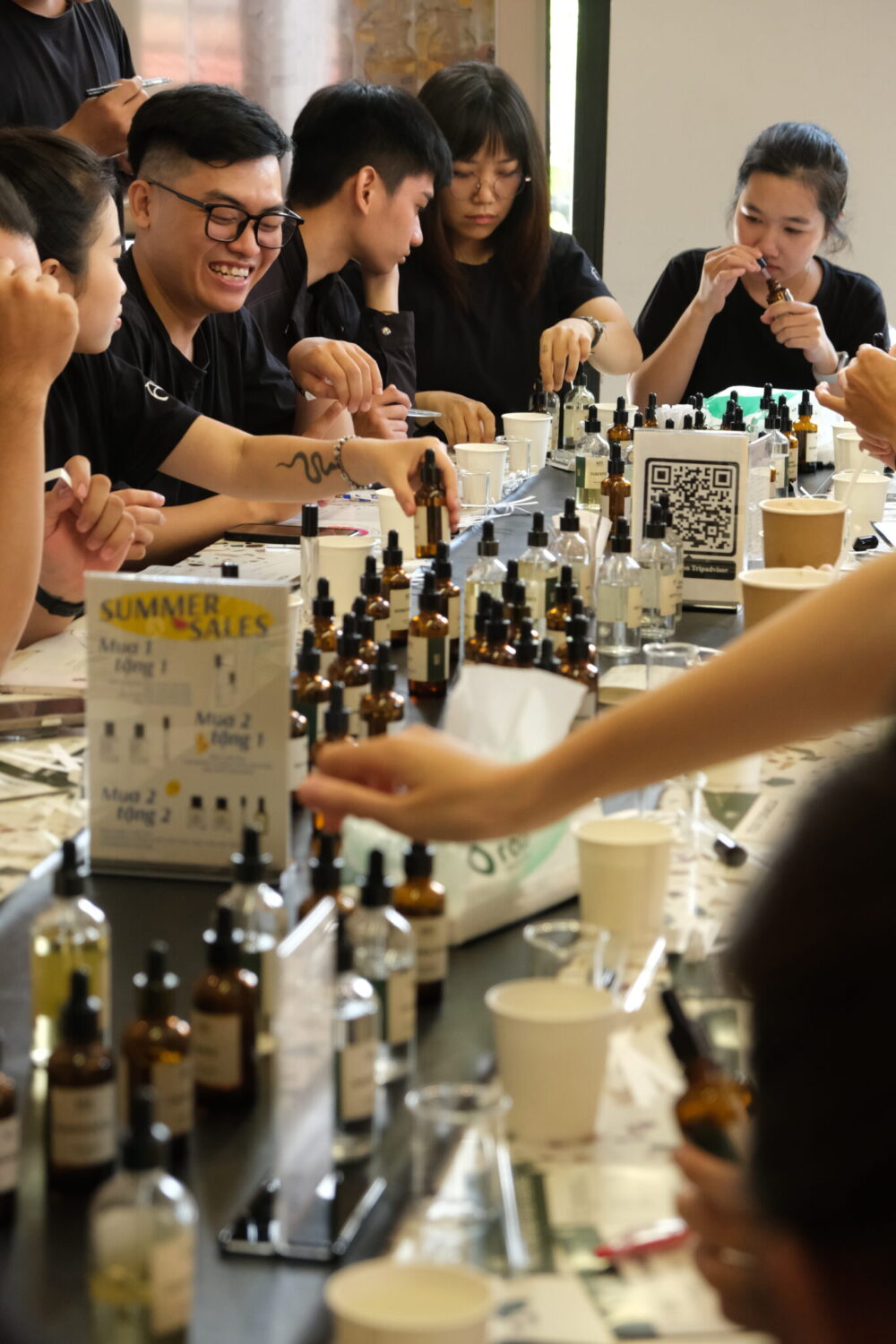
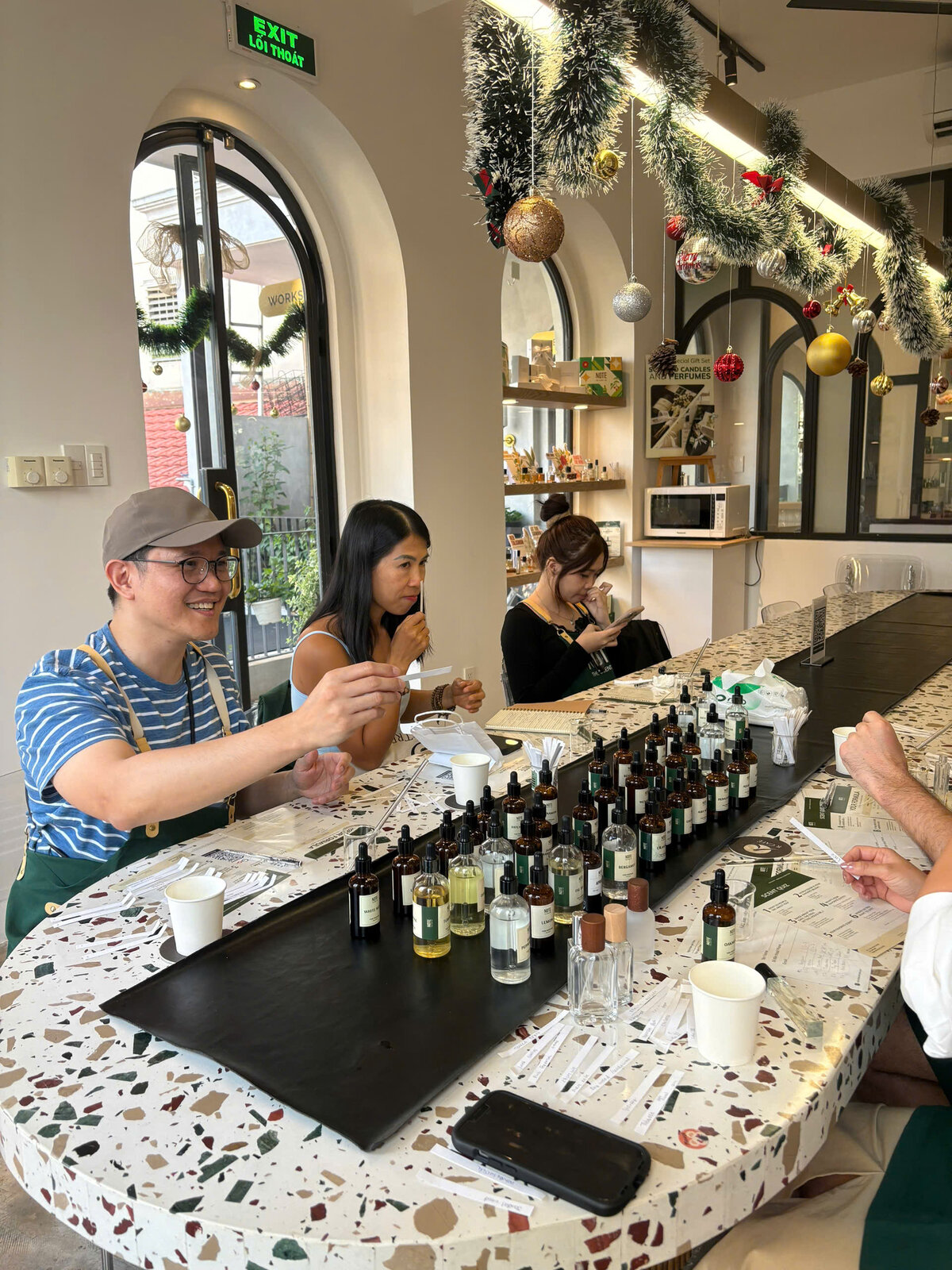
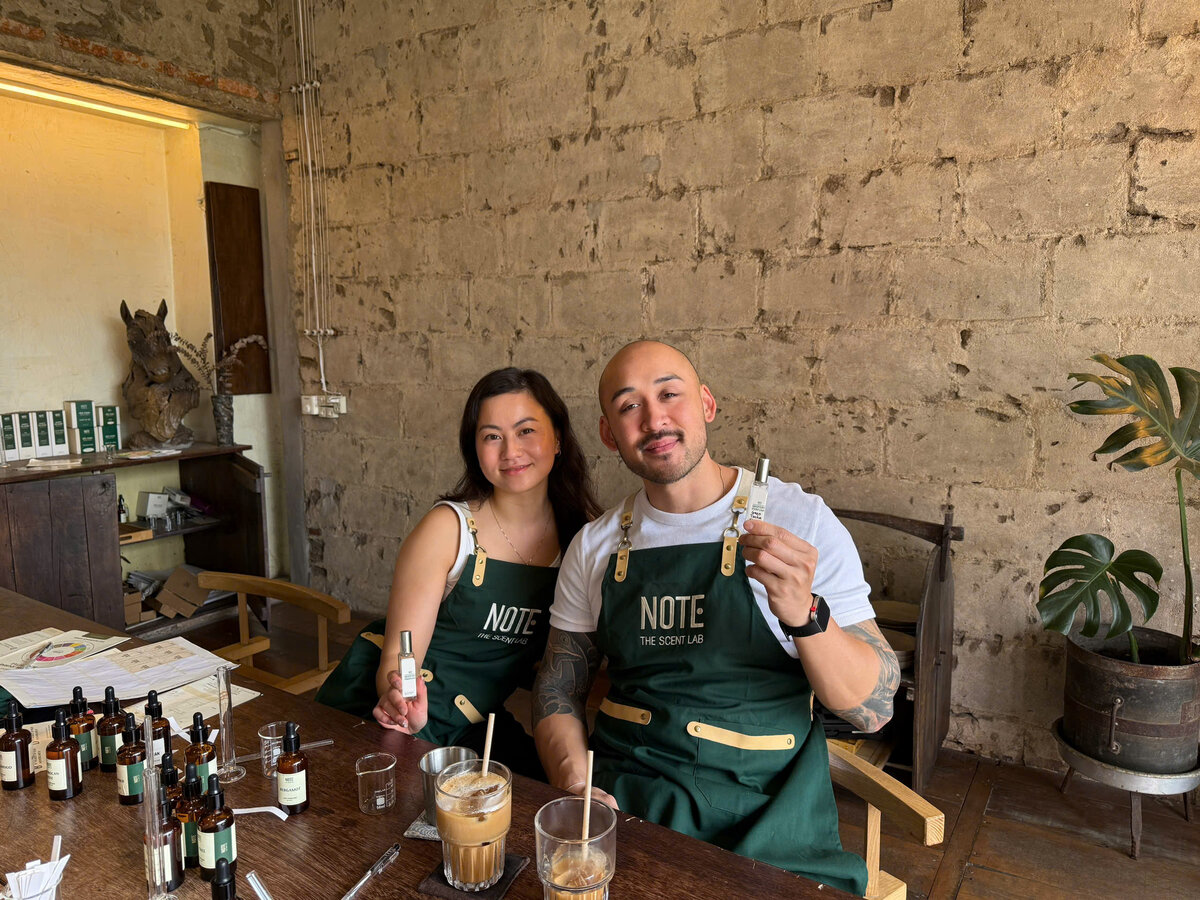
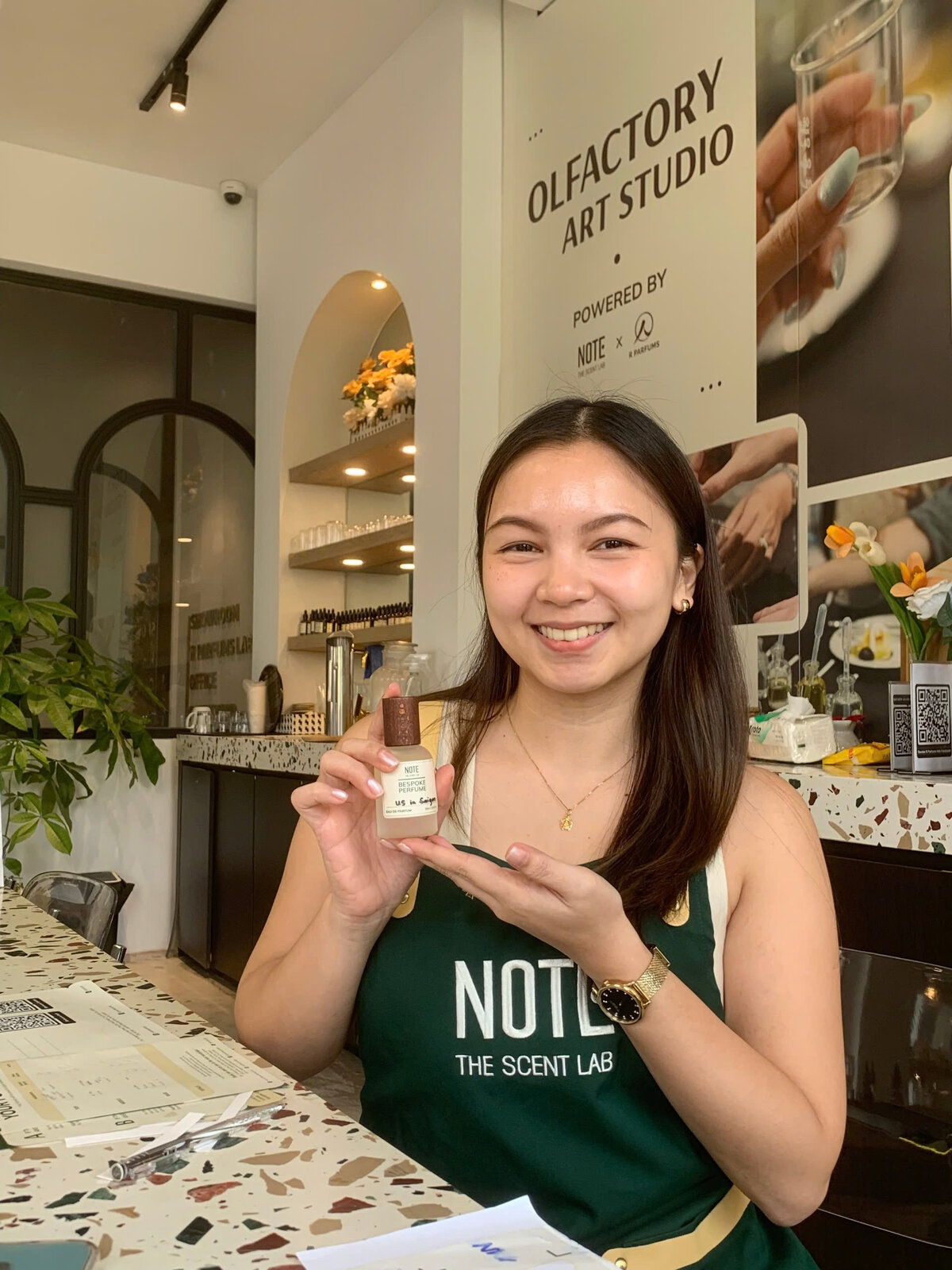
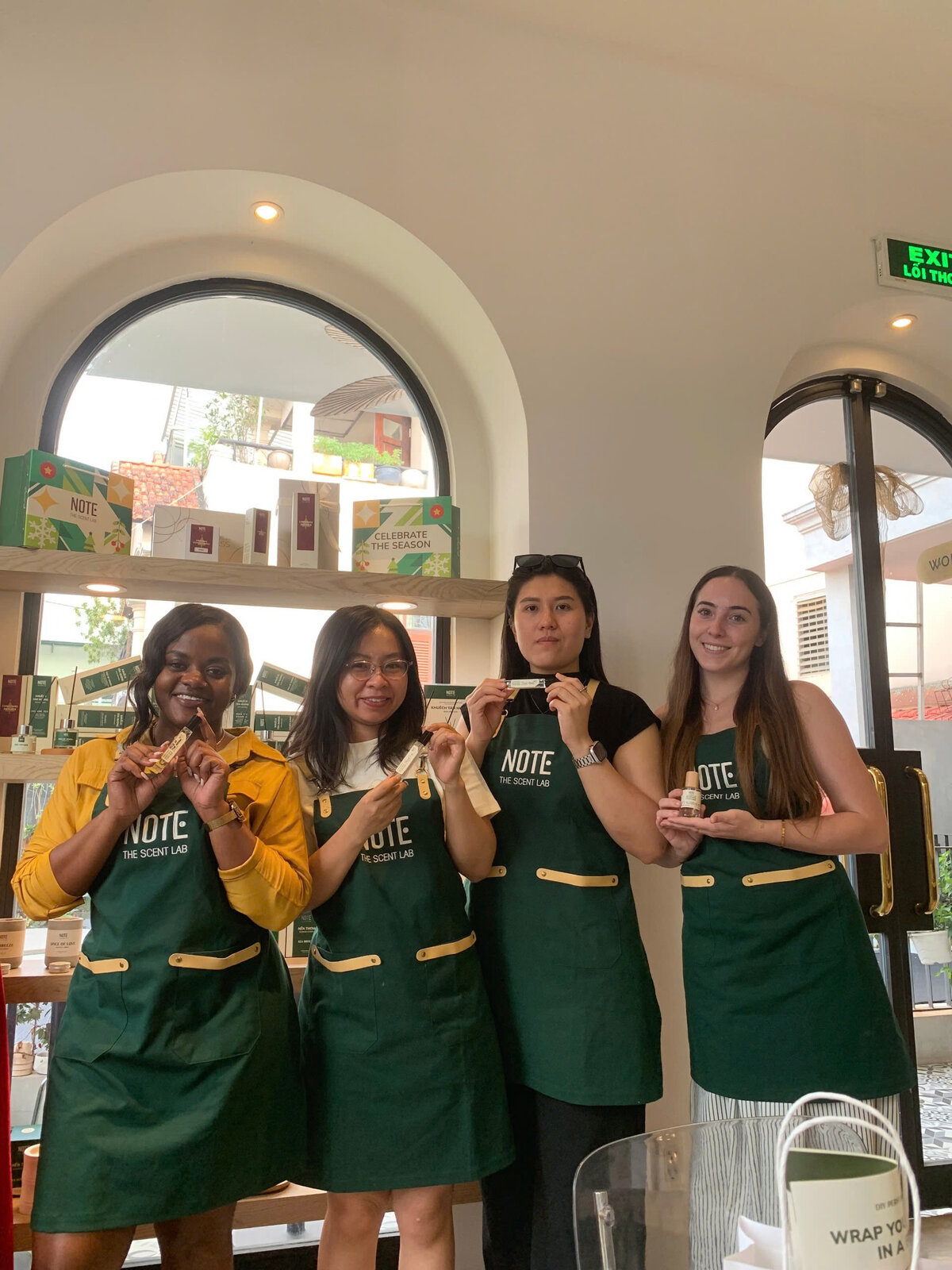
NOTE – The Scent Lab runs 120-minute perfume workshops at 42 Nguyễn Huệ in District 1 and in Thảo Điền. You choose from 30+ professional-grade ingredients, from bright citrus and florals like jasmine and osmanthus to warm woods and spice such as sandalwood, cinnamon and amber, and create an Eau de Parfum that’s entirely yours. Pricing starts at 550,000 VND for a 10ml bottle.
“I loved my fragrance making experience. I have a beautiful souvenir to take home and every time I smell it, I will remember Saigon. Thanh was an excellent teacher.”
“Creating your own signature perfume is just such a nice and unique experience. Vy guided us through the process and was a very lovely person.”
“One of the most pleasant and calming workshops I’ve ever attended. Great variety of scents — you truly create your own fragrance and get to name it.”
If Da Nang taught you to look beyond the obvious, a perfume workshop is where you go deeper — turning memories and instincts into something you can wear. The studio is open daily. Follow @note.workshop for behind-the-scenes stories, or book your session before flying south.
Planning Your Da Nang Trip — Practical Notes for 2026
Best time to visit: February through May — dry, warm, calm seas. Avoid October–November (typhoon season). Weekday mornings at Bà Nà Hills are noticeably quieter.
Getting around: Grab works well for shorter distances. For Hải Vân Pass and Sơn Trà Peninsula, rent a motorbike or hire a private driver. Airport transfers to the city center take 15 minutes.
Budget tip: Cù Lao Chàm day trips booked directly with local operators cost 30–40% less than hotel-arranged tours. Dragon Bridge fire show is free every weekend.
Onward to Saigon: Flights from Da Nang to Tân Sơn Nhất take 80 minutes. Many travelers combine 3–4 days in Da Nang with a week in Ho Chi Minh City — enough time for a 3-day Saigon itinerary that includes the perfume workshop experience.
We also wrote a deeper guide to Da Nang’s hidden gems if you want to go even further off the beaten path.
Frequently Asked Questions
What are the most unique things to do in Da Nang beyond the Golden Bridge?
The most rewarding Da Nang experiences include sunrise at Sơn Trà Peninsula for langur monkeys, Mỹ Khê Beach at 5 AM with locals, the Dragon Bridge fire show on weekend nights, Hải Vân Pass by motorbike, and snorkeling at Cù Lao Chàm island. Most visitors miss all of these.
How many days do you need in Da Nang to see everything?
Four days lets you cover the highlights comfortably — one day for Sơn Trà and Linh Ứng, one for Bà Nà Hills and the Marble Mountains, one for Cù Lao Chàm or Hải Vân Pass, and one for exploring An Thượng and the Korean district. Many travelers then fly to Saigon or Hanoi to continue their trip.
Is there a perfume workshop in Da Nang?
NOTE – The Scent Lab operates in Saigon (42 Nguyễn Huệ, District 1 and Thảo Điền) and Hanoi (. Most Da Nang visitors fly to Ho Chi Minh City after — the 120-minute workshop fits easily into a Saigon itinerary. Book at workshop.thescentnote.com/book/.
When is the best time of year to visit Da Nang?
February through May offers dry weather, warm seas, and thinner crowds — perfect for outdoor activities like Hải Vân Pass riding and Cù Lao Chàm snorkeling. Avoid October–November when typhoons are most likely. The Dragon Bridge fire show runs year-round on weekends.
Is the Hải Vân Pass safe to ride by motorbike?
Yes, with precautions. Rent an automatic scooter, ride in dry weather and daylight only, go north-to-south for the best sea views, and carry your passport plus international driving permit. Start before 7 AM to avoid afternoon traffic. The road is well-maintained — it’s the curves and altitude that demand respect.
Where can I find the best local food in Da Nang?
An Thượng walking street is the real food district — try bún chả cá (fish cake noodle soup), mì Quảng (turmeric noodles), and fresh seafood. For Korean food, head to the Nguyễn Văn Thoại area near Mỹ Khê. Night stalls along Bạch Đằng Street after the Dragon Bridge show serve grilled squid and sugarcane juice.
How do I get from Da Nang to Ho Chi Minh City?
Direct flights take 80 minutes with VietJet, Vietnam Airlines, or Bamboo Airways — multiple departures daily. Budget fares start around 500,000–800,000 VND when booked in advance. The airport is just 15 minutes from Da Nang’s city center.
Looking for a scent souvenir? NOTE also offers ready-made perfumes, home fragrances, and gift sets if you want to bring the experience home without the workshop. Browse the online store — popular picks include travel-size rollerballs and natural room sprays.
Find NOTE – The Scent Lab
- 42 Nguyễn Huệ — Get directions on Google Maps → · Read reviews on TripAdvisor
How to find us:
- 📍 42 Nguyễn Huệ — Watch direction video on TikTok →
Your Last Day in Vietnam?
If you’re heading back to Ho Chi Minh City before your flight home, save your last morning or afternoon for something memorable. Many travelers book a perfume workshop on their last day in Saigon — it takes just 120 minutes, and you leave with a one-of-a-kind souvenir you created yourself. It’s the kind of ending that makes a trip feel complete.
Information in this article was accurate at the time of writing (April 2026). Opening hours, prices, and availability may change — we recommend double-checking with official sources before your visit.