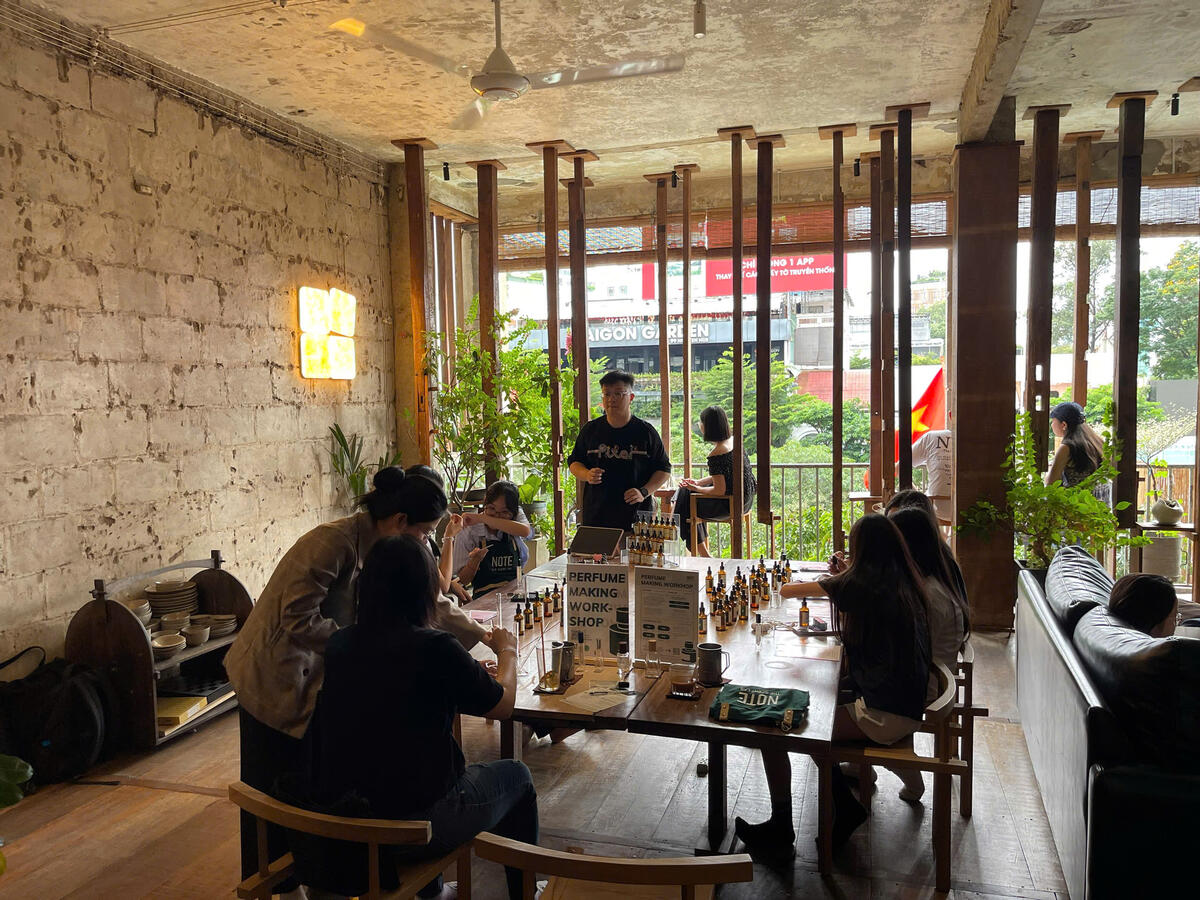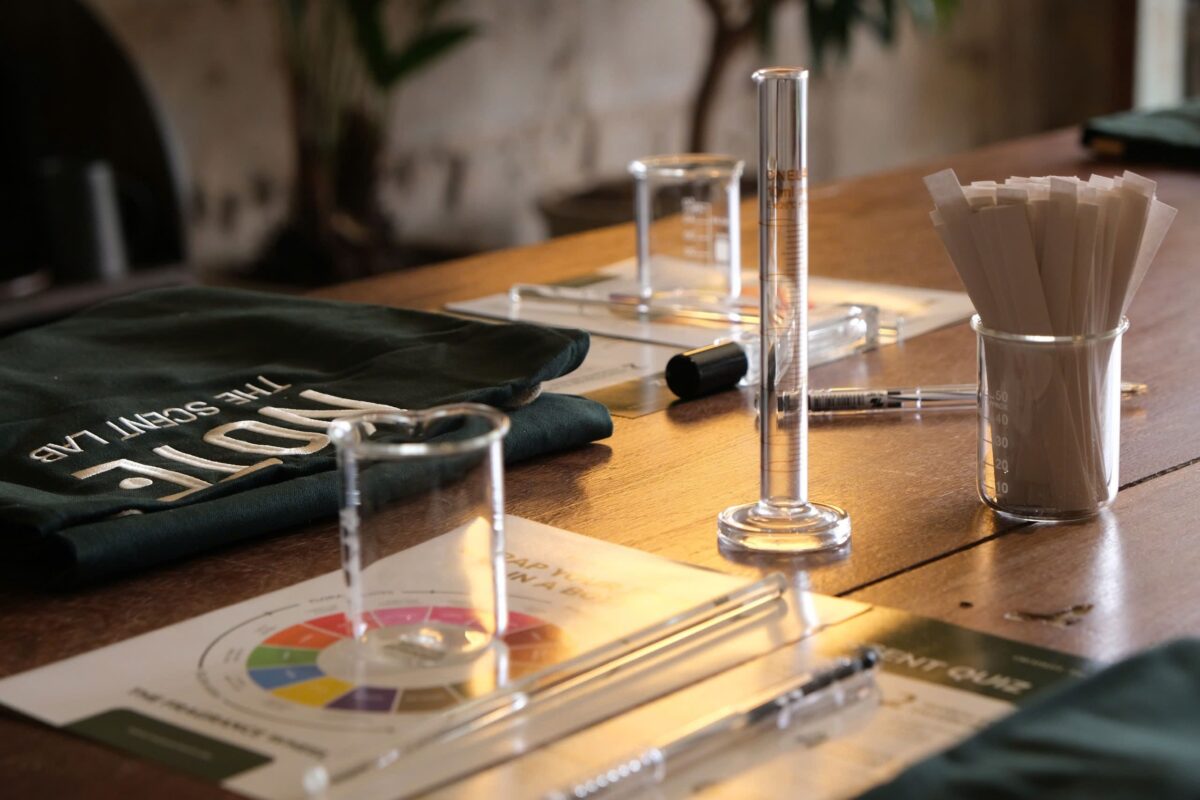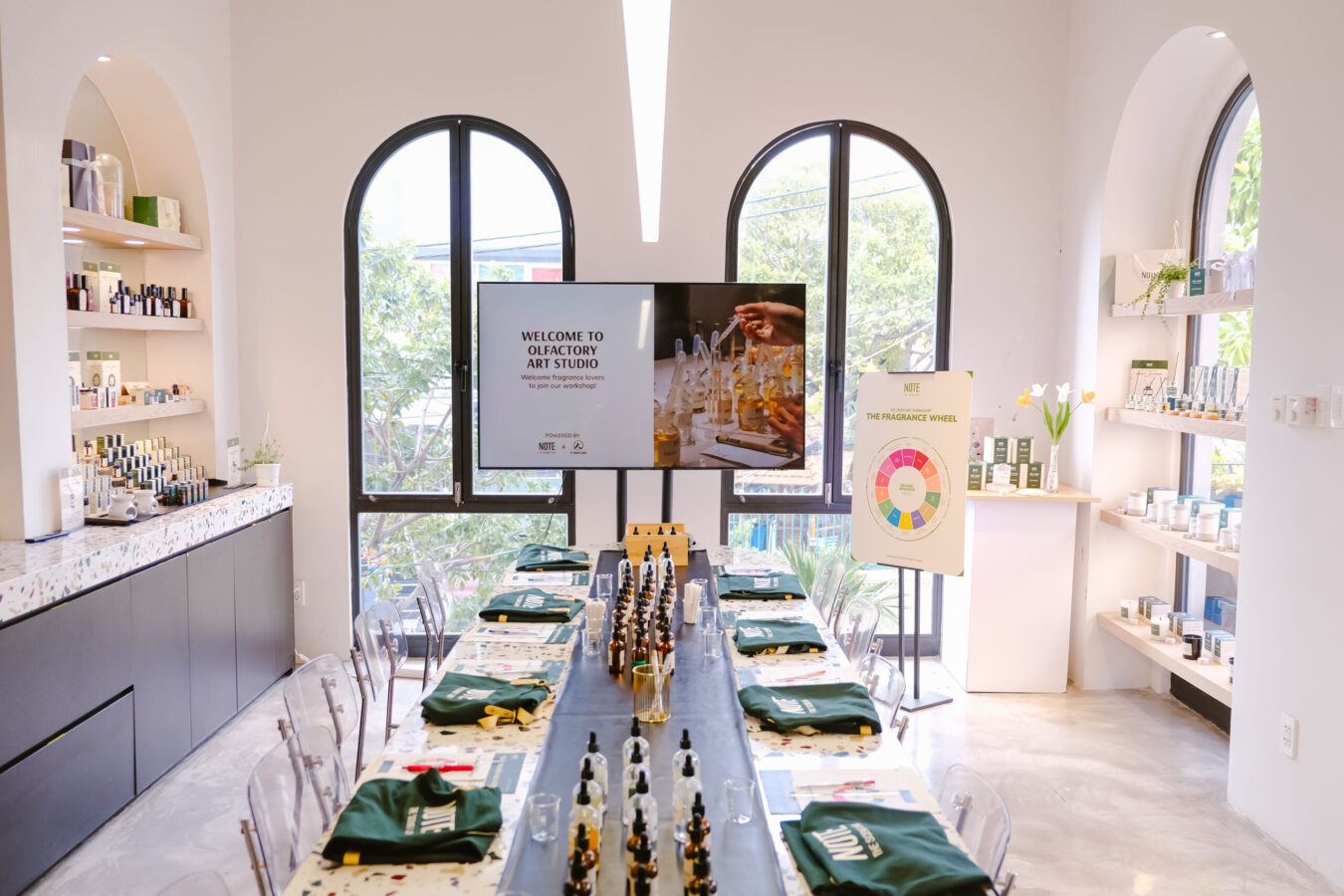

Unique things to do in Sapa extend far beyond the trekking trails that dominate every travel blog. While Sapa, Vietnam remains one of Southeast Asia’s most dramatic mountain destinations in 2026, the real magic hides in the fog-wrapped villages, dawn rituals, and sensory traditions that most visitors never find. NOTE – The Scent Lab’s Hanoi studio (Lotte Mall West Lake, Tây Hồ) closed permanently in August 2026 — the perfume workshop now runs only in Ho Chi Minh City: 42 Nguyễn Huệ (District 1) and 34 Nguyễn Duy Hiệu (Thảo Điền).
The cold hits different at 1,600 metres. Not the air-conditioned cold of a Hanoi mall or the damp chill of a Saigon December — this is thin, sharp, laced with woodsmoke and wet earth and something green you can’t quite name. Maybe it’s the cardamom growing wild under the canopy. Maybe it’s the fog itself, pressing against your skin like a second atmosphere. You step off the overnight train at Lao Cai, and Sapa announces itself not through your eyes but through your nose.
This is a guide for the traveller who has already seen the rice terrace photos. Who already knows about the treks. What follows are 10 uncommon Sapa experiences that will reshape how you understand northern Vietnam — and one unexpected creative adventure waiting when you descend back to Hanoi.
unique things to do in Sapa: 1. Fansipan Summit by Cable Car at Dawn — Above the Clouds
Most visitors take the Fansipan cable car mid-morning, when the gondolas are packed and the summit is a sea of selfie sticks. The experienced travellers go at first light.
Arrive at the Sun World station before 7:00 AM. The cable car ascends 6,292 metres of rope through a silence so total you can hear the mechanism hum. Below, the Hoang Lien Son range materialises in layers — charcoal, then slate blue, then the palest lavender where mountain meets sky. At the summit (3,143 metres), if the timing is right, you stand above the cloud line. Vietnam stretches below you as a white ocean, peaks breaking through like islands.
The temperature hovers near 5°C. Your fingers sting. The air smells of nothing — genuinely nothing — and after days of Hanoi’s motorbike exhaust and phở broth steam, that emptiness is its own kind of gift. Stay for the Buddhist temple complex at the top. The incense there, burning into frozen air, creates something you won’t smell anywhere else on Earth.
2. Red Dao Herbal Bath in Ta Phin Village
The Red Dao people of Ta Phin have been preparing medicinal herbal baths for generations — long before “wellness tourism” became a search term. The practice involves over a dozen plants foraged from the mountains surrounding the village, boiled into a dark, intensely aromatic brew.
You sit in a wooden tub behind a curtain of steam. The water is the colour of strong tea. Cinnamon bark, ginger root, and plants whose Vietnamese names you won’t remember create a scent that’s simultaneously medicinal and warm — like someone wrapped a pharmacy in a forest. Your skin tingles. The Red Dao women who prepare the bath learned this from their grandmothers, who learned it from theirs.
A session costs approximately 100,000-200,000 VND. The real cost is the 7-kilometre drive from Sapa town to Ta Phin, through terraces so steep they seem to defy physics. Go in the afternoon, when the village is quiet and the light turns everything amber.
Getting to Ta Phin
Hire a motorbike (manual or semi-automatic) from Sapa town for about 150,000 VND per day, or arrange a xe om. The road is paved but narrow. Budget 20 minutes each way.
3. Muong Hoa Valley at Sunrise — Terraces Without Crowds
The Muong Hoa Valley appears in every Sapa photograph. What doesn’t appear: the 6:00 AM version, before the trekking groups arrive.
Wake early. Walk — don’t drive — down the path from Sapa town toward the valley floor. The rice terraces in pre-dawn light look like hammered silver, each level catching the sky at a slightly different angle. The only sounds are water moving through irrigation channels and roosters declaring themselves from unseen farms. Fog sits in the valley like cotton, rising and thinning as the sun climbs.
This is where the ancient rock carvings are — over 200 stones etched with mysterious symbols that predate the Sa Pa we know. Nobody is entirely sure who made them or why. Stand next to one in the early light, run your fingers over the grooves, and you’re touching something that has survived centuries of monsoons. That stays with you.
4. Hmong Homestay Cooking with Foraged Mountain Ingredients
Forget the tourist cooking classes. A Hmong homestay kitchen — with smoke-blackened walls, a wood fire, and ingredients gathered that morning — is a different universe entirely.
Your host might hand you thang co herbs to sort, or send you to pick mustard greens from the garden behind the house. The meal builds around what’s available: bamboo shoots, river fish wrapped in banana leaf, sticky rice steamed in a woven basket. The flavours are assertive — cardamom and galangal and a chilli heat that builds slowly, then stays.
Several homestays in Lao Chai and Ta Van villages offer cooking experiences. Expect to pay 300,000-500,000 VND per person including the meal. The experience is informal, sometimes chaotic, always genuine. You eat on the floor. Children wander through. The fire crackles. This is Sapa’s heartbeat, and you won’t find it on a day-tour itinerary.
5. Cat Cat Village — Indigo Dyeing and Bamboo Weaving
Planning your northern Vietnam itinerary? Many Sapa travellers end their trip with a perfume creation workshop — a way to bottle the mountain memories before flying home.
Cat Cat village is technically on every tourist map. But most visitors walk through, photograph the waterfall, and leave. The craft workshops hidden in the village’s lower reaches are where the real story lives.
Hmong women here still dye fabric using indigo — a process that turns their hands blue-black and takes weeks to complete. Watch them work: the rhythmic dipping, the wringing, the spreading of cloth across flat rocks to dry in mountain sun. If you ask, some artisans will let you try. Your hands will carry the stain for days. Consider that your souvenir.
Bamboo weaving happens in the quieter homes uphill. The sound of bamboo being split — a sharp, clean crack — echoes between stone walls. Baskets, fish traps, rice containers. Each one functional, each one beautiful in the way that only objects made for actual use can be.
Cat Cat entrance fee: 100,000 VND. Walk past the main tourist path and follow the sound of looms. That’s where the artisans are.
6. O Quy Ho Pass — Vietnam’s Most Dramatic Mountain Road
If you have a motorbike and a tolerance for hairpin turns above cloud level, O Quy Ho Pass is the most spectacular road in northern Vietnam. Possibly in all of Vietnam.
The pass connects Sapa to Lai Chau province, climbing to approximately 2,000 metres before descending into a completely different landscape. On one side: the lush, terraced Sapa you know. On the other: drier, sparser terrain that feels almost Tibetan. The transition happens in kilometres, not hours.
Stop at the viewpoints. There are no guardrails at most of them — just mountain dropping into valley dropping into cloud. The wind at the summit can knock you sideways. It carries cold-weather pine resin and something mineral, like the mountains themselves are exhaling. Ride early morning for the best visibility and the least traffic.
Safety note
O Quy Ho is not for inexperienced riders. The road is good quality but features blind curves and occasional rockfall. Go slowly. Wear layers — temperature drops significantly at the highest points.
7. Thac Bac (Silver Waterfall) in Monsoon Season
Every Sapa guide mentions Silver Waterfall. Few mention the right time to see it.
Visit between June and September — monsoon season — when Thac Bac transforms from a picturesque cascade into something genuinely powerful. The volume of water increases dramatically, the mist soaks you from 50 metres away, and the roar makes conversation impossible. The rocks around the base become slick and dark. Everything smells of wet stone and ozone.
The waterfall sits along the road to O Quy Ho Pass, about 12 kilometres from Sapa town. Entrance fee: 30,000 VND. In monsoon, you’ll likely have it nearly to yourself — the tour buses thin out when the weather turns unpredictable. Bring a waterproof layer. Accept that you will get wet regardless.
8. Ham Rong Mountain Botanical Garden — Orchids in the Middle of Town
Ham Rong Mountain rises directly behind Sapa town, and most travellers dismiss it as “just a garden.” They’re wrong.
The botanical garden here houses hundreds of orchid varieties — some endemic to the Hoang Lien Son range, found nowhere else. In spring (March-April), the orchid garden erupts into colour so dense it feels artificial. It isn’t. These are mountain orchids, delicate and stubborn, blooming at altitude because that’s what they’ve always done.
Beyond the orchids, the path climbs through cloud forest to a viewpoint overlooking Sapa valley. On clear mornings, you can see Fansipan. On foggy mornings — which are most mornings — you see white nothing, punctuated by the tips of pine trees. Both versions are worth the 100,000 VND entrance fee. Budget 120 minutes for the full loop.
9. Sapa Night Market — The Hidden Food Stalls Behind the Main Street
The Sapa night market that appears in travel guides is the one along the main square — a grid of souvenir stalls selling brocade bags and “I Love Sapa” T-shirts. The market worth visiting is behind it.
Walk past the tourist stalls. Follow the smoke. In the alleyways behind the main drag, local vendors set up portable grills and steaming pots after dark. Thang co — a Hmong soup of horse meat and organs, heavily spiced with cardamom and thao qua — simmers in massive iron pots. The smell is thick, meaty, medicinal. You either love it immediately or need three attempts. Grilled corn rolled in chilli salt. Sweet potato roasted in charcoal. Sticky rice tubes. Men ga (a Hmong corn wine) poured from plastic bottles.
No English menus. Point and smile. Expect to pay 20,000-50,000 VND per dish. Sit on a plastic stool next to someone’s grandmother. The fog rolls through the alley. This is the kind of Vietnam you can’t plan for — it finds you when you stop trying.
10. Muong Hum Sunday Market — The Ethnic Minority Gathering Off the Tourist Trail
Muong Hum is 40 kilometres north of Sapa, near the Chinese border, and its Sunday market is one of the last truly local highland markets in the region. While Bac Ha market has become a stop on the tour-bus circuit, Muong Hum remains largely unvisited by international travellers.
Arrive early Sunday morning. The road from Sapa takes about 120 minutes through mountain passes and terraced valleys. At the market, Hmong, Red Dao, Giay, and Tay communities converge to trade livestock, produce, textiles, and medicinal herbs. The colour is extraordinary — traditional dress in reds, blacks, and electric blues against a backdrop of green mountains. The scent of the market shifts as you walk through: fresh herbs, livestock, woodsmoke, the sharp tang of men ga being sampled from shared cups.
This is not a curated experience. There may be no other tourists. Bring cash — no card machines exist here. Hire a motorbike or arrange transport the night before. And bring a camera with a long lens — some vendors prefer not to be photographed up close, which is a boundary worth respecting.
From Mountain Air to Custom Scents — The Unexpected Hanoi Detour
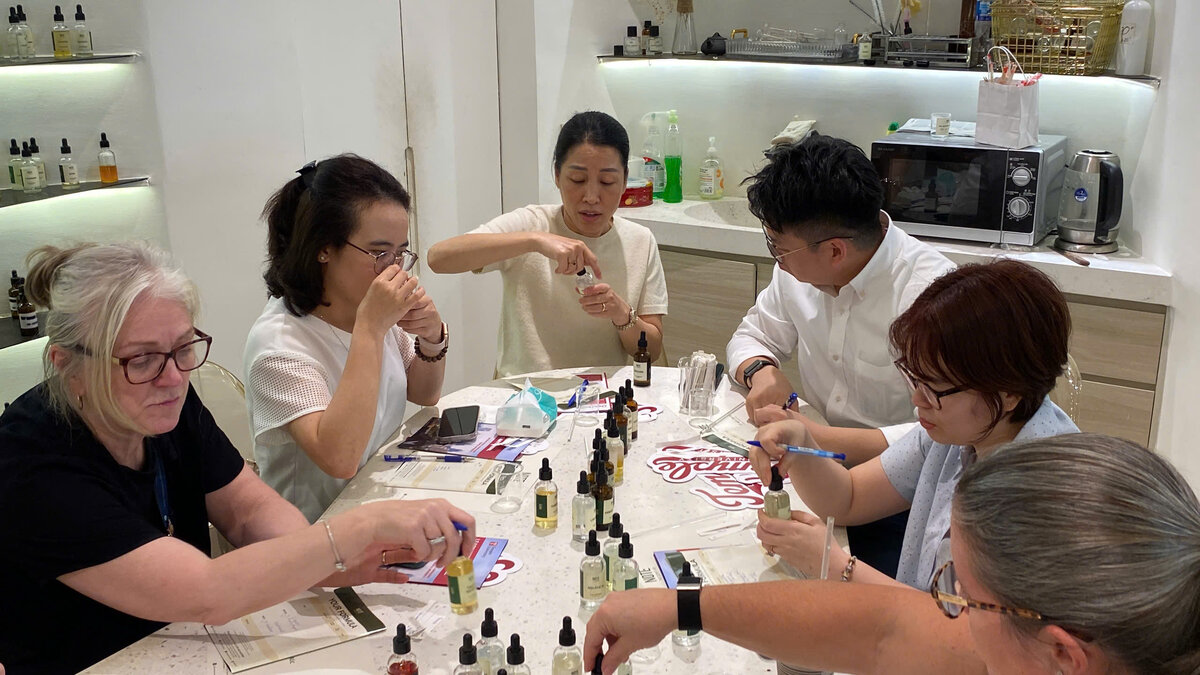
Here’s what we’ve noticed at our perfume workshop: guests who arrive from Sapa create differently.
They reach for cinnamon — not because it’s familiar, but because they just spent three days breathing it in the mountain air. They gravitate toward patchouli and cedarwood, earthy notes that echo the rice terraces still fresh in their memory. They choose honey and benzoin, warm and aromatic like the brew the Red Dao women boiled into their herbal baths.
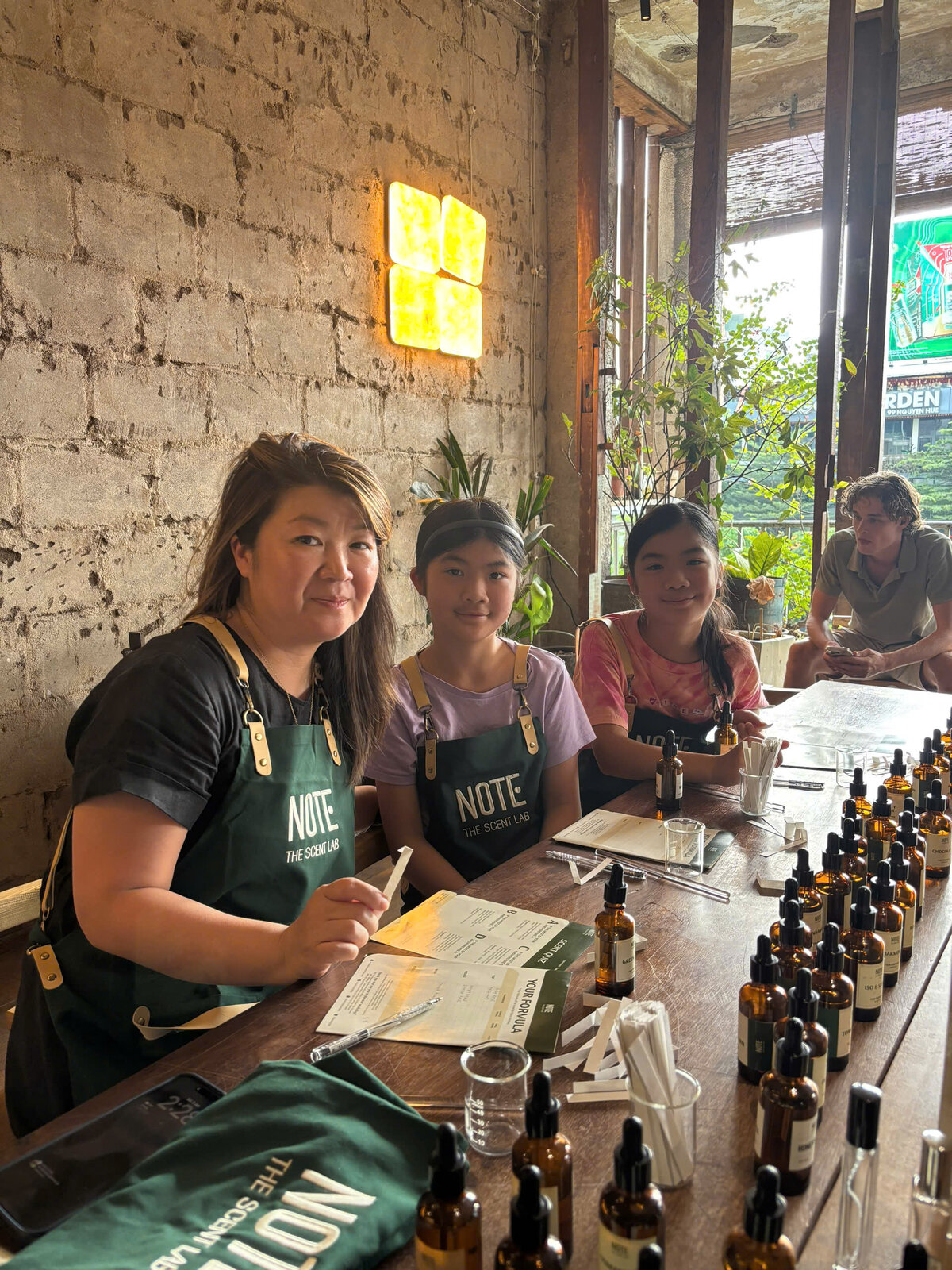
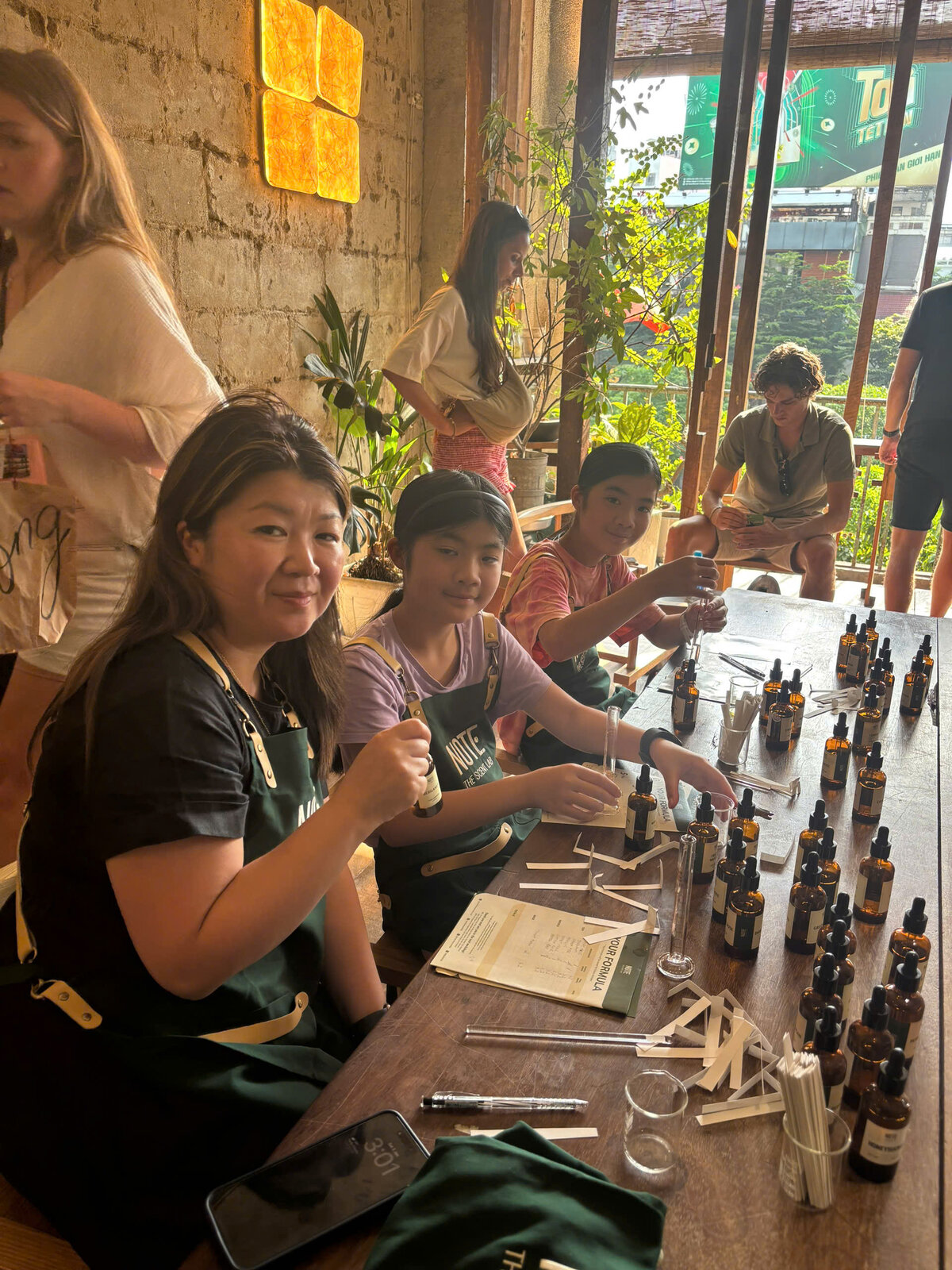
The highlands get into your senses. They recalibrate your nose. And when you sit down at NOTE – The Scent Lab — now in Ho Chi Minh City, after the Hanoi studio closed in August 2026 — with 30+ professional-grade ingredients arranged before you, those mountain memories become the raw material for something you’ll carry home in a bottle. (Curious about the ingredients? NOTE’s full fragrance collection draws from the same natural palette.)
“I loved my fragrance making experience. I have a beautiful souvenir to take home and every time I smell it, I will remember… Thanh was an excellent teacher,” wrote herbaljo on TripAdvisor. That memory-into-scent transformation is exactly what happens when travellers visit a NOTE studio.
“The workshop was an excellent experience. It was fun discovering different scents and finding out what I like best,” shared Kenny P on TripAdvisor. After days of mountain trekking and village visits, the 120-minute creative session becomes something else entirely — a way to process everything you’ve absorbed.
“This is a not-to-miss experience! We enjoyed every moment. Vy was so helpful and taught us so much about scent pairing. I will do this again when I’m in Hanoi!” said Seneca C on TripAdvisor. Many of our Sapa-to-Hanoi guests say the same — the workshop becomes the unexpected highlight of their northern Vietnam trip.
The Sapa-to-Hanoi route is the most common traveller path: overnight train or morning bus back to the capital, one or two days in Hanoi before flying out. Most people fill that Hanoi time with the Old Quarter and Ho Chi Minh Mausoleum. The travellers who book experiences beyond the usual tourist stops are the ones who leave with stories worth telling.
Planning Your Sapa Trip in 2026 — Practical Details
Best time to visit Sapa
September-November for terraced rice harvest (golden fields). March-May for spring flowers and orchids. December-February for possible snow on Fansipan — beautiful but bitterly cold. June-August is monsoon: dramatic waterfalls, fewer tourists, muddy trails.
Getting there from Hanoi
Overnight sleeper train to Lao Cai (8 hours, from 500,000 VND) + 45-minute bus to Sapa town. Or direct bus from Hanoi’s My Dinh station (5-6 hours). Private car services run about 3,500,000 VND one way.
How many days in Sapa
Three nights minimum for the experiences in this guide. Two nights if you skip Muong Hum market. Add a fourth night if you want the O Quy Ho Pass ride without rushing.
Budget
Homestays: 200,000-500,000 VND per night including dinner. Hotels in town: 400,000-2,000,000 VND. Meals at local stalls: 30,000-80,000 VND. The best experiences in Vietnam don’t require big budgets — they require early mornings and a willingness to get lost.
Frequently Asked Questions
What unique things can I do in Sapa besides trekking?
Beyond trekking, Sapa offers Red Dao herbal baths in Ta Phin village, Hmong homestay cooking with foraged ingredients, indigo dyeing at Cat Cat village, the Muong Hum Sunday market, O Quy Ho Pass motorbike rides, and Ham Rong orchid gardens. Most of these unique Sapa experiences sit outside the standard tour-group itineraries.
Is Sapa worth visiting in 2026?
Sapa remains one of Vietnam’s most rewarding destinations in 2026. While tourism infrastructure has grown, the off-trail experiences — ethnic minority markets, mountain-pass rides, village homestays — remain authentic. Visit midweek and explore beyond Sapa town for the best experience.
How do I get from Sapa to Hanoi?
The most popular route is a bus to Lao Cai (45 minutes) followed by an overnight sleeper train to Hanoi (8 hours, from 500,000 VND). Direct buses from Sapa to Hanoi take 5-6 hours. Most travellers spend 1-2 days in Hanoi before flying home — enough time for the Old Quarter, family-friendly activities, and creative workshops.
What is the best time to visit Sapa?
September-November offers golden rice terraces during harvest. March-May brings spring flowers and comfortable temperatures. Winter (December-February) features occasional snow on Fansipan. Monsoon season (June-August) delivers dramatic waterfalls and the fewest tourists.
Where can I create a custom perfume with NOTE after visiting Sapa?
NOTE – The Scent Lab’s Hanoi studio closed permanently in August 2026, and its perfume workshop now runs only in Ho Chi Minh City, where you blend 30+ ingredients, from bright citrus and florals to warm spice and woods like cinnamon, rose and sandalwood, into a custom Eau de Parfum. Many Sapa travellers book this as a creative stop before flying home. Prices range from 550,000 to 1,550,000 VND. Book at workshop.thescentnote.com/book.
Is the Muong Hum Sunday market worth the trip from Sapa?
If you’re in Sapa on a Sunday and want an authentic highland market experience without tourist crowds, Muong Hum is worth the 120-minute drive. It’s one of the few remaining markets where ethnic minority communities gather primarily for local trade rather than tourism. Arrive early morning for the best atmosphere.
Can I combine Sapa with a perfume workshop in Vietnam?
The natural route is Hanoi → Sapa → Hanoi. NOTE’s Hanoi studio closed in August 2026, so its perfume workshop now runs only in Ho Chi Minh City — save it for the southern leg of your trip to transform your mountain memories into a signature scent. Follow @note.workshop for studio updates.
Looking for a scent souvenir? NOTE also offers ready-made perfumes, home fragrances, and gift sets if you want to bring the experience home without the workshop. Browse the online store — popular picks include travel-size rollerballs and natural room sprays.
Find NOTE – The Scent Lab
How to find us:
Your Last Day in Hanoi?
If you still have a morning or afternoon before your flight from Hanoi, consider ending your trip with something creative. NOTE’s Hanoi studio (Lotte Mall Tây Hồ) closed permanently in August 2026; its perfume workshop now runs only in Ho Chi Minh City, so plan a session there if your travels take you south.
Information in this article was accurate at the time of writing (April 2026). Opening hours, prices, and availability may change — we recommend double-checking with official sources before your visit.