
Da Nang Cham heritage is the thousand-year scent thread that ties this coastal city to its Champa past — river breeze off the Han, citrus from Quang Nam orchards inland, and the warm terracotta dust of My Son sandstone temples. NOTE – The Scent Lab is a perfume workshop in Saigon and Hanoi, Vietnam (rated from ), and many of our travelers arrive carrying exactly this in their hair: salt, citrus, old stone.
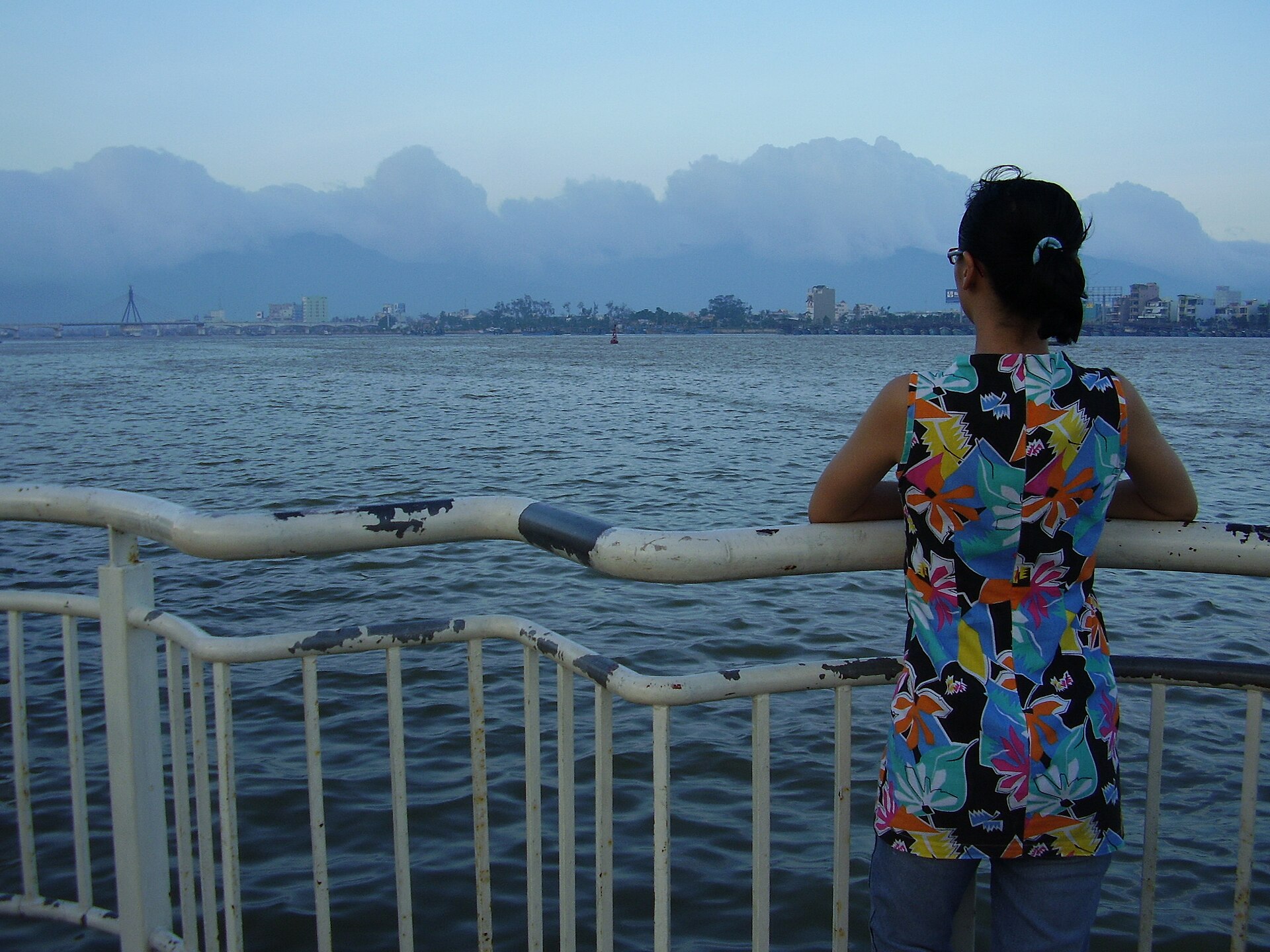
The breeze hits you first. Not the river itself. The breeze that runs off the Han at 5 PM, when the sun has dropped behind the Marble Mountains and the air finally cools — brackish at the edges, citrus-sweet underneath, with something older threaded through it that you cannot quite name. That older note is sandstone. Terracotta. The dust of temples a thousand years older than your grandmother. Da Nang does not announce its Champa past on signs. It carries it in the air. For travelers researching da nang cham heritage, this guide should be a starting point — verify before booking.
And once you notice it, you stop seeing the city the same way.
A note before you read: This guide is based on our team’s research and visits as of May 2026. Prices, hours, transit schedules, and venue availability change — please treat the specifics as a starting point, not a guarantee, and verify with official sources before booking. The only thing we can vouch for absolutely is the perfume workshop at NOTE.
Why Da Nang Cham heritage starts at the river, not the museum
Most Da Nang itineraries begin with the Marble Mountains, then the Dragon Bridge, then a beach. That is fine. But it skips the thread that holds them together. The thread is Champa — the seafaring kingdom that ruled this coast from roughly the 4th century to the 15th, trading spices and silk between India, China, Indonesia, and Persia, and leaving sandstone temples scattered across central Vietnam. This is part of our broader da nang cham heritage coverage on workshop.thescentnote.com.
Indrapura, “the city of Indra,” was the Champa capital from about 875 to 1100. It sat near today’s Quang Nam province, an hour south of the Han River. Art historians call this stretch — 875 to 982 — the Golden Age of Cham art. Stone-carvers worked sandstone the colour of Quang Nam citrus skins. Priests burned incense to Shiva on hilltops. Boats slid up the rivers carrying pepper, cinnamon, and pomelos from inland orchards to the sea. If da nang cham heritage is on your list, the workshop pairs well with this stop.
That world is gone. But the geography is not. The river still runs. The citrus trees still grow in Tien Phuoc and Duy Xuyen. The sandstone is still warm at noon and cool by dusk. When you walk along Bach Dang Street at sunset and the breeze picks up, you are walking the same waterfront the Cham merchants walked. Da Nang Cham heritage is not a chapter in a guidebook. It is the air.
Where the breeze begins
Stand on the east bank of the Han, near the foot of Dragon Bridge, around five in the afternoon. Face inland. Close your eyes if you can do it without being self-conscious. The breeze comes from the river but it has travelled further than that. It has rolled over rice paddies in Hoa Vang. It has brushed the citrus orchards of Quang Nam. By the time it reaches your face, it carries traces of all of them — and a memory that is older than any of us. Many guests planning da nang cham heritage mention this in their booking notes.
That layered breeze is what we want to talk about. Not as a metaphor. As a fact. We hear this often from travelers exploring da nang cham heritage.
The Cham Museum: walking through Da Nang Cham heritage in stone
The Museum of Cham Sculpture sits at the southern end of Bach Dang Street, where the river bends. From the outside, it looks modest — yellow walls, a low colonial roof, palm trees out front. Inside, it holds the largest collection of Cham sculpture in the world. As of early 2026, the museum opens daily from around 7:30 AM to 5 PM, with admission typically around 60,000 VND. (Check current schedule before you go — holidays sometimes shift hours.) For first-timers researching da nang cham heritage online, the practical details matter.
The galleries are organised by where the pieces were excavated. Tra Kieu. My Son. Thap Mam. Each room has its own light. Each light reveals a different period of Cham work. The earliest pieces feel close to Indian Hindu sculpture — Shiva lingams, dancing apsaras, garudas with wings spread. The later pieces become more local. Faces shorten. Bodies thicken. Stone-carvers have started working from their own villages instead of imported manuals. Of all the angles in da nang cham heritage, this is one we hear about often.
Of the 9 national treasures the museum holds, the Tra Kieu altar is the one most visitors slow down for. The pedestal is carved with scenes from a wedding ceremony — musicians, dancers, attendants — and the detail on the stone is fine enough to count the folds in a dancer’s skirt. Recent guests interested in da nang cham heritage have asked about this exact spot.
What the sandstone smells like
Here is the thing nobody mentions. The galleries smell. Not strongly. Not unpleasantly. They smell of warm sandstone — slightly mineral, slightly powdery, like an old library that someone has been gently dusting for a hundred years. Cham heritage has a smell, and you only notice it when you stop looking at the labels and start breathing through your nose. Our notes on da nang cham heritage keep coming back to scenes like this.
Travelers who later come to our perfume workshop in Saigon often try to describe this. They reach for words. Old paper. Hot brick. Pencil shavings. We hand them a strip of vetiver, and another of dry amber, and they nod. That. That is the smell of the museum. Anyone planning da nang cham heritage will likely cross paths with this corner.
Quang Nam citrus terroir: the inland half of the breeze
An hour south of the Cham Museum, the land starts to climb. Quang Nam province begins where Da Nang’s suburbs end. The roads narrow. Rice paddies give way to citrus orchards. Pomelos hang heavy off branches in November. Oranges ripen in winter. The Tien Phuoc district has been growing citrus for generations, and the fruit there carries a specific terroir — sweeter than southern oranges, drier, with a green-leaf bitterness that registers in the peel before you bite the flesh.
Citrus orchards Quang Nam farmers tend are not industrial. They are family plots. A few hectares each. Dogs sleep under the trees. Children pick early in the morning before school. The fruit goes to local markets in Hoi An and Da Nang, and the rest goes north on trucks, and the leaves and broken peels go into the soil and stay there.
Why does this matter for a scent story? Because citrus terroir is real. The same orange variety, grown in two different soils, will have two different essential oils. The Quang Nam pomelo carries something the Mekong pomelo does not — a sharper top, a slightly woody undertone, a faint memory of the river that ran past the orchard last week. When scent makers source bergamot from Calabria instead of Brazil, this is what they are paying for. The land speaks through the fruit.
The orchard you can almost visit
Most travelers do not go to Tien Phuoc. There is no entry ticket, no bus, no tour. You hire a car and a driver, you bring water, and you ask in advance. Some farms welcome curious foreigners during harvest season — November through January for pomelos, December through February for oranges. Bring small bills. Bring patience. Do not photograph people without asking. The orchards are working land, not exhibits.
If you cannot make the inland trip, do this instead. At any Da Nang market — Han Market is closest to the river — buy one Quang Nam pomelo. Carry it back to your hotel. Peel a small strip of skin slowly with your thumbnail. Hold it under your nose. That is the smell that ran the trade routes a thousand years ago.
Han River bridge architecture: where Da Nang Cham heritage meets neon
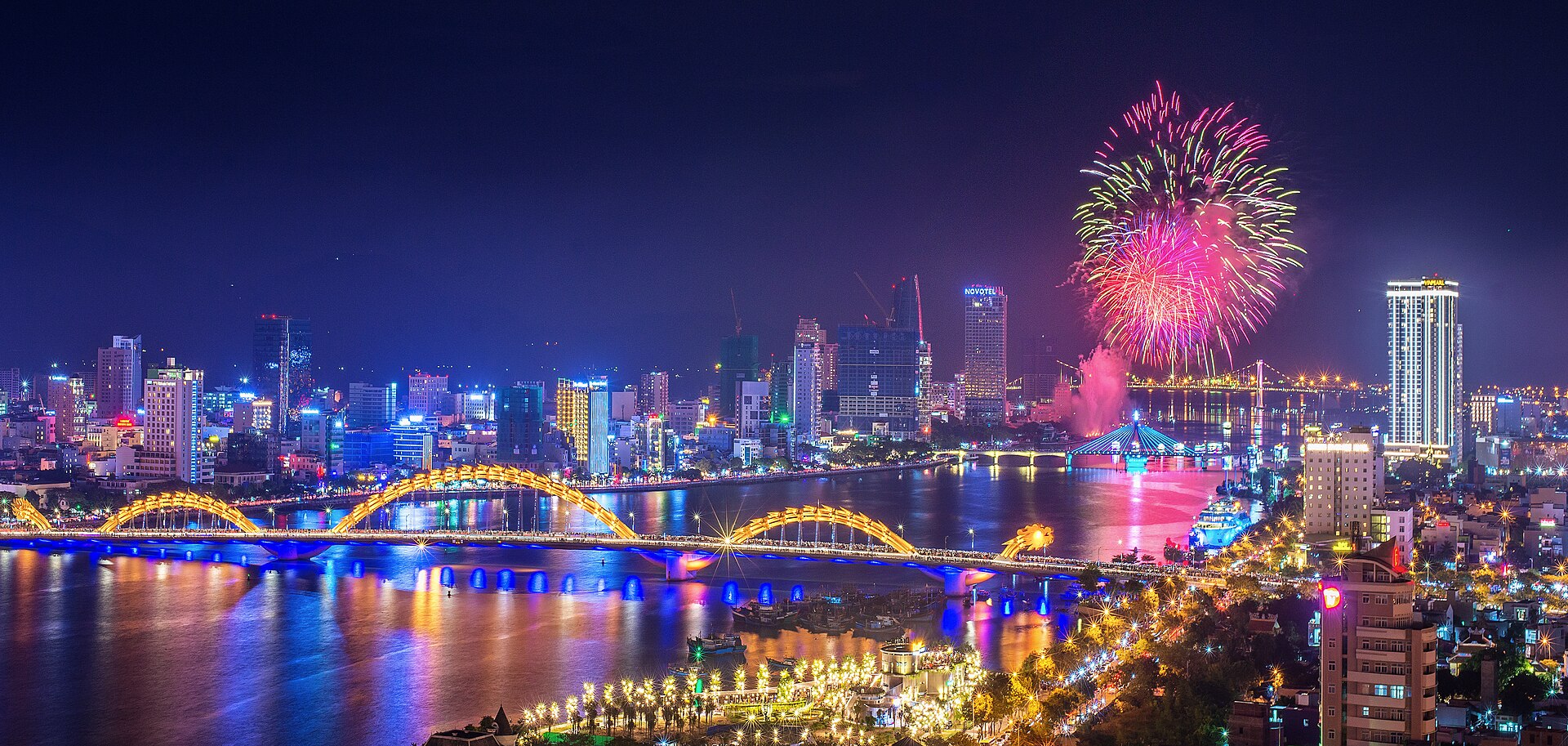
The Dragon Bridge is the obvious one. Six hundred and sixty-six metres of steel dragon, fifteen thousand LED lights, fire and water show on Saturday and Sunday nights at 9 PM (and nightly during Tet, mid-February in 2026). Most visitors photograph it once and move on. The bridge deserves more than that.
Stand near the dragon’s tail at sunset. Look across the water at the city skyline — modern, neon, restless. Then turn ninety degrees. The Han River bridge curves north toward the older streets. Beyond it, the lights of Hai Chau district shimmer against the dark. The breeze coming off the water carries everything we have already talked about: river, citrus, old sandstone. And now also: motorbike exhaust, grilled squid from a riverside cart, jasmine perfume from a young woman walking past.
This layering is what makes Da Nang Cham heritage different from Hue’s. Hue keeps its past in walled enclosures. Da Nang lets its past blend with the present, and the result is a smell — a literal smell, on the river breeze — that no other Vietnamese city has.
Five other bridges you might miss
The Han River has six bridges. Most people only know the Dragon. The other five are worth a slow walk. The Han River Swing Bridge rotates ninety degrees at 11 PM nightly to let boats through — a small, weirdly satisfying piece of civic theatre. The Tran Thi Ly Bridge has a sail-shaped tower that lights white at night. Even the older Nguyen Van Troi Bridge, now retired from traffic and converted into a pedestrian walkway, carries a particular charm at dusk. Each bridge frames the river differently. Each frame holds a different evening.
My Son and the inland temples: the source of Da Nang Cham heritage
If you have time for one day trip from Da Nang, make it My Son. The drive takes about ninety minutes south, into the foothills of Duy Xuyen district. UNESCO recognised the site in 1999. It dates from the 4th to the 13th centuries. It was the religious and political heart of the Champa Kingdom for almost a thousand years.
Most of the temples are in ruins. American bombing during the war damaged the largest. Vegetation has reclaimed parts of the site. But what remains — clusters of red-brick towers rising out of jungle, their corners carved with apsaras and lions — is enough to change how you walk.
The smell at My Son is different from the museum. It is older, more humid, and threaded with vegetation — moss on warm brick, ferns under stone, the faint sweetness of frangipani trees the local caretakers have planted around the site. If sandstone has a perfume, this is where you learn what its top, heart, and base notes are.
When to go, what to bring
Go early. The first shuttle from the parking area runs around 6 AM in dry season (February through August), and the light at that hour is what photographers chase. Bring water. Bring a hat. The brick absorbs heat. By 11 AM the towers feel like ovens. Wear closed shoes — the paths are uneven. Allow three hours for the round trip from the parking lot. Allow more if you are the kind of traveler who likes to sit on a step and let the breeze fill in details a guide cannot.
How a NOTE workshop captures Da Nang Cham heritage in a bottle
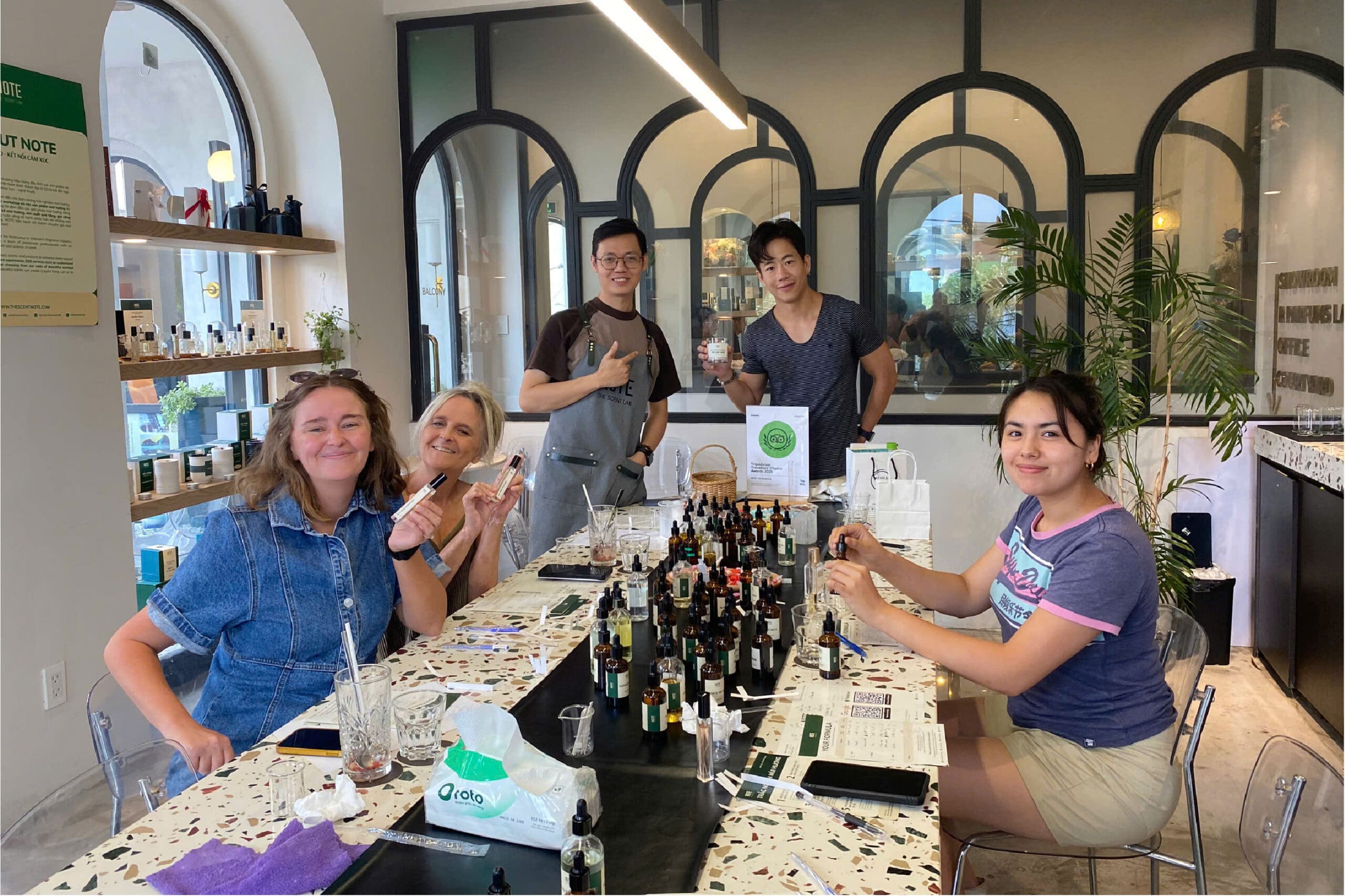
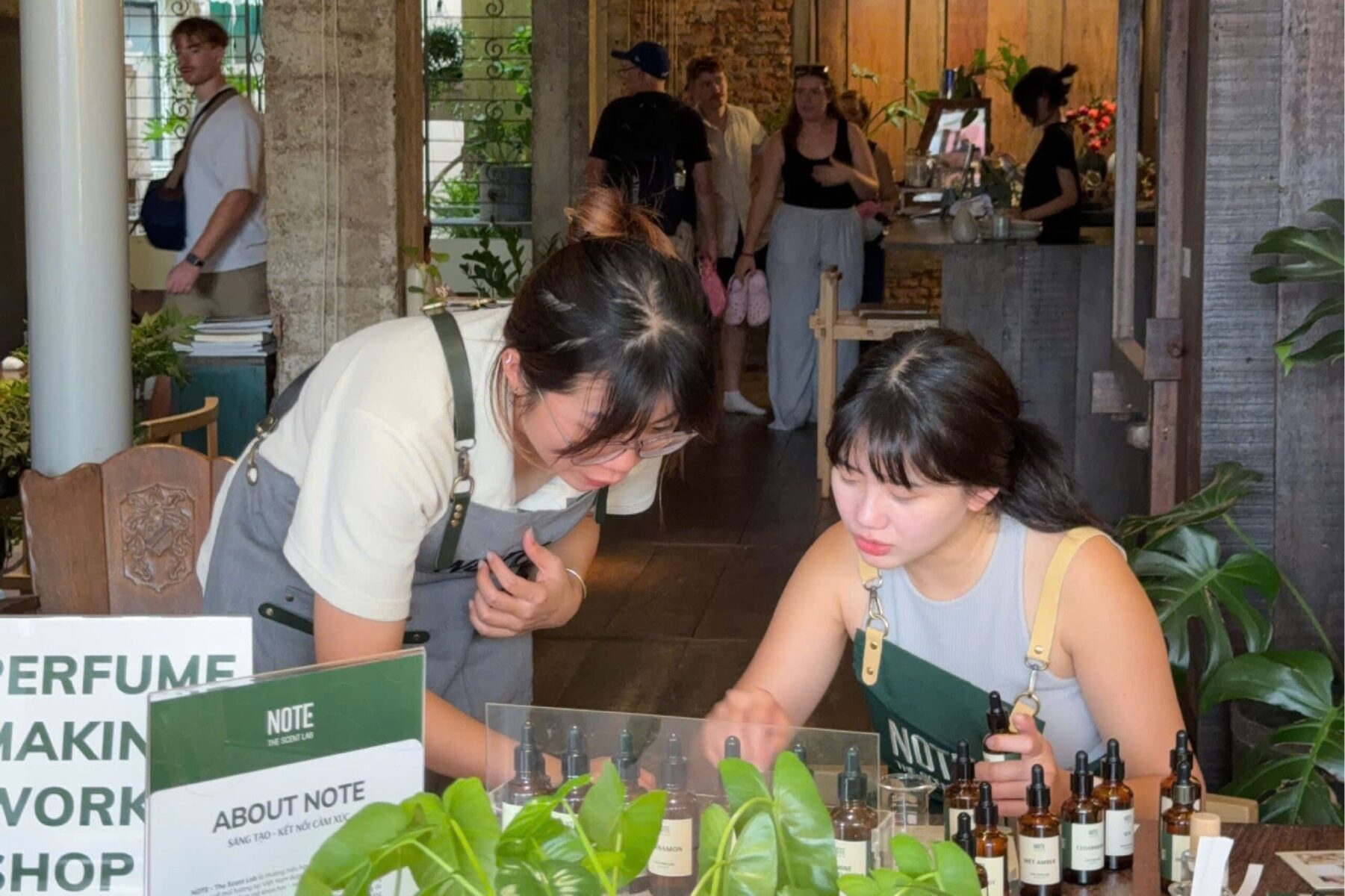
Travelers reach our perfume workshop carrying these scents in their hair, their luggage, their memory. We hand them strips of paper. The strips are labelled in small English and Vietnamese letters: bergamot, petitgrain, vetiver, amber, frangipani, oakmoss. They smell each one slowly. They build a fragrance — top, heart, base — from 30+ professional ingredients, all IFRA-compliant, all expert-curated.
For travelers who arrived from Da Nang, the patterns repeat. The pomelo strip stops them. The amber strip stops them again. Vetiver makes them quiet. Then they start blending — citrus on top, spice in the middle, sandstone-warm amber at the base — and ninety to one hundred and twenty minutes later they leave with a 10ml to 50ml bottle (prices typically start around 550,000 VND / $24 USD for 10ml) that carries the whole trip in five drops.
One traveler from Berlin told us last March: I think I just bottled the river breeze.
“I really love all the gorgeous smells. Zang helped me a lot how to make my very own scent”
— Pioneer07851527510, TripAdvisor ★5
“I loved my fragrance making experience. I have a beautiful souvenir to take home and every time I smell it, I will remember Saigon. Thanh was an excellent teacher”
— herbaljo, TripAdvisor ★5
“Ember and Maria did an amazing job explaining the perfume wheel and how all the scents go together. This perfume will always remind us of this trip in Vietnam”
— An L, TripAdvisor ★5
Why we mention the river in the workshop
Our instructors at the 42 Nguyễn Huệ studio in District 1 — a small space on Floor 3 (Vietnamese “Lầu 2,” 2 levels up from the ground floor) of the Cafe Apartment — have heard travelers talk about Da Nang for years. They have learned the questions to ask. What did the air smell like at sunset? What did you eat on the river? What did you bring home in your bag? The answers, more often than not, point at citrus and old stone. So we keep both on the bench.
If you also stopped in Hanoi on your trip, our. The materials are identical across all three NOTE locations. Only the city outside the window changes.
Continuing the thread: from Da Nang to your last day
Most travelers leaving Da Nang fly south to Saigon or north to Hanoi. Both cities continue the Cham thread in different ways. Saigon’s old streets carry the southern echo of trade routes that ran from Champa to the Mekong. Hanoi’s quiet lakes hold a slower version of the same coastal memory. Whichever direction you go, do not waste your last day.
If your final day is in Saigon, we wrote a guide to what to do on your last day in Ho Chi Minh City — markets, river walks, and the workshop slot that fits between lunch and your evening flight. If you are heading north first to explore other regions, our piece on hidden gems in Da Nang beyond the Golden Bridge covers the Son Tra Peninsula and Cu Lao Cham angles in detail.
For the curious — the travelers who want to understand what Vietnamese ingredients actually carry — our notes on Vietnamese botanicals, wellness, lotus and agarwood map the same scent geography from a different angle.
Frequently Asked Questions about Da Nang Cham heritage
What is the best way to experience Da Nang Cham heritage in one day?
Start at the Museum of Cham Sculpture on Bach Dang Street in the morning, when the galleries are quiet and the light is soft. Then drive ninety minutes south to My Son Sanctuary for the afternoon — temples in the foothills, dating from the 4th to the 13th centuries. Return to Da Nang for sunset on the Han River. The breeze, the sandstone smell, the citrus from inland orchards — they connect across the day if you let them.
How much does Cham Museum admission cost in 2026?
As of early 2026, admission to the Da Nang Museum of Cham Sculpture is typically around 60,000 VND per person, with free entry on certain Vietnamese holidays such as Liberation Day, Hung Kings’ Commemoration Day, and National Day (September 2). Hours generally run 7:30 AM to 5 PM daily. Confirm current schedule on the museum’s official channels before you visit.
Can I visit Quang Nam citrus orchards as a tourist?
Yes, but informally. The Tien Phuoc and Duy Xuyen districts have family-run pomelo and orange orchards that occasionally welcome visitors during harvest season — November through February. There is no formal tourist program. You will need to hire a private car and driver from Da Nang, ask in advance, and bring small bills for any fruit you buy. If the inland trip is too far, Han Market in central Da Nang sells Quang Nam citrus daily.
When does the Dragon Bridge fire and water show happen?
The Dragon Bridge typically performs its fire and water show on Friday, Saturday, and Sunday nights at 9 PM, plus special Vietnamese holidays. For the Lunar New Year 2026, nightly shows ran from February 13 to February 22 (Tet 2026). The east bank near the dragon’s tail offers the best vantage with fewer crowds. Arrive by 8:30 PM for a clear view. Schedules can shift — check current listings before you plan your evening.
Where can I make a perfume that captures my Da Nang trip?
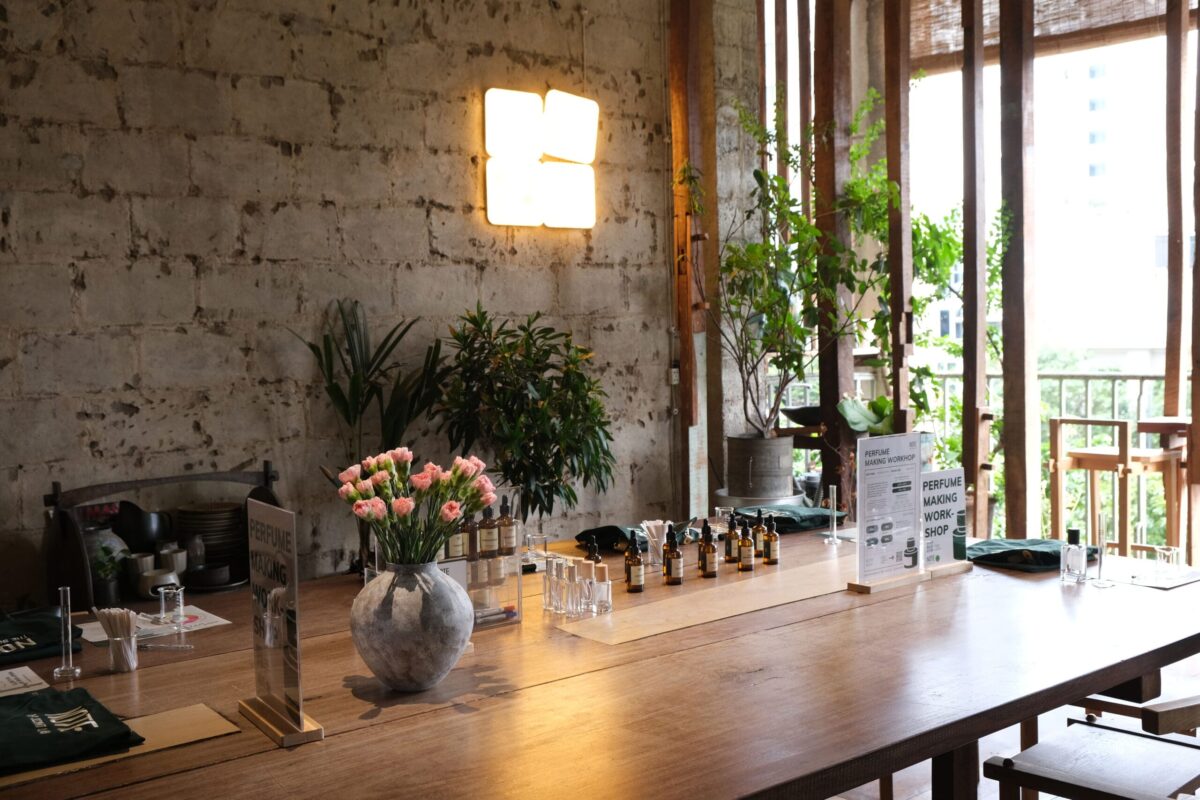
NOTE – The Scent Lab runs 90 to 120-minute perfume workshops in Saigon (42 Nguyễn Huệ District 1, and 34 Nguyễn Duy Hiệu in Thảo Điền) and Hanoi (. All three studios carry 30+ IFRA-compliant ingredients including bergamot, vetiver, amber, and frangipani — the building blocks of the Da Nang Cham heritage scent profile we describe in this guide. Bottles range from 10ml (around 550,000 VND / $24 USD) to 50ml. Book at workshop.thescentnote.com/book/.
Is My Son worth the day trip from Da Nang?
For travelers interested in Cham culture, yes — strongly. My Son Sanctuary is a UNESCO World Heritage Site and the spiritual heart of the former Champa Kingdom. The temples date from the 4th to the 13th centuries. The drive takes about ninety minutes each way. Go early in the morning to avoid heat and crowds. Allow at least three hours on site. If you only have time for the Cham Museum in the city, that is also a meaningful introduction — but My Son delivers something the museum cannot: the scale, the silence, and the smell of the original landscape.
What time of year captures Da Nang Cham heritage best?
February through May offers dry weather, soft light, and citrus season tail-ends in Quang Nam orchards. October to November is typhoon season — avoid for outdoor temple visits. December through January brings cool evenings on the Han River and full pomelo season inland. For travelers wanting the breeze-and-citrus combination we describe here, late February to early April typically delivers the best layered air.
Last day on the road: from Da Nang to your final hours
Travelers leaving central Vietnam usually fly out from either Saigon or Hanoi. We have written separate guides for each. If your last day is in Ho Chi Minh City, our last-day Saigon itinerary threads markets, river walks, and a workshop slot into the hours between lunch and a late-evening departure. If you wrapped your trip in Da Nang itself and want one final inland angle, our piece on hidden gems in Da Nang covers the Son Tra Peninsula sunrise drives and the Cu Lao Cham island day-trips most visitors miss.
Find NOTE – The Scent Lab
- 📍 42 Nguyễn Huệ, District 1, Saigon — Floor 3 (Vietnamese “Lầu 2” — 2 levels up from the ground floor), Cafe Apartment building. Get directions → · TripAdvisor · Watch direction video on TikTok →
- 📍 34 Nguyễn Duy Hiệu, Thảo Điền, Saigon — quieter Thảo Điền studio. Get directions → · TripAdvisor · Watch direction video on YouTube →
Workshop: 120 minutes · 30+ IFRA-compliant notes · from · Book your workshop →
Looking for a take-home keepsake from Vietnam beyond the workshop? Browse NOTE’s handcrafted fragrance collection at thescentnote.biz · Follow @note.workshop on Instagram.
A thousand-year breeze, bottled
The Cham kingdom fell. Indrapura crumbled. The Golden Age of stone-carving ended around 982. But the geography stayed. The river still runs. The orchards still bloom. The sandstone still warms at noon and cools at dusk. And every evening, on the east bank of the Han River, a breeze gathers the whole story — citrus, salt, terracotta, a thousand years — and carries it across to the people standing on the other side.
Some places do not fit in a suitcase. They fit in a bottle.
This article is provided for general informational and reference purposes only. Information was accurate at the time of writing (May 2026) but may change without notice. Opening hours, prices, transit schedules, and availability for venues outside NOTE – The Scent Lab can change without notice — please verify with official websites, TripAdvisor, or Google Maps before your visit. We do not guarantee accuracy and are not responsible for outcomes based on outdated information.