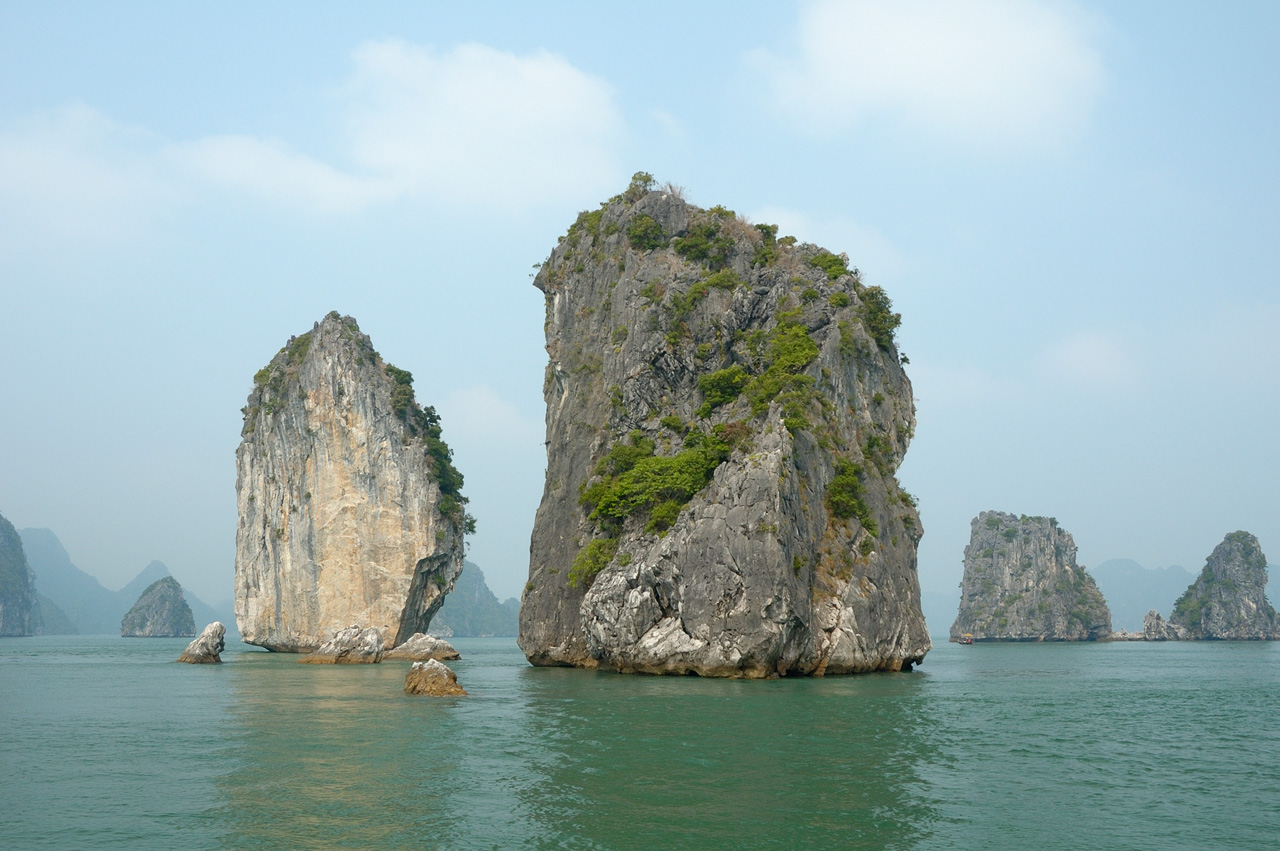

Looking for Ha Long hidden gems beyond the cruise port? The Ha Long hidden gems most travelers miss live in the quieter karst arms — Lan Hạ Bay’s emerald coves, Cát Bà island’s rainforest interior, Bãi Tử Long’s empty shipping lanes, and the kayak channels behind Sửng Sốt Cave. NOTE – The Scent Lab is a perfume workshop in Hanoi and Saigon, Vietnam (). Many North Vietnam travelers end their loop in Hanoi with a 120-minute scent-making session. They bottle sea salt, sun-dried squid, and the karsts’ damp-stone smell into a fragrance that fits in a carry-on. But first — Ha Long Bay asks you to stop ticking boxes.
nn
The salt arrives before the boat does. Step onto the pier at Bến Bính in Hải Phòng at 7 AM and the air is already moving. Sea salt mixed with diesel boat fuel. The resinous warmth of dried squid hung from a bamboo pole. Somewhere a mineral whisper of limestone you can almost taste. Engine bells. A mate calling instructions. The horizon hazy with karst stacks. Among the Ha Long hidden gems most travelers miss, this dawn-pier moment is one of the quieter ones.
nn
This is Ha Long beyond the Instagram cliché. The Ha Long that doesn’t fit on a one-night-cruise itinerary. These seven hidden spots are for travelers who already know the headline routes. They want the bay locals actually live in. That sense of room to breathe is what makes these Ha Long hidden gems feel different.
nn
A note before you read: This guide is based on our team’s research and visits as of May 2026. Prices, hours, transit schedules, and venue availability change — please treat the specifics as a starting point, not a guarantee, and verify with official sources before booking. The only thing we can vouch for absolutely is the perfume workshop at NOTE.
nnn

nn
Ha Long Hidden Gems: Why the Bay Rewards Travelers Who Skip the Cliché
nn
Ha Long Bay has a reputation problem. Most visitors arrive on a half-day bus from Hanoi. They pile onto a same-day or one-night cruise. They photograph the same three karst silhouettes everyone else photographs. The Ha Long hidden gems list usually skips this — and that’s the point.
n
 n
nnnn
The Ha Long that stays with you reveals itself on day three. Kayak channels behind the famous caves. Floating villages where children paddle to school. Cát Bà island’s rainforest with langurs you might actually spot. According to UNESCO’s recent extension of the World Heritage listing to the Cát Bà Archipelago, the area’s quieter arms are now formally part of the same protected site. These Ha Long hidden gems reward a slow visit far more than a quick photo stop.
nn
What makes Ha Long different is sensory layering. Most coastal destinations smell of salt and sand. Ha Long smells of salt, diesel, sun-dried squid, and limestone after rain. Travelers who stay three nights almost always wish they’d booked four. Travelers researching Ha Long hidden gems often find the bay’s better arms last, not first.
nn
Ha Long Hidden Gems #1: Lan Hạ Bay — The Quieter Sister Bay
nn
Lan Hạ Bay sits south of the headline cruise corridor. Most travelers only learn it exists after their trip is over. Lan Hạ is not a separate place — it’s the same UNESCO-protected karst landscape with a fraction of the boat traffic. Around 400 limestone islands. Sandy crescents tucked between cliffs. Fishing villages that still actually fish. It’s why our Ha Long hidden gems write-ups keep returning here.
nn
Cruise companies departing from Cát Bà island typically run two-day-one-night routes through Lan Hạ. These overlap less with the Ha Long City fleet. As a result, you’ll often find yourself anchored in a cove with one or two other boats instead of fifteen. The Three Peach Beach (Ba Trái Đào) is a Lan Hạ favourite — a small sand strand backed by three pyramid karsts, often quiet enough to feel borrowed.
nn
Boats from Bến Bính pier in Hải Phòng to Cát Bà town typically depart through the morning. One-way tickets ran around 200,000-300,000 VND in early 2026. Confirm operator and schedule on the day. From Cát Bà town, kayak rentals cluster around Bến Bèo pier and run roughly 100,000-200,000 VND per hour. We wrote a full Ha Long and Cát Bà off-beat itinerary with timing, route order, and the small details that turn this from a checklist into a story.
nn
Ha Long Hidden Gems #2: Cát Bà Island National Park — The Bay’s Green Lung
nn
Cát Bà is the largest island in the bay. It’s also the only one with a national park’s worth of rainforest and a critically endangered langur. Most cruise tourists never set foot here. They cruise around Cát Bà; they don’t cruise into it. Anyone serious about Ha Long hidden gems should put this near the top of the list.
nn
The Cát Bà National Park trailhead is roughly 15 kilometers from Cát Bà town. Park entry typically costs around 80,000-150,000 VND in early 2026, according to recent visitor reports on TripAdvisor. The classic Kim Giao trail is a hard 2-3 hour climb to a lookout. It’s slippery in the rainy season, breath-taking on a clear day. The longer Việt Hải village trek crosses to a fishing community on the far side of the island.
nn
The park is also home to the Cát Bà langur, one of the rarest primates on earth. Sightings are rare and unpredictable. Bring binoculars. Hire a ranger guide. Accept that the langur sometimes wins the morning. Pair this with the other Ha Long hidden gems on this list and the bay begins to make sense as an ecosystem.
nn
Ha Long Hidden Gems #3: Bãi Tử Long Bay at Sunrise — The Empty Karst Frontier
nn
Bãi Tử Long Bay begins where Ha Long Bay ends. It stretches northeast almost to the Chinese border. Same geology, same UNESCO-adjacent protection, a fraction of the cruise traffic. Every guidebook lists Sửng Sốt Cave; almost none mention Bãi Tử Long. That’s the rhythm of Ha Long hidden gems done well — slow, sensory, never rushed.
nn
Cruises into Bãi Tử Long typically depart from Cẩm Phả or Hòn Gai port. These are not the busy Tuần Châu marina that serves Ha Long City. Expect fewer English-language operators and smaller boats. Itineraries stop in working fishing villages instead of staged photo islands. The cruise corridor opens up dramatically — you’ll often see five or six karsts and not a single other boat.
nn
Bái Tử Long National Park information centers are typically open through the morning and early afternoon. Park access fees were around 40,000 VND in early 2026 — confirm at the gate. Sunrise on the deck of a Bái Tử Long boat is the moment to put down the camera. Mist on the water. The karsts fading from black to silver to amber. Fishermen pulling nets in the middle distance. Our Ha Long hidden gems research kept circling back to this corner of the seascape.
nn
Ha Long Hidden Gems #4: Kayak Routes Behind Sửng Sốt Cave — Where Cruise Tourists Don’t Go
nn
Sửng Sốt Cave (Surprise Cave) on Bo Hon Island is the most-visited grotto in the bay. Most visitors do exactly what the day-tour boats do. Walk in, walk through, walk out. Forty-five minutes. They miss the part where the bay actually opens up. These small details are why the Ha Long hidden gems here stick in memory.
nn
Skip the daytime queue if you can. Most overnight cruises stop at Sửng Sốt around 3-4 PM, when the day-trippers have already left. Better still, ask your boat to drop kayaks beyond the cave’s far exit. The water back there is the colour of jade glass. The walls rise sheer from the sea. Twenty minutes of paddling delivers you into a hidden lagoon the cruise boats can’t reach. Kayak rentals on most overnight cruises are typically included or run around 150,000 VND per hour.
nn
For travelers without an overnight booking, Hồ Ba Hầm — the Three Tunnels Lagoon — is the other big payoff. You enter through a tide-dependent stone arch only navigable on a kayak. Then a short cave. Then a circular lagoon ringed by 100-meter cliffs. Day-tour operators in Tuần Châu marina can arrange this with advance notice. Among the Ha Long hidden gems we keep returning to, Hồ Ba Hầm reads first on the kayak list.
nn

nn
Ha Long Hidden Gems #5: Cửa Vạn Floating Village — Where the Bay Eats and Smells Like Itself
nn
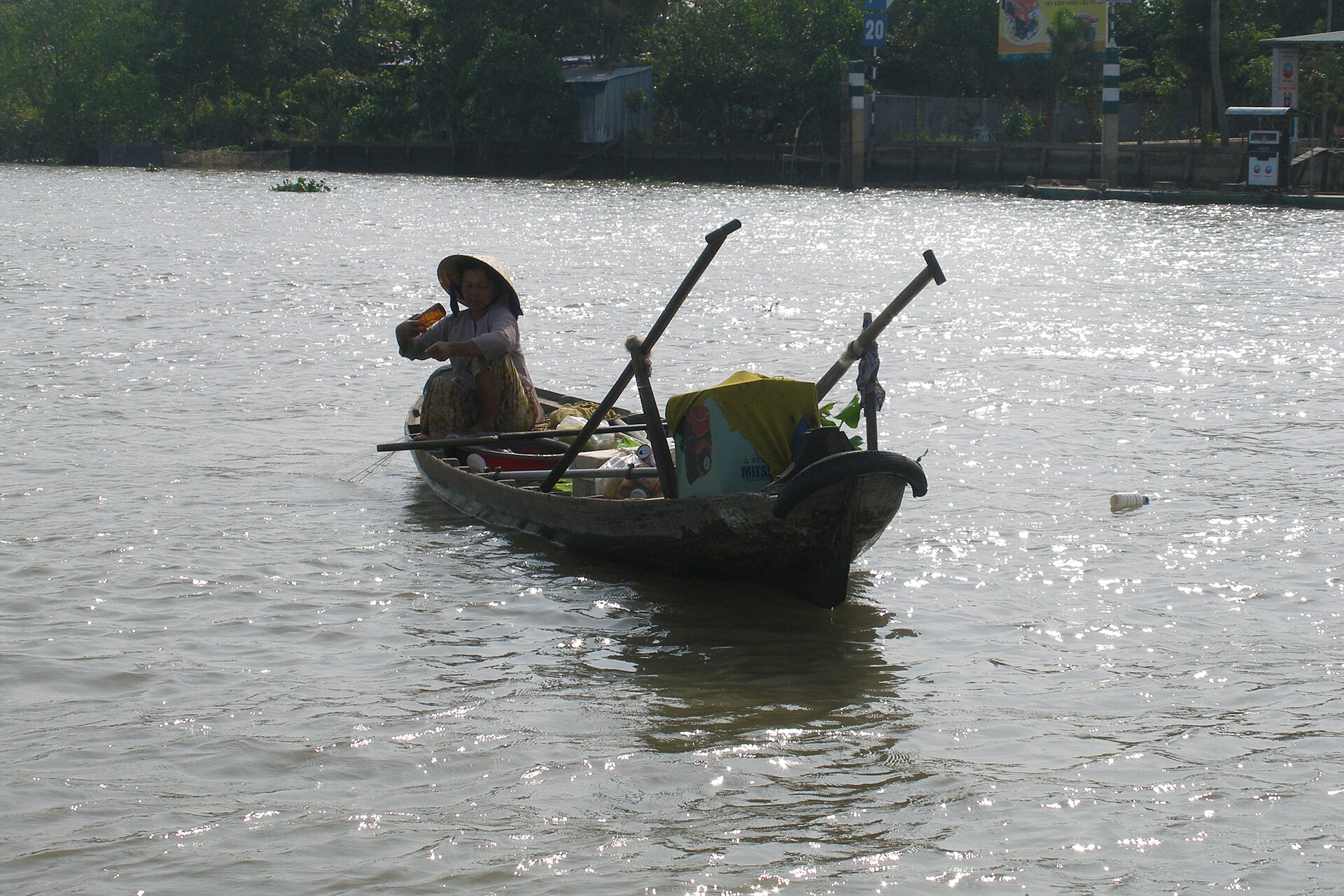
Cửa Vạn is the largest of the bay’s surviving floating fishing communities. It’s also the most overlooked sensory experience in the area. Wooden houses anchored to the karst walls. Schoolchildren paddling between buildings. Fish farms fenced into the lagoon. The morning haul slapped onto blue plastic crates. That feeling — that you’ve been let in on something — is what Ha Long hidden gems are for.
nn
What you’re there for, mostly, is sun-dried squid. The bay’s signature snack. Splayed flat on bamboo racks. Dried in salt air for a day or two. Then grilled on charcoal until the edges curl. The smell is impossible to describe and impossible to forget. Sweet, smoky, briny, faintly fermented. A whole grilled squid plus a small beer at a floating-village restaurant typically costs around 100,000-150,000 VND in early 2026. Few Ha Long hidden gems pages mention the squid; most travelers find it by accident.
nn
Beyond the squid, look for ốc len (sea snails simmered in coconut milk and chili), bún chả cá Hạ Long (fish-cake noodle soup unique to Quảng Ninh province), and chả mực (the bay’s signature pounded squid patty). Cửa Vạn tours typically depart from Tuần Châu marina with the standard cruise fleet. The best Ha Long hidden gems aren’t promoted — they’re discovered while you’re chewing something you didn’t know existed.
nn
For a deeper dive into the bay’s salt-and-squid aromatic profile, our scent guide to Ha Long’s coastal aromatics traces the connection between karst, water, and table.
nn
Ha Long Hidden Gems #6: Yên Đức Heritage Village — A Rural Counterpoint to the Cruise
nn
About 40 kilometers inland from Ha Long City sits Yên Đức village. A 700-year-old farming community. Surrounded by jagged inland karsts that feel like the bay’s mountains have wandered ashore. Lonely Planet describes the broader Quảng Ninh region as one of Vietnam’s most underrated cultural landscapes. Yên Đức is the proof. Almost no foreign visitors come here. Most travelers chasing Ha Long hidden gems skip the inland small details that make the cruise itself feel deeper.
nn
The ride out is half the point. Hire a Grab car or join a half-day tour from Ha Long City. The road winds past rice fields, lotus ponds, and small footbridges. Flocks of ducks waddle across paddy. The pace forces itself on you. Bring water, bring a hat, give yourself half a day. This is a Ha Long hidden gems entry that improves with company.
nn
The village runs craft demonstrations — rice-pounding, conical-hat weaving, water-puppet shows on a small village pond. Tours typically include lunch at a local family’s home. Prices fall in the range of 600,000-900,000 VND per person, depending on group size and inclusions. Sit on the family’s veranda afterwards. The village isn’t going anywhere. Real Ha Long hidden gems are like that — the kind you only notice when you’ve slowed down.
nn
Ha Long Hidden Gems #7: Ti Tốp Island Sunrise Climb — The Photo Spot Without the Crowd
nn
Ti Tốp Island was named after Soviet cosmonaut Gherman Titov, who visited in 1962. It’s the most-photographed climb in Ha Long Bay. A short concrete staircase up to a 360-degree viewpoint. Most cruises stop here mid-morning. So most travelers arrive in a queue. That’s the case for these Ha Long hidden gems as much as any place we’ve written.
nn
The trick is the early-morning slot. Overnight cruises that anchor near Ti Tốp can typically arrange a 6:00 or 6:30 AM tender ashore. Most do this on request, though it’s not on the standard itinerary. You’ll have the staircase to yourself. Watch the bay come up out of the dark. Pink, then peach, then bronze. Then the full-color karst panorama before the day-trip boats arrive. The small swimming beach at the base of the island is empty at this hour.
nn
Allow 60-90 minutes ashore. Combine the climb with a 15-minute swim before breakfast. You’ll have done more by 8 AM than most of the bay’s visitors do all day. Treat the Ha Long hidden gems list as a starting point, not a checklist.
nn
From Ha Long to Hanoi — and Then to the Workshop
nn
Most travelers reach Ha Long as part of the North Vietnam loop. Hanoi in, Ha Long for two or three nights, then onward south. The Ha Long-to-Hanoi leg is the most common return route. Limousine vans typically run the 165-kilometer trip in 2.5 to 3 hours. Fares were around 250,000-350,000 VND per seat in early 2026. Expressway buses are cheaper and slower.
nn
If your trip continues to Ninh Bình, our guide to Ninh Bình’s hidden gems beyond Tam Cốc covers the limestone river valleys and dynasty pagodas that pair naturally with what Ha Long has just slowed you down for. The two regions are different temperaments. Ha Long is sea and salt and karst-meets-water. Ninh Bình is karst-meets-river. Travelers who do both in sequence almost always say the combination is the trip.
nn
n Plan Your North Vietnam Loop →n
nn
Why Ha Long Smells Different — and How to Take It With You
nn
Spend three days in the bay and you’ll start to recognize a particular fragrance you can’t quite place. It’s not perfume in the modern sense. It’s the bay’s atmospheric chord. Sea salt from the open water. Diesel and engine grease from the working fleet. Sun-dried squid hung from village racks. The resinous smoke of charcoal grills. Underneath all of it, the cool damp-stone smell of limestone karst that has held its shape for half a billion years.
nn
This is where the workshop conversation begins. Travelers who’ve spent time in Ha Long often arrive in Hanoi already half-thinking about scent. NOTE – The Scent Lab runs a 120-minute hands-on perfume workshop. You build a custom fragrance from 30+ professional-grade IFRA-compliant ingredients. The library includes marine and mineral notes — sea salt, oakmoss, vetiver, sandalwood — that echo the Ha Long air. Workshops start from $24 for a 10ml take-home bottle (around 550,000 VND). Sizes go up to 50ml. The studio is. It sits insideCafe Apartment 42 Nguyễn Huệ in Saigon (Floor 3 — Vietnamese “Lầu 2,” 2 levels up from the ground floor) and at 34 Nguyễn Duy Hiệu in Thảo Điền.
nn
This isn’t a souvenir in the postcard sense. It’s a 50ml of the Tonkin coast you can take through airport security. The workshop provides a leak-protection zip pouch — cabin pressure turns most travel atomizers into luggage-stainers. The formula card you take home means you can recreate the scent later, in your kitchen in Melbourne or Berlin, when you want to be back on the Cửa Vạn pier for ten minutes.
nn
n
“The staff is very informative and patient. I’m so proud of coming up the scent I really like even though it’s my first time. A must try in Hanoi.”
n — Lynnell, TripAdvisor ★5n
nn
n
“This is a not-to-miss experience! We enjoyed every moment. Vy was so helpful and taught us so much about scent pairing. I will do this again when I’m in Hanoi!”
n — Seneca C, TripAdvisor ★5n
nn
n
“Such a fun experience — learned so much about perfume and the staff were so patient and knowledgeable, especially Sophia. Now have a great keepsake from our Hanoi trip!”
n — Lucy W, TripAdvisor ★5n
nn
If your North Vietnam trip ends in Hanoi, our last-day Vietnam itinerary linking Ha Long through Hanoi to a Tây Hồ workshop covers exactly how to thread the bay experience into a final-day workshop without rushing.
nn
n Book Your Perfume Workshop in Hanoi →n
nn

nn
Practical Tips for Your Ha Long Trip
nn
Best time to visit: March through May is the sweet spot — calm seas, mild temperatures around 22-28°C, and dry days. October to November is the second sweet spot. Avoid late June through August (typhoon season). Winter is cool and atmospheric, though the karsts shift toward grey.
nn
Getting there from Hanoi: Limousine vans run the 165-kilometer route to Ha Long City in 2.5-3 hours. Fares fall around 250,000-350,000 VND per seat. From Cát Bà, the cheapest route is the express bus from Hanoi to Hải Phòng, then ferry to Cát Bà town (combined journey roughly 4-5 hours).
nn
How long to stay: A one-night cruise is the minimum for any sense of the bay. Two nights is the right length for Lan Hạ or Bái Tử Long. Three nights, if you can spare them, is ideal — adds a Cát Bà island day for the national park.
nn
Where to embark: Tuần Châu Marina is the largest cruise port and serves most Ha Long City operators. Bến Bính pier in Hải Phòng is the gateway for Cát Bà island and Lan Hạ Bay. Cẩm Phả and Hòn Gai serve the quieter Bái Tử Long routes.
nn
Booking ahead: Cruises in peak season (March-May, September-November) sell out fast. Book at least two weeks ahead during these windows. Avoid the absolute cheapest operators — the bay’s safety record matters.
nn
Heading Back to Hanoi After Ha Long?
n
Most travelers who do the bay end their North Vietnam trip in Hanoi. If you’re flying out of Nội Bài, save your last morning for something memorable. Many travelers book a perfume workshop on their last day in Hanoi — it takes 120 minutes. The studio. You leave with a one-of-a-kind 10-50ml bottle that fits in carry-on.
n
nn
Frequently Asked Questions
nn
What are the best Ha Long hidden gems beyond the standard cruise?
n
The top hidden spots include Lan Hạ Bay (the quieter sister bay), Cát Bà Island National Park (rainforest, langurs, the Việt Hải village trek), Bái Tử Long Bay at sunrise, the kayak channels behind Sửng Sốt Cave and Hồ Ba Hầm lagoon, Cửa Vạn floating fishing village, the inland Yên Đức heritage village, and an early-morning Ti Tốp Island climb before the day boats arrive. These off-the-beaten-path destinations let you experience the bay’s UNESCO geology beyond the standard one-night cruise.
nn
How many days do you need in Ha Long Bay?
n
One overnight cruise is the absolute minimum. Two nights is the right length for Lan Hạ or Bái Tử Long. Three nights is ideal — it adds a full Cát Bà island day for the national park. Travelers who stay only one night almost always say they wish they’d booked another.
nn
Is Lan Hạ Bay better than Ha Long Bay?
n
Lan Hạ Bay isn’t strictly better — it’s the same UNESCO-protected karst landscape with a fraction of the boat traffic. If your priority is fewer cruise crowds, Lan Hạ wins. If you want the headline silhouettes from every brochure, Ha Long City’s main corridor still delivers them. Many travelers split a three-day itinerary between both.
nn
When is the best time to visit Ha Long Bay?
n
March through May is the sweet spot — calm seas, mild temperatures, and dry days. October to November is the second-best window. Avoid late June through August when typhoons can cancel cruises. Winter (December-February) is cool and atmospheric, though the karsts shift toward grey.
nn
How do I get to Cát Bà Island from Hanoi?
n
The most common route is express bus from Hanoi to Hải Phòng (around 2 hours), then ferry from Bến Bính pier to Cát Bà town (around 1 hour). Combined fares were around 250,000-400,000 VND per person in early 2026. Direct combo tickets are also available through hotels and tour agencies. Confirm departures on the day of travel.
nn
What is Ha Long’s signature dish?
n
Chả mực — a pounded squid patty unique to Quảng Ninh province, eaten with sticky rice. Try it at a Cửa Vạn floating restaurant or at any Hạ Long City stall where the queue is mostly local. A grilled-squid plus a small beer typically costs around 100,000-150,000 VND. Eat it where the fisherman is grilling it himself.
nn
Is Ha Long Bay worth visiting if I’m short on time?
n
Yes, but one overnight cruise minimum. A same-day bus tour reduces the bay to a checklist. The bay’s character only opens up once you’ve slept on the water. If you absolutely have only one day, take the express limousine from Hanoi, do a deluxe day-cruise, and accept that you’ll come back. Most travelers do.
nn
Can I bring perfume from Vietnam home on a plane?
n
Yes — perfume bottles up to 100ml are TSA carry-on compliant when sealed in a quart-size zip bag. NOTE workshop bottles range 10-50ml, well within limits. Cabin pressure can occasionally cause atomizers to leak. NOTE provides every guest with a complimentary leak-protection zip pouch as part of the workshop. The take-home formula card lets you recreate the scent later, anywhere.
nn
Looking for a scent souvenir you don’t have to make yourself? NOTE also offers ready-made perfumes, home fragrances, and gift sets for travelers without the time for a workshop. Browse the online store — popular picks for North Vietnam travelers include the sandalwood-and-lotus rollerball and the marine-and-vetiver room spray.
n
nn
Some places don’t fit in a suitcase. They fit in a bottle.
n
nn
Find NOTE – The Scent Lab
n
- n n
- 42 Nguyễn Huệ (Cafe Apartment, District 1, Saigon) — Floor 3 (Vietnamese “Lầu 2” — 2 levels up from the ground floor) · Get directions → · TripAdvisor
- 34 Nguyễn Duy Hiệu (Thảo Điền, Saigon) — Get directions → · TripAdvisor
n
n
n
How to find us:
n
- n
- ? — Watch direction video on YouTube →
- ? 42 Nguyễn Huệ — Watch direction video on TikTok →
- ? 34 Nguyễn Duy Hiệu — Watch direction video on YouTube →
n
n
n
n
n
Book your workshop → · Workshops are conducted in English. Vietnamese also available for local guests.
n
nn
This article is provided for general informational and reference purposes only. Information was accurate at the time of writing (May 2026) but may change without notice. Opening hours, prices, transit schedules, and availability for venues outside NOTE – The Scent Lab can change without notice — please verify with official websites, TripAdvisor, or Google Maps before your visit. We do not guarantee accuracy and are not responsible for outcomes based on outdated information.
n