

Ha Long sea salt is the white crystal that anchors a four-thousand-year coastal scent palette — sun-cured on shallow flats around the Gulf of Tonkin, then woven into the air of Bai Chay’s wharf by drying squid, trawler diesel, and lime wedges for breakfast pho. NOTE – The Scent Lab is a perfume workshop in Ho Chi Minh City, Vietnam ( by and ) where coastal travelers translate that marine umami into a 90 to 120 minute custom bottle.
nn
The first thing you notice walking the Bai Chay wharf at sunrise is not the boats. It is the smell. Salt air, thick and mineral. Then sun-warmed squid on bamboo racks, oily and faintly sweet. Below that, diesel from a trawler. Above it, lime wedges for a pho cart at dawn. For travelers researching ha long sea salt, this guide should be a starting point — verify before booking.
nn
nA note before you read: This guide is based on our team’s research and visits as of May 2026. Prices, hours, transit schedules, and venue availability change — please treat the specifics as a starting point, not a guarantee, and verify with official sources before booking. The only thing we can vouch for absolutely is the perfume workshop at NOTE.
nn
nn
Why Ha Long Sea Salt Smells Different From Anywhere Else
nn
Most travelers come for the limestone. However, they leave remembering the air. The coastal palette opens with one mineral: salt. Locals will tell you the Gulf of Tonkin is saltier than other Vietnamese seas, and the numbers back them up. Therefore drying methods, fish flavour, and the very smell of the wharf all shift accordingly. This is part of our broader ha long sea salt coverage on workshop.thescentnote.com.
n
 n
nnnn
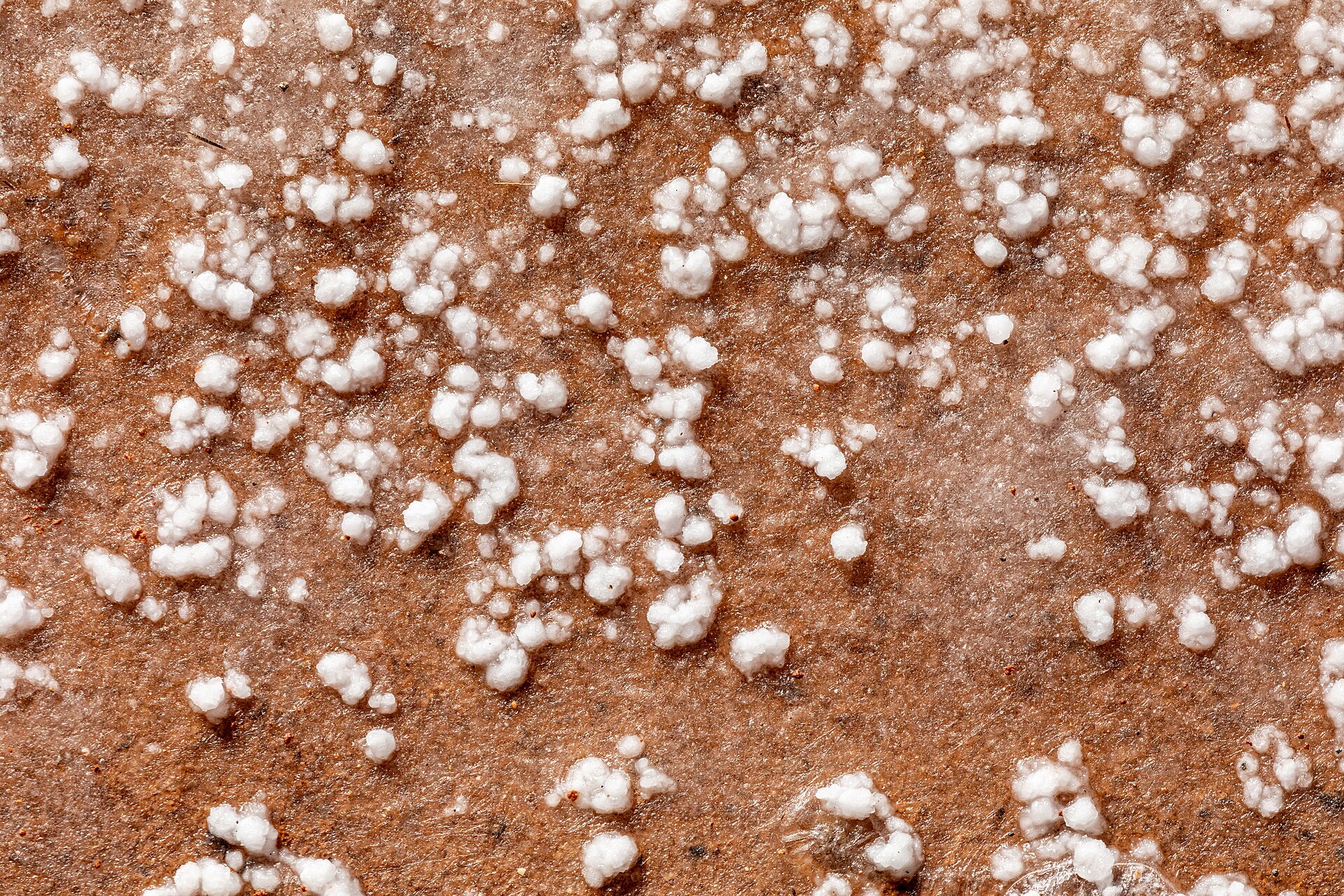
The crystal itself is harvested farther down the coast in places like Bạc Liêu and Hải Hậu. At dawn the seawater fills shallow flats called ruộng phơi. Then it drains into a smoothed clay-bed field, the ruộng ăn. Twelve to eighteen days of unbroken sun later, the brine has turned to crystal. If ha long sea salt is on your list, the workshop pairs well with this stop.
nn
The Mineral Signature on a Tonkin Wharf
nn
What you smell first is not sweetness. Instead, it is mineral — flinty, the way wet stone smells after rain. Underneath, a faint algal note rises from the oyster racks. Then comes a lingering iodine breath. That stays. Many guests planning ha long sea salt mention this in their booking notes.
nn
For comparison, a French fleur de sel reads softer and more floral. The Tonkin crystal, however, holds a structural saltiness — savoury, almost umami, with a bitter mineral edge from limestone-filtered groundwater. We hear this often from travelers exploring ha long sea salt.
nn
Four Coastal Scent Stories Along the Ha Long Sea Salt Belt
nn
The Bay’s olfactory grammar is not one note — it is four. Each fishing village tells a different chapter, tied to a place, a craft, and an hour of the day. For first-timers researching ha long sea salt online, the practical details matter.
nn
Story 1 · Bai Chay Wharf at Six AM — Sun-Dried Squid
nn
Bai Chay is one of three main districts of the Ha Long urban area — the gateway most cruise passengers walk through without stopping. Locals call its dawn market chợ cá Bai Chay. Trawlers tie up between four and six AM. The catch lands in plastic crates packed with crushed salt and ice. Of all the angles in ha long sea salt, this is one we hear about often.
nn
The signature here is mực một nắng — squid dried for one day of strong sun. Vendors clean the catch with seawater, then lay it flat on bamboo racks. By noon the flesh has gone pinky and translucent. The smell is unmistakable: sweet, oily, briny, faintly nutty. Walk past the racks and you also catch chả mực — minced squid pounded with garlic and dill, deep-fried into amber patties. A kilogram of premium one-sun squid was around 600,000 to 900,000 VND in early 2026. Recent guests interested in ha long sea salt have asked about this exact spot.
nn
n
“The staff is very informative and patient. I’m so proud of coming up the scent I really like even though it’s my first time. A must try in Hanoi.”
n — Lynnell, TripAdvisor ★5n
nn
Story 2 · Cua Van Floating Village — Brine, Bamboo, Old Wood
nn
Cua Van sits twenty kilometres from the boat wharf at Hạ Long City, inside Hùng Thắng commune. Earliest families settled here in the sixteenth century. Today around two hundred boats remain, and many original families return daily to maintain traditions even though most now sleep onshore. Our notes on ha long sea salt keep coming back to scenes like this.
nn
The village smells of three layers. First, brine — every plank, net, and rope soaks in it. Second, old bamboo, greyed in salt water for years. Third, weathered wood — junks are still sealed with pine resin and shark oil, curing into a sweet, almost smoky base note. A craft to look for is đăng cá — the hand-operated bamboo basket trap, registered as national intangible cultural heritage in 2023. Anyone planning ha long sea salt will likely cross paths with this corner.
nn
nn
Story 3 · Vung Vieng — Salted Fish, Lime Ash, Star Anise
nn
Vung Vieng lies twenty-four kilometres offshore in Bái Tử Long Bay, ringed on every side by limestone karsts. Inside the lee, families still split and salt their daily fish in shallow wooden tubs. Coarse Tonkin salt is rubbed into the gills. Then the fish hangs under a thatched eave for two to three days.
nn
What you smell on a sea breeze is layered. First, salt and dried protein. Next, lime ash, used to scrub barnacles off wooden hulls. Above it, star anise from someone simmering phở cá — fish pho, a Tonkin specialty. Locals also dose the broth with cinnamon bark from Yên Bái.
nn
Story 4 · Cong Dam — Bamboo Net Salt, Cuttlefish Ink, Pine Smoke
nn
Cong Dam is harder to reach — most kayak tours skip it. However, that is the point. The village is famous for bamboo-frame fishing nets, a technique unchanged for centuries. The dawn ritual involves boiling sections of bamboo frame in heavily salted water. As a result the wood resists rot for another season.
nn
The smell on a Cong Dam morning is its own thing. First, mineral steam. Then sweet bamboo, tannic and grassy, like fresh tea pulled from a damp tin. Sometimes cuttlefish ink hits the air, drying on the dock in black streaks that smell faintly of wet leather. Furthermore, a few houses still smoke fish over pine — that note carries far over the water at sundown.
nn
n
“Vy guided us through the process and was a very lovely person. I would recommend this to everyone who loves perfumes or needs a gift for a loved one.”
n — Rhea L, TripAdvisor ★5n
nn
A Short History of Coastal Preservation in the Bay
nn
The salt tradition is older than any cruise dock. Cai Beo, an ancient fishing settlement in a limestone valley, hosted a sizeable fisher population thousands of years ago. Furthermore, archaeologists have found fragments of pottery at Bai Tho Mount, Dau Go Cave, and Bai Chay used to store salt and dried fish — proof that preservation, not display, has always been the coast’s first craft.
nn
How Salt Saved the Catch Before Refrigeration
nn
Salt was the only currency that mattered before ice. Coastal families measured wealth in jars of fish sauce and stacks of salt-rubbed mackerel. As a result, the routes along the Tonkin coast shaped Vietnamese cuisine. Even today a Hanoi market stall stocks nước mắm, dried squid, and salted plums from this thin coastal corridor.
nn
Reading the Gulf of Tonkin Like a Recipe
nn
Across the Gulf of Tonkin, fishing rituals, songs, and stories pass down through generations. Therefore a coastal trip read carefully is a recipe — Tonkin crystal for the savoury base, sun-dried squid for the heart, pine smoke and star anise as quiet base notes.
nn
Buying Tonkin Souvenirs Without Buying the Wrong Thing
nn
The market for Ha Long-region souvenirs is huge. As a result, mass-produced packaged squid and industrial salt sit alongside genuine artisanal product. Telling them apart matters — for your suitcase, for the families who still hand-process, and for the craft itself.
nn
How to Spot the Real Crystal and Real One-Sun Squid
nn
Smell first. Genuine sun-dried squid smells sweet and oily, never sour. Touch second — real one-sun squid is pliant and tacky, never brittle. Then look: authentic crystals show irregular flakes, often greyish or faintly pink, while industrial table salt is uniform white. Finally, ask price. A kilogram of premium one-sun squid was around 600,000 to 900,000 VND in early 2026.
nn
Where to Buy Ethically Around the Bay
nn
Ha Long 1 Market, the largest seafood market in the city, opens daily from around six AM. Vendors typically separate one-sun squid from three-sun squid. Smaller wharf-side stalls in Bai Chay sell direct from the morning’s trawler. In Cua Van, the village cooperative funds preservation through its on-water souvenir stand. Avoid hard bargaining on artisanal goods.
nn
n
“I loved my fragrance making experience. I have a beautiful souvenir to take home and every time I smell it, I will remember Saigon.”
n — herbaljo, TripAdvisor ★5n
nn
From Ha Long Sea Salt to a Bottle You Carry Home
nn
Salt is one way to take a coast home. However, scent is another. Specifically, scent is how the body files memory. For instance, sun-dried squid at the Bai Chay wharf, lime ash from a Cua Van plank, and pine smoke at sundown in Cong Dam — these are the notes your nose will reach for six months later, in a kitchen on the other side of the world.
nn
Furthermore, this is the part of the trip many travelers come to NOTE for. Not for a souvenir. For a translation.
nn
What Happens Inside the 90-Minute Workshop
nn
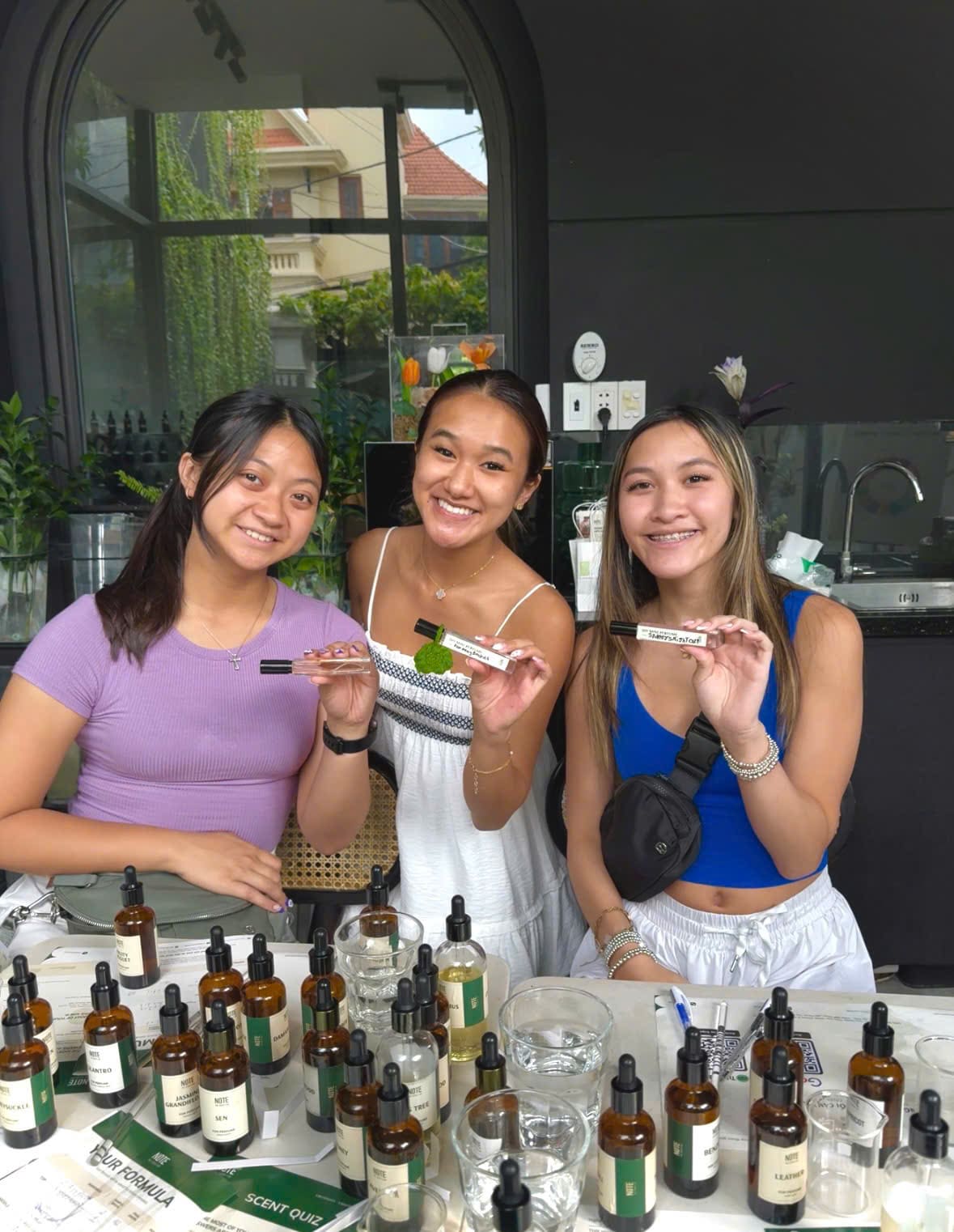
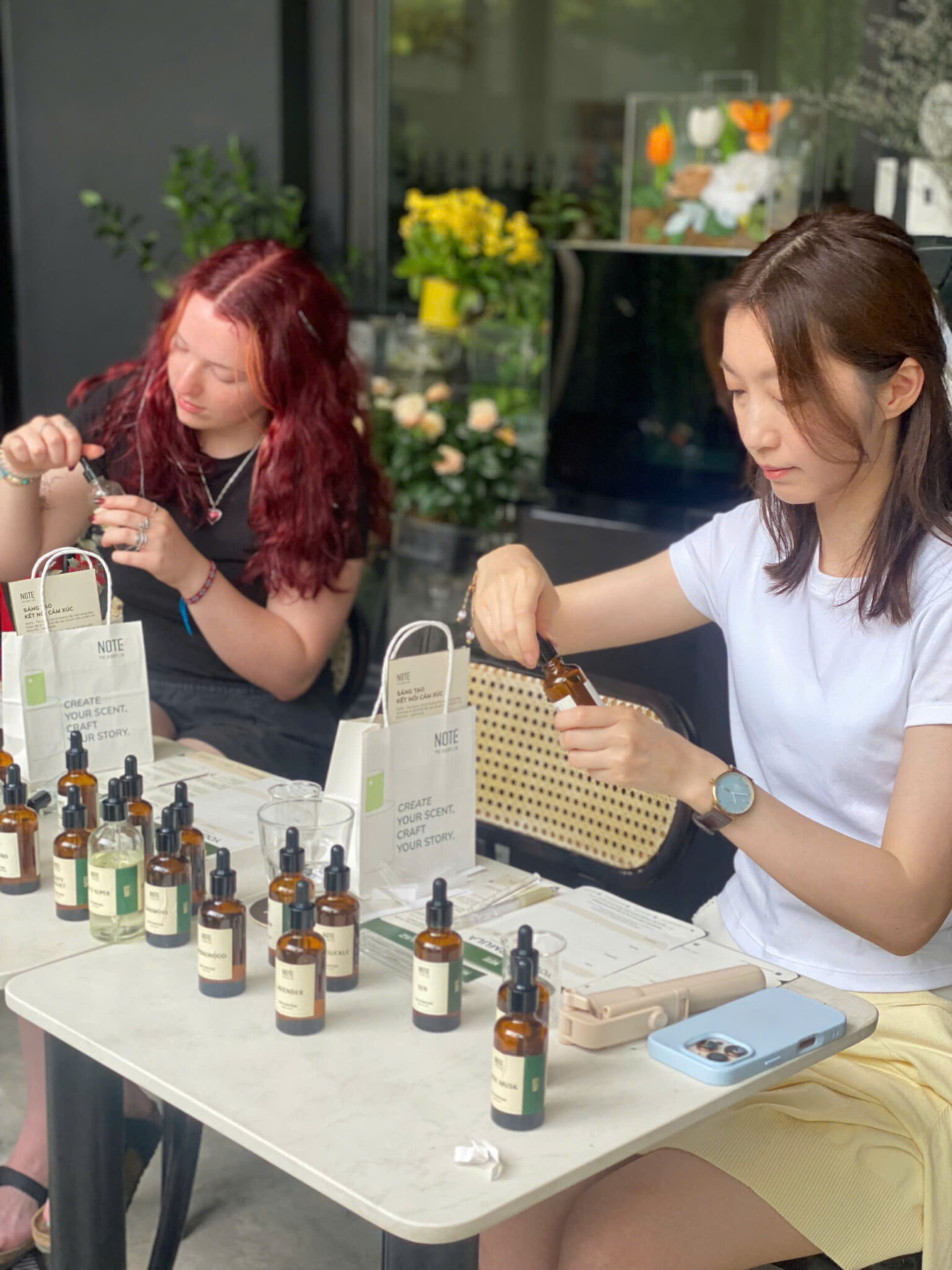
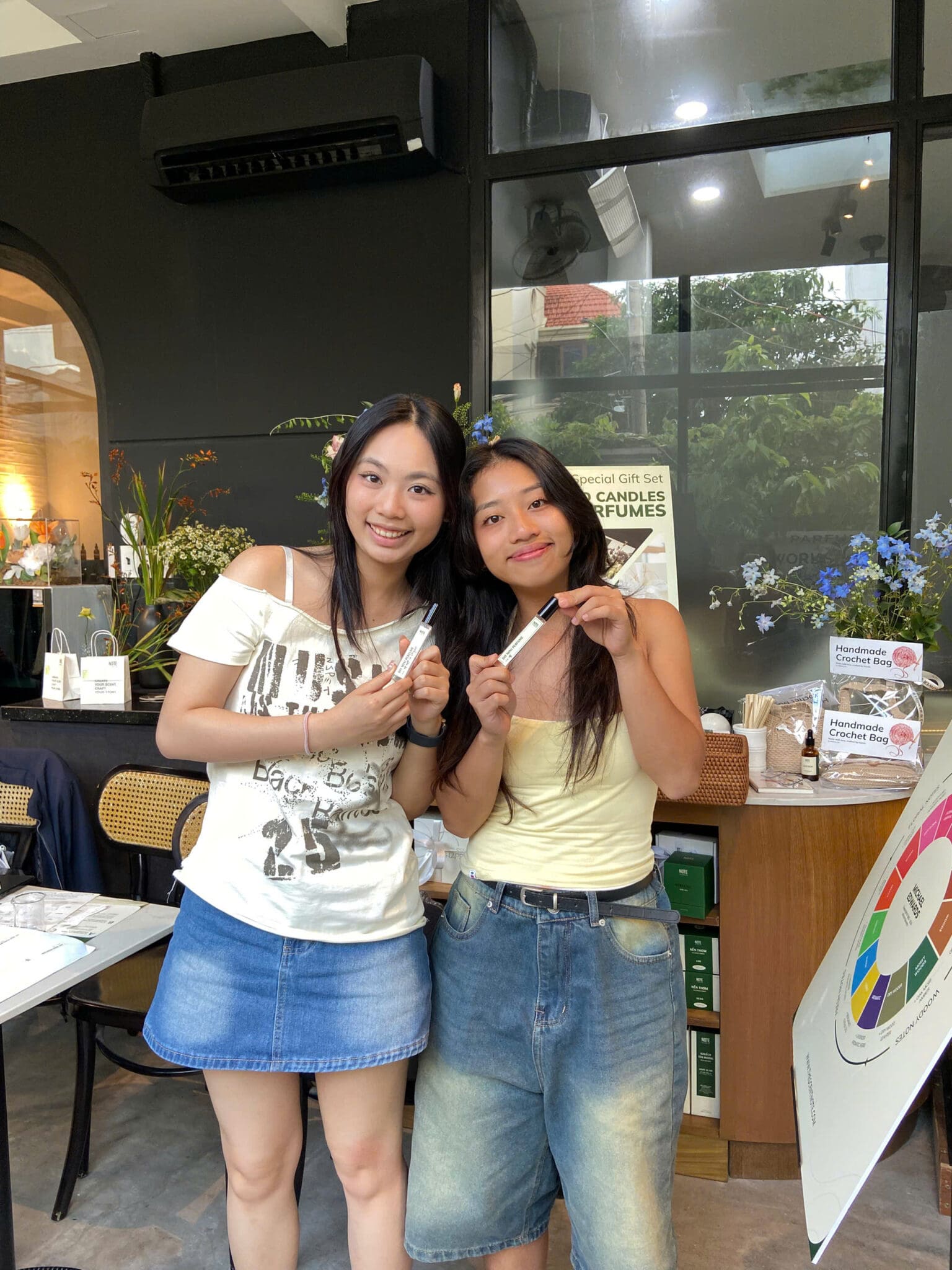
The perfume making workshop at NOTE – The Scent Lab is 90 to 120 minutes, hands-on, and expert-guided. Moreover, it offers more than 30 IFRA-compliant fragrance notes, from bright citrus and delicate florals to warm woods and spice, cinnamon among them, that you blend by hand into a scent tied to the coast you just travelled. Workshop instructors guide each guest through the full arc. You walk out with a 10 to 50 ml bottle (USD $24/$44/$54/$64) plus a take-home formula card, sealed in an airline-friendly gift box with a complimentary leak-protection zip pouch.
nn
n n Book Your Perfume Workshop in Saigon →n n
nn
Looking for a ready-made souvenir of Vietnam? The handcrafted collection at thescentnote.biz uses the same alphabet of Vietnamese botanicals. Furthermore, our note on Vietnamese botanicals and the craft behind them explores the ingredients that shape Vietnamese perfumery. For the coastal counterpart, our hidden gems of Ha Long beyond the cruise guide is the cluster’s home base.
nn
After the Coast: Half a Day in Hanoi Before You Fly
nn
Most Ha Long trips loop back through Hanoi. Buses from Bãi Cháy reach Mỹ Đình station in roughly two and a half to three hours in early 2026. International flights leave Nội Bài in the late afternoon. As a result, that gap is the half-day window that decides your trip’s last memory.
nn
If you are travelling with children, our family activities in Hanoi with kids guide maps indoor options. The perfume workshop is on the list — the ingredient table is child-friendly for ages eight and up. Furthermore, the Hanoi flagship sits.
nn
Ha Long Sea Salt, Read Out Loud
nn
A grandmother in Cua Van will not call her morning a craft. Instead, she will tell you it is just what is done. Mastery hides inside the ordinary.
nn
The coast, however, refuses to stay ordinary the moment you leave. Folded into a suitcase, a packet of grey-pink crystals carries the smell of mineral wind for weeks. Opened in a kitchen in Berlin or Melbourne or Seoul, it brings back a bamboo rack at six AM in Bai Chay.
nn
Some places do not fit in a suitcase. They fit in a bottle. Or in a small linen pouch of crystals that, when sprinkled across rice, still tastes of sun.
nn
nn
Frequently Asked Questions About Ha Long Sea Salt
nn
Where can I see Ha Long sea salt and squid drying in person?
n
Bai Chay’s wharf market, near Ha Long 1 Market, is the easiest. Trawlers unload between four and six AM, and bamboo squid racks line the wharf by mid-morning. For a quieter setting, Cua Van and Vung Vieng floating villages hand-salt fish daily. Most kayak day-tours from Tuần Châu marina include Vung Vieng.
nn
How is genuine Ha Long sea salt actually made?
n
Most Vietnamese coastal salt is made by sun evaporation. Seawater fills a shallow flat called ruộng phơi at dawn. Once salinity rises, farmers drain the brine into a smoothed clay-bed field, the ruộng ăn. Twelve to eighteen days of strong sun later, the brine has crystallised. Production runs roughly December through April.
nn
What does one-sun squid mean in Ha Long?
n
The Vietnamese term is mực một nắng — squid dried under one full day of strong sun. The flesh stays pink and slightly translucent. Locals consider it the premium grade. Three-sun squid is cheaper and chewier. A kilogram of premium one-sun squid was around 600,000 to 900,000 VND in early 2026.
nn
How do I tell real Ha Long sea salt from industrial salt?
n
Look at the flakes first. Authentic crystals are irregular, often greyish or faintly pink because of trace minerals. Industrial table salt is mathematically uniform white. Then taste a grain. Genuine sea salt has a savoury bottom and a faint sweet aftertaste, especially if it originates from Bạc Liêu.
nn
Can I bring sealed seafood and salt on a flight home?
n
Sealed packaged dried squid and salt are generally allowed in checked baggage on most international carriers as of early 2026. However, fresh seafood is restricted at most destinations — check your destination’s customs page before flying. Vacuum-sealed gift packs from Ha Long 1 Market are the safest format.
nn
How does a coastal trip connect to a perfume workshop?
n
Both crafts work the same way: layered, slow, expert-guided. NOTE – The Scent Lab in Ho Chi Minh City translates the sensory imprints of a Ha Long trip — mineral air, sun-dried squid, bamboo and pine — into a 10 to 50 ml take-home bottle in 90 to 120 minutes. The same alphabet of Vietnamese botanicals appears at thescentnote.biz in ready-made form.
nn
When is the best season to visit for coastal scent stories?
n
October to April are widely considered ideal. Skies are stable, and salt-harvesting along the Tonkin coast peaks December through April. Summer brings humidity and storms. Therefore many travelers plan around late autumn and early spring.
nn
Find NOTE – The Scent Lab
n
- n n
- 42 Nguyễn Huệ (Saigon) — Floor 3 (Vietnamese “Lầu 2” — 2 levels up from the ground floor), Cafe Apartment, District 1 · Get directions → · TripAdvisor · Watch direction video →
- 34 Nguyễn Duy Hiệu (Saigon) — Thảo Điền, Thủ Đức · Get directions → · Watch direction video →
n
n
n
n
nn
nThis article is provided for general informational and reference purposes only. Information was accurate at the time of writing (May 2026) but may change without notice. Opening hours, prices, transit schedules, and availability for venues outside NOTE – The Scent Lab can change without notice — please verify with official websites, TripAdvisor, or Google Maps before your visit. We do not guarantee accuracy and are not responsible for outcomes based on outdated information.
nn
n