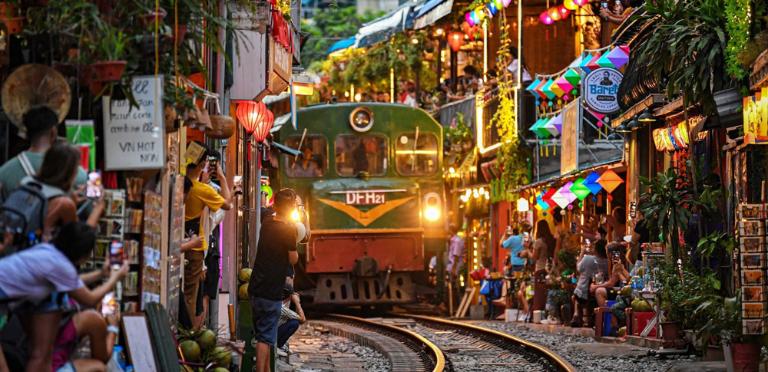

In the heart of Hanoi’s Old Quarter, there lies a street where the ordinary rhythm of daily life meets something truly extraordinary. Here, trains rumble through a narrow alley so close that you can feel the rush of air on your skin and hear the echo of steel brushing past the walls of family homes and small cafés. Locals pause their conversations, tourists hold their breath, and for a brief moment, the whole city seems to pulse with one heartbeat. This is Hanoi Train Street, a place where time feels suspended between danger and beauty, chaos and calm. What was once just a railway line cutting through quiet neighborhoods has now become one of Hanoi’s most thrilling and photogenic attractions. Yet beyond its viral fame lies a deeper story of people, tradition, and resilience.
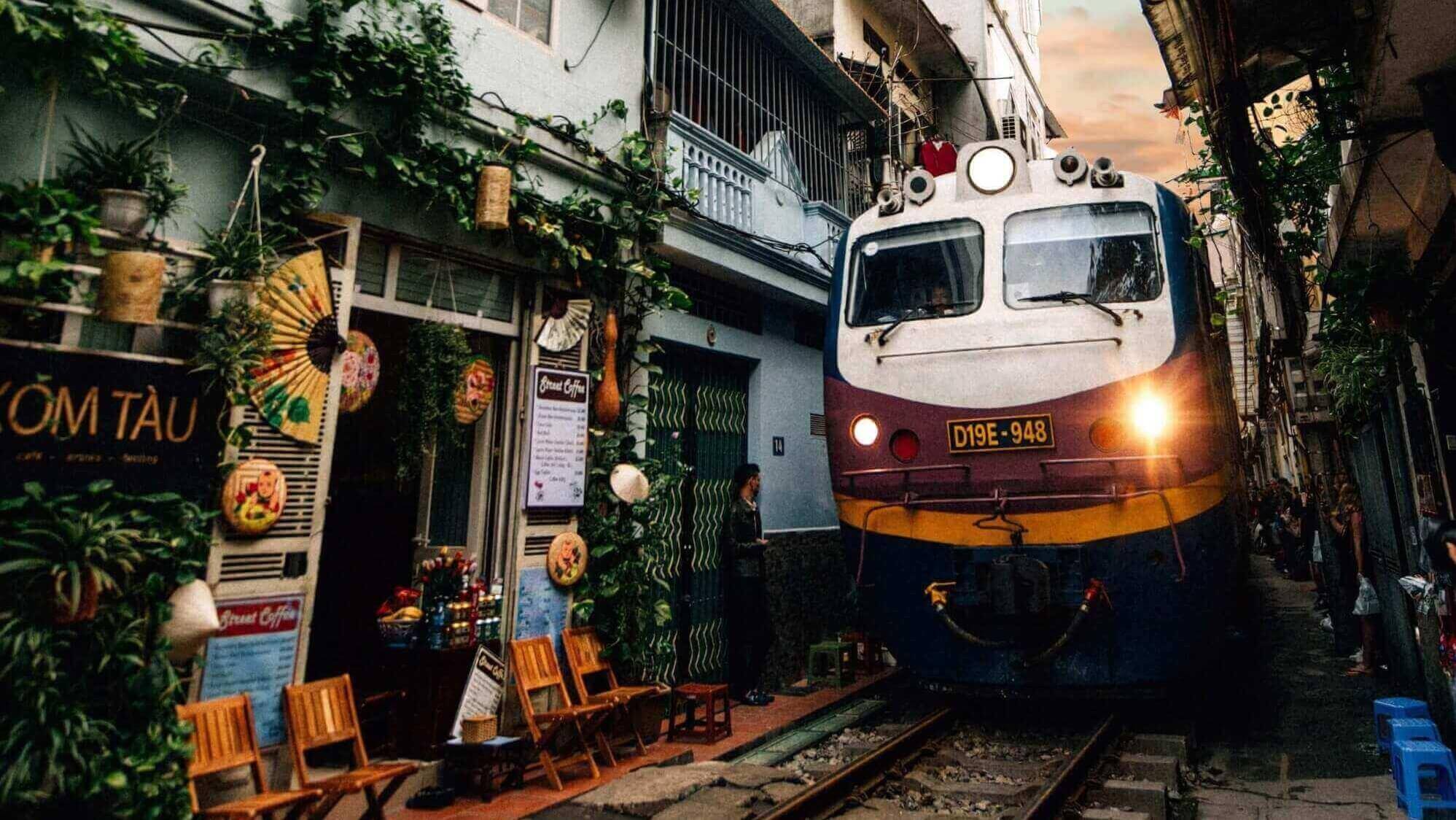
In this Hanoi Train Street Exploring Guide, we invite you to look beyond the lens. To see the charm that lives not only in the passing train but in the lives that unfold around it: the aroma of Vietnamese coffee, the soft chatter of locals, and the way sunlight glints off the metal tracks. Let this guide take you through the history, the hidden corners, and the best ways to experience this remarkable place safely and meaningfully.
The Story Behind Hanoi Train Street
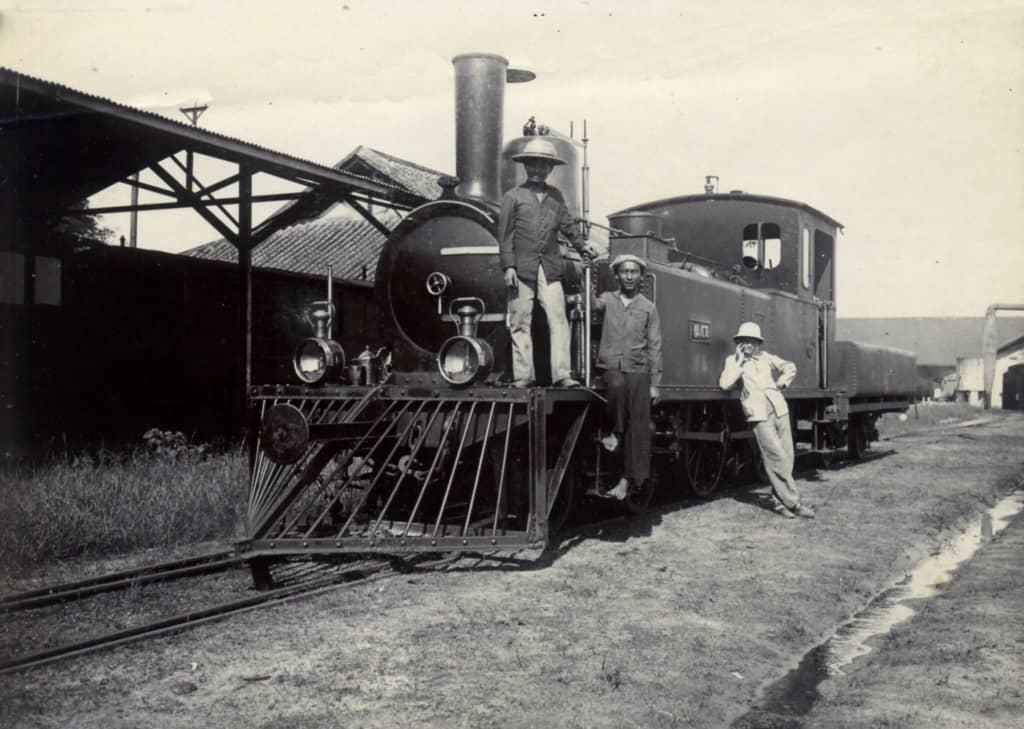
Long before it became a social media sensation, Hanoi Train Street was simply a part of the city’s everyday rhythm. The railway line was first constructed in the early 1900s, during the French colonial era, connecting Hanoi to the northern and southern regions of Vietnam. Over time, as the city expanded, homes and small shops began to grow around the tracks, forming a narrow, lively alley where trains and daily life learned to coexist
For decades, residents have lived within arm’s reach of the railway. They hang laundry, cook meals, and sip tea just steps away from the steel rails. When the familiar whistle echoes in the distance, a well-rehearsed choreography begins, tables are pulled back, scooters are moved aside, children are ushered indoors. Then, in a thunderous blur, the train passes. Moments later, the alley returns to its usual calm, as if nothing extraordinary had just happened.
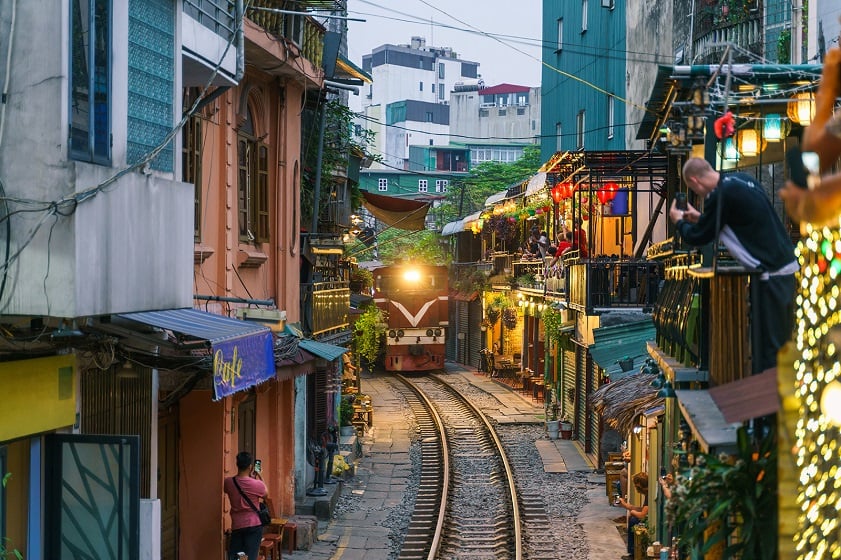
This seamless dance between human routine and mechanical rhythm is what makes Hanoi Train Street so mesmerizing. It’s not just the thrill of proximity, but the quiet beauty of adaptation, a community that has turned constraint into character, and danger into daily poetry.
Today, while parts of the street have been regulated to ensure safety, the spirit of this place remains unchanged. It stands as a vivid reminder of Hanoi’s essence: a city that hums with history, energy, and grace, even in its tightest corners.
How to Find Hanoi Train Street
Hidden within the maze of Hanoi’s Old Quarter, Hanoi Train Street is both easy to reach and surprisingly easy to miss. The most popular section runs between Phùng Hưng Street and Lý Nam Đế Street, only a short walk about ten minutes from the iconic Hoàn Kiếm Lake. You’ll know you’re close when the narrow alleys begin to hum with quiet anticipation, filled with the scent of freshly brewed coffee and the soft clatter of cups from trackside cafés.
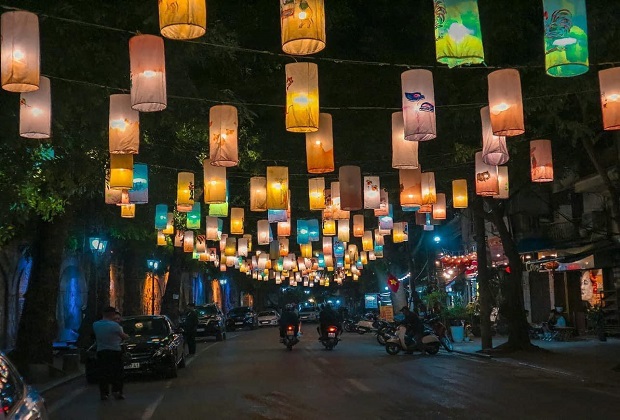
If you’re visiting for the first time, look for the entrance near Ngõ 224 Lê Duẩn or Ngõ 5 Trần Phú. These are the main access points where local cafés are licensed to welcome visitors safely. From there, the path opens into a slender lane, where the railway line cuts straight through the heart of the neighborhood, flanked by homes, balconies, and the occasional Vietnamese flag fluttering in the wind.
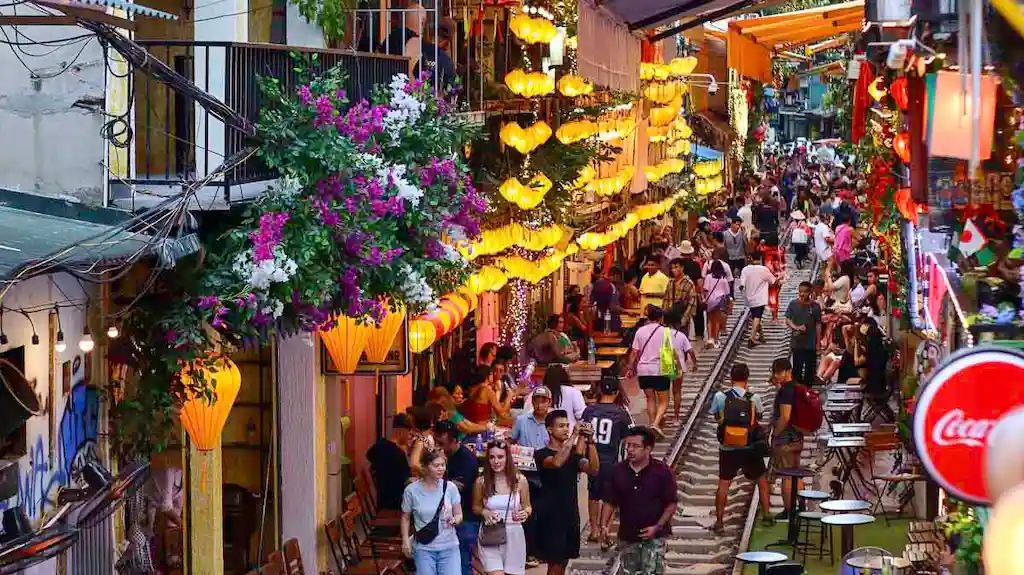
The best way to explore is on foot. Wander slowly, take in the details: the weathered walls, the laughter of children playing just beyond the tracks, and the way sunlight filters through the tangle of electric wires above. Every turn offers a glimpse into local life that no map can fully capture.
For travelers unfamiliar with Hanoi’s streets, on weekends and certain evenings, segments of the surrounding streets are closed to traffic to form pedestrian-only zones (for example streets around the Hoàn Kiếm walking-street such as Đinh Tiên Hoàng, Lê Thái Tổ, Tràng Tiền), so it is wise to check your route in advance before arriving, in case your usual access is blocked.
Finding Hanoi Train Street is not only about reaching a destination, it’s about discovering a hidden rhythm of the city, where adventure begins the moment you decide to take a quieter turn off the main road.
The Train Schedule & Best Time to Visit
Trains pass through Hanoi Train Street several times a day, usually in the early morning and evening. While the exact schedule can change, visitors often catch the trains between 7:00–9:00 AM and 7:00–9:00 PM. It’s best to check with local café owners when you arrive, they usually know the latest timetable and will alert you before the train approaches.
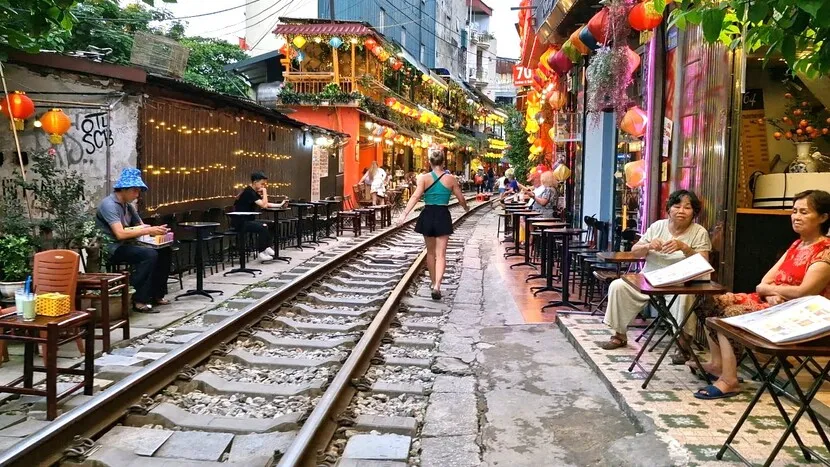
For the most memorable experience, visit around sunset, when golden light softens the narrow alley and the atmosphere feels both calm and expectant. The gentle glow from hanging lanterns and streetlights turns the place into something cinematic, especially when a train’s headlights begin to gleam in the distance.
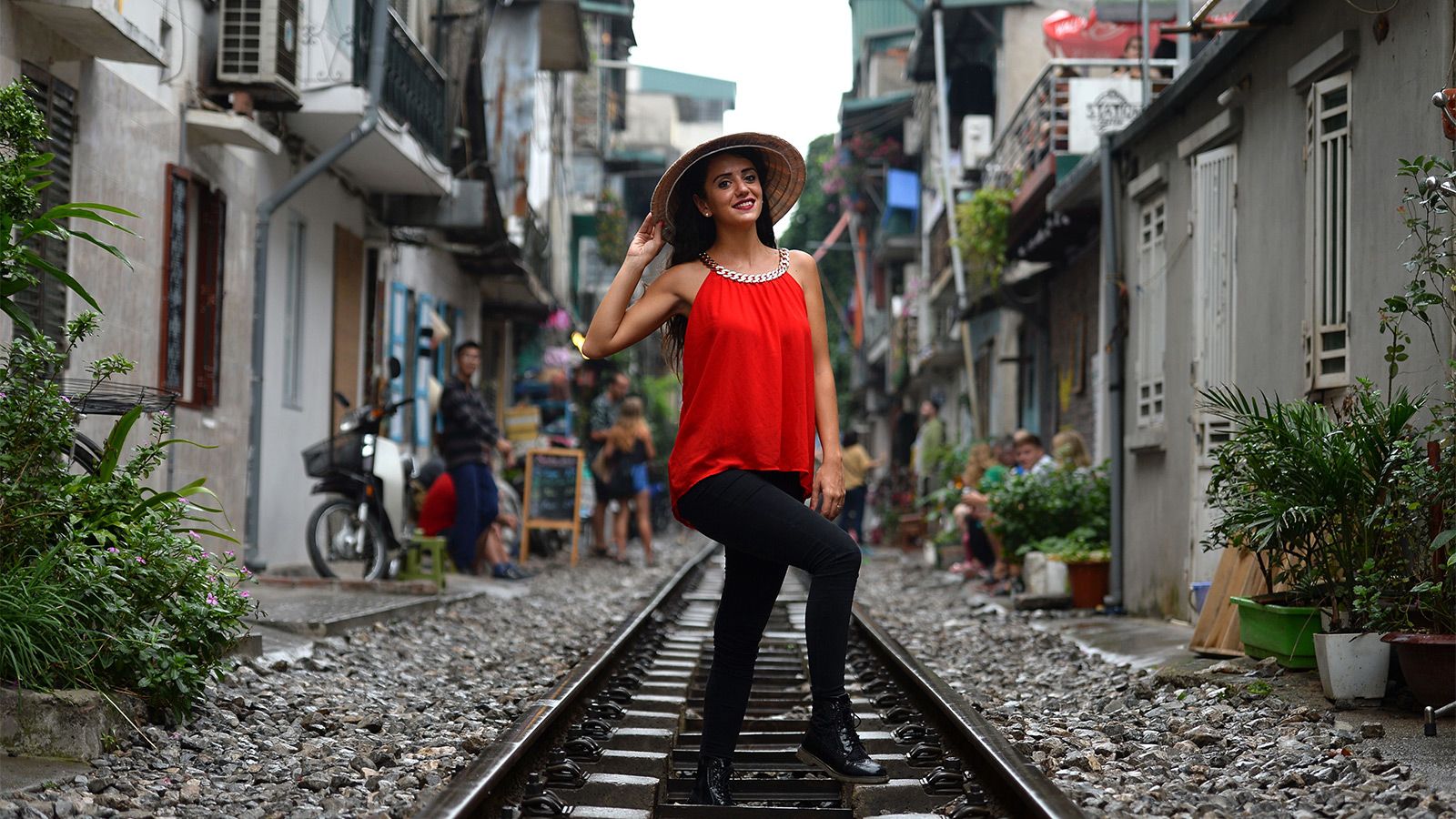
If you prefer quieter moments, early mornings are ideal. The crowds are thinner, and you can enjoy the peaceful rhythm of local life before the city fully awakens.
Photography Tip:
Arrive at least 30 minutes before the train time to secure a good spot. Some cafés on the upper floors offer stunning vantage points, perfect for capturing that dramatic moment when the train rushes past just inches away.
Experiencing the Moment – Feel the Rush
There is a rare kind of thrill that lingers in the air at Hanoi Train Street. It begins quietly, the gentle hum of conversations, the soft aroma of roasted coffee beans until a distant whistle cuts through the noise. In those few seconds before the train appears, everything slows. Then, with a sudden rush of sound and wind, it passes by, close enough to feel the vibration under your feet. It’s over in a heartbeat, yet somehow unforgettable.
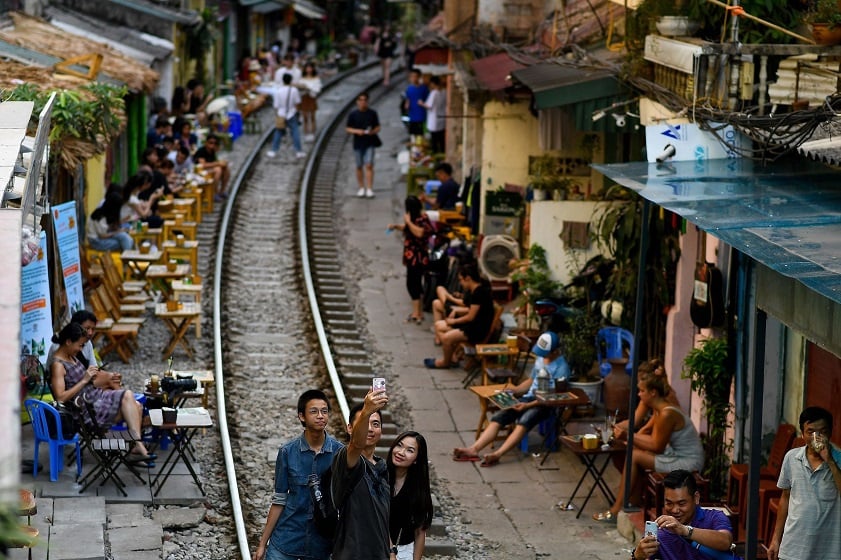
The best way to experience this moment is from one of the small cafés lining the tracks, where you can safely sit and soak in the atmosphere:
1. Little Forest Cafe
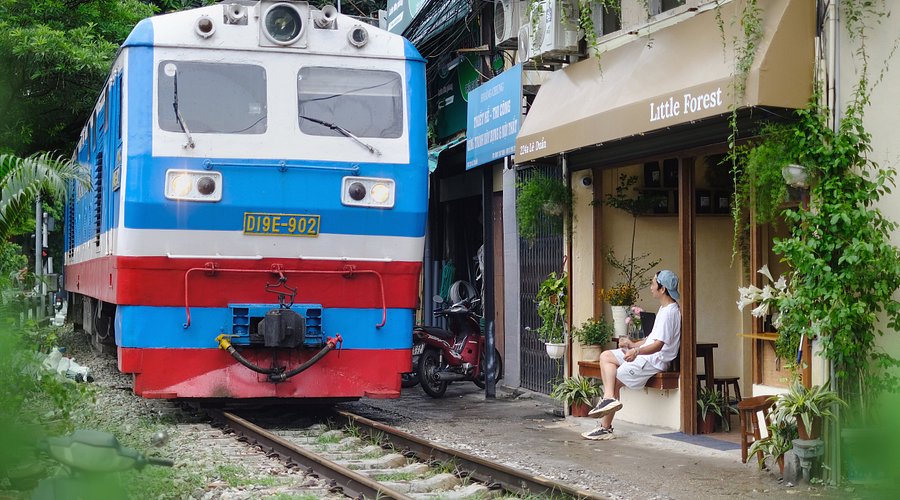
Little Forest Café charms visitors with its refreshing greenery and tranquil setting, where plants surround every corner and sunlight softly fills the space. The wooden tables, cozy layout, and warm natural light create a soothing escape from the city’s pace. Here, you can enjoy traditional Vietnamese drinks such as robust black coffee, smooth iced milk coffee, or the signature bạc xỉu, all crafted in the classic style. It’s an inviting retreat to unwind and savor a quiet moment amidst Hanoi’s vibrant energy.
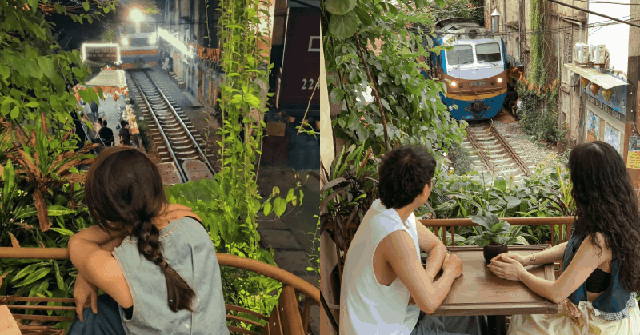
2. Spot 09 Café
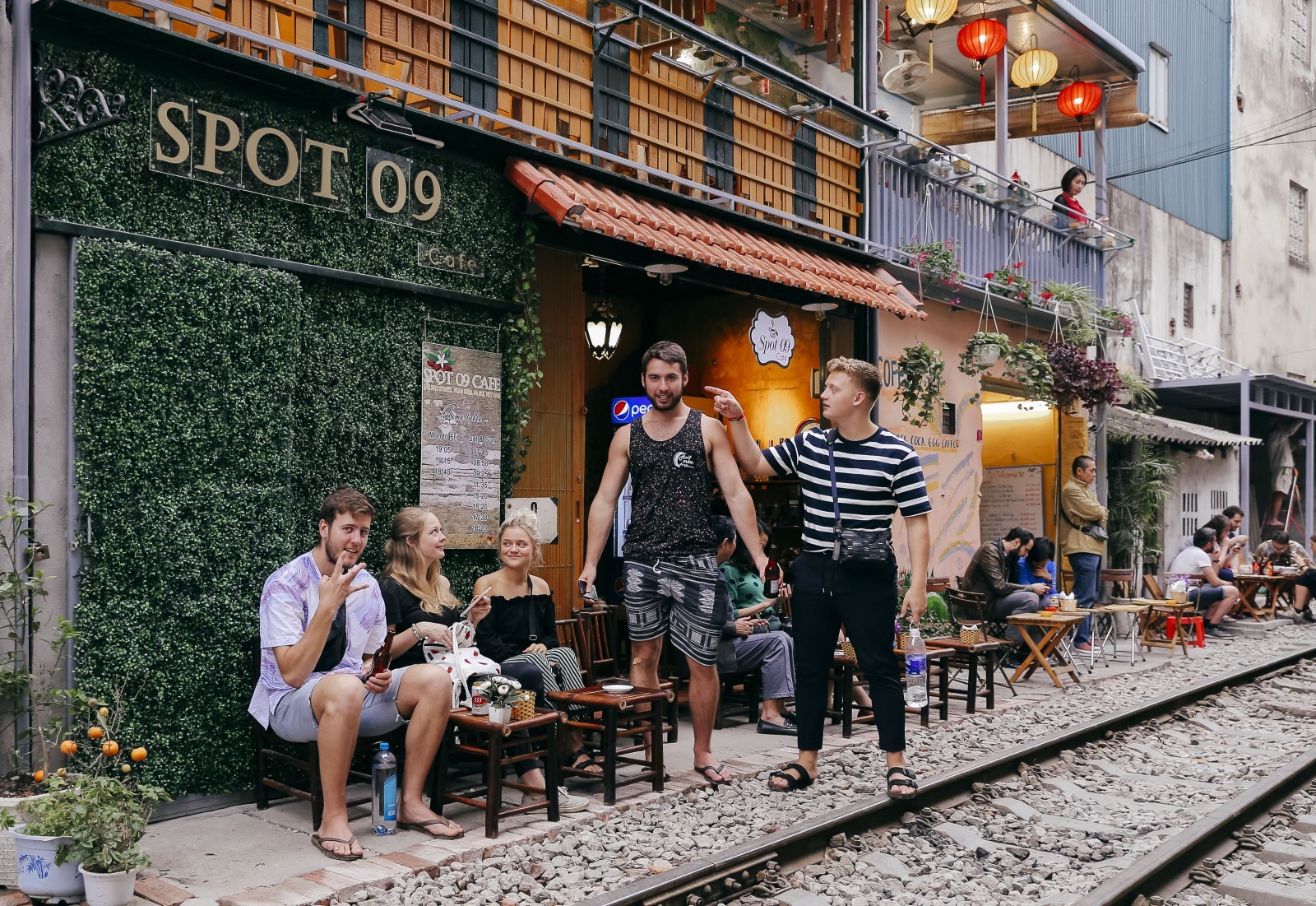
Spot09 Café is a cozy stop tucked near Hanoi’s Train Street, known for its friendly vibe and authentic Vietnamese charm. Guests come here not only for the signature egg coffee but also for the rare thrill of watching trains glide by just meters away. The café’s warm lighting, rustic décor, and relaxed energy make it an inviting place to pause and soak in the rhythm of the city.
While the occasional rumble of passing trains adds a bit of excitement, it’s the genuine hospitality of the staff that leaves a lasting impression. Service is attentive and kind, though the pace can slow during busy hours, giving you more time to enjoy the moment and the scent of freshly brewed coffee.
Prices are reasonable, especially considering the café’s location and unique setting. With a menu that balances local favorites and simple modern drinks, Spot09 Café captures the everyday charm of Hanoi: unhurried, welcoming, and full of character.
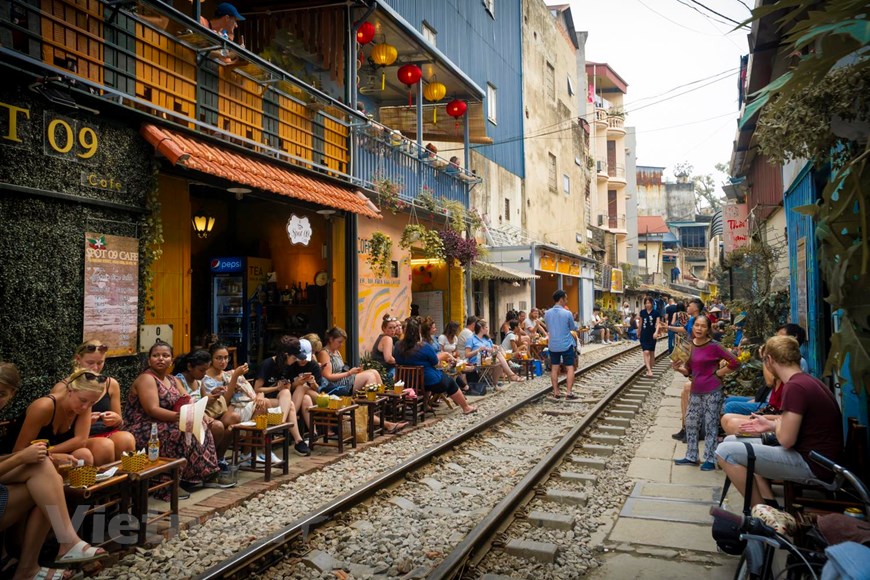
2. Spot 09 Café
Safety & Responsible Visiting
Hanoi Train Street may look like an open playground for adventure seekers, but it is first and foremost a living neighborhood, home to families who have shared their space with passing trains for decades. Respecting that balance is the key to keeping this place both safe and beautiful.
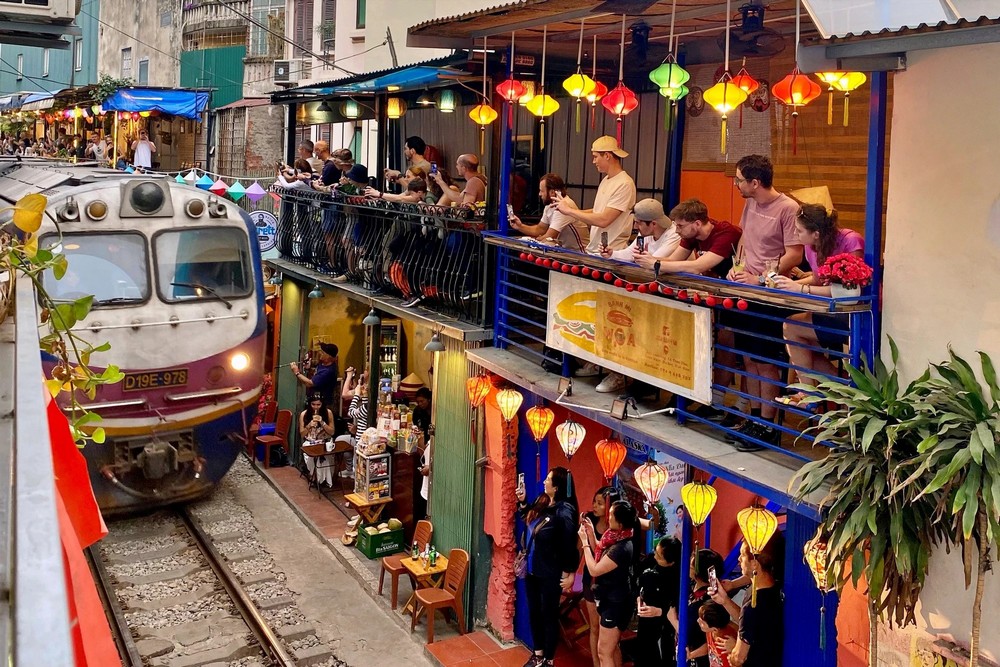
For your visit, keep these simple guidelines in mind:
- Stay within designated café areas. Only certain sections of the street are officially open to visitors. Always follow the café owner’s instructions, they know the timing and safety boundaries best.
- Never stand or sit on the tracks. It might look tempting for photos, but the trains pass extremely close. A few inches make all the difference.
- Be alert when the train is coming. You’ll hear the whistle several minutes in advance, use that time to move to a safe spot.
- Respect the residents. This isn’t a theme park but a community. Avoid loud noises, trespassing into private homes, or blocking entrances.
- Support local cafés. Buying a drink or snack is a simple way to show appreciation for the residents who welcome visitors into their daily lives.
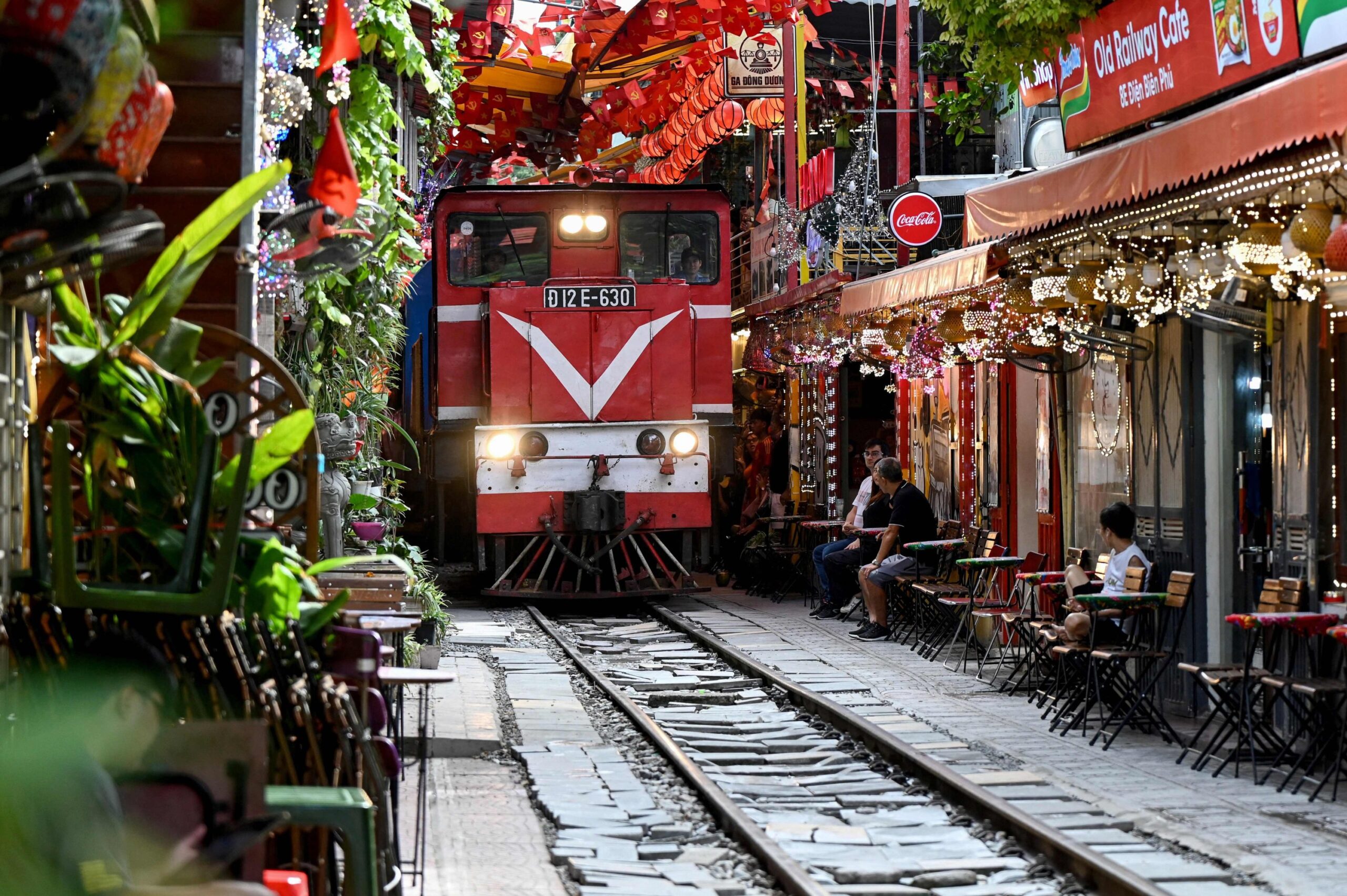
Authorities have temporarily closed certain access points in the past due to unsafe behavior from tourists. By traveling responsibly, you help ensure that this unique corner of Hanoi remains open for everyone to experience, not as a spectacle, but as a living story of coexistence between people and trains.
Hanoi Train Street is more than just a famous photo spot, it captures the essence of Hanoi’s unique charm, where everyday life unfolds just inches from the rumbling trains. Watching locals sip coffee, chat, and smile as the train passes by is both thrilling and heartwarming. Whether you’re visiting for the adrenaline rush or the cultural authenticity, this narrow street reminds every traveler that beauty often hides in the most unexpected places. A visit to Train Street is not only about seeing the train go by, but about feeling the pulse of Hanoi — raw, vibrant, and unforgettable.
Explore more about Hanoi
– Discover Hanoi: Best Things to Do, Hidden Gems & Must-Visit Spots