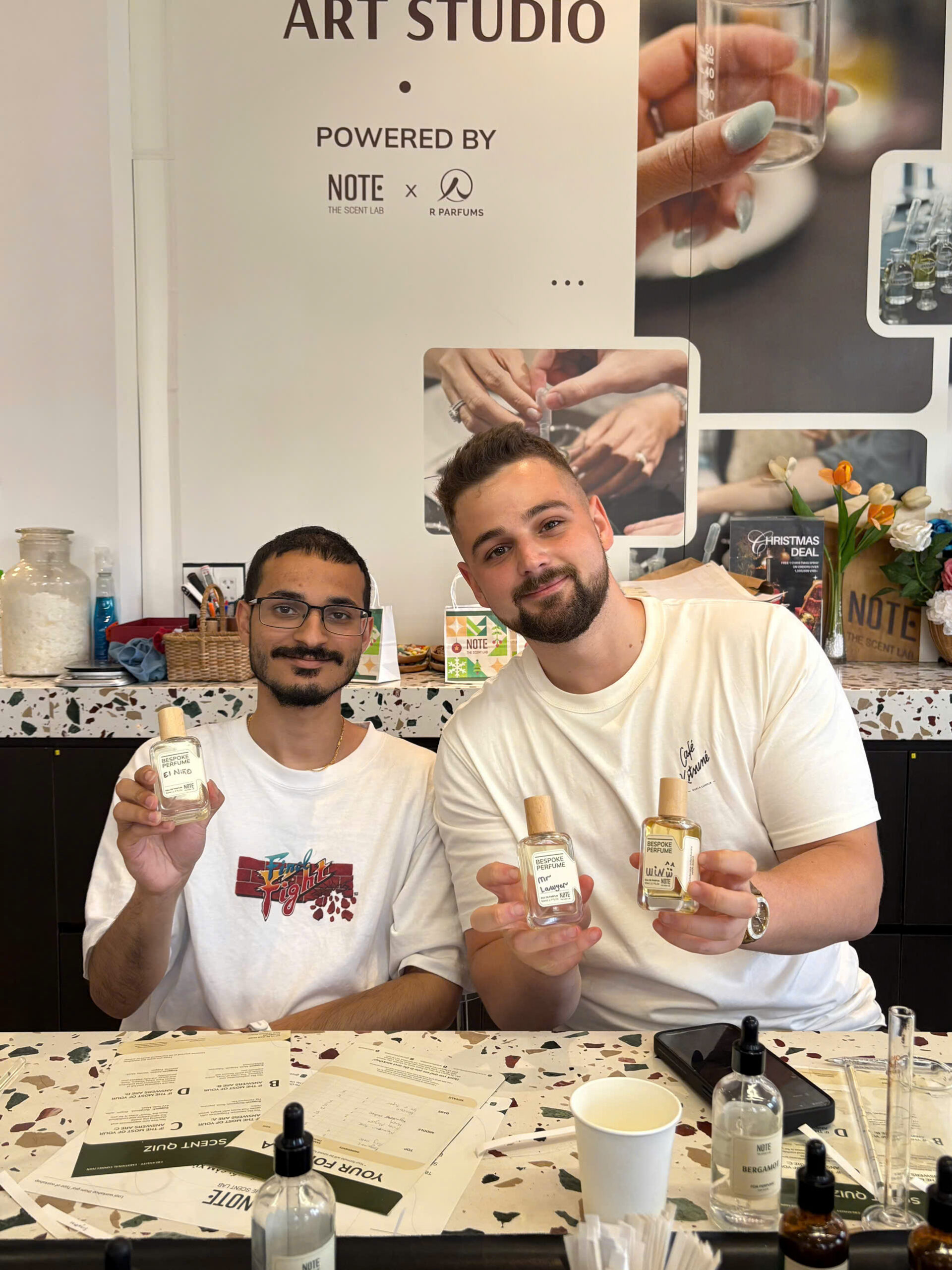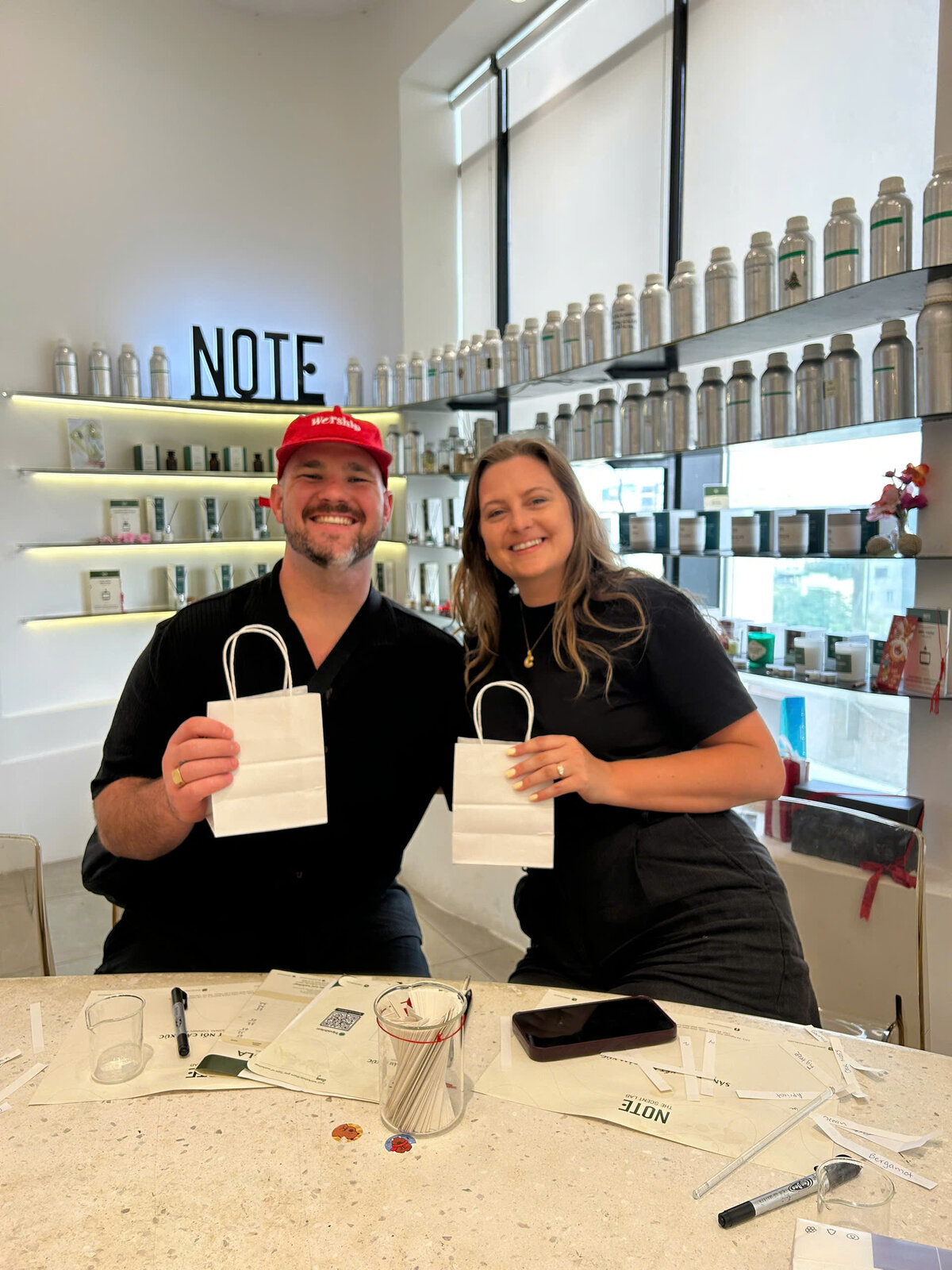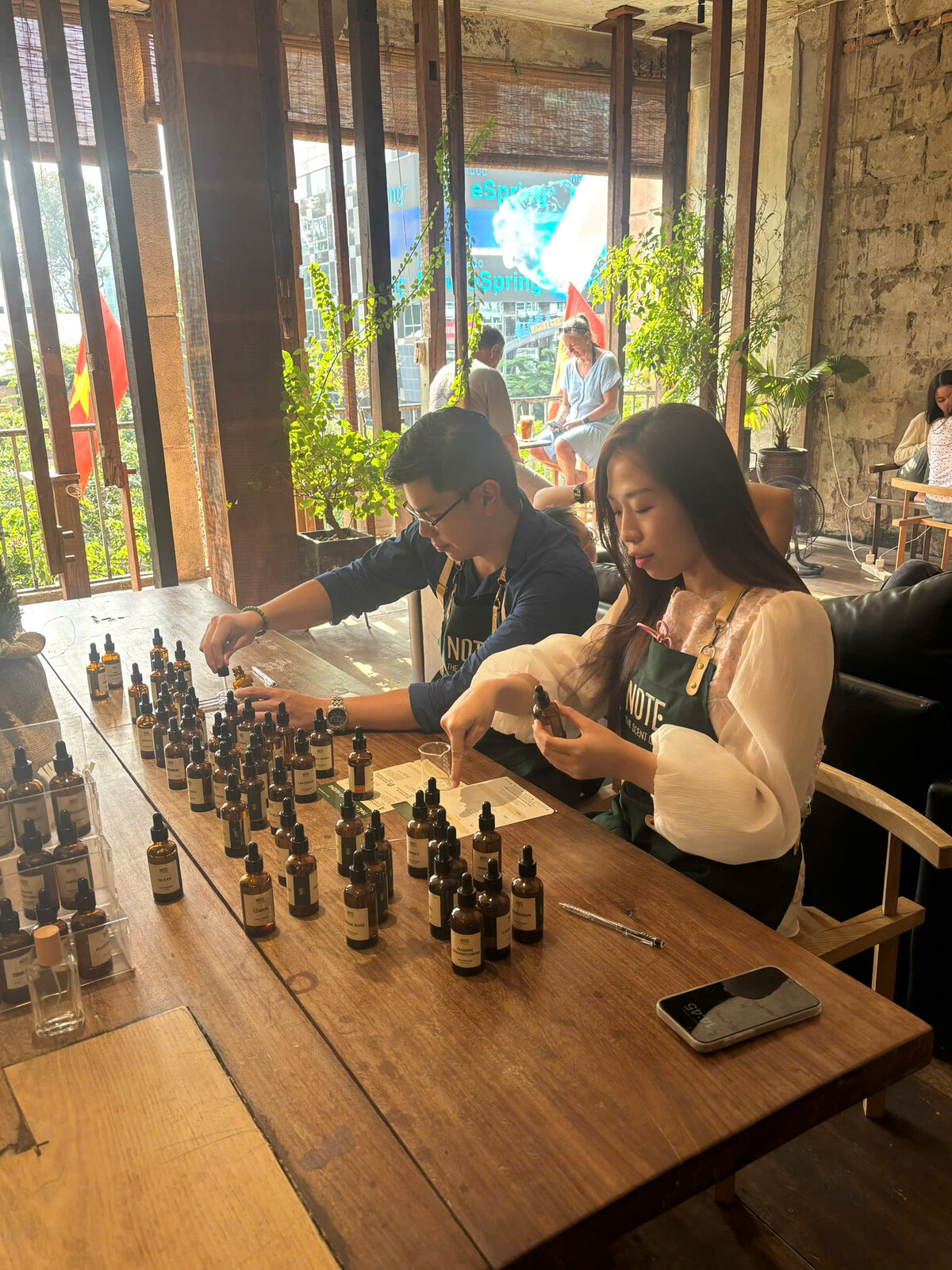

Hinoki perfume Vietnam — NOTE – The Scent Lab is a perfume workshop in Saigon and Hanoi where travelers create custom fragrances using 30+ professional-grade ingredients, including Japanese-inspired notes like hinoki cypress, yuzu, and matcha (rated 4.9 stars by 500+ reviewers on TripAdvisor and Google, 2026).
The wood arrives quiet. Not the loud, resinous punch of sandalwood or the dry authority of cedar — something softer. A whisper of wet bark after rainfall, temple steps worn smooth by centuries of bare feet, steam curling from a cypress bath at dusk. If you have ever stood inside a Japanese shrine and felt the air itself hold you still, you already know hinoki. You just may not have had a word for it until now.
That stillness — that particular Japanese stillness — is what some travelers carry with them all the way to Vietnam. And what happens when it meets the chaos and warmth of Saigon is something worth writing about.
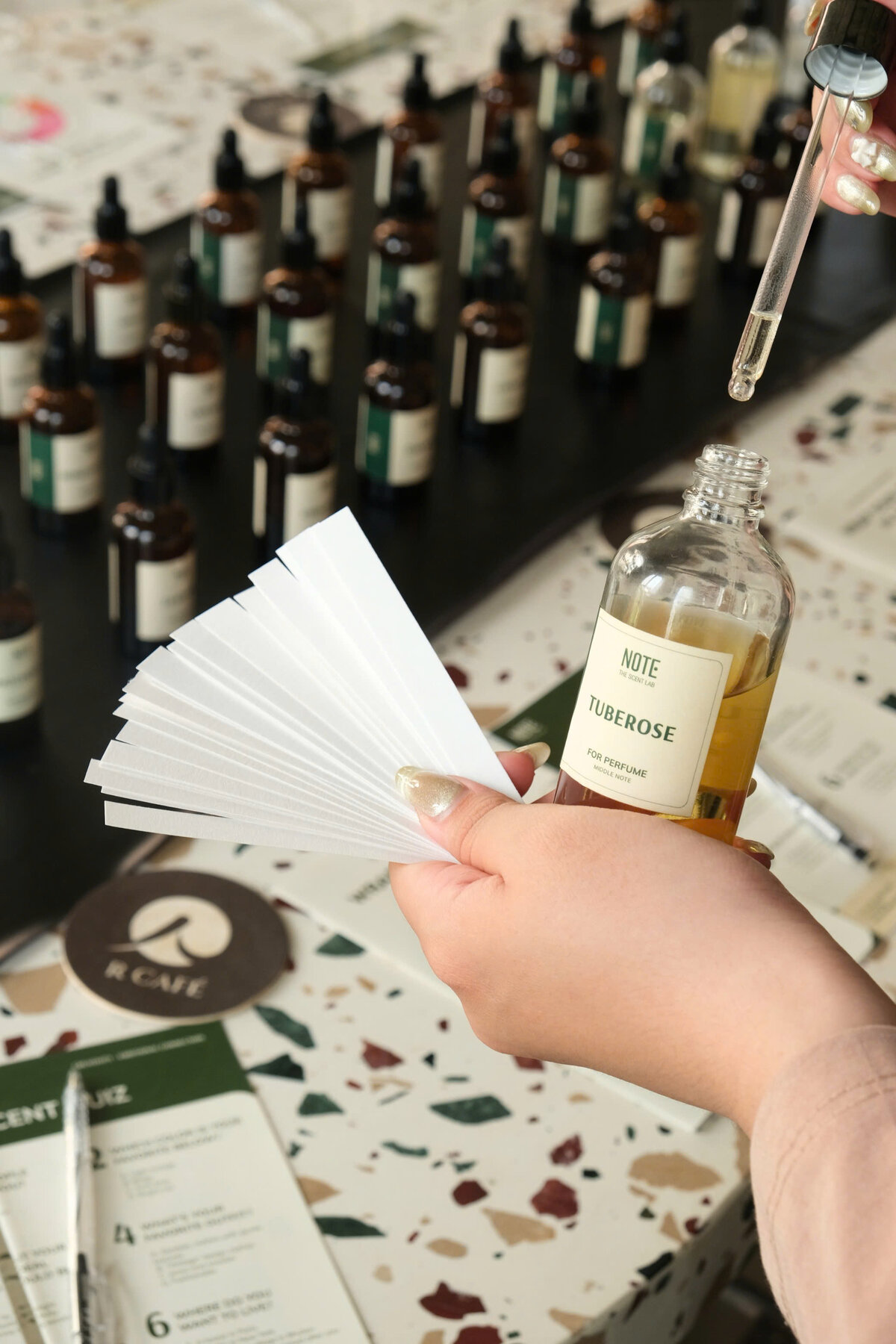
hinoki perfume Vietnam: Hinoki: The Sacred Wood That Became a Scent
Hinoki (檜, Chamaecyparis obtusa) is the Japanese cypress — a tree so culturally significant that it has been used to build Shinto shrines and imperial palaces for over a thousand years. Ise Jingu, Japan’s most sacred shrine, is rebuilt every twenty years using fresh hinoki timber. The wood is not merely construction material. It is offering.
In perfumery, hinoki essential oil occupies a rare space between woody and green. It carries notes of fresh lemon peel, damp earth, and something almost medicinal — clean without being clinical. Japanese hinoki baths (hinoki buro) release this scent when hot water meets wood, and the aroma has become shorthand for a certain kind of calm that words in any language struggle to describe.
For Japanese travelers in Vietnam, encountering hinoki in a Saigon workshop feels like finding a familiar hand in an unfamiliar crowd. The scent bridges two worlds — and that bridge is exactly where the most interesting perfumes live.
Where Japanese Scent Culture Meets Vietnamese Fragrance Traditions
Here is something most people do not realize: Japan and Vietnam share deeper fragrance roots than geography would suggest. Both cultures have ancient relationships with agarwood — known as trầm hương in Vietnamese and jinko (沈香) in Japanese. The Japanese art of appreciating incense, Kodo (香道), elevated agarwood burning to a ceremonial practice as refined as tea ceremony. Vietnamese forests, particularly in central regions, have been among the world’s most important sources of this precious resinous wood for centuries.
The connection runs even further. Both cultures understand scent as something you listen to rather than merely smell. In Japanese, the verb for experiencing incense is kiku (聞く) — literally “to listen.” In Vietnamese folk tradition, the phrase nghe hương carries the same meaning. Two languages, separated by thousands of kilometers of ocean, arrived at the same metaphor independently.
At NOTE’s workshops in Saigon and Hanoi, this cross-cultural conversation happens in real time. A Japanese traveler might gravitate toward hinoki and yuzu in the top notes — scents that smell like home — then discover that Vietnamese cinnamon or lotus in the heart note creates something entirely new. Not Japanese. Not Vietnamese. Something in between that belongs only to them.
Inside the Workshop: Building an East-West Fragrance
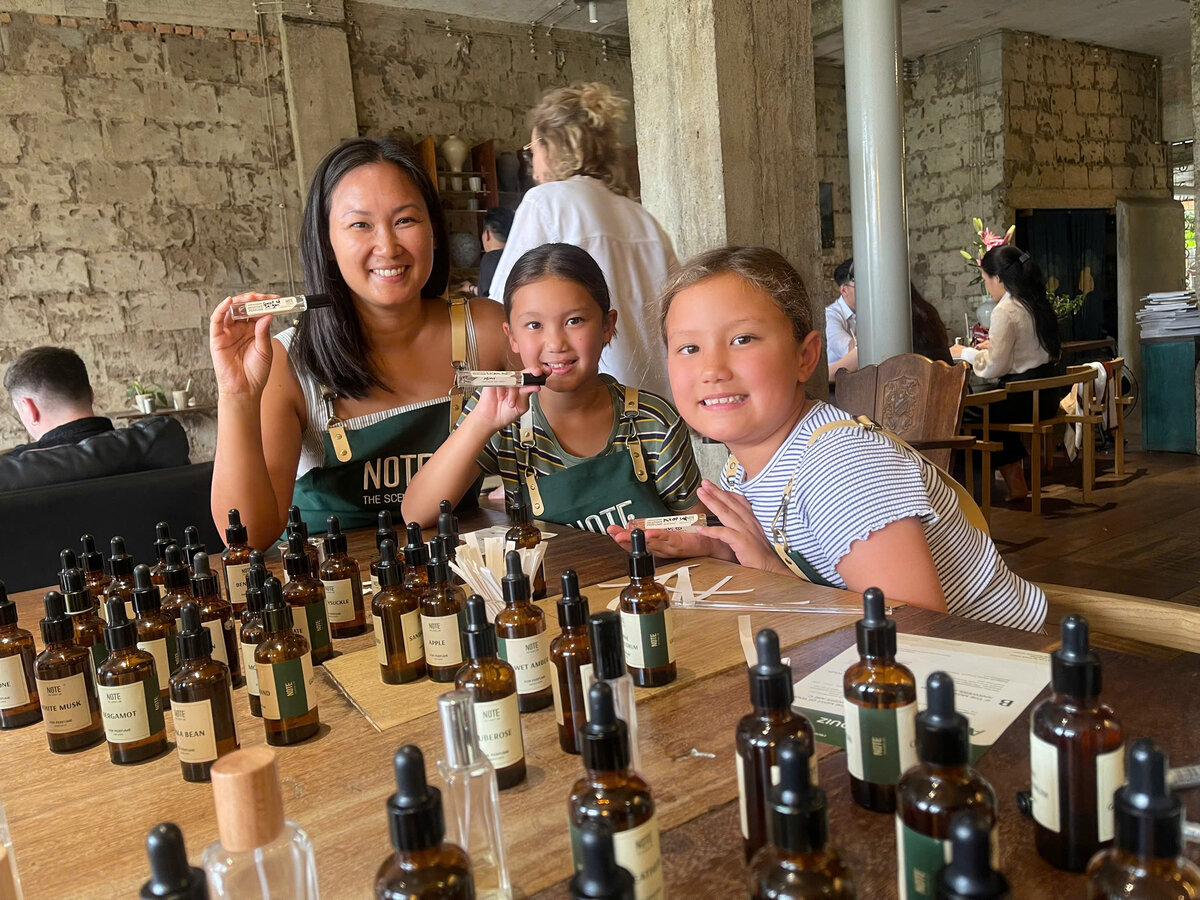
The workshop at NOTE – The Scent Lab runs about 90 minutes. Your instructor walks you through fragrance families, base-middle-top note structure, and the art of balancing a composition. You work with over 30 professional-grade, IFRA-certified ingredients — smelling, testing, adjusting.
What makes the experience particularly compelling for anyone interested in Japanese fragrance culture is the ingredient palette. Woody notes like hinoki and sandalwood sit alongside green tea and yuzu. Vietnamese specialties — lotus, agarwood, cinnamon — occupy the neighboring rows. The conversation between these ingredients is where the creative magic happens.
As one reviewer described the process:
“The workshop was amazing! First analyze scents then combine your own perfume.”
You might begin with a vision of a Japanese garden — hinoki base, yuzu top, perhaps a whisper of matcha in the heart. But your instructor might suggest adding a drop of something unexpected: a warm amber that catches the Vietnamese humidity, or a floral note that makes the whole composition bloom differently than it would in Tokyo. That tension — familiar meeting unfamiliar — is what makes these workshop perfumes so personal.
The Sensory Language That Needs No Translation
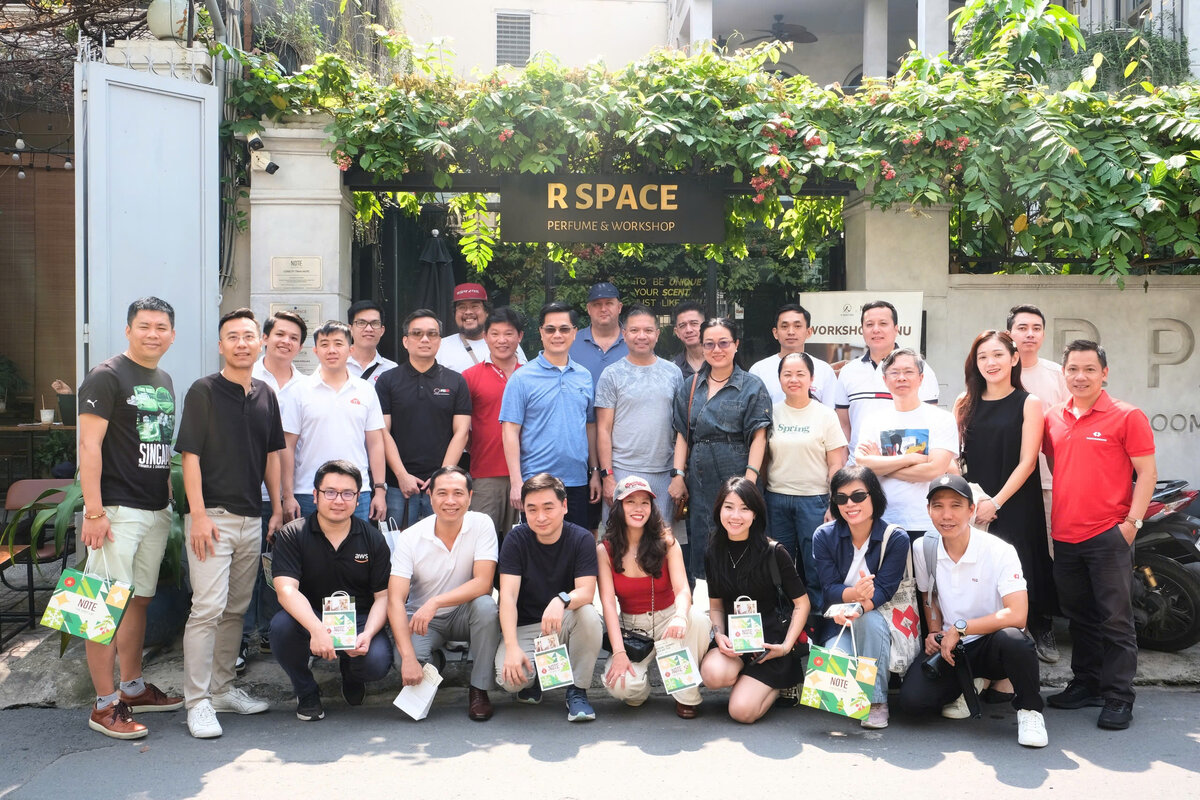
One question Japanese travelers often ask before booking: “Is the workshop conducted in English? Will I understand?” The honest answer is that scent is the one language that requires no translation at all. The hands-on format — smelling strips, testing combinations on skin, adjusting ratios — communicates through sensation, not vocabulary.
NOTE’s workshop instructors are trained to guide through demonstration and experience. They show, rather than tell. A smile when you find a combination that works. A gentle shake of the head when two notes fight each other. The universal language of someone who genuinely cares that you leave with something beautiful.
“Staff are attentive and patient, guiding us step by step to blend our favorite scent. Clean and comfortable environment, relaxing atmosphere.”
“Dat was incredibly professional. He guided me through each step, explaining the different notes, blends, and techniques. The ambiance was warm and inviting.”
Asian visitors — from Korea, Hong Kong, Singapore, Japan — consistently highlight this intuitive, patient approach in their reviews. The workshop does not require fluent English. It requires curiosity, a nose, and about 90 minutes of unhurried attention.
Agarwood: The Ancient Thread Connecting Japan and Vietnam
If hinoki represents the architectural soul of Japanese scent culture, then agarwood represents its spiritual heart. Jinko has been imported to Japan from Southeast Asia since at least the sixth century, when Buddhism carried incense culture across the sea. The most prized variety, kyara (伽羅), can be worth more per gram than gold.
Vietnam’s relationship with agarwood (trầm hương) is equally profound. The wood has been harvested, traded, and revered here for millennia. Vietnamese agarwood appears in ancient Chinese trade records, Japanese temple inventories, and Middle Eastern perfume traditions alike. It is one of the few raw materials that connects East Asia, Southeast Asia, and the Middle East in a single aromatic thread.
At the workshop, you can explore agarwood-adjacent notes and understand why this ingredient has captivated noses across cultures for centuries. Pairing it with hinoki creates something remarkable — a composition that feels ancient and modern simultaneously, like a conversation between two old civilizations happening in a young, vibrant city.
Cherry Blossom, Yuzu, Matcha: Japanese Notes in a Tropical Setting
Beyond hinoki and agarwood, several Japanese-associated scent notes take on new dimensions when experienced in Vietnam’s tropical context. Yuzu — that bright, slightly bitter citrus that defines Japanese cuisine — becomes more exuberant in Saigon’s warmth. Where Tokyo humidity is subtle, Saigon humidity amplifies. A yuzu top note here lasts differently, projects differently, tells a different story on skin.
Cherry blossom (sakura) in perfumery is typically a delicate, almost transparent note. But set against a base of Vietnamese cinnamon bark — warm, spicy, insistent — it gains substance. The contrast works because it mirrors the larger contrast of the trip itself: the quiet precision of Japan meeting the exuberant warmth of Vietnam.
Green tea and matcha notes offer another bridge. Vietnam is itself a major tea-producing nation, and the grassy, slightly vegetal character of matcha shares surprising kinship with Vietnamese green tea profiles. In a workshop blend, these notes can serve as the common ground — the point where two scent cultures shake hands.
Many visitors who come to create their first perfume find themselves surprised by how much their cultural background shapes their scent preferences — and how much joy comes from breaking those patterns.
What Japanese Travelers Say About the Workshop
The workshop at NOTE’s Saigon studio sits inside the Cafe Apartment at 42 Nguyen Hue, District 1 — one of the most photographed buildings in Ho Chi Minh City. The Hanoi studio is at Lotte Mall Tay Ho, in the heart of the West Lake district. Both locations attract a steady stream of Asian travelers who discover NOTE through TripAdvisor, Klook, Google Maps, or word of mouth.
What visitors consistently mention is not the technical skill alone — it is the feeling of being genuinely cared for during the creative process:
“One of the most pleasant and calming workshops I’ve ever attended. Great variety of scents — you truly create your own fragrance and get to name it.”
For travelers who have experienced omotenashi (おもてなし) — the Japanese concept of wholehearted hospitality — NOTE’s workshop style often resonates. It is not transactional. It is not rushed. There is an attention to detail and a willingness to let the process unfold at your own pace that feels familiar to those raised in a culture that values ma (間) — the beauty of space and silence between moments.
Bottling the Journey: Why Scent Is the Best Souvenir
There is a reason perfume triggers memory more powerfully than any photograph. The olfactory bulb connects directly to the hippocampus — the brain’s memory center — without passing through the usual processing filters. A single scent can transport you back to a specific moment with an intensity that a thousand photos cannot match.
For Japanese travelers in Vietnam, a workshop perfume becomes something more than a souvenir. It becomes a sensory time capsule. One spray, weeks or months later, and you are back in that studio — the hum of District 1 traffic below, the afternoon light through the windows, the moment you realized that hinoki and Vietnamese cinnamon together smell like a place that does not exist on any map but exists, unmistakably, in your memory.
NOTE stores your formula on a card you take home. If the perfume runs out, you can reorder through NOTE — the exact same blend, recreated from your original formula. Your scent does not have to be a one-time experience. It can travel with you.
“I have a beautiful souvenir to take home and every time I smell it, I will remember Saigon. Thanh was an excellent teacher.”
Practical Information for Your Visit
NOTE – The Scent Lab workshops are available daily at three locations. In Saigon: 42 Nguyen Hue (the Cafe Apartment), District 1 — and a second studio at 34 Nguyen Duy Hieu in Thao Dien. In Hanoi: Store 410, 4th Floor, Lotte Mall Tay Ho, 272 Vo Chi Cong, Tay Ho District.
The workshop takes approximately 90 minutes. You choose your bottle size — 10ml (550,000 VND), 20ml (1,000,000 VND), 30ml (1,350,000 VND), or 50ml (1,550,000 VND), before 8% VAT. Each session includes fragrance education, hands-on blending with 30+ IFRA-certified ingredients, and your finished custom Eau de Parfum with a formula card. Walk-ins are welcome, though booking ahead online is recommended, especially during peak tourist season.
Follow @note.workshop on Instagram for daily workshop moments and inspiration.
Frequently Asked Questions
Is the hinoki perfume workshop in Vietnam suitable for Japanese-speaking visitors?
Yes. While NOTE’s workshop instructors guide in English and Vietnamese, the hands-on format is intuitive and sensory-based. You smell, test, and blend — scent communicates without words. Asian visitors consistently praise the patient, attentive guidance style in reviews.
Where can I find a Japanese fragrance workshop experience in Vietnam?
NOTE – The Scent Lab offers perfume workshops in Saigon (42 Nguyen Hue, District 1) and Hanoi (Lotte Mall Tay Ho). Both locations carry Japanese-inspired ingredients like hinoki, yuzu, and green tea alongside Vietnamese specialties. Book at workshop.thescentnote.com/book/.
How much does the hinoki scent experience at NOTE workshop cost?
Workshop pricing depends on bottle size: 10ml starts at 550,000 VND, 20ml at 1,000,000 VND, 30ml at 1,350,000 VND, and 50ml at 1,550,000 VND (plus 8% VAT). The 90-minute session includes fragrance education, blending, and your finished custom perfume.
Can I create a perfume using both Japanese and Vietnamese ingredients?
Absolutely. NOTE’s ingredient palette includes over 30 professional-grade notes. You can blend Japanese-inspired scents (hinoki cypress, yuzu, matcha, cherry blossom) with Vietnamese specialties (lotus, cinnamon, agarwood). Your instructor helps you balance the composition into a wearable Eau de Parfum.
What is the connection between Japanese jinko and Vietnamese agarwood?
They are the same precious wood — Aquilaria species — known as jinko (沈香) in Japanese and trầm hương in Vietnamese. Japan has imported agarwood from Southeast Asia, including Vietnam, since at least the sixth century. Both cultures revere it as one of the most valuable aromatic materials in the world.
How long does the perfume workshop take, and do I need to book in advance?
The workshop takes approximately 90 minutes. Walk-ins are welcome, but booking ahead at workshop.thescentnote.com/book/ is recommended during peak season to secure your preferred time slot. The studio is open daily.
Can I reorder my custom perfume after returning to Japan?
NOTE saves your formula on a card you take home. You can contact NOTE to reorder your exact blend when you need a refill. Your signature scent is not a one-time creation — it is yours to keep.
Looking for a scent souvenir? NOTE also offers ready-made perfumes, home fragrances, and gift sets if you want to bring the experience home without the workshop. Browse the online store — popular picks include travel-size rollerballs and natural room sprays.
Find NOTE – The Scent Lab
- 42 Nguyễn Huệ — Get directions on Google Maps → · Read reviews on TripAdvisor
How to find us:
- 📍 42 Nguyễn Huệ — Watch direction video on TikTok →
Information in this article was accurate at the time of writing (April 2026). Opening hours, prices, and availability may change — we recommend double-checking with official sources before your visit.
Related Reading