A Vietnam perfume workshop designed for Japanese travelers offers a 90-minute hands-on experience creating a custom fragrance at NOTE – The Scent Lab, rated ★4.9 by 500+ visitors on TripAdvisor and Google. With studios in Ho Chi Minh City (42 Nguyen Hue, District 1 and Thao Dien) and Hanoi (Lotte Mall Tay Ho), NOTE uses ingredients deeply familiar to Japanese culture — hinoki, agarwood, cinnamon — making this far more than a tourist activity. It is a bespoke perfume experience in the truest sense — a ものづくり (monozukuri) journey transplanted to Southeast Asia.
The humidity hits you before the scent does. Thick, sweet, carrying jasmine from somewhere below and the ghost of Vietnamese cinnamon from somewhere you can’t quite place. You step inside and the temperature drops — clean surfaces, glass vials in rows, the faint cedar-and-citrus signature of a perfumer’s studio. If you’ve ever walked through Takashimaya’s fragrance hall in Shinjuku or browsed the essential oils at Tokyu Hands, you know the feeling: a quiet alertness, a sense that invisible things are about to become visible.
But this is not Tokyo. This is Saigon — and what happens next is something no department store in Ginza can offer you.
Why Japanese Travelers Are Drawn to Vietnam’s Perfume Workshops
Japan has one of the world’s most sophisticated fragrance cultures. From the 500-year tradition of kodo (香道) — the art of “listening” to incense — to the modern boom in niche perfumery, the Japanese relationship with scent is layered, contemplative, and deeply personal. Yet in Tokyo, Osaka, and Kyoto, perfume remains something you select. You browse. You sample. You buy.
You almost never create.
This is the gap that draws Japanese visitors to NOTE – The Scent Lab in Vietnam. The 90-minute workshop is structured, precise, and guided by a trained workshop instructor — qualities that resonate with travelers who appreciate organized, well-designed experiences. But within that structure, you’re making every creative decision yourself. Choosing which Vietnamese cinnamon pairs with which Japanese hinoki. Deciding whether your base note leans toward the warmth of agarwood or the earthiness of vetiver.
It is monozukuri in its purest form — the art of making things with intention, care, and your own hands.
The elevator is famously unreliable. Most visitors take the stairs, and by the time they reach our floor, they’ve already discovered three cafes and a gallery they didn’t plan to visit.
Hinoki, Agarwood, and Lotus: Ingredients That Bridge Two Cultures
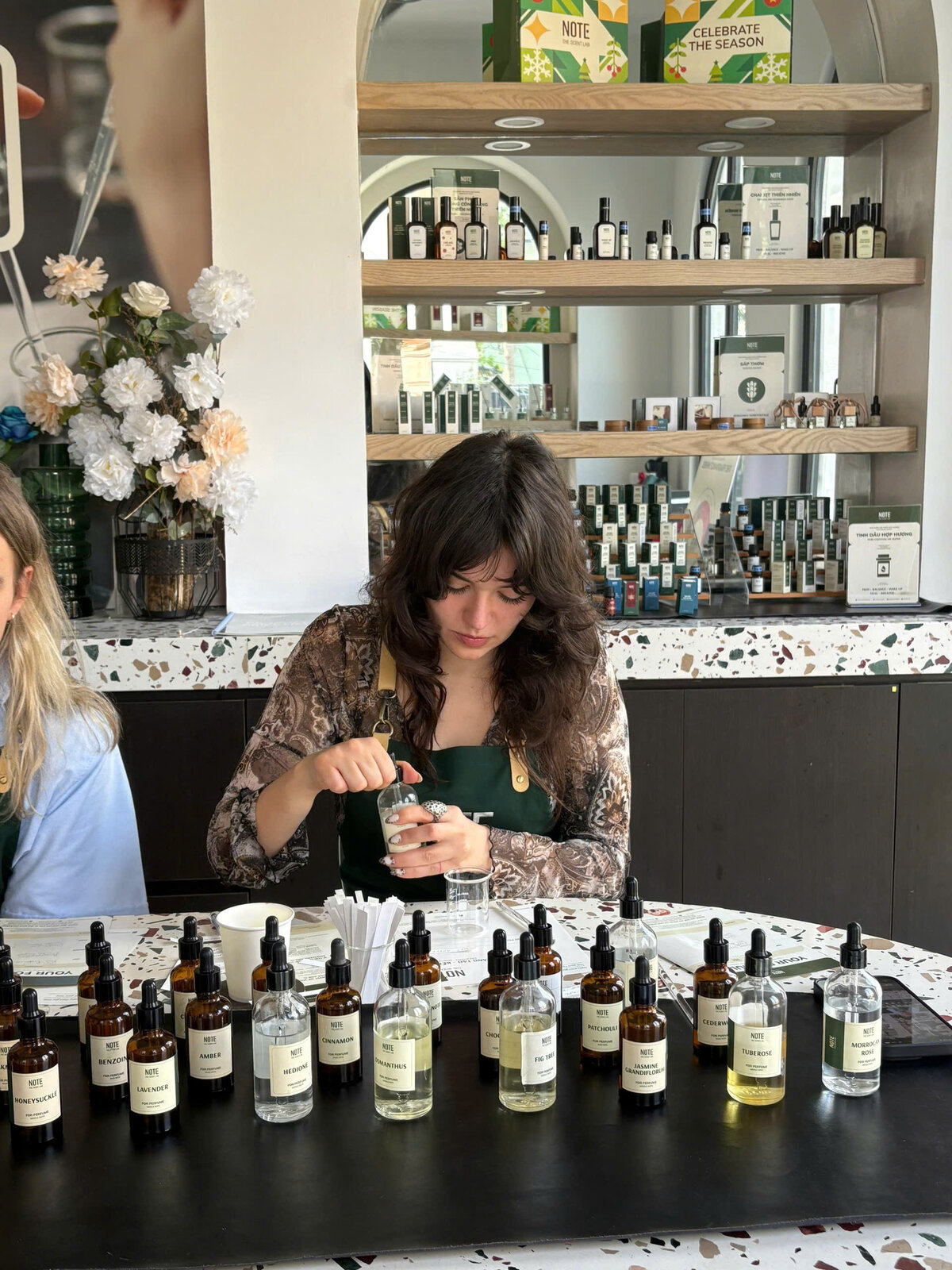
What surprises many Japanese visitors is how familiar the ingredient table feels. NOTE uses 30+ professional-grade materials, and several of them are deeply woven into Japanese daily life and ceremony:
Hinoki (檜). The scent of onsen ryokan, of new tatami, of shrine forests in Kii Peninsula. At NOTE, hinoki appears as a base note — warm, woody, meditative. Japanese visitors often reach for it first, instinctively. It’s home. But layered with Vietnamese lemongrass or Saigon jasmine, it becomes something entirely new: a bridge between two countries, held in a single bottle.
Agarwood (沈香/Tram Huong). In Japan, this is jinkoh — the most prized material in kodo ceremony. Vietnam is one of the world’s finest sources. When you smell agarwood at NOTE’s studio, you’re encountering the same wood that Japanese incense masters have treasured for centuries, but from the forests of central Vietnam. The connection is immediate. The context is transformed.
Cinnamon (桂皮). Vietnamese cinnamon — Vietnamese cassia — carries a sweetness and depth that Japanese travelers recognize from shichimi togarashi, from nikki candy, from autumn festival stalls. As a heart note in perfumery, it adds warmth without heaviness.
Lotus (蓮). Sacred in both Vietnamese and Japanese Buddhism. The scent of lotus ponds in Hue echoes the lotus gardens of Ueno and Shinobazu. At the workshop, lotus extract brings a clean, aquatic sweetness that grounds a perfume in something spiritual — something beyond technique.
These are not exotic novelties. For a Japanese visitor, they are reunions — familiar essences encountered in an unfamiliar place, creating a fragrance that belongs to both cultures at once.
Tokyo Department Stores vs. Vietnam Hands-On Creation
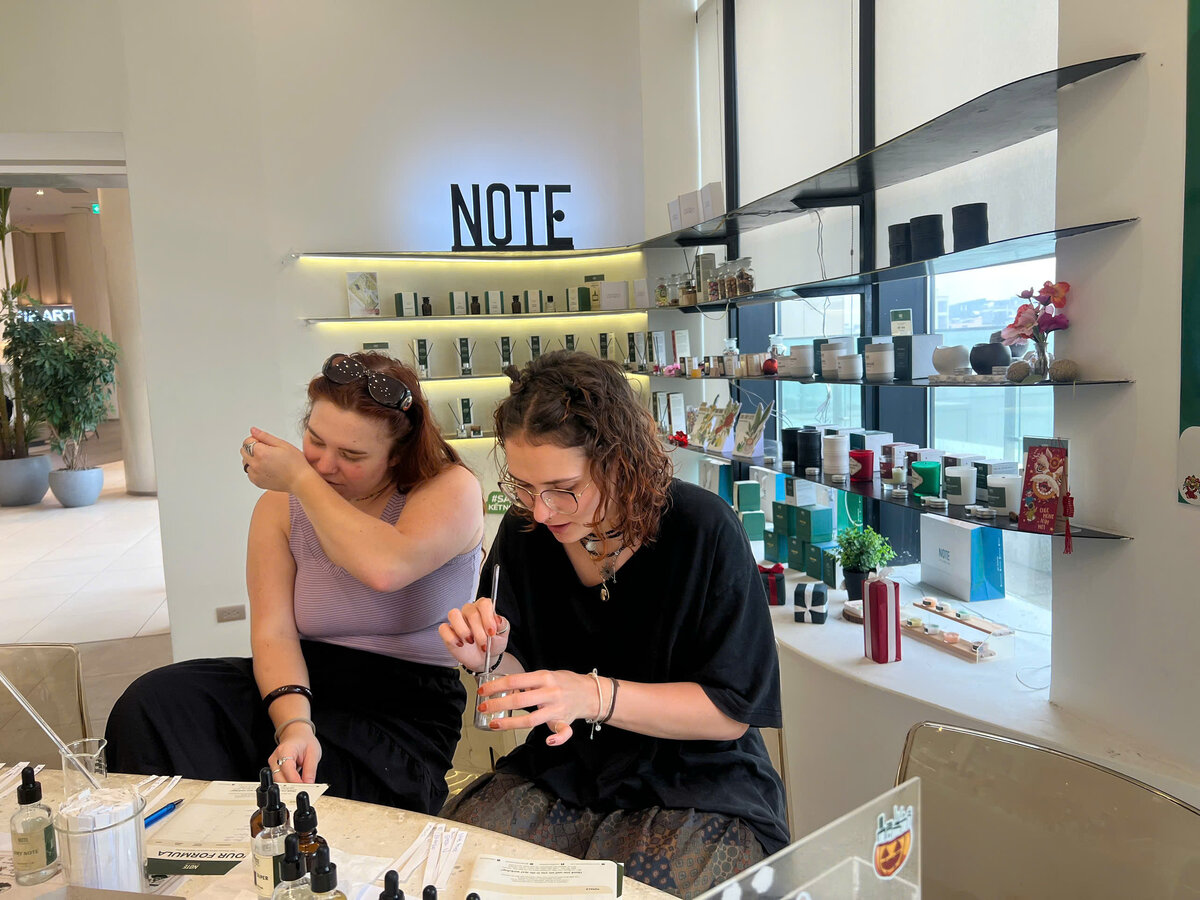
In Isetan Shinjuku or Takashimaya Nihonbashi, fragrance shopping is refined. Beautiful counters. Knowledgeable staff in uniforms. Blotters lined up like calligraphy brushes. You can spend an hour sampling Diptyque, Le Labo, and Aesop — and leave with a gorgeous bottle someone else designed.
At NOTE in Vietnam, you leave with a bottle you designed — creating your own signature scent using Vietnamese ingredients, guided by a trained workshop instructor.
The difference is not about quality — it’s about agency. In a department store, you’re choosing from someone else’s vision. In a perfume workshop, you’re building your own. Drop by drop. Note by note. The workshop instructor guides your decisions — suggesting combinations, explaining how molecules interact, helping you balance top, heart, and base — but the final fragrance is yours alone. No one else in the world will have it.
This is wabi-sabi in action. Your perfume won’t be “perfect” the way a mass-produced fragrance is perfect. It might lean a little heavy on the cinnamon. The vetiver might arrive later than expected. That’s the point. The imperfection is evidence of your hand. Of a specific afternoon in Saigon. Of choices only you could have made.
“Staff are attentive and patient, guiding us step by step to blend our favorite scent. Clean and comfortable environment, relaxing atmosphere.”
What to Expect: The 90-Minute Workshop Experience
The workshop follows a clear, structured format — no ambiguity, no unexpected extensions, no hard selling. For travelers who value time precision, here is exactly what happens:
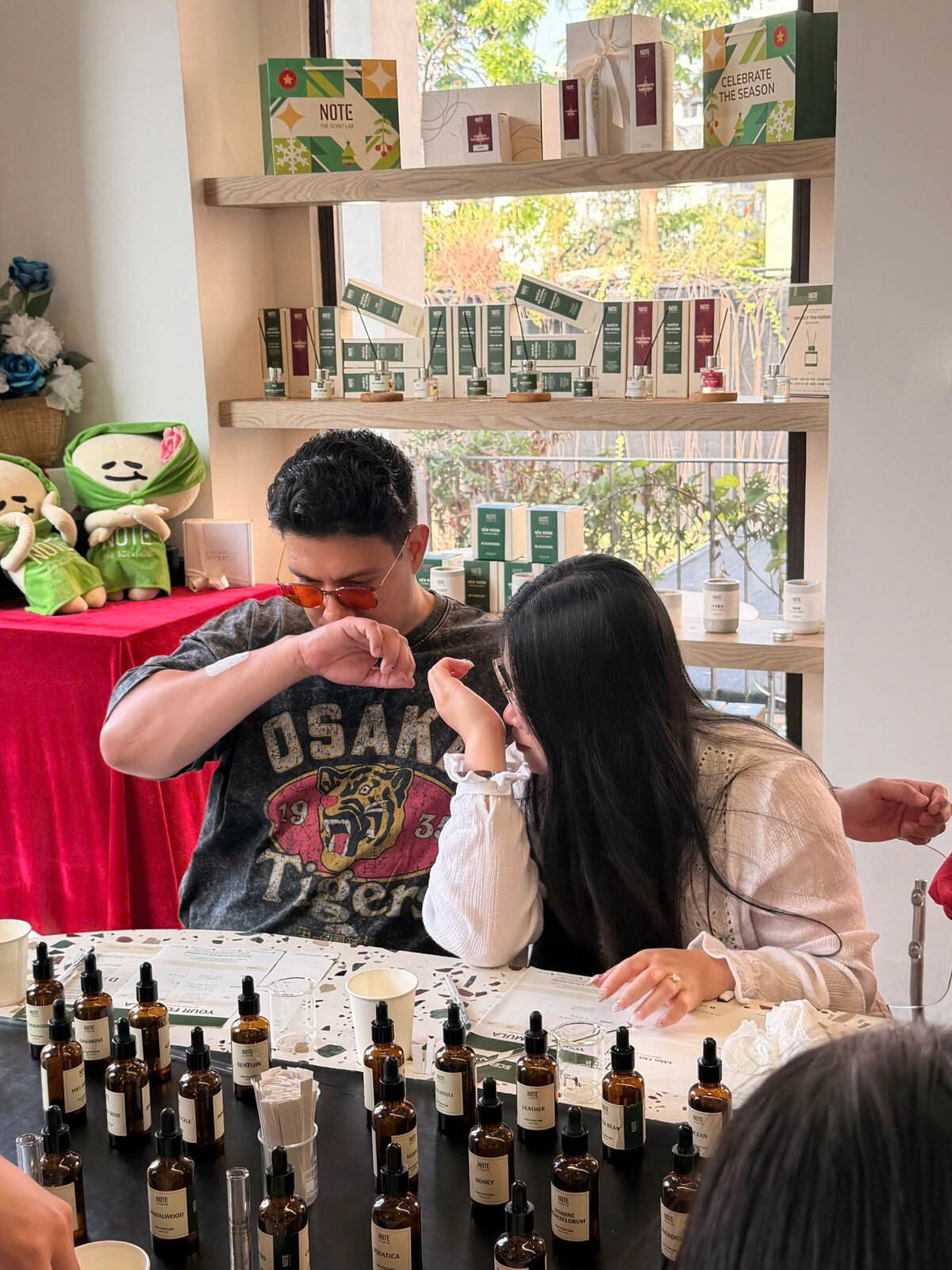
Minutes 1–15: Scent education. Your workshop instructor introduces the three layers of fragrance — top notes (first impression), heart notes (character), and base notes (lasting memory). You smell raw ingredients one by one. This is the listening phase — similar to how kodo begins with quiet attention before anything is blended.
Minutes 15–30: Concept design. What do you want your perfume to say? A memory from this trip? The smell of rain on Saigon streets? Something that reminds you of someone? Your workshop instructor helps translate abstract feelings into concrete ingredient choices.
Minutes 30–60: Blending. This is the making — the monozukuri. Using a pipette, you add drops of each ingredient, adjusting ratios, smelling test strips, refining. The room tends to go quiet during this phase. Hands move slowly. Focus sharpens. If you’ve ever practiced any craft — ceramics, calligraphy, cooking — you’ll recognize the feeling of flow.
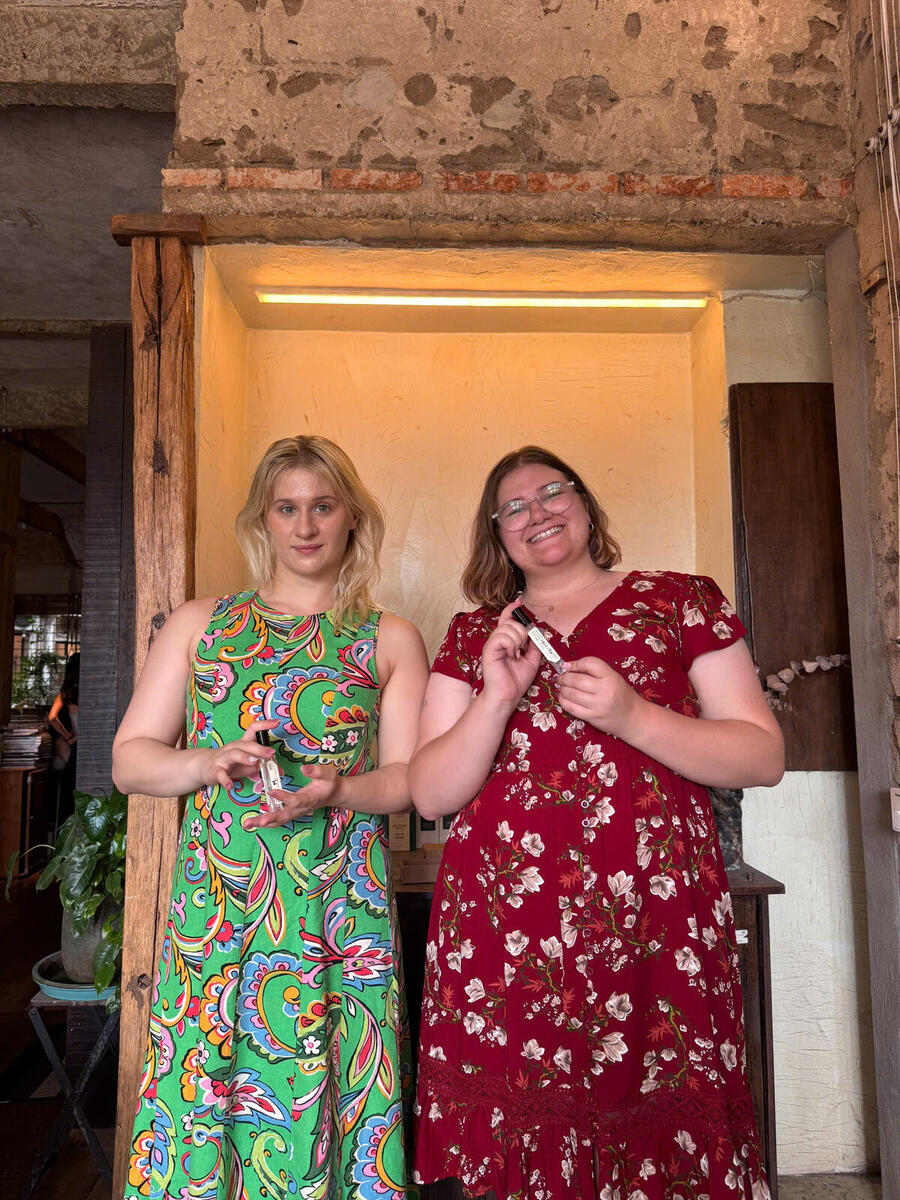
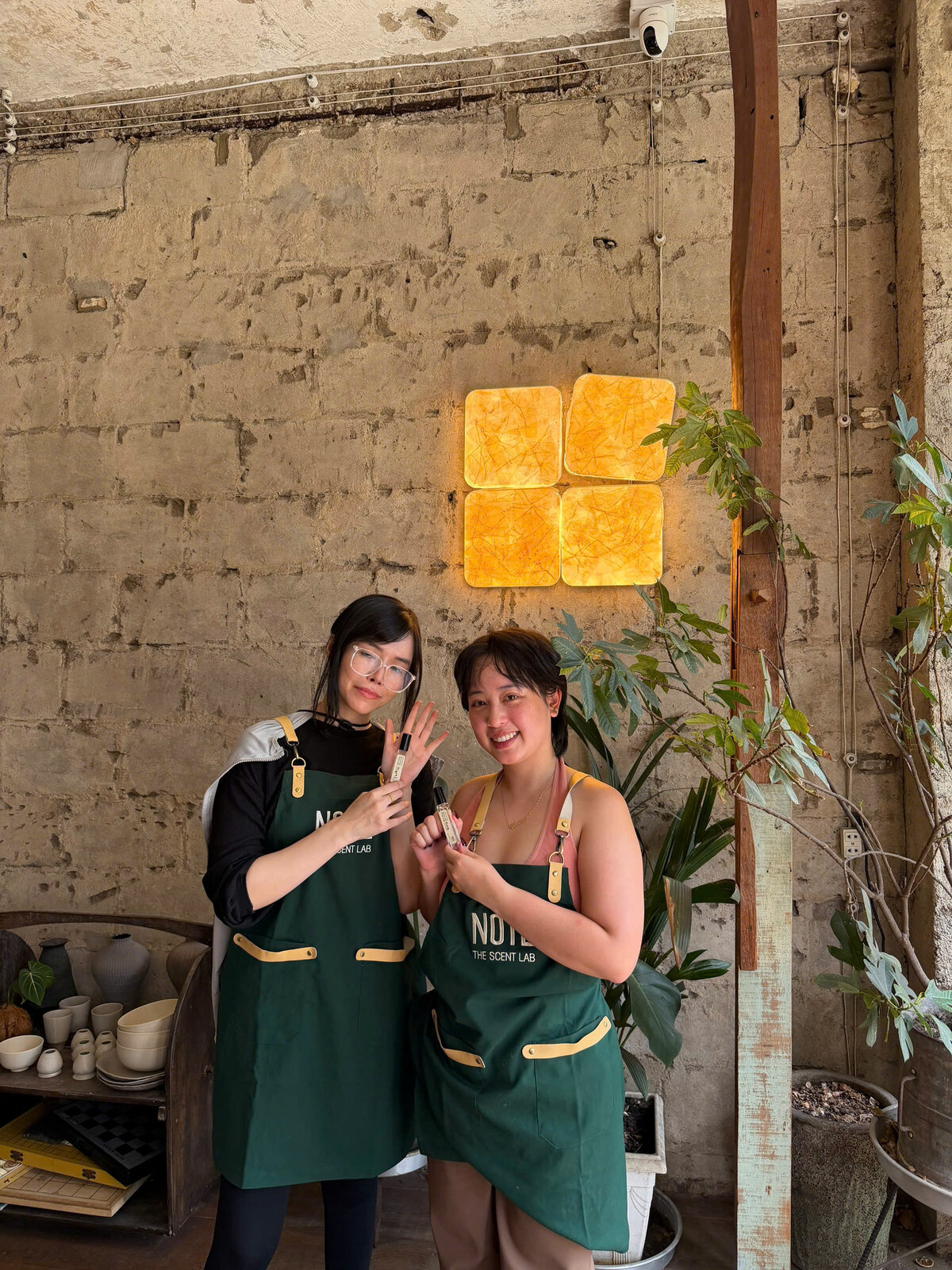
Minutes 60–75: Naming and labeling. You name your creation. You write the label by hand. Many Japanese visitors choose names that combine Vietnamese and Japanese references — a word from each world meeting on a single bottle.
Minutes 75–90: Bottling. Your custom EDP (Eau de Parfum) is sealed and packaged. Your formula is saved permanently — if you want to reorder after returning to Japan, you can contact NOTE and they’ll prepare it for your next visit to Vietnam.
Total time: exactly 90 minutes. No overtime. No pressure. The kind of precision you can plan around.
Practical Details Japanese Travelers Want to Know
Based on questions from past Japanese visitors, here are the details that matter most:
Cleanliness and environment. NOTE’s studios are clean, air-conditioned, and organized. Ingredients are stored in labeled glass vials. Workspaces are wiped between sessions. The aesthetic is minimal and modern — closer to a Japanese workshop studio than a cluttered market stall.
Language. Workshops are conducted in English. Workshop instructors are fluent and experienced with international visitors. The hands-on format means language barriers rarely become an issue — scent is a universal language, and the physical process (smelling, choosing, mixing) communicates beyond words.
“The staff is very informative and patient. I’m so proud of coming up the scent I really like even though it’s my first time. A must try in Hanoi.”
Booking and punctuality. Online booking is available at workshop.thescentnote.com/book. Sessions start on time. Walk-ins are welcome but booking ahead during peak season (December–March) is recommended.
What you take home. A custom EDP perfume bottle with your handwritten label, plus a formula card documenting every ingredient and ratio. IFRA-certified ingredients — the same safety standard used in Japanese perfumery.
Suitable for groups. Couples, families (children 8+), and friends are all welcome. Corporate and student groups regularly visit — a scent-making team activity that’s more memorable than most.
Two Cities, Two Atmospheres: Saigon and Hanoi
NOTE operates in both of Vietnam’s major cities, each offering a different texture to the workshop experience.
Ho Chi Minh City (Saigon)
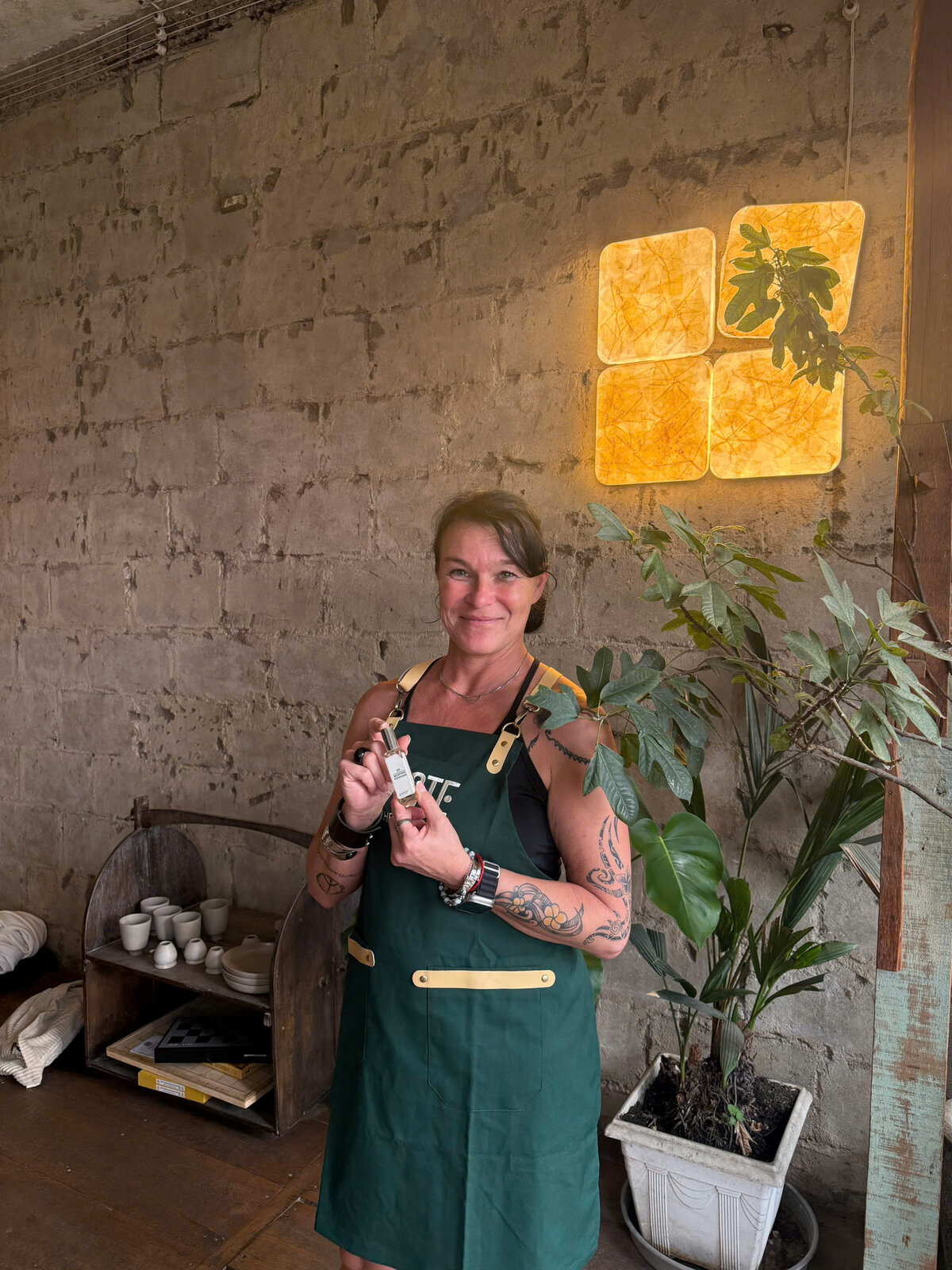
The flagship studio sits inside the Cafe Apartment at 42 Nguyen Hue, District 1 — a building Japanese travel bloggers already know well. Tourists discover pottery two floors below, vinyl records play above, and jasmine base notes drift from NOTE’s studio on the 2nd floor. After the workshop, you walk out onto Nguyen Hue Walking Street — Saigon’s central boulevard — with your new perfume in hand and the city buzzing around you.
A second studio in Thao Dien (34 Nguyen Duy Hieu, Thu Duc) offers a quieter, more residential atmosphere — popular with visitors staying in the Thao Dien area’s cafes and boutique hotels.
If you’re exploring Saigon, our complete guide to perfume workshops in Vietnam covers everything about the city’s creative scene.
Hanoi
The Hanoi studio at Lotte Mall Tay Ho (Store 410, 4F, 272 Vo Chi Cong, Tay Ho) sits near West Lake — one of Hanoi’s most scenic areas. The northern capital adds a different sensory dimension: cooler air, the scent of green tea and chrysanthemum, the slower rhythm of a city that moves differently than Saigon. Many travelers who visit both cities say the Hanoi workshop feels more introspective, the Saigon one more energetic.
Bottling Vietnam: Why Scent Is the Souvenir That Lasts
There’s a neuroscience behind this. Smell is the only sense that connects directly to the limbic system — the brain’s center for emotion and memory. A photograph requires you to look at it. A souvenir sits on a shelf. But a perfume ambushes you: one spray, and you’re back in that studio in Saigon, choosing between Vietnamese cinnamon and hinoki, while the afternoon light angles through the window and the city hums four floors below.
Japanese travelers understand this instinctively. Kodo is built on the same principle — that scent carries meaning beyond the material. That listening to fragrance is an act of presence. When you create a personalized perfume at NOTE during your Vietnam trip, you’re not just making a product. You’re bottling a moment — a specific afternoon, a specific mood, a specific version of yourself in a country that moved you.
“I loved my fragrance making experience. I have a beautiful souvenir to take home and every time I smell it, I will remember Saigon. Thanh was an excellent teacher.”
Your formula is saved permanently. Months later, back in Tokyo or Osaka, when the bottle runs low — you’ll know it can be remade. The memory has a formula. The formula has a home. And Vietnam will be waiting.
Monozukuri Meets Mekong: A Cultural Exchange in 90 Minutes
What makes this experience resonate so deeply with Japanese visitors is the cultural mirroring. Vietnam and Japan share more than most travelers expect:
- Buddhist heritage — lotus, incense, temple rituals appear in both cultures
- Reverence for craftsmanship — Vietnam’s lacquerware tradition parallels Japan’s urushi; both countries value patient, skillful hands
- Aromatic ingredients — agarwood, cinnamon, and camphor move between both nations’ traditions
- The philosophy of restraint — a great perfume, like a great Japanese garden, is about what you leave out as much as what you include
At NOTE’s workshop, these connections surface naturally. You might blend Vietnamese agarwood with hinoki and discover you’ve created a bespoke perfume that smells like neither country alone — but like the space between them. The workshop instructor might suggest adding a trace of lotus. Suddenly the perfume carries the weight of shared Buddhism, of water, of quiet. That’s not something you plan. It’s something that happens when you work with ingredients that have traveled between cultures for centuries.
This is not a “Japanese-themed” workshop. It’s a Vietnamese workshop that, because of historical and botanical connections, speaks a language Japanese visitors already understand.
Planning Your Visit: Tips for Japanese Travelers in 2026
Best time to book: 2–3 weeks before your trip. Peak season (December–March) fills faster. Online booking at workshop.thescentnote.com/book is the easiest way to secure your preferred time slot.
Where to fit it in your itinerary: The workshop works beautifully as a last-day activity — when you’ve experienced Vietnam and want to consolidate those memories into something tangible. It also works as a rainy-day alternative or an afternoon break between sightseeing.
Combine with the Cafe Apartment: If you’re at the 42 Nguyen Hue location, explore the building’s cafes and creative studios before or after. Many Japanese visitors spend 2–3 hours in the building total.
Pair with shopping: NOTE also has a collection of ready-made fragrances and scented products at thescentnote.biz — including candles and room sprays that make thoughtful omiyage (お土産).
Follow the journey: Check @note.workshop on Instagram for workshop moments, ingredient stories, and visitor photos from travelers around the world.
Reserve Your Workshop Session →
Frequently Asked Questions
Is the perfume workshop available in Japanese?
The workshop is conducted in English. However, the hands-on format means language is rarely a barrier — your workshop instructor guides you through smelling, choosing, and blending using visual and physical cues. Many Asian visitors have reviewed the experience as easy to follow regardless of English level.
How long does the workshop take?
Exactly 90 minutes. Sessions start on time and finish on time — no overtime, no waiting. You can plan the rest of your day around it with confidence.
Can I reorder my custom perfume after returning to Japan?
Yes. NOTE saves your formula permanently. When you return to Vietnam, contact the studio and they’ll have your perfume prepared. The formula card you receive at the workshop documents every ingredient and ratio.
Does NOTE use hinoki and other Japanese-familiar ingredients?
Yes. NOTE’s ingredient library includes hinoki (Japanese cypress), agarwood (jinkoh), cinnamon, lotus, and other materials with deep connections to Japanese fragrance culture. You can build your perfume around these ingredients if you choose.
Which location is best — Saigon or Hanoi?
Both offer the same workshop quality. The Saigon studio at Cafe Apartment (42 Nguyen Hue, District 1) is ideal if you want an urban, energetic atmosphere. The Hanoi studio at Lotte Mall Tay Ho suits travelers who prefer a quieter, more contemplative setting near West Lake.
Is it suitable for children?
Children aged 8 and above can participate (ages 8–10 with a parent). The workshop is a popular family activity — creative, educational, and produces a tangible result everyone takes home.
Can Japanese travelers create a personalized perfume in Vietnam?
Absolutely. The entire workshop is designed around creating your own signature scent — 自分だけの (one-of-a-kind). You choose every ingredient, adjust every ratio, and name the final perfume yourself. With materials like hinoki, agarwood, and Vietnamese cinnamon, many Japanese visitors craft fragrances that bridge both cultures. Your formula is saved permanently, so it’s truly yours.
How do I book?
Book online at workshop.thescentnote.com/book. Pre-booking is recommended during peak season (December–March). Walk-ins are welcome when space is available.