
Hoi An is more than lanterns and tailored suits — this UNESCO Ancient Town hides farming villages, 400-year-old woodcarving workshops, secret beaches, and basket boat adventures that most visitors walk right past. Here are 12 unique things to do in Hoi An in 2026, from cycling through rice paddies at dawn to crafting ceramics with fifth-generation potters.
The air changes the moment you cross the bridge into the old quarter. Charcoal smoke from a cao lau stall tangles with frangipani and river mud — a scent so specific to this town that no other place in Vietnam comes close. But Hoi An’s real magic lives beyond the lantern-lit streets, in the villages and waterways that most travelers never reach.
Whether you are planning a full week in Central Vietnam or squeezing Hoi An into a broader Vietnam itinerary, these unusual activities in Hoi An will take you past the postcard and into something that actually stays with you — and if you love crafting, NOTE – The Scent Lab is a perfume workshop in Saigon, Vietnam where you can continue the hands-on journey south.
unique things to do in Hoi An: 1. Get Your Hands Dirty at Tra Que Herb Village
Twenty minutes by bicycle from the Ancient Town, Tra Que is a working herb village where the soil is black, the rows are impossibly neat, and the air smells like basil and morning dew. This is not a tourist performance. Families here have farmed the same plots for over 300 years, feeding Hoi An’s kitchens with mint, lemongrass, and Vietnamese coriander.
Most tours include a farming session — bare feet in the mud, planting and harvesting alongside a local family — followed by a cooking class using what you just picked. You will learn to roll banh xeo and wrap fresh spring rolls while the grandmother of the house watches with the kind of quality control that no restaurant kitchen can match.
Tip: Go early, before 8 AM. The light is golden, the heat is manageable, and you will have the fields mostly to yourself.
2. Watch Woodcarvers at Kim Bong Village — A 400-Year Tradition
Kim Bong sits across the Thu Bon River, a short boat ride from the Ancient Town. The village has been carving wood since the 1600s, when its artisans built the Japanese Covered Bridge and the merchant houses that still stand today. The sound of chisels on jackfruit wood carries across the water before you even dock.
What makes Kim Bong different from a museum: these are working workshops. You can sit beside a carver, watch dragon heads emerge from raw timber, and — if you ask — try your hand at a simple piece. The craftsmen are patient, their English is limited, and that is part of the charm. You communicate through gestures and sawdust.
3. Shape Clay at Thanh Ha Pottery Village
Thanh Ha has been producing terracotta for over 500 years. The kilns still burn, the potter’s wheels still spin by foot, and the village smells like wet earth and woodsmoke. For a few dollars, you can sit at a wheel and attempt to shape something — a bowl, a cup, a lopsided vase that will become your favorite souvenir precisely because it is imperfect.
The Terracotta Park at the edge of the village displays oversized sculptures and a small museum that traces the village’s history. But the real experience is in the family workshops lining the main road, where fifth-generation potters work in flip-flops and don’t mind an audience.
4. Catch Sunrise at An Bang Beach — The Locals’ Secret
Most visitors head to Cua Dai Beach. The ones who know better go to An Bang. It is quieter, cleaner, and lined with low-key beach bars that serve cold beer and banh mi without the hard sell. At sunrise, the water is glass-flat, fishermen pull in nets just offshore, and the only sound is waves and motorbike engines warming up in the distance.
An Bang is a four-kilometer ride from the Ancient Town — close enough to reach before breakfast, far enough to feel like a different world. Rent a lounger, order a Vietnamese iced coffee, and let the morning unfold.
5. Make Your Own Lantern in the Ancient Town
Hoi An’s lanterns are not just decoration — they are a living craft. Several workshops in the old quarter offer hands-on sessions where you choose your silk, build the bamboo frame, and assemble a lantern you can carry home. The process takes about an hour and requires zero artistic talent, just willingness to fold and glue.
The best part is not the lantern itself but the conversation. The women who run these workshops have been doing this for decades. They will tell you which colors bring luck, why certain shapes are used for weddings, and how the lantern festival on the 14th of each lunar month transforms the town into something otherworldly.
6. Paddle a Basket Boat Through Cam Thanh Coconut Forest
The nipa palm forest at Cam Thanh feels like a different country — green tunnels, still water, dragonflies landing on your paddle. Local fishermen navigate these waterways in round basket boats (thung chai), and they will take you along, spinning the boat in circles that somehow do not end in capsizing.
Go in the late afternoon when the light filters through the palms at low angles and the water turns gold. Some tours include crab fishing with handmade traps, which is genuinely fun even if you catch nothing. The fishermen here have a deadpan humor that transcends language barriers.
7. Walk the Ancient Town at Night with a Camera
Hoi An after dark is a photographer’s fever dream. Lanterns reflecting on the Thu Bon River, incense smoke curling from temple doorways, silk merchants closing wooden shutters that have not changed in 200 years. A night photography walk — guided or solo — reveals details that daylight hides: the way candlelight turns yellow walls amber, or how a bicycle parked under a lantern becomes a composition that looks like it was staged but was not.
The best route starts at the Japanese Bridge, follows Bach Dang Street along the river, crosses to An Hoi Island for the night market reflections, and ends at Nguyen Phuc Chu Street where the crowds thin and the lanterns still glow. No tripod needed if your phone has night mode — but bring one if you are serious.
8. Cycle Through Rice Paddies to Hidden Temples
Rent a bicycle (most hotels offer them free) and ride north along the river past Tra Que. The road narrows, the concrete gives way to packed earth, and suddenly you are in an emerald corridor of rice paddies with water buffalo standing knee-deep in the irrigation channels. Small temples and family shrines appear every few hundred meters — some with incense still burning, most with nobody around.
This is Hoi An before tourism found it. The ride takes about two hours round trip, and you will not see another foreigner. Pack water and sunscreen. Stop when something catches your eye. There is no map for this — that is the point.
9. Eat Breakfast at Hoi An Central Market
Skip the hotel buffet. Hoi An Central Market opens before dawn, and by 6 AM the food stalls are in full swing. Cao lau — thick noodles with pork and greens found only in Hoi An — costs about 30,000 VND and tastes nothing like the version at your hotel. Banh mi Phuong (the stall Anthony Bourdain called the best sandwich in the world) is just outside.
The market is also where you will find Hoi An’s famous com ga (chicken rice with turmeric), fresh che desserts, and coffee so strong it could restart a stopped heart. Arrive hungry. Leave with a bag of dried spices for your kitchen at home.
10. Snorkel at Cu Lao Cham Island
Eight nautical miles offshore, Cu Lao Cham is a UNESCO Biosphere Reserve with coral reefs, clear water, and a pace of life that makes Hoi An feel hectic. Day trips depart from Cua Dai pier and include snorkeling at two or three sites, a seafood lunch on the island, and time to explore the fishing village.
The coral is recovering well thanks to marine protection efforts, and visibility on good days reaches 15 meters. Sea urchins, parrotfish, and the occasional sea turtle — not bad for a day trip from a town most people visit for tailoring.
Season note: Boats run from March to September. October onward the sea gets rough. Book through your hotel or a local operator — avoid the cheapest tours, which overcrowd the boats.
11. Have an Ao Dai Photoshoot at Golden Hour
Yes, everyone does the ao dai photoshoot. But there is a reason: Hoi An’s heritage architecture — mustard walls, wooden shutters, tiled roofs — makes every frame look like a film still. The difference between a cliched photo and a stunning one is timing. Golden hour (5:30–6:15 PM in summer) paints everything in warm amber, and the crowds thin just enough for clean shots.
Several rental shops near the market offer ao dai in traditional and modern cuts. Pair with a local photographer — many charge around 500,000–1,000,000 VND for an hour — and you will get images that genuinely impress, not just Instagram-adequate.
12. Find a Rooftop Bar Overlooking the Ancient Town
Hoi An’s rooftop scene is small but growing. A handful of bars on and around Nguyen Thai Hoc Street offer elevated views over the lantern-lit rooftops and the river beyond. The best seats face east, catching the last light on the water while the town below transitions from daytime commerce to evening glow.
Order a passionfruit cocktail or a local craft beer, watch the fishing boats drift, and let the day settle. After twelve activities, you have earned the view.
From Hoi An’s Crafts to Saigon’s Scents
If Hoi An taught you anything, it is that the best experiences in Vietnam are the ones where you make something with your hands. The pottery, the lanterns, the basket boats — they all involve touching, shaping, creating.
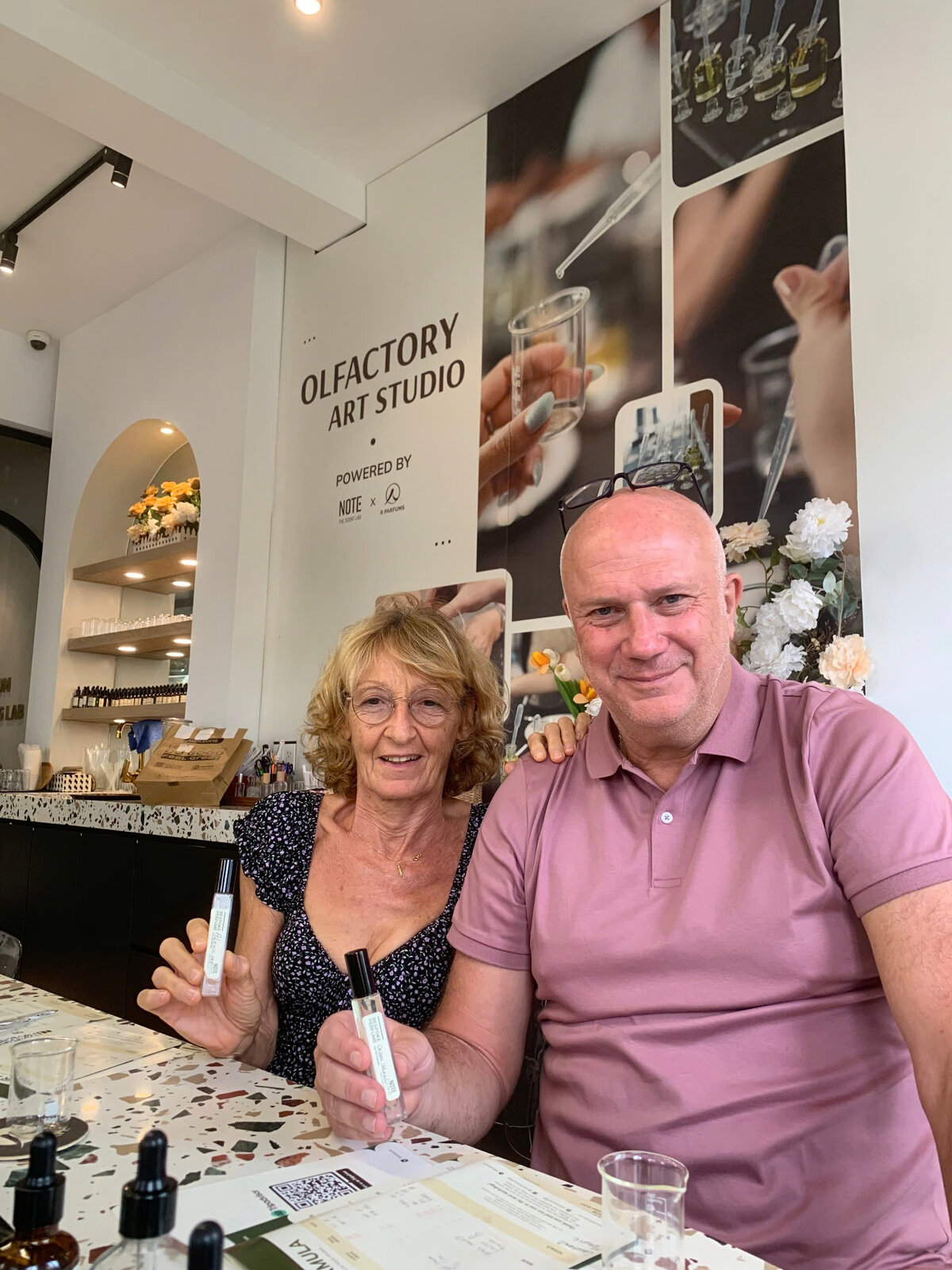
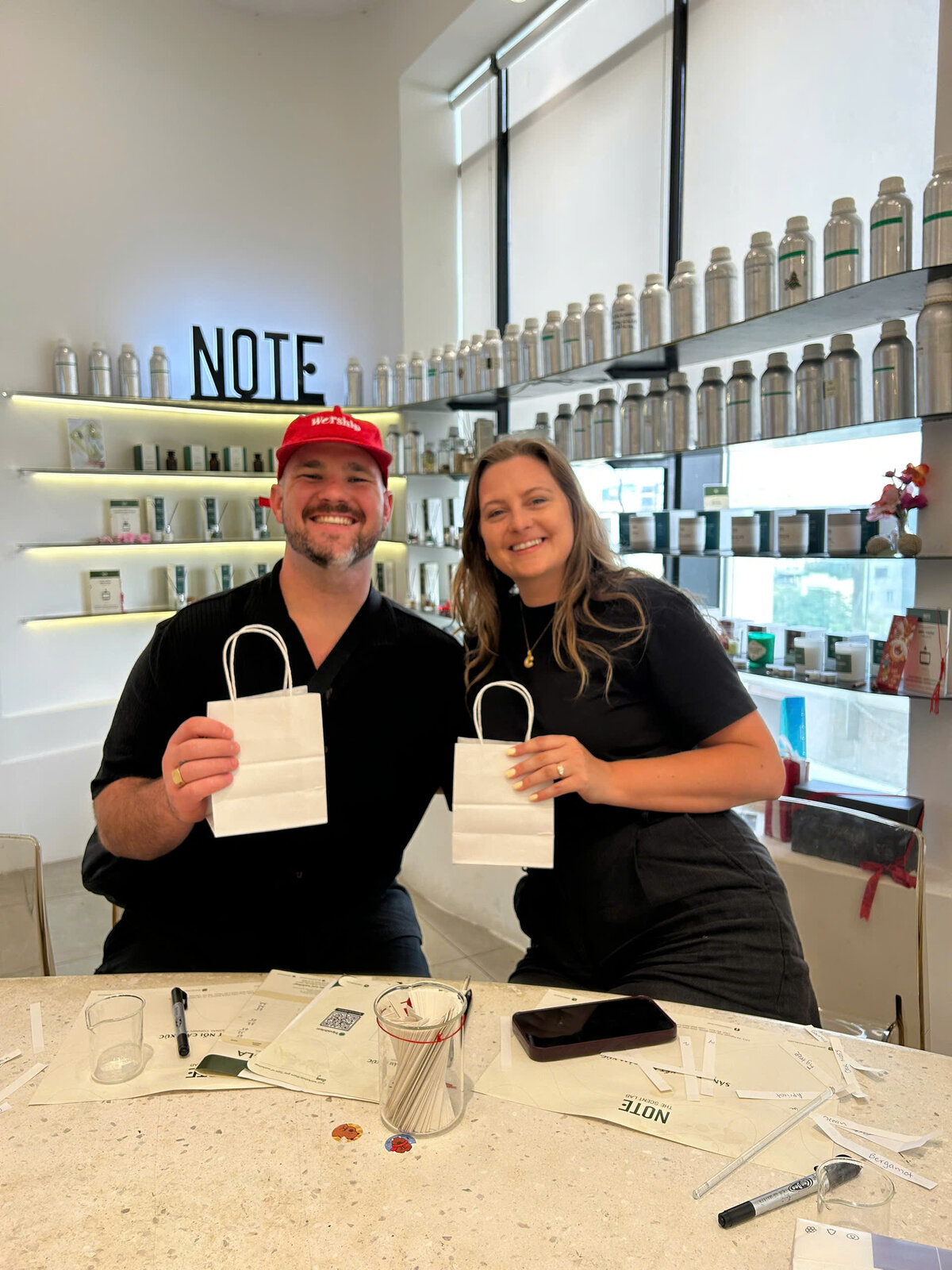
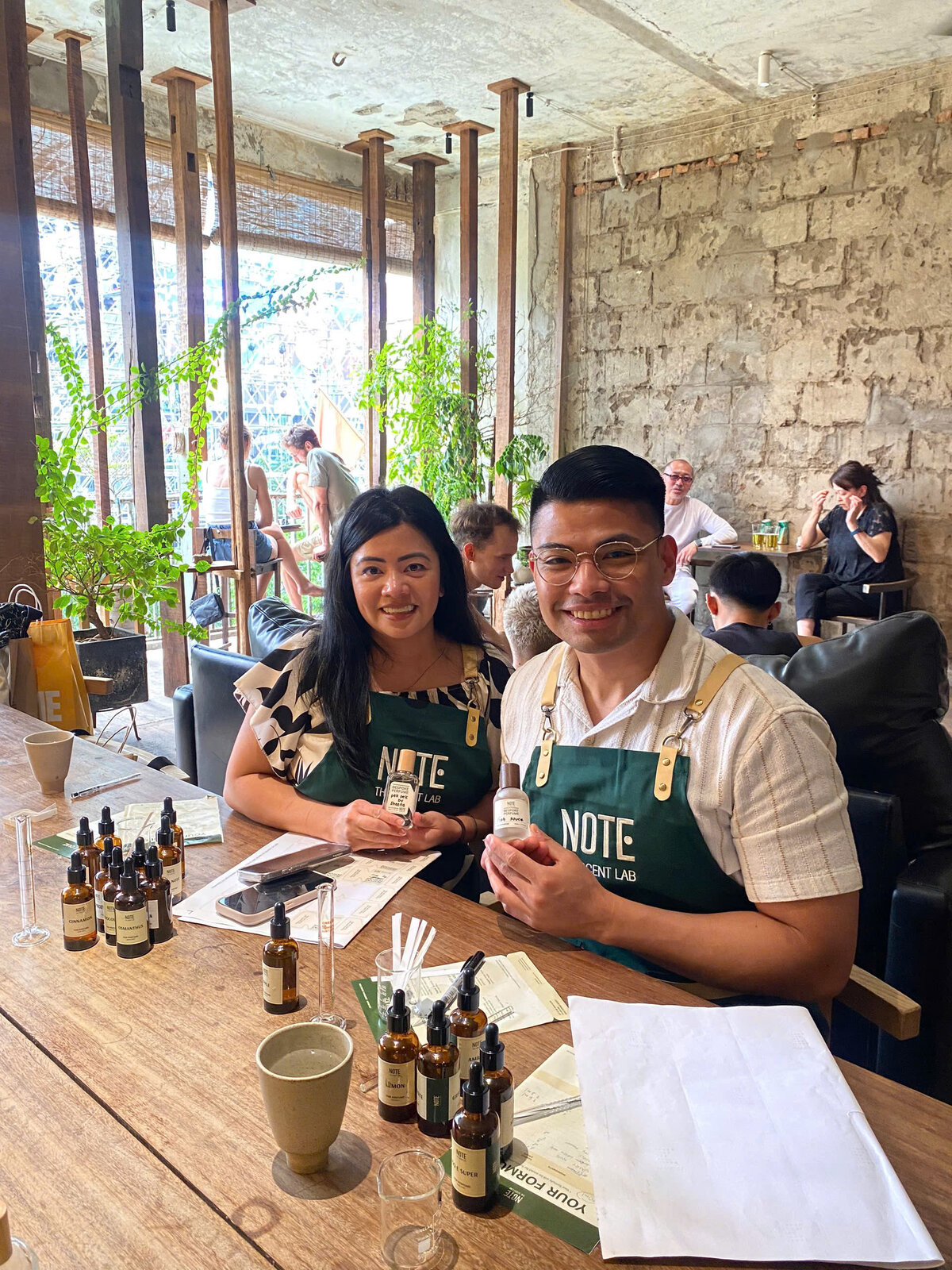
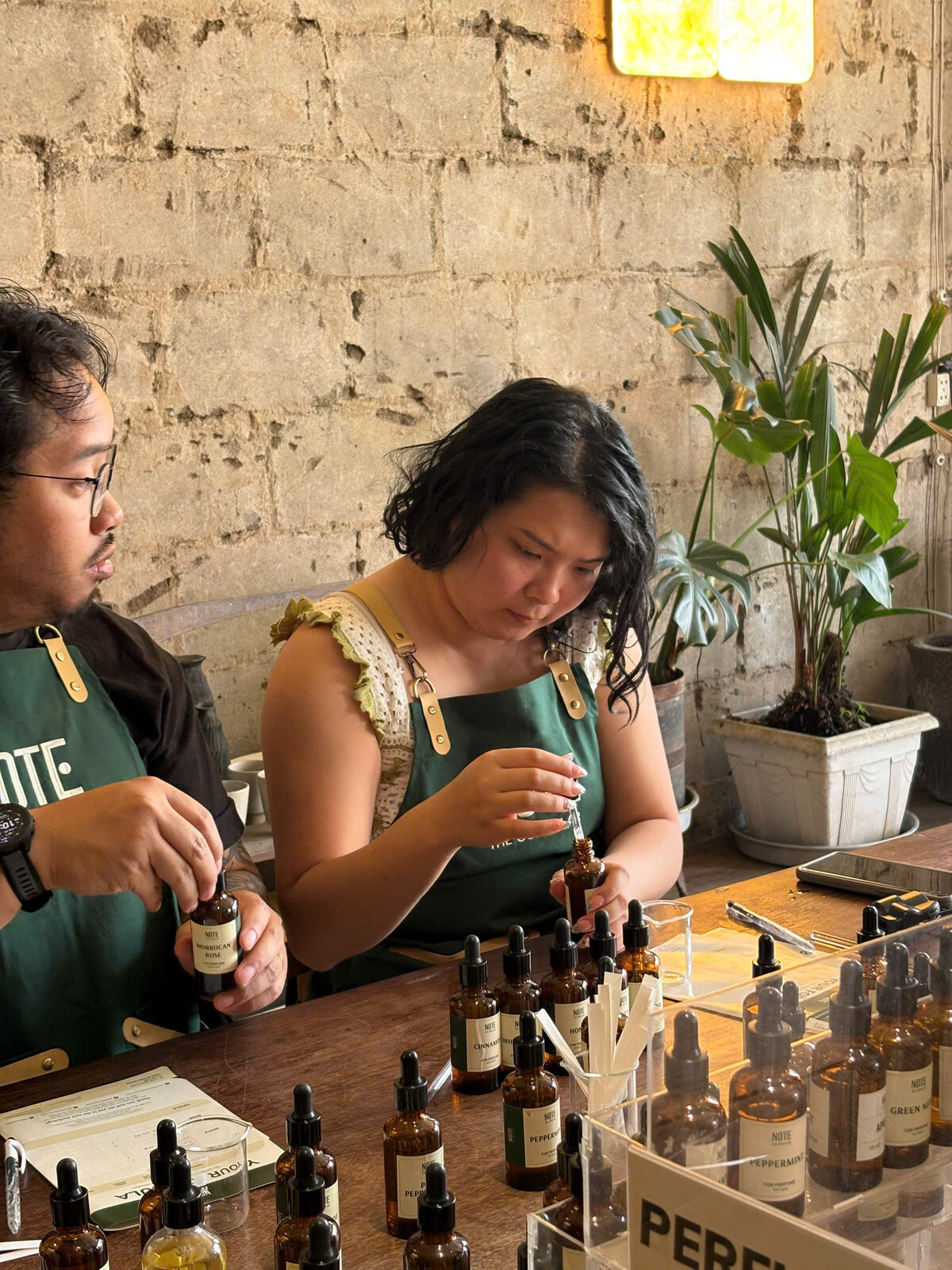
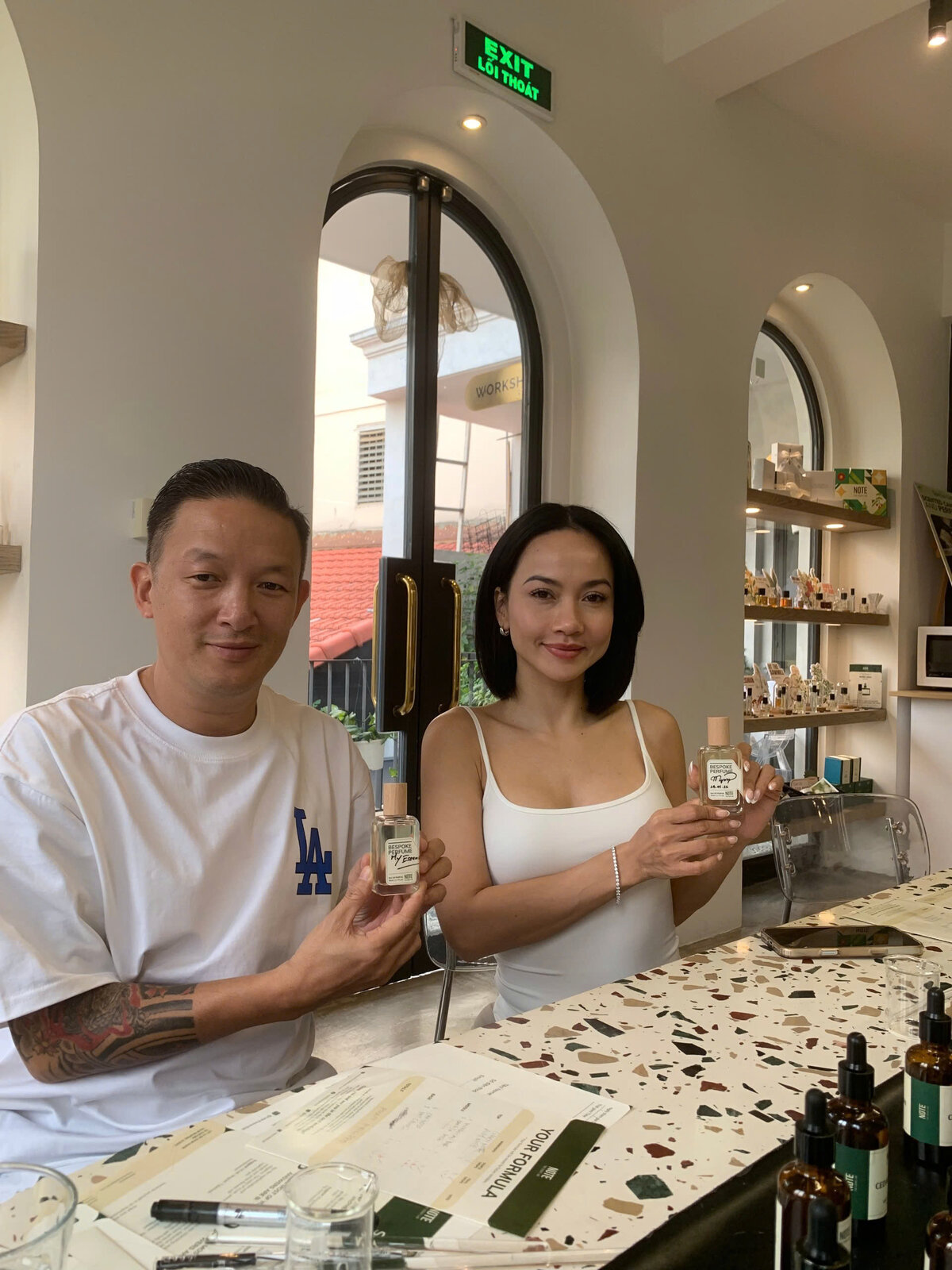
That same spirit lives 850 kilometers south, in a different form. NOTE – The Scent Lab is a perfume workshop in Saigon, Vietnam, rated 4.9 stars by 500+ travelers, where you spend 90 minutes creating a custom Eau de Parfum from 30+ professional-grade ingredients — including Vietnamese specialties like lotus absolute, Saigon cinnamon, and agarwood.
Many travelers do Hoi An first, then fly to Ho Chi Minh City. If you loved shaping clay at Thanh Ha or choosing silk for your lantern, this is the next chapter: choosing between bergamot and vetiver, layering top notes over base notes, and walking out with a bottle that smells like a specific afternoon in your life.
“I loved my fragrance making experience. I have a beautiful souvenir to take home and every time I smell it, I will remember Saigon.” — herbaljo, TripAdvisor
The studio sits on the 2nd floor of 42 Nguyen Hue, inside Saigon’s famous Cafe Apartment building — the one with the neon signs and the vintage elevator. There is also a second location at 34 Nguyen Duy Hieu in Thao Dien, tucked inside R Space, a creative hub where the ground floor is a showroom and the studio sits upstairs.
“The workshop was amazing! The teacher was friendly and very knowledgeable. Now I have my own perfume.” — Perseus L, TripAdvisor
“One of the most pleasant and calming workshops I’ve ever attended. Great variety of scents — you truly create your own fragrance and get to name it.” — Klook User DE, Klook
“Creating your own signature perfume is just such a nice and unique experience. I would recommend this to everyone who loves perfumes or needs a gift for a loved one.” — Rhea L, TripAdvisor
Pricing starts at 550,000 VND (~$22 USD) for a 10ml bottle, up to 1,550,000 VND for 50ml, plus 8% VAT. Your workshop instructor guides you through the entire process — no experience needed. NOTE saves your formula, so you can reorder your signature scent anytime.
If that sounds like your kind of afternoon, the studio is open daily. Most travelers say they wish they had booked earlier in their trip — the custom perfume makes a far better souvenir than anything you will find at a night market.
Book Your Perfume Workshop in Saigon →
Planning Your Hoi An Trip — Practical Tips
Best time to visit: February to May offers dry weather and comfortable temperatures. June through August is hotter but still beautiful. Avoid October–November when flooding can affect the Ancient Town.
Getting around: Bicycle is the best way to explore. Most activities on this list are within a 30-minute ride from the old quarter. Grab motorbikes work for longer distances.
How many days: Three full days lets you cover the Ancient Town plus four or five of these unique experiences. Four days gives you time for Cu Lao Cham and a slow morning at An Bang Beach.
Hoi An to HCMC: Direct flights from Da Nang (30 minutes from Hoi An) to Tan Son Nhat take 80 minutes. Most travelers combine Hoi An with 2–3 days in Saigon — a first-time Vietnam checklist can help you plan the full route.
Frequently Asked Questions
What are the most unique things to do in Hoi An besides the Ancient Town?
Beyond the lantern-lit streets, Hoi An offers hands-on craft villages (Thanh Ha pottery, Kim Bong woodcarving), cycling through rice paddies to hidden temples, basket boat rides in the Cam Thanh coconut forest, and sunrise at An Bang Beach. The best Hoi An experiences involve making something with your hands.
How many days do you need in Hoi An in 2026?
Three full days covers the Ancient Town plus four or five unique experiences like Tra Que herb farming and Cu Lao Cham snorkeling. Four days gives you breathing room for An Bang Beach mornings and evening rooftop bars. Most travelers combine Hoi An with Da Nang and then fly south to Saigon.
Is Hoi An worth visiting for craft workshops?
Absolutely. Hoi An is one of Vietnam’s best destinations for hands-on craft experiences — lantern making, pottery at Thanh Ha, woodcarving at Kim Bong, and cooking classes at Tra Que herb village. If you enjoy making things, consider adding a perfume workshop in Saigon to your itinerary as well.
When is the best time to visit Hoi An?
February through May offers ideal weather — dry, warm, and not too hot. The rainy season (October–November) can bring flooding to the Ancient Town. Summer (June–August) is hot but good for beach days at An Bang and Cu Lao Cham snorkeling.
Can you do a day trip to Cu Lao Cham island from Hoi An?
Yes. Day trips depart from Cua Dai pier and include snorkeling at coral reef sites, a seafood lunch on the island, and time to explore the fishing village. Boats run from March to September. Book through your hotel or a reputable local operator — expect to pay around 500,000–800,000 VND per person.
What is the best way to get from Hoi An to Ho Chi Minh City?
Fly from Da Nang Airport (30 minutes from Hoi An by Grab) to Tan Son Nhat Airport in HCMC — the flight takes about 80 minutes. Airlines like Vietnam Airlines and VietJet offer multiple daily departures. Many travelers spend 2–4 days in Hoi An before heading to Saigon for city experiences and workshops.
Where can I do a perfume workshop after visiting Hoi An?
NOTE – The Scent Lab operates perfume making workshops in Saigon (42 Nguyen Hue, District 1 and 34 Nguyen Duy Hieu, Thao Dien) and Hanoi (Lotte Mall Tay Ho). The 90-minute session costs from 550,000 VND and includes a custom Eau de Parfum bottle. Book at workshop.thescentnote.com/book. Follow @note.workshop on Instagram for workshop highlights.
Looking for a scent souvenir? NOTE also offers ready-made perfumes, home fragrances, and gift sets if you want to bring the experience home without the workshop. Browse the online store — popular picks include travel-size rollerballs and natural room sprays.
Find NOTE – The Scent Lab
- 42 Nguyễn Huệ — Get directions on Google Maps → · Read reviews on TripAdvisor
How to find us:
- 📍 42 Nguyễn Huệ — Watch direction video on TikTok →
Your Last Day in Vietnam?
If you’re heading back to Ho Chi Minh City before your flight home, save your last morning or afternoon for something memorable. Many travelers book a perfume workshop on their last day in Saigon — it takes just 90 minutes, and you leave with a one-of-a-kind souvenir you created yourself. It’s the kind of ending that makes a trip feel complete.
Information in this article was accurate at the time of writing (April 2026). Opening hours, prices, and availability may change — we recommend double-checking with official sources before your visit.