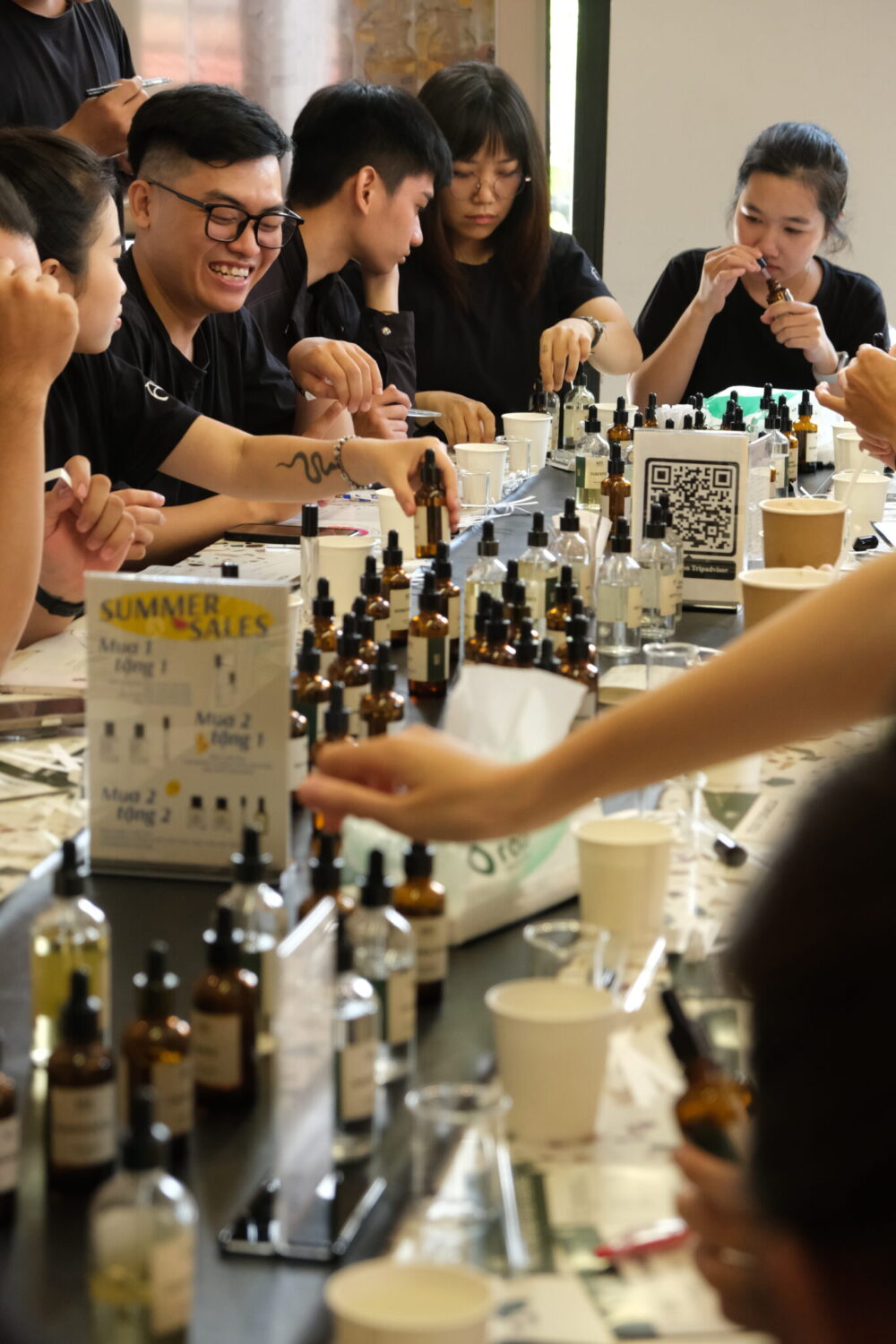

The best things to buy in Vietnam aren’t the mass-produced magnets at Ben Thanh Market — they’re the handmade, one-of-a-kind pieces that carry a story back home with you. NOTE – The Scent Lab is a perfume workshop in Ho Chi Minh City, Vietnam, and in Hanoi (, ) where travelers create custom fragrances — and a bottle of perfume you blended yourself might be the only souvenir from Vietnam you’ll actually use every single day. This what to buy Vietnam guide covers everything you need to know.
You’re standing in a market stall. The vendor is smiling. The lacquerware box is beautiful — red and black, smooth as glass, light in your hands. You buy it. You pack it carefully in your suitcase between two t-shirts. You get home. You put it on a shelf. And there it sits, gathering dust beside the elephant from Thailand and the batik from Bali and the snow globe from wherever.
We’ve all done this. The souvenir that felt meaningful in the moment becomes invisible at home. The question isn’t “what to buy in Vietnam” — it’s “what will I actually keep using, keep noticing, keep being surprised by?”
This guide is organized around that principle. For the hands-on version, see our handmade souvenirs Vietnam guide covering 12 things you can make yourself. Every item here earns its place in your suitcase because it does something — it smells, it tastes, it functions, it tells a story that matters to you specifically.
1. Custom Perfume — The Souvenir You’ll Wear Every Day
This is the one souvenir from Vietnam that ambushes you with memory.
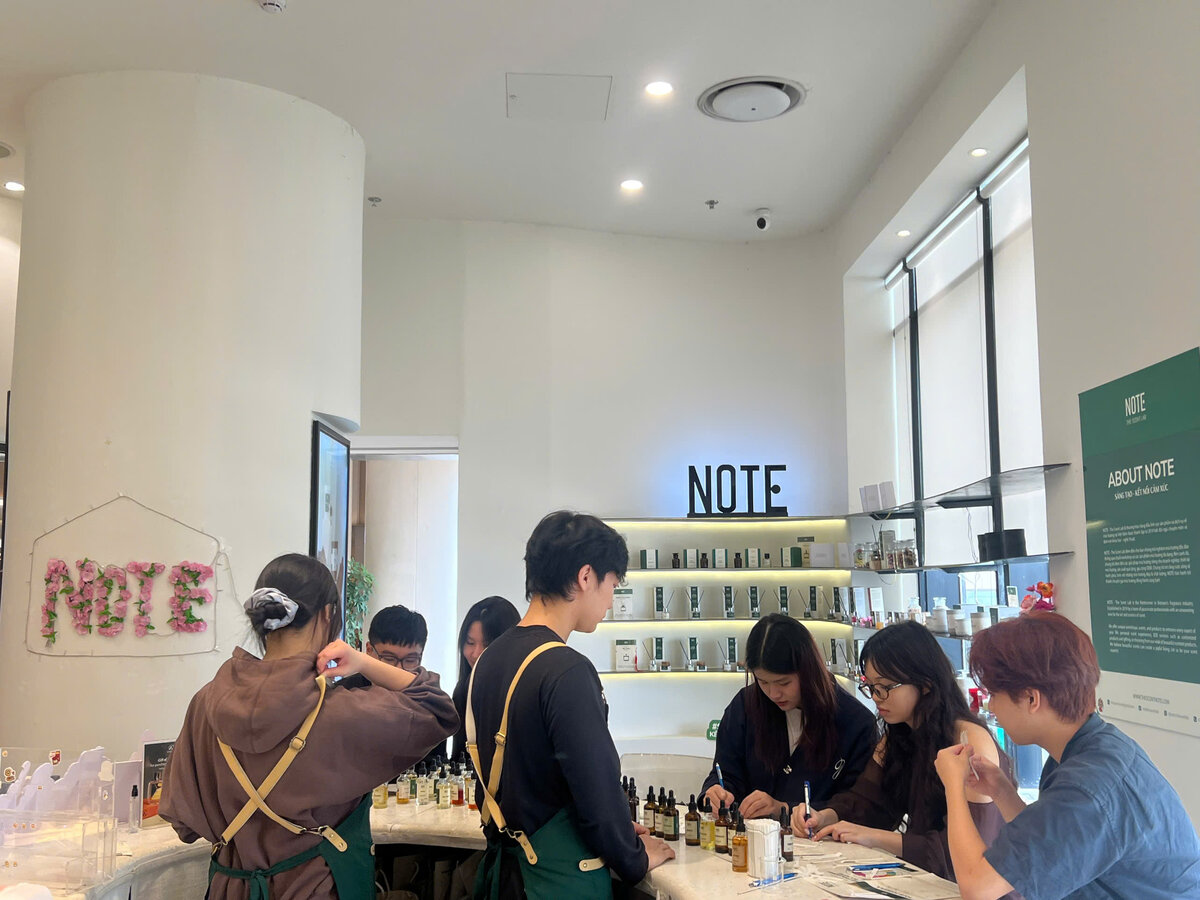
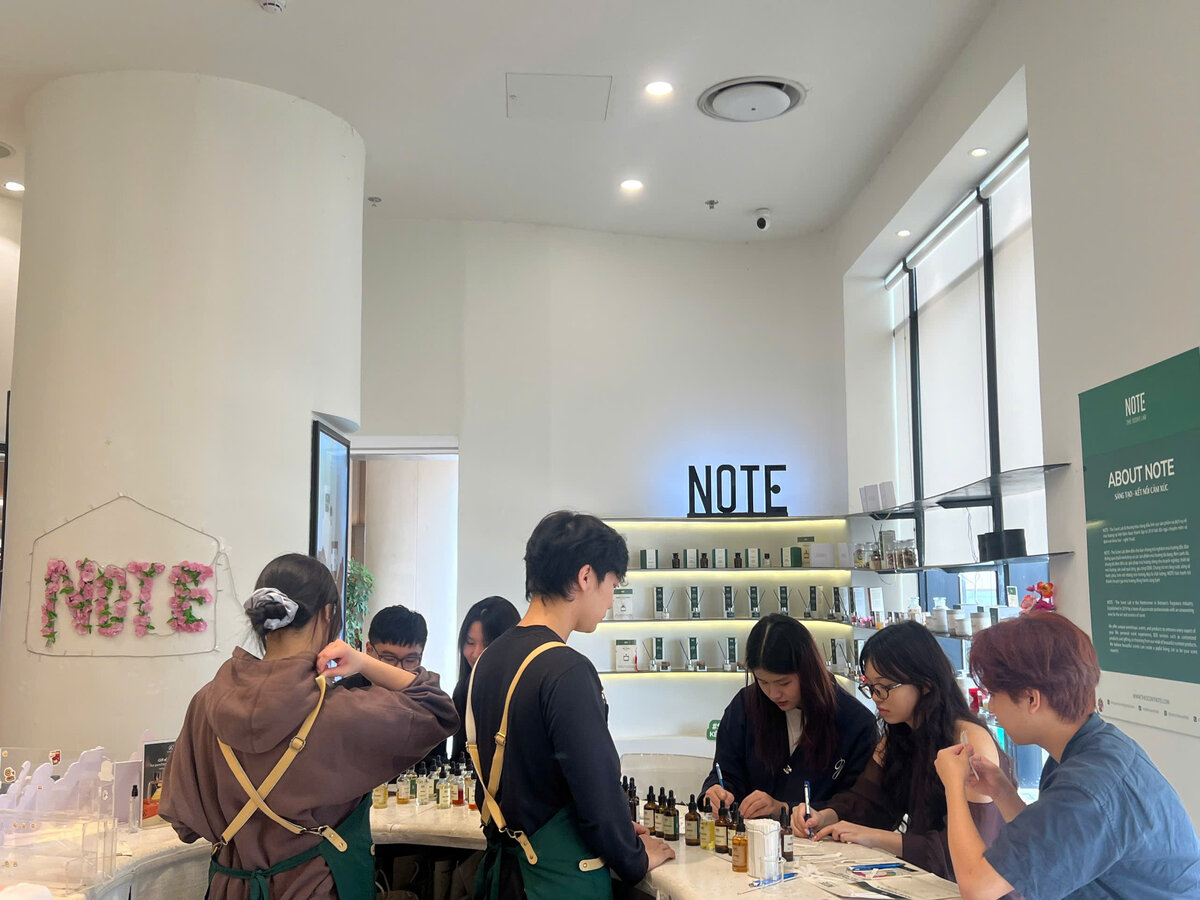
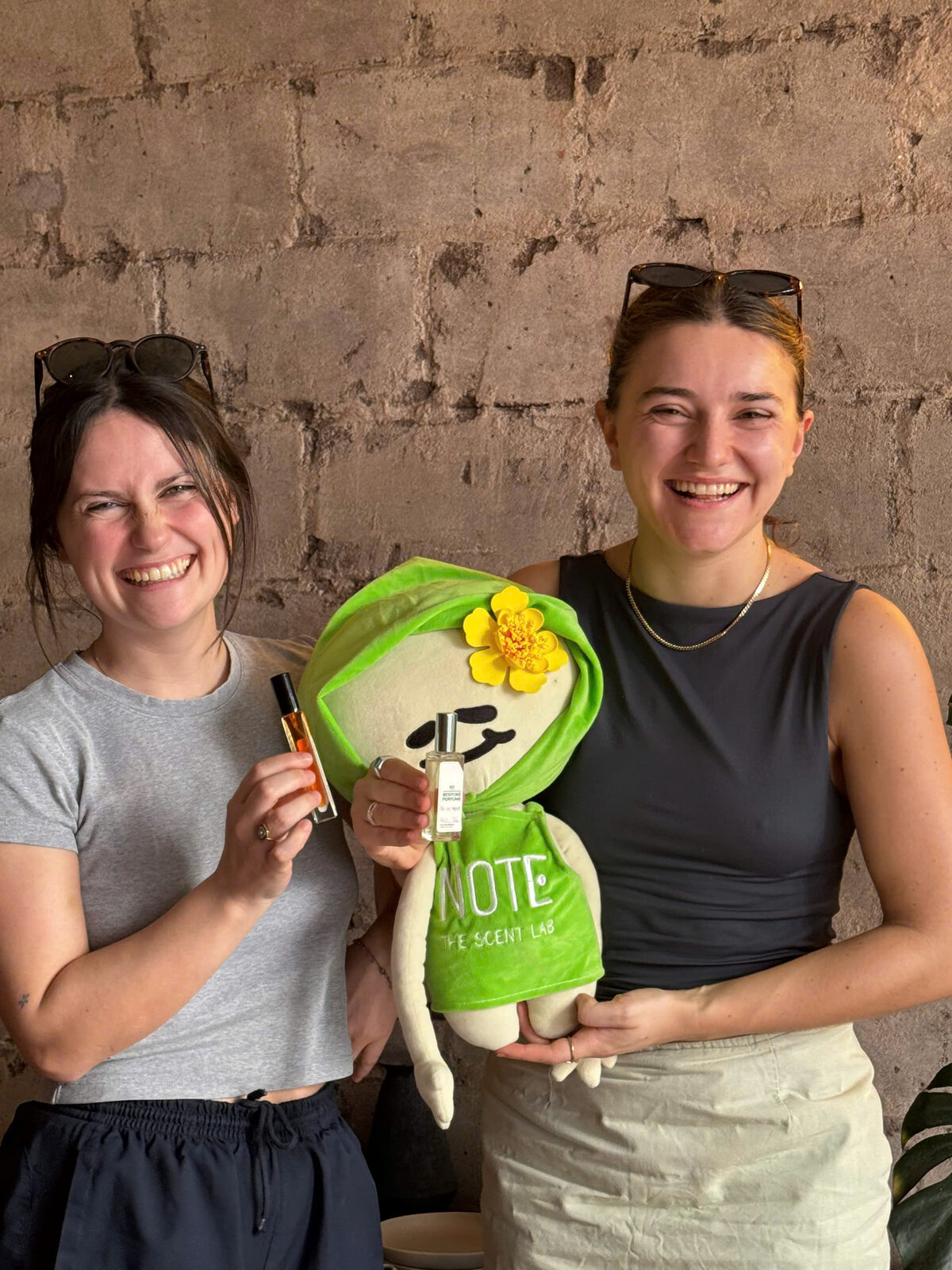
At NOTE – The Scent Lab, the 120-minute workshop guides you through creating a custom Eau de Parfum from a palette of more than thirty professional-grade accords, from bright citrus and jasmine to cinnamon, rose and warm woods. Your workshop instructor helps you translate your trip into a fragrance concept, and you blend it drop by drop.
The result: a perfume that smells like YOUR Vietnam. See our custom perfume as a unique souvenir guide for the full story, or book a custom perfume workshop for travelers to make one on your trip. Not a generic “tropical” scent — something specific. The jasmine from Hoi An at night. The cinnamon from the phở stall you loved. The green freshness of a Hanoi morning. Every ingredient carries a memory, and every time you spray it — months later, in a different city, in winter — Vietnam comes back. The heat, the noise, the aliveness of it.
Why it’s the #1 souvenir: your formula is saved permanently. When you finish the bottle, you can reorder. The scent evolves on your skin over time. And no one else on earth has the same one.
From the studio window on the 4th floor, you can see Nguyen Hue stretching toward the river — motorbikes circling the roundabout below, tourists taking photos on every landing.
“I left with not only my handmade creations but also a wealth of new knowledge. Highly recommend.”
“I loved my fragrance making experience. I have a beautiful souvenir to take home and every time I smell it, I will remember Saigon. Thanh was an excellent teacher.”
Workshops run daily at three locations: 42 Nguyen Hue in the Cafe Apartment, District 1, R Space at 34 Nguyen Duy Hieu in Thao Dien, and . No experience needed. Ages 8+. Online booking gives you instant confirmation with no deposit — pay by credit card, bank transfer, or cash on the day.
2. Vietnamese Coffee — The Daily Ritual
Vietnamese coffee is not like other coffee. It’s darker, stronger, and brewed through a small metal filter called a phin that drips slowly into a glass of condensed milk. The result is thick, sweet, and intensely aromatic — somewhere between espresso and dessert.
What to buy: whole beans from the Central Highlands (Da Lat, Buon Ma Thuot, or Gia Lai). Look for robusta (Vietnam’s signature) or a robusta-arabica blend. Trung Nguyen is the most famous brand, but smaller roasters in the Ben Thanh Market area and specialty shops in District 3 offer single-origin options that are far more interesting.
Also buy: a phin filter. They’re aluminum or stainless steel, cost almost nothing, and turn your kitchen into a Saigon sidewalk every morning. That’s a souvenir that works.
The scent connection: Vietnamese coffee is one of the most distinctive olfactory signatures of the country. At the perfume workshop, some travelers reach for warm gourmand accords like chocolate and tonka bean, the roasted, bittersweet warmth that says “morning in Vietnam.”
3. Áo Dài Fabric or Custom Tailoring
The áo dài is Vietnam’s national garment — a long tunic over flowing trousers, elegant in a way that stops conversation. You can buy a ready-made version, but the meaningful souvenir is having one custom-made. Beyond the traditional áo dài, Saigon also has a fast-growing scene of independent local designers, and our guide to Saigon local fashion brands maps where foreigners can find them.
In Hoi An, tailoring shops can produce a custom áo dài in 24-48 hours. In Saigon, the silk shops on Hai Ba Trung Street (District 1 and District 3) offer similar services. Choose your fabric — silk is traditional, but modern áo dài come in cotton, linen, and even printed linen blends.
Even if you don’t commission a full áo dài, buying a cut of Vietnamese silk is worth it. The quality rivals Thai silk but tends to be softer and more subtle in sheen. A silk scarf from Hang Gai Street in Hanoi or from Van Phuc silk village (30 minutes from central Hanoi) makes a gift that people actually use.
4. Lacquerware — If You Know What to Look For
Vietnam’s lacquerware tradition dates back thousands of years. The real stuff is built up in dozens of hand-applied layers of tree sap — each sanded smooth before the next — creating a depth and warmth that resin-based imitations can’t replicate.
The problem: most lacquerware sold in tourist markets is plastic resin with a pretty finish. It’s not bad, but it’s not the craft.
How to find the real thing: visit workshops in Ha Thai village (south of Hanoi) or in Binh Duong province (north of HCMC). The pieces are heavier, the colors have depth rather than uniform gloss, and the artisans can show you the layering process. Expect to pay more than market price — but you’re buying something that took weeks to make, not minutes.
Good souvenirs: lacquered bowls (usable), chopstick sets (giftable), small boxes (displayable). Avoid oversized vases unless you have a plan for shipping.
5. Conical Hat (Nón Lá) — The Iconic One
Yes, it’s a cliche. But a well-made nón lá is genuinely beautiful — palm leaves stitched over bamboo ribs, light enough to barely feel on your head, and functional (it works as both sun hat and rain shield).
The special version: in Hue, look for the nón bài thơ — a “poem hat” with verses pressed between the leaf layers, visible only when you hold it up to the light. It’s one of the most poetic objects you’ll encounter anywhere in Asia.
Where to buy: direct from villages. Chuong Village (30 km from Hanoi) specializes in nón lá. In Hue, the Phu Cam hat village is the source. Market versions work fine — just check that the stitching is tight and the frame doesn’t flex too much.
6. Spices and Sauces — Bring the Kitchen Home
Vietnam’s flavor profile depends on ingredients that are hard to replicate abroad. Buying them in-country means getting the real thing at a fraction of the price.
Must-buy spices:
- Star anise — Vietnam produces 80% of the world’s supply. Buy whole pods at any market.
- Cinnamon (quế) — from Yên Bái. Sweeter and more complex than Chinese or Indonesian cinnamon. Also available as cinnamon essential oil from specialty shops.
- Black pepper — from Phu Quoc. Among the world’s best. Buy whole peppercorns.
- Dried lemongrass — for soups and teas. Lightweight, easy to pack.
Must-buy sauces:
- Nước mắm (fish sauce) — from Phu Quoc or Phan Thiet. The difference between Vietnamese fish sauce and what you get abroad is like the difference between fresh-squeezed orange juice and concentrate. Buy the glass bottle, not plastic.
- Satay sauce (sa tế) — chili-lemongrass oil that transforms any noodle bowl.
Pack carefully — double-bag liquids. Most fish sauce bottles are now carry-on friendly (under 100ml versions exist at airport shops).
7. Handmade Pottery and Ceramics
Vietnam has been making ceramics for 2,000+ years. The two traditions travelers encounter most:
Bat Trang (Hanoi) — a 700-year-old pottery village where you can visit workshops, take a wheel-throwing class, and buy directly from artisans. Blue-and-white glazes are the signature style. Bowls, teapots, and small vases make great gifts.
Thanh Ha (Hoi An) — a smaller village focused on terracotta. Simpler, earthier, more rustic. The fish-shaped lanterns sold here are a Hoi An icon.
Like the perfume workshop, pottery villages offer a “create” experience — you can make your own piece and carry it home. The overlap isn’t accidental: both ask you to work with your hands, engage your senses, and leave with something no one else has.
For more on the best handmade finds, our handmade souvenirs guide goes deep into artisan villages and what to buy at each.
8. Vietnamese Art — Originals, Not Prints
Saigon and Hanoi both have thriving art scenes, and original works by emerging Vietnamese artists are remarkably affordable compared to global art markets. Oil paintings, lacquer paintings (a uniquely Vietnamese medium), and contemporary mixed-media works can be found at galleries in District 1 (Saigon) and the Hoan Kiem area (Hanoi).
What to look for: ask galleries if the artist is listed anywhere (even Instagram). Avoid the mass-produced “oil painting streets” in District 7 — those are reproduction factories. The real finds are in small galleries where the artist might be sitting in the back.
Lacquer paintings are particularly special as souvenirs — the same layering technique as lacquerware, applied to canvas. They’re uniquely Vietnamese, not available anywhere else, and age beautifully.
9. Incense and Essential Oils — The Invisible Souvenir
Vietnam’s incense tradition runs deep — nearly every home has an altar where incense burns daily. The craft of making incense by hand (from natural ingredients, not synthetic) is alive in villages like Quang Phu Cau (near Hanoi, famous for its red incense-drying fields) and Thuy Xuan (near Hue).
Buy natural incense sticks — look for those made from agarwood, cinnamon, or lemongrass. The synthetic ones (sold cheaply everywhere) smell harsh. The real ones transform a room.
Essential oils from Vietnamese plants — lemongrass, cinnamon, grapefruit, lotus — are also excellent buys. Small bottles pack easily and last for months. The perfume workshop composes with its own palette of professional accords, and bringing home an essential oil is like carrying a single note from a full composition. For a ready-made Vietnamese fragrance, R Parfums crafts niche perfumes inspired by Vietnamese aromatics, a refined souvenir for those drawn to local scent.
10. The Souvenir You Create — Why “Made by You” Beats “Made in Vietnam”
Look at this list again: custom perfume, custom-tailored clothes, hand-thrown pottery, hand-picked spices. The best Vietnam souvenirs share one quality — they involve YOU in the making.
That’s not a coincidence. Vietnam is an Experience Economy destination now, and the souvenirs that travelers keep — the ones that don’t end up in a drawer — are the ones where the traveler was part of the creation.
“The workshop is very fun and enjoyable. We got to take home a little souvenir that reminds us Vietnam! The instructor is very friendly and answers our questions.”
A perfume you blended yourself isn’t just a bottle. It’s 120 minutes of your life in Saigon — the concentration, the choices, the conversation with your workshop instructor, the moment you named it. A silk scarf you chose the fabric for. A bowl you shaped with your own hands. These things carry more than origin — they carry autobiography.
For a deeper look at how the custom perfume works as a souvenir, we’ve written a dedicated piece that explains the formula-saving system, the reorder process, and why rate it as a highlight of their trip.
Practical Tips for Souvenir Shopping in Vietnam
Bargaining
Expected at markets (Ben Thanh, Dong Ba, Binh Tay). Start at 50-60% of the asking price. Not expected at fixed-price shops, workshops, or malls. Never bargain aggressively — Vietnamese vendors have long memories, and tourism is relationship-based here.
Packing and Shipping
Vietnam Post offers international shipping from most cities. For fragile items (ceramics, lacquerware), many shops will pack and ship for you. For carry-on: liquids under 100ml, no fresh food items, and declare spices/plant products at customs if required by your home country.
Customs and Restrictions
Antiques over 100 years old require an export permit (most tourist-market items are modern reproductions — no issue). Agarwood products may require CITES documentation depending on your home country. Coffee, spices, and perfume clear customs easily in most countries.
Where NOT to Buy
Avoid taxi-driver recommended shops, airport gift shops (marked up 3-5x), and vendors who approach you on the street. The best buys come from artisan villages, specialty shops, and workshops where you can see the making process.
Visit thescentnote.biz to explore the full collection of NOTE – The Scent Lab products, or follow @note.workshop for daily inspiration from the studios.
Souvenir hunters agree — a custom perfume beats a fridge magnet. Read reviews on TripAdvisor, online booking platform, and Google Maps.
Frequently Asked Questions
What are the best things to buy in Vietnam?
The most meaningful souvenirs are handmade and personal: custom perfume from a workshop, tailored clothing (especially from Hoi An), Vietnamese coffee and phin filters, lacquerware from artisan villages, and natural incense. Choose items you’ll actually use at home.
Where can I make my own perfume in Vietnam?
NOTE – The Scent Lab offers 120-minute perfume workshops in Ho Chi Minh City (42 Nguyen Hue, District 1 + Thao Dien) and Hanoi (. No experience needed. Your formula is saved for future reorders. Book at workshop.thescentnote.com/book.
Can I bring perfume and coffee home from Vietnam?
Yes. Custom perfume from the workshop fits in carry-on luggage. Coffee beans can be packed in checked or carry-on bags. Declare food items at customs if required by your destination country. Fish sauce must be under 100ml for carry-on.
Is bargaining expected in Vietnamese markets?
Yes, at open-air markets like Ben Thanh and Dong Ba. Start at 50-60% of the asking price. Fixed-price shops, malls, and workshops do not bargain. Be respectful — aggressive haggling is considered rude.
What souvenirs from Vietnam make the best gifts?
Vietnamese coffee + phin filter (practical and delicious), custom perfume (deeply personal), silk scarves from Hoi An or Van Phuc village, natural incense from Hue, and Phu Quoc pepper. Avoid generic mass-produced items — the story behind a gift matters.
How much should I budget for souvenirs in Vietnam?
A reasonable souvenir budget is $50-150 USD total. Vietnamese coffee costs $3-8/bag, silk scarves $10-30, lacquerware bowls $5-20, and the perfume workshop produces a custom EDP that would cost 3-5x more for an equivalent experience in Paris or Tokyo.