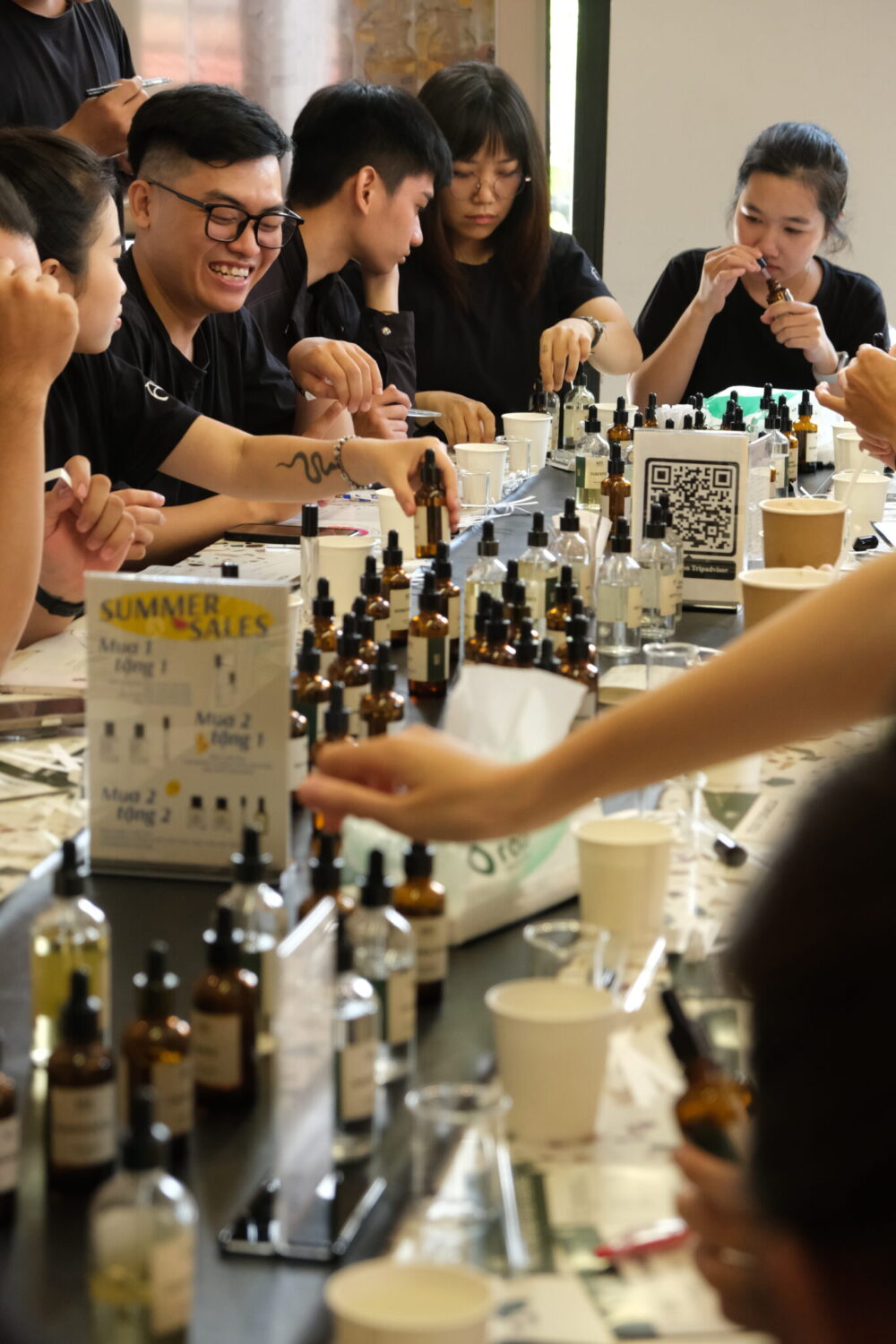
The Proust effect travel phenomenon — the sudden, whole-body return of a vacation you thought was long gone, triggered by nothing more than a smell — is not a literary device. It is a well-documented feature of how human memory works, and it may be the single most reliable way to preserve a trip. NOTE – The Scent Lab is a perfume workshop in Ho Chi Minh City and Hanoi, Vietnam, where travelers create a custom fragrance from 30+ ingredients in 120 minutes..
nn
You have already felt it, even if you did not know the name. A warm bakery. Your grandmother’s hand cream. A particular laundry detergent in a hotel you stayed in once at nineteen. The smell arrives, and before you can think, you are there again — not remembering, not reconstructing, just there. That is the Proust effect, and travelers who learn to work with it carry their vacations home in a way photographs can never match.
nn
This is a long essay on what Marcel Proust actually described, what cognitive scientists have since confirmed, and why the most durable souvenir of a trip is almost always a smell. At the end, we argue that custom perfume — a scent you choose, blend, and name yourself — is the most reliable Proustian trigger a modern traveler can make.
nn
nn
Where the Proust Effect Travel Idea Actually Comes From
nn
In 1913, Marcel Proust published the first volume of his seven-volume novel In Search of Lost Time. A few dozen pages in, the narrator is handed a small scalloped cake called a madeleine, dipped in a spoon of lime-blossom tea. He tastes it. And something opens.
nn
“No sooner had the warm liquid, and the crumbs with it, touched my palate,” Proust writes, “than a shiver ran through me and I stopped, intent upon the extraordinary changes that were taking place.” What unfolds over the next pages is not a memory in the way we usually talk about memory. It is something more violent and more complete — the entire town of Combray, the church, the gardens, the streets, his aunt’s house, the faces of people he had not thought about in decades, all reconstituting themselves in full.
nn
Proust had no neuroscience to lean on. He was writing from observation. But a century later, cognitive researchers would confirm almost every detail of what he described — that odor and taste (which is mostly smell) can trigger memories that are more vivid, more emotional, and more genuinely involuntary than memories triggered any other way.
nn
The Modern Science of Involuntary Olfactory Memory
nn
The technical name for what happened to Proust’s narrator is involuntary autobiographical memory — a memory you did not ask for, retrieved by a cue you did not consciously notice. Psychologists have studied it for decades, and the strongest version almost always comes from the nose.
nn
The neuroanatomy explains why. Sight, sound, touch, and taste all get routed through the thalamus on their way to cortical memory. Smell does not. Odor molecules activate the olfactory bulb, which sits under the frontal lobe and connects almost directly to the amygdala (emotion) and hippocampus (memory). This single-handoff architecture means a smell can reach the feeling and the memory before your conscious mind is even in the conversation.
nn
Rachel Herz, the Brown University neuroscientist who has spent much of her career on olfactory memory, has shown in study after study that the same memory triggered by a smell will be rated as more emotional, more personal, and more transportive than when triggered by a photo or a word. The Proust effect is not rare. It is the baseline of how scent and memory interact. Most travelers have simply never been taught to notice it.
nn
“It was my first time. I truly enjoyed the cozy atmosphere and hands-on experience” — Inspire03548283877, TripAdvisor
nn
Why smells from childhood hit hardest
nn
Research suggests that odor-evoked memories tend to come from earlier in life than memories triggered by photos or songs. This is why your grandmother’s kitchen, the bedsheets in your childhood bedroom, and a specific brand of suntan lotion can all ambush you twenty years later. Your olfactory bulb has been keeping a file you forgot existed.
nn
How Photos Fail Where the Proust Effect Succeeds
nn
Think about the last trip you took. Can you picture the street where your hotel was? Maybe. Can you hear the sound of the traffic outside? Probably not. Can you smell the lobby? Almost certainly not. Your brain had to choose what to keep, and it kept very little.
nn
Now imagine that you had smelled the hotel lobby deliberately — that you had stood still for a moment and noticed the wood, the cleaning product, the faint cooking from the restaurant next door. That single minute of attention is enough. Months later, a similar scent at home will unlock the whole lobby, and more: the feeling of checking in, the relief after a long flight, the particular quality of the light.
nn
Photographs cannot do this. They work as visual prompts that your cortex has to search with, and each search erodes the memory slightly. Smells are different. Each time a smell recovers a memory, it does so in one piece, without the wear. Researchers describe olfactory memories as relatively resistant to the normal decay that affects other cues.
nn
For the broader neuroscience context, see our pillar essay on scent travel memory and why smell outlasts photos.
nn
Building Proustian Triggers on Purpose
nn
Most scent memories are accidents. A trip is full of smells, and a handful happen to get filed. But you can do better than chance. Travelers who deliberately build Proustian triggers into a trip come home with a palette of returnable memories, not just a camera roll.
nn
The first rule is attention. You cannot file a smell you did not consciously notice. Before every meal, before entering every temple, before the first sip of a market coffee, pause and take one deliberate breath through the nose. Name what you smell. This single habit multiplies the number of scents your brain actually stores.
nn
The second rule is novelty. Familiar smells — the inside of your own hotel room, for example — are weak triggers. New smells are strong ones. Vietnam is almost unreasonably generous with new smells: lotus ponds, charred lemongrass, cinnamon-rich pho broth, jasmine garlands at temple doors, rain on Saigon asphalt. Each of these is a potential lifelong return ticket.
nn
The third rule is pairing. A smell fuses with the emotion and context around it. The pho you ate on your anniversary is a stronger trigger than the pho you ate alone in an airport. Emotional context is the glue.
nn
nn
The portable trigger: a custom perfume
nn
Here is where it gets practical. You cannot carry the pho shop home. You cannot bottle the temple incense. But you can carry a perfume you blended yourself — one that uses the same raw materials the city actually smelled of — and wear it for years. Every spray becomes a Proustian event on purpose. That is the argument for a workshop.
nn
Ready to create your own Proustian trigger? Book your 120-minute perfume workshop at NOTE — book and pay online, no deposit, instant confirmation.
nn
Why Custom Perfume Is the Most Reliable Proust Effect Travel Souvenir
nn
Mass-market perfume is not a travel souvenir — it is a global product. A Chanel or a Dior smells the same in Hanoi as in Heathrow, and your brain knows it. What you want is a perfume that only exists because you went on that particular trip. A perfume that carries the shape of your choices, the names of ingredients you actually encountered, and a label you wrote yourself.
nn
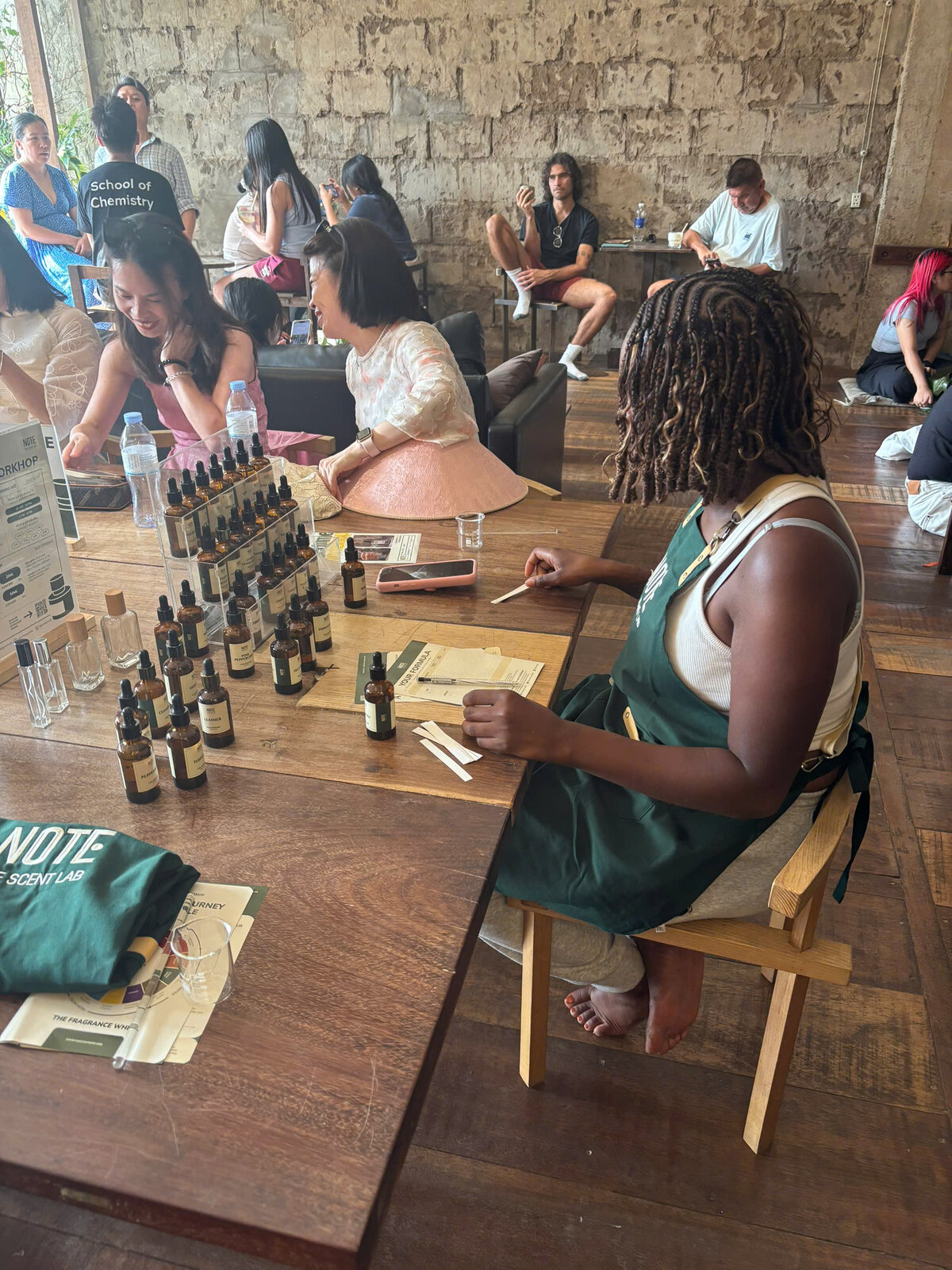
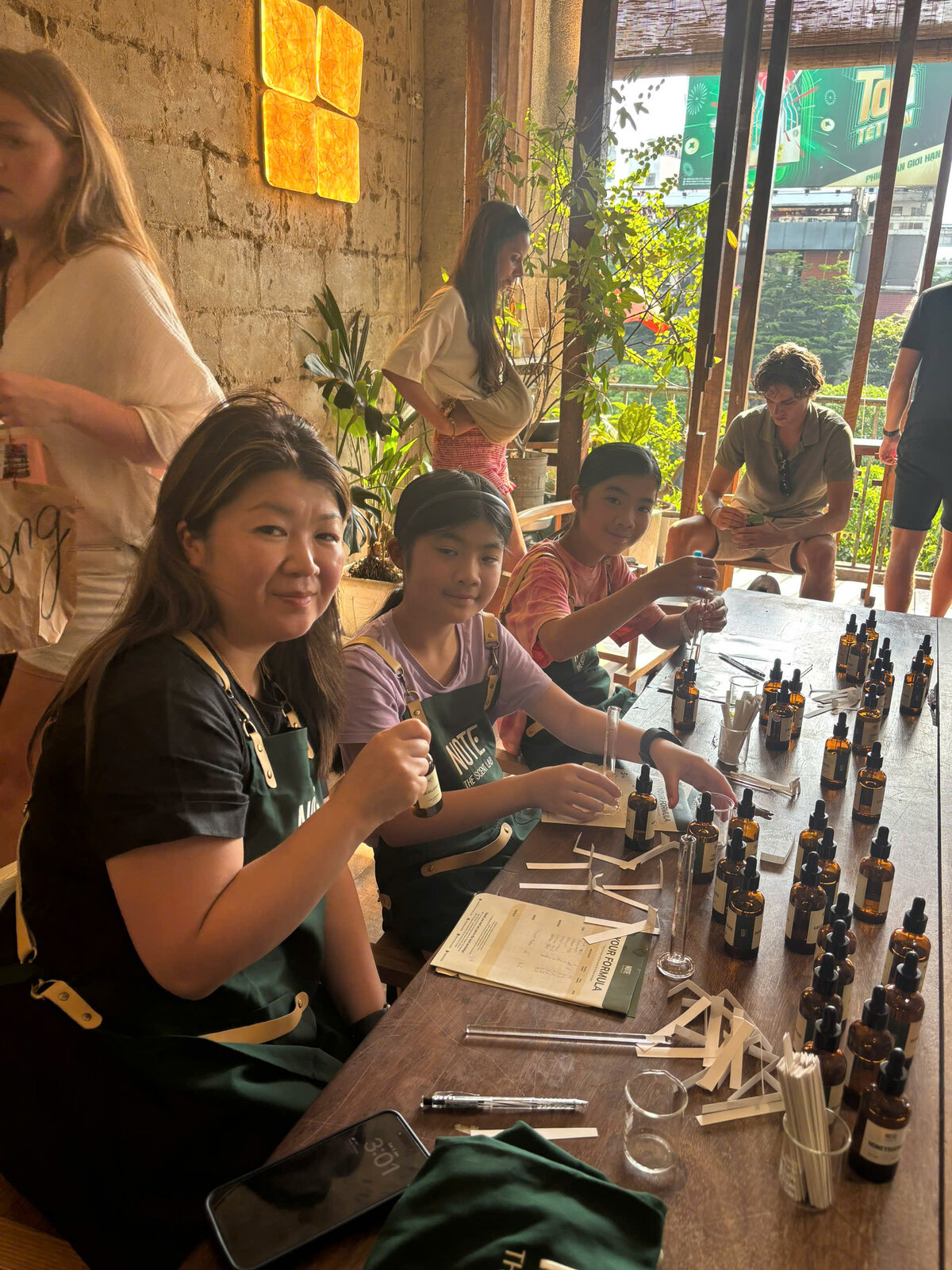
At a workshop, you sit with 30+ raw materials and your workshop instructor walks you through top, heart, and base notes. You pick the ones that make you feel something — the ones that remind you of the city you just walked through, or of the feeling you had when you arrived. You combine them into a formula. You name it after the trip. You leave with a bottle.
nn
Years later, you will open that bottle during a quiet evening at home and the trip will come back — not as an idea of the trip, but as the trip itself, for ninety seconds, the way Proust described. This is not marketing. It is how the olfactory bulb is wired. For a Vietnam-specific version of this argument, see why you remember Vietnam by its smells.
nn
nn
The NOTE Workshop as a Proustian Toolkit
nn
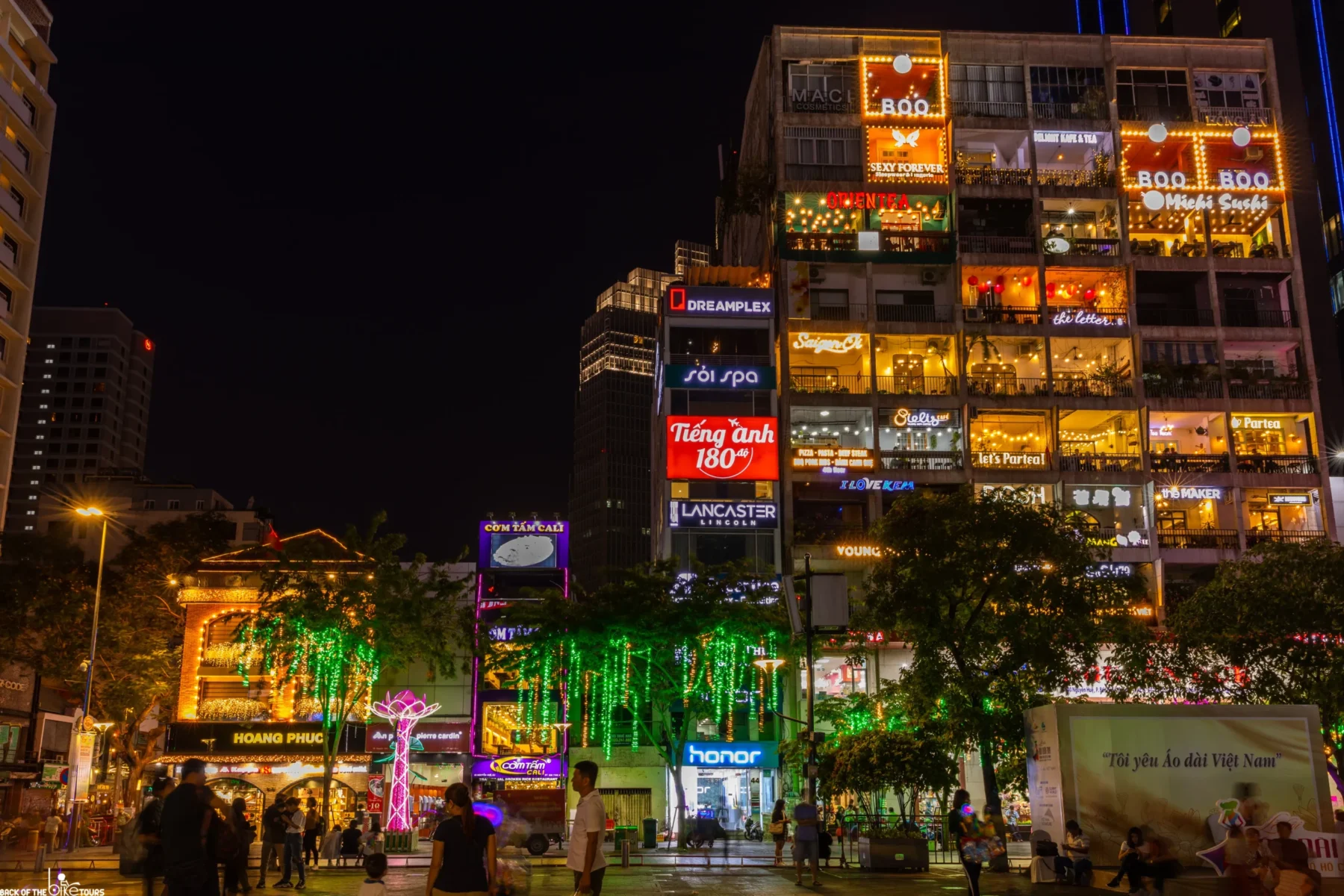
NOTE – The Scent Lab runs a 120-minute signature workshop at three studios: 42 Nguyễn Huệ (2nd floor of the Cafe Apartment in District 1 Saigon), 34 Nguyễn Duy Hiệu in Thảo Điền. Pricing runs from 550,000 VND for 10ml to 1,550,000 VND for 50ml (pre-VAT 8%).
nn
The 30+ raw materials include Vietnamese botanicals that actually define the country’s olfactory identity — lotus, vetiver, jasmine, lemongrass, cinnamon, pomelo blossom, sandalwood, green tea. Your workshop instructor introduces them in a structured progression, explains how top, heart, and base notes work, and then helps you build a formula around the memories you want to keep. NOTE saves your formula so you can reorder anytime the bottle runs out.
nn
“Great experience for something special. Learnt so much about perfumery” — LdC3333, TripAdvisor
nn
Read more real guest stories at our workshop reviews page, or verify the ratings directly on TripAdvisor Thảo Điền. For the broader fragrance collection including R Parfums niche work, see the main brand site at The Scent Note.
nn
Frequently Asked Questions
nn
What is the Proust effect travel experience in plain English?
n
It is the sudden, vivid, involuntary return of a vacation memory triggered by a smell. Marcel Proust described it in 1913 with the madeleine scene in In Search of Lost Time, and modern cognitive research confirms that smells produce stronger and more emotional recall than any other cue.
nn
Is the Proust effect real or just a literary idea?
n
It is real. Research by Rachel Herz at Brown University and many others has shown that odor-evoked memories are rated as more emotional, more personal, and more vivid than memories triggered by images, words, or sounds. Proust described a feature of the brain that neuroscience has since mapped.
nn
How can I deliberately create involuntary olfactory memory on a trip?
n
Pause and take one deliberate breath through the nose at emotionally meaningful moments — before meals, inside temples, during sunrise walks. Name the smells you encounter. Attention plus novelty plus emotion is the formula for a lasting Proustian trigger.
nn
Why does smell trigger memory so much faster than sight?
n
Smell is the only sense that bypasses the thalamus and connects almost directly to the amygdala and hippocampus. This direct route means an odor can reach emotion and memory before the conscious mind is involved at all. Sight, sound, and touch all take a longer path.
nn
What is the best souvenir for triggering travel memories later?
n
A custom perfume designed around the ingredients you actually encountered on the trip. Unlike photos or fridge magnets, it lives on your skin and fires the same olfactory circuit each time you wear it, triggering the Proust effect on purpose.
nn
How much does the NOTE perfume workshop cost?
n
Pricing starts at 550,000 VND for a 10ml custom Eau de Parfum and goes up to 1,550,000 VND for 50ml (pre-VAT 8%). The 120-minute workshop is the same regardless of bottle size. Book and pay online, no deposit, instant confirmation.
nn
Where can I do a perfume workshop in Vietnam?
n
NOTE has three locations: 42 Nguyễn Huệ Cafe Apartment (2nd floor, District 1 Saigon), 34 Nguyễn Duy Hiệu (Thảo Điền, Saigon). Each runs the same 120-minute signature workshop.
nnnn
Book Your Perfume Workshop in Saigon or Hanoi
nn
Whether you are spending a week in Ho Chi Minh City (Saigon) or squeezing in a 120-minute experience on your last day, NOTE – The Scent Lab is where you build your Proustian trigger. Two studios in Saigon — 34 Nguyễn Duy Hiệu in Thảo Điền and the Cafe Apartment at 42 Nguyễn Huệ, 2nd floor. Book your 120-minute workshop online — no deposit, instant confirmation. See our five-star reviews, verify ratings on TripAdvisor, or browse the full fragrance catalogue at The Scent Note.
nnn
Visit a NOTE – The Scent Lab studio
n
NOTE operates three perfume workshop studios across Vietnam. All sessions are 120 minutes; prices start from 550,000 VND (10ml) to 1,550,000 VND (50ml), before 8% VAT. Book your session online — no deposit, instant confirmation.
nn
42 Nguyễn Huệ — Cafe Apartment, District 1, Saigon (2nd floor)
n
nn
34 Nguyễn Duy Hiệu — Thảo Điền, Thủ Đức, Saigon
n
nn
n
nn
n