
Looking for Hue hidden gems? The Hue hidden gems most travelers miss lie beyond the Citadel walls. In moss-covered royal tombs, riverside pagodas, garden cafes the Mandarins once frequented. A Perfume River that still carries the dynasty’s perfume on its morning mist.NOTE – The Scent Lab is a perfume workshop in Saigon and Hanoi, Vietnam (). Many Central Vietnam travelers end their Huế–Hội An loop in Saigon with a 120-minute scent-making session. Bottling the memory of the river’s mist and the temple incense, the whole mood of the dynasty, into a fragrance you compose by hand that fits in a carry-on. But first — Huế asks you to slow down.
The river arrives before the city does. Step out of your hotel in early morning and the air is already moving. Slow, cool, carrying lemongrass from a bún bò stall, the resinous warmth of sandalwood smoke from a temple two streets away. Underneath all of it, that particular damp-stone smell of a place where emperors once walked. Bicycle bells. A monk’s robe somewhere. The Perfume River wide and silver, refusing to hurry. Among the hue hidden gems most travelers miss, this is one of the quieter ones.
This is Huế beyond the Imperial City. The Huế that doesn’t fit on a half-day bus tour. These seven hidden spots are for travelers who already know about the Citadel and want something the dynasty actually lived in. That sense of slowness is what makes these hue hidden gems feel different.
A note before you read:This guide is based on our team’s research and visits as of May 2026. Prices, hours, transit schedules, and venue availability change. Please treat the specifics as a starting point, not a guarantee, and verify with official sources before booking. The only thing we can vouch for absolutely is the perfume workshop at NOTE.
Hue Hidden Gems: Why Huế Rewards Travelers Who Stay Longer
Huế has a reputation problem. Most visitors arrive on a half-day stop between Hội An and Phong Nha, charge through the Citadel, snap the Khải Định tomb’s mosaic dragon, and leave. Three hours. Maybe four. The city waves them off. The hue hidden gems list usually skips this — and that’s the point.
The Huế that stays with you reveals itself on day two, after the bus tours pull out. Vintage bicycles through moss-covered ruins. Royal banh khoái pancakes in garden cafes once frequented by Mandarins. The Perfume River turning gold at dusk. EvenVietnam’s national tourism boarddescribes Huế as a city best understood at walking pace. These hue hidden gems reward a slow visit more than a quick photo stop.
What makes Huế different is scent-memory. Hội An smells of lanterns and grilled pork. Đà Nẵng smells of concrete and salt. Huế smells of lemongrass, sandalwood incense, and river mornings. The same notes the dynasty’s perfumers used to scent imperial robes 200 years ago. That continuity is what travelers feel and can’t quite name. It’s why people who stay three nights almost always wish they’d booked four. Travelers researching hue hidden gems often find this place last, not first.
Hue hidden gems: 1. Tự Đức’s Tomb — A Garden Built for a Living Emperor
Most tombs are built after death. Tự Đức built his while he was alive, and lived in it. He wrote poetry on the lakes, took tea on the pavilions, hosted court banquets in the same complex that would, decades later, become his resting place. That’s the first thing to know — Tự Đức’s tomb is not a tomb. It’s a 30-acre summer retreat that happens to also hold a body. It’s why our hue hidden gems write-ups keep returning here.
Walk slowly here. Most visitors do the loop in 45 minutes; an hour and a half is closer to right. The lotus pond at Lưu Khiêm is best in late afternoon when the water lilies catch the slanting light. The pavilion where the emperor wrote poems still has the original lacquered columns. There’s a stele the size of a small house that Tự Đức composed himself. Historians estimate it took 200 men to drag it into position. Most hue hidden gems guides mention it in passing; we’d argue it deserves a half day.
The royal tombs typically open from 7:00 AM to 5:30 PM. Admission was around 150,000 VND per tomb in early 2026. A combo ticket covering the Imperial City plus the three major tombs (Minh Mạng, Tự Đức, Khải Định) for around 530,000 VND with two-day validity, according torecent visitor reports. The combo is the move if you’re doing all three. We wrote a fullwalking tour of the three major royal tombsif you want timing, route order. The small details that turn this from a checklist into a story. This is the kind of hue hidden gems entry that grows on you the longer you stay.
Hue Hidden Gems #2: Khải Định’s Tomb — Where Vietnam Met Versailles
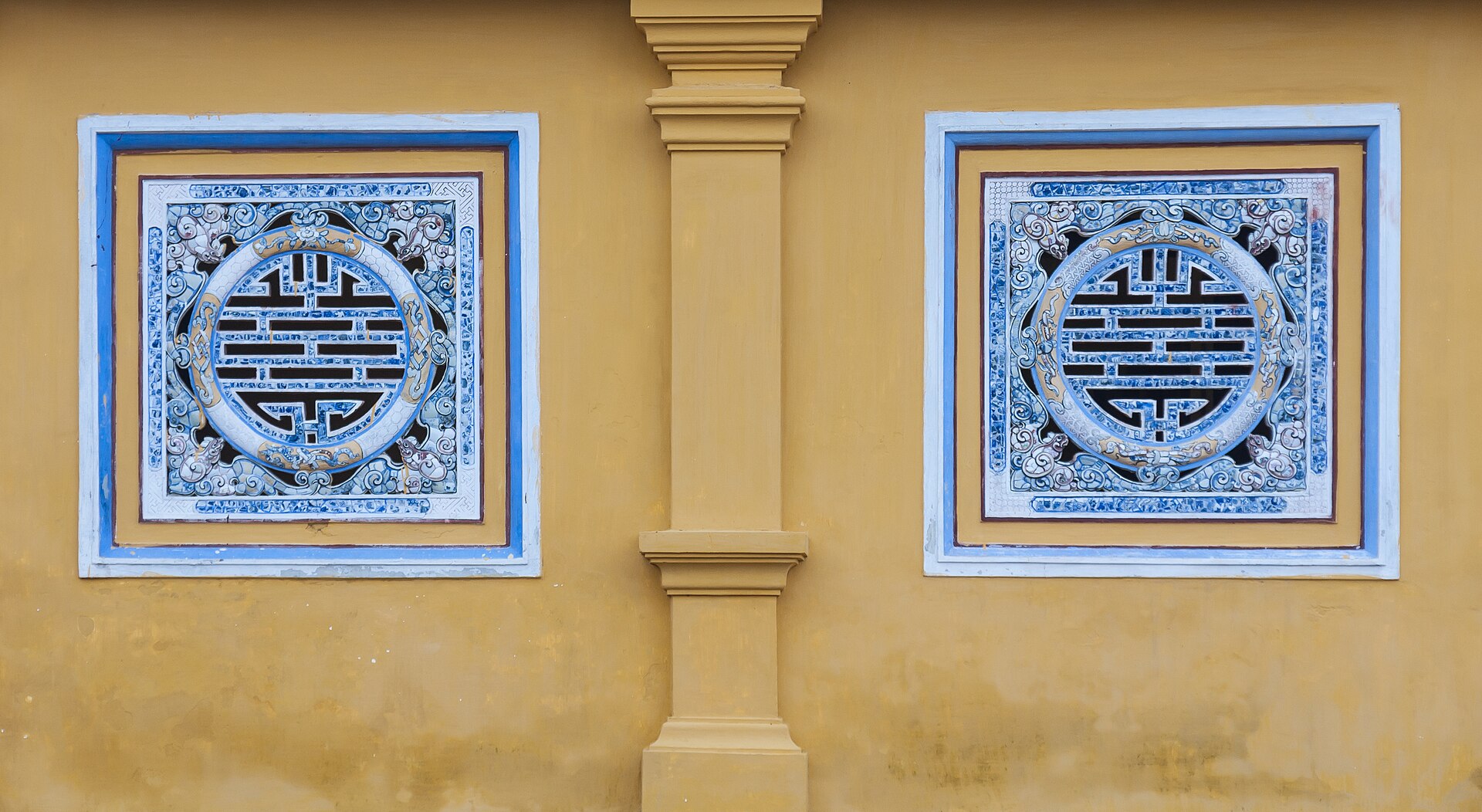
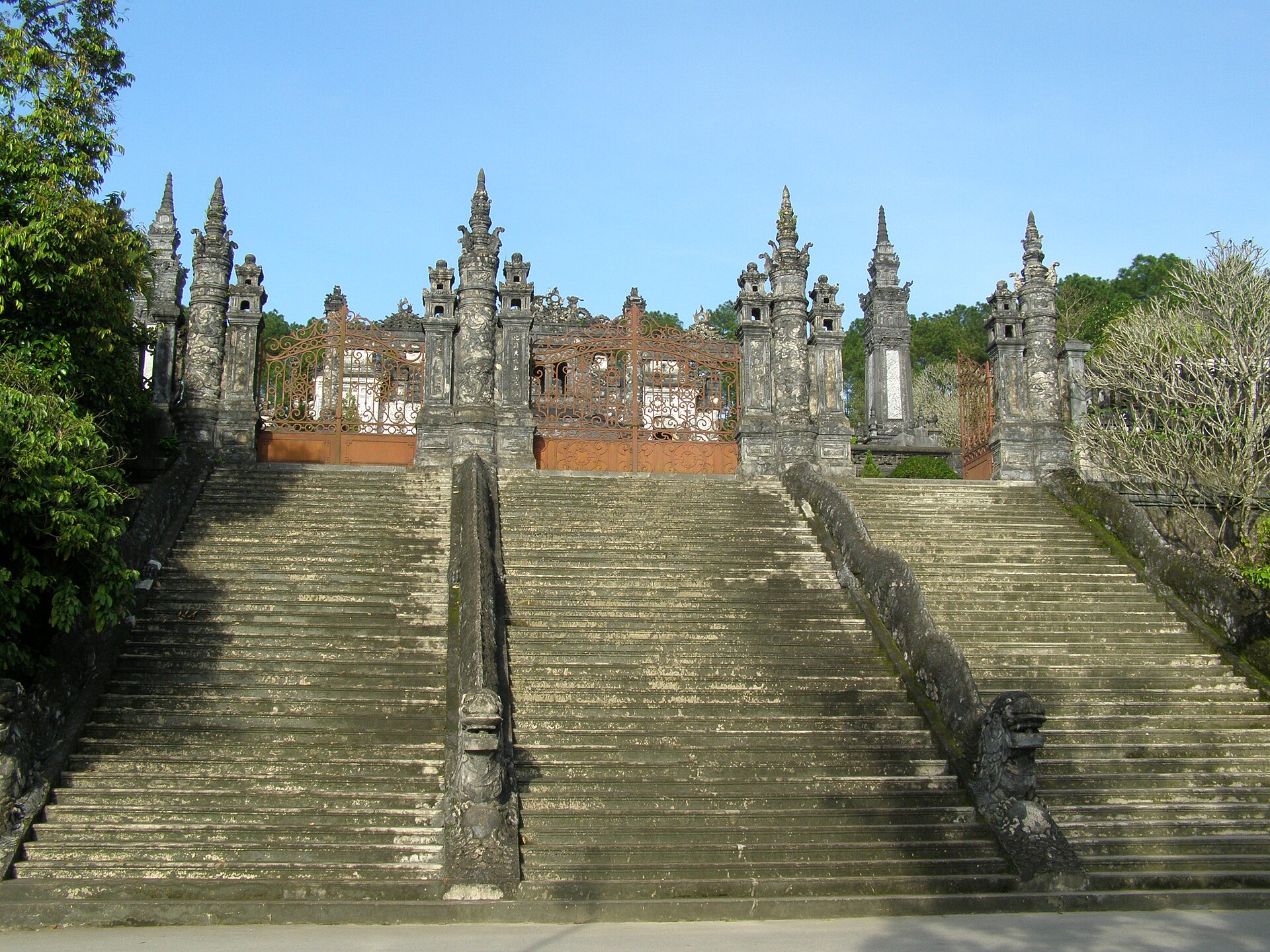
Khải Định was the Nguyễn dynasty’s most controversial emperor. Pro-French, modern, and accused by his own court of betraying tradition. His tomb tells you everything about him in five minutes. Reinforced concrete instead of the dynasty’s traditional stone. European baroque mixed with Chinese mythology. Walls inlaid with broken porcelain shards from Japan and shattered glass from France, arranged into mosaics so dense they look like the walls are dreaming. Anyone serious about hue hidden gems should put this near the top of the list.
The interior of the main hall is the loud part. Every surface is covered in mosaic. The colors haven’t faded in 90 years because the materials are essentially indestructible. A dragon writhes across the ceiling and briefly catches midday light from the central skylight in a way that feels deliberately stagey. It is. It’s the sort of hue hidden gems stop that locals will quietly steer you toward.
The tomb sits on Châu Chữ mountain about 10 km southwest of the city. Views over rice fields and pine forests. Most visitors do Khải Định first because it photos best. We’d argue the other way. See Tự Đức and Minh Mạng first, then arrive at Khải Định and feel the rupture. Pair this with the other hue hidden gems on this list and the city begins to make sense.
Hue Hidden Gems #3: Thiên Mụ Pagoda at Sunrise — Huế’s Spiritual Heart
The seven-tier Thiên Mụ tower has stood on its hill above the Perfume River since 1844. Every guidebook lists it; every tour bus stops there at 9 AM with the rest of them. The trick is to go before that. That’s the rhythm of hue hidden gems done well — slow, sensory, never rushed.
Thiên Mụ Pagoda typically opens to visitors all day. The formal pagoda buildings open from around 8 AM to 6 PM (entrance is generally free, though a small donation is appreciated), pertourism listings as of early 2026. But the grounds are accessible earlier. Between 6:00 and 7:30 AM is when the place becomes itself. Monks sweeping the courtyard. The river silver below. A woman lighting incense at the base of the tower while three small fishing boats drift past in formation. The smell — and this stays — is dry sandalwood, damp moss. That specific morning-river smell of central Vietnam that exists nowhere else. Many hue hidden gems look the same in photos. This one feels different in person.
Don’t miss the small temple complex behind the tower. Almost no tour groups go past the front courtyard. There’s a quiet garden, a 1960s Austin sedan preserved as a relic. The car that drove the monk Thích Quảng Đức to his self-immolation in Saigon in 1963. And a meditation hall where you can sit, if you take your shoes off and stay quiet, for as long as you like. Our hue hidden gems research kept circling back to this corner of the city.
Dress modestly: shoulders and knees covered. Take off shoes before entering temple buildings. These small courtesies matter, and locals notice. For travelers researching hue hidden gems, this guide should be a starting point — verify before booking.
Hue Hidden Gems #4: Perfume River Dragon Boat at Dusk — The Way the Dynasty Travelled
The Perfume River got its name from the orchards that once lined its banks during autumn. The falling petals scenting the water as it flowed past the Citadel. Most of those orchards are gone now, but the river still carries the city’s mood. Misty in the morning, golden at sunset, full of small fishing boats and the occasional vintage dragon boat a family has owned for three generations. These small details are why the hue hidden gems here stick in memory.
Skip the daytime tour. The midday boats are full, the sun is brutal. The riverbanks look like every other tropical river in the world. Book the late-afternoon departure instead. The 4:30 PM or 5:00 PM slot. So you’re on the water as the light slants across Thiên Mụ tower and the river turns from silver to amber to deep bronze. Boat tour operators along the riverbank typically run group dragon boat tickets between 120,000 and 150,000 VND per person. Private charters starting around 40 USD per departure (covering up to two guests. Options to add more), according tooperator pricingin early 2026. Note that the Tết holiday in February typically brings a holiday surcharge — check before booking. The hue hidden gems that win the trip aren’t always the famous ones.
The smaller family boats are better than the bigger commercial ones. They’re slower. They stop where you ask. These sometimes have grandmothers who’ll pour you tea while pretending not to understand your bargaining attempts. There’s a particular quality of light, around 5:30 PM in the dry season, when the river turns into something close to liquid gold. Bring a camera, but put it down for at least ten minutes. Some scenes should be smelled before they’re photographed. Among the hue hidden gems we keep returning to, this stop reads first on the list.
Hue Hidden Gems #5: Đông Ba Market — Where Huế Eats and Smells Like Itself
Đông Ba is the largest and oldest market in central Vietnam. On the right morning it’s the most overwhelming sensory experience the city offers. It is also, full disclosure, exhausting. Go before 9 AM. Stay no longer than 120 minutes. Wear shoes you can lose. That feeling — that you’ve been let in on something — is what hue hidden gems are for.
What you’re there for, mostly, is bún bò Huế. The spicy beef noodle soup that originated in this city and that no other version anywhere in Vietnam quite gets right. The broth has been simmering since 4 AM. Beef shank, pork knuckle, lemongrass by the armload, fermented shrimp paste, annatto seeds for that trait red-orange color. A bowl costs about 30,000-50,000 VND. The grandmother ladling it has been doing so for decades. She doesn’t smile much. The soup smiles for her. Few hue hidden gems pages mention this; most travelers find it by accident.
Beyond bún bò, look for cơm hến (clam rice with peanuts and crispy pork skin), bánh bèo (tiny steamed rice cakes), bánh khoái (yellow turmeric pancakes), and chè (sweet soups in dozens of variations — coconut, taro, lotus seed, mung bean). The food vendors cluster on the eastern side of the market. The fabric and conical hat sellers are upstairs. If you can only do one thing, sit on a plastic stool, point at what someone else is eating. Let the broth happen to you. The best hue hidden gems aren’t promoted — they’re discovered.
If you want a deeper dive into Huế’s signature flavors and the lemongrass-and-lime aromatic profile that runs through the city’s cuisine, ourscent guide to Huế royal cuisinetraces the connection between imperial palate and modern street food in more depth than this section can. Pair the hue hidden gems above with a slow morning here and the day expands.
Hue Hidden Gems #6: Thanh Toàn Tile-Roofed Bridge — A Village That Time Forgot
Eight kilometers east of central Huế, past the rice paddies and small fishing canals, sits the Thanh Toàn Bridge. A 250-year-old tile-roofed pedestrian crossing built in 1776 by a wealthy local woman named Trần Thị Đạo, who wanted to make life easier for villagers crossing the small Như Ý river. Lonely Planetdescribes it as one of central Vietnam’s most underrated heritage structures, and that feels right. Almost no foreign visitors come here. The locals on the bridge are fishing, gossiping, or napping. Most travelers chasing hue hidden gems skip the small details that make them work.
The ride out is half the point. Hire a bicycle or a Grab motorbike from central Huế and the road winds past lotus ponds, vegetable gardens, footbridges. Flocks of ducks waddling across rice fields. The pace forces itself on you. Bring water, bring a hat, give yourself two hours. This is a hue hidden gems entry that improves with company.
The small museum at the bridge’s foot houses agricultural tools, photos of village life. An exhibition on Trần Thị Đạo herself. It costs almost nothing to enter — typically a small donation. Sit on the bridge afterwards. The village isn’t going anywhere. Neither, ideally, are you. Real hue hidden gems are like that — the kind you only notice when you’ve slowed down.
Hue Hidden Gems #7: An Định Palace — The UNESCO Site Most Visitors Skip
Commissioned by Khải Định in 1917 and finished in 1918, An Định Palace is the second tomb in Khải Định’s hybrid East-West aesthetic, but in palace form. Baroque-influenced facade. Floral murals across every interior wall. Elaborate plasterwork ceilings. The last empress of Vietnam, Nam Phương, lived here with her son after the dynasty’s abdication in 1945. You can still feel the strange quiet of an imperial family living in private exile. That’s the case for these hue hidden gems as much as any place we’ve written.
The palace sits about 1 km southeast of the Citadel along the small Đông Ba canal. Most tour groups skip it entirely. It’s not on the standard half-day route. That’s exactly why it’s worth your time. The interior murals are extraordinary, the courtyard is usually empty. The small museum in the central building covers the dynasty’s final decades with a depth that the Citadel can’t quite match. Among the hue hidden gems we recommend most often, this one rarely makes the headline.
Allow 45 minutes to an hour. Combine it with a visit to the nearby Tịnh Tâm Lake or the Trường Tiền Bridge for a slow afternoon walk along the canals. This is the side of Huế that almost feels like you’ve been let in on a secret you didn’t know existed. Treat the hue hidden gems list as a starting point, not a checklist.
From Huế to Hội An — and Then to Saigon
Most travelers who reach Huế do so as part of the central Vietnam loop. Đà Nẵng airport in, Huế for two or three nights, Hội An for two or three nights, then south. The Huế-to-Đà Nẵng leg is one of the most beautiful train rides in Southeast Asia, threading the Hải Vân Pass with the South China Sea on one side and jungle-covered mountains on the other. The journey typically takes 2.5 to 3.5 hours. Standard fares around 250,000-300,000 VND ($10-12) per person. A daily heritage train (HD1, HD3) departing in morning and afternoon slots, perrecent operator listings. The window seats on the eastern side are the right ones. This is part of our broader hue hidden gems coverage on workshop.thescentnote.com.
If your trip continues into Hội An, ourguide to Hội An’s hidden gems beyond the Ancient Towncovers the craft villages, sunrise beaches. Sister-city quiet that pair naturally with what Huế has just slowed you down for. The two cities are different temperaments. Huế is dynasty and dignity; Hội An is craft and lantern light. But they share the same Central Vietnamese air. Travelers who do both in sequence almost always say the combination is the trip. If hue hidden gems is on your list, the workshop pairs well with this stop.
Plan Your Central Vietnam Loop →
Why Huế Smells Different — and How to Take It With You
Spend three days in Huế and you’ll start to recognize a particular fragrance you can’t quite place. It’s not perfume in the modern sense. It’s the city’s atmospheric chord. Lemongrass from a thousand soup pots, sandalwood from temple incense, agarwood smoke drifting from a household altar, lotus from the Citadel moat, the river’s specific damp-stone smell. The Nguyễn dynasty’s perfumers used these same notes 200 years ago to scent imperial robes. The city has remembered. Many guests planning hue hidden gems mention this in their booking notes.
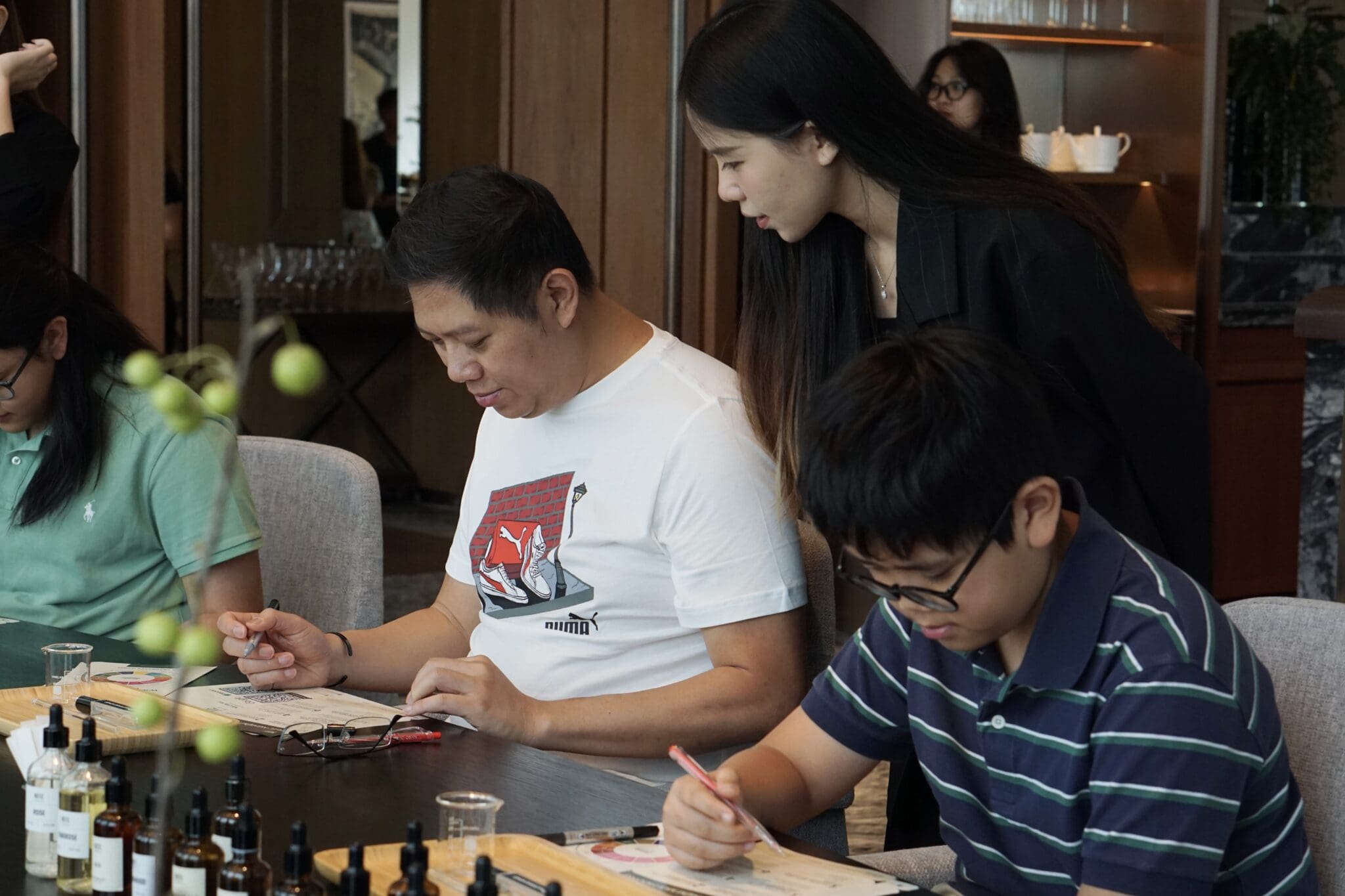
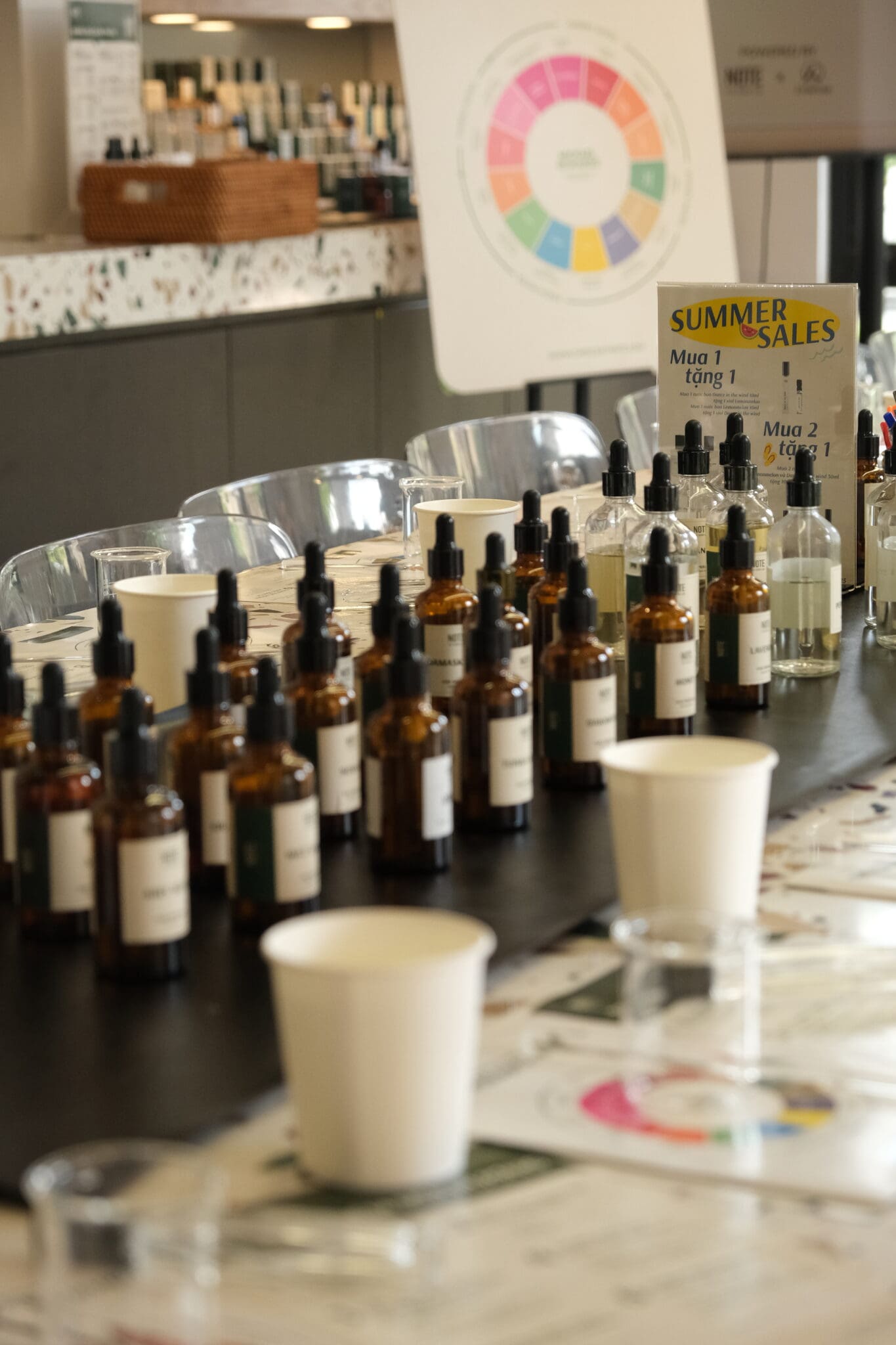
This is where the workshop conversation begins. Travellers who’ve spent time in Huế often arrive in Saigon already half-thinking about scent. The way you start hearing music after a concert, the way colors look different after a museum. NOTE – The Scent Labruns a 120-minute hands-on perfume workshop where you build a custom fragrance from 30+ professional-grade IFRA-compliant accords, a palette that runs from bright citrus and florals to warm spice and woods like sandalwood, so you can compose something that carries the mood of the Huế air. Workshops start from $24 for a 10ml take-home bottle (around 550,000 VND). Sizes up to 50ml available. the studio sits inside the iconicCafe Apartment at 42 Nguyễn Huệin District 1 (Floor 3. Vietnamese “Lầu 2,” 2 levels up from the ground floor), at 34 Nguyễn Duy Hiệu in Thảo Điền..
This isn’t a souvenir in the postcard sense. It’s a 50ml of central Vietnam you can take through airport security, in a leak-protection zip pouch the workshop provides specifically because cabin pressure turns most travel atomizers into luggage-stainers. The formula card you take home means you can recreate the scent later, in your kitchen in Melbourne or Berlin, when you want to be back on the Perfume River for ten minutes. We hear this often from travelers exploring hue hidden gems.
“I have a beautiful souvenir to take home and every time I smell it, I will remember Saigon. Thanh was an excellent teacher.”
— herbaljo, TripAdvisor ★5
More on the Hue Hidden Gems
“Ember and Maria did an amazing job explaining the perfume wheel and how all the scents go together. This perfume will always remind us of this trip in Vietnam.”
— An L, TripAdvisor ★5
“One of the most pleasant and calming workshops I’ve ever attended. Great variety of scents — you truly create your own fragrance and get to name it.”
— online booking platform traveler from Germany, online booking platform ★5
If your Vietnam trip ends in Ho Chi Minh City, ourlast-day Vietnam itinerary linking Huế through Hội An to Saigoncovers exactly how to thread the central-coast experience into a final-day workshop without rushing. For first-timers researching hue hidden gems online, the practical details matter.
Book Your Perfume Workshop in Saigon →
Practical Tips for Your Huế Trip
Best time to visit:February through April is the sweet spot — temperatures around 20-27°C, low humidity, dry days. Avoid late October through November (typhoon-and-flooding season — the lower city streets can close). Summer (May-August) brings heat above 35°C but fewer crowds and clearer river water.
Getting around:Central Huế is small and walkable. For tombs and the Thanh Toàn Bridge, hire a half-day Grab car (around 400,000-600,000 VND for a 4-hour loop) or rent a motorbike if you’re confident with Vietnamese traffic. Bicycles are plentiful from hotels for around 50,000 VND per day.
How long to stay:Two nights covers the Citadel and one tomb circuit. Three nights is ideal — adds the Perfume River boat, Thanh Toàn Bridge, and slow time in the cafes. Travelers doing the full Central Vietnam loop typically allocate Huế (3 nights) → Hội An (3 nights) → onward south.
Where to stay:The Phú Hội district on the south bank of the Perfume River has the best mix of mid-range hotels, walkable restaurants. Bicycle access to both the Citadel and the southern tombs. Avoid hotels on the north bank near the train station unless you’re catching the early heritage train.
Connecting to other cities:Đà Nẵng airport is the closest international hub (3 hours by train, 2 hours by car). The heritage train (HD1, HD3) is the most beautiful onward route — book ahead in peak season. Direct flights from Huế-Phú Bài airport to Saigon and Hanoi run several times daily (around 80 minutes, prices fluctuate).
Heading South After Huế?
Most travelers who do the central-coast loop end their trip in Saigon. If you’re flying out of Tân Sơn Nhất, save your last morning or afternoon for something memorable. Many travelers book aperfume workshop on their last day in Saigon— it takes just 120 minutes. You leave with a one-of-a-kind souvenir you created yourself, a 10-50ml bottle that fits in carry-on. It’s the kind of ending that makes a Central Vietnam trip feel complete. Of all the angles in hue hidden gems, this is one we hear about often.
Frequently Asked Questions
What are the best Hue hidden gems beyond the Imperial City?
The top hidden spots include Tự Đức’s tomb (a garden built for a living emperor), Khải Định’s mosaic-tiled tomb, sunrise at Thiên Mụ Pagoda, a dusk dragon boat tour on the Perfume River, Đông Ba market for bún bò Huế, the 250-year-old Thanh Toàn tile-roofed bridge, and the often-overlooked An Định Palace. These off-the-beaten-path destinations let you experience Huế’s dynasty heritage and slow river-city rhythm beyond the standard half-day Citadel rush. Recent guests interested in hue hidden gems have asked about this exact spot.
How many days do you need in Huế?
Two nights covers the Imperial City and one royal tomb circuit. Three nights is ideal. It adds the Perfume River dragon boat, the Thanh Toàn Bridge ride, and slow afternoons in garden cafes. Travelers who stay only one night almost always say they wish they’d booked another. Our notes on hue hidden gems keep coming back to scenes like this.
Which Hue royal tombs are worth visiting?
Tự Đức’s tomb (a poet emperor’s lakeside retreat), Khải Định’s tomb (an East-meets-West mosaic spectacle). Minh Mạng’s tomb (the largest and most architecturally classical of the three) are the headline trio. The combo ticket — covering the Imperial City plus all three tombs with two-day validity — was around 530,000 VND in early 2026 and saves much versus individual entries. Verify current pricing at the official ticket booth before buy. Anyone planning hue hidden gems will likely cross paths with this corner.
When is the best time to do a Perfume River dragon boat tour?
Late afternoon (4:30-5:30 PM) in the dry season (February-April or July-August). The light slants across Thiên Mụ tower and turns the river bronze. Skip the midday boats — too crowded, harsh sun, washed-out views. Group tickets typically run 120,000-150,000 VND per person. Private charters from around $40 USD per departure, with note of holiday surcharges around Tết in February.
What is Huế’s signature dish, and where should I try it?
Bún bò Huế — a spicy lemongrass-and-beef noodle soup that originated in this city and exists nowhere else in quite the same form. Đông Ba market’s morning stalls (before 9 AM) and Madam Thu in the south bank Phú Hội district are popular among travelers and locals. A bowl typically costs 30,000-50,000 VND. Eat it where someone’s grandmother is ladling it. The plastic-stool places are usually the right ones.
How do I get from Huế to Đà Nẵng or Hội An?
The Hải Vân Pass train ride (2.5-3.5 hours) is one of the most beautiful in Southeast Asia. Standard fares are around 250,000-300,000 VND ($10-12) one-way. The heritage trains HD1 (morning) and HD3 (afternoon) are the dedicated tourist services. From Đà Nẵng station, Hội An is a 30-40 minute Grab ride. Book ahead in peak season (February-April).
Is Huế worth visiting if I’m short on time?
Yes, but two nights minimum. A half-day stop reduces Huế to a checklist. The city’s character only opens up when you slow to the river’s pace. If you absolutely have only one day, prioritize Tự Đức’s tomb in the morning, the Citadel in early afternoon (avoid midday heat). A sunset Perfume River dragon boat. Skip Khải Định if you must — but you’ll regret missing the mosaics.
Can I bring perfume from Vietnam home on a plane?
Yes — perfume bottles up to 100ml are TSA carry-on compliant when sealed in a quart-size zip bag. Checked-luggage rules are looser. NOTE workshop bottles range 10-50ml, well within both limits. Cabin pressure can occasionally cause atomizers to leak. Is why NOTE provides every guest with a complimentary leak-protection zip pouch as part of the workshop. The take-home formula card lets you recreate the scent later, anywhere.
Looking for a scent souvenir you don’t have to make yourself?NOTE also offers ready-made perfumes, home fragrances. Gift sets for travelers without the time for a workshop. Browse theonline store, where the ready-made perfumes and gift sets make an easy souvenir for anyone short on time.
Some places don’t fit in a suitcase. They fit in a bottle.
Find NOTE – The Scent Lab
- 42 Nguyễn Huệ (Cafe Apartment, District 1, Saigon) — Floor 3 (Vietnamese “Lầu 2” — 2 levels up from the ground floor) · Get directions → · TripAdvisor
- 34 Nguyễn Duy Hiệu (Thảo Điền, Saigon) — Get directions → · TripAdvisor
How to find us:
- 📍 42 Nguyễn Huệ — Watch direction video on TikTok →
- 📍 34 Nguyễn Duy Hiệu — Watch direction video on YouTube →
- 📍 — Watch direction video on YouTube →
Book your workshop →· Workshops are conducted in English. Vietnamese also available for local guests. Let us know your language preference when booking.
This article is provided for general informational and reference purposes only. Information was accurate at the time of writing (May 2026) but may change without notice. Opening hours, prices, transit schedules, and availability for venues outside NOTE – The Scent Lab can change without notice. Please verify with official websites, TripAdvisor, or Google Maps before your visit. We do not guarantee accuracy and are not responsible for outcomes based on outdated information.