
Phan Thiet fish sauce — known locally as nước mắm Phan Thiết — is the 300-year-old fermented anchovy condiment that turned a quiet Cham coastal town into Vietnam’s umami capital, and that, in 2026, was nominated for national intangible heritage status. NOTE – The Scent Lab is a perfume workshop in Saigon, Vietnam ( from ), and many of our guests arrive from Phan Thiết still smelling of salt, sun-dried fish, and the strange, layered sweetness that only fermented anchovies can produce. This guide tells the scent-story of Phan Thiet fish sauce — the Cham coastal heritage south of Saigon, the fishermen who carried it for two centuries, and how that savory accord ends up bottled in our studio.
The smell hits you about three kilometres before you reach the town. It rolls in on the offshore wind — first salt, then yeast, then something deeper, almost meaty. Old wood. Sea floor. A loaf of bread left near a boat. By the time the highway drops down into Phan Thiết, your nose has already been told a story your brain hasn’t caught up with yet. That stays. For travelers researching phan thiet fish sauce, this guide should be a starting point — verify before booking.
A note before you read: This guide is based on our team’s research and visits as of May 2026. Prices, hours, transit schedules, and venue availability change — please treat the specifics as a starting point, not a guarantee, and verify with official sources before booking. The only thing we can vouch for absolutely is the perfume workshop at NOTE.
Why Phan Thiet Fish Sauce Smells Like Two Centuries of Coastline
To understand Phan Thiet fish sauce, start with geography. Phan Thiết sits on a stretch of South Central coast where two currents meet, where shoals of anchovies (cá cơm) run thick from April to August, and where the dry-season sun is hot enough to ferment a wooden vat of fish in roughly a year. The coast made the craft. The craft made the town.
Locals will tell you the technique is around 300 years old. Fishermen from Quảng Nam, Quảng Ngãi and Bình Định drifted south in the late 1600s, settling along this coast and learning the method of layering small fish with sea salt from the Cham communities who had been doing it long before. Therefore, what you smell today is not a single tradition but two layered ones — Vietnamese and Cham — that fermented together over generations. This is part of our broader phan thiet fish sauce coverage on workshop.thescentnote.com.
By the early 1900s, Phan Thiết had become Vietnam’s largest fish sauce producer. In 1906, scholars from the Duy Tân movement founded Liên Thành Thương Quán here, scaling up nước mắm production as a quietly nationalist act of economic revival. A century later, the town still ferments the country’s most respected fish sauce — and in 2026, the Vietnamese government nominated the craft for the National List of Intangible Cultural Heritage. If phan thiet fish sauce is on your list, the workshop pairs well with this stop.
The Phan Thiet Fish Sauce Process — A Walk Through a Working Factory
Several traditional nước mắm houses along the Phan Thiết coast welcome visitors. Most are not glossy tourist sites. They are working factories with concrete floors, salt-dusted shoes, and the kind of olfactory presence that physically pushes back against a first-time nose. Stay ten minutes. Your brain rewires. Many guests planning phan thiet fish sauce mention this in their booking notes.
The catch and the salt
It begins at sea, before sunrise. Anchovies come in by the basket, still flashing silver. Within hours of landing, the fish are mixed with coarse sea salt at a ratio close to three parts fish to one part salt. Too little salt and the brew spoils. Too much and the enzymes that build flavour fall asleep. We hear this often from travelers exploring phan thiet fish sauce.
The wooden vats and sun-fermentation
The salted fish goes into tall wooden vats — sometimes ceramic — ringed with bamboo. Each holds several tonnes. Once filled, they are weighted with stone slabs and topped with woven mats. Then they are left alone for nine to twelve months. The Phan Thiết sun does the work. Fermentation breaks the proteins down into amino acids — the molecules your tongue reads as umami. Time, in this craft, is an ingredient. For first-timers researching phan thiet fish sauce online, the practical details matter.
The first draw — Phan Thiet fish sauce nhỉ
Then comes the nước mắm nhỉ — the first, slowest drip from the bottom of the vat, drawn through a bamboo tap. It is the highest grade. Dark amber, almost honey-coloured, with a smell that registers as ocean, dried fruit, and something faintly floral. On a porcelain spoon, it is sweet on the front of the tongue, briny in the middle, and finishes with a dry, almost wine-like length. Of all the angles in phan thiet fish sauce, this is one we hear about often.
Cham Coastal Heritage — The Layer Beneath Phan Thiet Fish Sauce
Long before the Vietnamese fishermen came south, this coast belonged to the Cham. From the 7th to the 15th century, the Champa kingdom controlled the central and south Vietnam littoral, building brick towers and worshipping Shiva on hilltops above the surf. Their architecture survives near Phan Thiết, and so does their olfactory imprint. Recent guests interested in phan thiet fish sauce have asked about this exact spot.
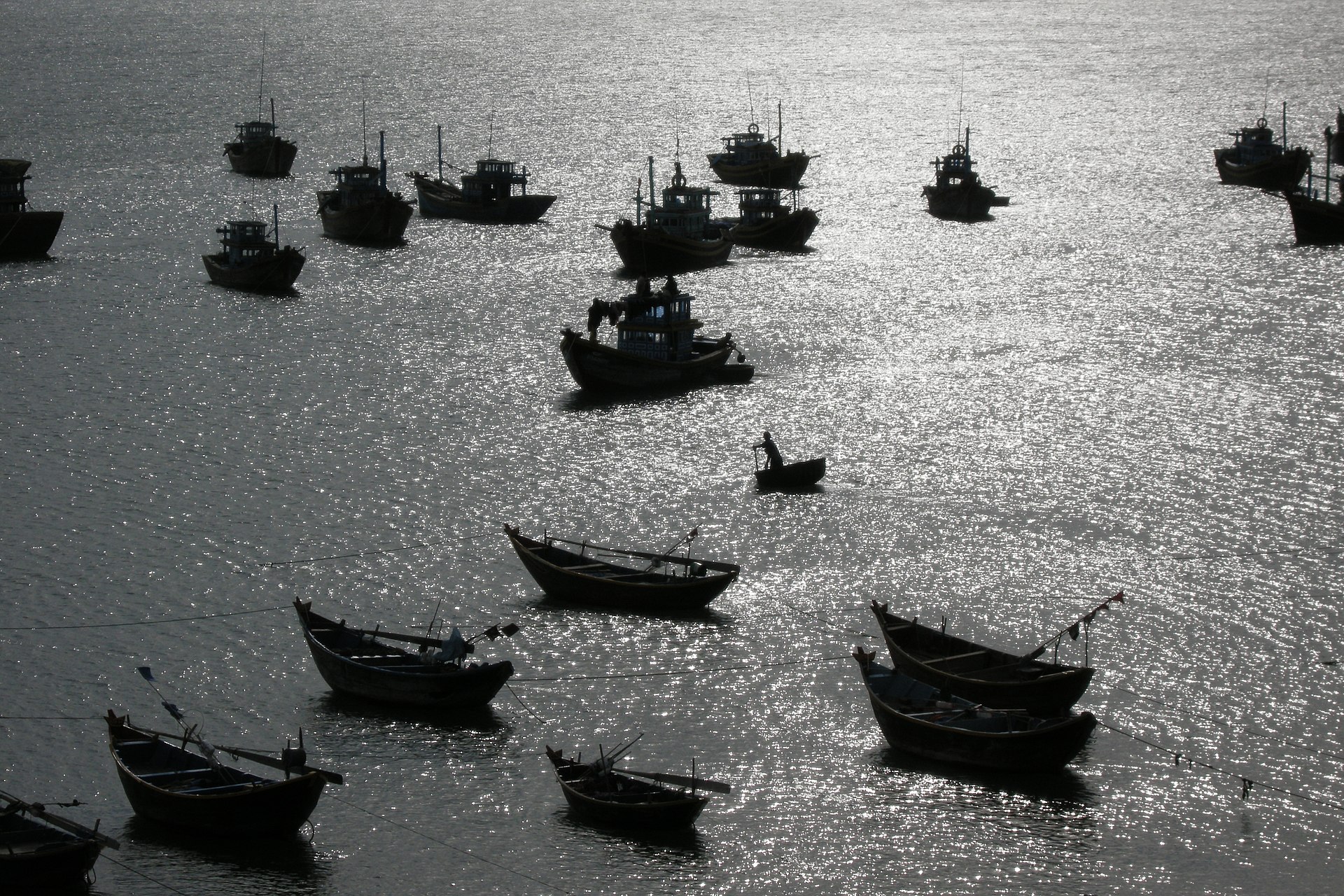
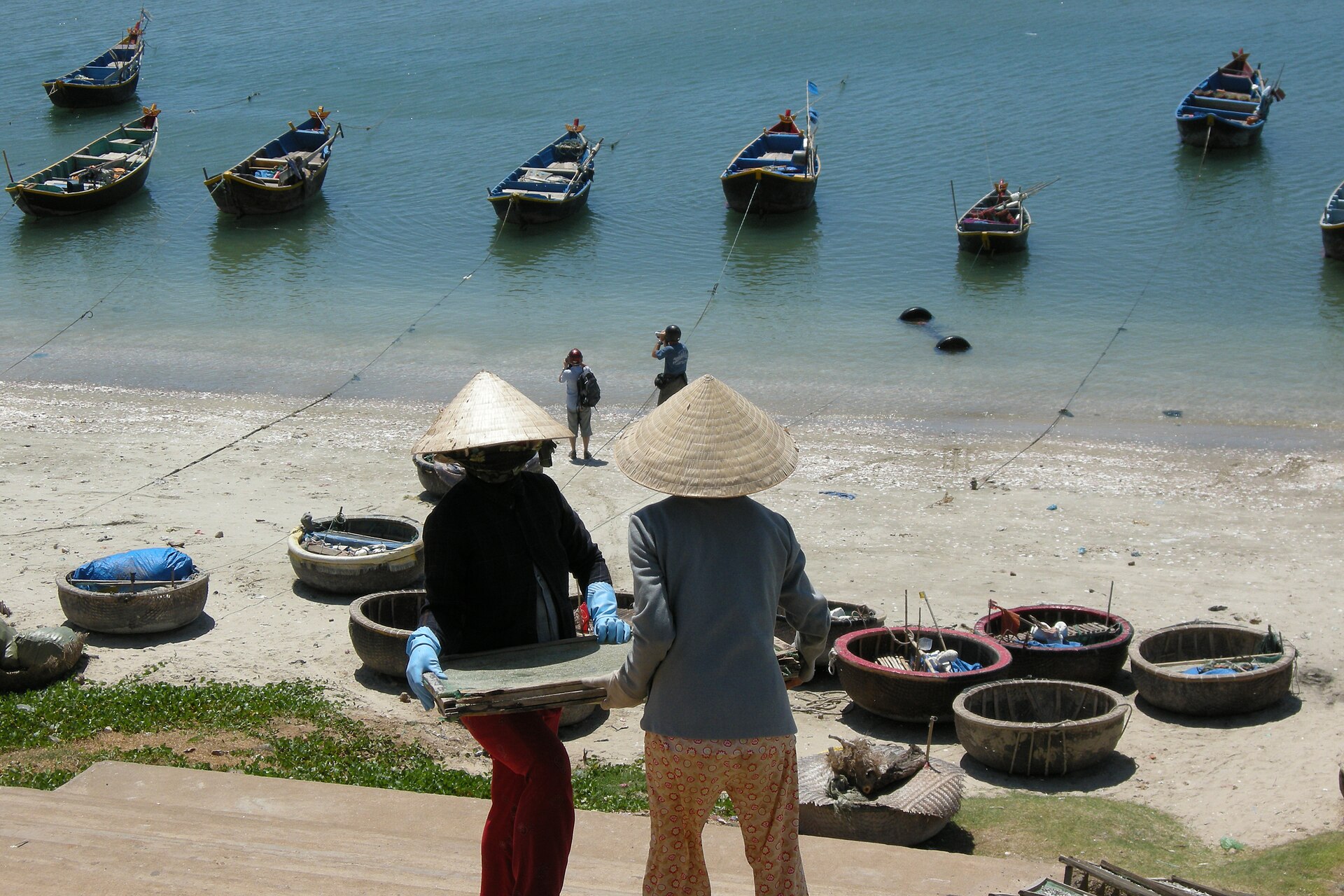
Visit the Po Sah Inu towers at the northern edge of town in late afternoon. The eighth-century brickwork sits on a hill overlooking the Phan Thiết fishing harbor — three weathered stupas against the South China Sea. Frangipani drifts down from old trees. Faint incense rises from the active shrine still tended by the local Balamon Cham community. Below, the round basket boats (thúng chai) of Mui Ne fishermen dot the water like floating commas. Our notes on phan thiet fish sauce keep coming back to scenes like this.
This is what we mean by Cham coastal heritage south. It is not a museum but a living overlap — Cham bricks, Vietnamese fish sauce vats, the same tradewinds blowing through both. Therefore, when you smell Phan Thiet fish sauce, you are also, in a sense, smelling something the Cham started.
The Vạn Thủy Tú whale temple in Phan Thiết, founded in 1762, is the other scent-stop. Vietnamese fishermen along this coast worship the whale (Cá Ông) as a deity who guides storm-tossed boats home. The temple holds the largest whale skeleton in Southeast Asia, more than twenty metres long, and the air inside smells of teak, joss-stick smoke, and old salt. The fish sauce vats are simply the most edible expression of that same reverence for the sea. Anyone planning phan thiet fish sauce will likely cross paths with this corner.
Mui Ne Fishermen and the Daily Smell of the South Vietnam Coast
Twenty kilometres north of Phan Thiết, the Mui Ne fishing harbor is where the daily reality of all this heritage actually lives. Come at 5:30 a.m. The horizon is still grey. Then, in formation, five hundred thúng chai drift in — round wicker bowls woven from bamboo, sealed with dragon’s blood resin, paddled by fishermen with the steady, almost lazy rhythm that comes from doing the same thing every day for forty years.
The boats unload anchovies. Mackerel. Sometimes squid. Some catch goes to fresh markets in Saigon by truck within hours. The rest goes — by tradition, by economics, by smell — into the fish sauce vats of Phan Thiết. Stand on the harbor wall and breathe. This is the supply chain you can inhale: brine, diesel, scales catching the first light, the faint ammonia of fish that have already begun to do what fish do once they leave the cold of the sea.
Most travelers are content to watch — to stand, breathe, and let the harbor do its slow morning theatre. For us, this scene is the live overture for every bottle of Phan Thiet fish sauce. Without these boats, no nước mắm. Without nước mắm, a hole in the centre of Vietnamese cooking.
From Phan Thiet Fish Sauce to a Saigon Workshop — The Savory Accord
So you spend two days in Phan Thiết. You walk a fish sauce factory. You stand at the Mui Ne harbor at dawn. You climb the Po Sah Inu towers at sunset. Your shirt smells faintly of fermented anchovy for the rest of the trip. Then, four hours later, you are back in Saigon — and the question becomes: what do you do with that?
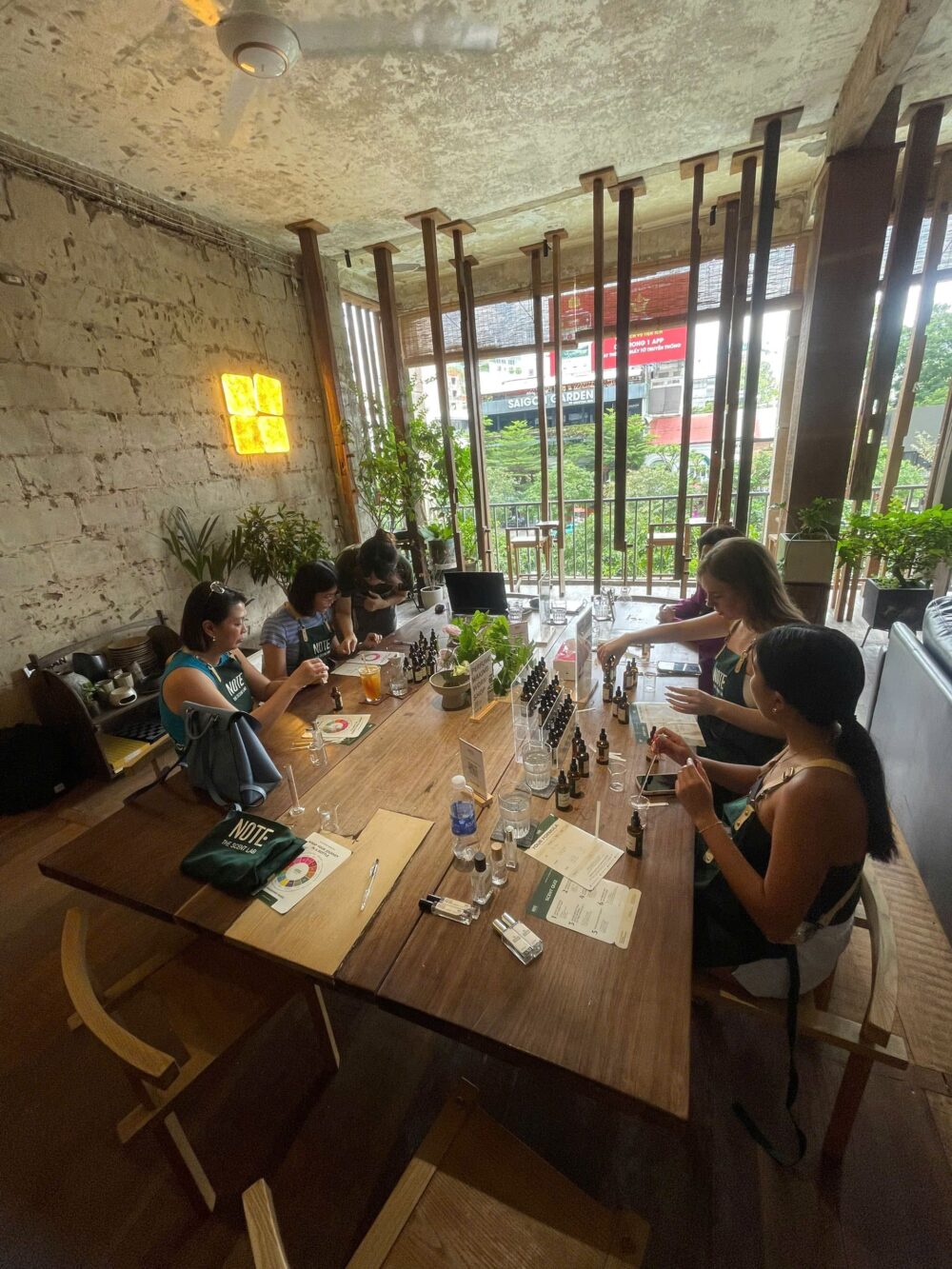
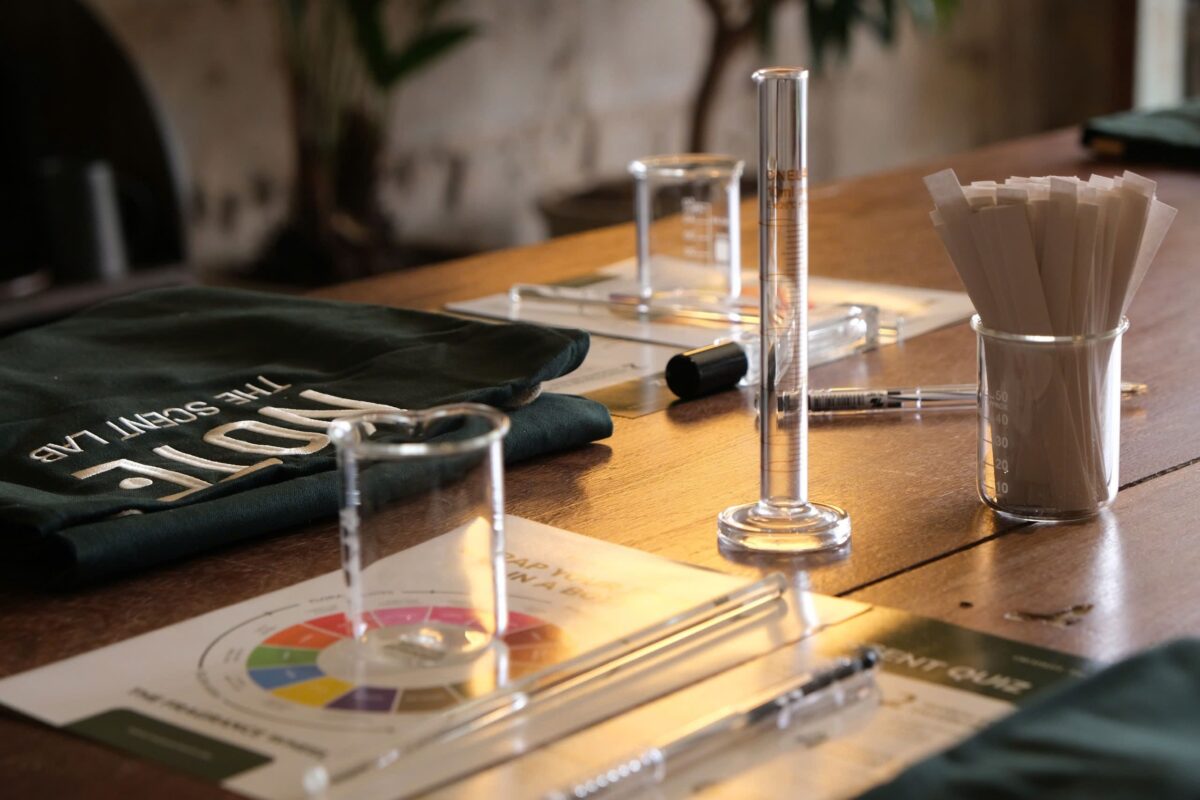
This is where our work begins. At NOTE – The Scent Lab, we run 90- to 120-minute perfume making workshops where guests blend a custom fragrance from 30+ IFRA-compliant ingredients. One of the families of notes our instructors love most is what we informally call the savory accord — a layered set of materials that, used carefully, evoke umami, brine, fermentation, and warm sea air without smelling literally of fish. Think of it as a regional accord built from the same instinct that built the fish sauce craft.
“I left with not only my handmade creations but also a wealth of new knowledge. Highly recommend.”
The savory accord usually starts with sea salt and a touch of seaweed absolute on the bass — anchoring, not loud. In the heart, immortelle brings a warm, almost maple-syrup roundness. Above it, a bright top of bergamot or yuzu lifts the whole thing into something breathable. The fragrance does not announce itself with sweetness. Instead, it slips in like the offshore wind into Phan Thiết.
“Beautiful space, amazing hospitality and great information from knowledgeable host.”
If you walk in fresh from a Mui Ne morning, you arrive with a sensory vocabulary already loaded. You know what brine smells like. You know what salt-cracked wood smells like. The workshop simply gives you the materials and the time to bottle that — not as fish sauce itself, but as the regional savory accord that carries the same instinct.
Book Your Perfume Workshop in Saigon →
A Practical Note on Visiting the Phan Thiet Fish Sauce Region
Phan Thiết sits roughly 200 km east of Saigon, about four to five hours by car or coastal train. Most travelers pair the trip with one or two nights in Mui Ne, then return to Ho Chi Minh City for their final days. The dry season — November through April — is best for both factory tours and the dunes.
For factory visits, ask your hotel to call ahead. Many smaller producers welcome travelers but do not run formal tour schedules. Around 50,000-100,000 VND in early 2026 should typically cover an informal walk-through with a tasting; a glass-bottled nước mắm nhỉ souvenir typically costs another 100,000-300,000 VND. Bring an extra sealed bag.
Many travelers also combine the trip with our guide to Phan Thiết and Mui Ne hidden gems, which maps out the lighthouses, lakes and Champa ruins beyond the dunes.
Frequently Asked Questions about Phan Thiet Fish Sauce
What makes Phan Thiet fish sauce different from other Vietnamese fish sauces?
Phan Thiết uses long sun-fermentation in tall wooden vats, often nine to twelve months, and traditionally relies on the local cá cơm anchovy. The result is a darker, more amino-rich nước mắm than many factory-produced versions. Its first-draw grade — nước mắm nhỉ — is widely regarded as one of Vietnam’s finest. In 2026 it was nominated for national intangible heritage recognition.
Can I tour a Phan Thiet fish sauce factory in 2026?
Yes. Several traditional nước mắm houses welcome visitors, and a 300-year fish sauce museum operates in central Phan Thiết. Most do not run fixed schedules, so it is best to ask your hotel to phone ahead. Plan around 30-45 minutes per factory visit, and bring a sealed bag for any bottle souvenir.
What is the connection between Cham heritage and Phan Thiet fish sauce?
The technique of fermenting small fish with sea salt was practised on this coast by the Cham long before Vietnamese settlers arrived in the late 1600s. The Vietnamese fishermen who moved south learned and refined the method. Cham coastal heritage south of Saigon is still visible in the Po Sah Inu towers above the harbor, and culturally embedded in the way nước mắm is still made today.
When is the best time to visit Mui Ne fishermen at the harbor?
Arrive between 5:30 and 7:00 a.m., when the round basket boats (thúng chai) come back with the night’s catch. The light is good, the air is full of brine, and the fishermen are usually relaxed about respectful onlookers. By 8:00 a.m. the activity thins.
How does Phan Thiet fish sauce relate to a perfume workshop in Saigon?
The same olfactory grammar — salt, fermentation, sun-warmed wood, sea air — sits at the heart of NOTE – The Scent Lab’s regional savory accord. Many of our guests arrive in Saigon after a Phan Thiết trip and use that fresh sensory memory to blend a custom 90- to 120-minute fragrance from 30+ IFRA-compliant materials at our 42 Nguyễn Huệ or Thảo Điền studios.
How do I get from Phan Thiet to Saigon?
The drive takes four to five hours by car or coach. The Phan Thiết express train runs daily and takes about four hours. Private transfers should typically cost around 1.2-1.5 million VND in early 2026, though pricing varies — please verify with your hotel or operator before booking.
“This perfume will always remind us of this trip in Vietnam.”
The Coast in a Bottle
Some places stay with you because of what you saw. The Phan Thiết coast stays with you because of what you smelled. The fermentation courtyards. The wet rope of the round boats. The salt grit on your forearm. The faint sweetness drifting down from frangipani at the foot of an eighth-century Cham tower.
You can taste Phan Thiet fish sauce on a plate of cơm tấm back in Saigon. You can drizzle it on greens, mix it with lime and chilli for nước chấm, give a bottle to your sceptical uncle at home and watch him slowly come around. But there is a third option, quieter and stranger. You can sit with someone in our studio for ninety minutes and translate the whole coastline — Cham, Vietnamese, fishermen, sun, salt, time — into a fragrance you actually wear.
Some places don’t fit in a suitcase. They fit in a bottle.
Follow @note.workshop on Instagram for the small daily details from our studio — fresh ingredients arriving from Vietnamese botanicals growers, and the slow craftsmanship that goes into every blend.
Looking for a scent souvenir? If you would rather take home a ready-made bottle than build your own, NOTE’s online store at thescentnote.biz ships natural perfumes, home fragrances and travel-size rollerballs across Vietnam — many of them inspired by the same coastal grammar as Phan Thiet fish sauce.
Last Day in Saigon Before Your Flight?
If you fly out of Tan Son Nhat the day after your Phan Thiết trip, save your last morning or afternoon for a 120-minute perfume making session. Many of our guests find it the most memorable thing they did in Vietnam — see our guide to what to do on your last day in Ho Chi Minh City for the gentle version of an itinerary.
This article is provided for general informational and reference purposes only. Information was accurate at the time of writing (May 2026) but may change without notice. Opening hours, prices, transit schedules, and availability for venues outside NOTE – The Scent Lab can change without notice — please verify with official websites, TripAdvisor, or Google Maps before your visit. We do not guarantee accuracy and are not responsible for outcomes based on outdated information.
Find NOTE – The Scent Lab
- 42 Nguyễn Huệ (Floor 3 — Vietnamese ‘Lầu 2’, 2 levels up from the ground floor of the Cafe Apartment) — Get directions on Google Maps → · Read reviews on TripAdvisor
- 34 Nguyễn Duy Hiệu (Thảo Điền) — Get directions on Google Maps → · Read reviews on TripAdvisor
How to find us:
- 📍 42 Nguyễn Huệ — Watch direction video on TikTok →
- 📍 34 Nguyễn Duy Hiệu — Watch direction video on YouTube →