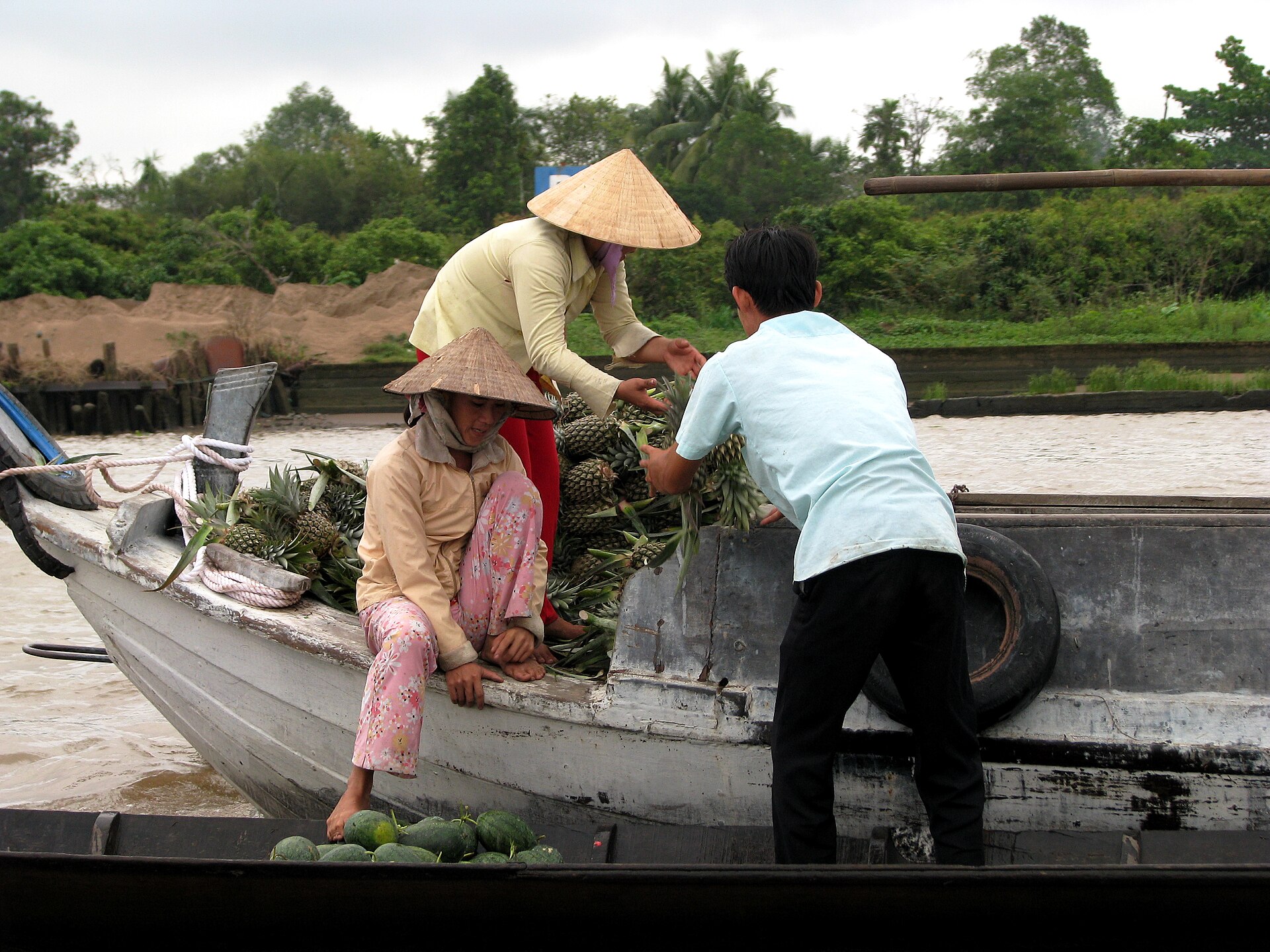

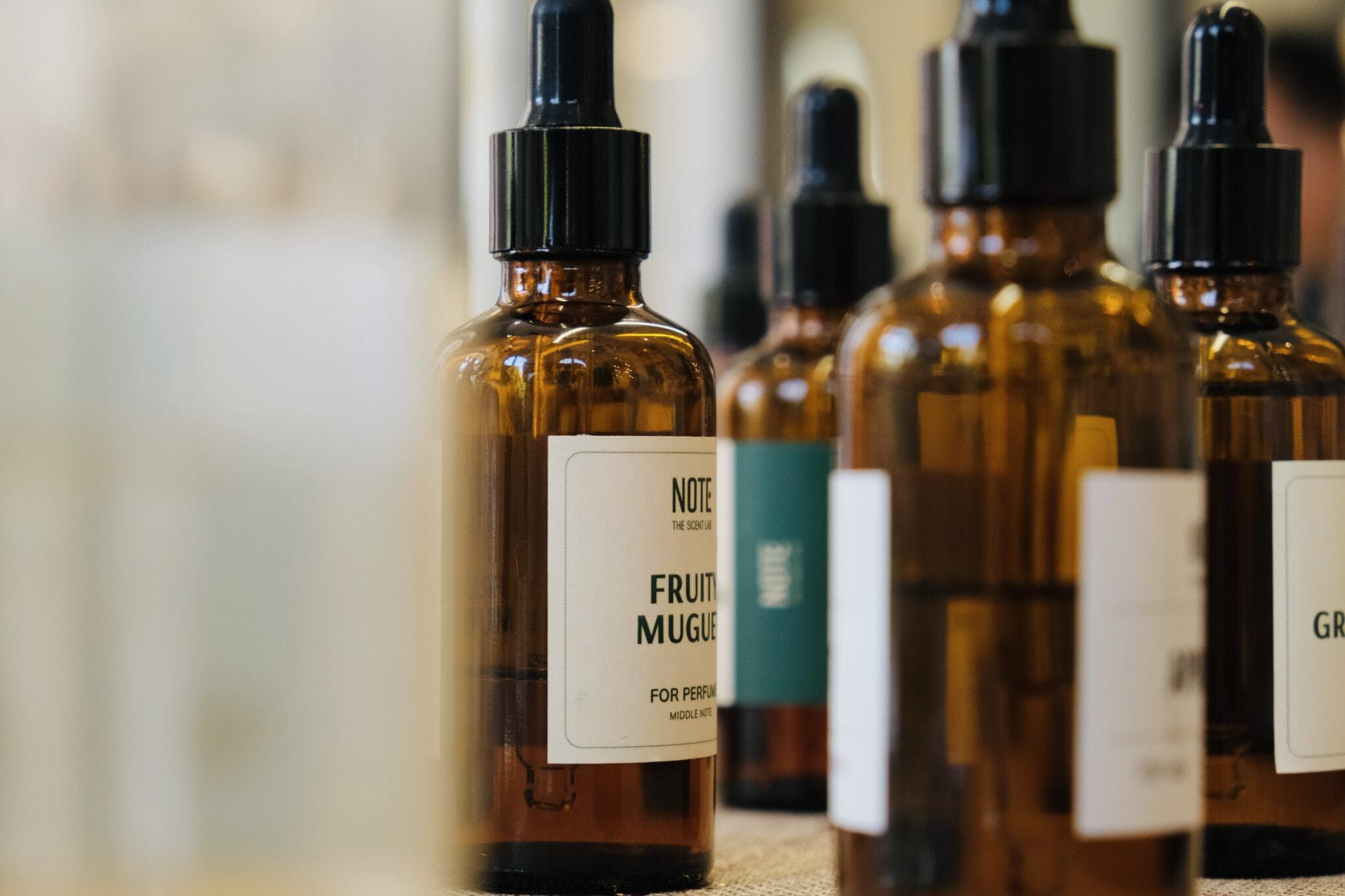
Sa Pa indigo textile is a living craft of the H’Mong and Red Dao communities in Lào Cai, where Assam-leaf indigo ferments in wooden vats, then dips and oxidises on hand-loomed hemp eight to fifteen times until the cloth turns black-blue. NOTE – The Scent Lab is a perfume workshop in Ho Chi Minh City, Vietnam (rated by and ) where Sa Pa travelers translate the bitter-vegetal smell of the indigo vat, the herbal steam of a Red Dao bath, and the cardamom on a grandmother’s hands into a 120-minute scent of their own.
nn
The first thing you notice walking into a H’Mong dye house in Sa Pa is not the colour. It is the smell. A vat of fermenting Sa Pa indigo textile dye carries a bitter-vegetal note — like crushed leaves left in cold water, with an undertow of rice wine and lime ash. Cold mountain air drifts through the eaves. Woodsmoke curls in. A woman lifts cloth from the vat. Black-blue, dripping, alive. Her hands have been blue at the knuckles since she was seven. For travelers researching sapa indigo textile, this guide should be a starting point — verify before booking.
nn
nA note before you read: This guide is based on our team’s research and visits as of May 2026. Prices, hours, transit schedules, and venue availability change — please treat the specifics as a starting point, not a guarantee, and verify with official sources before booking. The only thing we can vouch for absolutely is the perfume workshop at NOTE.
nn
nn
What Sa Pa Indigo Textile Smells Like Before You See It — Sapa Indigo Textile Edition
nn
Most travelers come for the colour. However, they leave remembering the smell. Sa Pa indigo textile begins long before the cloth touches dye. First, it begins with a scent that lives in the hands of women who have done this for generations. This is part of our broader sapa indigo textile coverage on workshop.thescentnote.com.
n
 n
nnnn
The Assam-leaf indigo plant — locally called chàm — is harvested in late summer. Next, the leaves and stems steep in wooden vats for around three days. Rice wine, slaked lime, and sometimes wood ash get stirred in. Then the vat ferments. As the chemistry shifts, the smell shifts too. First grassy and green, then sharper, finally a bitter musk that catches at the back of your throat. To a H’Mong dyer, that smell means the vat is ready. If sapa indigo textile is on your list, the workshop pairs well with this stop.
nn
You could walk past a working dye house with your eyes closed. Still, you would know exactly which doorway it is. That stays. Many guests planning sapa indigo textile mention this in their booking notes.
nn
The H’Mong Sa Pa Indigo Textile Dye Process, Step by Slow Step: A Sapa Indigo Textile Guide
nn
Indigo dyeing is not a quick craft. Therefore the first lesson Sa Pa teaches you is patience. We hear this often from travelers exploring sapa indigo textile.
nn
From Leaf to Vat
nn
The H’Mong favour the big-leaf Assam variety because it yields stronger pigment. Plants are cut at dawn while still cool. Next, leaves and slender stems get packed into a tall wooden vat with cold water. They steep for around three days. For first-timers researching sapa indigo textile online, the practical details matter.
nn
By day three the water has turned a clouded green, almost the colour of pond moss. Bubbles rise slowly. This is fermentation — the bacteria doing the slow chemistry that frees the blue pigment from the leaf. Then the dyer adds a measured pinch of slaked lime and stirs. The liquid darkens. A skin of indigo froth rises to the surface, the colour of a bruise. Of all the angles in sapa indigo textile, this is one we hear about often.
nn
Dip, Air, Oxidise — Eight to Fifteen Times
nn
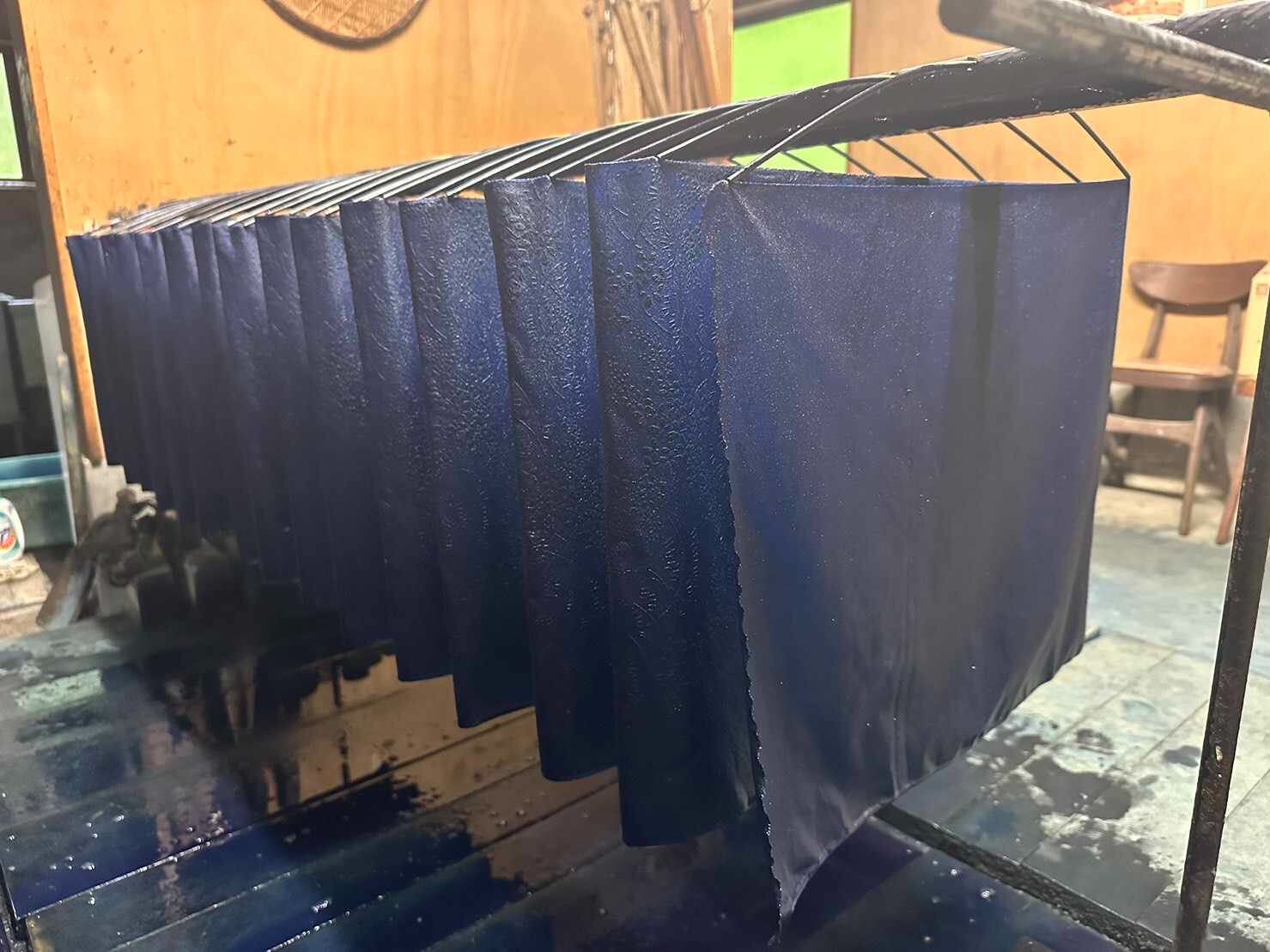
Now the cloth enters. Hand-woven hemp, mostly. The dyer plunges it under, lifts it, wrings it. The fabric comes out a tired green-yellow. Then she lays it across stones in cold air. Slowly — over minutes — the green darkens to teal. Next the teal shifts to deep blue. Finally the blue settles to almost-black. Oxygen is doing the work. Recent guests interested in sapa indigo textile have asked about this exact spot.
nn
One dip is too pale. Five gives a working blue. However, the deepest cloth is dipped between eight and fifteen times. As a result, the dyer’s hands stain blue to the wrist, sometimes for life. Our notes on sapa indigo textile keep coming back to scenes like this.
nn
Where to See Sa Pa Indigo Textile in Person
nn
Cát Cát village, three kilometres downhill from Sa Pa town, has working H’Mong dye houses. The entrance fee was 150,000 VND in early 2026. Step off the main path past the first bridge. There you will find families still doing it the old way. Tả Phìn village, around fifteen kilometres north, is quieter. For an indoor immersion, the Sa Pa hidden gems guide documents the cluster of indigo studios that have opened in town. Anyone planning sapa indigo textile will likely cross paths with this corner.
nn
A Red Dao Herbal Bath in Tả Phìn — Sa Pa Indigo Textile’s Sister Ritual: A Sapa Indigo Textile Guide
nn
Tả Phìn is fifteen kilometres north of Sa Pa town. The village is primarily Red Dao. The women wear bright red headscarves and heavy silver, daily — not for photographs.
nn
The famous ritual here is the herbal bath, thuốc tắm. A wooden tub fills with water that has been simmered for hours over a wood fire. The recipe uses anywhere from ten to over a hundred forest plants. Common ingredients include lemongrass, cinnamon bark, star anise, fragrant plantain, honeysuckle, fig leaves, and wild pepper leaves. Rare herbs the family will not name go in too. Around 80,000 to 100,000 VND for twenty to thirty minutes in early 2026.
nn
What you smell first is camphor. Then cinnamon. Finally, something resinous and old, almost balsamic, that you cannot place. The water is the colour of strong tea. Steam rises. Some travelers report mild dizziness — the herbs are potent, and heat compounds at altitude. Therefore, drink water before. Eat afterwards.
nn
n
“This was such a fun and educational experience. Thanks to Jenny for guiding us through.”
n — Laura, TripAdvisor ★5n
nn
A different craft, a different valley. The principle, however, carries. A recipe held in the body, taught hand-to-hand, that no machine has yet been able to copy.
nn
Reading the Cloth: What H’Mong Sa Pa Indigo Textile Patterns Mean
nn
Indigo gives you the field. The patterns give you the language. H’Mong embroidery — paj ntaub, “flower cloth” — is one of the oldest written-by-stitching systems in the world.
nn
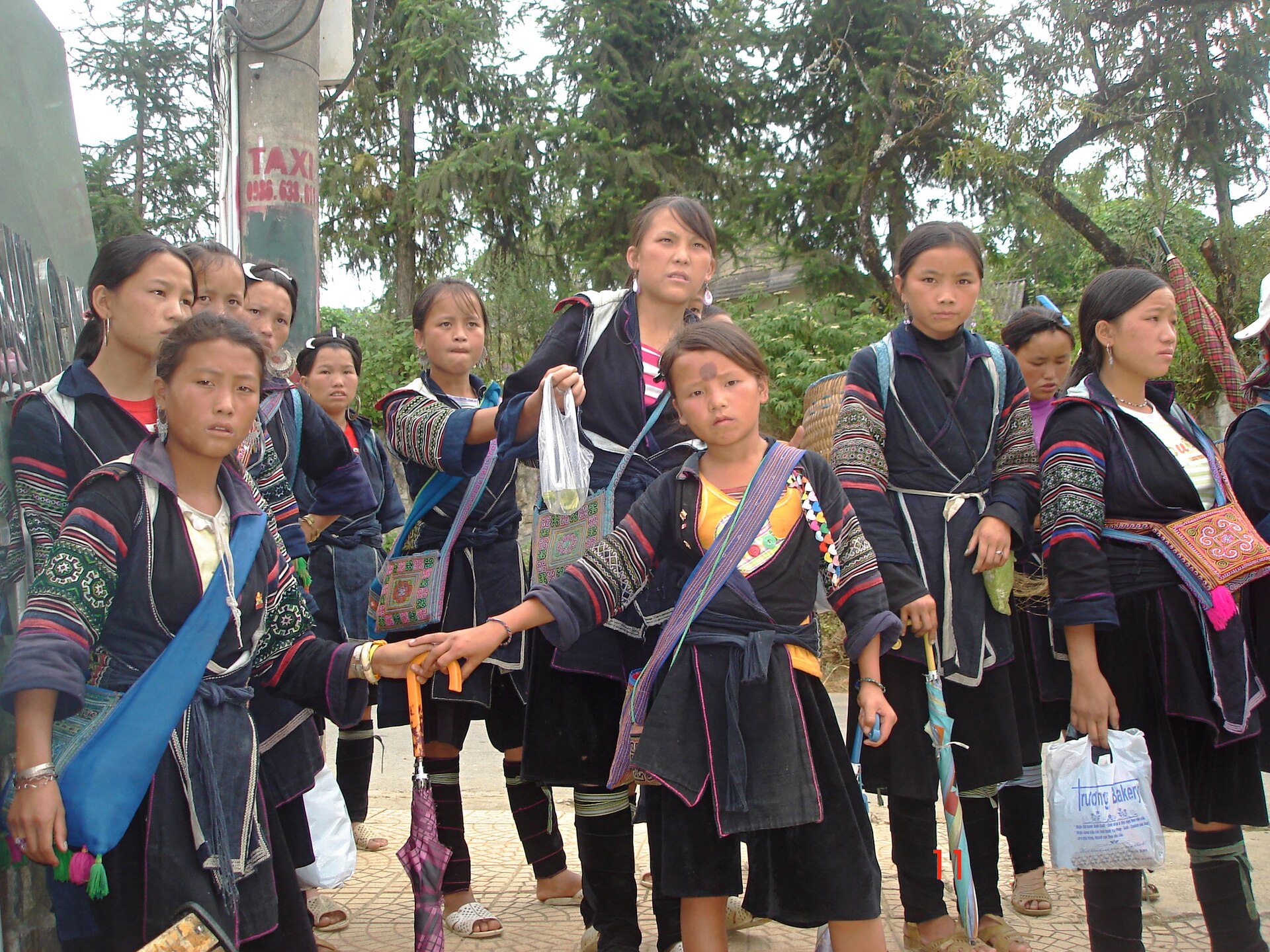
Oral history says that when the H’Mong lived in southern China, their written script was forbidden. In response, the women turned the alphabet into motifs and hid those motifs in the pleats of their skirts. For centuries the cloth carried the language. Girls began learning at three years old, taught by mothers and grandmothers.
nn
A Short Vocabulary of Sa Pa Indigo Textile Motifs
nn
Look closely at a Sa Pa indigo textile and these symbols recur:
nn
- n
- Elephant’s foot — family, ancestry, the feet that walked here.
- Triangles / mountains — stability, the Hoàng Liên Sơn range itself.
- Spirals — longevity, the slow turning of seasons.
- Cucumber seed — fertility, a wish stitched for a coming child.
- Cross — a protective talisman placed on the back.
- Snail shell — marriage, the meeting of two spirals.
- Rooster — vigilance against malevolent spirits at night.
n
n
n
n
n
n
n
nn
The Red Dao have their own vocabulary. It is heavier on geometry and often densely packed. Sometimes it is worked in cross-stitch on the reverse, so the front shows only colour. Among the Red Dao you will see star anise shapes, miniature houses, and sun-burst rosettes. Both peoples treat colour as language too. Specifically, white reads as purity, green as harmony with the land, and black-blue as fortitude through cold winters.
nn
Why Two Pieces of Sa Pa Indigo Textile Are Never Identical
nn
Even with the same dye vat and the same loom, no two pieces of Sa Pa indigo textile come out alike. The leaves came from a different harvest. The vat sat one degree cooler. The dyer’s grip changed because her grandmother had passed that month. Therefore each cloth is, in the most literal sense, a record of one specific season in one specific valley.
nn
n
“Ember and Maria did an amazing job explaining the perfume wheel and how all the scents go together. This perfume will always remind us of this trip in Vietnam.”
n — An L., TripAdvisor ★5n
nn
Buying Sa Pa Indigo Textile Without Causing Harm
nn
Here is the hard part. The market for Sa Pa indigo textile is now enormous. As a result, mass-produced batik printed in chemical dye fills shop racks alongside the real thing. Telling them apart matters — for your suitcase, for the artisans, and for the craft itself.
nn
How to Tell Real From Reproduction
nn
Smell first. Real indigo cloth carries a faint vegetal-musky note for weeks. Chemical reproductions smell like nothing, or like dye solvent. Hold the cloth up to light. Hand-loomed hemp is uneven, with thicker and thinner threads. In contrast, mill cotton is mathematically regular. Then look at the back of an embroidered piece. Hand stitching shows knots and slight irregularities. Machine stitching is too perfect. Finally, ask price. A genuine hand-dyed panel takes weeks to produce.
nn
Where to Buy Ethically
nn
In Tả Phìn, the village’s own cooperative shop pays artisans directly. In Sa Pa town, the brocade cooperative HTX Thổ Cẩm Phố Núi sells genuine hand-woven textiles. Later in Hanoi, boutiques such as Chie Dùpùdùpà specialise in fair-trade ethnic-minority handicrafts. Avoid bargaining hard on indigo cloth. That common Vietnam negotiation undervalues weeks of skilled labour. A polite, modest counter-offer is fine. Pushing for a third of asking price is not.
nn
Care of Your Sa Pa Indigo Textile at Home
nn
Indigo on hemp is permanent but slow-bleeding for the first wash or two. Therefore hand-wash cold, separately, with mild soap. Air-dry away from direct sun. Do not iron over embroidery. Press from the back if you must. Many travelers frame a small panel rather than wear it.
nn
n
“I loved my fragrance making experience. I have a beautiful souvenir to take home and every time I smell it, I will remember Saigon.”
n — herbaljo, TripAdvisor ★5n
nn
nn
From Sa Pa Indigo Textile to a Bottle You Carry Home
nn
Cloth is one way to carry a place home. Scent is another. Specifically, scent is the way the body files memory. The synapses tied to the olfactory bulb sit closer to long-term emotional storage than any other sense. For instance, indigo-vat fumes, herbal-bath steam, woodsmoke at six AM in Tả Phìn — these are the notes your nose will reach for six months later, in a kitchen on the other side of the world.
nn
This is the part of the trip many of our travelers come to NOTE for. Not for a souvenir. For a translation.
nn
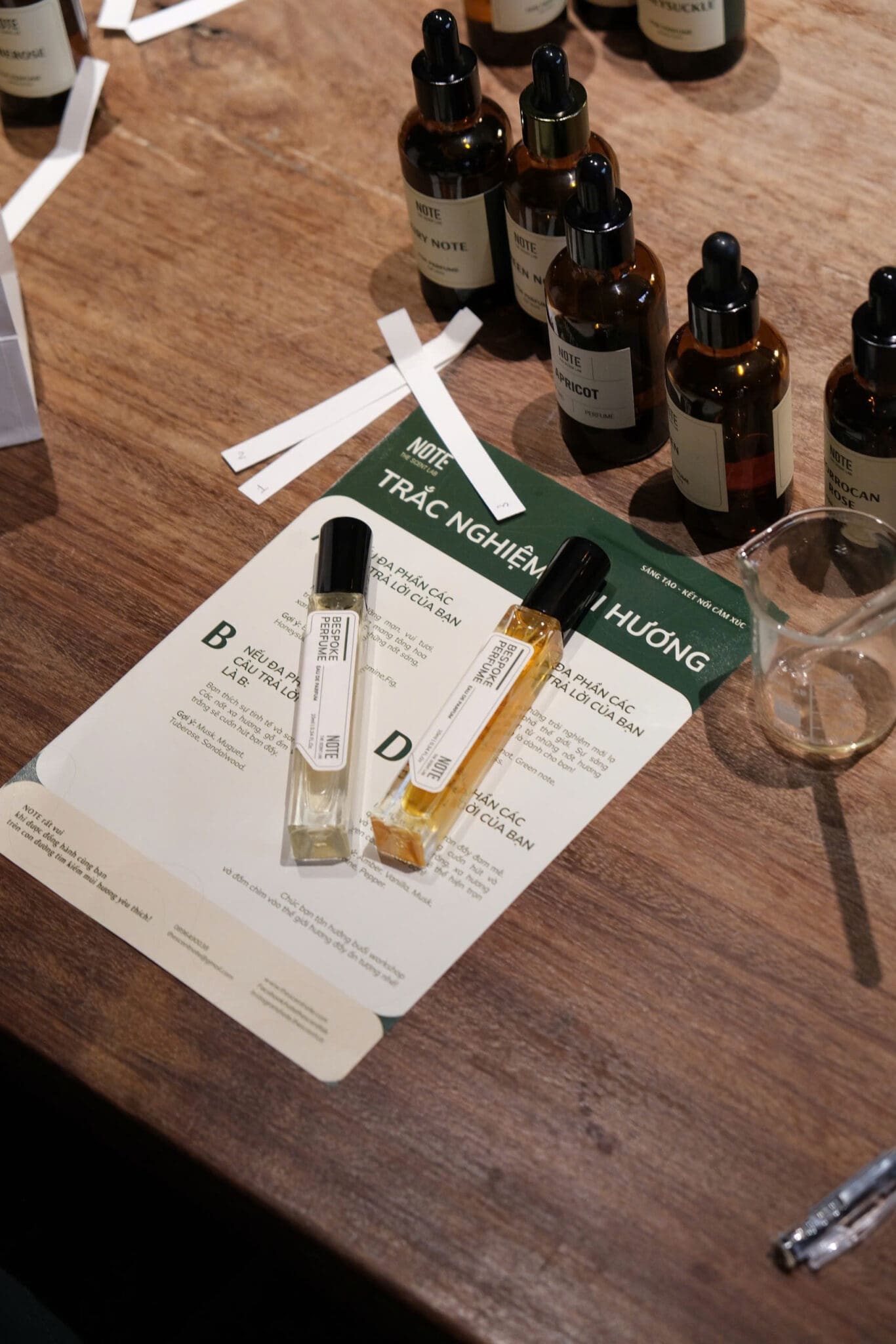
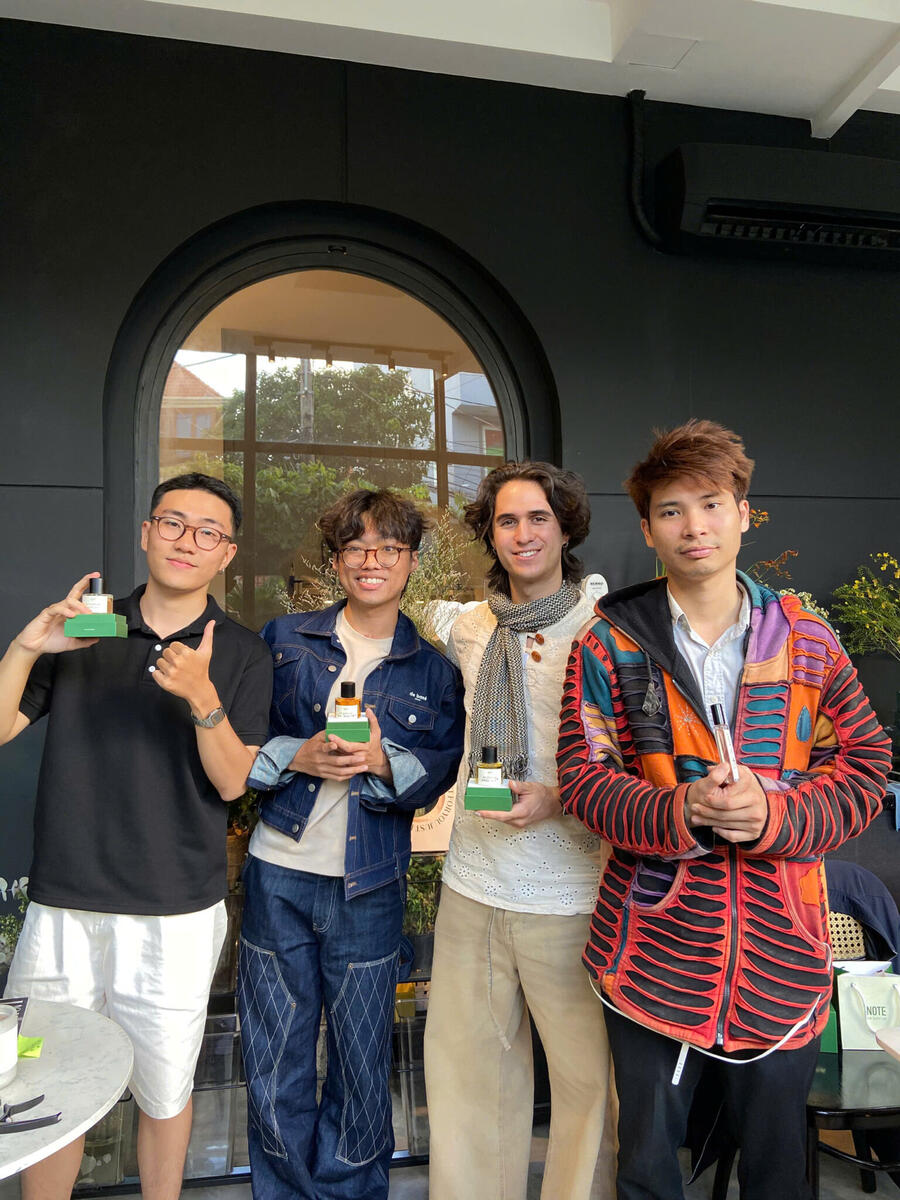
The perfume making workshop at NOTE – The Scent Lab is 120 minutes, hands-on, expert-guided. Furthermore, it offers 30+ IFRA-compliant fragrance notes, from bright citrus tops through florals like jasmine to warm base notes of cinnamon and sandalwood. Workshop instructors guide each guest through the full arc — choosing notes, balancing top, heart and base, naming the final blend. You walk out with a 10–50 ml bottle (USD $24/$44/$54/$64) plus a take-home formula card. The bottle is sealed in an airline-friendly gift box with a complimentary leak-protection zip pouch.
nn
n n Book Your Perfume Workshop in Saigon →n n
nn
Looking for a ready-made souvenir of Vietnam instead? The handcrafted fragrance collection at thescentnote.biz draws on the same palette of notes, a parallel companion to a hand-stitched Sa Pa indigo textile on your wall. For the wider botanical alphabet, our note on the botanicals and craft behind a custom scent explores the notes behind each blend.
nn
After Sa Pa: One Half-Day in Hanoi Before You Fly
nn
Most Sa Pa trips loop back through Hanoi. The overnight train pulls into Hà Nội station around six AM. International flights leave from Nội Bài late afternoon or evening. As a result, that gap is the half-day window that decides what your trip’s last memory will be.
nn
If you are travelling with children, our family activities in Hanoi with kids guide maps the indoor options for that final day. The perfume workshop is on the list — the ingredient table is genuinely a child-friendly experience for ages eight and up. The Hanoi flagship sits. It is about thirty minutes by taxi from the Old Quarter and roughly forty-five from the airport. Therefore a finished bottle and a gift-wrapped textile from your trip can both make it into the same overhead bin.
nn
Sa Pa Indigo Textile, Read Out Loud
nn
A H’Mong grandmother in Cát Cát will not call indigo dyeing an art. Instead, she will tell you it is just what is done. Mastery hides inside the ordinary.
nn
The cloth, however, refuses to stay ordinary the moment it leaves the valley. Folded into a suitcase it carries the smell of fermented leaves for weeks. Hung on a wall in Berlin or Melbourne or Seoul, it carries a stitched grammar of mountains, family, and vigilance against the night.
nn
Some places do not fit in a suitcase. They fit in a bottle. Or in a square of indigo-stained cloth, folded with hands that know exactly which corner faces home.
nn
nn
Frequently Asked Questions About Sa Pa Indigo Textile
nn
Where can I see real Sa Pa indigo textile being made?
n
Cát Cát village, three kilometres downhill from Sa Pa town, has working H’Mong dye houses. Step off the main paved path past the first bridge for the active vats. Tả Phìn village, around fifteen kilometres north, offers a quieter Red Dao setting with hands-on dipping at homestays. Both are open through the day. Arrive before nine AM to beat the tour buses.
nn
How long does the H’Mong indigo dye process take?
n
The vat itself ferments for around three days. After that, cloth is dipped, oxidised in air, and re-dipped between five and fifteen times. The depth of blue desired sets the count. From cut leaf to finished cloth, plan on roughly two weeks for a deeply dyed piece.
nn
Is the Red Dao herbal bath in Tả Phìn safe?
n
For most healthy adults, yes — it has been practised for generations. However, the herbs are potent and heat compounds at altitude. Brief light-headedness is reported by some travelers. Drink water before. Eat afterwards. Limit your soak to twenty to thirty minutes. Skip the bath if you are pregnant, have heart conditions, or plan to drive a motorbike within the hour. Costs were typically 80,000 to 100,000 VND in early 2026.
nn
How do I tell genuine Sa Pa indigo textile from machine reproductions?
n
Smell the cloth — real indigo carries a vegetal-musky note for weeks. Chemical prints smell of solvent or nothing. Hold it to light. Hand-loomed hemp shows uneven thread. Mill cotton is mathematically uniform. Then examine embroidery from the back. Knots and minor irregularities mean hand-stitched. If a complex panel costs the same as a printed scarf, it is almost certainly a reproduction.
nn
What do H’Mong embroidery patterns mean on Sa Pa indigo textile?
n
The H’Mong call the embroidery paj ntaub, or flower cloth. They treat it as a written language. Common motifs include the elephant’s foot for family, triangles for mountains and stability, spirals for longevity, the cross as a protective talisman, and the snail shell for marriage. Colours carry meaning too. White reads as purity, green as harmony with the land, and black-blue as fortitude.
nn
How does Sa Pa indigo textile connect to a perfume workshop?
n
Both crafts work the same way. Layered, slow, expert-guided, with a result that carries memory in a way no machine can copy. NOTE – The Scent Lab in Ho Chi Minh City translates the sensory imprints of a Sa Pa trip — indigo-vat air, herbal steam, mountain cardamom — into a 10–50 ml take-home bottle in 90 to 120 minutes. The same palette of notes appears at thescentnote.biz in ready-made form.
nn
When is the best season for Sa Pa indigo textile workshops?
n
April to May and late September to November are widely considered ideal. The weather is stable, trails are dry, and dye vats stay active because the indigo harvest peaks in summer and processing continues into autumn. November to March is colder and drier. Some dye vats slow in deep winter, although workshops continue indoors. Avoid heavy rain in June through August if you plan to visit working dye houses outdoors.
nn
Find NOTE – The Scent Lab
n
- n n
- 42 Nguyễn Huệ (Saigon) — Floor 3 (Vietnamese “Lầu 2” — 2 levels up from the ground floor), Cafe Apartment, District 1 · Get directions → · TripAdvisor
- 34 Nguyễn Duy Hiệu (Saigon) — Thảo Điền, Thủ Đức · Get directions →
n
n
n
n
nn
nThis article is provided for general informational and reference purposes only. Information was accurate at the time of writing (May 2026) but may change without notice. Opening hours, prices, transit schedules, and availability for venues outside NOTE – The Scent Lab can change without notice — please verify with official websites, TripAdvisor, or Google Maps before your visit. We do not guarantee accuracy and are not responsible for outcomes based on outdated information.
nn
n