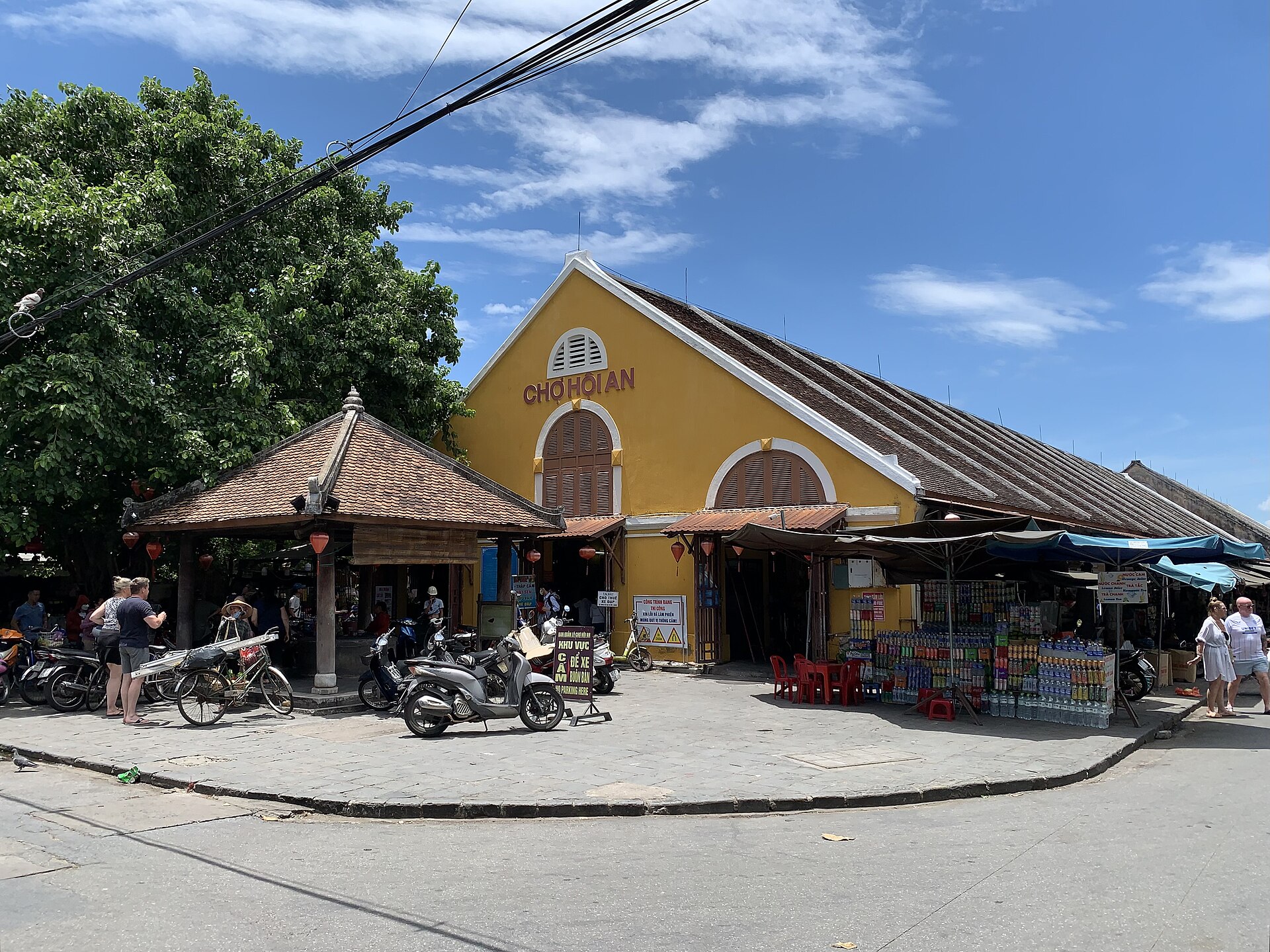

The Hoi An spice market is a 400-year-old olfactory archive of Vietnam’s maritime trade — where cinnamon from the Quang Nam highlands, star anise from the northern mountains, and Cham-era cardamom still perfume the same riverside lanes that drew merchants from Baghdad to Nagasaki. NOTE – The Scent Lab is a perfume workshop in Saigon, Vietnam (), where many travelers translate the scent memory of a Hoi An spice market into a custom fragrance to take home. But first — the market.
\n\n
\nA note before you read: This guide is based on our team’s research and visits as of May 2026. Prices, hours, transit schedules, and venue availability change — please treat the specifics as a starting point, not a guarantee, and verify with official sources before booking. The only thing we can vouch for absolutely is the perfume workshop at NOTE.
\n\n
You feel the wave before you see it. Cinnamon first — sweet, woody, almost peppery on the back of the tongue. Then star anise, that licorice hum you recognize from your grandmother’s pho pot. Cardamom underneath, smoky and faintly camphor-like. Turmeric on your sleeves before you have touched anything. The Hoi An spice market hits you at the entrance the way a well-built perfume hits the skin — top notes brassy and bright, the heart settling in slowly, a base of something old and earthy that you cannot quite name.
\n\n
I came here to buy lemongrass. I left two hours later with cinnamon bark from Tra My, a paper cone of green cardamom pods, and the strange feeling that I had walked through a chapter of Vietnamese history written in scent. For travelers researching hoi an spice market, this guide should be a starting point — verify before booking.
\n\n\n
\n\n
Why the Hoi An Spice Market Smells Like a Trade Route
\n\n
To understand the Hoi An spice market, remember what Hoi An was before UNESCO. From the seventh to the tenth centuries, this riverbend port belonged to the Champa kingdom. Cham seafarers traded aloe, cinnamon, ivory, and pepper as far west as Baghdad. The Maritime Silk Road brushed this coast, and Hoi An caught the spillover.
\n
 \n
\n\n\n\n
By the sixteenth century, Japanese, Chinese, Portuguese, and Dutch merchants began anchoring along the Thu Bon River. They were not opening a new chapter. They were arriving at a port that had already smelled like cinnamon and star anise for nearly a thousand years. This is part of our broader hoi an spice market coverage on workshop.thescentnote.com.
\n\n
That smell never left. The merchants did. The Champa rulers did. The Japanese bridge stayed. The market stayed. The spice ladies, descendants of traders who learned which bark commanded which price, still sit at the same wooden counters today. If hoi an spice market is on your list, the workshop pairs well with this stop.
\n\n
The geography of a Hoi An spice market bowl
\n\n
Most travelers assume the spices here are local. Some are. Most are not. Cinnamon — que in Vietnamese — arrives from two distinct mountain regions, and the difference matters to anyone who cares about scent. Many guests planning hoi an spice market mention this in their booking notes.
\n\n
From the north come barks grown in Yen Bai and Lao Cai. Cool altitude gives those barks a brighter, sharper sweetness. From the south comes Tra My cinnamon, grown in Quang Nam at roughly 1,500 metres on the Laotian border. It takes ten years for the bark to mature. The flavor reads deeper, almost honeyed, with a slow heat that lingers. We hear this often from travelers exploring hoi an spice market.
\n\n
Star anise (hoi) travels south from Lang Son near the Chinese border. Black cardamom, used in pho stocks, comes from the high northern provinces. Turmeric and ginger are local — you can buy them muddy and just-pulled. The Hoi An spice market is therefore a living map of Vietnam, organized by smell.
\n\n
Five Spices to Smell at the Hoi An Spice Market — A Sensory Walk
\n\n
If you walk through the spice section without slowing down, you will miss the whole point. The trick, as any cooking class instructor will tell you, is to ask permission and then bury your nose in the bowl. Spice ladies expect this. They will laugh, then nudge you toward the better stuff hidden in plastic bins under the counter. For first-timers researching hoi an spice market online, the practical details matter.
\n\n
Below are five Vietnamese spices worth pausing for. Each comes with its scientific name and the folk associations that scent makers and cooks use. Smell each slowly. Then walk away and try to remember. That is how scent memory is built. Of all the angles in hoi an spice market, this is one we hear about often.
\n\n
1. Tra My Cinnamon (Cinnamomum loureiroi) — “que Tra My”
\n\n
Vietnamese cinnamon is not Ceylon cinnamon. The bark is thicker, darker, and significantly higher in cinnamaldehyde — the molecule responsible for that warm-and-stinging sensation. Tra My cinnamon, the local Quang Nam variety, smells like a Christmas cake left near a fire. There is sweetness, yes, but also a peppery bite and something almost leathery underneath. Recent guests interested in hoi an spice market have asked about this exact spot.
\n\n
Hold a stick under your nose. Breathe in. Wait. The first note is sugar. The second is smoke. The third is a faint floral quality that scent makers call “balsamic.” That balsamic note is why cinnamon shows up in oriental fragrance pyramids next to incense and amber. Our notes on hoi an spice market keep coming back to scenes like this.
\n\n
2. Star Anise (Illicium verum) — “hoi”
\n\n
Eight-pointed, hollow, almost ornamental. Star anise smells like licorice, but with a cooler, slightly medicinal edge that licorice candy lacks. Crush a single pod between your fingers and the smell jumps — anethole, the same molecule that gives fennel its sweetness, only louder. Anyone planning hoi an spice market will likely cross paths with this corner.
\n\n
This is the spice that makes pho smell like pho. It is also why mulled wine in Hanoi smells different from one in Munich. In fragrance composition, anethole pairs well with rose and tobacco. Niche scent houses occasionally hide it in masculine blends and call it “anise accord.”
\n\n
3. Black Cardamom (Amomum tsao-ko) — “thao qua”
\n\n
Bigger than green cardamom and far smokier. Vietnamese cooks use thao qua in pho bo the way a scent maker uses a single drop of birch tar — to give a recipe depth and shadow without anyone being able to point to why.
\n\n
The smell is hard to forget. Smoke. Camphor. A trace of pine. Something almost menthol on the tail. Open a pod and the seeds glitter resinous and sticky. If you have ever wondered what gives Vietnamese broth its slightly mysterious, almost campfire quality at the back of the palate — this is the answer.
\n\n
4. Lemongrass (Cymbopogon citratus) — “sa”
\n\n
Lemongrass at the Hoi An spice market is sold by the bundle, often still wet from rinsing. Bruise a stalk between your palms and the air around you turns citrus-bright. The smell is sharp, clean, faintly grassy — somewhere between lemon zest and freshly cut hay.
\n\n
Vietnamese cooks use only the pale stem. Scent makers use the leaf-extracted oil for its citral content. Citral is the same compound that gives Verbena and lemon myrtle their snap. Walk through the herb section early, when the lemongrass is just unbundled, and you understand why the Cham traders bothered exporting it.
\n\n
5. Turmeric (Curcuma longa) — “nghe”
\n\n
Yellow does not begin to describe it. Hoi An turmeric is bright as a wedding sari and stains everything it touches — fingers, shopping bags, the inside of your suitcase. The smell on the raw root is earthy and slightly bitter, with a peppery undertone that disappears when cooked.
\n\n
Turmeric is in everything central Vietnamese: mi quang noodles, banh xeo crepes, the marinade for grilled fish. The locals say a pinch of turmeric in a kitchen keeps the cook honest. We are not sure what that means, but we believe it.
\n\n
\n\n
A Hoi An Cooking Class That Starts at the Spice Market
\n\n
If you only have one morning in Hoi An and you want to understand the spice market the way a cook understands it, take a cooking class that begins with a market tour. Several Hoi An institutions — Red Bridge, Vy’s Market Restaurant, Green Bamboo, and Happy Cooking Class among them — typically open with a guided walk through the central market before moving to the kitchen.
\n\n
The instructor will pause at a spice stall, hand you a bowl, and watch you smell. Then she will explain why the cinnamon you just sniffed is graded differently from the cinnamon two stalls over. Why the lemongrass at the cooking school is bundled together with three different basil varieties. Why one star anise smells brighter than another.
\n\n
Specifically, the cooking class works because it teaches you to smell on purpose. Most travelers walk through the market and let the smell happen to them. A market visit with a teacher slows the act of smelling down. You smell the cinnamon. You name what you smell. You buy a little. You take it home and put it in something. Suddenly the spice is not exotic anymore — it is yours.
\n\n
Therefore, that is the first half of how a Hoi An spice market becomes a real scent memory. The other half — and this is where most travelers run out of time — is finding a way to keep the memory after the trip ends.
\n\n
Practical notes for the spice market
\n\n
The Hoi An Central Market sits along Bach Dang Street beside the Thu Bon River, in the heart of the UNESCO Old Town. Most stalls open by 6 AM. The spice section hits its peak between 7 and 8:30 AM, when the smell is strongest and the locals are still doing the actual shopping. By 10 AM, the tour groups arrive and the air shifts from market to performance.
\n\n
Bring small bills. Most spice ladies will let you smell anything you ask about. A bag of dried Tra My cinnamon should run somewhere around 50,000-80,000 VND in early 2026 (verify with the seller — prices shift). Star anise typically sells loose by weight. Lemongrass is sold by the bundle. The transactions are small. The conversations, if you take time to ask, are not.
\n\n
From the Hoi An Spice Market to a Bottle: Capturing Scent Memory
\n\n
Here is the problem with spice market memories. They fade. The cinnamon stick you brought home loses something on the flight. The lemongrass dries. By the time you are back at your kitchen counter trying to recreate the smell of the Hoi An market on a Tuesday morning in October, what you have is a faint copy of a feeling.
\n\n
For a long time I thought this was unavoidable. Smell is supposed to be ephemeral. That is part of what makes it precious. But after a few years working alongside scent makers in Saigon, I have come to believe something more useful — that a spice market wave can be bottled if you build the bottle around the right notes.
\n\n
Cinnamon and star anise are oriental fragrance pyramid staples. Cardamom is a secret weapon of niche scent houses. Lemongrass and ginger sit comfortably in the top notes of clean unisex blends. The trick is not buying the spices and bringing them home. The trick is sitting with someone who knows fragrance composition and saying: I want to remember a morning in Hoi An.
\n\n
That sentence — said out loud, in a quiet studio, to someone who has done this for thousands of travelers — is the start of a real scent memory. Not a souvenir. A formula.
\n\n
Book Your Perfume Workshop in Saigon →
\n\n
Why this works at NOTE in Saigon
\n\n
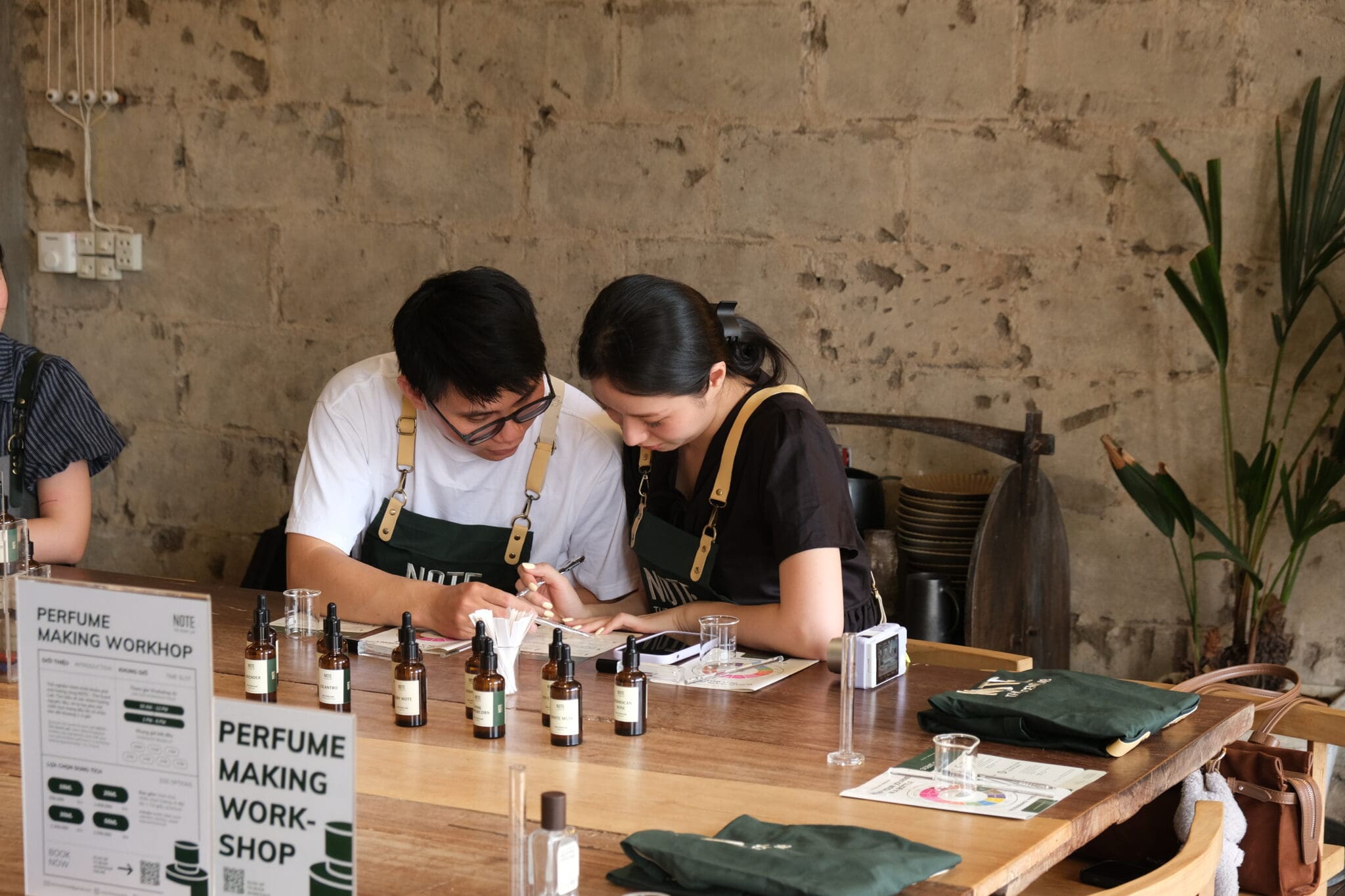
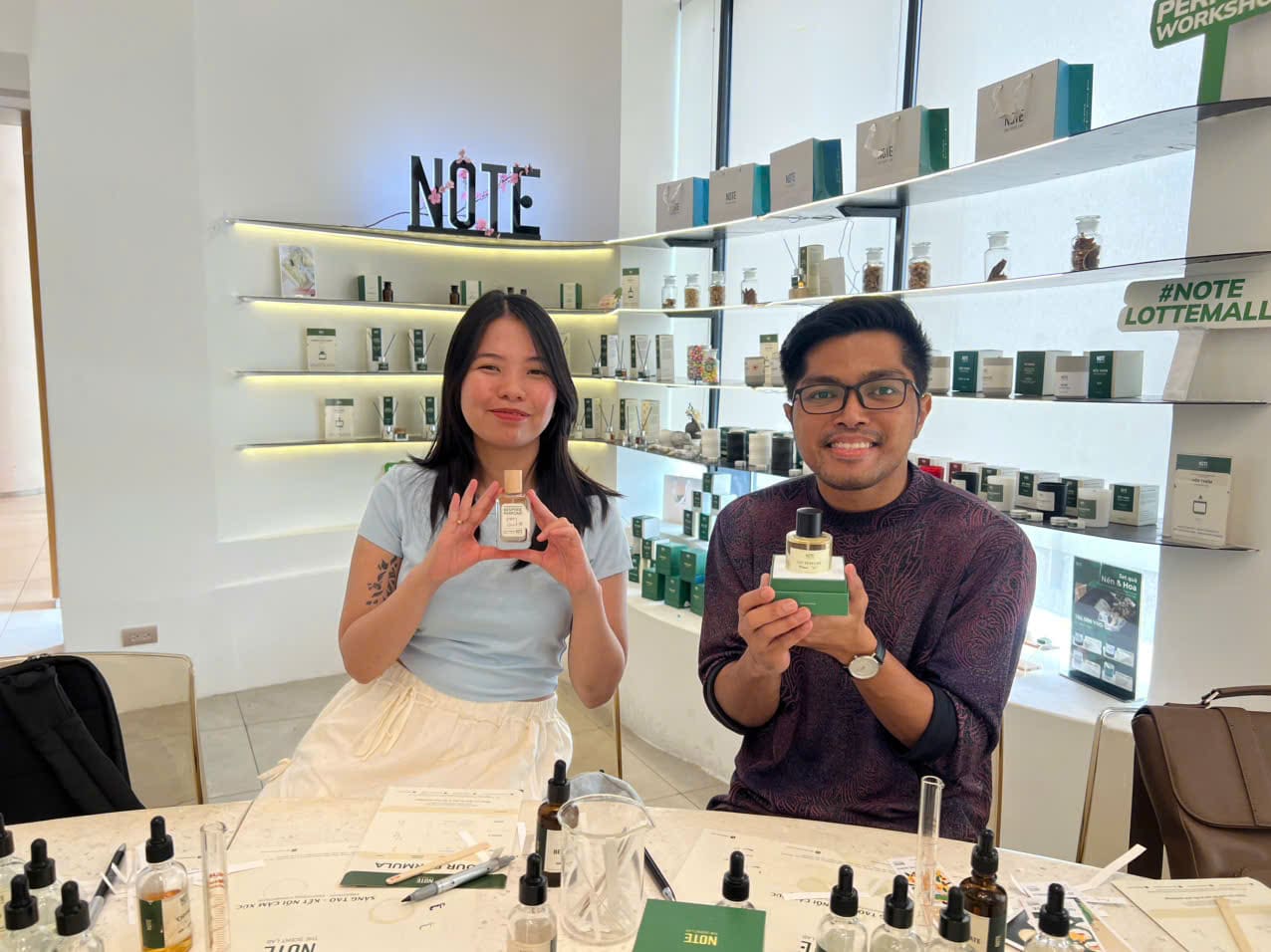
NOTE – The Scent Lab runs a 120-minute hands-on workshop where you build a custom fragrance from 30+ IFRA-compliant notes. Many of the notes available, cinnamon, pink peppercorn, amber, benzoin, sandalwood and patchouli, are exactly the materials a workshop instructor would reach for if you said “make me a Hoi An morning.” That is not a coincidence. The warm spices, woods and resins on the palette are some of the most layered materials in perfumery, and a workshop instructor at NOTE can guide you through pairings that translate spice market notes into a wearable fragrance.
\n\n
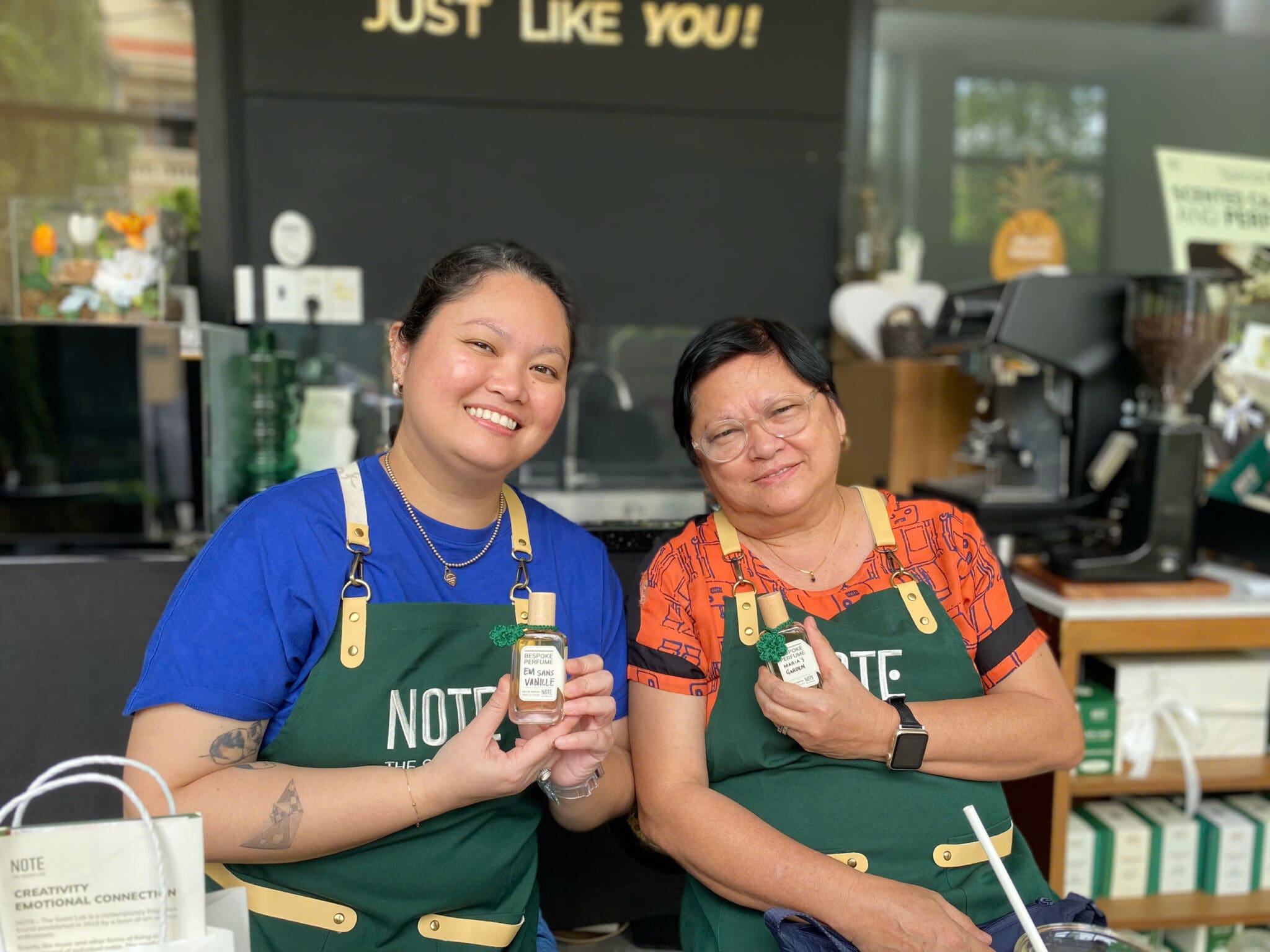
The workshop is hands-on and expert-guided. You leave with a 10-50ml bottle, a take-home formula card so you can recreate the scent later, and a complimentary leak-protection zip pouch designed for cabin pressure (a small thing that turns out to matter on long flights). There is no certificate. There is, however, a perfume that smells like a morning in central Vietnam, and that is the better souvenir.
\n\n
Travelers Who Bottled a Vietnamese Memory — Real Stories
\n\n
\n
“I loved my fragrance making experience. I have a beautiful souvenir to take home and every time I smell it, I will remember Saigon. Thanh was an excellent teacher.”
\n — herbaljo, TripAdvisor ★5\n
\n\n
\n
“Ember and Maria did an amazing job explaining the perfume wheel and how all the scents go together. This perfume will always remind us of this trip in Vietnam.”
\n — An L, TripAdvisor ★5\n
\n\n
\n
“My daughter took a similar class in Singapore but this is at a different level. We learnt about sensory moods and smells. We will definitely come back!”
\n — Michael, online booking platform ★5\n
\n\n
\n
“Wonderful 120-minute workshop where we experimented with different scents. We left with our own little perfumes — can’t wait to wear them!”
\n — online booking platform User FR, online booking platform ★5\n
\n\n
If You Loved Hoi An, You Will Love These Other Vietnamese Botanicals
\n\n
The Hoi An spice market is one entry point into Vietnam’s olfactory landscape, but it is not the only one. Lotus from the Mekong delta, agarwood from the central highlands, and pomelo blossoms from the Hue countryside all carry the same layered, place-specific intensity that makes Vietnamese ingredients so interesting to scent houses worldwide.
\n\n
If the spice market sparked something, our guide to Vietnamese botanicals — lotus, agarwood, and the wellness traditions behind them goes deeper into the cultural roots of Vietnamese scent. And our broader companion piece on hidden gems in Hoi An beyond the lantern crowds covers the craft villages, riverside cafes, and pre-dawn alleys that pair naturally with a market morning.
\n\n
Last Day in Saigon — Where the Hoi An Spice Memory Becomes a Bottle
\n\n
Most travelers fly in or out through Ho Chi Minh City. If your itinerary ends in Saigon, that final day is the natural moment to translate the spice market into something portable. The flight from Da Nang to Saigon runs roughly hourly, takes about 120 minutes, and the airport sits a 25-minute drive from the District 1 workshop.
\n\n
For practical planning on the closing day of your trip, our Saigon last-day itinerary covers the timing logistics for fitting a perfume workshop in before an evening flight — including how late you can book and still make it to Tan Son Nhat with time for one more bowl of pho.
\n\n
\n\n
Find NOTE – The Scent Lab
\n
- \n
- 42 Nguyễn Huệ, District 1, HCMC — Floor 3 (Vietnamese “Lầu 2” — 2 levels up from the ground floor), inside the Cafe Apartment building. Get directions → · TripAdvisor
- 34 Nguyễn Duy Hiệu, Thảo Điền, HCMC — R Space studio. Get directions → · TripAdvisor
\n
\n
\n
How to find us:
\n
- \n
- ? 42 Nguyễn Huệ — Watch direction video on TikTok →
- ? 34 Nguyễn Duy Hiệu — Watch direction video on YouTube →
\n
\n
\n
\n
\n
\n\n
\nThis article is provided for general informational and reference purposes only. Information was accurate at the time of writing (May 2026) but may change without notice. Opening hours, prices, transit schedules, and availability for venues outside NOTE – The Scent Lab can change without notice — please verify with official websites, TripAdvisor, or Google Maps before your visit. We do not guarantee accuracy and are not responsible for outcomes based on outdated information.
\n\n
Hoi An Spice Market — Frequently Asked Questions
\n\n
What time does the Hoi An spice market open and what is the best time to visit?
\n\n
The Hoi An Central Market — including the spice section — typically opens around 6 AM and runs through late afternoon. The best time to visit for the strongest aromas and the most active local trade should be between 7 and 8:30 AM, before the tour groups arrive. Locals do their real shopping early. Mornings are also cooler, which makes the spice section more pleasant to linger in.
\n\n
What spices should I buy at the Hoi An spice market?
\n\n
Tra My cinnamon (the local Quang Nam variety) is the standout — typically deeper and more aromatic than Ceylon cinnamon. Star anise, black cardamom (thao qua), turmeric root, and bundled lemongrass are also worth picking up. Bring small bills, ask permission before smelling, and let the spice ladies show you what is in the bins under the counter. Prices typically run small — a few dollars per bag.
\n\n
Can I take Hoi An spice market spices on the plane?
\n\n
Whole, dried spices are typically allowed in carry-on and checked baggage in most countries — though we recommend verifying current customs rules with your destination. Australia and New Zealand have stricter agricultural import rules, so declare your spices on entry. Wrap turmeric tightly because it stains aggressively. For perfume bottles created at NOTE, every guest receives a complimentary leak-protection zip pouch designed for cabin-pressure changes.
\n\n
Is a Hoi An cooking class with market visit worth it?
\n\n
For most first-time visitors, yes. A cooking class with a market visit reframes the spice market from a tourist attraction to a working kitchen pantry. The instructor explains regional grading, lets you smell what you would otherwise walk past, and translates aromas into dishes you will actually cook later. Several reputable schools — Red Bridge, Vy’s Market, Green Bamboo, and Happy Cooking Class among them — typically include the market walk as part of the half-day program.
\n\n
How is Hoi An connected to Vietnam’s spice trade history?
\n\n
Hoi An sits in Quang Nam province, which has been a major Vietnamese spice-producing region — particularly for cinnamon — for over a millennium. The town was a Champa-era trading port from roughly the seventh century onward, then became a Maritime Silk Road hub under the Nguyen lords in the sixteenth and seventeenth centuries, attracting Japanese, Chinese, Portuguese, and Dutch merchants. The current spice market is a continuation of trade traditions that pre-date the UNESCO Old Town by hundreds of years.
\n\n
How can I turn a Hoi An spice memory into a perfume?
\n\n
The most reliable way is to book a hands-on perfume workshop in Saigon — the typical final stop for travelers flying out of Vietnam. NOTE – The Scent Lab in Ho Chi Minh City offers a 120-minute workshop where you build a custom fragrance from 30+ IFRA-compliant notes, including cinnamon, pink peppercorn, amber, benzoin, sandalwood and patchouli. A workshop instructor can guide you through pairings that translate spice market memories into a wearable, take-home fragrance.
\n\n
A Final Note on Memory and Spice
\n\n
Some places fit in a suitcase. Hoi An does not. Not really. You can fold the silk shirt and pack the pottery and tape the bag of cinnamon shut, and still — a month later, in a kitchen six time zones away — what you have is a faint impression of a morning that was once whole.
\n\n
The spice market knows this. It has been losing its memory to travelers for four hundred years and giving them just enough back to keep them returning. The Cham knew. The Japanese merchants knew. The grandmothers at the cinnamon stalls know.
\n\n
What stays, in the end, is not the bag of star anise. It is the wave that hit you at the entrance — cinnamon-cardamom-licorice-smoke — and the small, surprised pause it produced in your day. If you can get that wave into a bottle, you will smell Hoi An for years. If you cannot, you still walked through it. That stays.
\n\n
\nn