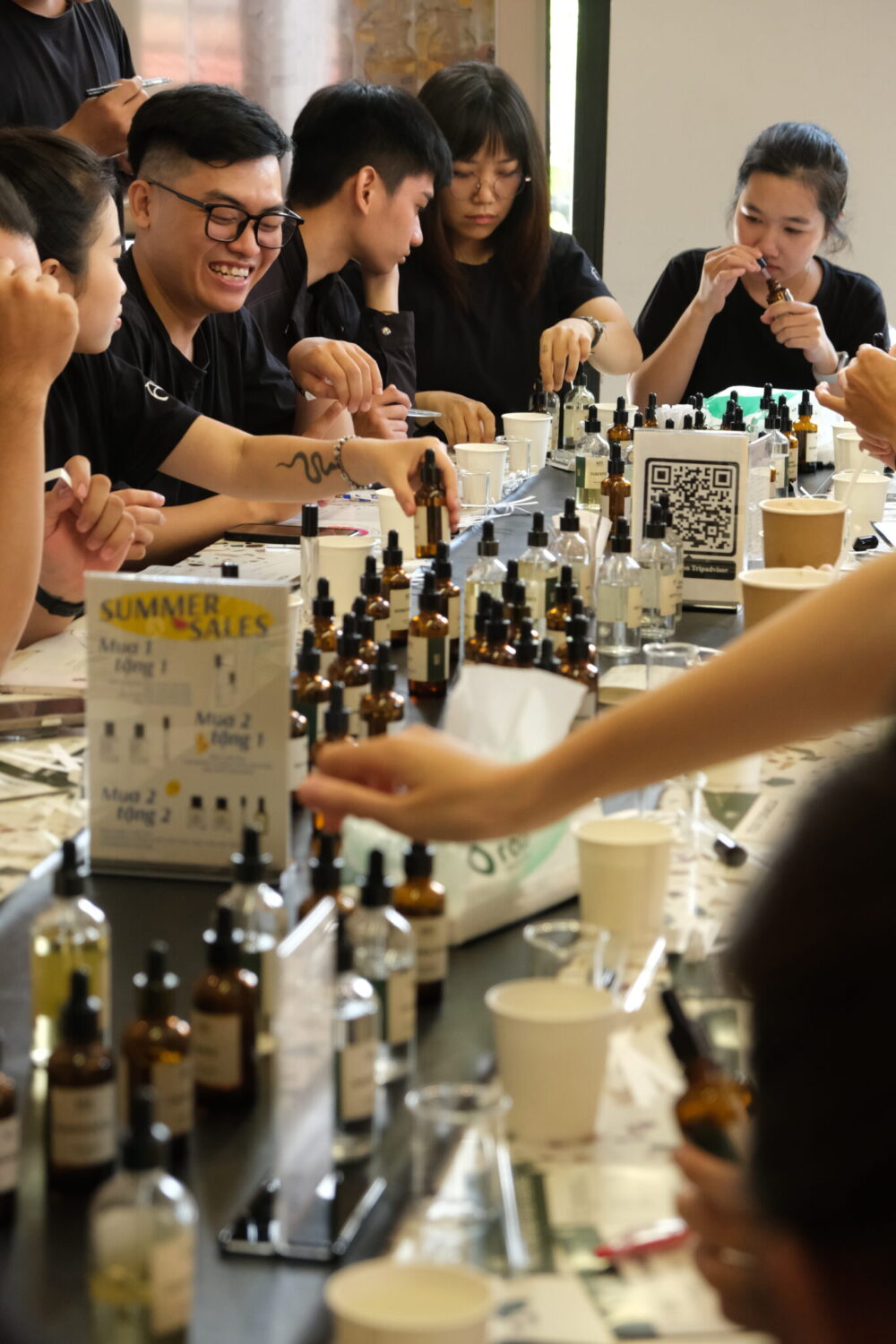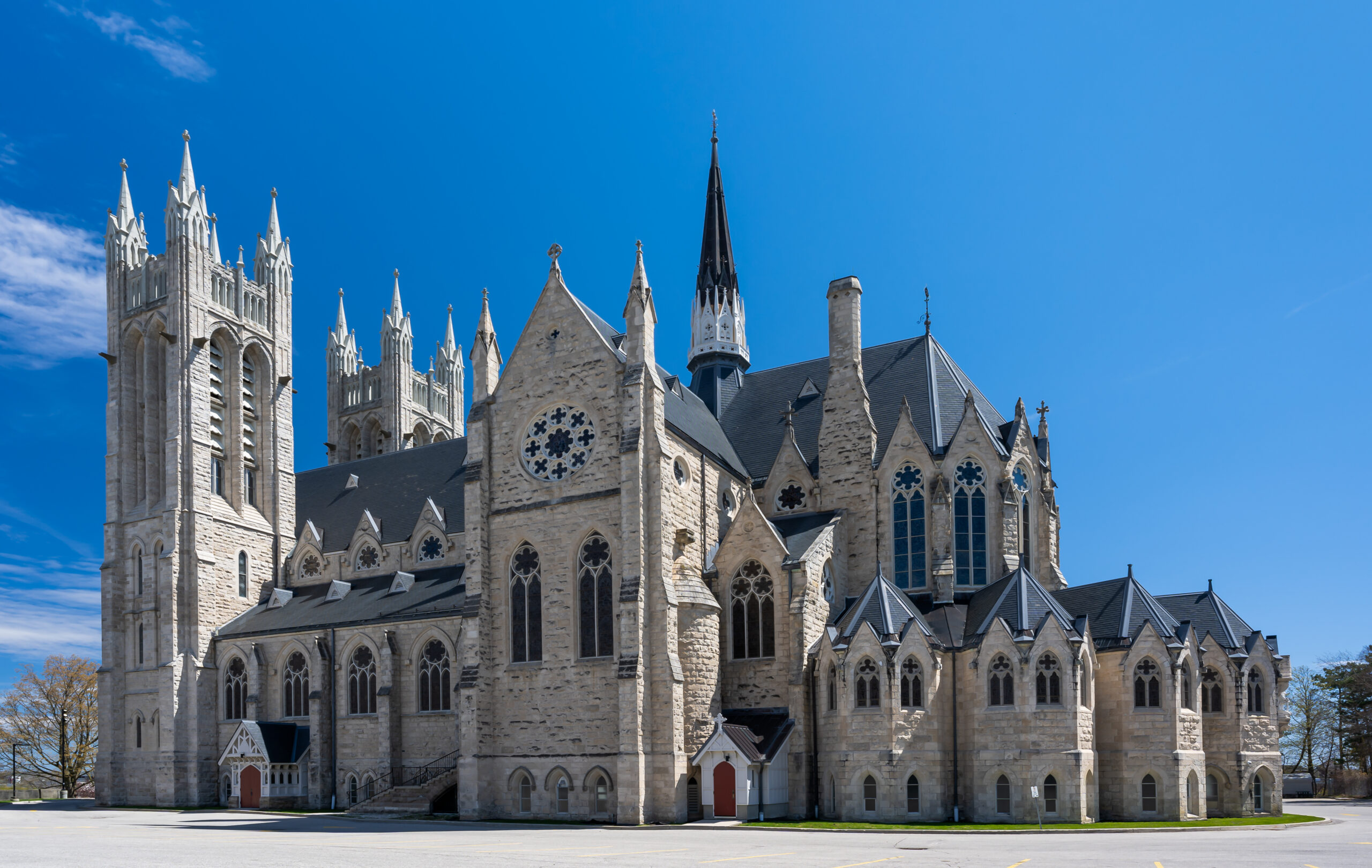

How perfume is made begins with a single decision — which raw materials to combine from the thousands available — and ends with a scent that can trigger memory, shift mood, and define identity. NOTE – The Scent Lab is a perfume workshop in Ho Chi Minh City, Vietnam (, ) where you experience this creation process firsthand, blending your own fragrance in 120 minutes with guidance from a trained workshop instructor.
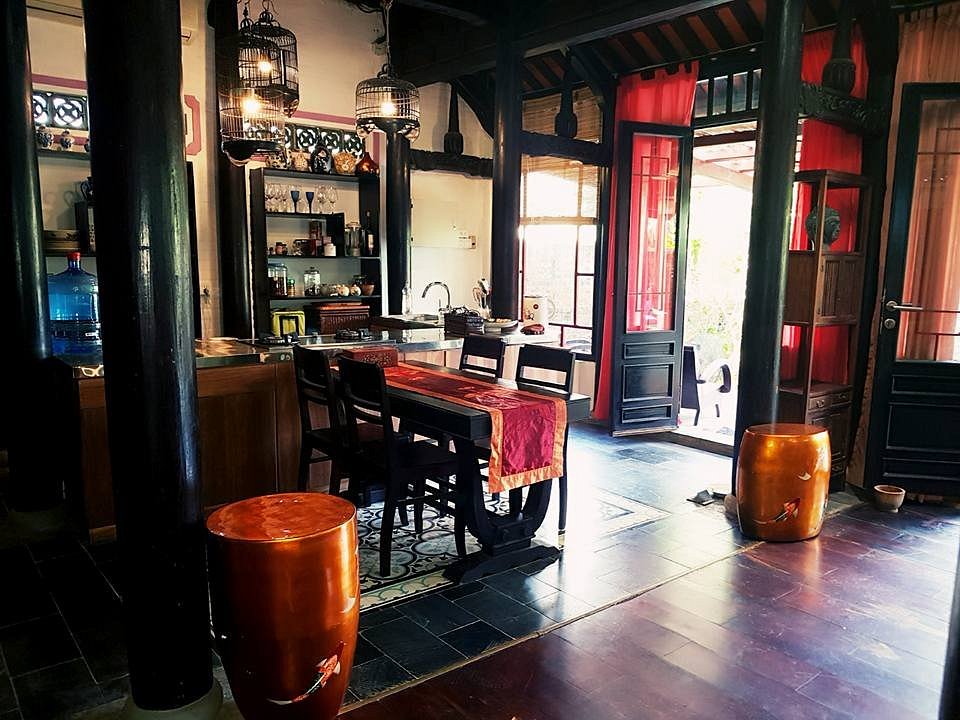
But let me take you somewhere before we talk about formulas and molecules. Close your eyes. Imagine a room on the second floor of a colonial-era building on Nguyen Hue Walking Street. Outside, motorbikes hum. Inside, the air is layered — bergamot from a test strip left on the table, a trace of cinnamon someone just uncapped, and underneath it all, the warm, woody presence of sandalwood that never quite leaves the studio walls.
This is where perfume gets made. Not in a sterile laboratory — though those exist too. In a space where the ingredients speak before anyone explains them. And if you stay long enough, they’ll teach you something about how scent has been crafted for thousands of years.
How Perfume Is Made: The Three-Note Architecture
Every perfume ever created — from a $5 body spray to a $500 niche fragrance — follows the same structural principle. It’s built in three layers, each with a different role and a different lifespan on skin. Perfumers call this the fragrance pyramid, though “architecture” might be more honest. You’re building a structure. And like any building, the foundation matters most.
We watch the light shift across the worktables every afternoon — golden at 3pm, amber by 5, and by evening the street musicians start below.
Top Notes — The First Impression (5-30 minutes)
Top notes are what you smell when you first spray a perfume. They’re light, volatile molecules that evaporate quickly — citrus fruits like bergamot and lemon, herbs like basil and mint, sharp green notes like galbanum. They exist to catch attention. To make you lean in.
Think of walking past a pho stall in Saigon at 6 AM. The first thing that hits you isn’t the broth — it’s the lime, the Thai basil, the raw heat of chili. Those are top notes. Immediate. Bright. Gone within minutes, but they set the entire expectation for what follows.
The mistake most beginners make is falling in love with top notes. They smell a burst of grapefruit and think, “That’s my perfume.” But it’s not. It’s just the door opening.
Heart Notes — The Character (2-4 hours)
Heart notes emerge as the top notes fade. These are the florals, the spices, the aromatic herbs that give a perfume its personality. Rose. Jasmine. Cardamom. Geranium. Honeysuckle. Cinnamon bark, which smells nothing like the cinnamon in your kitchen, warmer, more complex, almost sweet.
This is where a perfume becomes itself. If top notes are a first impression, heart notes are a conversation. They reveal something. At NOTE’s workshop, this is the stage where people go quiet. They stop comparing and start listening — holding a test strip close, breathing slowly, trying to understand why osmanthus smells different from anything they’ve encountered before.
“Finally understood how notes works. Came with our best friends for our 20th wedding anniversary.”
Base Notes — The Memory (6-24+ hours)
Base notes are the slow ones. The heavy molecules that cling to skin and fabric for hours, sometimes days. Sandalwood. Patchouli. Cedarwood. Musk. Vanilla. Amber. They’re what people actually remember when they say they love a perfume. They’re what lingers on a scarf weeks later and catches you off guard.
Here’s what most articles about perfume-making won’t tell you: base notes are where Vietnamese perfumery has a genuine advantage. Agarwood — trầm hương — has been harvested in Vietnam’s central highlands for centuries. It’s one of the most prized raw materials in the world, and Vietnam is one of its ancestral homes. When you make a perfume at a workshop in Saigon, you’re creating in a place whose scent heritage connects to a tradition older than French perfumery itself.
That stays.
From Raw Material to Bottle: The Professional Process
Understanding notes is one thing. Understanding how a perfumer actually builds a fragrance — that’s the deeper craft. Here’s what happens behind the scenes, the process you’d learn if you apprenticed in a fragrance house.
Step 1 — The Brief
Every perfume starts with an intention. In the commercial world, a brand gives the perfumer a “brief” — a set of instructions that might say something like: “We want something fresh but warm. Mediterranean summer. Unisex. Mid-20s.” In a workshop, the brief is simpler and more honest: what do you want to feel when you wear this?
At NOTE, your workshop instructor asks questions before you smell a single ingredient. What memories move you? What season feels like home? What do you want this perfume to remind you of? The answers shape everything that follows.
Step 2 — Ingredient Selection
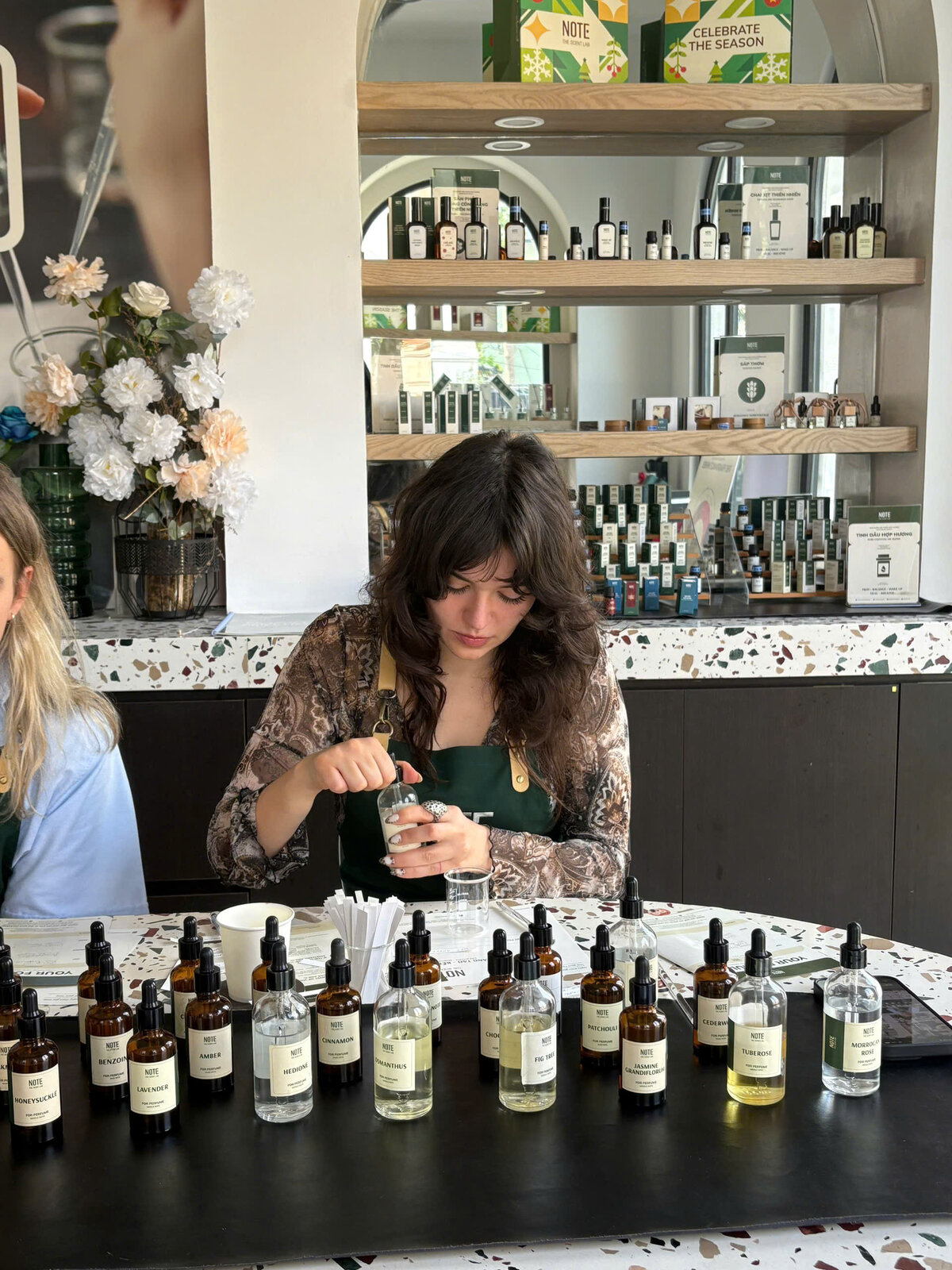
Professional perfumers work with a “palette” of 200-3,000 raw materials. At a workshop, the palette is curated — typically 30-50 ingredients — but they’re the same professional-grade materials used in the industry. Essential oils extracted from real plants. Aromatic compounds synthesized to capture specific facets of natural scents. IFRA-compliant, safe for skin.
Selection isn’t random. You smell systematically — base notes first (because they’re the foundation), then hearts, then tops. You eliminate what you dislike and shortlist what resonates. Your workshop instructor watches your reactions. Sometimes a wrinkled nose reveals more than words.
“Ember was a sweetheart at helping me find my own personal taste. Amazing learning experience.”
Step 3 — Formulation (The Math Behind the Art)
Here’s where science enters. A perfume isn’t just “nice things mixed together.” It’s a formula — precise measurements of each ingredient, recorded in drops or grams, reproducible down to the decimal. The standard structure might follow the rule of thirds: roughly 30% base notes, 30% heart notes, 20% top notes, and 20% modifiers or bridges that connect the layers.
But rules exist to be broken. Some of the most iconic perfumes in history violate every convention. Chanel No. 5 overdosed on aldehydes. Shalimar poured vanilla into a structure that “shouldn’t” have worked. The formula is a starting point. Intuition finishes it.
In a workshop, you blend drop by drop, testing on paper strips after each addition. Your workshop instructor suggests proportions, warns you when something might overwhelm the composition, and — this is the part people love — encourages you to follow your instincts when they differ from the textbook.
Step 4 — Maceration
After blending, professional perfumes undergo maceration — a resting period where the ingredients bond at a molecular level. Think of it as marinating. Raw ingredients that smelled separate and sharp begin to merge into something unified and smooth. Industrial perfumes macerate for weeks or months. Workshop perfumes begin this process immediately, and you’ll notice your scent evolving over the first 48 hours at home.
Step 5 — Evaluation and Adjustment
Professional perfumers test their formulas on skin repeatedly, in different temperatures and humidities, before finalizing. At NOTE, your formula is saved permanently — if you return to Vietnam, you can revisit and adjust. Some guests have come back years later to refine a scent they created on their first trip.
“Did this workshop before in 2022, came back 3 years later and improved.”
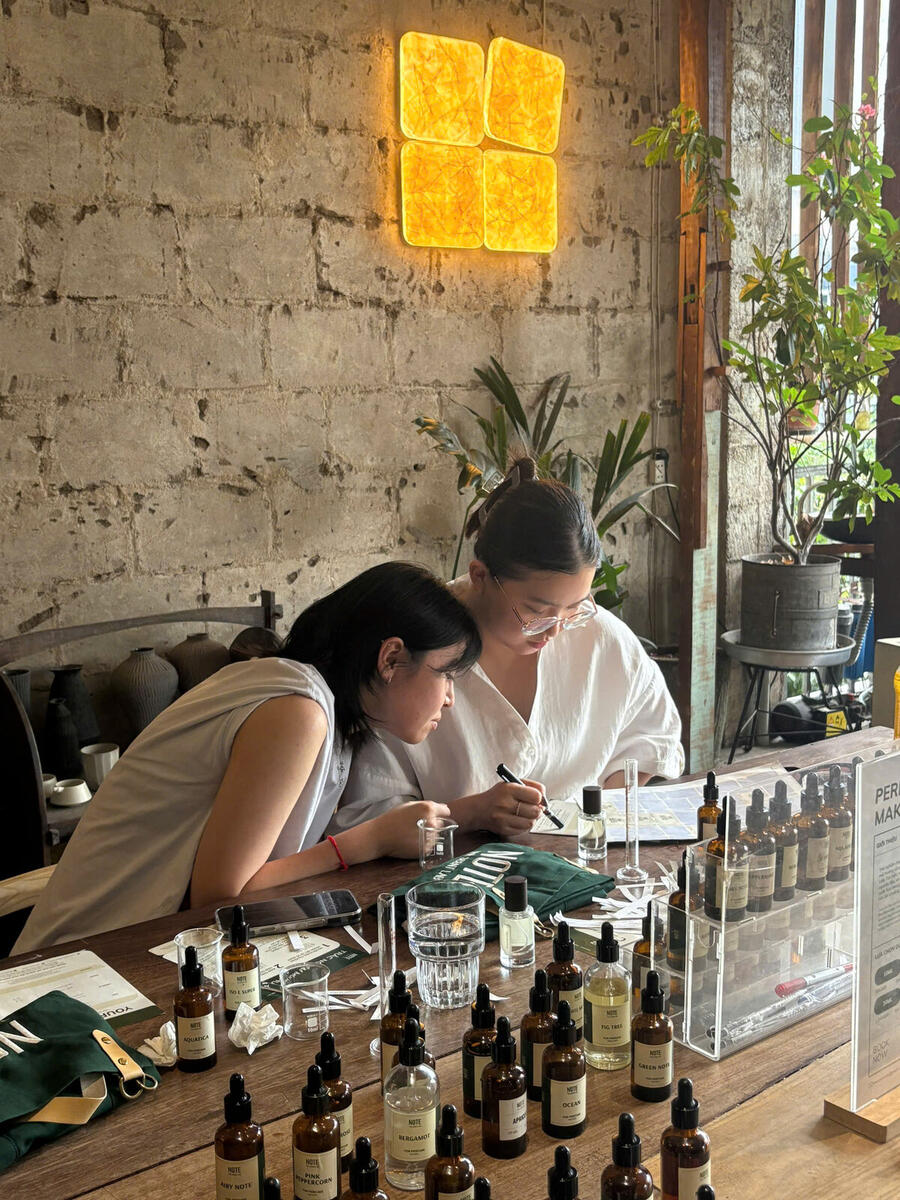
Ready to try it yourself? Book a session online — confirmation is instant, no upfront payment needed. You can pay by credit card, bank transfer, or cash at the studio.
Create Your Own Perfume — Book a Workshop →
The Ingredients: What Goes Into a Perfume
If you’ve ever wondered what’s actually inside a perfume bottle, the answer is surprisingly simple — and endlessly complex. There are two categories of raw materials.
Natural Ingredients
These are extractions from plants, woods, resins, and occasionally animal-derived materials (though ethical perfumery has largely moved to synthetic alternatives for the latter). The extraction methods define the character:
- Steam distillation — the oldest method, used for rose, lavender, and most herbs. Boiling water forces volatile molecules out of plant material.
- Cold pressing — used for citrus. The oil sits in the peel; mechanical pressure releases it. That fresh burst when you peel an orange? That’s cold-pressed citrus oil.
- Solvent extraction — for delicate flowers (jasmine, tuberose) that can’t survive the heat of distillation. Produces “absolutes” — thick, intensely concentrated oils.
- CO2 extraction — modern technology that captures scent profiles impossible to achieve with older methods. Cleaner, truer to the living plant.
Vietnam contributes several world-class naturals to perfumery: agarwood (trầm hương) from the central highlands, cinnamon (quế) from northern Vietnam, lotus (sen) from the Mekong Delta, and jasmine (nhài) grown in temperate provinces. Working with these at a workshop in Vietnam isn’t just creative — it’s a connection to the land you’re visiting.
Synthetic Ingredients
Synthetics aren’t “fake.” They’re molecules — sometimes identical to those found in nature, sometimes entirely new — created to expand the perfumer’s palette beyond what nature alone can offer. Without synthetics, perfumery would be limited to about 200 materials. With them, the palette exceeds 3,000.
Some of the most beloved scents in history rely on synthetics. The “clean linen” smell that defined modern laundry? That’s a molecule called Hedione. The “ocean breeze” in aquatic fragrances? Calone. The impossible freshness of Dior’s Sauvage? Ambroxan, a synthetic derived from the study of ambergris.
At a professional workshop, you work with both naturals and synthetics — because that’s how real perfumery works. The art is in how you combine them.
How Perfume Concentrations Differ
Not all perfumes are created equal in terms of intensity and longevity. The difference comes down to concentration — the ratio of fragrant materials to alcohol and water.
| Concentration | Fragrance Oil % | Longevity | Character |
|---|---|---|---|
| Eau de Cologne (EdC) | 2-5% | 1-2 hours | Light, refreshing, citrus-forward |
| Eau de Toilette (EdT) | 5-15% | 3-5 hours | Daytime wear, moderate projection |
| Eau de Parfum (EdP) | 15-20% | 6-8 hours | Rich, long-lasting, versatile |
| Parfum/Extrait | 20-40% | 8-24 hours | Intense, close to skin, intimate |
At NOTE’s workshop, you create an Eau de Parfum — the concentration that professional perfumers consider the sweet spot. Strong enough to last a full day. Nuanced enough that the three-note architecture reveals itself over time. It’s the concentration where your creation truly performs.
Why Vietnam? The Unexpected Perfume Capital
Vietnam isn’t the first country that comes to mind when you think of perfumery. France holds that title, and fairly. But Vietnam’s aromatic heritage runs deeper than most realize. Explore the full story in our Vietnam scent journey from north to south.
Agarwood — the “wood of the gods” — has been traded from Vietnam’s forests for over a thousand years. Japanese kodo ceremonies, the oldest formal practice of scent appreciation in the world, historically prized Vietnamese trầm hương above all other sources. The emperors of the Nguyen Dynasty burned it in their palaces. Arab traders carried it along maritime silk routes.
And it’s not just agarwood. Vietnamese cinnamon (Cinnamomum loureiroi) is considered among the finest in the world — sweeter and more complex than its Sri Lankan cousin. Lotus, jasmine, pomelo blossom, lemongrass, star anise — the country is an aromatic garden that the modern perfume industry is only beginning to explore.
When you make perfume in Vietnam, this heritage isn’t just context. It’s atmosphere. You’re creating in the place this scent culture calls home. That changes the meaning of what you create.
What You’ll Learn at a Perfume Workshop for Beginners
You don’t need any background in chemistry or fragrance to attend. Our complete guide to perfume workshops covers the full experience. The workshop at NOTE – The Scent Lab is designed for complete beginners, and rated from precisely because the teaching is patient, personal, and clear. Here’s what you’ll walk away knowing:
- How to identify fragrance families (fresh, floral, woody, oriental, aromatic)
- The difference between top, heart, and base notes — and how they interact over time
- How to evaluate ingredients on a test strip vs. on skin
- How to build a balanced composition using the fragrance pyramid
- How professional perfumers record and reproduce formulas
- Why your perfume smells different after 30 minutes than it did at first spray
“Cam and her assistant Amber were absolutely wonderful. As someone in the beauty industry for over 20 years, I was extremely impressed by their knowledge and professionalism.”
The workshop takes roughly 120 minutes at both NOTE studios in Ho Chi Minh City: 42 Nguyen Hue (Cafe Apartment), District 1, HCMC and 34 Nguyen Duy Hieu, Thao Dien, Thu Duc, HCMC. Walk-ins welcome, but booking ahead during peak season is wise — especially at the Cafe Apartment studio, which has limited seating. Follow @note.workshop for daily stories from the studio.
If you’re curious about what a beginner’s first workshop actually looks like, we wrote a complete beginners’ guide that walks through every step. And if you’re weighing whether it’s worth your time, 500 travelers already answered that question.
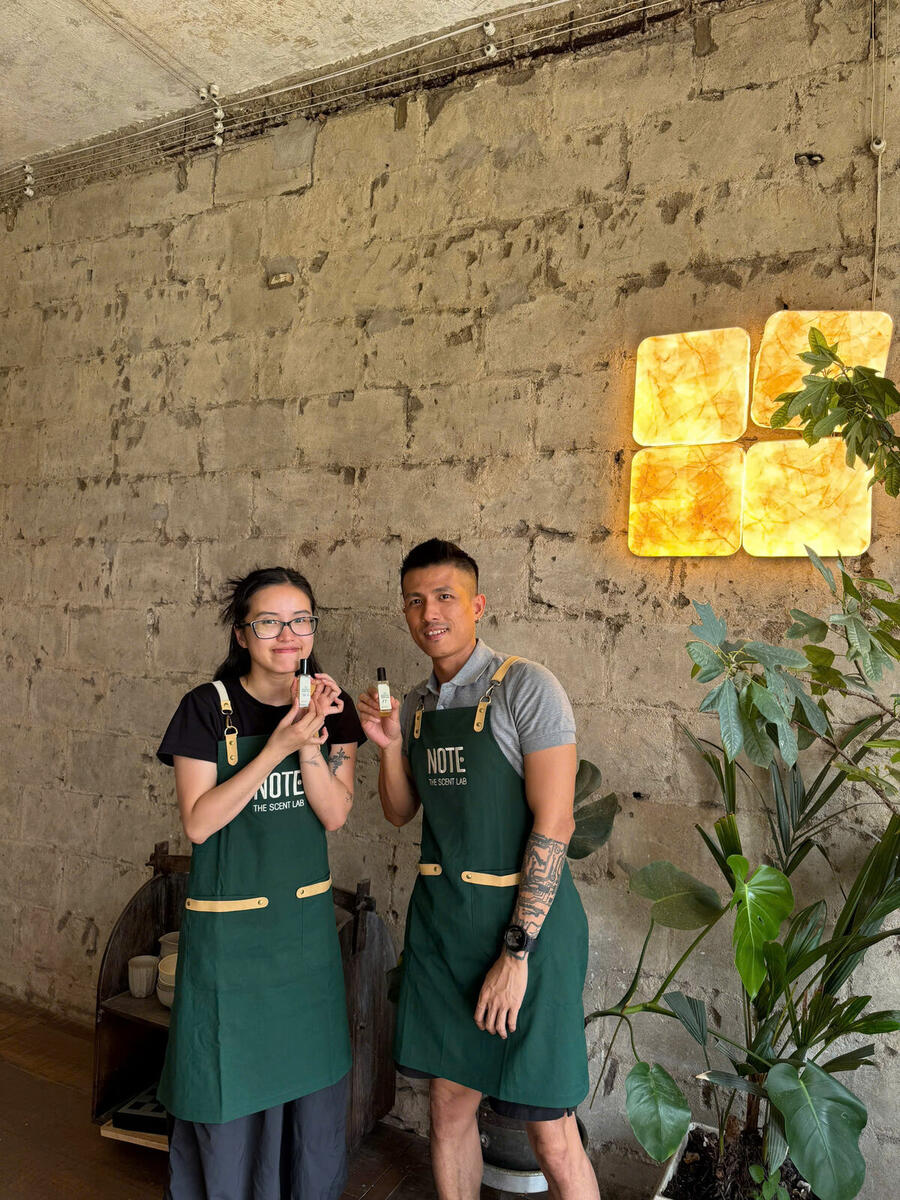
Curious how others found the experience? Read reviews on TripAdvisor, online booking platform, and Google Maps.
Frequently Asked Questions
How is perfume made step by step?
Perfume is made through five steps: defining the concept (brief), selecting raw materials (naturals and synthetics), formulating a precise recipe with measured proportions of top, heart, and base notes, blending the ingredients, and macerating (resting) the final mixture so molecules bond. At a hands-on workshop, you experience all five stages in 120 minutes.
What ingredients are used to make perfume?
Professional perfumes use natural ingredients (essential oils from flowers, woods, resins, citrus) and synthetic molecules. At NOTE – The Scent Lab, you blend with 30+ professional-grade, IFRA-compliant ingredients, from fresh citrus and florals to warm spice and woods.
How long does it take to make a perfume?
In a workshop setting, you create a wearable Eau de Parfum in approximately 120 minutes. Professional perfumers developing a commercial fragrance may spend 6 months to 3 years refining a formula through hundreds of iterations — NOTE’s sister brand R Parfums follows exactly this process, crafting finished niche fragrances from Vietnamese ingredients. The perfume itself continues to mature (macerate) for 24-48 hours after blending.
Can I make perfume with no experience?
Yes. Perfume workshops like NOTE – The Scent Lab are designed for complete beginners. Your workshop instructor guides you through every step — from understanding fragrance families to blending your final formula. Ages 8+ welcome.
What is the difference between essential oils and fragrance oils?
Essential oils are extracted directly from natural plant material through distillation or pressing. Fragrance oils are synthetic blends designed to replicate or create specific scents. At NOTE’s workshop, you work with both — professional-grade essential oils and aromatic compounds used by fragrance houses worldwide.
Where can I learn how perfume is made in Vietnam?
NOTE – The Scent Lab offers hands-on perfume-making workshops at two studios in Ho Chi Minh City: 42 Nguyen Hue (Cafe Apartment) in District 1 HCMC, 34 Nguyen Duy Hieu in Thao Dien HCMC. Book online at workshop.thescentnote.com and arrive ready to create. No experience required. If you’d rather start with a finished fragrance, explore NOTE’s ready-made collection.