
The Mui Ne sand dunes photography window is short — and earlier than most travelers think. The white dunes peak between 5:30 and 6:15 a.m., the red dunes between 17:30 and 18:00, and Fairy Stream looks best in the soft sidelight just after sunrise. NOTE – The Scent Lab is a perfume workshop in Saigon, Vietnam, and many of our guests arrive with a memory card full of dune images and skin still cool from the pre-dawn ride. This 2026 guide is the timing chart we wish we had on our first trip — when to wake up, which lens to pack, which jeep and quad-bike combos actually earn their cost.
The cold hits you first. Forty minutes before sunrise, the air on the back of an open-side jeep is around 22°C — sharper than anything Vietnam usually offers. Sand. Diesel. Distant fish sauce. Then the horizon greys, the dunes lift out of the dark like enormous sleeping animals, and you have maybe forty minutes before the desert turns to a furnace. For travelers researching mui ne sand dunes, this guide should be a starting point — verify before booking.
A note before you read: This guide is based on our team’s research and visits as of May 2026. Tour prices, jeep schedules, ATV rates, and venue availability change — please treat the specifics as a starting point, not a guarantee, and verify with operators or official sources before booking. The only thing we can vouch for absolutely is the perfume workshop at NOTE.
The 4:30 a.m. Pickup: Why Mui Ne Sand Dunes Photography Starts in the Dark
Standard sunrise pickup is around 4:30 a.m. The drive from Mui Ne or Ham Tien beach hotels to the White Sand Dunes (Bau Trang) takes 35-45 minutes. Arrive at 5:15 and you have fifteen minutes to scout composition before the sun breaks. Arrive at 5:30 and you are running. This is part of our broader mui ne sand dunes coverage on workshop.thescentnote.com.
A standard 5-hour private sunrise jeep covering White Dunes, Red Dunes, Fairy Stream, and the fishing village should land around 800,000 VND per vehicle (up to 7 passengers) in early 2026 — splitting with one other traveler makes a real cost difference. If mui ne sand dunes is on your list, the workshop pairs well with this stop.
What surprises first-timers is how thin the sweet spot actually is. Civil twilight — the soft pre-dawn light — lasts maybe twenty-five minutes. After that, the sun goes sharp and contrast on white sand goes nuclear. Highlights blow out. Shadows flatten. By 7 a.m. the dunes look hostile. Many guests planning mui ne sand dunes mention this in their booking notes.
That stays.
White Dunes vs Red Dunes: Where Mui Ne Sand Dunes Photography Actually Wins
The two dunes look similar in guidebook photos. They behave nothing alike at golden hour. We hear this often from travelers exploring mui ne sand dunes.
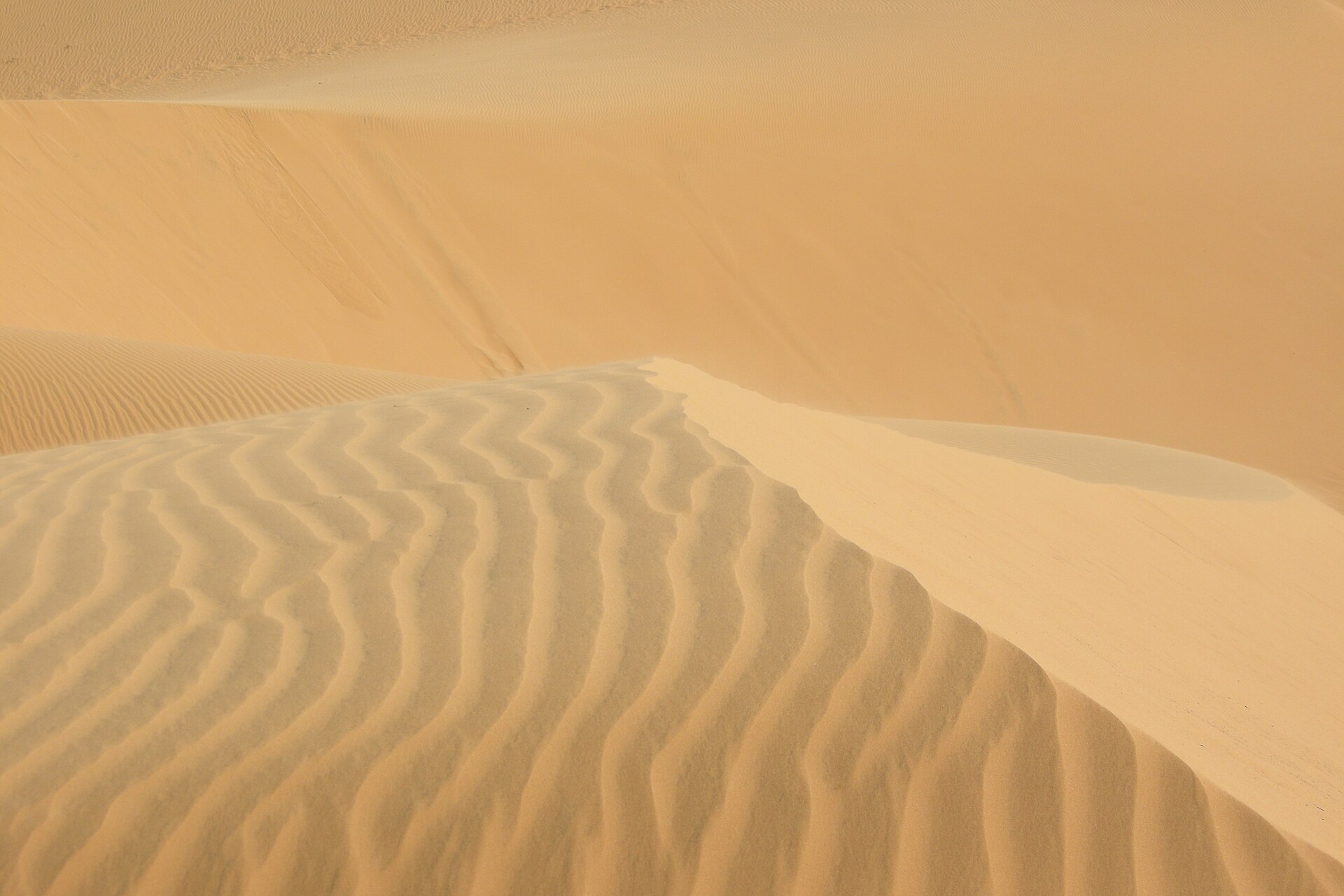
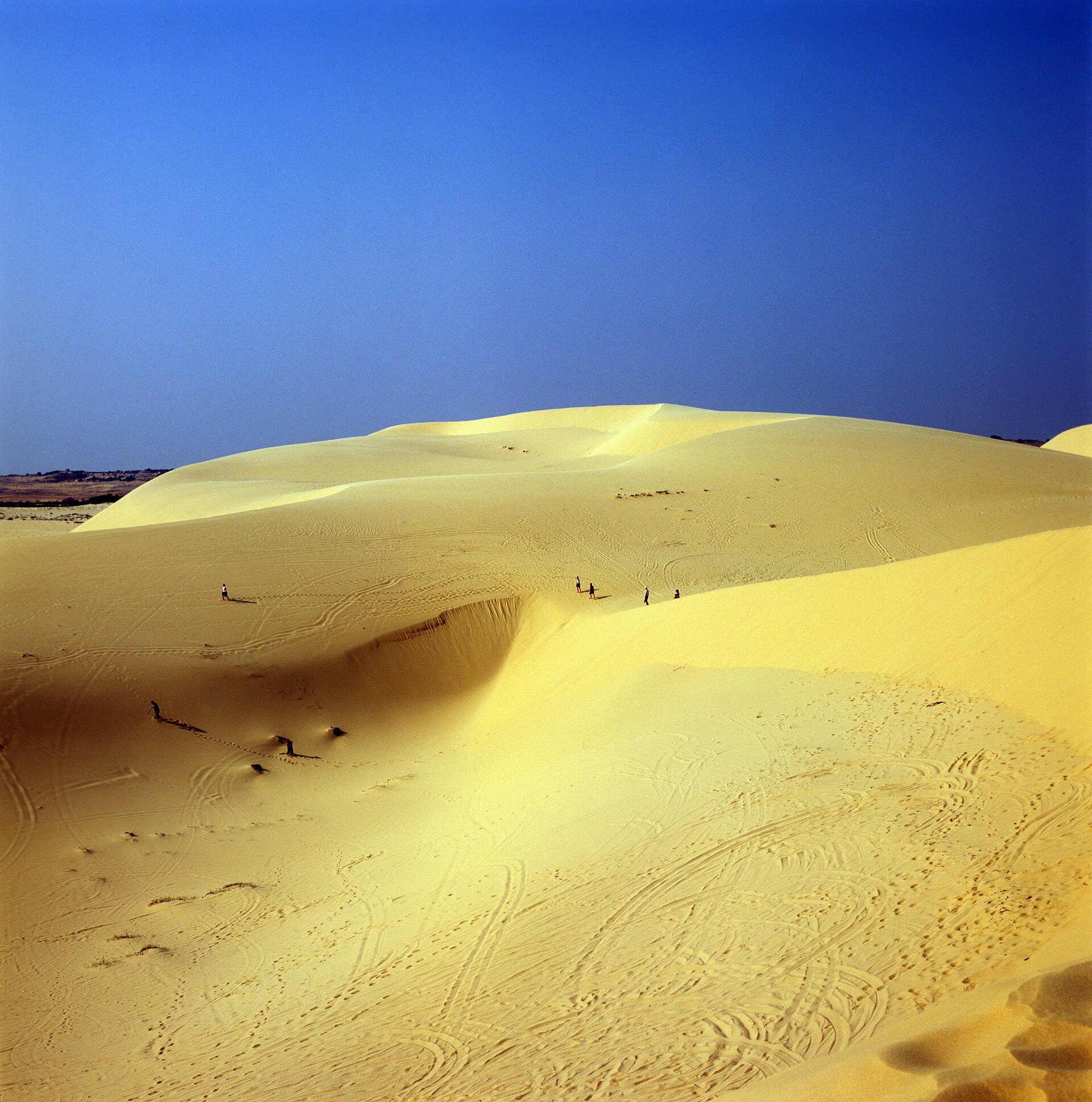
White Dunes (Bau Trang, ~30 km northeast of Mui Ne): The biggest, palest, most dramatic. Best at sunrise. Morning light flatters the long ridges, throws blue shadow into the troughs, and — if you catch the freshwater lake on the return — gives you a mirror reflection layered against the dunes. They also reward height: climbing the upper ridges, or paying for an ATV ride to the top, gives you horizons that swallow the frame. ATV rental runs around 600,000-800,000 VND for 30 minutes in early 2026.
Red Dunes (Doi Hong, on the edge of Mui Ne village): Smaller and gentler, but at sunset the color is the show. The afternoon sun warms the sand from tan to something between cinnamon and ember, and the long shadows of wind ripples become almost graphic. You walk in — no ATVs needed. The light starts working around 17:00 and peaks 17:30-18:00. Blue hour over the South China Sea holds for another twenty minutes.
The cliché advice is “go to both.” The honest advice: one morning, choose White at sunrise. One afternoon, Red. One full day, the standard jeep loop bookends sunrise white and sunset red, with Fairy Stream and the fishing village in between. For first-timers researching mui ne sand dunes online, the practical details matter.
Fairy Stream Photography: The Light Most People Miss
Fairy Stream — Suoi Tien — is the surreal bit. A shallow, ankle-deep stream winds about forty minutes through a narrowing canyon of red sandstone, white clay pillars, and bamboo. Three colors collide: brick-red walls, chalk-white pillars, green bamboo arching overhead. It is the only place in Mui Ne where photographs almost write themselves. Of all the angles in mui ne sand dunes, this is one we hear about often.
Most jeep tours stop here for thirty minutes. That is half the time you need. The first fifteen minutes get you to the photogenic main wall. The next thirty take you past the crowds into the section where the canyon narrows, the colors saturate, and the only sound is your own feet in warm current. Recent guests interested in mui ne sand dunes have asked about this exact spot.
Light tip: the stream looks flat at midday. Sidelight — soon after sunrise, or late afternoon before 16:30 — carves the wall textures into three dimensions. If your schedule allows, push for the Fairy Stream stop straight after the White Dunes. Otherwise, ask the driver to drop you at the entrance and return in sixty minutes. Most agree. Our notes on mui ne sand dunes keep coming back to scenes like this.
Our broader Phan Thiet and Mui Ne hidden gems guide covers spots beyond the standard jeep loop — Bau Trang lake at dawn, Ke Ga lighthouse, Po Sah Inu Champa towers — for travelers staying three days or more. Anyone planning mui ne sand dunes will likely cross paths with this corner.
Quad Bike vs Jeep: Which One for Mui Ne Sand Dunes Photography?
The answer depends on what you are photographing.
Jeep: The default. Open sides for action shots. Holds up to 7 people, spreading the cost. Stable for long-lens work. Downside: you are tied to the driver’s stops.
Quad bike (ATV): Unbeatable for getting deep into the white dunes and capturing rider-on-ridge shots a jeep cannot reach. Solo riders run around 600,000-800,000 VND for 30 minutes. Risk: sand and electronics do not co-exist gracefully. Seal your camera body and never change lenses on the dune top in wind.
Combo most photographers book: Jeep for the route, quad bike for 30 extra minutes at White Dunes — usually 1,000,000-1,400,000 VND per person depending on group size. Worth it if dramatic landscape with a human subject is your goal.
Best Lens Setup for Mui Ne Sand Dunes Photography
Mui Ne punishes overpacking. Sand gets into everything, and changing lenses on the dunes is a small disaster.
One-lens setup (recommended): A 24-70mm zoom on full-frame, or 16-55mm on APS-C. Wide enough for ridges, long enough for figures isolated against the slope. This is what most travel photographers run.
If you can carry a second: A 70-200mm. Useful for distant camel-ride lines on the Red Dunes, isolated ridge figures, and the fishing village’s boats catching morning light from a distance. Also flattering for Fairy Stream where you cannot back up further.
Skip: Ultra-wides under 14mm flatten the dunes and steal scale. Tripods are unnecessary for sunrise/sunset (light is plenty) and a nightmare in soft sand.
Smartphone tip: Lock exposure on the sky 30% above the horizon, then drop half a stop. Sand reflects so much light that auto-exposure consistently overexposes highlights. Lock-and-drop saves ridge texture.
When to Go: The Photography Calendar for Mui Ne 2026
Mui Ne’s dry season runs roughly November through April, but those months are not equal for photography.
Nov-Dec: Cooler, breezier, gentler light. Some afternoon haze. Good for kitesurf-on-water shots; the wind-blown dunes are dramatic but harder for tripod work.
January: Clearest, driest stretch. Cooler air. Dunes still hold crisp ridge lines because winds have not started rebuilding them. Avoid Tet holiday week (typically late January or early February — verify the lunar calendar) unless you enjoy dense crowds at sunrise.
Feb-March: The photographers’ window. Below 30mm rainfall on average, around six hours of daily sunshine, calmer late-March winds. Sunrise temperatures sit around 22-24°C. Sunset reds at the Red Dunes are at their saturated best.
April: Transition. Mornings still clean, but afternoons can cloud over and pre-monsoon haze starts softening contrast. Some travelers prefer the diffused light for portraits.
May-October: Rainy season. Plan around it.
Real Visitors, Real Memories
From travelers who turned Mui Ne mornings into Saigon afternoons:
“I really love all the gorgeous smells. Zang helped me a lot how to make my very own scent.”
— Pioneer07851527510, TripAdvisor ★5
“This perfume will always remind us of this trip in Vietnam. Thanh was an excellent teacher.”
— herbaljo, TripAdvisor ★5
“Wonderful 120-minute workshop where we experimented with different scents. We left with our own little perfumes — can’t wait to wear them!”
— online booking platform User FR, online booking platform ★5
Phan Thiet to Saigon: The Quiet Connection
Mui Ne sits in Phan Thiet’s tourism orbit, four hours from Saigon. Most photographers we meet do the trip as a 2-3 night swing out from Ho Chi Minh City.
Train: The Phan Thiet Express runs daily, around four hours, tickets typically 150,000-320,000 VND depending on class. Right-side window seats coming back hold the coast for the first hour.
Bus/minivan: 5-6 hours, fares roughly 150,000-350,000 VND. Cheaper, but expect rest stops and QL1A traffic.
Private car: 2.5-4 hours, typically 1.2-1.5 million VND one-way through hotels. Worth it with luggage, camera bags, and tired legs.
Book Your Perfume Workshop in Saigon →
From Sand to Bottle: Why Mui Ne Photography Often Ends in a Saigon Studio
Here is a pattern we did not predict. Travelers come back from the dunes with a card full of images and something else they cannot quite name — the salt-and-warm-sand smell that clung to clothes, the diesel-and-fish-sauce note from the harbor at 5:30 a.m., the cool mineral scent of Fairy Stream water on bare ankles. They show up at our 42 Nguyen Hue studio that afternoon, scroll through their own photos on the table, and try to find the matching scent in the 30+ ingredients laid out in front of them.
Bergamot for the sharp citrus of cold dawn. Vetiver — Vietnamese hương bài — for the dry, smoky note of warm sand. Agarwood for the desert evening. Each blend fits a 10ml bottle starting around $24 (up to 50ml at $64). The 120-minute workshop is hands-on and IFRA-compliant — built around the same principle that pulled you out of bed at 4:30 a.m.: pay attention to small differences, and the experience becomes yours.
Frequently Asked Questions
When is the best time for Mui Ne sand dunes photography?
Sunrise (5:30-6:15 a.m.) at the White Sand Dunes for the cleanest morning light, and sunset (17:30-18:00) at the Red Sand Dunes for warm color saturation. February and March are typically the best months overall — minimal rainfall, around six hours of daily sunshine, and calmer late-March winds. Avoid midday between 10 a.m. and 3 p.m., when sand reflectivity blows out highlights.
How much does a sunrise jeep tour to the Mui Ne dunes typically cost in 2026?
A standard 5-hour private sunrise jeep covering White Dunes, Red Dunes, Fairy Stream, and the fishing village should be around 800,000 VND per jeep (up to 7 passengers) in early 2026. Group joiner tours run cheaper per head. ATV rental at the White Dunes adds roughly 600,000-800,000 VND for 30 minutes. Always confirm prices with the operator before booking.
Quad bike or jeep — which is better for Mui Ne photography?
Jeep is the default for stable shots and the full multi-stop loop. Quad bike (ATV) wins for getting deep onto the White Dunes for human-on-ridge images that the jeep cannot reach. The combo most photographers book — jeep for the route plus 30 minutes of ATV at the White Dunes — usually lands around 1,000,000-1,400,000 VND per person depending on group size.
What lens should I bring to Mui Ne?
A 24-70mm full-frame zoom (or 16-55mm APS-C) handles 90% of dune and stream shots. If you can carry a second lens, a 70-200mm helps with isolated figures on the Red Dunes and tighter Fairy Stream compositions. Skip ultra-wides under 14mm — they flatten dune scale. Skip tripods — the light is generous and sand makes setup miserable.
How do I get from Mui Ne to Ho Chi Minh City for the perfume workshop?
The Phan Thiet Express train runs daily and takes around 4 hours (tickets typically 150,000-320,000 VND). Buses and minivans take 5-6 hours and run cheaper. Private cars take 2.5-4 hours and are usually quoted 1.2-1.5 million VND through hotels. Many photographers return to Saigon and book a 120-minute perfume workshop on their last day at NOTE – The Scent Lab.
Where can I create a custom perfume after my Mui Ne trip?
NOTE – The Scent Lab offers 120-minute perfume workshops in Saigon, with the flagship at 42 Nguyen Hue (Floor 3 — Vietnamese “Lầu 2”, two levels up from the ground floor of the Cafe Apartment building) and a second studio at 34 Nguyen Duy Hieu in Thao Dien., with 30+ IFRA-compliant ingredients. Bottles range from $24 (10ml) to $64 (50ml). Booking at workshop.thescentnote.com/book/.
The Light Stays
Photographs of Mui Ne age strangely. Wide shots of dunes, symmetric Fairy Stream walls, the camel against the sunset — those go postcard-flat on a hard drive. What stays vivid is the ten-second moment before you raised the camera: cold air, diesel from the jeep idling behind you, warm sand releasing the heat it held all night, the first amber line of light on the upper ridge.
That is what scent preserves better than image. A photo needs you to look at it. A bottle waits on a shelf and ambushes you when you walk past. Some places do not fit in a suitcase. They fit in a bottle.
Follow @note.workshop on Instagram for daily scenes from the studio. If you want a ready-made keepsake without the workshop, browse NOTE’s online store for travel-size rollerballs and home fragrances.
Find NOTE – The Scent Lab
- 42 Nguyễn Huệ (Floor 3 — Vietnamese “Lầu 2”, two levels up from the ground floor of the Cafe Apartment building, District 1) — Get directions on Google Maps → · TripAdvisor
- 34 Nguyễn Duy Hiệu (Thảo Điền) — Get directions on Google Maps → · TripAdvisor
How to find us:
- 📍 42 Nguyễn Huệ — Watch direction video on TikTok →
- 📍 34 Nguyễn Duy Hiệu — Watch direction video on YouTube →
Your Last Day in Vietnam?
If you are heading back to Ho Chi Minh City after Mui Ne and have a final morning or afternoon before your flight, save it for something memorable. Many travelers book a perfume workshop on their last day in Saigon — 90 to 120 minutes, walkable from most District 1 hotels, and you leave with a custom 10-50ml bottle that becomes the kind of souvenir a photo cannot replace.
This article is provided for general informational and reference purposes only. Information was accurate at the time of writing (May 2026) but may change without notice. Tour prices, jeep schedules, ATV rates, train schedules, and venue availability for places outside NOTE – The Scent Lab can change without notice — please verify with operators, official websites, TripAdvisor, or Google Maps before your visit. We do not guarantee accuracy and are not responsible for outcomes based on outdated information.