What to expect at a perfume workshop in Saigon: a 90-minute hands-on custom perfume experience where you learn fragrance theory, blend your own fragrance from 30+ professional-grade ingredients, and leave with a bottle that smells like nowhere else on earth. NOTE – The Scent Lab is a perfume workshop in Ho Chi Minh City, Vietnam, rated 4.9 stars by 500+ travelers on TripAdvisor and Google.
But that’s the brochure version. The version that fits inside a search result.
What actually happens is harder to explain — it starts with the humidity. The warm, heavy air of District 1 follows you up the stairwell of the Cafe Apartment building at 42 Nguyen Hue, past the coffee shops and the pottery studios and the couples taking photos on every landing. By the second floor, you catch something else underneath the concrete and espresso — something green and resinous and faintly sweet, drifting from behind a glass door. That’s when you know you’ve arrived. If you’re curious whether it’s worth it, 500 travelers already shared their verdict.
What Most People Think a Perfume Workshop Is (And Why They’re Wrong)
Let’s be honest about what you’re probably imagining right now. A table full of pretty bottles. A scripted presenter. A paint-by-numbers experience where everyone ends up with roughly the same thing, feels vaguely nice about it, and moves on to dinner.
That’s not what happens here.
The most common reaction we hear — the one that shows up in review after review — is surprise. Not at the quality (though people notice that too), but at the depth. At how much they actually learn. Our what is a perfume making workshop guide covers the educational side in depth. At how different their creation turns out from the person sitting next to them. At how quiet the room gets during blending, even when it’s full of strangers.
On rainy afternoons, the Cafe Apartment corridors fill with petrichor — wet concrete mixing with coffee from the shop next door and the sandalwood lingering from our last session.
“It wasn’t just about creating a perfume — it was a whole experience that felt creative, relaxing, and honestly really special.”
The gap between expectation and reality is where the real story lives. For the full science behind it, read how perfume is made. So let’s walk through what actually happens — step by step, minute by minute — from the perspective of someone who works in this studio every day, who watches first-timers become perfumers in the space of an afternoon.
The First 15 Minutes: Scent Education That Changes How You Smell Everything
You sit down. There are small glass vials lined up in front of you — unlabeled, intentionally. Your workshop instructor (that’s what we call our instructors, because that’s what they are) asks you to close your eyes and smell the first one.
This is the part that catches people off guard. You’re not here to pick from a menu. You’re here to discover what you’re drawn to — and why.
The education phase covers the architecture of fragrance: top notes that hit you first and vanish fast (citrus, herbs, the bright opening), heart notes that define the character (jasmine, cinnamon, rose), and base notes that linger for hours after everything else fades (sandalwood, musk, agarwood). You’ll smell Vietnamese ingredients you won’t find in most studios anywhere else — lotus absolute, cinnamon, oud from the central highlands.
By the end of these 15 minutes, you’ll notice something strange. You start thinking in scent. That bergamot doesn’t just smell citrusy anymore — it smells like morning. That vetiver doesn’t just smell earthy — it smells like rain on red soil.
This shift — from passive smelling to active perception — is the thing nobody warns you about. It follows you out of the studio and into the streets of Saigon, where suddenly the lemongrass in your pho broth and the jasmine from a street vendor’s garland hit differently.
The Creative Heart: Designing Your Fragrance Concept
Next comes the question that stops most people mid-sentence: What do you want your perfume to say?
Not what do you want it to smell like. What do you want it to say.
Some people answer immediately — “I want it to smell like the beach at Mui Ne.” Others go quiet, staring at the vials, surprised by how personal the question feels. Your workshop instructor sits with you through this. No rush. No script. They help you translate a feeling, a memory, an abstract idea into a fragrance direction. This is what makes it a truly personalized perfume — no two sessions produce the same result.
One traveler wanted to capture “the feeling of reading a book in a hammock while it rains.” Another said “my grandmother’s garden in Seoul, but warmer.” A couple once asked to create scents for each other — his version of her, her version of him. These are the moments that make every perfume making workshop different.
If you’re worried about not having the vocabulary — don’t be. That’s literally what your workshop instructor is trained for. They bridge the gap between “I don’t know, something fresh but not too fresh?” and a precise combination of bergamot, green tea, and white cedar.
The Quiet Part: 30 Minutes of Blending
Here’s where the expectation-vs-reality gap is widest.
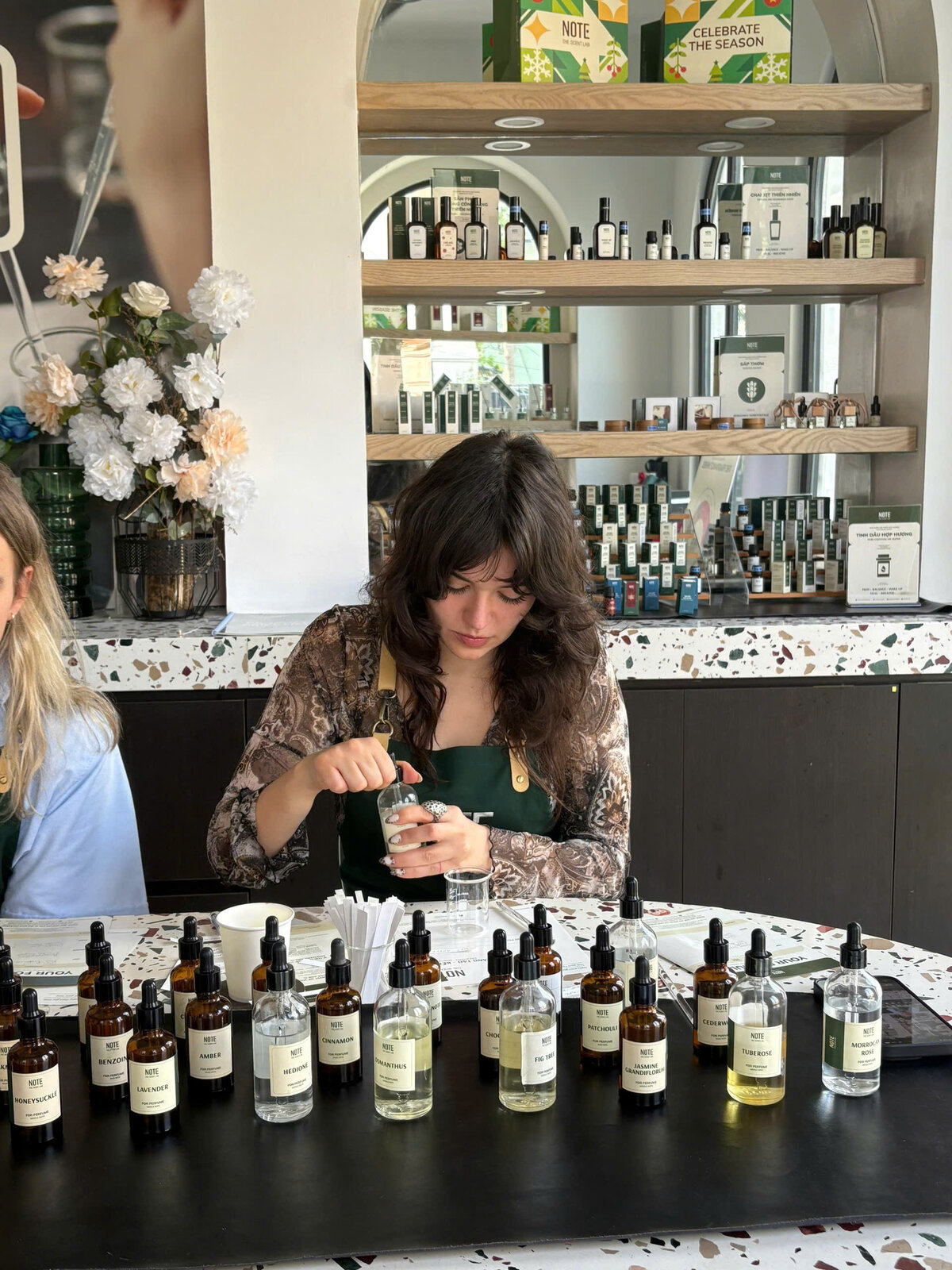
People expect blending to be the fun, chatty, Instagram-moment part. It is fun. But it’s also surprisingly meditative. The room changes. Conversations drop to murmurs. You’re measuring drops with a pipette, smelling test strips, adjusting ratios. Your workshop instructor watches, suggests, occasionally says “try adding two more drops of that sandalwood” — but mostly lets you work.
30+ professional-grade ingredients. IFRA-certified materials, the same quality used in commercial perfumery. Every drop changes the composition. Too much jasmine and the heart overwhelms the base. Not enough citrus and the opening falls flat. You learn this not from a textbook but from your own nose, in real time.
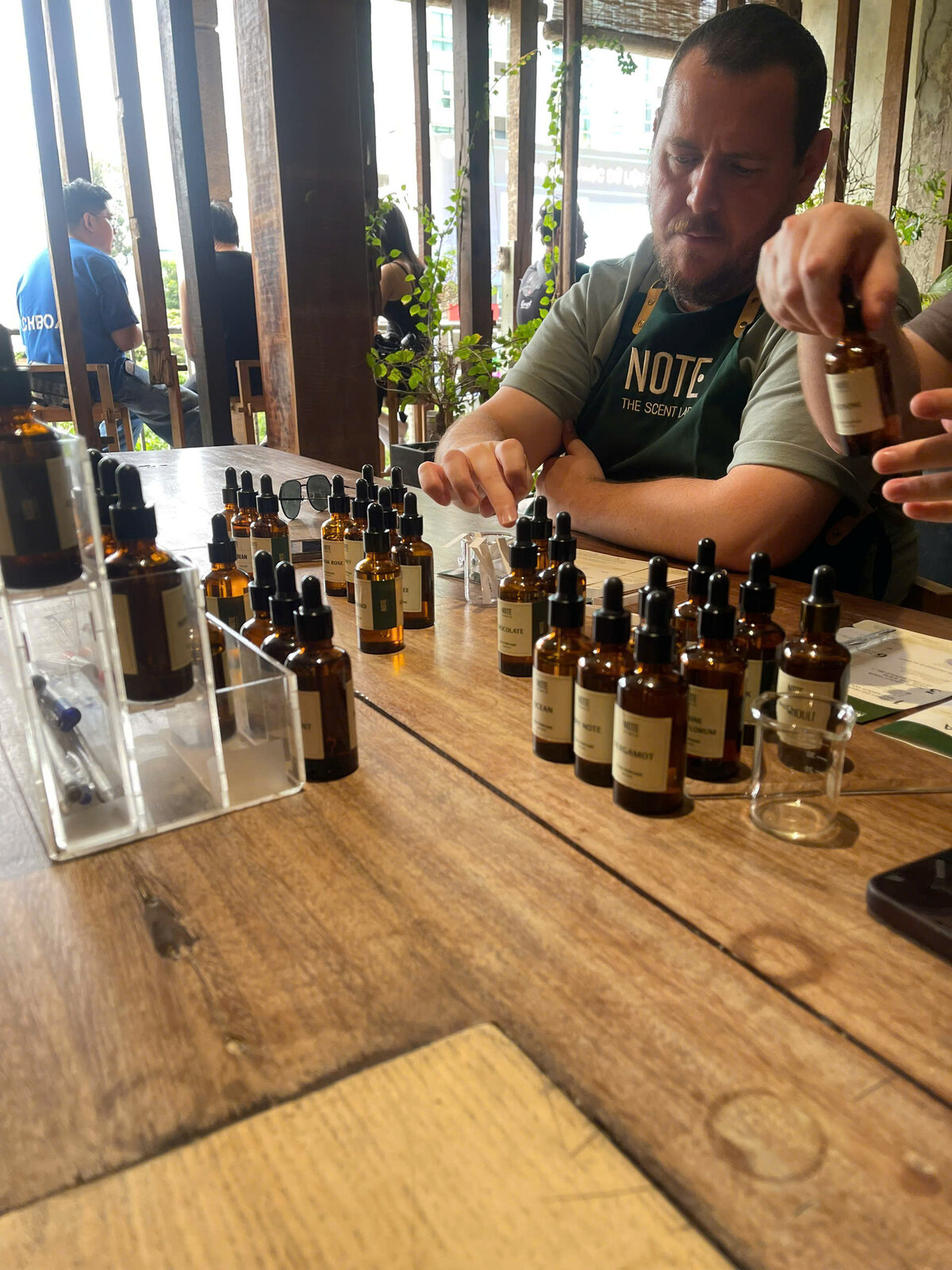
“One of the most pleasant and calming workshops I’ve ever attended. Great variety of scents — you truly create your own fragrance and get to name it.”
If you want to understand what the full 90-minute arc feels like from beginning to end, we break it down in detail in our complete guide to the 90-minute perfume workshop experience.
Naming, Bottling, and the Moment People Don’t Expect
After blending, you name your perfume. You write the label by hand. You seal it.
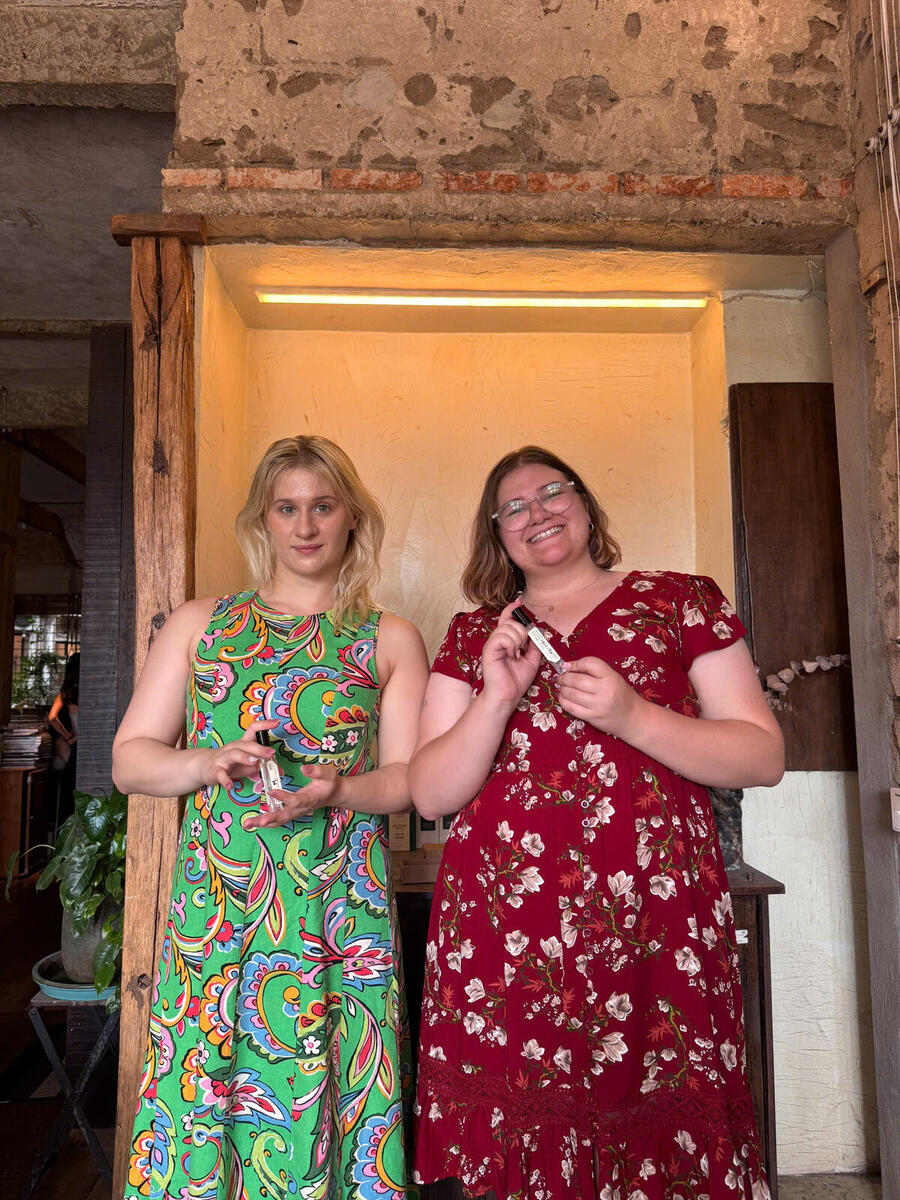
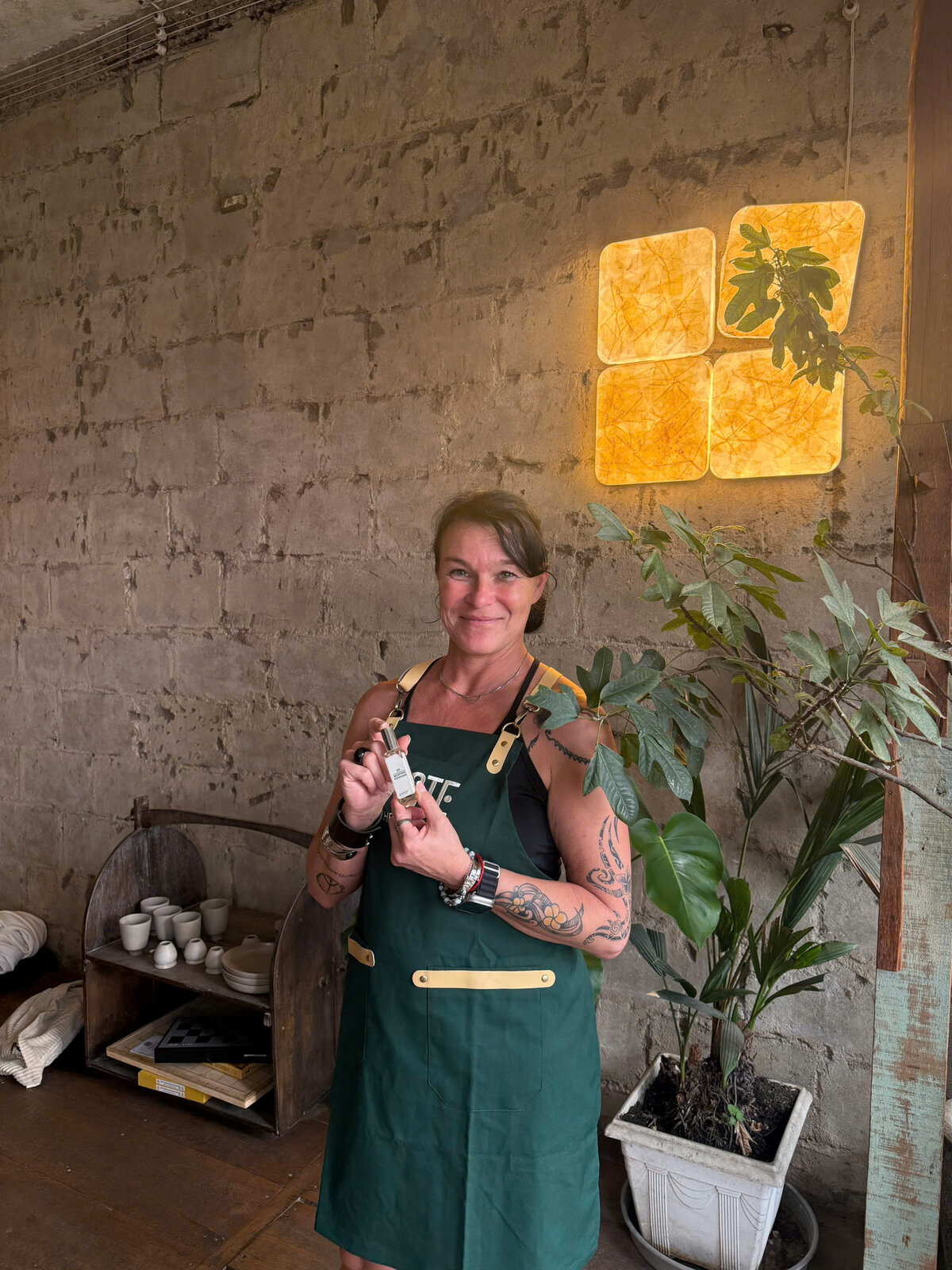
This sounds like the wrap-up — the administrative tail end. But it’s actually the moment that surprises people most. There’s a specific expression we see every day: someone holds up their finished bottle, reads the name they just wrote, and their face changes. You don’t just leave with a product — you leave with your own signature scent. It lands differently when it’s real. When it’s yours.
Your formula is saved permanently. Not just as a courtesy — as a commitment. If you come back to Vietnam in a year, five years, ten years, you can reorder your exact scent. Some travelers have done exactly that. As we wrote in Bottle Your Vietnam Memories, the perfume becomes a kind of sensory postcard — one that replays itself every time you wear it.
“I loved my fragrance making experience. I have a beautiful souvenir to take home and every time I smell it, I will remember Saigon. Thanh was an excellent teacher.”
Honest Answers to the Questions You’re Actually Asking
We’ve watched enough first-timers walk through the door to know what’s really on your mind. Not the polished FAQ questions — the real ones.
“Do I need any experience with perfume?”
None. Zero. Most of our visitors have never thought about fragrance beyond picking a bottle at the department store. The workshop is designed for complete beginners — that’s the whole point. Your workshop instructor adapts to your level, whether you’re smelling raw materials for the first time or you already know the difference between an aldehyde and an aromatic.
“Will it feel cheesy or touristy?”
This is the big one. The fear of being herded through a cookie-cutter experience while someone takes photos you didn’t ask for. We hear it. And we get why — Saigon has plenty of tourist traps.
Here’s the honest answer: the workshop runs in small groups, usually 2-6 people. Your workshop instructor works with you personal for the core blending phase. The ingredients are professional-grade, not watered-down souvenir materials. And the result is a wearable eau de parfum, not a novelty item that sits in a drawer.
“As someone in the beauty industry for over 20 years, I was extremely impressed by their knowledge and professionalism.”
“Is it worth the price?”
Think about what you’re actually getting: 90 minutes of creative instruction from a workshop instructor, professional-grade materials, a finished perfume you designed yourself, and a formula saved for life. Compare that to the cost of a generic souvenir that collects dust. Over 500 travelers have shared their experience — and the word that shows up most isn’t “worth it.” It’s “wish I’d booked earlier.”
“Can I come alone?”
Absolutely. Solo travelers make up a significant portion of our bookings. There’s something quietly powerful about spending 90 minutes focused on what you like, what you’re drawn to, without compromise or committee. Many solo visitors tell us it was the most personal part of their trip.
“What about kids?”
Ages 8 and up, with a parent present for ages 8-10. Kids are often more intuitive blenders than adults — they haven’t learned to second-guess their instincts yet.
What the Studio Feels Like (From Someone Who’s There Every Day)
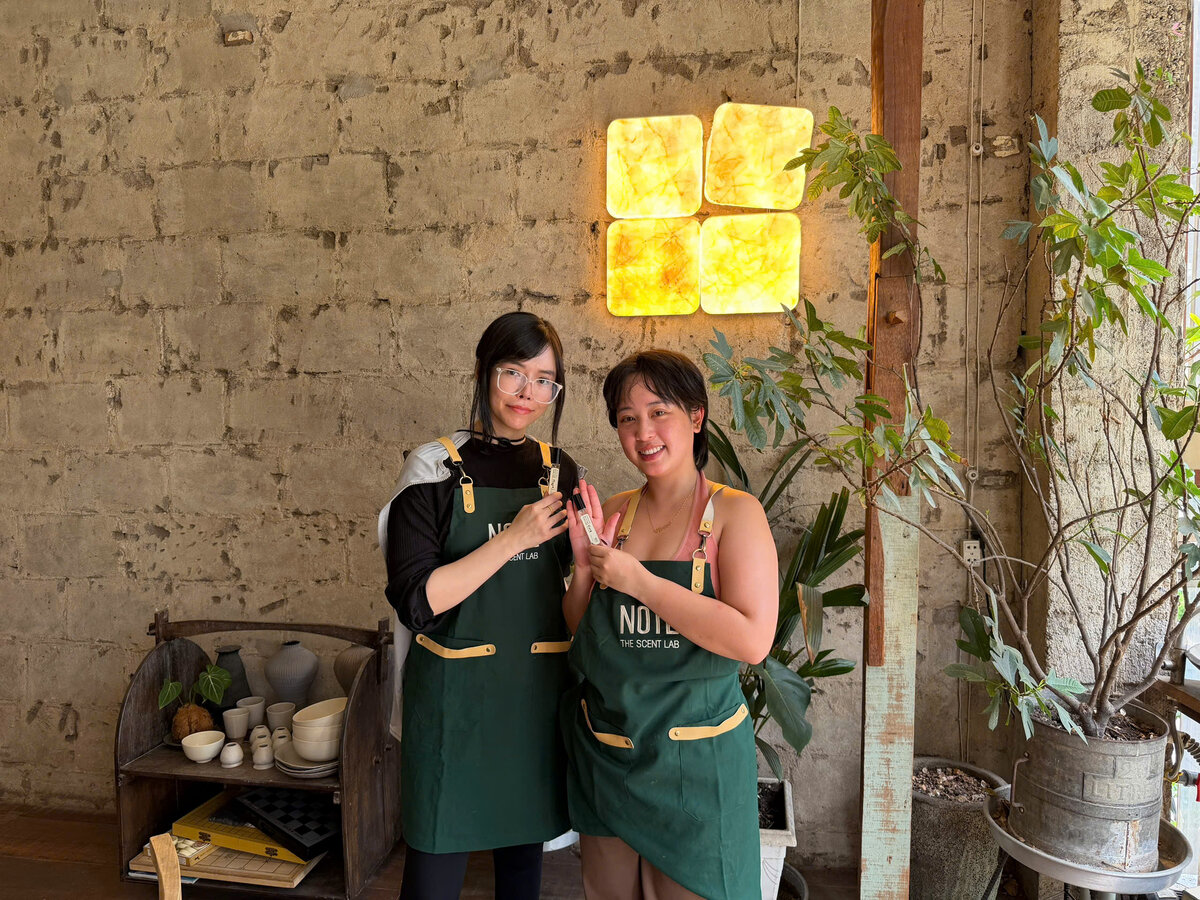
The Saigon studio sits on the second floor of the Cafe Apartment building — 42 Nguyen Hue, right on the main walking street of District 1, Ho Chi Minh City. If you’ve seen photos of the building with its grid of lit-up cafes and shops, that’s the one.
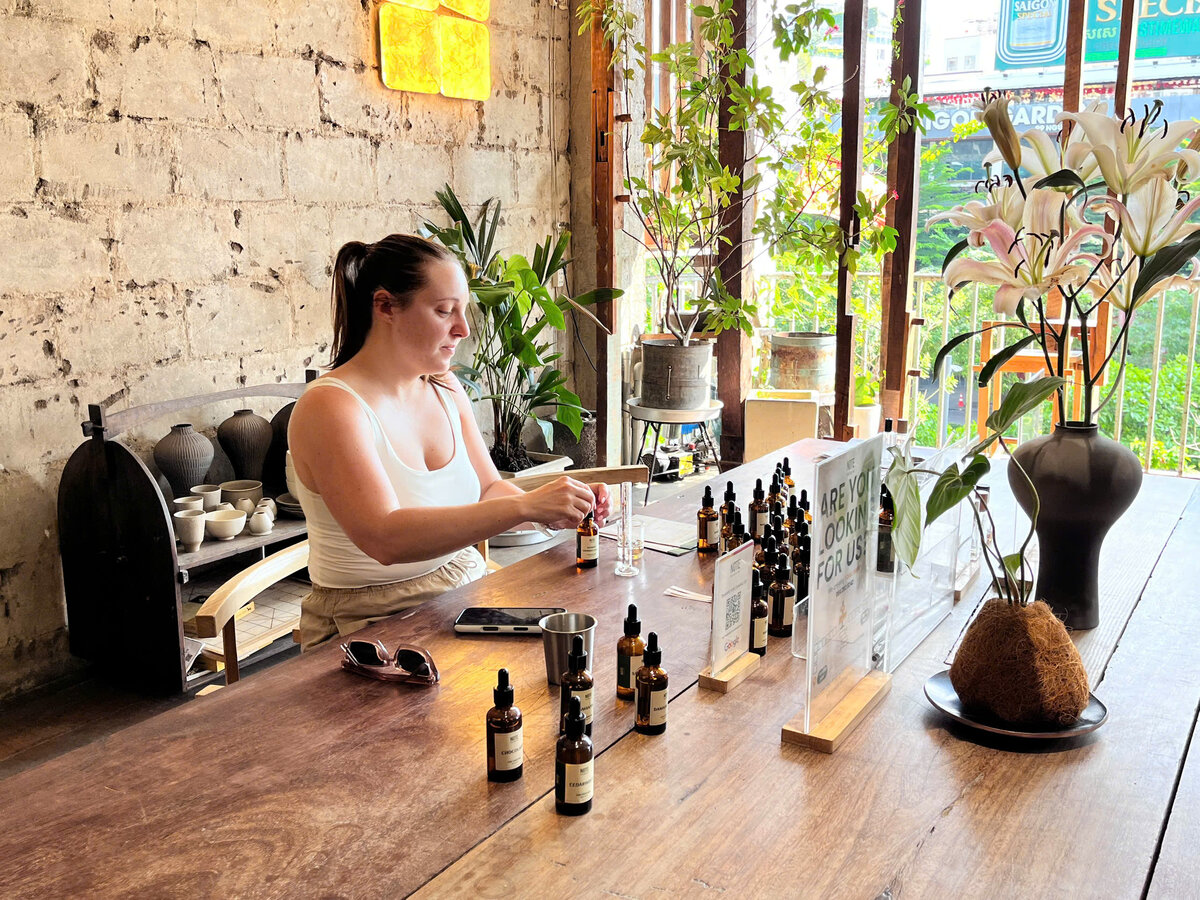
From inside, the city noise drops to a hum. Light comes through the windows in warm slabs, shifting across the worktables as the afternoon moves. The shelves hold rows of amber and clear bottles — essential oils, absolutes, aromatic compounds. The air carries a layered baseline: something woody underneath, something floral drifting over it, and every now and then a bright citrus spike when someone opens a new vial.
Tourists discover pottery two floors below us. Vinyl records play above. Jasmine base notes drift from our studio into the hallway, mixing with the coffee from next door. This building is its own ecosystem, and the workshop is part of its rhythm.
We also have a studio in Thao Dien (34 Nguyen Duy Hieu, Thu Duc) — quieter, more light, with curved windows and stone tables — and one in Hanoi at Lotte Mall Tay Ho for travelers heading north. Each space has its own character, but the experience is the same: small, personal, and unhurried.
What to Know Before You Book: Practical Details
Duration: ~90 minutes. Arrive 5 minutes early.
Locations in HCMC (Saigon):
- 42 Nguyen Hue, District 1 (the Cafe Apartment building) — book here
- 34 Nguyen Duy Hieu, Thao Dien, Thu Duc
Hanoi: Store 410, 4F, Lotte Mall Tay Ho, 272 Vo Chi Cong
What you get: Custom EDP (Eau de Parfum) perfume bottle + formula card (saved permanently for reorder). If you fall in love with fragrance, you can explore NOTE’s full collection of ready-to-wear perfumes at the studio too.
Ingredients: 30+ professional-grade, IFRA-certified materials, including Vietnamese specialties (lotus, cinnamon, agarwood)
Language: English and Vietnamese. Scent is a universal language — the hands-on format makes communication easy regardless of your mother tongue.
Rating: 4.9 stars from 500+ reviews on TripAdvisor, Google, and Klook
Booking: Online at workshop.thescentnote.com/book. Walk-ins are welcome when space is available, but booking ahead is recommended during peak season (October-March). You can also book through Klook or TripAdvisor.
For a deeper dive into whether the workshop is the right fit for you, our honest review breakdown covers cost, time, and what different types of travelers think.
The Thing Nobody Tells You About Making Perfume
Here’s what doesn’t fit in any FAQ or bullet-pointed guide.
When you make your own perfume, you learn something about yourself that has nothing to do with fragrance. You learn what you’re drawn to when there’s no brand name, no advertising, no algorithm telling you what to like. Just raw materials and your own instincts.
Most people walk in thinking they know what they want. Floral. Fresh. Woody. Something safe. And then they smell Vietnamese cinnamon bark and their plan dissolves. They discover they love vetiver — an ingredient they’ve never heard of. They find out that the “woody” scent they’ve been buying for years is actually closer to amber. That the rose they thought they hated? They only hated the synthetic version.
Every week, someone looks up from their test strip mid-blend and says some version of the same thing: “I didn’t expect to feel this way about it.”
That’s the part you can’t put on a website. The moment when a creative exercise turns into something quietly personal — when you realize you’re not just making a perfume, you’re making a decision about who you are and what you want to carry with you.
The bottle goes in your bag. The formula stays on file. And weeks later, somewhere far from Saigon, you’ll uncap it, and the whole afternoon will come back — the light through the windows, the workshop instructor’s voice, the exact moment you added that last drop of sandalwood and everything clicked.
That’s what to expect. And also, it isn’t. Because the real answer is different for everyone.
Follow @note.workshop to see what others have created — or better yet, come make something of your own.
Book Your Perfume Workshop in Saigon →
Frequently Asked Questions
What should I expect at a perfume workshop in Saigon?
Expect a 90-minute hands-on experience at NOTE — The Scent Lab where you learn fragrance theory, blend your own custom perfume from 30+ professional ingredients, and leave with a finished bottle and saved formula. No experience needed — your workshop instructor guides every step.
How long does a perfume workshop take?
The workshop at NOTE — The Scent Lab takes approximately 90 minutes: 15 minutes of scent education, 15 minutes designing your concept, 30 minutes blending, and the remaining time for naming, bottling, and packaging.
Do I need experience to join a perfume workshop?
No experience is required. The workshop is designed for complete beginners. Your workshop instructor adapts the session to your level, whether you’ve never thought about fragrance or you’re a perfume enthusiast looking to go deeper.
Where is the perfume workshop located in Saigon?
NOTE — The Scent Lab has two locations in Ho Chi Minh City (Saigon): the Cafe Apartment building at 42 Nguyen Hue in District 1, and 34 Nguyen Duy Hieu in Thao Dien. There’s also a studio at Lotte Mall Tay Ho in Hanoi.
Is a perfume workshop good for couples or solo travelers?
Both. Couples love creating scents for each other, and solo travelers appreciate the focused, personal nature of the experience. The workshop runs in small groups of 2-6 people, so it’s intimate regardless of whether you come alone or with someone.
Can I reorder my custom perfume later?
Yes. NOTE saves your formula permanently. Whenever you return to Vietnam, you can reorder your exact scent. Some visitors have come back years later to get a refill of the perfume they created.
Do I get to keep my custom perfume?
Absolutely. You leave with a finished bottle of custom Eau de Parfum that you designed yourself — it’s yours to keep and wear. Your formula is also saved permanently, so you can reorder anytime. What makes the perfume personalized is that every decision, from concept to final blend, was yours.
How do I book a perfume workshop in Saigon?
Book online at workshop.thescentnote.com/book. Walk-ins are welcome when space is available, but booking ahead is recommended especially during peak tourist season (October through March). You can also book via Klook or TripAdvisor.