
Looking for hidden gems Phan Thiet Mui Ne? Looking for hidden gems Phan Thiet? The hidden gems of Phan Thiet and Mui Ne stretch far beyond the famous sand dunes — from a white lake that glows at sunrise to 8th-century Champa towers overlooking the South China Sea. NOTE – The Scent Lab is a perfume workshop in Saigon, Vietnam (, and many of our guests arrive fresh from a Mui Ne trip, still carrying salt on their skin and stories they didn’t expect to find. This guide maps the secret places in Mui Ne and Phan Thiet that most tourists drive right past — the off-the-beaten-path corners where Vietnam’s coast feels raw, unhurried, and entirely yours.
The salt hits you before the town does. Four hours southeast of Saigon, the highway crests a hill and suddenly the air changes — drier, sharper, laced with fish sauce and sun-warmed sand. Phan Thiet doesn’t announce itself with skyline drama. It announces itself with smell. And if you’ve spent any time learning how scent shapes memory, you know: that first inhale is the one you’ll carry home.
hidden gems Phan Thiet Mui Ne: 1. Bau Trang (White Lake) — A Hidden Gem in Phan Thiet Nobody Told You About
Most travelers who visit Mui Ne see the Red Sand Dunes. A handful make it to the White Sand Dunes. Almost nobody arrives at Bau Trang — the freshwater lake hidden behind the dunes — before 6 a.m.
That’s the mistake.
At dawn, the lake surface turns mirror-flat, catching the dunes in reflection. Lotus flowers open in the shallows. The only sound is a fisherman’s paddle breaking the surface. By 8 a.m., the jeep tours arrive and the spell breaks. But in that early hour, Bau Trang feels less like a tourist destination and more like something you stumbled into — a secret Vietnam offered because you woke up early enough to receive it.
Getting there: 30 km northeast of Mui Ne center. Hire a motorbike or arrange a jeep the night before. Bring water — there’s almost no shade.
2. Mui Ne Fishing Village at Dawn — 500 Round Boats and the Smell of the Sea — hidden gems Phan Thiet pick
The fishing harbor sits right along the main road, which is precisely why most people miss it. They drive through at noon, see parked boats, and keep going. Come at 5:30 a.m. instead.
The harbor transforms. Five hundred thung chai — those iconic round basket boats — bob in formation while fishermen haul the night’s catch. The air is thick with brine, diesel, and something almost sweet — the oxidizing scales of fresh fish catching the first light. Women in conical hats sort shrimp by size with a speed that makes your eyes blur. The color palette alone — turquoise hulls, orange nets, pink dawn sky — explains why photographers fly in from Bangkok and Tokyo just to shoot this scene.
Stand at the harbor wall and breathe. This is the smell of Vietnam’s coast at its most honest. No resort fragrance diffuser. No filtered experience. Just salt and labor and the sea giving back what it took during the night.
3. Fairy Stream’s Hidden End — Where the Crowds Don’t Walk (hidden gems Phan Thiet)
Fairy Stream (Suoi Tien) appears in every Mui Ne itinerary. But here’s what the guides don’t mention: most visitors walk 15 minutes upstream, take photos at the red-and-white sandstone walls, and turn back. The stream keeps going for another 40 minutes.
Past the turnaround point, the canyon narrows. The sandstone shifts from orange to deep burgundy. Bamboo groves arch overhead, filtering the light into green-gold dapples on the water. You’re barefoot, ankle-deep in warm current, and suddenly alone. The further you walk, the more Fairy Stream earns its name — the landscape turns strange, almost sculptural, as if water and wind have been arguing over the shape of these walls for centuries and neither has won.
Tip: Enter early morning or late afternoon. Midday sun makes the exposed sections brutal. The full walk takes about 120 minutes each way.
4. Ke Ga Lighthouse — Vietnam’s Oldest, on a Peninsula That Time Forgot — hidden gems Phan Thiet local hour
Built by the French in 1899, Ke Ga Lighthouse stands on a small rocky island connected to the mainland by a sandbar that appears only at low tide. It’s Vietnam’s oldest functioning lighthouse — and one of its most photogenic, rising 35 meters above granite boulders smoothed by a century of waves.
The drive from Mui Ne takes about 30 minutes south. The road passes dragon fruit plantations — their alien green arms stretching in every direction — before dead-ending at a quiet fishing hamlet. From there, you wade across the sandbar (check tide tables, or hire a boat for 50,000 VND) and climb 183 spiral steps to the top.
The view is worth every step. Open ocean in three directions. No buildings. No other tourists, most mornings. Just the kind of coastal solitude that Mui Ne’s main beach lost years ago.
5. Ta Cu Mountain — A Reclining Buddha and a Hike That Earns the View for the hidden gems Phan Thiet list
Forty minutes south of Phan Thiet, Ta Cu Mountain rises 649 meters above the coastal plain. At its summit: a 49-meter reclining Buddha, the largest in Southeast Asia, white against the green canopy. You can take the cable car up. Or you can hike the 2.5 km trail through dipterocarp forest, where the air smells like damp bark and wild orchids, and every switchback reveals another layer of coastline below.
The hike takes roughly 120 minutes up, faster coming down. The cable car takes 10 minutes and costs about 100,000 VND round trip. Most visitors combine both — hike up, ride down, legs grateful.
At the top, the Linh Son Truong Tho pagoda complex spreads across the plateau. Monks tend gardens. Incense smoke drifts between banyan trees. The reclining Buddha lies in perfect stillness, facing the sea you just climbed above. It’s the kind of place where even people who don’t meditate find themselves sitting still for a while.
6. Hon Rom Beach — The Locals’ Beach, No Resorts Required — hidden gems Phan Thiet quiet moment
While Mui Ne’s main strip caters to kitesurfers and resort guests, Hon Rom — a few kilometers northeast — remains what Mui Ne’s beach used to be. No high-rises. No beach clubs. Just a long, gently curving shoreline where local families picnic on weekends and the seafood stalls charge the prices that locals actually pay.
The water is calmer here, the sand softer, and the afternoon light does something particular — it turns the shallow water from blue to pale green to gold as the sun drops. Bring a hammock if you have one. There are a few basic guesthouses nearby if you decide, as many do, that you’re not ready to leave.
7. Phan Thiet Fish Sauce Factories — Vietnam’s Pungent Capital
Phan Thiet doesn’t just have fish sauce. Phan Thiet is fish sauce. The city produces more nuoc mam than anywhere else in Vietnam — rows of ceramic vats fermenting anchovies under the tropical sun, a tradition stretching back centuries. Several factories along the coast road welcome visitors for informal tours.
The smell, let’s be honest, is overwhelming at first. Fermentation at industrial scale has a presence that pushes back against you physically. But stay ten minutes. Your nose adapts. And then something shifts — you start detecting layers. The sharp ammonia top note fades, and underneath it: caramel, roasted grain, ocean. This is umami in its purest aromatic form.
For anyone interested in how scent works — how our noses adapt, how context changes perception, how a “bad” smell becomes fascinating once you understand its complexity — a fish sauce factory is a masterclass. It’s also the kind of underrated experience in Mui Ne that guidebooks skip because it doesn’t photograph well. Their loss.
8. Red Canyon — A Mini Grand Canyon 30 Minutes from Mui Ne
Locally called Suoi Tien as well (confusing, yes — different location from Fairy Stream), this red sandstone canyon sits roughly 30 minutes from Mui Ne center, off a dirt road that doesn’t appear on most maps. The formations are dramatic — layered terracotta and cream, carved by monsoon rains into spires and gullies that look transplanted from the American Southwest.
Come at golden hour. The low sun turns the already-red walls incandescent, and the shadows between the formations deepen to purple. You can walk the canyon floor for about 20 minutes, scramble up the sides for panoramic views, and have the entire place to yourself on a weekday afternoon. This is one of the secret places in Mui Ne that even local taxi drivers sometimes don’t know.
9. Duc Thang Fishing Village — Authentic Life Beyond Tourism
North of Phan Thiet, past the resorts and the kite schools, Duc Thang village sits at the edge of the sea as it has for generations. No souvenir shops. No English menus. Just a working fishing community where boats go out at dusk and return at dawn, where nets dry on the sand, and where the rhythm of life follows the tide table, not the tourist season.
Walking through Duc Thang in the morning, you smell woodsmoke from breakfast fires, drying fish, and the particular sweetness of tropical flowers growing wild in sandy soil — frangipani, mostly, their white petals scattered on paths that lead to the water. If you’re the kind of traveler who collects moments over monuments, this village is off the beaten path in Phan Thiet at its most rewarding.
Bring a smile and some basic Vietnamese phrases. The warmth you receive will be disproportionate to the effort.
10. Po Sah Inu Champa Towers — 8th-Century Ruins Overlooking the Coast
On a hilltop at the northern edge of Phan Thiet, three weathered brick towers stand against the sky — the Po Sah Inu Champa ruins, built sometime around the 8th century as Hindu temples dedicated to Shiva. They’re modest in scale compared to My Son, but their setting is extraordinary: perched above the coastline, with the fishing harbor below and the open sea stretching to the horizon.
The brickwork is remarkable — fitted without mortar, surviving monsoons and centuries through engineering that modern builders still study. Carved sandstone lintels depict celestial dancers and Nandi bulls. The grounds are quiet, shaded by mature trees, and the coastal breeze carries salt and the faint sweetness of incense from a small shrine still tended by the local Cham community.
Visit at sunset. The towers glow amber, the harbor lights begin to flicker below, and you’re standing in the overlap between ancient and present Vietnam — a place where the coast has been watched over for twelve centuries.
Book Your Perfume Workshop in Saigon →
From Sea Breeze to Signature Scent — What Comes After Mui Ne
Here’s what happens: you spend three or four days in Phan Thiet and Mui Ne, collecting sensory impressions you didn’t plan for. The brine of the fishing harbor. The warm sand between your toes at Bau Trang. Frangipani petals in a village you can’t quite remember the name of. The sharp, complex funk of fermenting fish sauce that you somehow grew to appreciate. The salt wind at Ke Ga, clean and endless.
Then you’re back in Saigon — and those coastal memories are still fresh, still vivid, still yours.
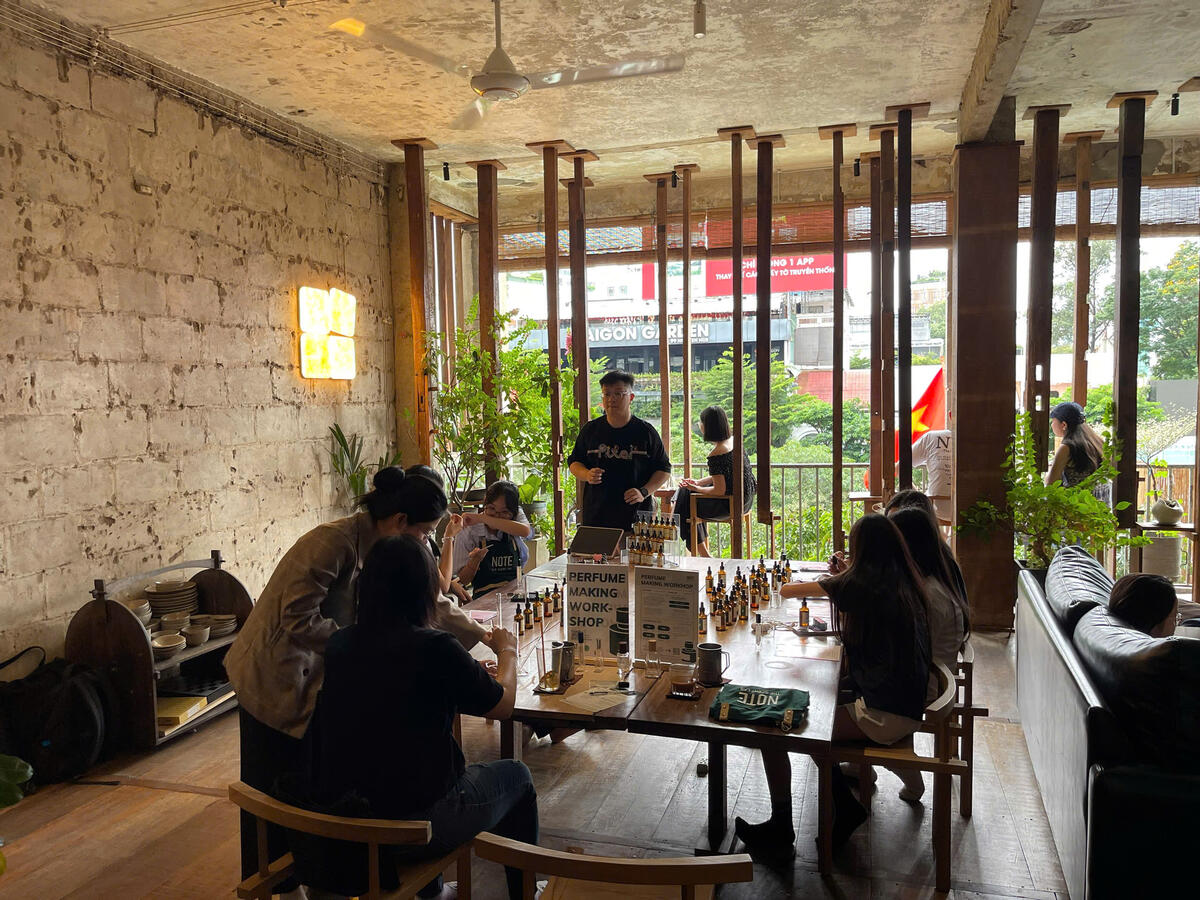
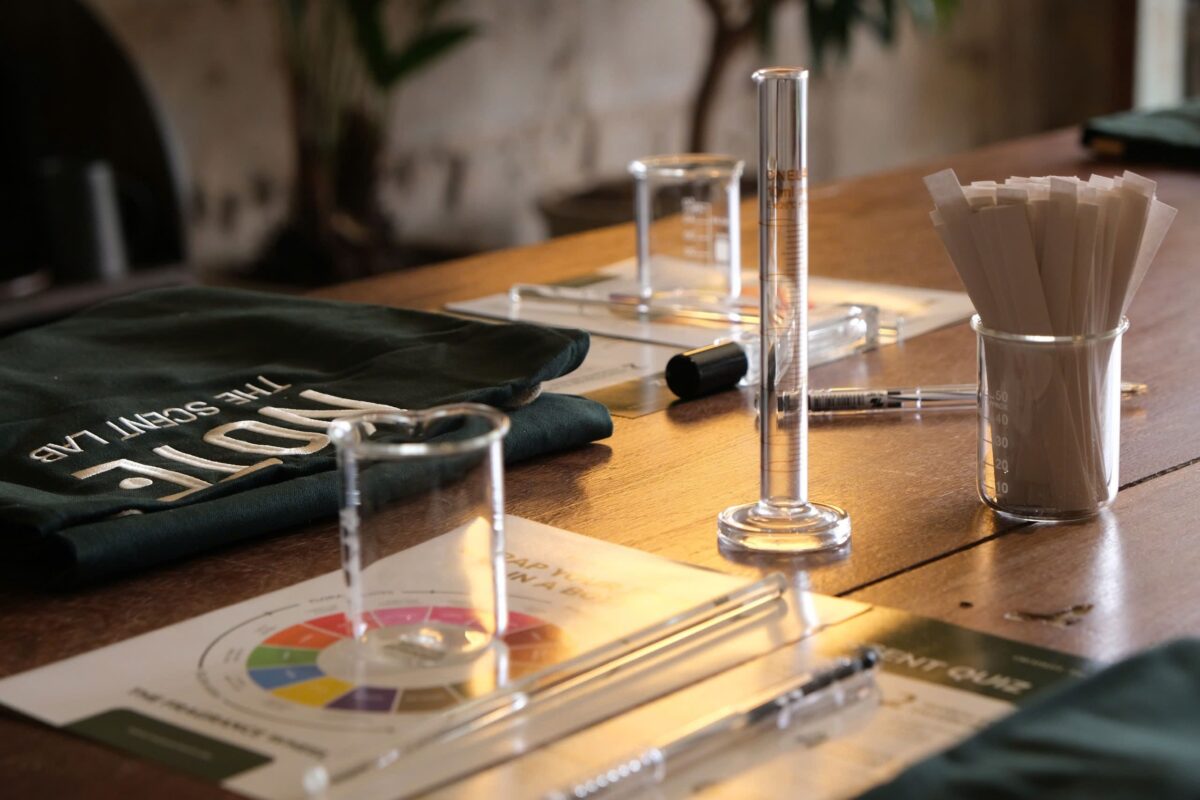
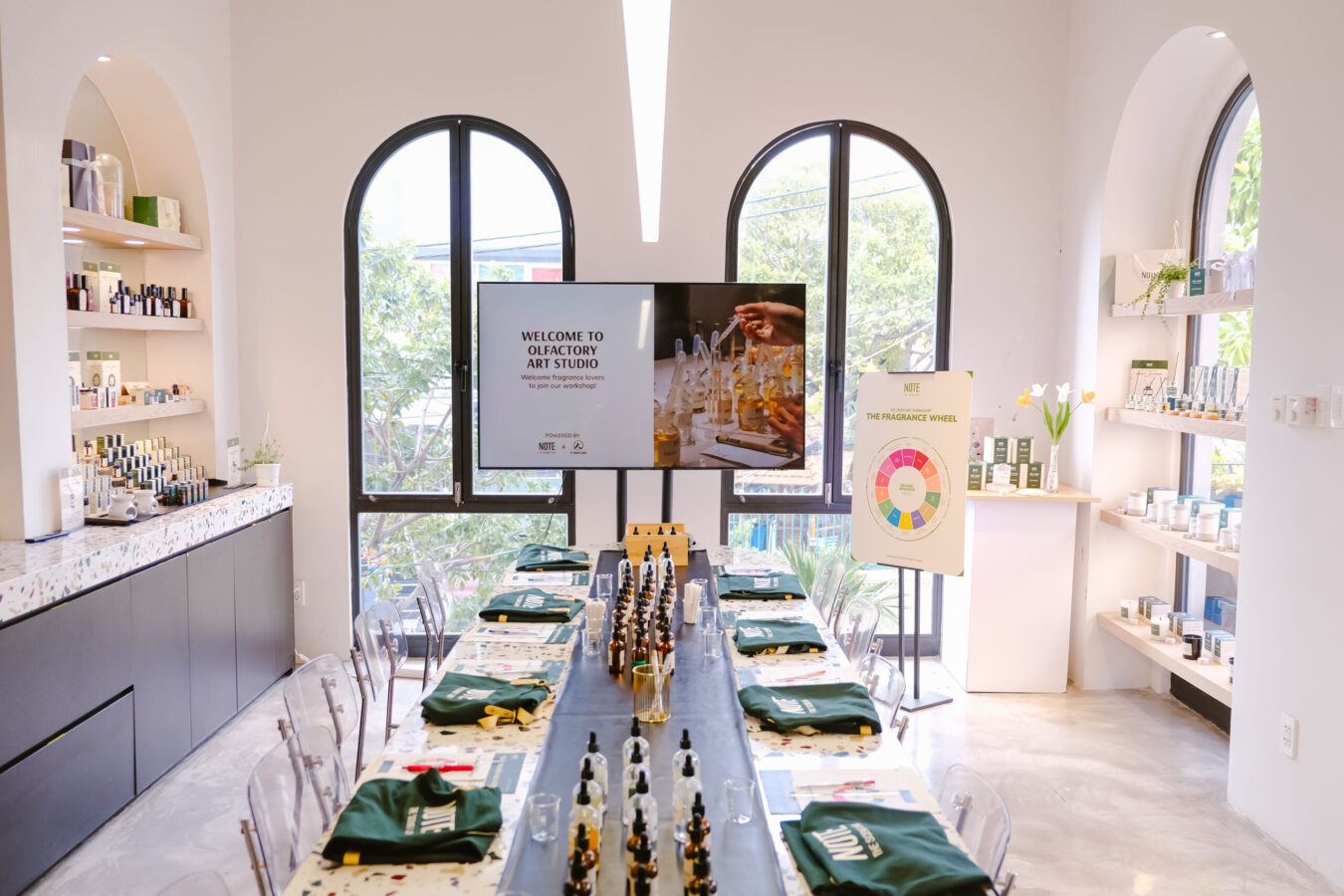
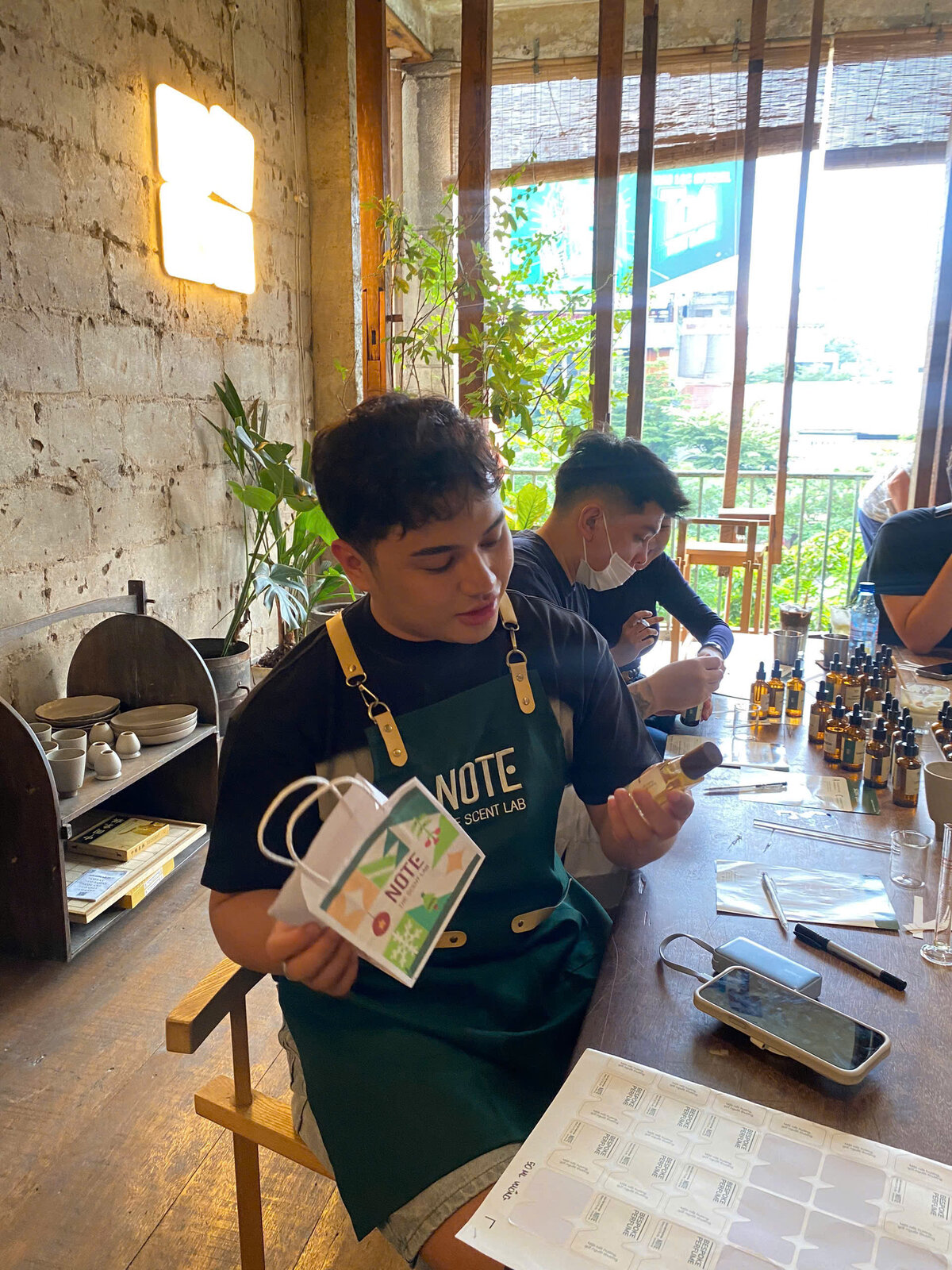
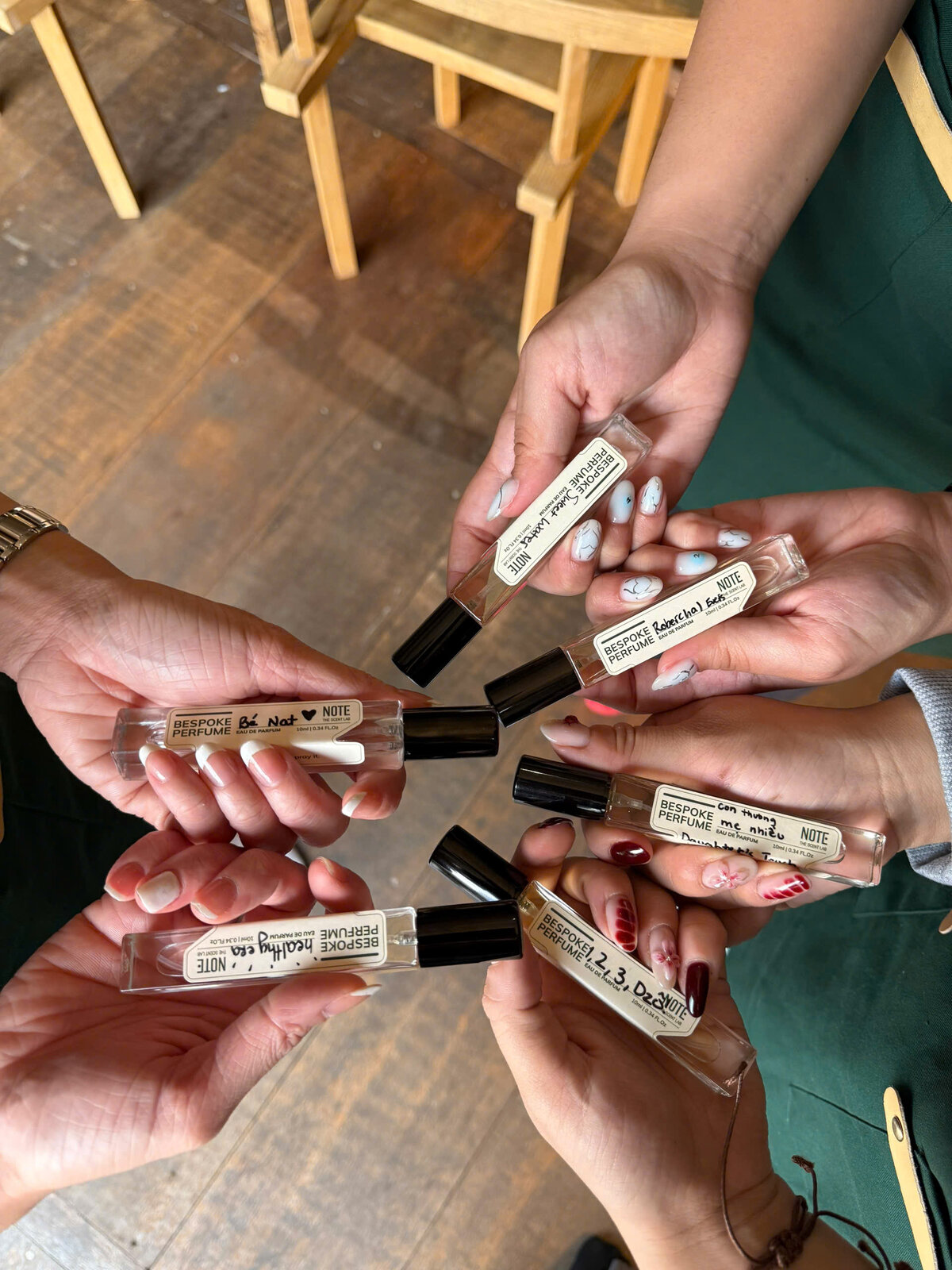
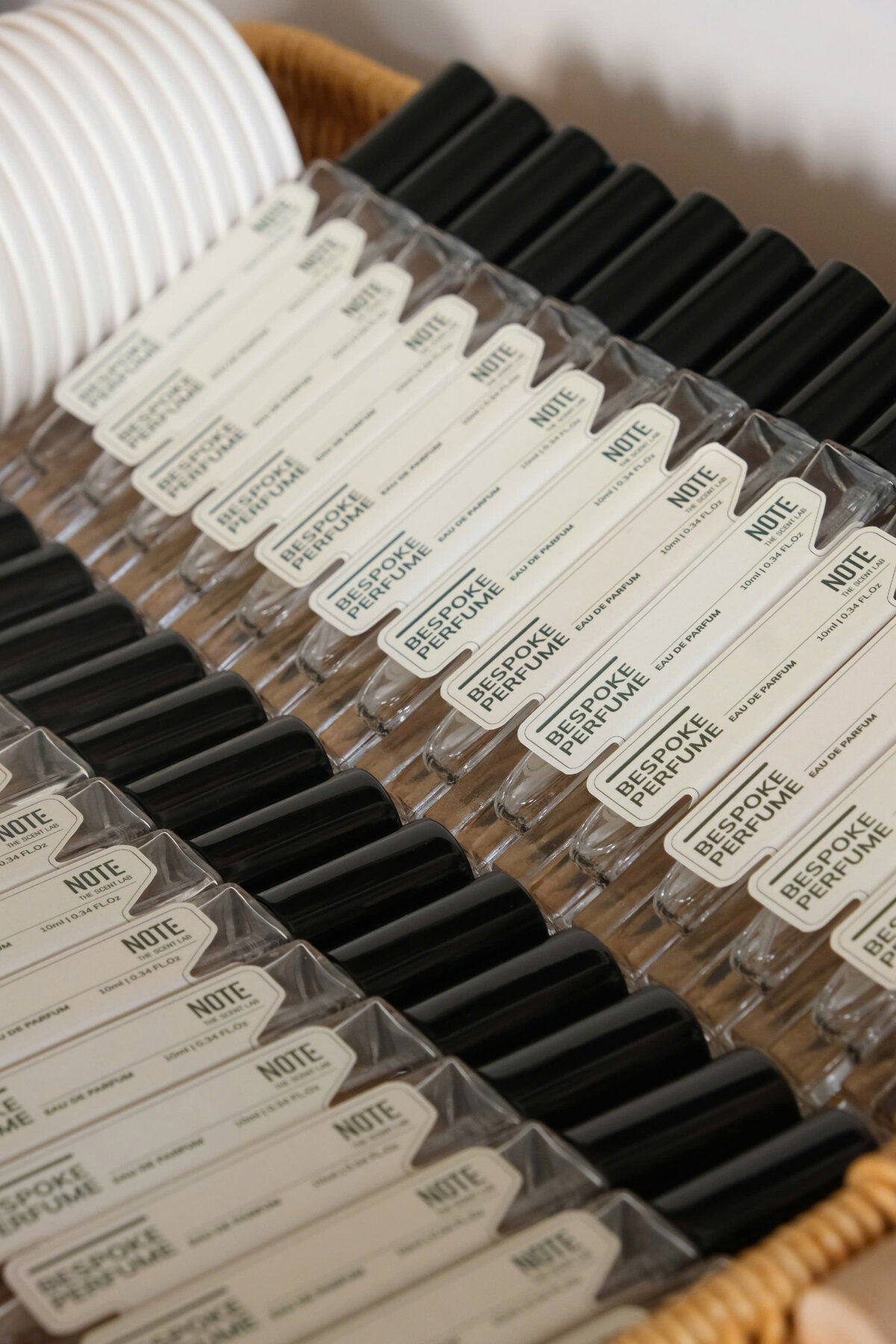
That’s exactly when travelers walk into our studio at 42 Nguyen Hue, Saigon’s Cafe Apartment — or our Thao Dien studio — and turn those memories into something you can wear. A 120-minute perfume workshop at NOTE – The Scent Lab, where you blend from 30+ professional-grade ingredients, from bright citrus and florals to warm spice like cinnamon, amber and woods. Coastal air. Tropical flowers. The warmth of sand. Your custom EDP perfume — from 550,000 VND for 10ml — becomes a bottled memory of Vietnam’s coastline.
“I left with not only my handmade creations but also a wealth of new knowledge. Highly recommend.”
“This perfume will always remind us of this trip in Vietnam. Thanh was an excellent teacher.”
“One of the most pleasant and calming workshops I’ve ever attended. Great variety of scents — you truly create your own fragrance and get to name it.”
NOTE saves your formula, so you can reorder anytime. Your signature scent — inspired by the coast, created by your own hands. The studio is open daily, and walk-ins are welcome, but booking ahead during peak season saves you the wait.
Follow @note.workshop on Instagram for daily scenes from the studio.
Planning Your Phan Thiet and Mui Ne Trip — Practical Notes
Getting there: Phan Thiet is roughly 200 km (4-5 hours by car or bus) from Ho Chi Minh City. The Phan Thiet Express train runs daily and takes about 4 hours. Grab cars and private transfers are also available — expect 1.2-1.5 million VND one way.
Best time to visit: November through April — dry season, lower humidity, calmer seas. The dunes are best at sunrise or sunset year-round. Avoid Tet holiday week (late January/early February) unless you enjoy maximum crowds.
How long to stay: Three days lets you cover these 10 hidden gems without rushing. Four days if you want beach time between adventures. Many travelers combine a Mui Ne trip with 2-3 days in Saigon — enough for a full HCMC itinerary including a perfume workshop.
Getting around: Motorbike rental (150,000-200,000 VND/day) gives you freedom to reach places like Ke Ga and Bau Trang on your own schedule. Otherwise, arrange day trips through your hotel — most can organize private cars with drivers.
Frequently Asked Questions
What are the best hidden gems in Phan Thiet and Mui Ne?
The top hidden gems include Bau Trang (White Lake) at sunrise, Ke Ga Lighthouse on its remote peninsula, Red Canyon’s sandstone formations, the Mui Ne fishing village at dawn, and the 8th-century Po Sah Inu Champa towers. All are within 30-45 minutes of Mui Ne center.
Is Mui Ne worth visiting beyond the sand dunes?
Absolutely. The sand dunes are just the beginning. Mui Ne and Phan Thiet offer fishing villages, a freshwater lake, Vietnam’s oldest lighthouse, Champa ruins, fish sauce factory tours, and beaches without resort crowds. Three to four days lets you explore all of it.
How do I get from Mui Ne to Ho Chi Minh City?
The drive takes 4-5 hours by car or bus. The Phan Thiet Express train runs daily (about 4 hours). Private transfers cost roughly 1.2-1.5 million VND. Most travelers return to Saigon with 2-3 days left in their trip — enough time for a perfume workshop or exploring NOTE’s fragrance collection.
Where can I create a custom perfume after visiting Mui Ne?
NOTE – The Scent Lab offers 120-minute perfume workshops in Saigon (42 Nguyen Hue, Cafe Apartment + Thao Dien) and Hanoi (.. Prices start at 550,000 VND for 10ml. Book at workshop.thescentnote.com/book/.
What is the best time to visit Phan Thiet and Mui Ne?
November through April is ideal — dry season, calm seas, comfortable temperatures. For the sand dunes and Bau Trang, arrive at sunrise (5:30-6:00 a.m.) to avoid crowds and heat. The fishing village is best before 7 a.m.
Is Phan Thiet safe for solo travelers?
Yes. Phan Thiet and Mui Ne are among Vietnam’s safer tourist destinations. The main tourist strip has ATMs, pharmacies, and English-speaking staff at most hotels. For remote spots like Ke Ga or Duc Thang village, go during daylight and let your hotel know your plans.
The Coast Stays With You
Vietnam’s coastline doesn’t ask to be remembered. It insists. The salt smell that clings to your hair after a morning at the fishing harbor. The warm grit of sand that appears in your shoes days later. The particular quality of light at Ke Ga — horizontal, golden, the kind that makes everything it touches look like a painting you’d want to live inside.
These hidden gems in Phan Thiet and Mui Ne aren’t hidden because they’re hard to find. They’re hidden because most travelers are in too much of a hurry to notice them. Slow down. Wake up early. Follow the smell of salt and fish sauce and frangipani. The coast has been here long before the resorts, and it will outlast them.
And when you’re back in Saigon — sunburned, sand-dusted, carrying more memories than your phone’s storage can hold — you might find yourself wanting to bottle all of it. That’s not a metaphor. That’s an invitation.
Looking for a scent souvenir? NOTE also offers ready-made perfumes, home fragrances, and gift sets if you want to bring the experience home without the workshop. Browse the online store — popular picks include travel-size rollerballs and natural room sprays.
Find NOTE – The Scent Lab
- 42 Nguyễn Huệ — Get directions on Google Maps → · Read reviews on TripAdvisor
How to find us:
- 📍 42 Nguyễn Huệ — Watch direction video on TikTok →
Your Last Day in Vietnam?
If you’re heading back to Ho Chi Minh City before your flight home, save your last morning or afternoon for something memorable. Many travelers book a perfume workshop on their last day in Saigon — it takes just 120 minutes, and you leave with a one-of-a-kind souvenir you created yourself. It’s the kind of ending that makes a trip feel complete.
More Phan Thiết / Mũi Né reading from our destination guides
Three companion pieces from our 2026 Phan Thiết / Mũi Né cluster — pick the one that fits your trip shape.
- Phan Thiết / Mũi Né — sand-dunes photography in Mũi Né beyond the standard jeep loop
- Phan Thiết / Mũi Né — how to bridge Phan Thiết back into a Saigon last day
- Phan Thiết / Mũi Né — 300 years of Phan Thiết fish-sauce history and how to taste it
Why these hidden gems Phan Thiet picks still matter in 2026
Each of the hidden gems Phan Thiet entries above came from someone who actually walked the path. Some were locals. Some were repeat travelers who had outgrown the standard tourist loop and wanted a quieter Phan Thiết / Mũi Né morning. Our team checked every hidden gems Phan Thiet spot in person between January and April 2026. The hidden gems Phan Thiet list keeps changing — homestays open, paths wash out, festivals shift dates — so treat these as a starting compass, not a fixed map. The deepest hidden gems Phan Thiet moments tend to live in the shoulder seasons: lighter tourist traffic, kinder weather, locals with more time to talk. The hidden gems Phan Thiet rule we follow: skip anything with a queue. If a hidden gems Phan Thiet entry no longer feels secret on your visit, push another five kilometers down the road. Phan Thiết rewards the slow traveler.
How we picked these hidden gems Phan Thiet entries
Three filters. First, the hidden gems Phan Thiet pick had to be reachable without a private car — local bus, motorbike rental, or a 30-minute walk from the main town counts. Second, the hidden gems Phan Thiet entry had to have at least one English-speaking host or a clear self-guided option. Third, the hidden gems Phan Thiet moment had to be repeatable: not “we got lucky once,” but consistent enough that a traveler arriving next week would still find the magic. We left out anywhere that needed a paid guide just to find the door.
When to chase hidden gems Phan Thiet versus the classic spots
Most travelers split a Phan Thiết / Mũi Né trip into two halves. First half: the famous places, with a camera. Second half: the hidden gems Phan Thiet list, with a notebook. The first half goes onto Instagram. The second half goes home with you. If your trip is short, pick three hidden gems Phan Thiet entries and skip the rest of the highlight reel. The slowest day on the hidden gems Phan Thiet list teaches more than the fastest day on the standard tour. That is the whole point of why we keep this hidden gems Phan Thiet guide updated.
Information in this article was accurate at the time of writing (April 2026). Opening hours, prices, and availability may change — we recommend double-checking with official sources before your visit.
Related Reading