
A Da Lat coffee farm tour takes you 1,500 metres up into the Lang Biang highlands, where small-batch growers tend specialty arabica beneath pine forests — Cau Dat plateau (a 1920s French colonial plantation), the K’Ho cooperative on Lang Biang Mountain, and Son Pacamara just ten minutes from town. NOTE – The Scent Lab is a perfume workshop in Saigon, Vietnam ( from ) that turns the same highland aromatics — coffee, pine, cedarwood — into a bottled scent memory once your trip ends.
nn
The first thing you notice is not the coffee. It is the air. Thin, cool, threaded with pine resin and woodsmoke, and somewhere underneath — that quiet sweetness of a roaster door just opened a few houses down. You stand on a dirt track at dawn between two rows of arabica. The cherries are red. Your breath shows. A Honda Cub coughs into life. That stays. For travelers researching da lat coffee farm tour, this guide should be a starting point — verify before booking.
nn
nA note before you read: This guide is based on our team’s research and farm visits as of May 2026. Prices, opening hours, transit schedules, and venue availability change — please treat the specifics as a starting point, not a guarantee, and verify with each farm or tour operator before booking. The only thing we can vouch for absolutely is the perfume workshop at NOTE.
nn
nn
Why Da Lat coffee tastes different at 1,500 metres — Da Lat Coffee Farm Tour Edition
nn
Most of Vietnam’s coffee story is robusta — bold, bitter, lower-altitude, the bean inside your cà phê sữa đá in District 1. Da Lat is the exception. The plateau sits high enough, cold enough at night, that arabica has a reason to be here. This is part of our broader da lat coffee farm tour coverage on workshop.thescentnote.com.
n
 n
nnnn
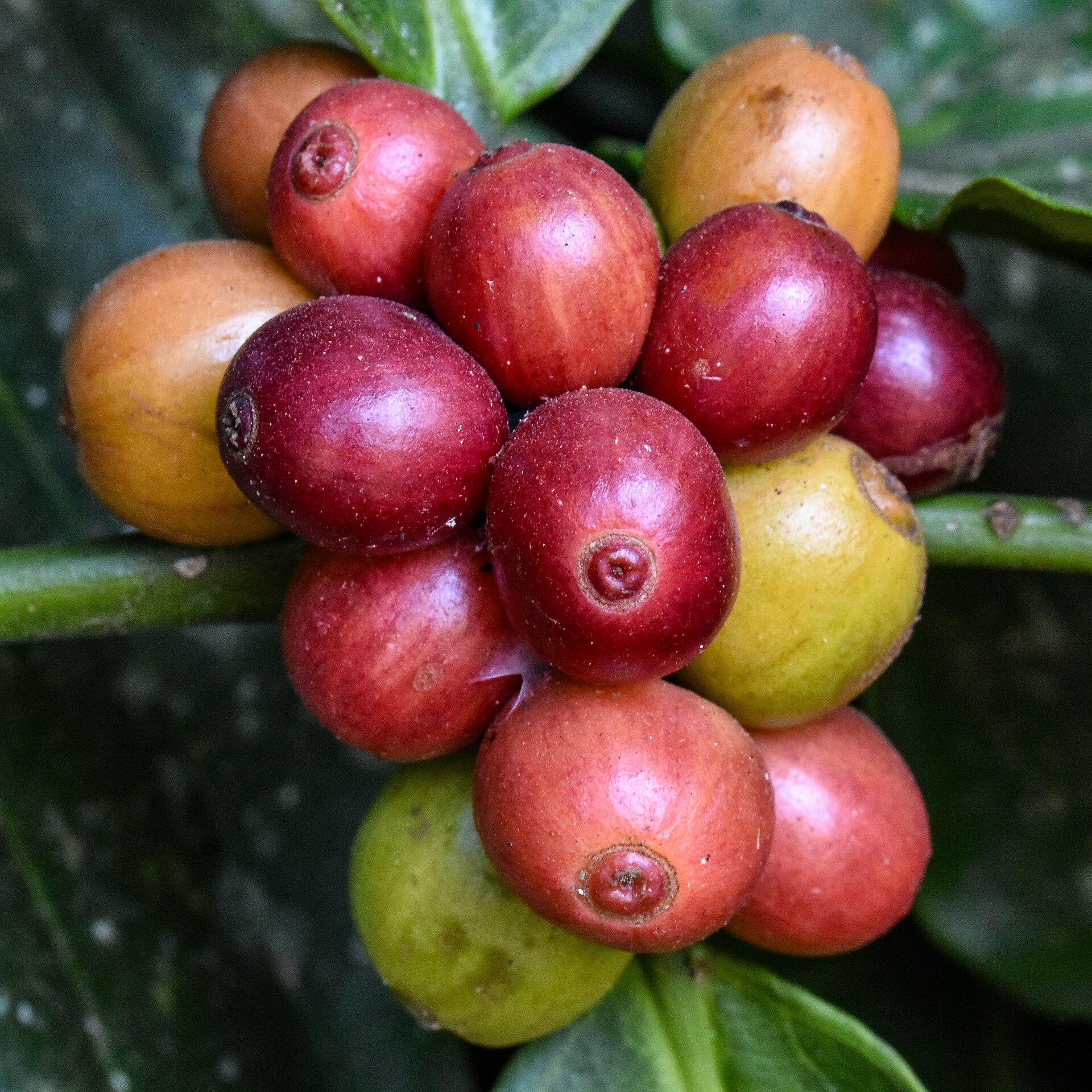
Cool nights slow the cherries down. Slowed cherries get sweeter. The result is a cup that pulls toward stone fruit, jasmine, gentle cocoa — sometimes black tea on the finish. K’Ho Coffee on Lang Biang Mountain has been cupping 84-89 in independent tests, firmly inside specialty range. Locals call this cà phê arabica Đà Lạt, almost apologetically — like a warning it will not taste like the coffee you came to Vietnam for. If da lat coffee farm tour is on your list, the workshop pairs well with this stop.
nn
That is the point.
nn
Three Da Lat coffee farm tours worth the morning
nn
You can do all three in two and a half days if you base in Da Lat town with a scooter. Pricing below was current at our early-2026 visit — confirm with the farm before you go. Tipping K’Ho families directly is appreciated. Many guests planning da lat coffee farm tour mention this in their booking notes.
nn
1. Cau Dat plateau — the 1920s legacy farm
nn
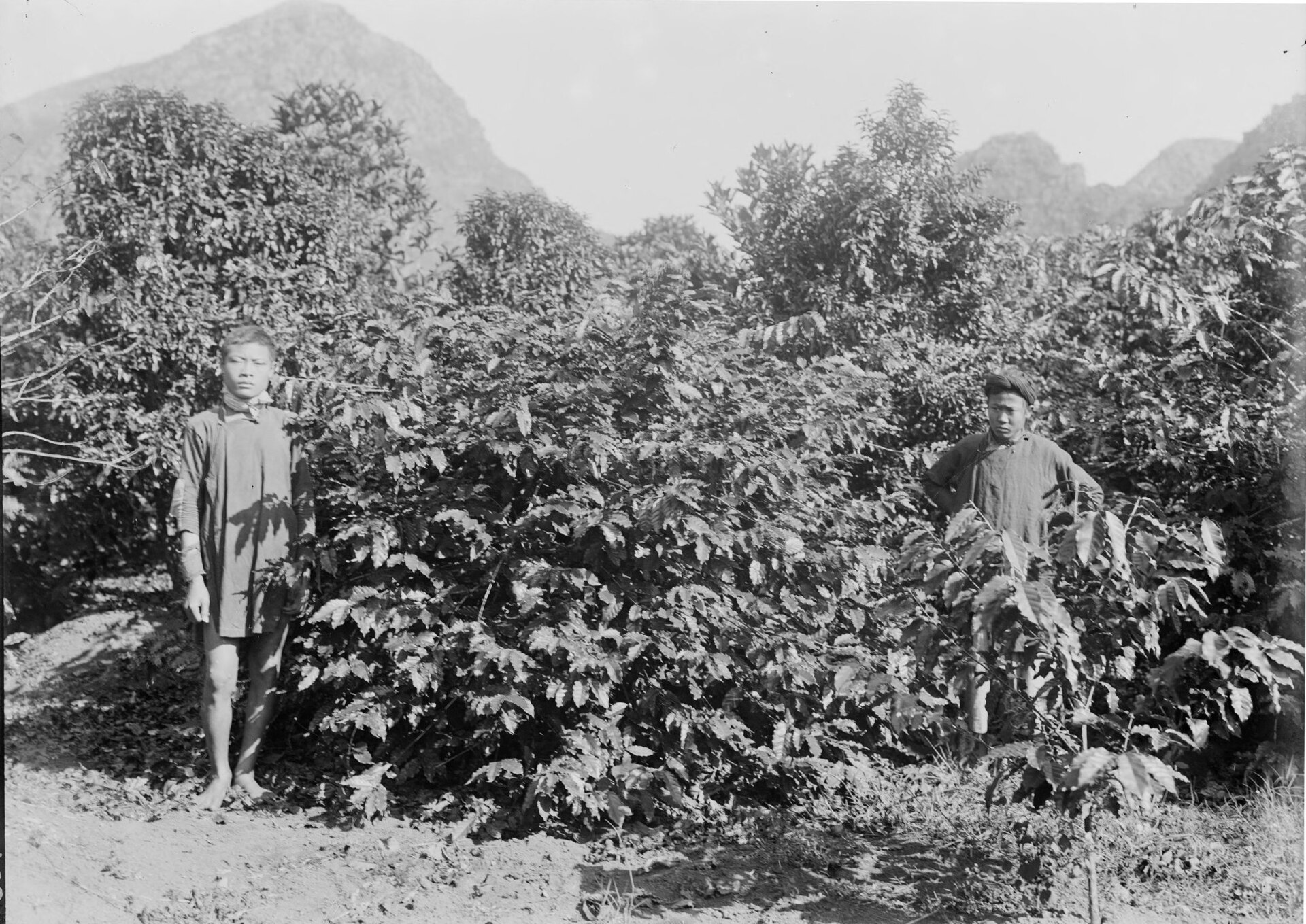
Cầu Đất sits about 25 km southeast of Da Lat town, up a winding road that thins your air as you climb. The French planted coffee and tea here in the 1920s — the country’s oldest tea factory, built in 1927, still stands at the edge of the hills, half-restored, half-haunted. We hear this often from travelers exploring da lat coffee farm tour.
nn
Walk the rows. There is no formal admission gate at most of Cau Dat — you park and wander. Smaller plots charge a token fee (around 90,000 VND in early 2026, sometimes including vegetable picking and a golf-cart to a tea-tasting hut). Visit late afternoon. The light goes gold and you understand why French planters built holiday homes here a century ago. For first-timers researching da lat coffee farm tour online, the practical details matter.
nn
Pair Cau Dat with a roastery stop in town. La Viet Coffee does a clean pour-over from Cau Dat lots and will explain processing — washed, honey, natural — without making you feel like a tourist. Of all the angles in da lat coffee farm tour, this is one we hear about often.
nn
2. K’Ho Coffee — Lang Biang’s hill-tribe cooperative
nn
This is the one most travelers have never heard of, and it is the one that stays with you longest. Recent guests interested in da lat coffee farm tour have asked about this exact spot.
nn
The K’Ho are an ethnic minority who have lived on Lang Biang Mountain for centuries. In 1912 the French planted coffee here and pressed K’Ho farmers into tending it. Some of those original arabica seeds survived. In 2012, fourth-generation K’Ho farmer Rolan Co Lieng and her husband Joshua, an American agricultural engineer, founded the K’Ho Coffee cooperative. Today it supports around fifty K’Ho families using organic, agroforestry-based farming. Our notes on da lat coffee farm tour keep coming back to scenes like this.
nn
The farm tour takes you up the mountain to see shade-grown plots, watch hand-sorting on the patio, and cup the season’s lots in their roastery-café. If you only do one Da Lat coffee farm tour, do this one — not because the cup is dramatically better than Cau Dat (it is excellent), but because the story matters and the model deserves your money. Book via khocoffee.com; walk-ins to the town café are usually fine.
nn
3. Son Pacamara — ten minutes from town, low effort
nn
If you only have one slow morning, Son Pacamara Coffee Farm is the easy answer. Ten minutes from central Da Lat, planted with Pacamara — a hybrid arabica varietal known for large beans and floral, almost perfumed cup notes. A half-day “Specialty Arabica Coffee Harvest” experience: pick cherries with farm staff, share a banh mi snack, hand-roast your own batch over open heat. Anyone planning da lat coffee farm tour will likely cross paths with this corner.
nn
It is more activity than education. But for travelers who tried to read about coffee processing in a guidebook and gave up, this is the version that finally makes it click.
nn
A word about weasel coffee — what is real, what is theatre: A Da Lat Coffee Farm Tour Guide
nn
You will be offered cà phê chồn — weasel coffee — at almost every Da Lat tourist stop. The story is striking: an Asian palm civet (not actually a weasel) eats only the ripest cherries, the beans ferment in the digestive tract and emerge as a smoother, less bitter cup. Wild civets foraging from the forest floor produce something genuinely rare.
nn
Here is the harder part. Most “civet coffee” sold to tourists is not wild-collected. Civets are caged and force-fed cherries — widely criticised on animal-welfare grounds. Exceptions exist: small Da Lat farms with semi-wild enclosures who are transparent about methods, and Trung Nguyen’s “Legendee” line which simulates the digestive fermentation in vats with no animal involvement.
nn
nn
If the price seems impossibly low for wild-collected coffee — it usually is. Ask the farm directly: are the civets caged or free-roaming? A farm that handles the question well is usually the one to trust.
nn
n
“My daughter took a similar class in Singapore but this is at a different level. We learnt about sensory moods and smells. We will definitely come back!”
n — Michael, online booking platform ★5n
nn
Arabica vs robusta — a tasting you can do in one afternoon
nn
A small ritual. After your farm visit, sit down at a third-wave café on Phan Đình Phùng street that serves both arabica and robusta side by side. Order a small cup of each. Smell first. Sip second. Wait sixty seconds. Sip again.
nn
The robusta hits hard up front — bittersweet, dark, the body of a Vietnamese phin. The arabica from Cau Dat or Lang Biang opens slower. Acidity, sometimes a fruit note that surprises you, a finish that disappears faster. Neither is better. Different bridges to different memories.
nn
If you have always thought “I do not really like Vietnamese coffee,” this is the afternoon to find out you do — you just had not met the highland half of it yet.
nn
A coffee bean is also a base note
nn
Here is a thing workshop instructors know that coffee farmers also know, in different vocabularies. A roasted coffee bean and a perfume base note do the same job. They sit at the bottom. They linger after the opening fades. They are what your nose still finds twenty minutes later.
nn
Walk through a Da Lat roastery on a working morning. Sweetness on top — caramel, hazelnut, a floral lift if the lot is washed. Underneath: cocoa, tobacco, woody resin from the pine forest. The very last layer: smoke. Earth. Something almost balsamic. That bottom layer is base-note territory in a workshop instructor’s language — the part that stays on paper twelve hours later.
nn
n
“I loved my fragrance making experience. I have a beautiful souvenir to take home and every time I smell it, I will remember Saigon. Thanh was an excellent teacher”
n — herbaljo, TripAdvisor ★5n
nn
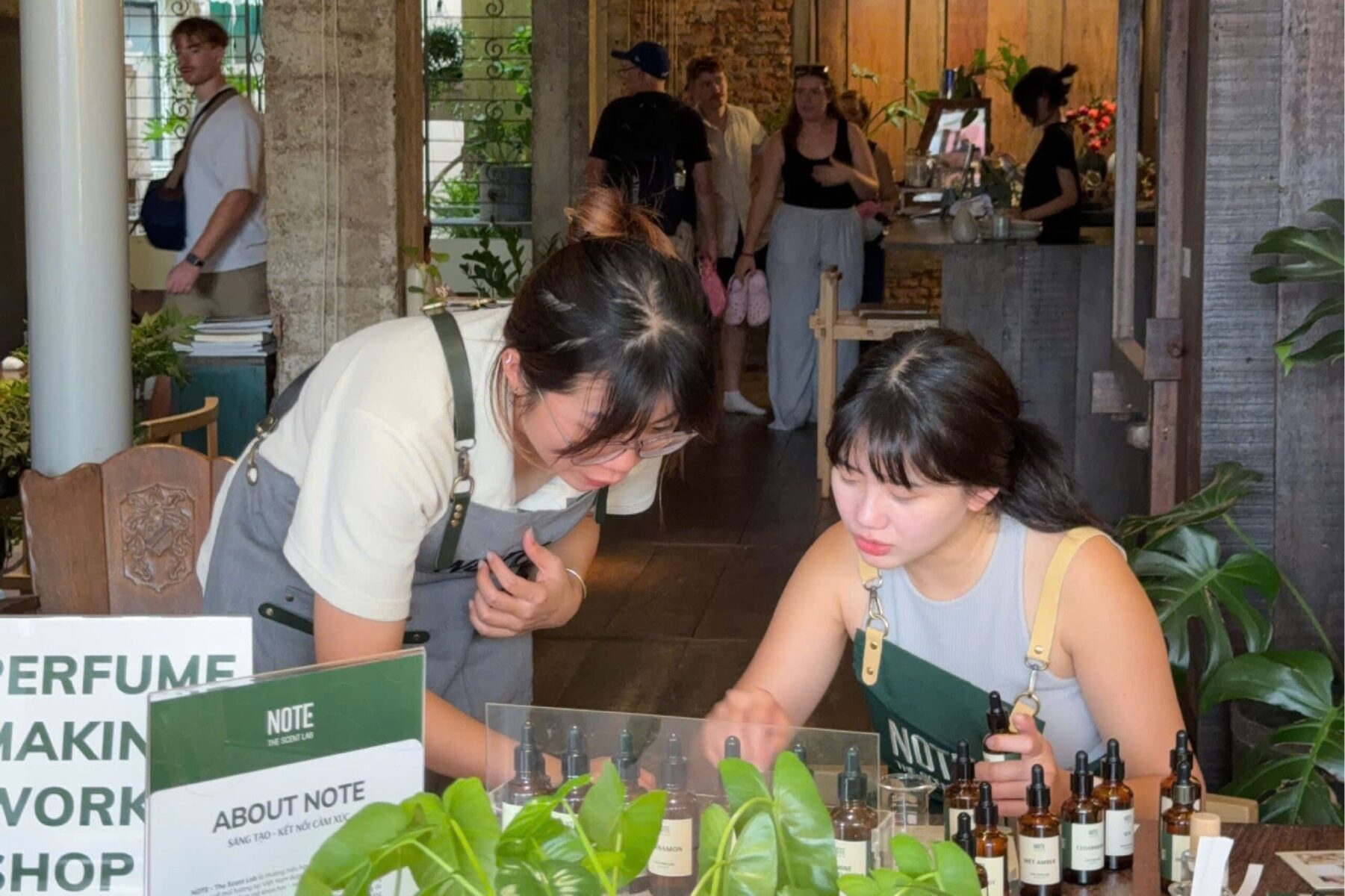
This is what the workshop instructors at NOTE quietly do. They take what your nose has collected over two weeks — the highland coffee morning, sandalwood incense from a temple, basil at a market stall, rain on hot tarmac — and help you build a bottle out of it. The coffee bean shows up as a real ingredient: a roasted absolute, layered against vanilla, tobacco, or vetiver.
nn
If that sounds like your kind of afternoon, the studio in Saigon is open daily.
nn
n n Book Your Perfume Workshop →n n
nn
When to go, how to get there, what to pack
nn
Two seasons matter. Dry season runs roughly November through March — clear skies, cold mornings (10-15°C), perfect light for farm walks. Harvest typically runs late October through January, so November-December is best for cherries on the trees. March-April brings the jasmine-like coffee blossom — its own reason to come.
nn
From Saigon: a 50-minute flight to Lien Khuong Airport (DLI), then a 30-minute taxi into town. Sleeper buses run overnight in 7-8 hours at a third of the price — schedules change, so check close to travel date. From Hanoi, fly via Saigon.
nn
Pack a light jacket — Da Lat at dawn surprises tropical travelers. Closed shoes for farm rows. Cash for small purchases (smaller plots rarely take card). And a notebook, if you are the kind of person who writes scents down.
nn
nn
Bottling the highland morning — your last day in Saigon
nn
Most travelers fly out of Saigon, not Da Lat — which means there is usually a final day in District 1 between the highlands and the airport. A slow morning, a coffee on Nguyen Hue, three open hours.
nn
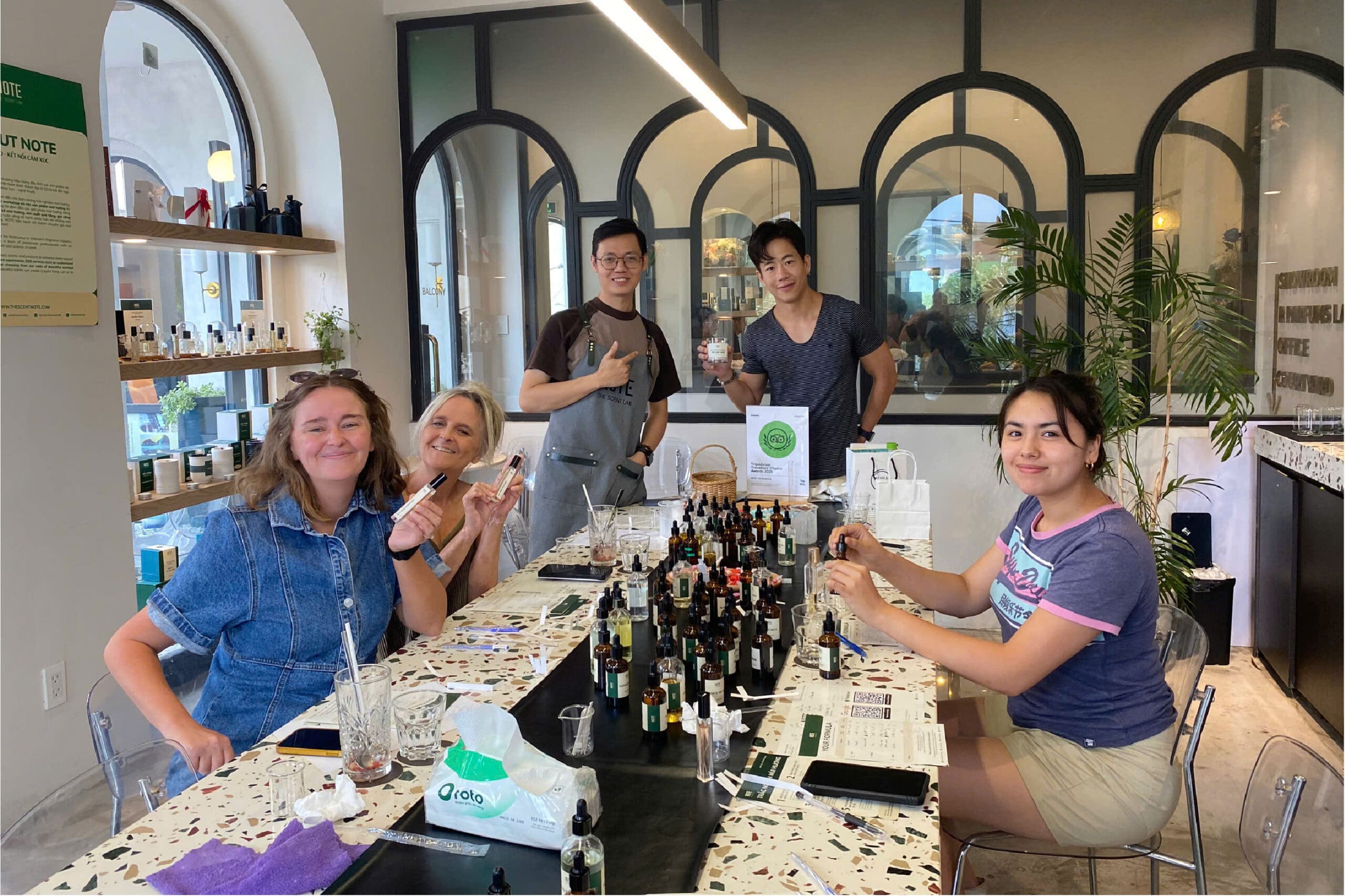
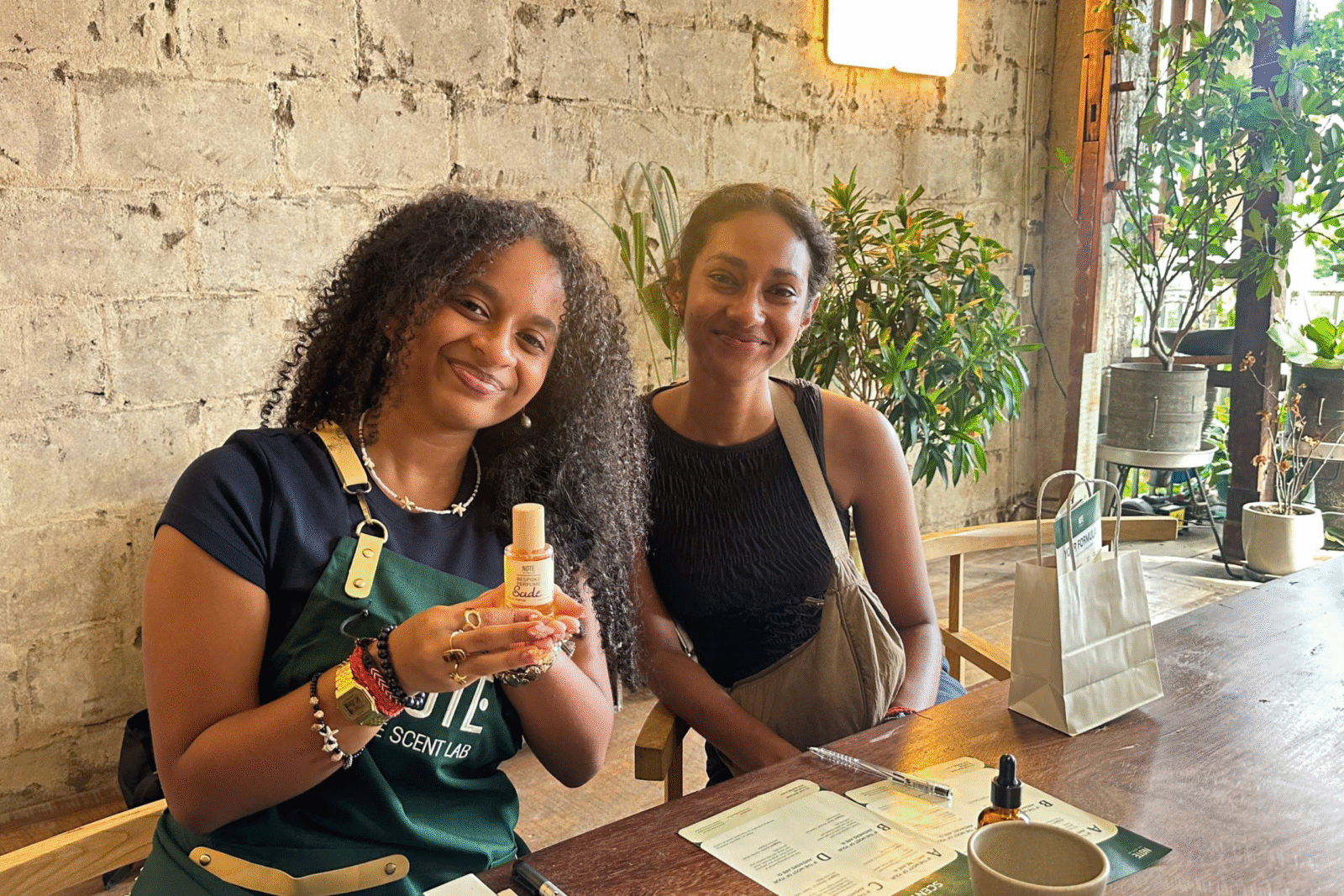
This is where the workshop fits. 120 minutes, hands-on, sitting at a wooden bench with 30+ IFRA-compliant ingredients. You pick fifteen, narrow to seven, blend three. You leave with a 10-50ml bottle (from $24 / around 550,000 VND) sealed in a gift box with a leak-protection zip pouch for the flight, plus a formula card. The bottle is the souvenir.
nn
n
“The workshop is very fun and enjoyable. We got to take home a little souvenir that reminds us Vietnam! The instructor is very friendly and answers our questions”
n — online booking platform User, online booking platform ★5n
nn
The 42 Nguyen Hue location sits in the Cafe Apartment building, Floor 3 (Vietnamese “Lầu 2” — 2 levels up from the ground floor). The Thao Dien location at 34 Nguyen Duy Hieu is quieter and greener. Both are walkable from most District 1 hotels. Workshops are conducted in English. Vietnamese also available for local guests.
nn
For more on that last Saigon day: our last-day Ho Chi Minh City guide. For the highlands beyond coffee — the Da Lat hidden gems guide covers pine forests, the Mimosa pass, and villages around Lang Biang. And our Da Lat pine forest and mimosa scent essay is the reason this article ends the way it does.
nn
n n Reserve Your Workshop Slot →n n
nn
Looking for a meaningful keepsake beyond the workshop bottle? Browse NOTE’s handcrafted fragrance collection at thescentnote.biz — many of the same Vietnamese botanicals you will have just smelled, in ready-to-wear formulations.
nn
Frequently Asked Questions
nn
What is the best Da Lat coffee farm tour for first-time visitors?
n
For first-time visitors, K’Ho Coffee on Lang Biang Mountain is the most rewarding because it combines a beautiful highland setting with a meaningful sustainability story — fifty K’Ho families, organic and agroforestry methods, direct cupping of the season’s lots. Cau Dat plateau is the easier, more historic option, and Son Pacamara is the lowest-effort half-day pick if you are short on time.
nn
How much does a Da Lat coffee farm tour typically cost?
n
Pricing varies widely by operator and inclusions. Half-day specialty arabica harvest experiences typically run between roughly 700,000 and 1,500,000 VND per person in early 2026, often including transport, snacks, and a small bag of beans to take home. Self-guided visits to Cau Dat can be done for around 90,000 VND admission. Always confirm pricing directly with the farm or operator before booking.
nn
Is weasel coffee in Da Lat ethical?
n
It depends on the source. Wild-collected civet coffee — where the civets roam free in the forest — is rare and ethically defensible but expensive. Cage-fed civet coffee, which dominates the tourist market, is widely criticised on animal-welfare grounds. Some Da Lat farms operate semi-wild enclosures and are transparent about their methods; ask directly whether the civets are caged or free-roaming before buying. Trung Nguyen’s “Legendee” line uses no animals at all.
nn
When is the best time of year to visit Da Lat for coffee?
n
Late October through January is harvest season — the most active and visually striking time on the farms, with red cherries on the trees and pickers in the rows. November and December are also dry-season months, ideal for farm walks. March-April brings the brief but extraordinary coffee blossom (jasmine-like white flowers covering the trees). Avoid the peak rainy weeks of June-August unless you do not mind muddy paths.
nn
Can I combine a Da Lat coffee tour with a perfume workshop in Saigon?
n
Yes — and many travelers do. The natural rhythm is: spend two to three days in Da Lat for the highlands and the coffee farms, then fly back to Saigon (50-minute flight to Tan Son Nhat). On your last day in Saigon, a 120-minute perfume workshop at NOTE – The Scent Lab (42 Nguyen Hue or Thao Dien) lets you bottle the highland aromatics — coffee, pine, cedarwood — into a custom scent to take home. Workshops start from $24 / around 550,000 VND.
nn
What does Da Lat arabica taste like compared to robusta?
n
Da Lat arabica grown at 1,500m elevation typically shows mild acidity, gentle bitterness, and notes of stone fruit, jasmine, cocoa, or black tea — softer and more aromatic than Vietnam’s lowland robusta, which is bolder, darker, and more bitter. K’Ho Coffee lots regularly cup in the 84-89 specialty range.
nn
Find NOTE – The Scent Lab
nn
- n
- 42 Nguyễn Huệ — Floor 3 (Vietnamese “Lầu 2” — 2 levels up from the ground floor), Cafe Apartment building, District 1, HCMC — Get directions → · TripAdvisor
- 34 Nguyễn Duy Hiệu — Thảo Điền, Thủ Đức, HCMC — Get directions → · TripAdvisor
n
n
n
How to find us:
n
- n
- ? 42 Nguyễn Huệ — Watch direction video on TikTok →
- ? 34 Nguyễn Duy Hiệu — Watch direction video on YouTube →
n
n
n
n
Book your workshop → · Follow us on Instagram @note.workshop
n
nn
nThis article is provided for general informational and reference purposes only. Information was accurate at the time of writing (May 2026) but may change without notice. Opening hours, prices, transit schedules, harvest timing, and availability for venues outside NOTE – The Scent Lab can change without notice — please verify with official websites, TripAdvisor, or Google Maps before your visit. We do not guarantee accuracy and are not responsible for outcomes based on outdated information.
nn
Some places do not fit in a suitcase. They fit in a bottle.
n
n