
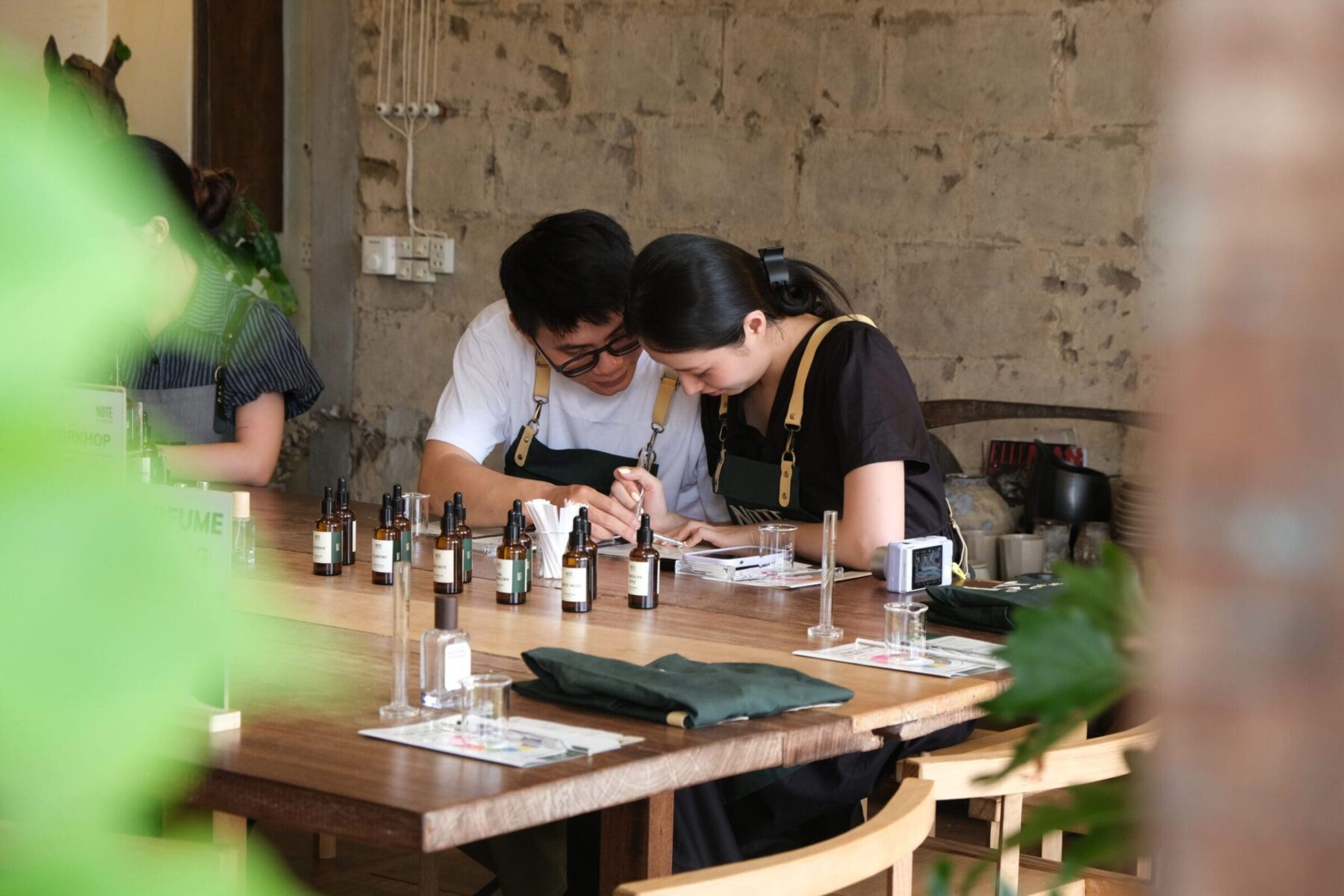
Hue royal cuisine — the imperial cooking tradition of the Nguyễn dynasty (1802-1945) — is built on lemongrass, galangal, and Huế shrimp paste, a fragrant trinity that turned 50-dish royal banquets into edible scent compositions. NOTE – The Scent Lab is a perfume workshop in Saigon, Vietnam, where travellers compose a scent by hand that captures what they meet across Vietnam, including the citadel-smoke memory of Hue.
The morning Đông Ba market opens before light. Lemongrass stalks bruise underfoot. Shrimp paste — the legendary mắm ruốc Huế — drifts from clay jars. Charcoal smoke curls from the soup vendors warming their broth. Somewhere in that haze, you smell it all at once: the citadel, the river, the kitchen of a former empire still very much alive. For travelers researching hue royal cuisine, this guide should be a starting point — verify before booking.
A note before you read: This guide is based on our team’s research and visits as of May 2026. Prices, hours, transit schedules, and venue availability change — please treat the specifics as a starting point, not a guarantee, and verify with official sources before booking. The only thing we can vouch for absolutely is the perfume workshop at NOTE.
Hue Royal Cuisine: An Edible Scent Composition
Before we walk through five dishes, the bigger picture. Hue served as Vietnam’s imperial capital for 143 years. During that span, two royal departments employed close to 400 staff to feed the court. An emperor’s banquet would feature no fewer than 50 dishes. Doctors supervised every preparation. Each plate was thought of as both food and medicine, balancing five tastes — spicy, sour, salty, sweet, bitter — to mirror the harmony Confucian scholars believed kept the body and the cosmos in tune. This is part of our broader hue royal cuisine coverage on workshop.thescentnote.com.
That last detail matters for our purposes. The court did not separate flavour from fragrance. Lemongrass was a medicine as much as a flavour. Galangal warmed the stomach. Cardamom calmed nerves. The same aromatics that perfumed the king’s broth also perfumed his apothecary — and the Imperial Medicine Institute (Thái Y Viện) sat inside the citadel walls, sharing herb gardens with the palace kitchens. If hue royal cuisine is on your list, the workshop pairs well with this stop.
So when we say Hue royal cuisine is closer to perfumery than cookery, we mean it almost literally. A perfumer reads top, heart, and base notes. A Hue chef reads the same arc — the bright lift of lime leaf at the start, the savoury heart of pork bone and shrimp paste, the long base of charred lemongrass and galangal. The technique travelled out of the palace and into the alleys. It is what makes Huế food smell like nowhere else in Vietnam.
1. Bún Bò Huế — The Imperial Scent of Lemongrass and Shrimp Paste
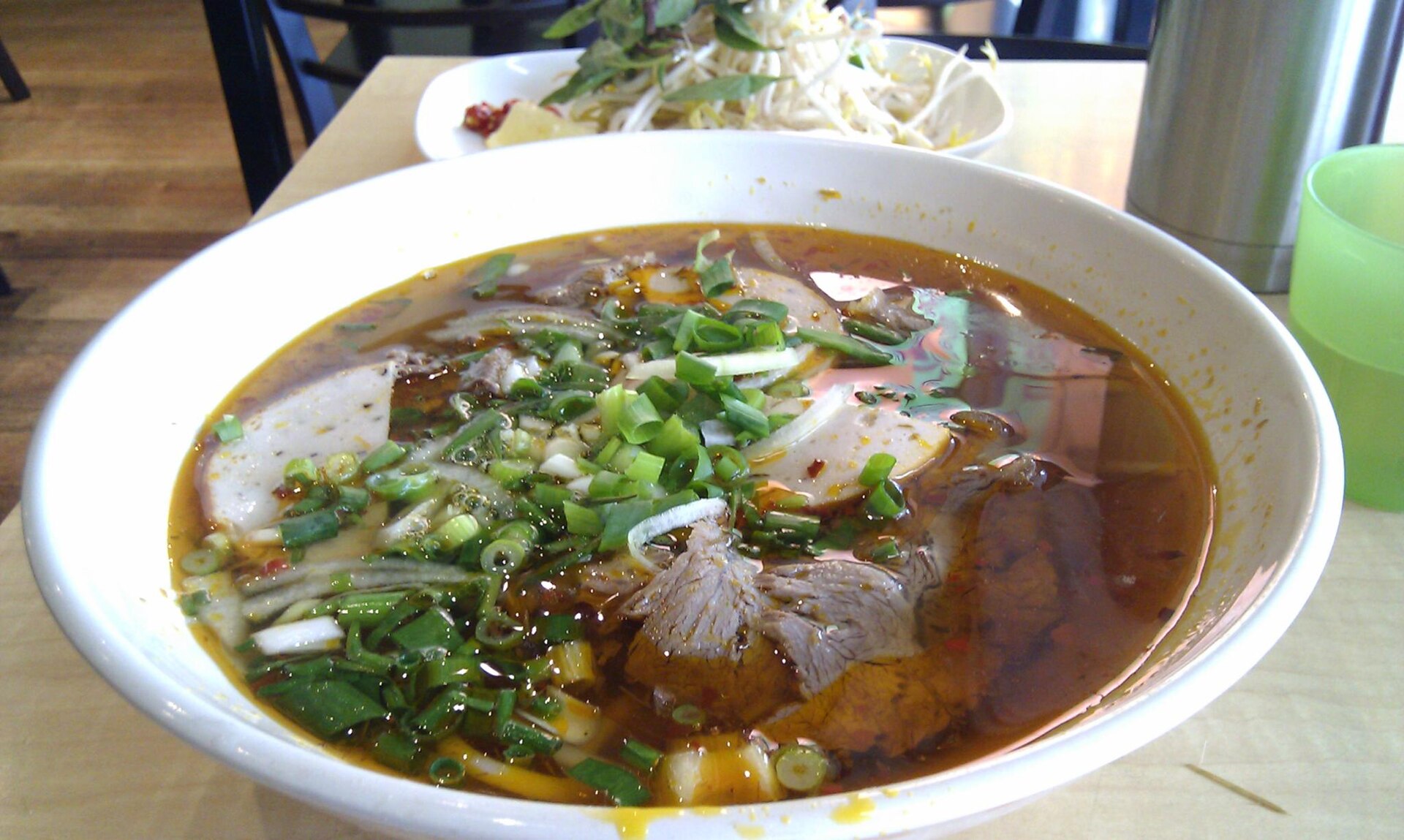
Start here. If you only learn one Hue royal cuisine dish, learn this one — because it carries the dynasty’s signature accord on its surface.
The legend, often repeated in Hue, is that a court chef invented the dish for an emperor with a delicate stomach. The result outgrew the palace and is now a national obsession. But authenticity remains stubbornly local. Real bún bò Huế begins with a stockpot of beef bones and pork hock simmered for three to four hours with stalks of lemongrass tied into knots. Knots, not slices — because the chef wants the oils to release slowly, not in a single rush. Many guests planning hue royal cuisine mention this in their booking notes.
Then the shrimp paste. Not any shrimp paste. Mắm ruốc Huế, fermented in clay jars along the Perfume River, has a deeper, slightly smoky funk that no substitute reproduces. Cooks dissolve a spoonful in water, let it settle for an hour, decant the clear liquid into the broth, and discard the sediment. That single step — the decanting — is what separates a tourist bowl from a grandmother’s bowl. We hear this often from travelers exploring hue royal cuisine.
Where to taste it (and what to look for)
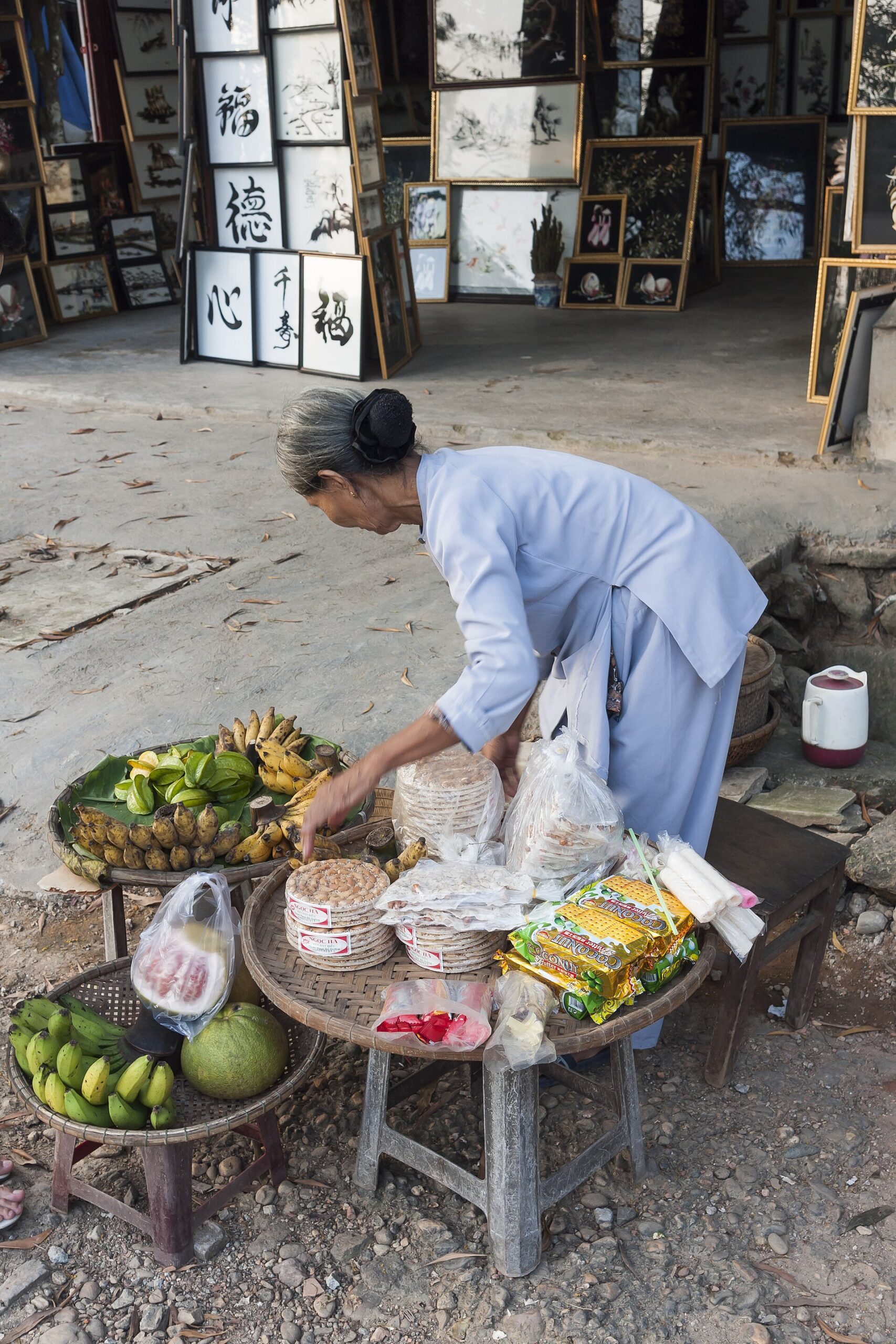
Đông Ba market’s morning stalls — open from around 5 AM, closing around 7 PM, with food courts firing up again 7-8 PM — are where locals eat before work. A bowl typically costs 30,000-50,000 VND in early 2026. The plastic-stool places, with a single grandmother ladling and a single grandson chopping scallions, are usually the right ones. Look for the colour of the broth: it should be deep amber, almost rust, never bright red. Bright red is chilli oil compensating for thin stock. For first-timers researching hue royal cuisine online, the practical details matter.
“Finally understood how notes works. Came with our best friends for our 20th wedding anniversary.”
— Aleck Hann, TripAdvisor ★5
Aleck’s review came after a NOTE workshop in Saigon, but the comment fits Hue too. The lemongrass-and-shrimp-paste accord works exactly the way perfume works: a top note (citrus from lemongrass), a heart (savoury beef and shrimp), a long base (charred bone and chilli). Once you smell that arc consciously, you can never unsmell it. Of all the angles in hue royal cuisine, this is one we hear about often.
2. Cơm Hến — The River-Stone Scent of Hue’s Royal Cuisine
Cross the Perfume River to Cồn Hến, a small islet under a single bridge. Tiny basket clams, called hến, thrive in the brackish water here. They are the size of a fingernail. They are the soul of Hue’s most beloved street food — and one that, despite its humble origins, was eaten in the palace too. Recent guests interested in hue royal cuisine have asked about this exact spot.
Cơm hến began as a recovery meal. Locals would simmer the previous day’s leftover rice with broth from boiled clams, then top it with whatever was on hand: fried pork skin, peanuts, sesame, basil, banana flower, star fruit, fried shallots, chilli, and — of course — a spoon of Huế shrimp paste. The result is the messiest scent picture in Vietnamese food: briny, sweet, sour, smoky, herbal. It contradicts itself in every bite. Our notes on hue royal cuisine keep coming back to scenes like this.
What makes it royal? Records from the Nguyễn court describe nearly identical cold-rice preparations served to concubines as “morning rebalancing” dishes after the rich night banquets. Same rice. Same clams. Same aromatic decoration. The difference was that the palace version was arranged on a lacquered tray; the islet version arrives in a chipped bowl. The taste is reportedly the same. Anyone planning hue royal cuisine will likely cross paths with this corner.
A scent lesson from a humble bowl
Pay attention to the order in which the smells arrive. First, the sharp brine of the clam broth. Then, slower, the toasted sesame and roasted peanut. Finally, almost a minute later, the deep herbal undertone of crushed basil and rau răm (Vietnamese coriander). Three layers, three speeds. A perfumer would call that a complete fragrance. A Huế grandmother would just call it lunch.
Vendors operate on almost every street near Cồn Hến. A bowl typically costs around 20,000-35,000 VND in early 2026. Mornings are best — most shops sell out by 11 AM.
3. Nem Lụi — Lemongrass Skewers from the Royal Court
Of every dish in Hue royal cuisine, this is the one a perfumer would invent. Pork is minced with shallots, garlic, fish sauce, and crushed lemongrass, then wrapped around a fresh stalk of lemongrass and grilled over charcoal. The stalk does double duty: it holds the meat and slow-releases citrus oil into the centre as the surface chars.
The first time you eat one, the lemongrass arrives in stages. There is the smoky, charred scent from the outside as you lift it. There is the meaty, fish-sauce-glazed middle. Then, once you bite through, a sudden wet burst of fresh lemongrass juice — bright, almost soapy, completely alive. Nem lụi is a perfume sample taken with chopsticks.
You build each parcel yourself. A square of rice paper. Lettuce, perilla, mint, banana flower, slices of green star fruit, slices of green banana. The skewer slides in. A drizzle of nước lèo — a peanut-and-pork-liver dipping sauce that, despite its earthy ingredients, tastes nothing like satay sauce in Bangkok or Jakarta. It is funkier. Older. The recipe predates the modern peanut.
The lemongrass technique that travelled
That trick of wrapping meat around an aromatic stalk has become a Huế signature. You will see it again in chả tôm (shrimp paste on sugarcane) and in bò lá lốt (beef in betel leaf). The principle is the same: a perfume bottle is a vessel that surrenders its scent slowly. So is a piece of grilled lemongrass.
“This was such a fun and educational experience. Thanks to Jenny for guiding us through.”
— Laura, TripAdvisor ★5
4. Bánh Khoái — The Crispy Scent of Imperial Pancakes
If French toast had a cousin born in 1820 inside a Vietnamese palace, it would be bánh khoái. The name means “happy pancake,” and Hue royal cuisine claims it as a court invention from the early Nguyễn era — a smaller, thicker, crisper version of the southern bánh xèo, sized to fit between a ruler’s chopsticks rather than be folded over by hand.
The batter is rice flour, turmeric, and coconut milk, pan-fried in pork fat until the edges curl up like brittle gold leaf. Inside: shrimp, pork, bean sprouts, sometimes a single quail egg. You eat it wrapped in mustard greens and herbs, dipped in a thick fermented soy-and-sesame sauce called tương Huế that, frankly, is the most underrated condiment in Vietnam.
What makes it imperial? The thickness. The southern street version stretches and folds like a crepe. The Hue royal cuisine version stays small, dense, and crackling — because the court chefs wanted a dish that held its texture from kitchen to dining hall, even after the long carrying corridor between the palace pantry and the throne room. Architecture shaping recipe. The same way a mosque shapes a call to prayer.
The smell of charred turmeric
Walk past a bánh khoái stall around 6 PM and you will pick up the signature note immediately: charred turmeric over hot pork fat. It is one of those scents your nose has no Western reference for. Turmeric in a curry is mellow, almost dusty. Turmeric in pork fat at frying temperature is sharp, bitter, and faintly metallic — like sun-baked saffron mixed with iron filings. Once you have smelled it, you can identify a Huế kitchen from a block away.
Bánh khoái stalls cluster around the southern bank of the Perfume River, especially near the Trường Tiền Bridge. Plates typically run 50,000-80,000 VND in early 2026.
5. Trà Cung Đình — Royal Herbal Tea, the Apothecary in a Cup
End the way the court did. With tea — but not green tea, and not the milky imports. Trà cung đình, royal herbal tea, is a blend of up to sixteen ingredients that doubled as evening medicine for the Nguyễn emperors. The recipe came from the Imperial Medicine Institute. The Institute, remember, sat inside the citadel and shared its herb beds with the palace kitchen.
What is in it? Most modern blends include lotus seed, lotus stamen, jujube, Chinese liquorice, chrysanthemum, ginseng, jasmine, monk fruit, cinnamon bark, sweet basil seed, atisô (artichoke flower), and four to six other roots that vary by maker. The result is sweet without sugar, slightly bitter, faintly resinous, and astonishingly complex. It is a perfumer’s tea. Every sip is layered.
The 14th-century physician Tuệ Tĩnh — revered as the founder of Vietnamese traditional medicine — built the philosophical foundation that the Hue court would later expand. His principle was “Nam dược trị Nam nhân” — Vietnamese medicine for Vietnamese people. Royal tea was the most elegant expression of that idea: a daily preventive perfume, taken inwardly.
Where to drink it now
Several quiet teahouses in Huế’s old quarter still serve trà cung đình by the small clay pot. Look for shops that brew leaf-by-leaf rather than pouring from pre-mixed sachets. A pot for two typically costs 60,000-100,000 VND in early 2026. Sit. Do not rush. The tea will reveal itself slowly, the way a fragrance does on warm skin.
“It all became good and understandable and the staff were very helpful. A nice experience.”
— Christina G, TripAdvisor ★5
From Hue Royal Cuisine to a Bottle You Can Carry Home
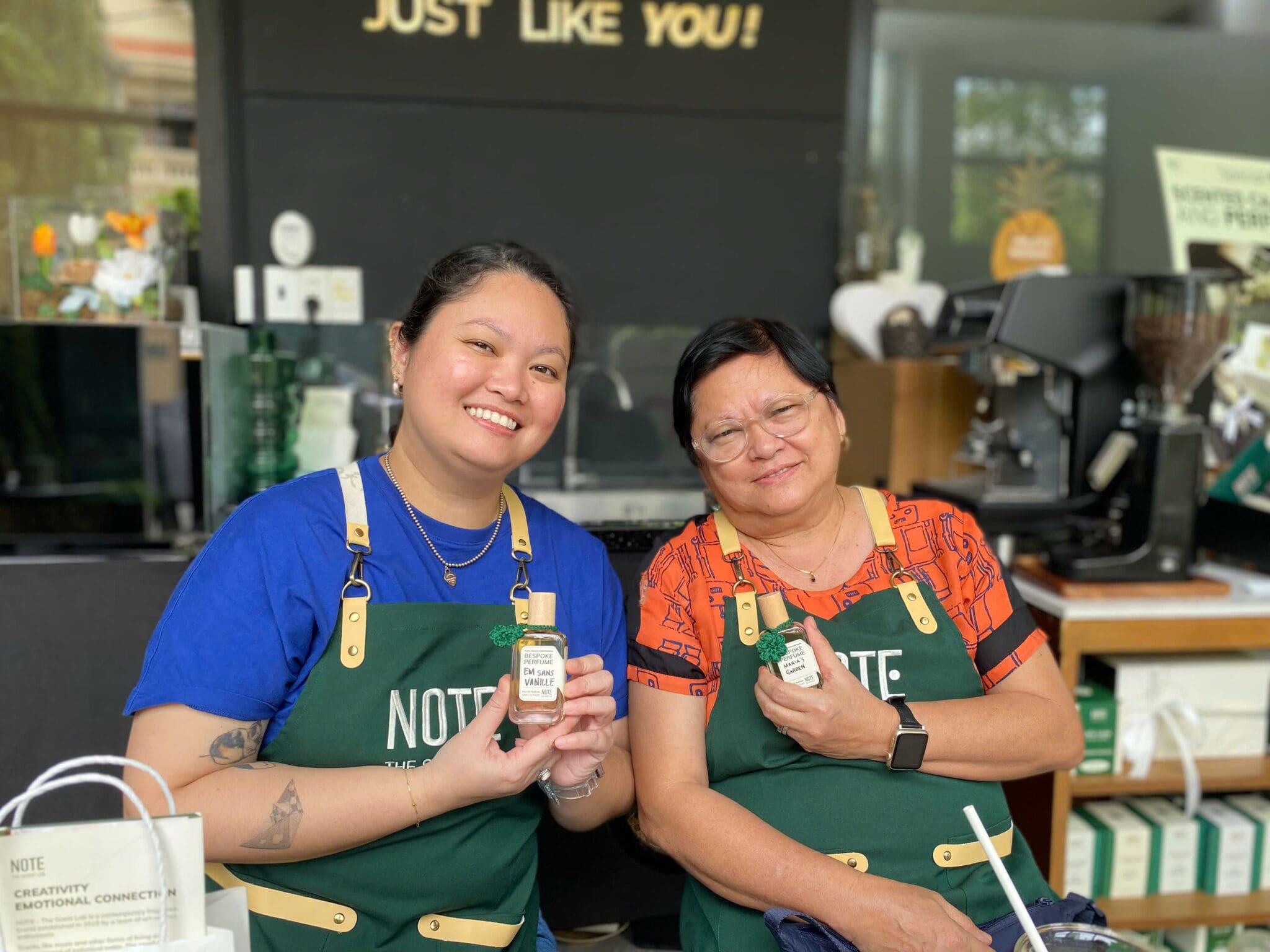
You cannot pack a bowl of bún bò Huế in your suitcase. You cannot bring back the Đông Ba morning, the river light, the way the lemongrass smoke wraps the bridge at 6 AM. But you can bring back the scent of it. That is what we do at NOTE.
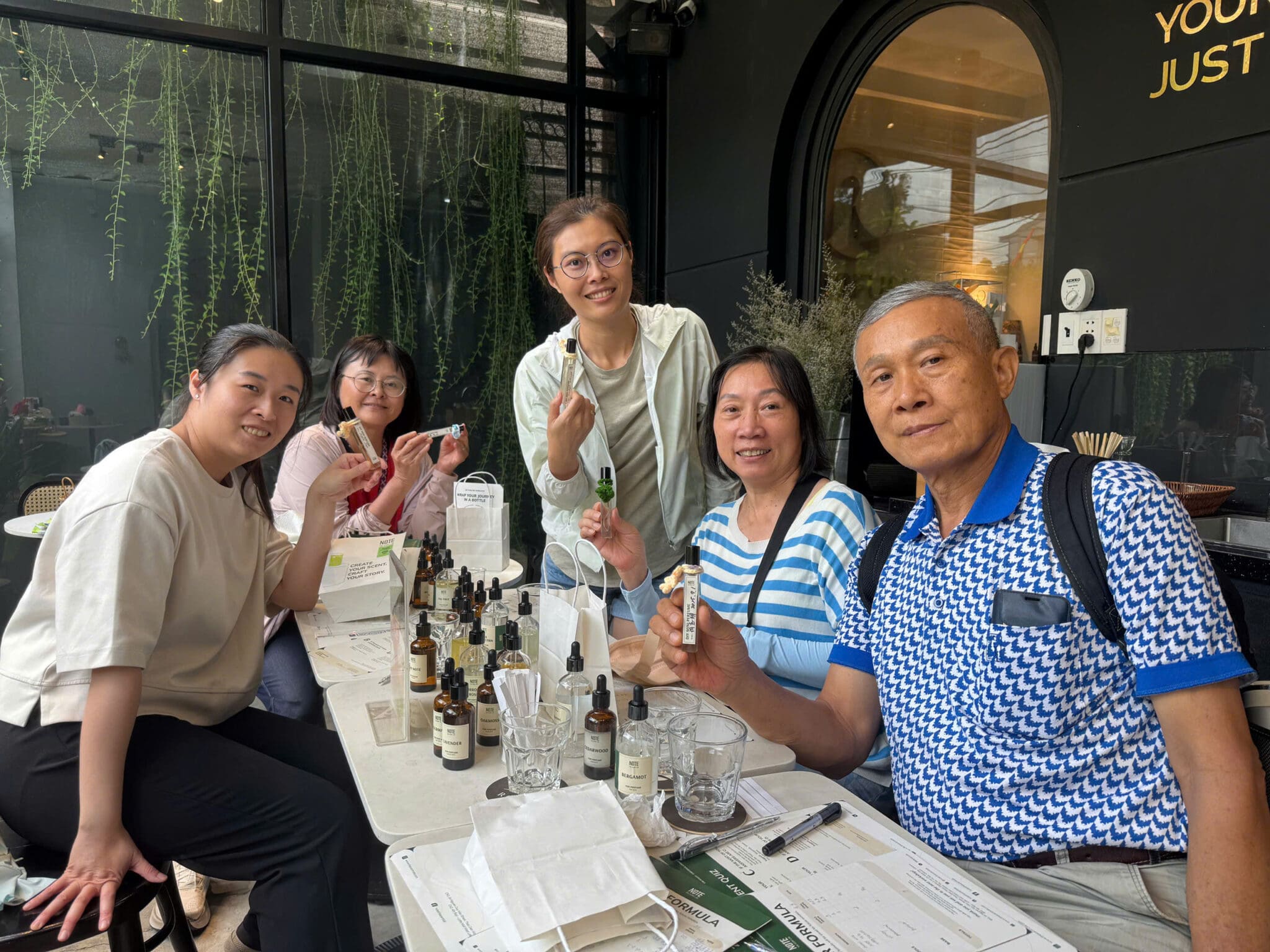
Our perfume workshop in Saigon offers more than 30 fragrance notes, among them florals, warm spice and woods that echo the aromatic side of Hue royal cuisine. Jasmine and osmanthus. Cinnamon and pink peppercorn. Sandalwood, cedarwood and amber. The same layering logic that builds a Huế broth can, with an instructor’s hand, become a perfume that sits on skin instead of a tongue.
Most of our travelling guests come to us at the end of their trip. They have eaten the bún bò Huế. They have ridden the Hải Vân Pass train. They have stood inside the citadel at dawn. Then they sit down in our studio in Saigon and try to bottle what they remember. Some leave with a bright citrus and pink peppercorn accord (yes, really, and yes, it works). Some leave with a warm blend of cinnamon and sandalwood. Some leave with a single note of jasmine that, every time they spritz it back home in Sydney or Stockholm, returns them to a tile-roofed alley they can no longer find on a map.
Booking lead time matters. The international travel average is around 83 days ahead of the trip — and our weekend slots in Saigon often book out 2-3 weeks in advance during peak season (October-April). If you are still in the planning phase, our Hue hidden gems guide covers the wider city beyond the Imperial Citadel, and our Vietnamese botanicals essay goes deeper on the wellness traditions behind ingredients like lotus and agarwood.
A Last Note: Why Hue Royal Cuisine Smells Like Memory
Smell is the only sense wired directly to the limbic system. The brain skips logic and goes to memory. That is why one whiff of charred lemongrass — twenty years later, in a kitchen that is not yours — can return you to the morning you crossed the Trường Tiền Bridge for the first time.
The Nguyễn court understood this without modern neuroscience. Their cooks plated dishes for fragrance first and flavour second. Their doctors prescribed aromatic medicine. Their perfumers — yes, the palace had perfumers — blended scent for the empress’s morning toilette using the same lemongrass and cardamom her chef was simmering for breakfast.
Hue royal cuisine is a 200-year argument that food and perfume are the same craft, parted only by which orifice receives them. We agree.
Some places do not fit in a suitcase. They fit in a bottle.
Find NOTE – The Scent Lab
- 42 Nguyễn Huệ, District 1, Saigon (Cafe Apartment, Floor 3 — Vietnamese “Lầu 2,” 2 levels up from the ground floor) — Get directions → · TripAdvisor
- 34 Nguyễn Duy Hiệu, Thảo Điền, Saigon — Get directions →
How to find us:
- 📍 42 Nguyễn Huệ — Watch direction video on TikTok →
- 📍 34 Nguyễn Duy Hiệu — Watch direction video on YouTube →
- 📍 — Watch direction video on YouTube →
Continuing on after Huế? Most travellers loop through Saigon at the end. We wrote a last-day-in-Saigon guide that covers exactly this — what to do (and what to skip) when your flight leaves at midnight and you have one final afternoon to spend.
Frequently Asked Questions About Hue Royal Cuisine
What defines Hue royal cuisine?
Hue royal cuisine refers to the imperial cooking tradition of the Nguyễn dynasty (1802-1945), centred in the former capital of Hue. Key features include the use of lemongrass, galangal, and the city’s signature fermented shrimp paste (mắm ruốc Huế); a banquet structure of up to 50 dishes per meal; the balancing of five tastes (spicy, sour, salty, sweet, bitter) for medicinal as well as flavour purposes; and a strong artistic emphasis on presentation. Roughly 1,700 distinct recipes from the tradition are still preserved today.
What is the most famous dish of Hue royal cuisine?
Bún bò Huế — a spicy lemongrass-and-beef noodle soup — is the most internationally recognised dish. Legend credits it to a court chef who designed it for an emperor with a sensitive stomach. Today it is served everywhere from Đông Ba market stalls to Michelin-listed restaurants overseas. Authentic versions rely on long bone broth, knotted lemongrass, and mắm ruốc Huế shrimp paste decanted (not stirred) into the stock.
Why is lemongrass so important in Hue cooking?
Lemongrass played a dual role in the Nguyễn court — as a flavour and as a medicine. The Imperial Medicine Institute (Thái Y Viện) prescribed lemongrass to support digestion and circulation; the palace kitchen used it to perfume broths, marinate meats, and char-grill skewers. Because the Institute and the kitchen shared herb gardens, the same stalk could end the day in either an apothecary jar or a soup pot. That overlap is why Hue royal cuisine smells more like a herbalist’s shop than any other regional Vietnamese cooking.
Where can I learn about Hue herbal medicine traditions?
The Imperial Medicine Institute (Thái Y Viện) is being restored as a cultural-tourism site, and Tuệ Tĩnh Đường Liên Hoa — a faith-based traditional clinic at Diệu Đế Pagoda — has welcomed visitors since 1982. Several boutique herbal-tea houses around the citadel sell trà cung đình (royal court tea) by the pot. For a deeper dive into Vietnamese aromatic traditions beyond Hue, our Vietnamese botanicals essay covers lotus, agarwood, and the broader wellness lineage.
Can I bottle a Hue scent memory at NOTE workshop in Saigon?
Yes. NOTE – The Scent Lab in Saigon stocks more than 30 fragrance notes, including cinnamon, jasmine, osmanthus, sandalwood and pink peppercorn, the kind of florals, warm spice and woods that echo the aromatic side of Hue royal cuisine. Workshops run 120 minutes with Workshops are conducted in English. Vietnamese also available for local guests. Bottles range from 10ml ($24, around 550,000 VND) to 50ml ($64, around 1,550,000 VND), and every guest leaves with a take-home formula card so the scent can be recreated later.
Is mắm ruốc Huế shrimp paste safe to bring home on a plane?
Sealed jars are typically allowed in checked luggage; check carry-on rules for liquids (under 100ml in your quart bag if not in checked). Always declare food items on customs forms. If you’d rather carry the scent rather than the paste, perfume bottles up to 100ml are TSA carry-on compliant, and NOTE’s workshop bottles (10-50ml) sit well within both limits. Cabin pressure can occasionally cause atomisers to leak, which is why every NOTE guest receives a complimentary leak-protection zip pouch as part of the workshop.
How spicy is authentic Hue royal cuisine?
Spicier than most Vietnamese regional cooking, but the heat is layered rather than blunt. Court chefs balanced chilli with sourness (from sấu fruit, lime, or fermented vegetables), bitterness (from herbs and tea), and aromatic warmth (from galangal and cinnamon). The result feels less like a sting and more like a slow climb. Bún bò Huế is the spiciest of the famous dishes; bánh khoái and cơm hến are mild to moderate. Most stalls will adjust spice levels on request.
This article is provided for general informational and reference purposes only. Information was accurate at the time of writing (May 2026) but may change without notice. Opening hours, prices, transit schedules, and availability for venues outside NOTE – The Scent Lab can change without notice — please verify with official websites, TripAdvisor, or Google Maps before your visit. We do not guarantee accuracy and are not responsible for outcomes based on outdated information.