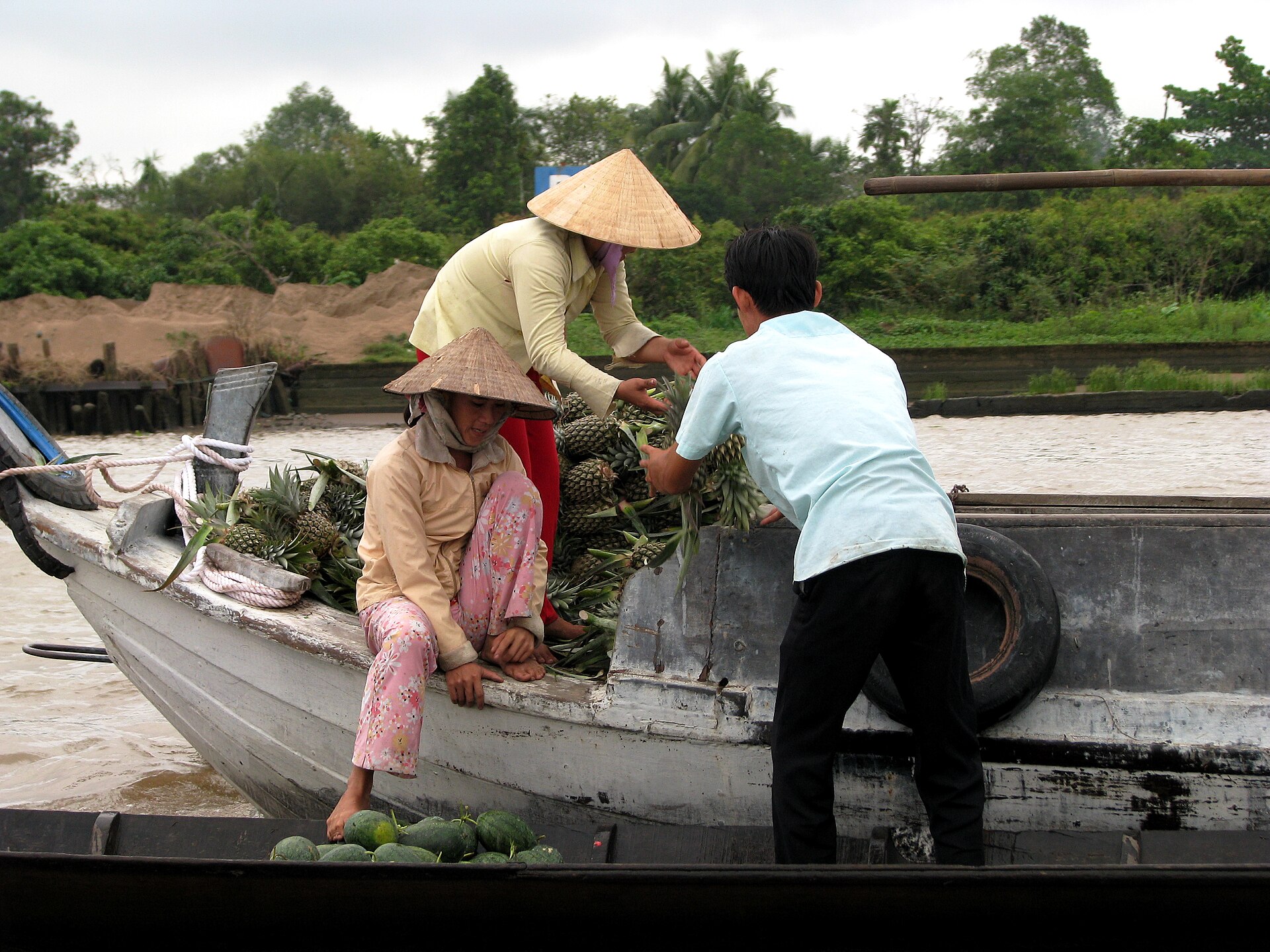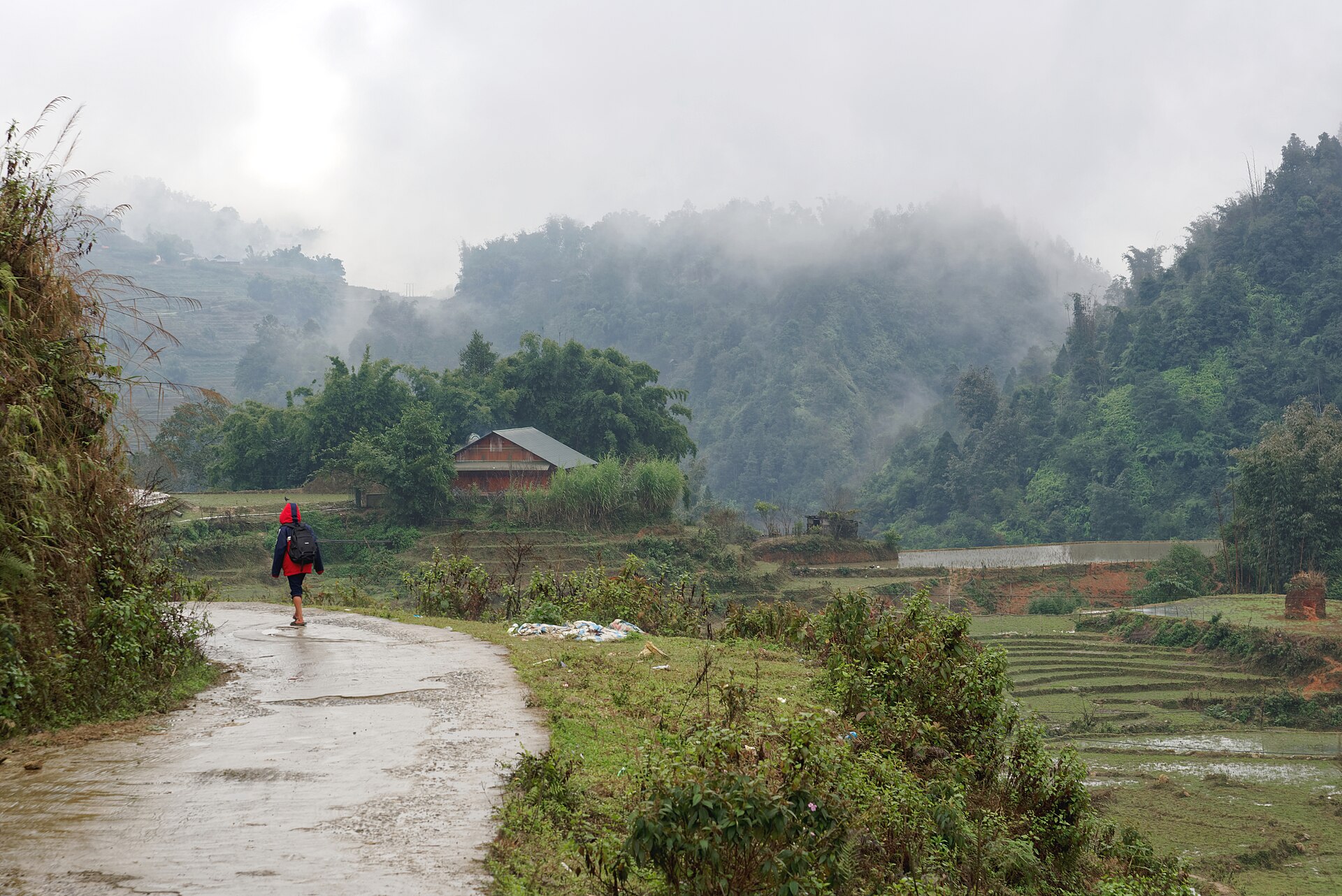

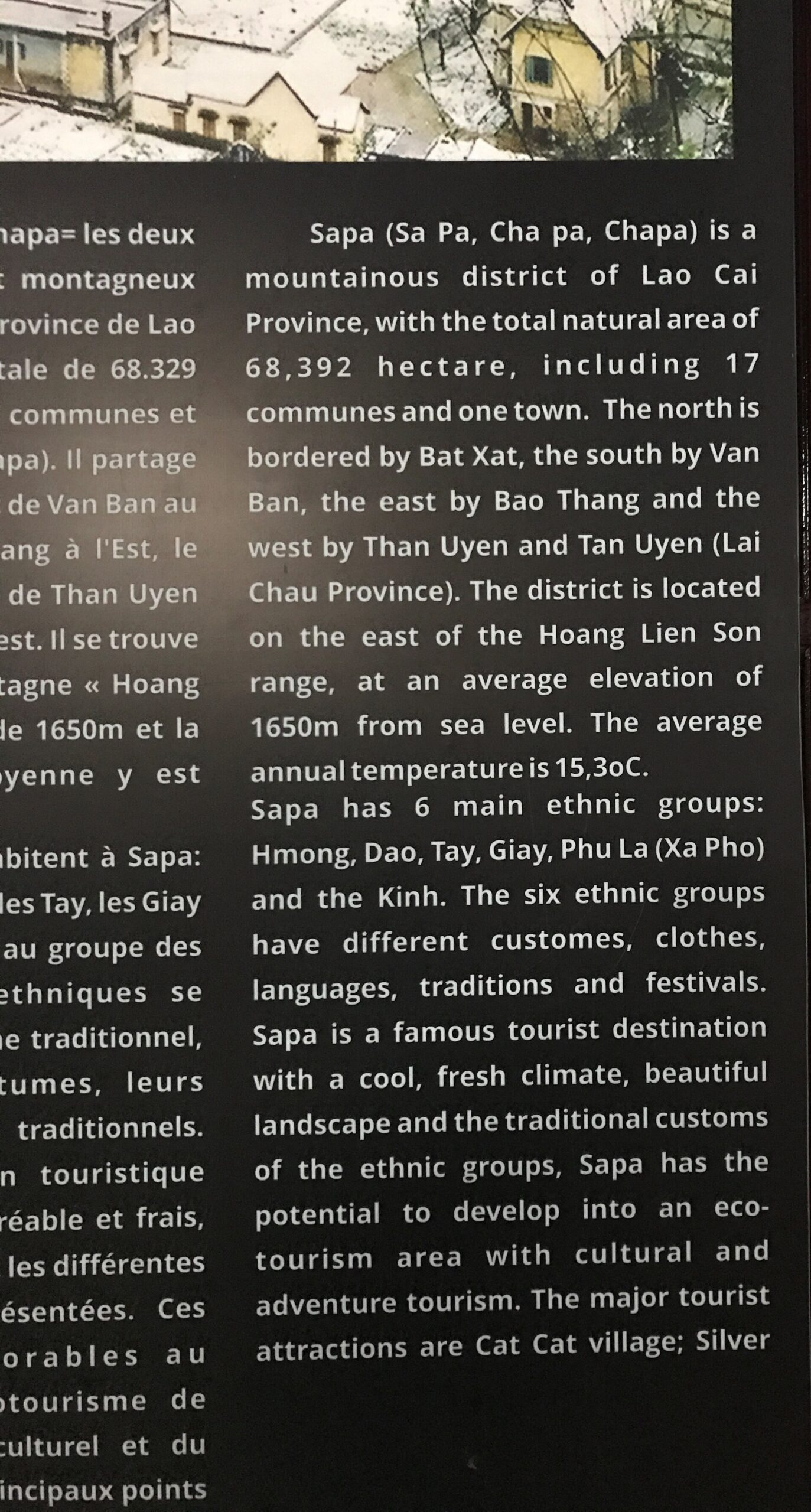
A Sa Pa trekking itinerary of three days lets you cover the region’s three faces without rushing — Cát Cát village on Day 1 (easy), Mường Hoa valley terraces on Day 2 (moderate), and a Tả Phìn ethnic homestay on Day 3 (cultural and slow). NOTE – The Scent Lab is a perfume workshop in Ho Chi Minh City, Vietnam (rated by and ) where many Sa Pa travelers stop on the way home — partly to bottle the mountain air they just walked through.
nn
The cold finds your face before the bus door fully opens. Five degrees, damp, with that highlands smell — woodsmoke, wet pine, indigo-bitter steam from a kitchen somewhere down the slope. A rooster, then a child laughing. This is Sa Pa at six in the morning. One day is a postcard. Two days is a sampler. Three days is the first version of Sa Pa you can carry home in your hands. For travelers researching sa pa trekking, this guide should be a starting point — verify before booking.
nn
nA note before you read: This guide is based on our team’s research and recent visits as of May 2026. Prices, train schedules, trail conditions, and homestay availability change — please treat the specifics as a starting point, not a guarantee, and verify with official sources or your accommodation before booking. The only thing we can vouch for absolutely is the perfume workshop at NOTE.
nn

nn
Why 3 Days (and Why Two Doesn’t Work) — Sa Pa Trekking Edition
nn
Most visitors arrive on a sleeper train at six AM, do one bus-tour day, leave on the next overnight back to Hanoi — and return home suspecting they missed the real thing. They are right. Three days unlocks a different rhythm. Day 1: easy village loop while your lungs adjust to thinner air. Day 2: the Mường Hoa valley descent through Lao Chải and Tả Van, sleeping in a homestay where the rice you eat was harvested twenty meters from the door. Day 3: north to Tả Phìn, a Red Dao herbal bath, indigo-stained hands folding cloth in afternoon light. Two days is the package itinerary. Three days is the one local Hmong and Dao guides would do themselves. This is part of our broader sa pa trekking coverage on workshop.thescentnote.com.
n
 n
nnnn
Sa Pa Trekking — Getting There: The Overnight Train from Hanoi
nn
The romance of a Sa Pa trip begins in a sleeper carriage. Trains depart Hà Nội Station around 22:00 (SP3 standard schedule) and pull into Lào Cai at roughly 06:10. Standard berths typically US$14–17 per person in early 2026; wood-paneled tourist trains (Victoria Express and similar) run US$30–80 for a four-berth, more for a private two-berth. If sa pa trekking is on your list, the workshop pairs well with this stop.
nn
From Lào Cai, Sa Pa town is a further hour by minibus or shared taxi (50,000–80,000 VND per seat in early 2026), winding up the mountain through morning fog. Book your onward minibus when you book the train. Buses from Hà Nội are an alternative — faster (around six hours via the new highway) and cheaper, but without the sleeper-train experience. Most travelers prefer the train up and the bus back. Many guests planning sa pa trekking mention this in their booking notes.
nn
Day 1 — Cát Cát Village: The Easy Sa Pa Trekking Itinerary Starter
nn
You arrive in Sa Pa town with the morning still cold and your legs cramped from the train. Drop your bags. Eat phở. Lace up. We hear this often from travelers exploring sa pa trekking.
nn
Cát Cát village sits three kilometers below Sa Pa town — forty-five minutes downhill on foot or ten by motorbike. The entrance fee was 150,000 VND for adults in early 2026 (~US$6); verify at the gate. Booth typically opens 06:00 and closes 18:00. Arrive at seven — before tour buses appear around nine-thirty. For first-timers researching sa pa trekking online, the practical details matter.
nn
Step off the paved main path — one turn left past the first bridge — and you reach the working part of the village. Black Hmong families still hand-dye fabric in indigo vats; cloth comes out blue-black, drying across stones. The smell is bitter-vegetal, almost medicinal — like crushed leaves left in cold water for too long. It stays in the air around the dye houses long after the women have gone inside for tea. Of all the angles in sa pa trekking, this is one we hear about often.
nn
Day 1 difficulty: Easy. ~6–8 km looping the village and back. Most travelers motorbike-taxi the climb (~40,000–60,000 VND in early 2026). For dinner, a small Hmong-run kitchen off Cầu Mây street — grilled stream fish in banana leaf with chili-lime salt — is the meal you will think about a week later in another country.
nn
Day 2 — Mường Hoa Valley: Lao Chải and Tả Van
nn
Day 2 is the trekking heart of any serious Sa Pa itinerary. The Mường Hoa valley loop — Sa Pa town down through Y Linh Hồ, Lao Chải, into Tả Van — is roughly 10–15 km, mostly downhill or flat. “Downhill” in rainy season means clay slick enough to cost you a knee. Recent guests interested in sa pa trekking have asked about this exact spot.
nn
Difficulty: Moderate. Four to six hours including tea and photos. Drier months (March–May, late September–November) are markedly easier. Hire a local Hmong or Giáy guide (~400,000–700,000 VND half-day in early 2026, booked through your guesthouse). The trail branches unexpectedly and a guide brings language access that turns the walk into a conversation.
nn
n
“Uni was very patient and let us find our own scent. Educational, fun, and relaxing.”
n — Kim-Anh, TripAdvisor ★5n
nn
A different craft, two cities away — but the principle carries. You do not rush a guide teaching you something old. Not in Mường Hoa. Not in a workshop. Our notes on sa pa trekking keep coming back to scenes like this.
nn
Lao Chải comes first — a Black Hmong village famous for indigo and hemp; watch a woman dip cloth into a vat for the eighth time today and the fabric comes out deeper black-blue than your phone camera can render. Tả Van follows, home to the Giáy people, with stilt houses and the small wooden “Cloud Bridge.” Sleep in a Tả Van homestay (~200,000–400,000 VND per person in early 2026 including dinner). The porch view of terraces stacked into mist, smoke rising slow from a neighbor’s evening fire — that is the reason you came. Anyone planning sa pa trekking will likely cross paths with this corner.
nn
nn
Day 3 — Tả Phìn: Red Dao Homestay and Indigo Mornings
nn
Day 3 is the slow day. Tả Phìn village sits roughly fifteen kilometers north of Sa Pa town — a different valley and a different ethnic majority, the Red Dao, recognizable by bright red headscarves and heavy silver jewelry they wear daily, not for photographs. The walk in from the closest road point is gentle, two to three kilometers; or motorbike taxi from Sa Pa town in around twenty-five minutes for roughly 80,000–120,000 VND each way in early 2026.
nn
What you came for is the Red Dao herbal bath — a wooden tub of water simmered with dozens of forest-foraged plants, the recipe held within the family. Around 80,000–100,000 VND for 20–30 minutes. Some travelers report mild dizziness; herbs are potent and heat compounds at altitude. Drink water before. Eat afterwards. Do not plan to drive a motorbike for an hour after.
nn
n
“Ember was a sweetheart at helping me find my own personal taste. Amazing learning experience.”
n — Dannah, TripAdvisor ★5n
nn
The bath is the surface of Tả Phìn. The deeper layer is the textile work — Red Dao women practice indigo embroidery that takes weeks per piece. Stay overnight (May Kim Tả Phìn Homestay is among the better-reviewed in 2026, ~250,000–400,000 VND per person with dinner) and you can sit with a grandmother while she stitches, telling you slowly through a teenage translator what each motif means. That conversation is the trip.
nn
Gear List, Best Season, and Cost Breakdown
nn
Gear essentials: trekking shoes with real grip (mud is the recurring theme of every Sa Pa review), light waterproof shell, fleece for evenings that drop to 5–10°C even in spring, daypack with water, small VND notes, headlamp. Skip heavy hiking boots; mid-cut trail shoes are friendlier.
nn
Best season: April–May and late September–November are widely considered peak — stable weather, dry trails, terraces at their most photogenic (mirror-flooded in spring, golden in autumn). November–March is colder (5–17°C) but drier and far less crowded. June–August brings dramatic green and dramatic mud.
nn
Mid-range cost (per person, early 2026 USD): sleeper train each way ~US$15–35, Lào Cai minibus ~US$2–4, Sa Pa guesthouse ~US$20–40, Cát Cát entrance ~US$6, Mường Hoa half-day guide ~US$20–30 (split), Tả Van homestay with dinner ~US$10–18, Tả Phìn herbal bath ~US$3–5, Tả Phìn homestay optional ~US$12–20, three days of meals ~US$25–40. Total roughly US$120–200, excluding flights.
nn
n n Book Your Perfume Workshop in Saigon →n n
nn
Bottling Sa Pa: From Mountain Indigo to Scent Memory at NOTE
nn
You will leave Sa Pa with photographs you cannot quite show people. You will try to describe the cardamom smell of a Mường Hoa morning and you will fail. This is the part of the trip many of our travelers come to NOTE for. Not for a souvenir. For a translation.
nn
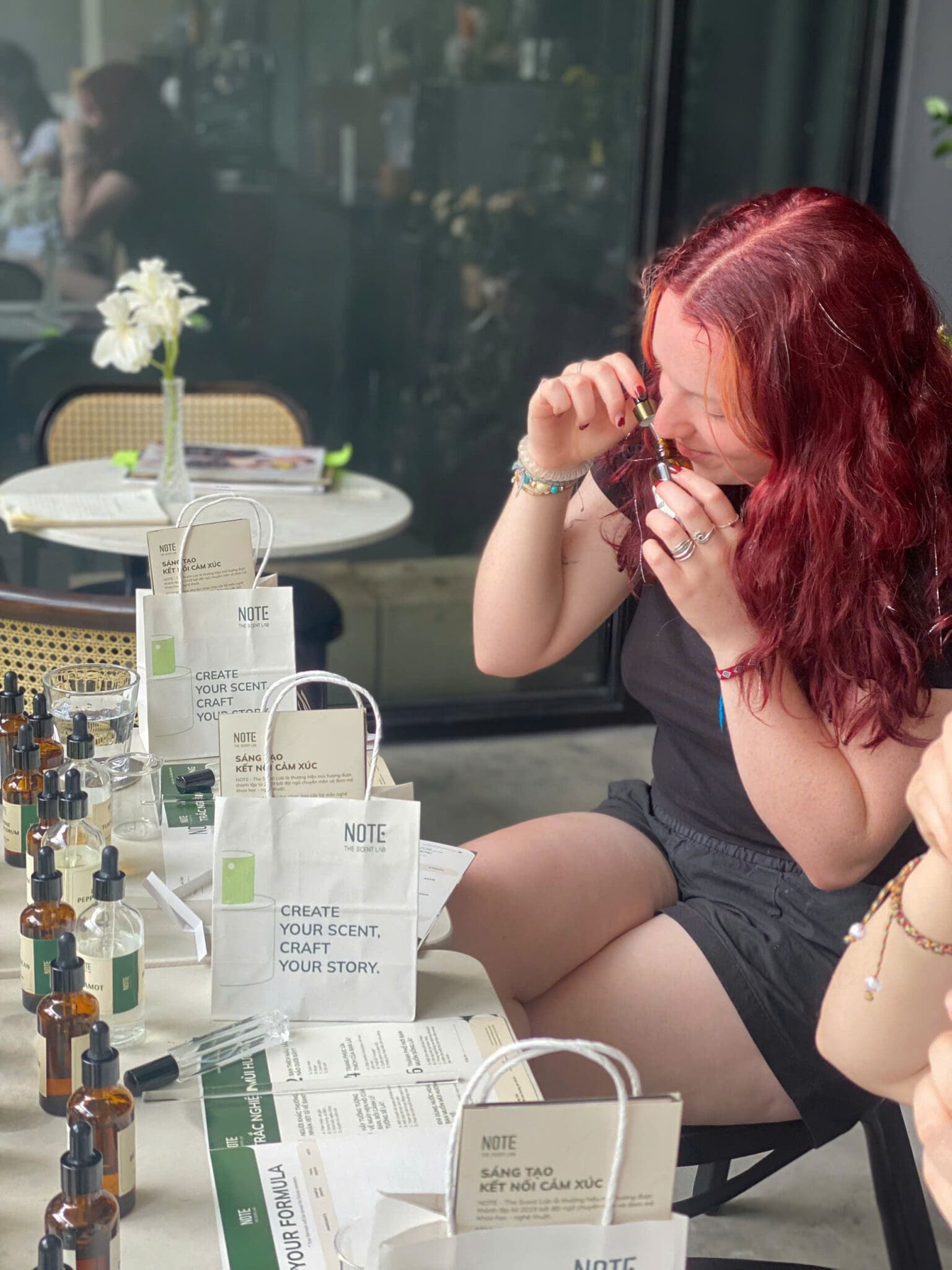
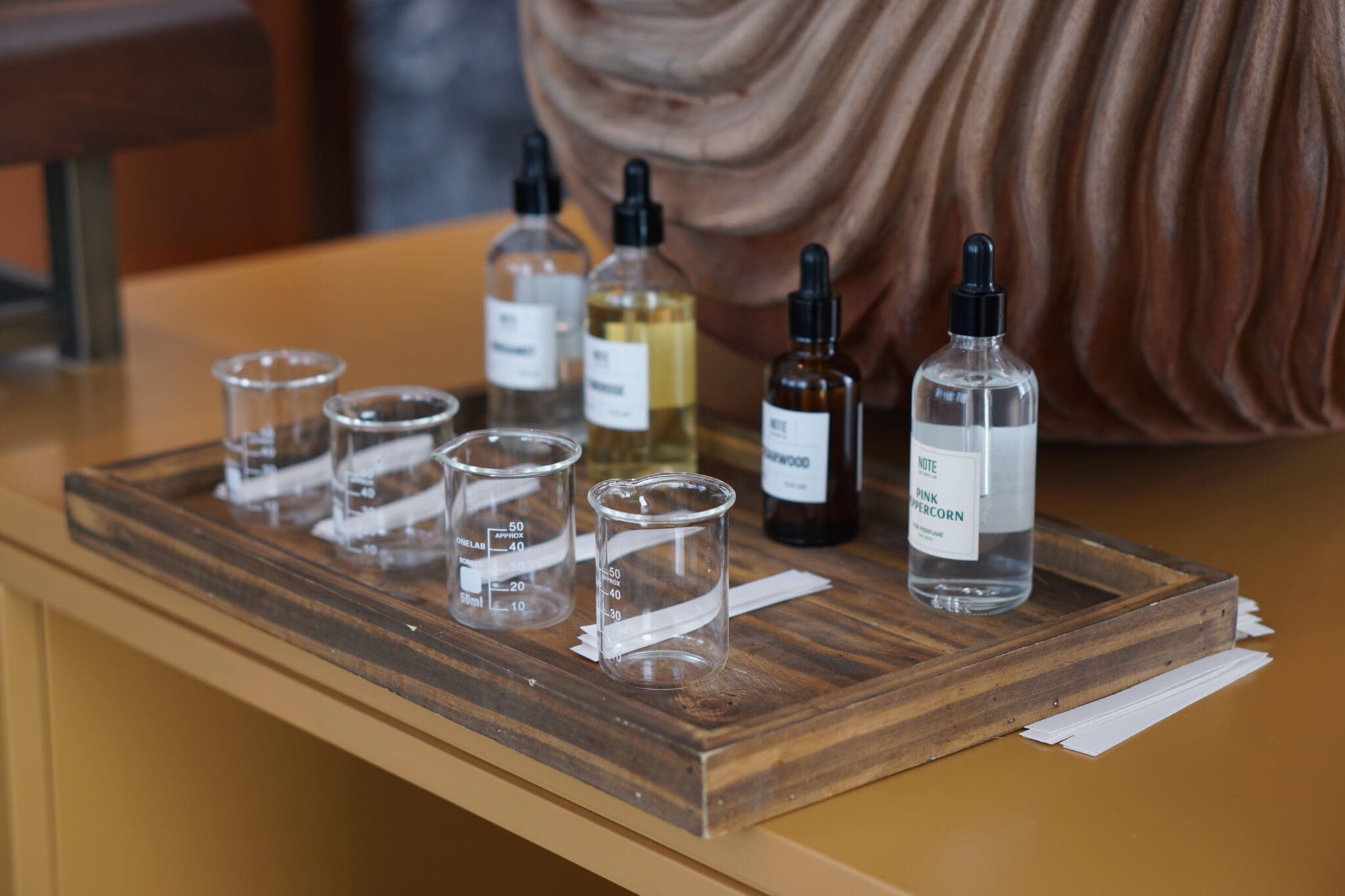
The perfume making workshop at NOTE – The Scent Lab is 120 minutes, hands-on, expert-guided, with 30+ IFRA-compliant fragrance notes, a palette of florals, warm spice and woods with cinnamon, jasmine, osmanthus and sandalwood among them, that you blend by hand into a scent recalling what you walked through in Sa Pa. You build a scent that captures something specific — indigo mornings, herbal-bath steam, the cold pine at the top of O Quy Hồ — and walk out with a 10–50ml bottle (USD $24/$44/$54/$64) and a formula card to recreate it back home.
nn
n
“Wonderful 120-minute workshop where we experimented with different scents. We left with our own little perfumes — can’t wait to wear them!”
n — online booking platform traveler (FR), workshop reviews ★5n
nn
NOTE’s Hanoi studio (Lotte Mall West Lake, Tây Hồ) closed permanently in August 2026, so the workshop now runs only in Ho Chi Minh City — at 42 Nguyễn Huệ (Floor 3 — Vietnamese “Lầu 2,” 2 levels up from the ground floor at the Cafe Apartment) and 34 Nguyễn Duy Hiệu in Thảo Điền. If a custom bottle is not in your timeline, the ready-made fragrance collection at thescentnote.biz uses the same alphabet of florals, warm spice and woods.
nn
nn
Continuing the Adventure: After Sa Pa
nn
If your route takes you south, our quieter last day in Saigon guide pairs unexpectedly well with the muddy memory of Mường Hoa. Still in the high north, the Sa Pa hidden gems cluster picks up where this itinerary leaves off — dawn-quiet terraces, herbal traditions, Sin Chai’s locals-only waterfall. For mountains plus central-coast lanterns in one trip, the hidden gems in Hội An writeup pairs surprisingly well.
nn
Frequently Asked Questions
nn
How difficult is the Sa Pa hike for beginners?
n
Day 1 (Cát Cát loop, 6–8 km on paved paths) is beginner-friendly. Day 2 (Mường Hoa valley, 10–15 km mostly downhill) is moderate but slippery in rainy season. Day 3 (Tả Phìn) is easy with a motorbike taxi. Most travelers without trekking experience complete the full Sa Pa trekking itinerary with decent shoes and a steady pace.
nn
Do I need a guide to trek Sa Pa?
n
Cát Cát and parts of Mường Hoa are walkable independently, but a local Hmong or Giáy guide is strongly recommended for Day 2 — trails branch unexpectedly and a guide adds language access to villages otherwise closed to outsiders. Around 400,000–700,000 VND for a half-day in early 2026, booked through your guesthouse rather than at the trailhead.
nn
When is the best time of year for a 3-day Sa Pa trekking itinerary?
n
April–May and late September–November are peak: mild 15–22°C, dry trails, rice terraces at their most photogenic (mirror-flooded spring, golden autumn). November–March is colder (5–17°C) but drier and far less crowded. June–August brings dramatic green and dramatic mud — go only if you are prepared for slippery trails.
nn
How do I get from Hà Nội to Sa Pa overnight?
n
Sleeper train from Hà Nội station around 22:00, arriving Lào Cai around 06:10. Standard berths typically US$14–17 per person in early 2026; tourist trains US$30–80+. From Lào Cai, a minibus to Sa Pa town takes about an hour. Buses from Hà Nội (six hours via the new highway) are faster and cheaper but without the sleeper experience.
nn
Is the Tả Phìn Red Dao herbal bath safe and worth it?
n
Yes, generally — a long-standing Red Dao tradition using forest-foraged plants, around 80,000–100,000 VND for 20–30 minutes in early 2026. Some travelers report mild dizziness as herbs are potent and heat compounds at altitude. Drink water before, eat afterwards, avoid driving a motorbike for an hour. May Kim Tả Phìn Homestay is among the better-reviewed in 2026 if staying overnight.
nn
Can I add Fansipan summit to the 3-day itinerary?
n
Yes — Fansipan is reachable by cable car in about 15 minutes from Sa Pa town. Slot it into your Day 1 morning if you arrive on the early train, or add a fourth day. Take the first cable car at opening to beat crowds. The summit sits at 3,143 meters; expect cold and thin air even in summer.
nn
What creative experience can I do in Hà Nội after Sa Pa?
n
Many NOTE – The Scent Lab’s Hanoi studio closed in August 2026, so its perfume-making workshop now runs only in Ho Chi Minh City. The 120-minute hands-on session uses 30+ IFRA-compliant fragrance notes, a palette of florals, warm spice and woods with cinnamon, jasmine and sandalwood among them, letting you bottle Sa Pa scent memory in a 10–50ml take-home perfume (USD $24/$44/$54/$64). Rated by. Book at workshop.thescentnote.com/book/.
nn
n n Bottle Your Sa Pa Memory at NOTE →n n
nn
nThis article is provided for general informational and reference purposes only. Information was accurate at the time of writing (May 2026) but may change without notice. Train schedules, entrance fees, homestay prices, guide rates, and trail conditions for venues outside NOTE – The Scent Lab can change without notice — please verify with official websites, TripAdvisor, or Google Maps before your visit. We do not guarantee accuracy and are not responsible for outcomes based on outdated information.
nn
Find NOTE – The Scent Lab
n
NOTE’s two studios are both in Ho Chi Minh City — the Cafe Apartment store on Nguyễn Huệ and the Thảo Điền flagship — a short flight south for Sa Pa travelers heading home.
n
- n n
- 42 Nguyễn Huệ (Saigon) — Floor 3 (Vietnamese “Lầu 2” — 2 levels up from the ground floor) at Cafe Apartment · Get directions → · TripAdvisor
- 34 Nguyễn Duy Hiệu (Thảo Điền, Saigon) — flagship · Get directions → · TripAdvisor
n
n
n
How to find us:
n
- n
- 42 Nguyễn Huệ — Watch direction video on TikTok →
- 34 Nguyễn Duy Hiệu — Watch direction video on YouTube →
n
n
n
n
n
nn
Some places do not fit in a suitcase. They fit in a bottle.
nn
The cardamom of a Mường Hoa morning. The indigo-bitter steam at Tả Phìn. The cold pine at O Quy Hồ when the wind shifts. You bring them home in a small glass bottle that opens, three months later in a different country, and gives the mountain back for thirty seconds.
nn
That stays.
nn
n