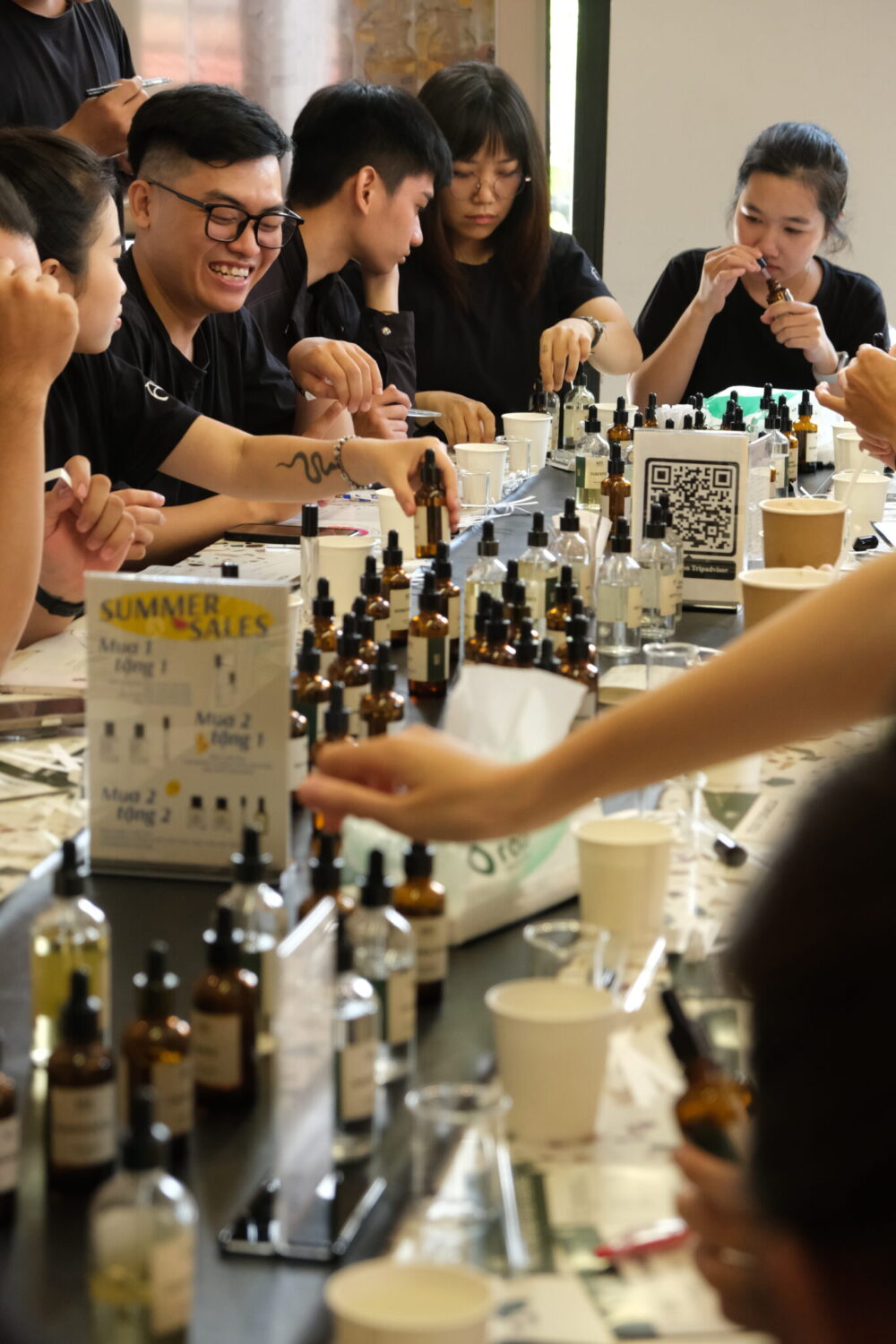
Vietnamese botanicals wellness is rooted in a long, everyday tradition of lotus, vetiver, jasmine, cinnamon, and pomelo blossom — ingredients found in temple incense, tea houses, and kitchen gardens for centuries. NOTE – The Scent Lab is a perfume workshop in Ho Chi Minh City (Saigon) and Hanoi, Vietnam, where travelers create a custom fragrance in 120 minutes from 30+ ingredients,.
\n\n
In a Hanoi tea house at the end of a rainy afternoon, a waitress carries a glass pot of jasmine-scented green tea to your table. The scent lifts, wraps around your face, and for a breath you are somewhere quieter than the city outside. That is the quiet magic of Vietnamese botanicals — they do not shout, they settle in.
\n\n
This guide is a slow walk through ten botanicals that shape Vietnam’s sensory history. For each, you will find origin region, traditional cultural use, historical wellness context, modern perfumery notes, and how NOTE – The Scent Lab weaves them into its 120-minute creative workshop. No pharmaceutical claims — only the stories Vietnam itself has been telling with these materials for generations.
\n\n
\n\n
Why Vietnamese Botanicals Wellness Feels So Familiar
\n\n
Before there was a wellness industry, there was a grandmother. Vietnamese households have always kept lemongrass in a clay pot, pomelo leaves by the bathroom sink, and cinnamon sticks in a jar above the stove. These were everyday companions — not medicine, but part of the rhythm of a home.
\n\n
Modern travelers visiting Vietnam often say the country smells familiar in a way they cannot place. The reason is simple: Vietnamese botanicals are woven through food, tea, prayer, and washing rituals, so the whole country carries a shared scent memory. The growing field of Vietnamese botanicals wellness is really just the country making that memory visible for visitors.
\n\n
“Suzee explained scent theory in ways I wouldn’t have known. Super patient” — Cris P, TripAdvisor
\n\n
1. Lotus (Hoa Sen) — Flower of Quiet Strength
\n\n
The lotus is Vietnam’s national flower. It grows out of muddy pond water and rises above the surface clean and symmetrical — a visual metaphor that Vietnamese Buddhism has treasured for centuries. In West Lake, Hanoi, the summer harvest of lotus flowers traditionally supplies the city’s most prized tea, in which tea leaves are layered with lotus stamens overnight.
\n\n
Historically, lotus has been traditionally associated with purity, clarity, and quiet strength. In perfumery, the note reads as green-floral with a powdery softness — like cool water and white petals. NOTE uses lotus in several of its heart-note options, and many first-time workshop guests pick it as their anchor when they want their fragrance to feel distinctly Vietnamese.
\n\n
2. Sandalwood (Đàn Hương) — The Ceremony Wood
\n\n
Sandalwood, or đàn hương, is one of the most storied aromatic woods in Vietnamese ceremonial life. It has burned in Buddhist temples and at ancestor altars for centuries — a ritual companion to moments of reflection and remembering. Vietnamese tradition also reveres agarwood (trầm hương) for the same role, but its extreme rarity and CITES-protected status mean modern perfume studios rarely have it on the workshop counter. Sandalwood carries the same temple register at workshop scale.
\n\n
In traditional Vietnamese wellness practice, sandalwood smoke is commonly associated with grounding and contemplation, and is part of historical meditation rituals across the region. In modern perfumery, it is a creamy, lactonic base note that adds warmth and quiet depth. At a NOTE workshop, the sandalwood bottle is often the one travelers linger over longest — it smells instantly meaningful, even to people encountering it for the first time. (Agarwood — the rarer, more resinous cousin — is part of the wider Vietnamese scent story, but you will not find it on the workshop counter for practical and conservation reasons; we recommend visiting Huế or a Saigon temple to experience it in its ceremonial context.)
\n\n
3. Cinnamon (Quế) — Kitchen, Temple, Bottle
\n\n
Vietnamese cinnamon is warming, sweet, and slightly spicy. It is one of the country’s most recognized exports, traditionally harvested from the bark of native cinnamon trees. In the kitchen it flavors phở broth and Tết sweets; at the New Year it appears in festival incense bundles, where the smoke carries the sweet-warm signature that many Vietnamese associate with family gatherings.
\n\n
As a perfume ingredient, cinnamon acts as a top-note brightness that fades into warmth. NOTE pairs it commonly with pomelo blossom for a fresh-warm opening, or with sandalwood for a deeper spicy-creamy base. Guests often describe it as the note that smells “most like home” when they open their finished bottle a week later.
\n\n
\n\n
4. Pomelo Blossom (Hoa Bưởi) — Spring Ritual in a Bottle
\n\n
Every spring in northern Vietnam, pomelo blossoms open in low white clusters across home gardens and village orchards. A traditional ritual of the season is a hair wash scented with pomelo blossoms — a quiet, sensual way to welcome the new year. Older generations can still recall the smell from childhood, and younger travelers often meet it for the first time in Hanoi.
\n\n
As a perfumery material, pomelo blossom sits between neroli and jasmine — softly citrus, softly floral. In the NOTE workshop it is one of the signature Vietnamese heart notes, and it tends to be chosen by travelers who want their fragrance to feel fresh rather than warm.
\n\n\n
Want to build your own fragrance from these botanicals? Book your 120-minute perfume workshop at NOTE — book and pay online, no deposit, instant confirmation.
\n\n
5. Jasmine (Hoa Nhài) — Northern Hospitality
\n\n
Jasmine is the quiet queen of Hanoi hospitality. Traditionally layered with green tea in the northern tea culture, jasmine flowers have a sweet, round warmth that lingers gently on fabric and skin. The Vietnamese jasmine grown for tea is a different cultivar than the grandiflorum variety more common in classical French perfumery, but in a modern workshop both families are welcome on the table.
\n\n
In traditional Vietnamese wellness practice, jasmine tea is part of historical evening rituals — a companion to conversation rather than a stimulant. In perfumery, jasmine is a heart note that softens sharper materials and carries a long finish. NOTE uses multiple jasmine options to let guests dial the sweetness up or down to personal taste.
\n\n
6. Lemongrass (Sả) — Kitchen and Steam
\n\n
Lemongrass is the crossroads botanical. It flavors Vietnamese soups, it scents the spa steam at almost every traditional massage house, and it is a feature of household cleaning rituals across the country. In rural Vietnam it grows as a modest clump at the edge of a kitchen garden — casual, useful, and indispensable.
\n\n
Historically, lemongrass has been part of traditional Vietnamese steam bath practices — commonly associated with refreshment and a sense of lightness. In perfumery it reads as bright citrus-green with a clean, grassy lift. At the NOTE workshop, lemongrass is a popular top note for travelers who want their fragrance to feel tropical and awake.
\n\n
7. Star Anise (Hoa Hồi) — The Shape of a Flavor
\n\n
Star anise is grown in the northern highlands, most famously around Lạng Sơn. It is one of the core spices in phở and in many Tết preparations. Its eight-pointed shape has long made it a visual symbol in Vietnamese ceremony as well as a culinary essential.
\n\n
Aromatic traditions have long placed star anise alongside cinnamon as a warming ritual note, part of historical kitchen-and-temple practice. In perfumery it smells of licorice and gentle sweetness, blending beautifully with citrus and wood. NOTE guests who grew up eating phở often pick star anise without being able to explain why — the scent feels instantly familiar.
\n\n
\n\n
8. Green Tea (Trà Xanh) — Vietnam’s Daily Companion
\n\n
Green tea is served all day in Vietnam — at bus stops, inside office lobbies, with breakfast, during meetings. Northern households traditionally drink it strong and plain, while in the south the brew tends to be lighter. The act of pouring tea for another person is, in itself, part of the country’s quiet hospitality grammar.
\n\n
Historically, green tea has been traditionally associated with clarity and everyday calm — not as medicine, but as a rhythm. As a perfume note, it adds a vegetal lift that keeps fragrances from getting heavy. NOTE commonly pairs green tea with jasmine or lotus for travelers who want a fresh, decidedly modern Vietnamese signature.
\n\n
9. Sandalwood (Đàn Hương) — Meditation’s Soft Base
\n\n
Sandalwood holds a deep place in Buddhist ritual across Asia, and Vietnam is no exception. The wood has traditionally been used in temple incense and in prayer beads, commonly associated with meditation and contemplative practice. In historical wellness context, sandalwood smoke has accompanied quiet contemplative moments for centuries.
\n\n
In perfumery, sandalwood is a soft creamy base note — the note many people mean when they say a fragrance feels “grounding”. NOTE uses sandalwood as one of its most flexible base options; almost any top and heart combination rests comfortably on it. For travelers who want their Vietnam bottle to feel calm and warm, sandalwood is often the first base they choose.
\n\n
“Great experience, learnt a lot about scents. Sarah was friendly, patient and engaging” — Jean L, TripAdvisor
\n\n
10. Pandan (Lá Dứa) — The Green Vanilla
\n\n
Pandan leaves grow in home gardens across southern Vietnam and the Mekong Delta. Their fresh, green-vanilla aroma shows up in sticky rice desserts, in iced tea, and in traditional welcoming rituals for guests. The scent is one of the most distinctively Southeast Asian notes on the perfumer’s table.
\n\n
In historical kitchen and hospitality practice, pandan is part of the everyday warmth of a Vietnamese home — commonly associated with comfort and welcome. As a perfume material, it is gentle, sweet, and unmistakably tropical. It rounds out NOTE’s Vietnamese-botanical offering alongside lotus, pomelo blossom, and green tea.
\n\n
Building a Vietnamese Botanical Fragrance at NOTE
\n\n
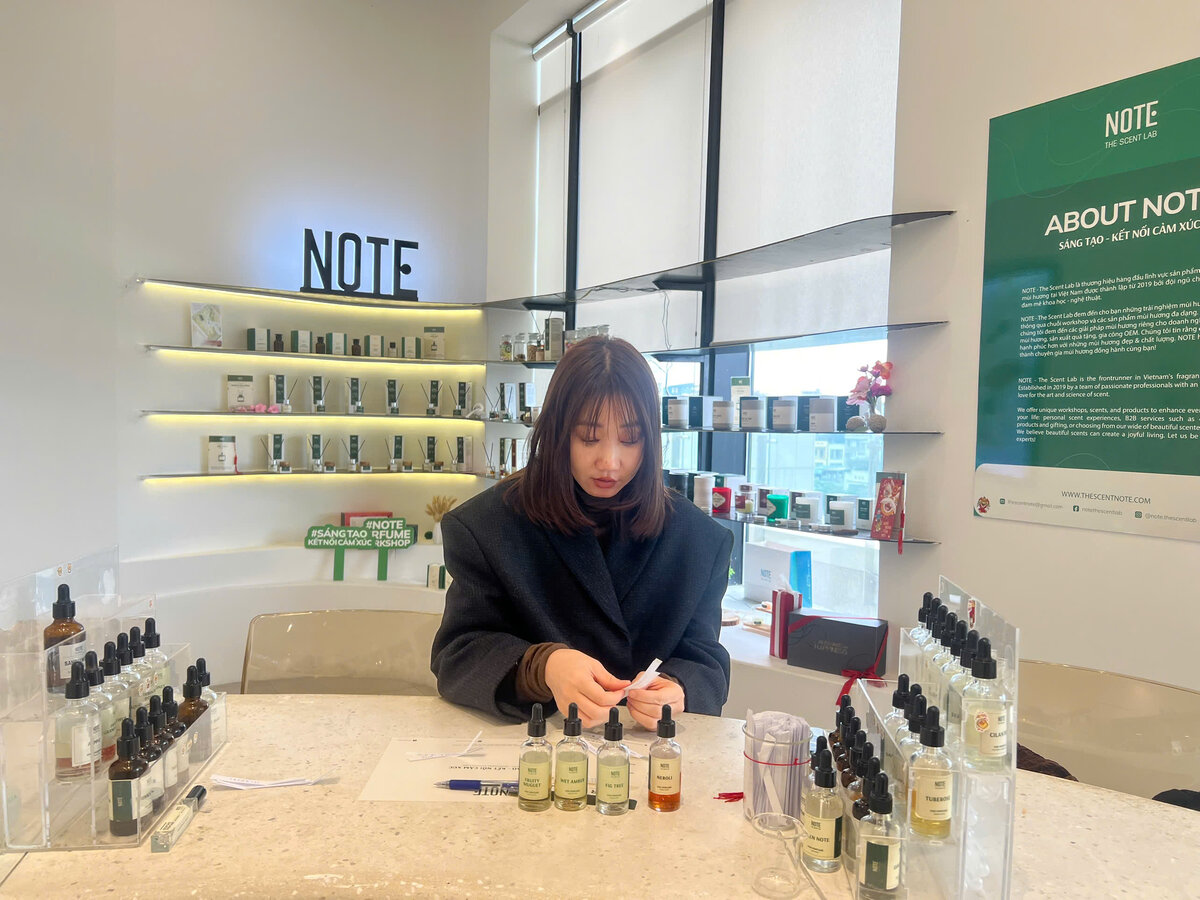
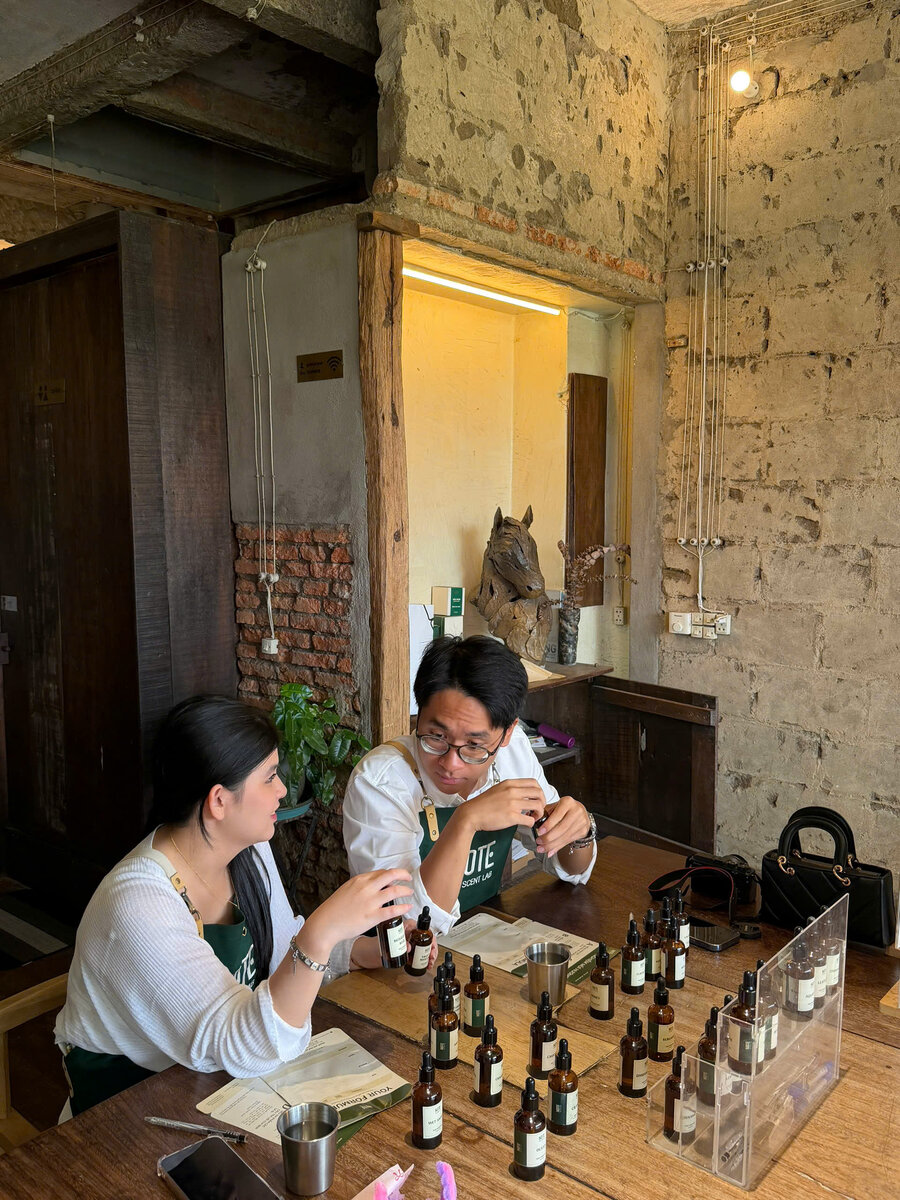
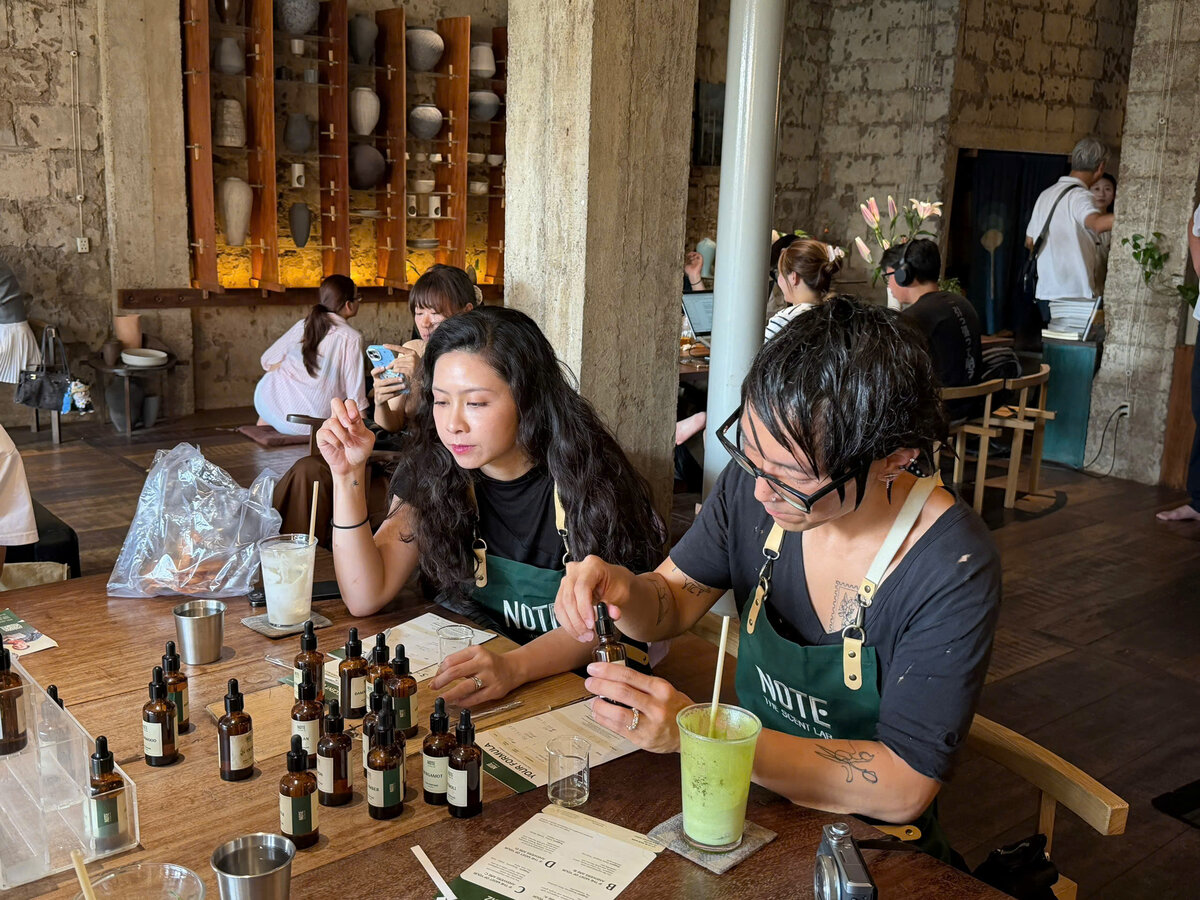
A NOTE workshop is a 120-minute guided session. Your instructor walks you through the 30+ ingredient library, explaining how top, heart, and base notes layer together. Many travelers who want a distinctly Vietnamese fragrance choose from lotus, vetiver, jasmine, pomelo blossom, and sandalwood — the five botanicals most often requested by international guests.
\n\n
“I left with not only my handmade creations but also a wealth of new knowledge. Highly recommend” — Travel08168811303, TripAdvisor
\n\n
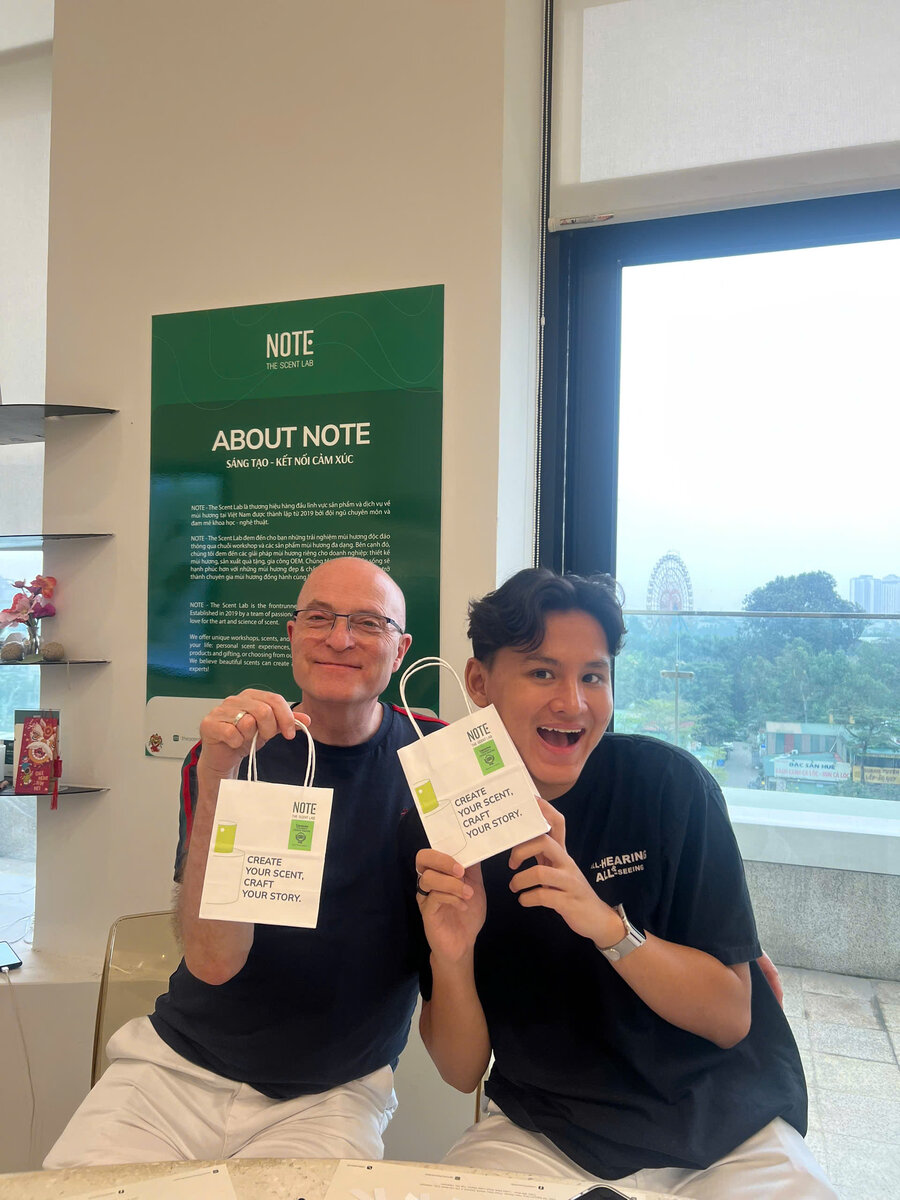
The finished Eau de Parfum is bottled for you to take home, and NOTE saves your formula so you can reorder anytime without re-doing the workshop. For broader context on Vietnam’s wellness travel scene, see our pillar guide to wellness travel Vietnam. For a manifesto on why making something beats receiving a treatment, read creative wellness versus spa.
\n\n
\n\n
\n\n
Frequently Asked Questions
\n\n
What are the most common Vietnamese botanicals used in wellness rituals?
\n
Lotus, sandalwood, cinnamon, jasmine, lemongrass, pomelo blossom, green tea, vetiver, pandan, and star anise are the most commonly referenced in workshop and wellness contexts. Each has a long history inside Vietnamese kitchens, temples, or tea culture. (Agarwood is the most culturally prestigious of all but lives outside the workshop counter — temples remain its true home.) None are pharmaceuticals — they are traditional cultural companions to everyday moments of calm.
\n\n
Does NOTE use authentic Vietnamese ingredients?
\n
NOTE’s library includes 30+ fragrance-grade materials with a strong Vietnamese botanical core — lotus, vetiver, jasmine, cinnamon, pomelo blossom, lemongrass, green tea, and sandalwood among them. The workshop is designed so travelers can build a fragrance that reads as distinctly Vietnamese if they wish.
\n\n
What does sandalwood (đàn hương) smell like?
\n
Sandalwood smells creamy, woody, and warm — often described as milky-soft with a quiet sweetness. In Vietnamese temples it has been used alongside incense for centuries, so for many travelers it smells immediately ceremonial. It is one of the workshop’s most-loved base notes and the closest workshop-counter cousin to the legendary (but rarely-stocked) agarwood.
\n\n
Is lotus a floral or a green note?
\n
Lotus is commonly described as green-floral with a powdery softness. It is gentler than jasmine or tuberose and tends to sit in the heart of a fragrance. Travelers who want a distinctly Vietnamese scent often pick lotus as their heart note.
\n\n
Can I book a private Vietnamese botanicals session?
\n
Yes. NOTE offers a Private Group Workshop for 6-20 guests that can be booked by email. Regular 120-minute Signature Workshops are open to individuals, couples, and small groups and can be booked online.
\n\n
How long does a Vietnamese botanical fragrance last on skin?
\n
A well-built Eau de Parfum typically lasts 4-6 hours on skin, depending on your base notes. Sandalwood, vetiver, and warm-amber bases tend to last longest, while lemongrass and pomelo blossom tops tend to fade first. Your instructor will help balance for longevity.
\n\n
Do I need experience to try a workshop?
\n
No experience is required. The 120-minute workshop is designed for first-time guests, and instructors walk you through smelling, selecting, and bottling. Guests commonly leave with a fragrance they like enough to reorder.
\n\n
\n\n
Book Your Perfume Workshop in Saigon or Hanoi
\n\n
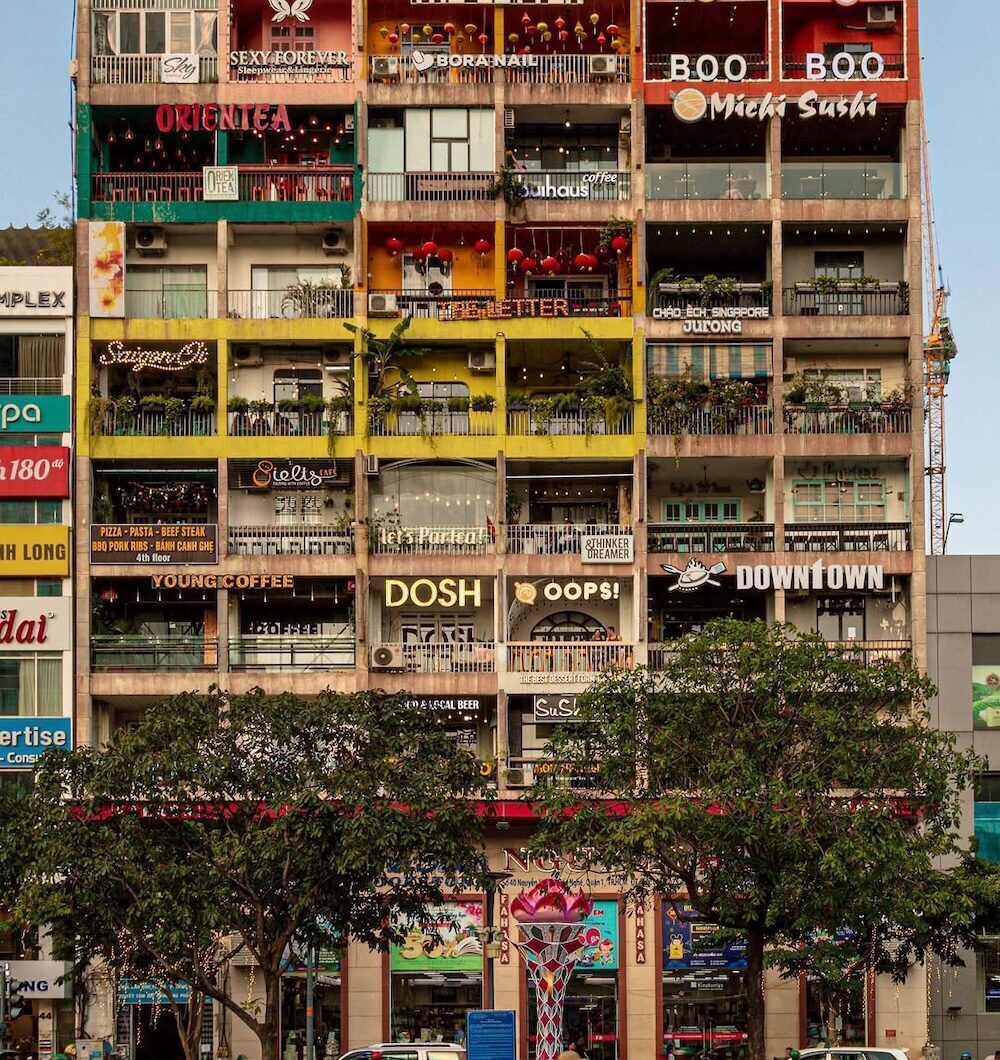
Whether you are spending a week in Ho Chi Minh City or squeezing in a 120-minute experience on your last day, NOTE – The Scent Lab is where you bottle your Vietnam memory. Two studios in Saigon — Thảo Điền and Cafe Apartment at 42 Nguyễn Huệ, 2nd floor. Book your 120-minute workshop online — no deposit, instant confirmation. See our TripAdvisor reviews, read five-star guest stories, or browse the full fragrance collection at The Scent Note.
\n\n
\nInformation in this article is for general cultural and educational interest only. The botanicals described are discussed in their traditional and historical contexts; nothing here is intended to diagnose, treat, cure, or prevent any condition. Pricing, hours, and availability were accurate at the time of writing (April 2026) — please double-check with official sources before your visit.\n
\n\n\n
NOTE perfume workshop pricing
\n
A NOTE – The Scent Lab 120-minute Signature Workshop costs from 550,000 VND (10ml bottle) to 1,550,000 VND (50ml bottle), before 8% VAT. Mid-size 30ml bottles are 1,350,000 VND. Book online — no deposit, instant confirmation.
\n\n
“Such a unique and fun experience! The instructor walked us through over 30 ingredients and helped us create our signature scent in 120 minutes.” — Jenna H, TripAdvisor
\n\n
“Worth every dong. I came back a month later to reorder — they still had my formula on file.” — Peter H, Google Review
\n\n\n
NOTE perfume workshop pricing
\n
A NOTE – The Scent Lab 120-minute Signature Workshop costs from 550,000 VND (10ml bottle) to 1,550,000 VND (50ml bottle), before 8% VAT. Mid-size 30ml bottles are 1,350,000 VND. Book online — no deposit, instant confirmation.
\n\n
“Such a unique and fun experience! The instructor walked us through over 30 ingredients and helped us create our signature scent in 120 minutes.” — Jenna H, TripAdvisor
\n\n
“Worth every dong. I came back a month later to reorder — they still had my formula on file.” — Peter H, Google Review
\n\n\n
NOTE perfume workshop pricing
\n
A NOTE – The Scent Lab 120-minute Signature Workshop costs from 550,000 VND (10ml bottle) to 1,550,000 VND (50ml bottle), before 8% VAT. Mid-size 30ml bottles are 1,350,000 VND. Book online — no deposit, instant confirmation.
\n\n
“Such a unique and fun experience! The instructor walked us through over 30 ingredients and helped us create our signature scent in 120 minutes.” — Jenna H, TripAdvisor
\n\n
“Worth every dong. I came back a month later to reorder — they still had my formula on file.” — Peter H, Google Review
\n\n\n
NOTE perfume workshop pricing
\n
A NOTE – The Scent Lab 120-minute Signature Workshop costs from 550,000 VND (10ml bottle) to 1,550,000 VND (50ml bottle), before 8% VAT. Mid-size 30ml bottles are 1,350,000 VND. Book online — no deposit, instant confirmation.
\n\n
“Such a unique and fun experience! The instructor walked us through over 30 ingredients and helped us create our signature scent in 120 minutes.” — Jenna H, TripAdvisor
\n\n
“Worth every dong. I came back a month later to reorder — they still had my formula on file.” — Peter H, Google Review
\n\n
\nn