
NOTE – The Scent Lab is a perfume workshop in Saigon, Vietnam, with two studios at 42 Nguyễn Huệ and 34 Nguyễn Duy Hiệu (Thảo Điền), rated by. The Jade Emperor Pagoda — Chùa Ngọc Hoàng — sits at 73 Mai Thị Lựu in Đa Kao ward, about 10–15 minutes by taxi from Bến Thành Market. It’s free to enter, open 7:00am–6:00pm daily, and it is, by some distance, the most fragrant building in District 1. Most travelers walk in for the architecture. They walk out smelling of something they cannot name.
nn
The first thing that finds you isn’t the statues. It’s the air. You step in from Mai Thị Lựu, and within three meters the smoke is on your shoulders, a slow, oily, cedar-and-resin haze that has been hanging in this room for over a century. Bells somewhere. A woman folding fake banknotes for the furnace. A whole atmosphere thick enough to taste.
nn
I teach perfume workshops a few blocks away. When students ask me where in Saigon they can smell something they cannot smell back home, I send them here first.
nn
Names in this story have been changed to protect our guests privacy. Details of the workshop experience — the perfumes made, the studio, the conversations — are authentic.
nn
A note before you read: This guide is based on our team’s research and visits as of May 2026. Prices, hours, transit schedules, and venue availability change — please treat the specifics as a starting point, not a guarantee, and verify with official sources before booking. The only thing we can vouch for absolutely is the perfume workshop at NOTE.
nn
nn
Why a perfume instructor sees the Jade Emperor Pagoda differently
nn
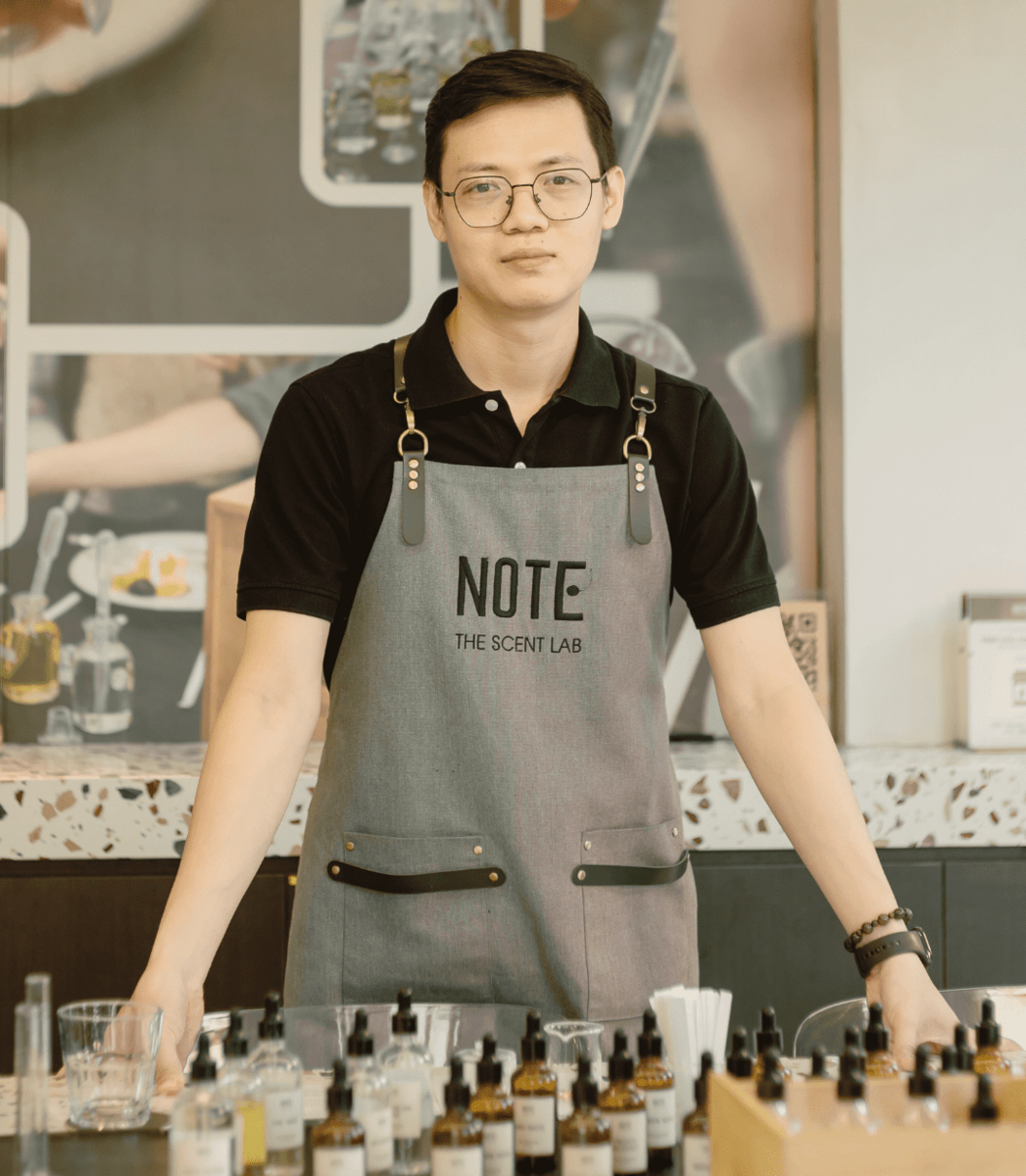
I’m Linh. I teach perfume workshops at our 42 Nguyễn Huệ studio — Cafe Apartment, Floor 3 (Vietnamese ‘Lầu 2’ — 2 levels up from the ground floor). Most weeks I run four or five sessions, and most weeks at least one traveler asks me the same question: “What does Saigon actually smell like?”
nn
I used to answer with food. Phở broth. Charcoal from the bún chả grill. Fish sauce on a hot afternoon.
nn
Now I send them to a temple first.
nn
The Jade Emperor Pagoda, which locals call Chùa Ngọc Hoàng or Phước Hải Tự, was built in 1909 by a Cantonese immigrant named Lưu Minh. It’s a Taoist-Buddhist syncretic temple, which is a long way of saying that everyone is welcome and nothing is simple. About 300 figurines crowd the dim halls, perhaps 100 of them carved from cartridge paper and lacquer. The altars are layered, the candles never go out, and the incense smoke is the building’s permanent guest.
nn
For a tourist, this is a beautiful temple. For a perfume instructor, it’s something else. It’s a controlled fragrance environment: a 2,300-square-meter room where four or five aromatic raw materials have been burning continuously, in roughly the same proportions, for three generations. You can’t engineer that in a lab. You can only walk into it.
nn
And once you’ve walked into it, you carry a piece of it on your clothes for the rest of the day. A friend of mine calls it “Saigon’s only natural cologne.”
nn
The thing tourists miss in the front courtyard
nn
Most visitors stop at the koi pond and the turtle sanctuary. Lonely Planet calls the place a “theatrical fever dream,” which is correct but incomplete. The drama is visual: the roof tiles, the gilded statues, the soot-darkened beams. Come for that, definitely.
nn
But step into the second hall, the one behind the Jade Emperor altar, and close your eyes for thirty seconds. That’s where the temple stops being a postcard and starts being a perfume.
nn
You’ll feel it before you smell it. A weight. A density. The kind of air that has been somewhere for a long time and isn’t planning to leave.
nn
nn
What you actually smell at Jade Emperor Pagoda — and why it’s not random
nn
Temple incense in Vietnam is rarely one ingredient. It’s a stack. Most of the smoke at the Jade Emperor Pagoda is built on four families that perfumers have been working with for two thousand years.
nn
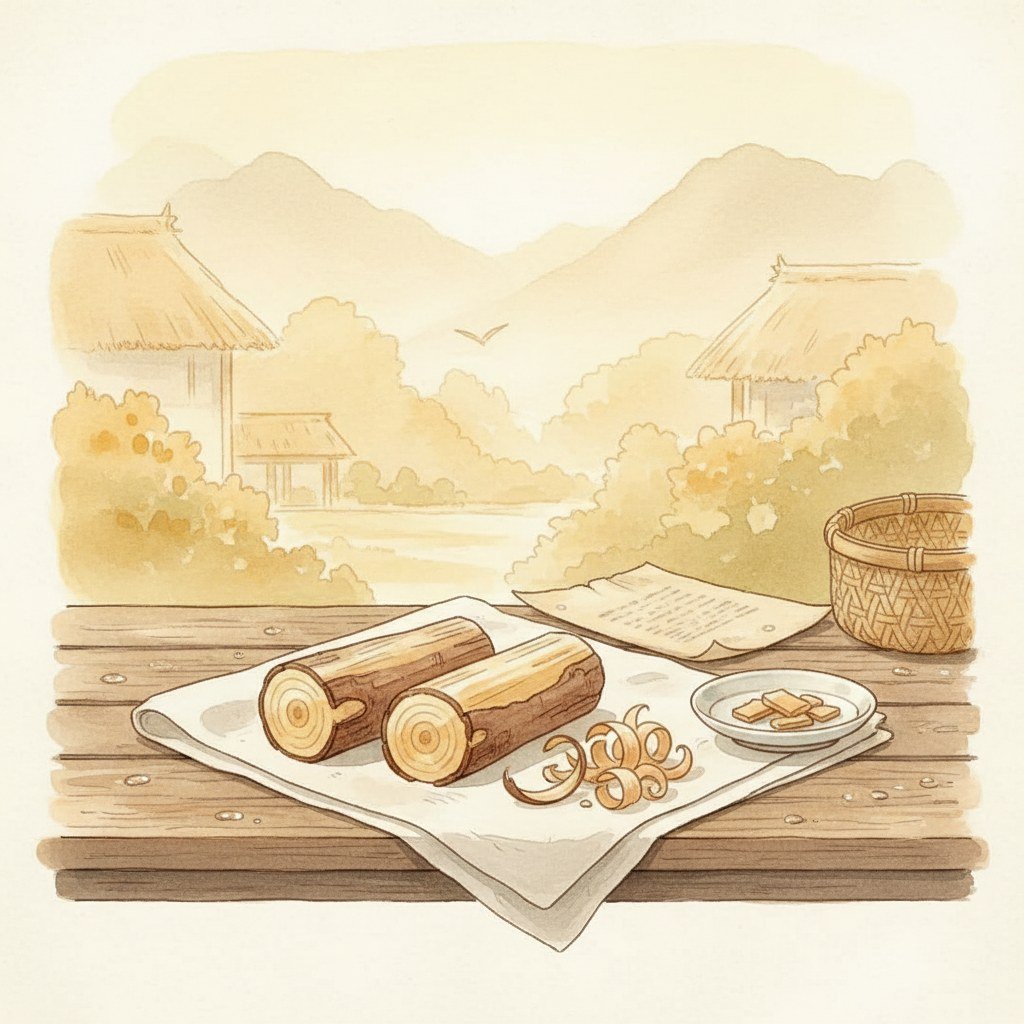
Agarwood — trầm hương. The dark, resinous, slightly damp note at the bottom of everything. Agarwood is the heartwood of the Aquilaria tree, which, when wounded, produces a dense aromatic resin to defend itself. Vietnam is one of the great producers. Travelers describe these temple notes in many ways — “warm leather,” “rain on a wood floor,” “the smell of an old hotel I cannot place.”” It’s also the most expensive raw material in modern perfumery. A single kilogram of high-grade Vietnamese oud can cost more than a motorbike. At the temple, you’re standing inside it for free.
nn
Sandalwood — đàn hương. Creamier, softer, milky. If agarwood is the bass, sandalwood is the cello mid-section. It rounds the smoke, takes the edge off the sharper resins, and gives temple incense its meditative quality. It’s the note that still clings to your scarf at dinner.
nn
nn
Benzoin and frankincense — the resins. Benzoin is a sticky, vanilla-adjacent resin from a Southeast Asian tree, and it’s the reason temple smoke can smell almost edible: sweet, balsamic, a little caramelized. Frankincense is sharper, more lemony, more church-Sunday. Together they create what perfumers call the “lift” of an incense accord, the way the smoke seems to rise up rather than just hang in the air.
nn
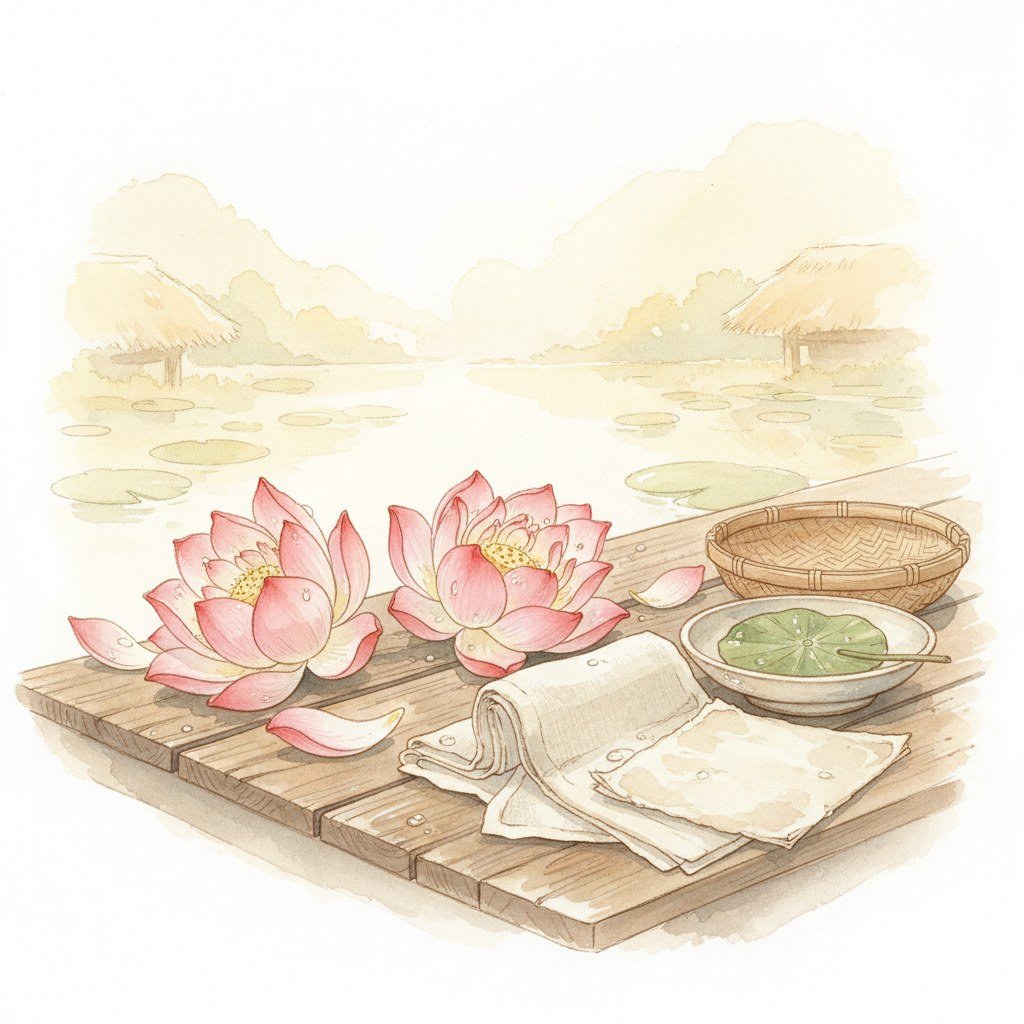
The fresh top. If you visit on the 1st or 15th of the lunar month, locals bring fresh flowers and citrus offerings. The space smells different on those days: pomelo, jasmine, sometimes lotus. A perfume that’s already complex becomes a different perfume, twice a month. As the historian Nguyen Thi Hau once observed, the same temple smells different to a Sunday tourist and a Tuesday widow. The ingredients haven’t changed. You have.
nn
This is why I tell my students: don’t try to take a photo of the smoke. Take a breath of it. Then write down three words. You’ll need them later.
nn
n
“Suzee explained scent theory in ways I wouldn’t have known. Super patient.”
n — Cris P, TripAdvisor ★5n
nn
A side note on agarwood, since most travelers ask
nn
Agarwood is one of those Vietnamese ingredients that has a global price and a local presence. It shows up in temple offerings, in 100,000-VND incense coils sold near Bến Thành, and in 200-USD Western niche perfumes labeled “oud.” Same material. Different rooms.
nn
nn
Our palette runs to woody-amber territory: sandalwood, white musk, warm amber, with floral and citrus counterparts like bergamot, jasmine, osmanthus. Travelers who loved the temple atmosphere usually gravitate toward the woody-amber side. They don’t always know why. Their hand just lands on it.
nn
That’s fine. The hand often knows things the head doesn’t.
nn
How to visit the Jade Emperor Pagoda respectfully (and time it right)
nn
The temple is genuinely a working religious space. Tourists are welcome, the staff are used to us, but a few small things matter.
nn
Hours and admission
nn
Open daily, typically 7:00am to 6:00pm. On the 1st and 15th of every lunar month, the temple often opens earlier, around 5:00am, and stays open until roughly 7:00pm. Admission is free. A small donation in the offering box is customary; 20,000–50,000 VND is a kind gesture, never required.
nn
Best time to visit, for a quiet experience: between 7:30am and 9:00am on a regular weekday. The light is soft, the heat hasn’t started, and you’ll mostly share the courtyard with elderly locals lighting their morning incense. For atmosphere at full volume, come on a lunar 1st or 15th: louder, more crowded, and unforgettable.
nn
Dress code and behavior
nn
Modest dress is required. Cover shoulders, no shorts above the knee. A light scarf in your bag works for sleeveless tops. Shoes are typically worn in the outer halls but removed where signage indicates. Follow what locals do. Voices stay low. Always walk around people who are praying, never in front of them.
nn
Photography
nn
Photos are generally allowed in the front courtyard and along the koi pond. Inside the main halls, the rules are stricter and not always consistent. Some halls forbid photos entirely, especially around the central altar and the fertility shrine. The simple rule: no flash, never photograph people praying, and if there’s a sign or a quiet “no” from staff, lower the camera immediately. The smoke ruins most photos anyway. Better to remember it.
nn
Getting there from Bến Thành and around
nn
From Bến Thành Market, the pagoda is about 10 minutes by taxi or Grab, typically 50,000–100,000 VND depending on traffic. From the Notre Dame Cathedral and Independence Palace cluster, around 10–15 minutes the same way. It’s also a reasonable walk if the heat is forgiving, roughly 25–30 minutes from Bến Thành, mostly along Đinh Tiên Hoàng and Mai Thị Lựu. Public buses (routes 18 and 28 typically pass nearby) are an option for budget travelers, though check current schedules before relying on them.
nn
One practical tip: the temple sits on a quiet residential street, and the entrance is easy to miss. The giveaway is the koi pond out front and the slow drift of incense smoke into the road. If you can smell it, you’ve arrived.
nn
What to pair it with
nn
The Jade Emperor Pagoda is a 30–45 minute visit. Most travelers fold it into a District 1 morning. A natural loop: temple first (early light), then walk back toward the center for coffee, then Notre Dame Cathedral and Independence Palace in the late morning. If you have an afternoon free, our walking tour of District 1 covers the cluster in detail. For something heavier in the afternoon, the War Remnants Museum is a fifteen-minute walk from the pagoda. Completely different mood, useful contrast.
nn
nn
From the Jade Emperor Pagoda to a perfume workshop in Saigon
nn
Here’s the part most guidebooks won’t tell you. The smell of the temple is not just atmosphere. It’s a starter ingredient.
nn
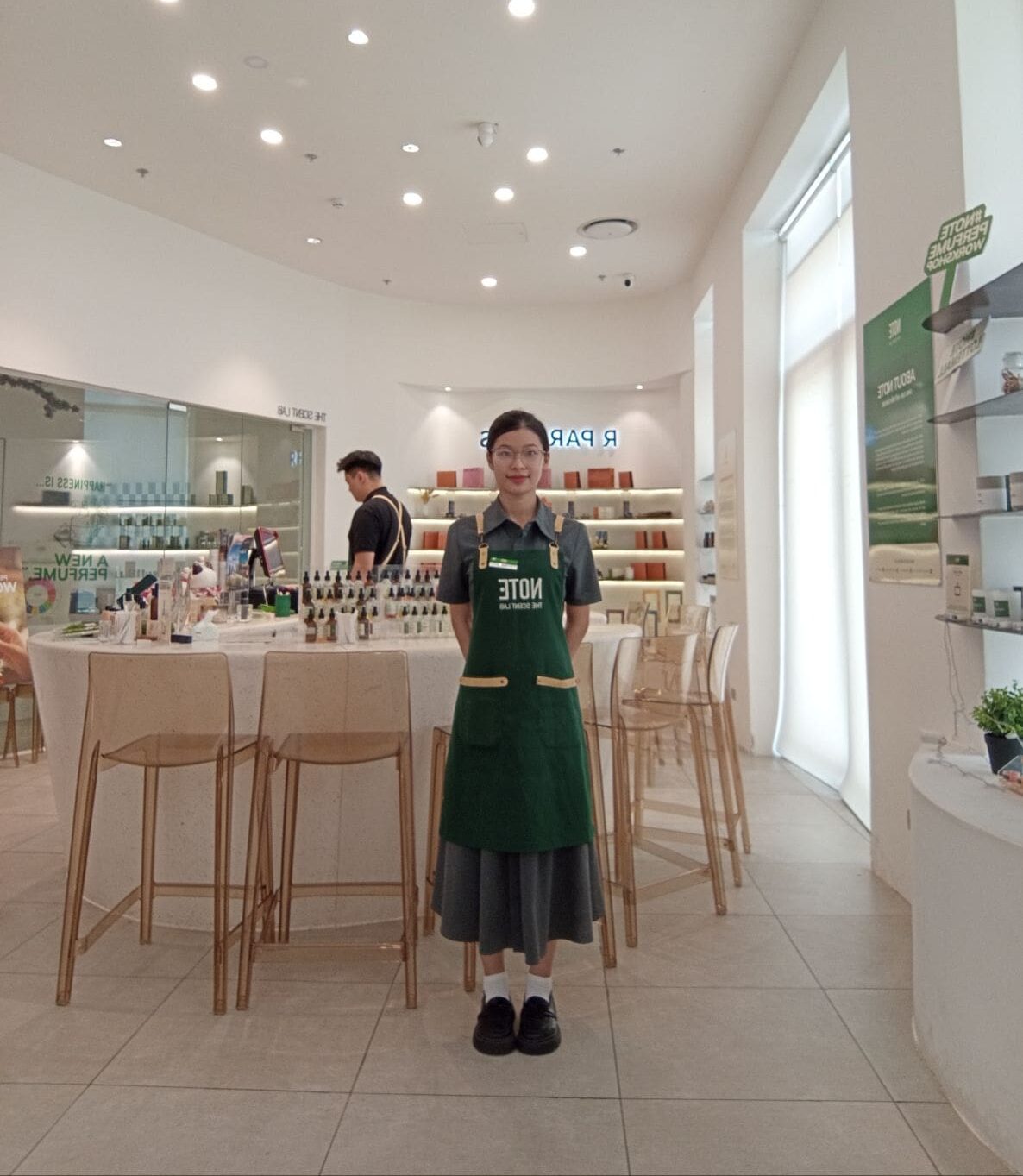
Travelers walk in to our 42 Nguyễn Huệ studio carrying that smoke on their clothes, on their scarves, sometimes on their skin. They sit down at the workshop bench, and within ten minutes of smelling fragrance notes, almost half of them point to the same drawer: sandalwood, white musk, sometimes a warm amber. They don’t say “I want a temple perfume.” They say things like “this one feels familiar” or “this is what Saigon smelled like to me this morning.”
nn
That’s not coincidence. That’s how memory and scent work. The olfactory bulb routes signals straight to the limbic system, the same part of the brain that stores emotion and memory, which is why a single sniff of something can drop you back into a moment ten years old. You walked through the Jade Emperor Pagoda. You took a deep breath without meaning to. Now there’s a faint imprint, and your hand finds the bottle that matches it.
nn
Take Kai Wen, a traveler from Singapore who joined a workshop last year. He chose what we listed as cedarwood, but he kept saying it smelled like chocolate mint to him. Halfway through the session, he figured out why: his uncle had owned an ice cream shop in Singapore in the 1990s, and the wood of the freezer cabinets had soaked up the stock for years. He named his perfume something we can’t print here, a private joke between him and a grandmother who has since passed. He still wears it. The scent didn’t come from cedarwood. It came from cedarwood plus a memory he didn’t know he had.
nn
Or “Hà” — a guest at our 34 Nguyễn Duy Hiệu studio in Thảo Điền. She built a formula around grapefruit and tía tô (Vietnamese perilla leaf) because, she said, “I first smelled this combination at Bến Thành Market this morning.” Two years later she emailed: “Every spritz takes me back to that Saigon morning.” She bought the temple, the market, the morning humidity, and the act of choosing, all of it, for the price of a 50ml bottle.
nn
This is what a perfume workshop in Saigon is, when it works. It’s not “make your own scent.” It’s “find the scent your day has already given you, and put it in a bottle.”
nn
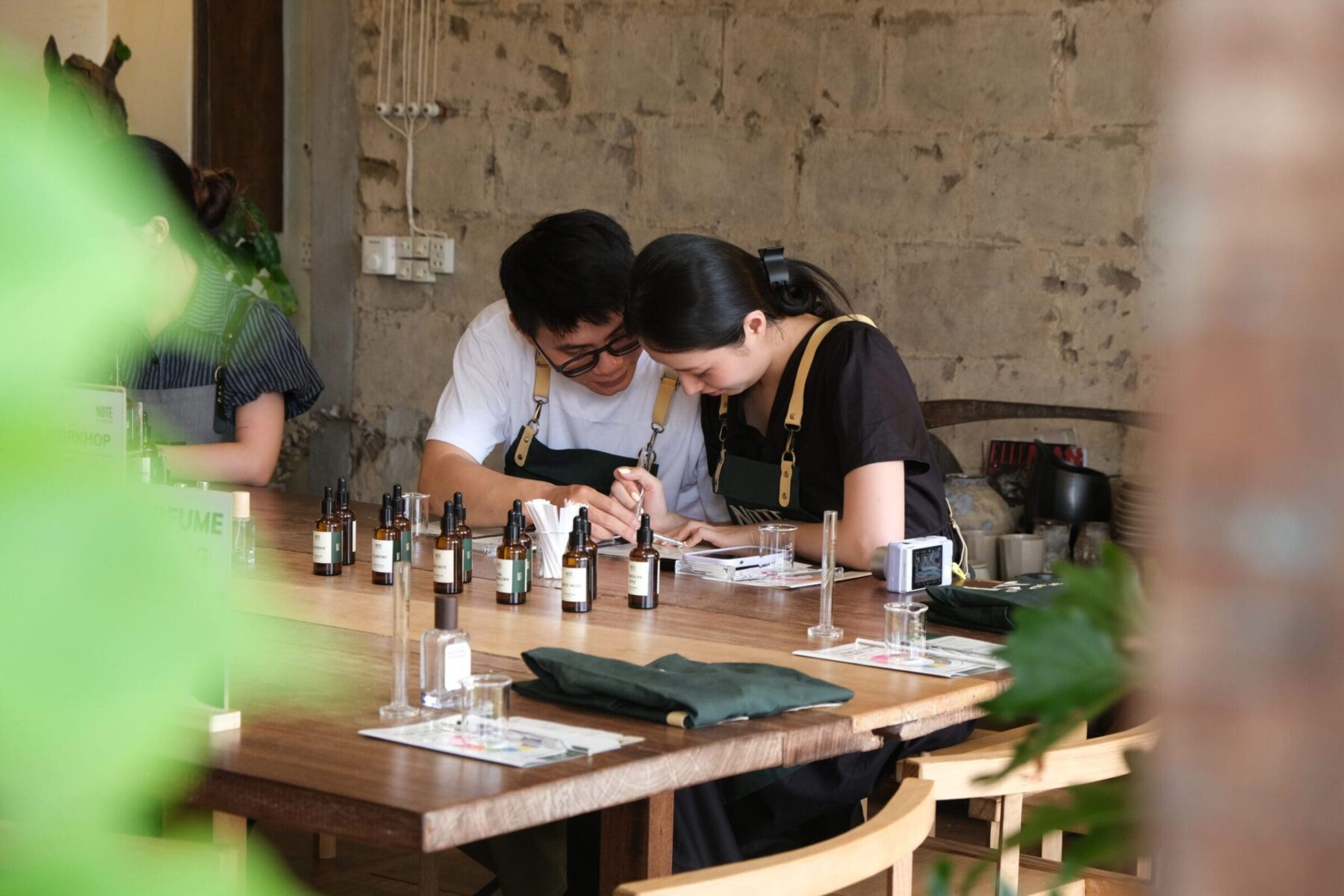
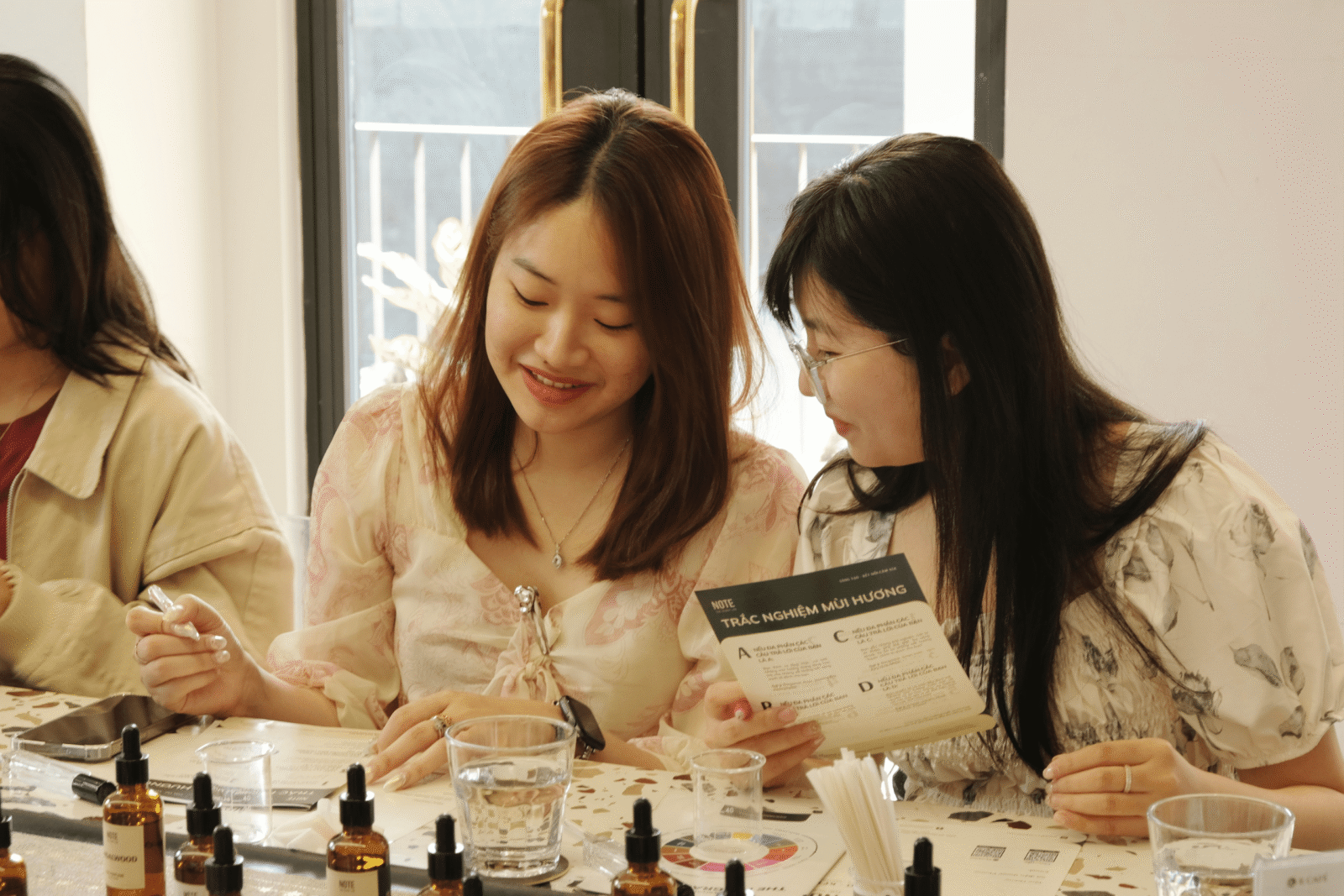
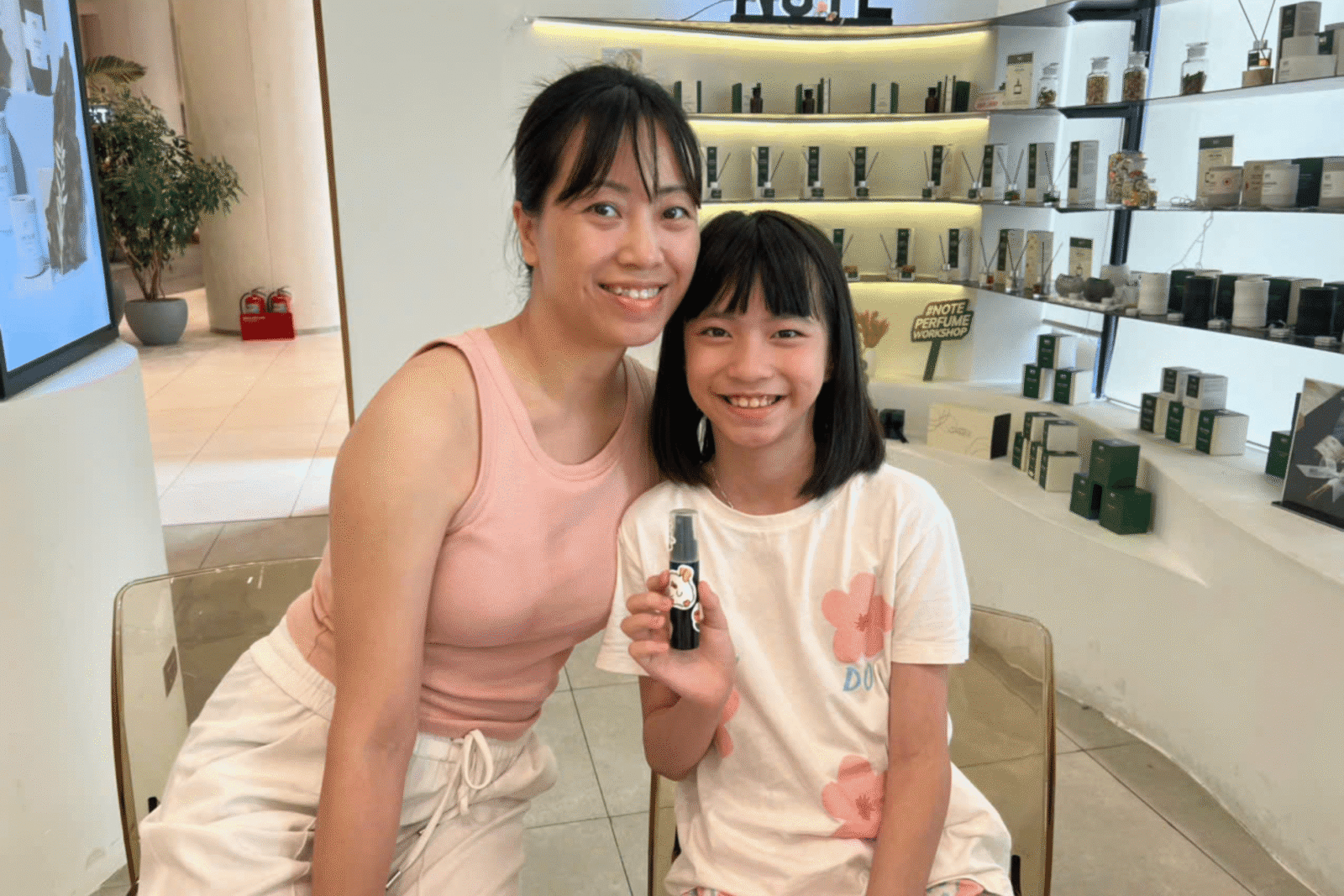
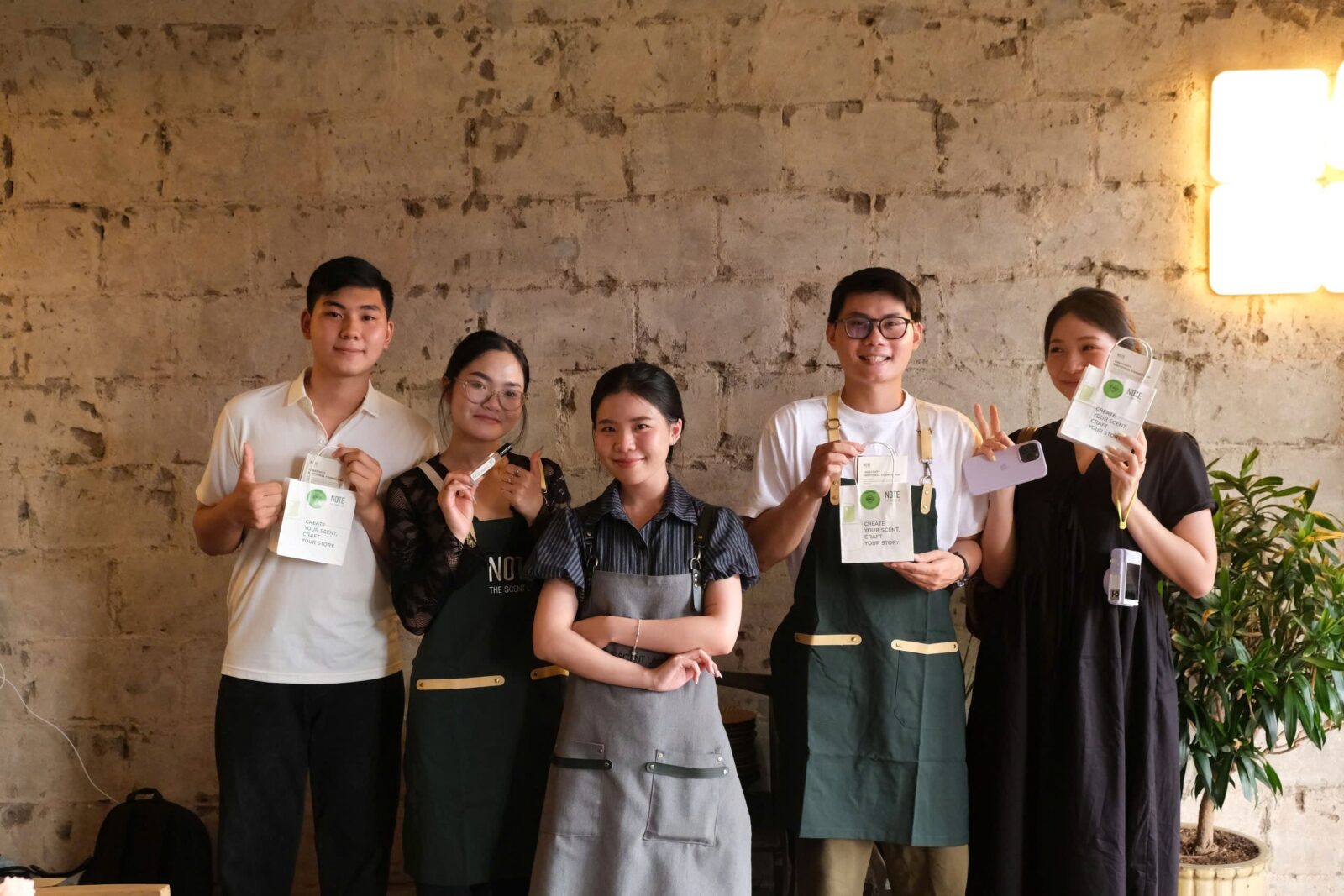
A NOTE workshop runs 120 minutes, hands-on, expert-guided. We work from 30+ fragrance notes, IFRA-compliant, including jasmine, sandalwood, cinnamon, and a range of florals, woods and spices. Workshop tiers start from $24 (10ml) and go up to $64 (50ml), or roughly 550,000 VND for the entry tier. You leave with a finished bottle, a take-home formula card so you can ask us to recreate it later, a sealed gift box, and a complimentary leak-protection zip pouch designed for cabin pressure on flights home. There’s no certificate, because we’re not pretending you graduated from a four-year program. You spent an afternoon making a perfume.
nn
n
“Great experience! Our tutor Long is the greatest story teller.”
n — Misha C, TripAdvisor ★5n
nn
n
“Making perfume in a space with fresh flowers on a rainy afternoon is romantic.”
n — Celine, TripAdvisor ★5n
nn
n
“I have a beautiful souvenir to take home and every time I smell it, I will remember Saigon.”
n — herbaljo, TripAdvisor ★5n
nn
Some travelers come in already knowing what they want. Most don’t. Both kinds leave with a bottle they couldn’t have predicted that morning.
nn
n n Book Your Perfume Workshop →n n
nn
A small detour: souvenirs from a Saigon temple
nn
The Jade Emperor Pagoda’s tiny shop sells stunning prayer amulets and incense bundles. Buying a coil of Vietnamese vetiver incense here, sealed, around 100,000–200,000 VND for decent quality, is one of the more honest souvenirs in District 1. You can light one at home and the entire temple comes back, once.
nn
If you’d rather take the smell with you in a wearable form, that’s what our studio does. A custom 30ml at NOTE built around sandalwood and warm amber will hold the meditative mood of the temple — different ingredients, similar atmosphere. For ready-made options, our retail collection at thescentnote.biz includes a few pieces inspired by Vietnam, a soft alternative if a 120-minute workshop doesn’t fit your itinerary. Both work. Neither fights with the other.
nn
Whatever you carry home, just don’t carry stock-photo memories of the pagoda. Carry the smell. Saigon will reward you.
nn
Frequently Asked Questions
nn
Is the Jade Emperor Pagoda in Saigon worth visiting?
n
Yes, especially if you appreciate temples that feel lived-in rather than restored. Built in 1909, the Jade Emperor Pagoda is a Top 25 TripAdvisor attraction in Ho Chi Minh City and one of the few sights in District 1 where the atmosphere is the main exhibit. Plan 30–45 minutes. Ideally first thing in the morning, when the incense smoke is at its densest and the crowds haven’t arrived.
nn
Is there a dress code at the Jade Emperor Pagoda?
n
Yes. Cover shoulders and knees: no sleeveless tops, no shorts above the knee. A light scarf or sarong in your bag is enough if your day’s outfit is more casual. Shoes are typically removed where you see locals removing theirs. Quiet voices throughout.
nn
How do I get from Bến Thành Market to the Jade Emperor Pagoda?
n
It’s about 10–15 minutes by taxi or Grab, typically 50,000–100,000 VND. Walking is also possible at roughly 25–30 minutes, mostly along Đinh Tiên Hoàng and Mai Thị Lựu streets. Buses 18 and 28 typically run nearby; check current schedules before relying on them. The address is 73 Mai Thị Lựu, Đa Kao ward, District 1.
nn
Can I take photos inside the Jade Emperor Pagoda?
n
The front courtyard and koi pond area are generally fine for photos. Inside the main halls, rules are stricter. Some halls forbid photography entirely, particularly around the central altar and the fertility shrine. Always: no flash, never photograph people praying, and follow staff signage. When in doubt, ask first or simply put the phone away.
nn
What does the Jade Emperor Pagoda smell like, exactly?
n
A heavy, warm, slightly sweet smoke layered from agarwood (deep, resinous), sandalwood (creamy, soft), benzoin (sweet, vanilla-adjacent), and frankincense (sharper, lemony). On lunar 1st and 15th days, fresh flowers and citrus offerings add a brighter top note: pomelo, jasmine, sometimes lotus. The base of the smell has been continuous in the building since 1909.
nn
How close is the Jade Emperor Pagoda to NOTE perfume workshop?
n
Our 42 Nguyễn Huệ store is roughly a 10-minute taxi ride or a 20-minute walk from the Jade Emperor Pagoda. Many travelers visit the pagoda in the morning and join an afternoon perfume workshop the same day. The temple incense is still on their clothes, which often shapes the formula they end up making. Workshops run 120 minutes, with tiers from $24 (10ml) to $64 (50ml).
nn
What other attractions are near the Jade Emperor Pagoda?
n
The pagoda sits on the District 1/3 boundary and pairs naturally with Notre Dame Cathedral (about 1.5 km), Independence Palace (about 1.2 km), and the War Remnants Museum (about 1 km). A complete morning loop covers the temple, then coffee, then one or two of these landmarks. We’ve mapped a longer version in our 3-day Ho Chi Minh City itinerary.
nn
Can I buy temple incense at the Jade Emperor Pagoda?
n
Yes, a small shop near the entrance sells incense coils, prayer amulets, and small offering items. Vietnamese vetiver incense bundles typically run 100,000–200,000 VND for decent quality. It’s a more honest souvenir than most things sold near Bến Thành, and lighting one at home tends to bring the entire pagoda back for as long as the coil burns.
nn
n n Book Your Perfume Workshop in Saigon →n n
nn
Before you fly home
nn
If the Jade Emperor Pagoda is on your morning, consider what to do with your last day in the city. We’ve put together a piece on what to do on your last day in Ho Chi Minh City for travelers who suddenly realize they have eight hours left and a flight in the evening. For another sister-temple experience with a completely different texture, our piece on Chợ Lớn, Saigon’s historic Chinatown covers the older Cantonese temple cluster across town.
nn
And if scent itself is what brought you here, the natural next read is our guide to creating your own signature scent, with practical notes on choosing ingredients before you ever sit down at the bench.
nn
Follow our day-to-day on Instagram @note.workshop.
nn
This article is provided for general informational and reference purposes only. Information was accurate at the time of writing (May 2026) but may change without notice. Opening hours, prices, transit schedules, and availability for venues outside NOTE – The Scent Lab can change without notice. Please verify with official websites, TripAdvisor, or Google Maps before your visit. We do not guarantee accuracy and are not responsible for outcomes based on outdated information.
nn
Find NOTE – The Scent Lab
n
- n
- 42 Nguyễn Huệ (Cafe Apartment, Floor 3 — Vietnamese ‘Lầu 2’, 2 levels up from the ground floor) — Get directions → · TripAdvisor
- 34 Nguyễn Duy Hiệu (Thảo Điền, Thủ Đức) — Get directions → · TripAdvisor
n
n
n
n
n
nn
Some smells fit in a suitcase. Most don’t. The ones that matter, you build yourself — and if you build them well, they keep arriving for years afterward, usually on the day you needed Saigon back.
nn
n
nnn
Ещё в этой серии
n
- n
- Pad Thai Class vs Perfume Class — Which Asia Workshop Do Tourists Remember Longer?
- Vietnam vs Thailand — Which Country Smells Better? An Instructor’s Honest Verdict
- The Scent of Vietnam: A Workshop Instructor’s Regional Guide
- 7 уникальных впечатлений во Вьетнаме, которых нет больше нигде (2026)
- 15 необычных развлечений в Хошимине вдали от туристических маршрутов
n
n
n
n
n
nn
Related Reading