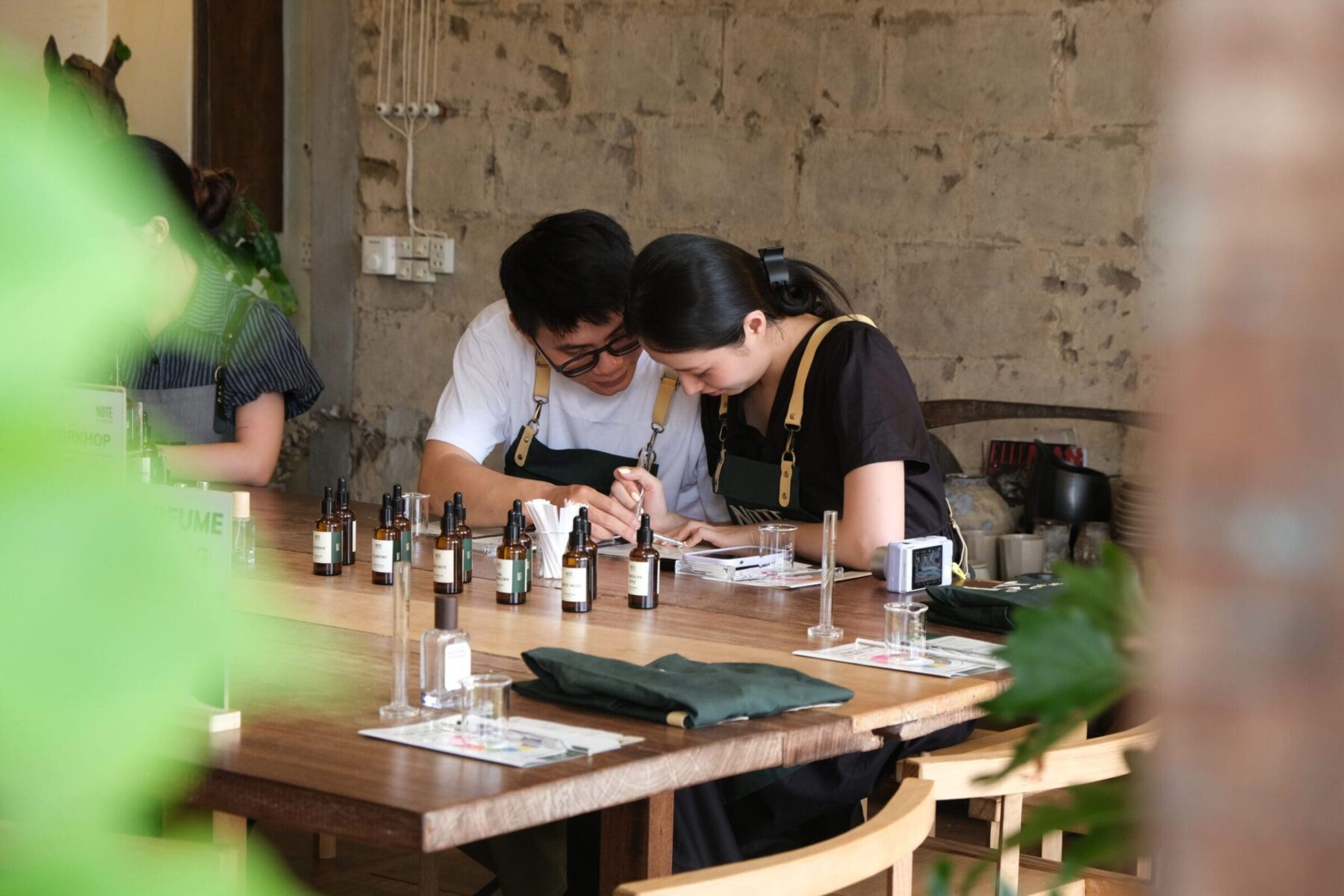
The scent of Vietnam is not one smell. It is three. NOTE – The Scent Lab is a perfume workshop in Vietnam with two studios at 42 Nguyễn Huệ (District 1, Ho Chi Minh City), 34 Nguyễn Duy Hiệu (Thảo Điền).9 by. North, Center, and South are three climates, three histories, three bowls of breakfast soup, and three perfumes hiding inside the air. This is a workshop instructor’s regional guide to what Vietnam actually smells like, written for travelers who care about their nose more than their camera.
I’m Yến. I teach perfume workshops at NOTE, most weeks at our 34 Nguyễn Duy Hiệu studio in Thảo Điền. Travelers from the North often say the same thing: “Saigon smells nothing like Hanoi.” Travelers from Hội An say something different: “Why is the air heavier here?” They are all correct. The scent of Vietnam shifts every five hundred kilometers. After a few hundred workshops, you stop hearing it as one country. It is three countries, stitched at the spine. The easiest way to understand them is one nose at a time.
Names in this story have been changed to protect our guests privacy. Details of the workshop experience, the perfumes made, the studio, the conversations, are authentic.
A note before you read: This guide is based on our team’s research and visits as of May 2026. Prices, hours, transit schedules, and venue availability change. Please treat the specifics as a starting point, not a guarantee, and verify with official sources before booking. The only thing we can vouch for absolutely is the perfume workshop at NOTE.

Why the scent of Vietnam is three countries, not one
A quick orientation, because it shapes everything that comes after. Vietnam is shaped like a long, narrow letter S, and the climate stretches with it. The North gets a real winter, dry and cool from December to February, sometimes cold enough for a coat in Sa Pa. The Center sits in a heat bowl, humid most of the year. The South never really cools down. The air is warm even at midnight.
What you smell is what the climate carries. Cool, dry air thins a scent and sharpens its edges. That is why Hanoi mornings smell of jasmine and lake mist with surgical clarity. Humid air holds a scent close to the ground. That is why Hội An lanes seem to ferment with cinnamon, fish sauce, and old wood at once. Saigon’s permanent warmth turns everything into top notes: bright, fast, slightly chaotic.
So when travelers ask me what Vietnam smells like, I start by asking them where they have been. The scent of Vietnam is not a single perfume. It is three accords that sit on your skin in sequence. A workshop, when it works, lets you choose which one, or which blend, you carry home.
Northern Vietnam: the cool, the floral, the still
Wake up early in the Old Quarter on a November morning. Step outside before seven. The first thing the air does is surprise you with how clean it is: drier than Saigon, sharper than Hội An, with a low hum of charcoal smoke from the bún chả grills warming up for lunch. Hoàn Kiếm Lake puts a faint mineral mist on top of everything. If you are lucky, a thread of jasmine drifts down from a courtyard balcony. That is the scent of Vietnam in the North in a single breath: jasmine, lake mist, charcoal, a dry quietness that the South never has.
The scent of Vietnam in the North: signature ingredients
From a fragrance palette, four notes carry most of the Northern scent of Vietnam.
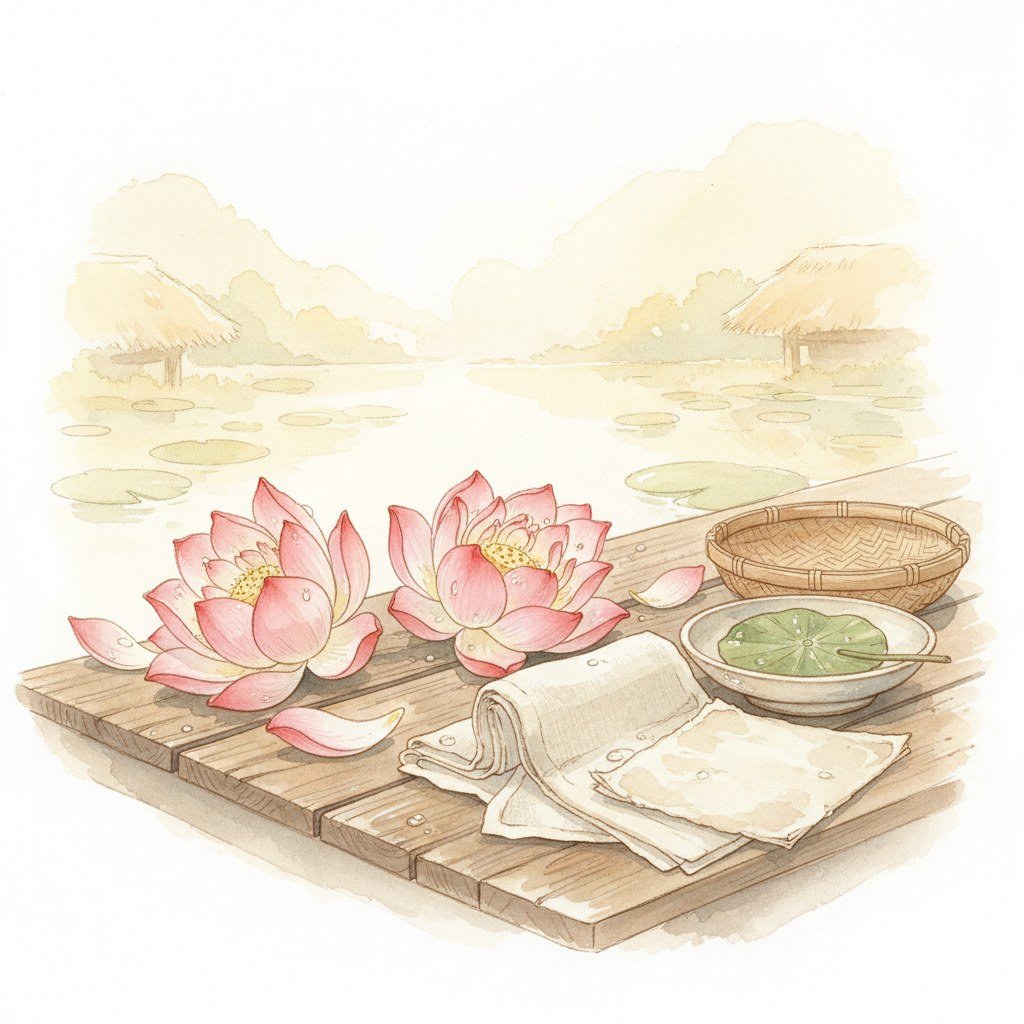
Lily-of-the-valley, our fruity muguet. The lotus is Vietnam’s national flower, and Hanoi has built a tea ceremony around it: tea leaves are sealed inside the closed bud overnight, then dried. To catch that same quiet, cool-morning feeling at our bench, we reach for fruity muguet, our lily-of-the-valley note: green, watery, slightly powdery, with a clean sweetness like fresh laundry dried in cool air. It is the scent of a Hanoi morning that has not started yet.
Jasmine, hoa nhài. Old Quarter courtyards, garden walls in Tây Hồ, the bushes around the Temple of Literature. Jasmine flowers open at night and release their fullest scent in the cool hours before dawn. A jasmine note in cool air smells sharper and more honeyed than the same note in hot air. North Vietnam jasmine is the cool-air version.
Peppermint. Northern soups are built on cold-weather herbs: Vietnamese coriander, perilla leaf, peppermint, holy basil. The scent of a Northern phở is unmistakable: a crisp, almost icy lift on the surface of the warm broth. In our workshop palette, peppermint is the most “Northern” green note we offer.
Cinnamon, quế. Vietnam grows some of the world’s best cinnamon, sharper and brighter than Indonesian cassia, with a clear sweetness underneath. A cinnamon note over a soft floral base is one of the most distinctly Northern accords a traveler can build at our bench, and a clean shorthand for the scent of Vietnam’s North in a 30ml bottle.
A traveler’s North: Mikhail at our Hanoi bench
Last summer, Mikhail walked into our.” A signature scent he had thought about for years but never sat down to make. He wanted something familiar, plus “something more interesting for the summer.”
The scent of Vietnam shaped the second half of that brief. He gravitated toward the brighter, cooler greens on the table: peppermint, a green note, a tiny lift of bergamot. Not the warmer notes my Saigon students reach for first. The morning at West Lake, he said, had set his expectation for what “summer” should smell like in this country: lake-cool, herbal, mineral. He left with a 30ml bottle, a clean green heart on a soft white-musk base. The scent of Vietnam in the North does not shout. It waits for you to be quiet enough to hear it.
A small cultural note: tea, not incense
Travelers sometimes assume the most “Vietnamese” smell in Hanoi is temple incense. It is not. The North’s everyday fragrance ritual is tea. Specifically lotus-scented green tea, the cup held a few centimeters under the nose for a moment before the first sip. That moment is the closest thing Vietnam has to a daily perfume ritual at home.
“Beautiful space, amazing hospitality and great information from knowledgeable host.”
— Tina C, TripAdvisor ★5
Central Vietnam: the heat, the spice, the imperial weight
The first time I taught a workshop the day after returning from Hue, I noticed I was reaching for warmer ingredients than usual. Cinnamon. Sandalwood. Cedarwood. A drop of patchouli. My nose had brought the city back with me without asking permission. Central Vietnam has a particular weight in the air: humid climate, heavily spiced cuisine, old dark wood architecture. The Perfume River, Sông Hương, runs through Hue, named centuries ago for the fragrant flowers that fell into the water from upstream gardens. Central Vietnam was perfumed before the word “perfume” reached Vietnamese.
The scent of Vietnam in the Center: signature ingredients
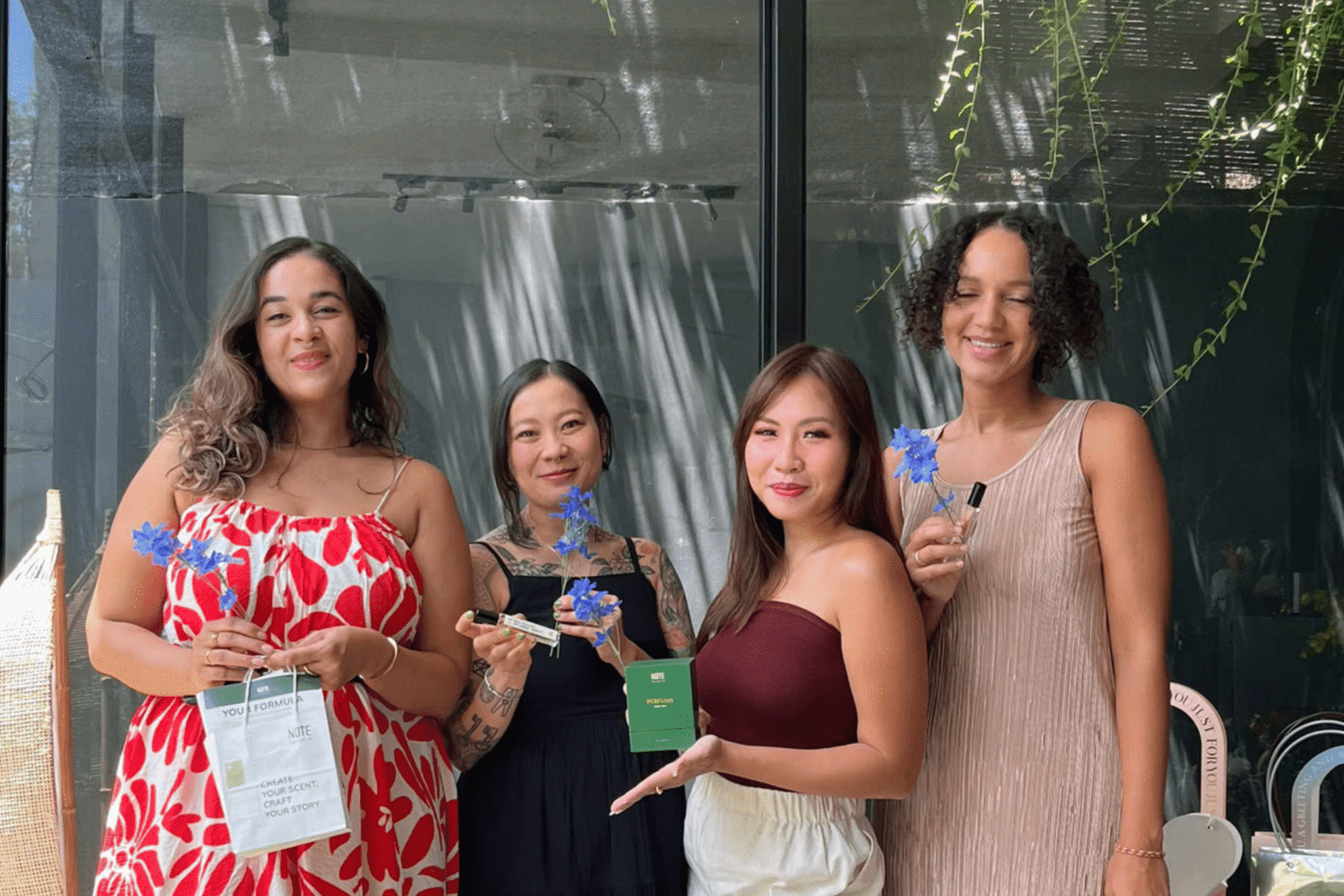
Cinnamon, again, but used differently. Central cinnamon shows up in slow-cooked beef noodle soup, in royal Nguyễn dynasty banquet dishes from Hue, and in cinnamon bark dried for incense. A Hoi An lane on a wet evening can smell faintly of cinnamon, woodsmoke, and rain on tile.
Pink peppercorn. Royal Hue cuisine is famously layered: a single dish can carry six or seven aromatic spices. In our palette, pink peppercorn is dry, slightly floral, with a green spike that rounds quickly into warmth.
Sandalwood, đàn hương. Central Vietnam has a long Buddhist history, and the temples around Hue and Hội An are full of slow, steady sandalwood smoke. Sandalwood in our palette is the creamy mid-section of our woody range: softer and milkier than cedarwood, almost sweet in the dry-down. It quietly anchors a “warm” Central perfume without making it heavy.
Oakmoss and patchouli. Vietnam has long prized fragrant roots and grasses like vetiver, used in traditional pomanders for centuries, and that dry, earthy note is what clings to old áo dài silk. At our bench, oakmoss and patchouli carry that character: dry, smoky, slightly earthy, sometimes leathery. In a workshop perfume, they give a Central-leaning formula its long, dry, smoky tail.
Neroli and honeysuckle. Both lighter florals work beautifully in Central blends because the climate’s humidity lifts them more readily than the cool dryness of the North. Hoi An’s lantern festivals, held on the 14th of every lunar month, have a particular sweetness in the night air: partly candles, partly river, partly orange-blossom and ylang-ylang.
A traveler’s Center: “Into The Woods”
One memorable workshop I taught was for a traveler I’ll call Joan, in her early sixties, who had just come back from a three-day trip up the central coast. She wanted “fresh and clean, but not floaty.” Something that smelled like skin in a forest, not a flower in a vase. After ten minutes at the bench, she picked white musk, then added sandalwood and a thread of cedarwood.
The dry-down surprised her. “I am standing in a forest,” she said. “A clean one. Not damp.” She named it Into The Woods. The formula is a particularly Central Vietnamese accord, even though Joan never said the word “Hue” once. White musk reads as cool dry mountain air. Sandalwood reads as the meditative core of a Buddhist temple. Cedarwood reads as the smoky signature of an old wooden house in Hội An. The scent of Vietnam often arrives in formulas that don’t name themselves.
A small cultural note: lanterns and royal kitchens
Hue’s royal cuisine is the most heavily perfumed food culture in the country, and Hoi An’s lantern nights are the most theatrical. Both feed the same impression: Central Vietnam thinks in layers. A “Central” perfume is rarely a soliflore. It is almost always an accord, three or four ingredients agreeing on the same mood.
Our hidden gems Hoi An guide covers the lanes, lantern rituals, and tailor shops most travelers miss on a one-day visit.
Southern Vietnam: the heat, the citrus, the river markets
Saigon does not smell like one thing. Saigon smells like seventeen things at once, switched around every block, layered with motorbike exhaust and someone’s lunch. The temperature never drops below the level where scents stay loose and lifted. The scent of Vietnam in the South is mostly a top-note country: bright, citrus-led, slightly chaotic, almost always edible.
Walk through Bến Thành Market at 7:00am. You will pass pomelo skins in a basket, fresh basil being washed, fish sauce in clay vessels, mango, dragon fruit, a charcoal stove warming up under a phở pot, a woman frying eggs in a doorway. Walk three more blocks and the air changes again: sweeter, fruitier, a soft drift of frangipani from a wall.
The scent of Vietnam in the South: signature ingredients
Bergamot and lemon. Citrus is the most honest summary of Saigon: pomelo skins, lime juice on every table, the sharp top note of any Southern morning. In our palette, bergamot reads as the refined version of that lift, green and slightly bitter. Either citrus anchors a Saigon-leaning formula.
Frangipani, hoa sứ. The white-and-yellow temple flower that grows in courtyards across the South. Frangipani is creamy, almost coconut-adjacent, with a slow tropical sweetness. The flower drops in the late afternoon and litters the ground beneath the trees. It is one of the most consistent ambient perfumes in Southern Vietnam.
Tuberose. A heavier tropical floral, creamy and heady in profile. In a workshop bottle, tuberose adds heat without adding weight.
Fig and fig tree. Very Southern. Fig in our palette is green-sweet, slightly milky in the dry-down, with a soft tropical fruit underneath. Travelers from Europe use it as their “this reminds me of home” note. Travelers from Asia use it as their “this reminds me of Saigon afternoons” note. Same ingredient, different memory work.
White musk and warm amber. Two of the most-chosen base notes at our 34 NDH studio in Thảo Điền. White musk gives the warm-skin cleanliness travelers associate with Saigon’s humidity. Warm amber adds the slow, resinous after-dinner sweetness of a Southern night. Together they are the unofficial base of a “Saigon evening” formula and the closest match to the scent of Vietnam’s South after dark.
Jasmine, again, but warmer. Northern jasmine reads cool and surgical. Southern jasmine reads sweeter, fuller, more honeyed because the heat lifts the molecules differently. Many of our Saigon-built formulas pair jasmine with bergamot for a top-and-heart that smells like a market morning at 8:00am.
A traveler’s South: “Saigon Kisses”
One of my favorite Southern formulas was made by a traveler I’ll call Lee at our 34 Nguyễn Duy Hiệu studio. She had spent three days walking a District 1 morning loop: coffee, pomelo on a market stall, fig trees in a residential side street, the late-afternoon frangipani drop in a courtyard near our studio. She kept choosing notes that pulled toward the warm, fruity, milky side of the table.
She named the final bottle Saigon Kisses: a fig top, a soft jasmine heart, a white musk base with the smallest drop of warm amber. It is, to my nose, the most accurate “Saigon” perfume I have ever helped someone build. The scent of Vietnam in the South is the idea that the city’s humidity itself has a flavor, and a perfume that captures that humidity wins.
A small cultural note: river markets and the long flat South
The Mekong Delta is the South’s other great fragrance environment. The river markets at dawn (Cái Răng near Cần Thơ is the most famous) smell of fresh river water, cut fruit, diesel from the boats, and a vegetable sweetness that rises with the morning sun. Phú Quốc, the island off the southern coast, smells of sea salt, coconut, and fish sauce barrels.
Our Cafe Apartment guide covers the neighborhood around our 42 Nguyễn Huệ studio. The studio sits on Floor 3 (Vietnamese ‘Lầu 2’, 2 levels up from the ground floor) of a 1960s residential building with a particular old-Saigon smell: damp concrete, fresh laundry, somebody’s coffee.
“Ember and Maria did an amazing job explaining the perfume wheel and how all the scents go together. This perfume will always remind us of this trip in Vietnam.”
— An L, TripAdvisor ★5
The scent of Vietnam, as a 30ml bottle
Here is the part travelers usually realize halfway through a workshop. The scent of Vietnam is not something you have to choose between. You can build a bottle that holds North, Center, and South in different proportions: a lily-of-the-valley heart, a cinnamon middle, a citrus top, a sandalwood base. The formula remembers all three trips at once.
Or you can pick a region. Many guests do. A traveler who has only visited Hanoi often leaves with a cool, restrained, jasmine-and-mint formula. A traveler from Hội An tends to build a darker, spicier accord with cinnamon and sandalwood. A traveler whose Vietnam was mostly Saigon walks out with citrus, fig, white musk, jasmine. A perfume that, on a hot day six months later, plays back the whole trip in a single spritz.
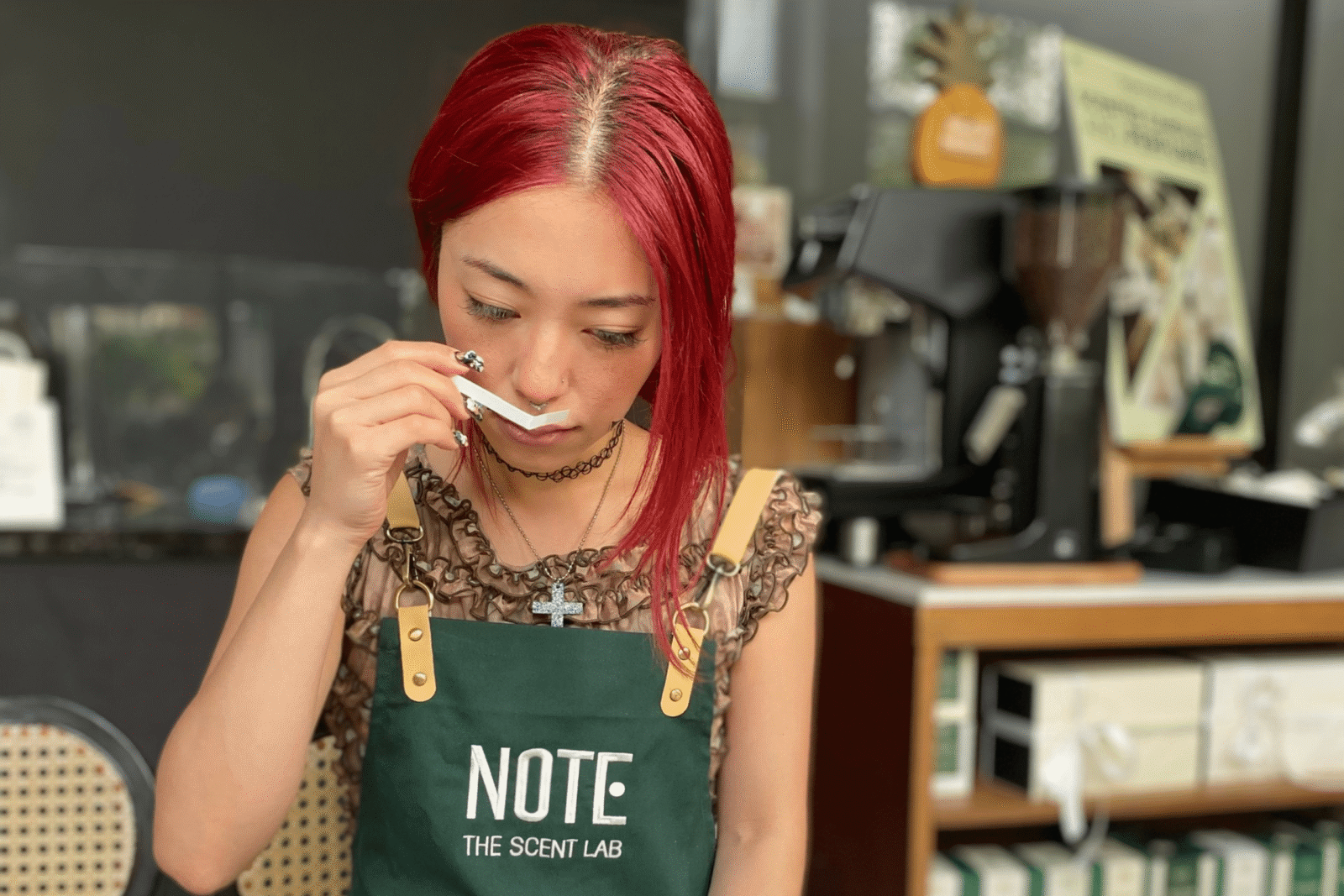
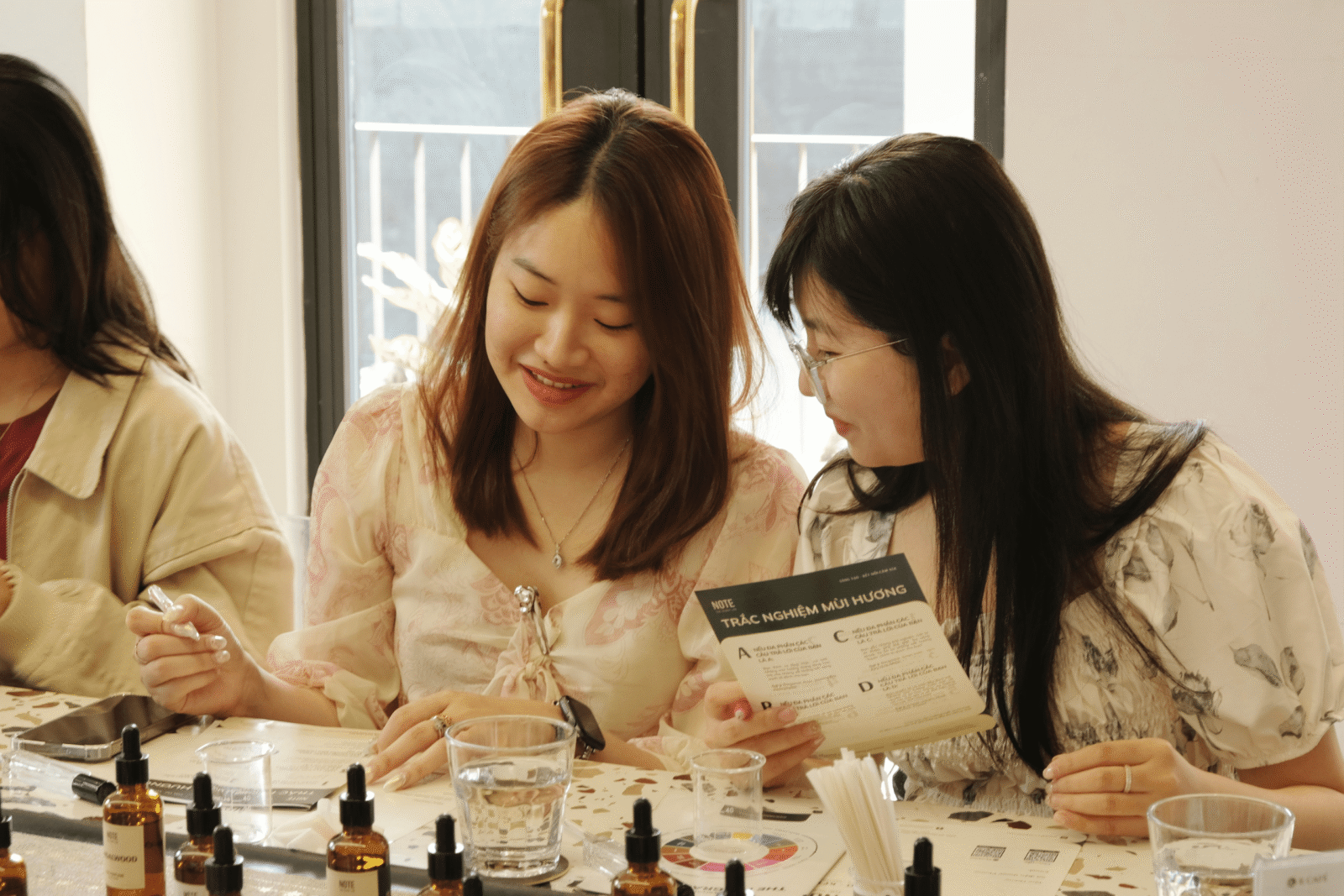
A workshop at NOTE runs 120 minutes, hands-on and instructor-led, working from 30+ IFRA-compliant fragrance notes including jasmine, sandalwood, cinnamon, fig, and a broad range of florals, warm spice and woods. Tiers start from $24 (10ml) up to $64 (50ml), or around 550,000 VND for the entry tier. You leave with a finished bottle, a take-home formula card to recreate the scent later, a sealed gift box, and a complimentary leak-protection zip pouch for cabin pressure on flights home. Workshops are conducted in English. (Vietnamese also available for local guests.)
What you choose at the bench will be shaped by where in Vietnam you have been. That is, in fact, the whole point.
“Great experience! Our tutor Long is the greatest story teller.”
— Misha C, TripAdvisor ★5
“Suzee explained scent theory in ways I wouldn’t have known. Super patient.”
— Cris P, TripAdvisor ★5
Souvenirs from a country that smells like three countries
Markets across Vietnam sell scent souvenirs: lotus tea in Hanoi, cinnamon bark in Hoi An, fish sauce in Phú Quốc, frangipani-scented soaps in the Mekong. The simple rule for a fragrance-aware traveler: buy from a shop where the staff can describe what is in the product, or skip it.
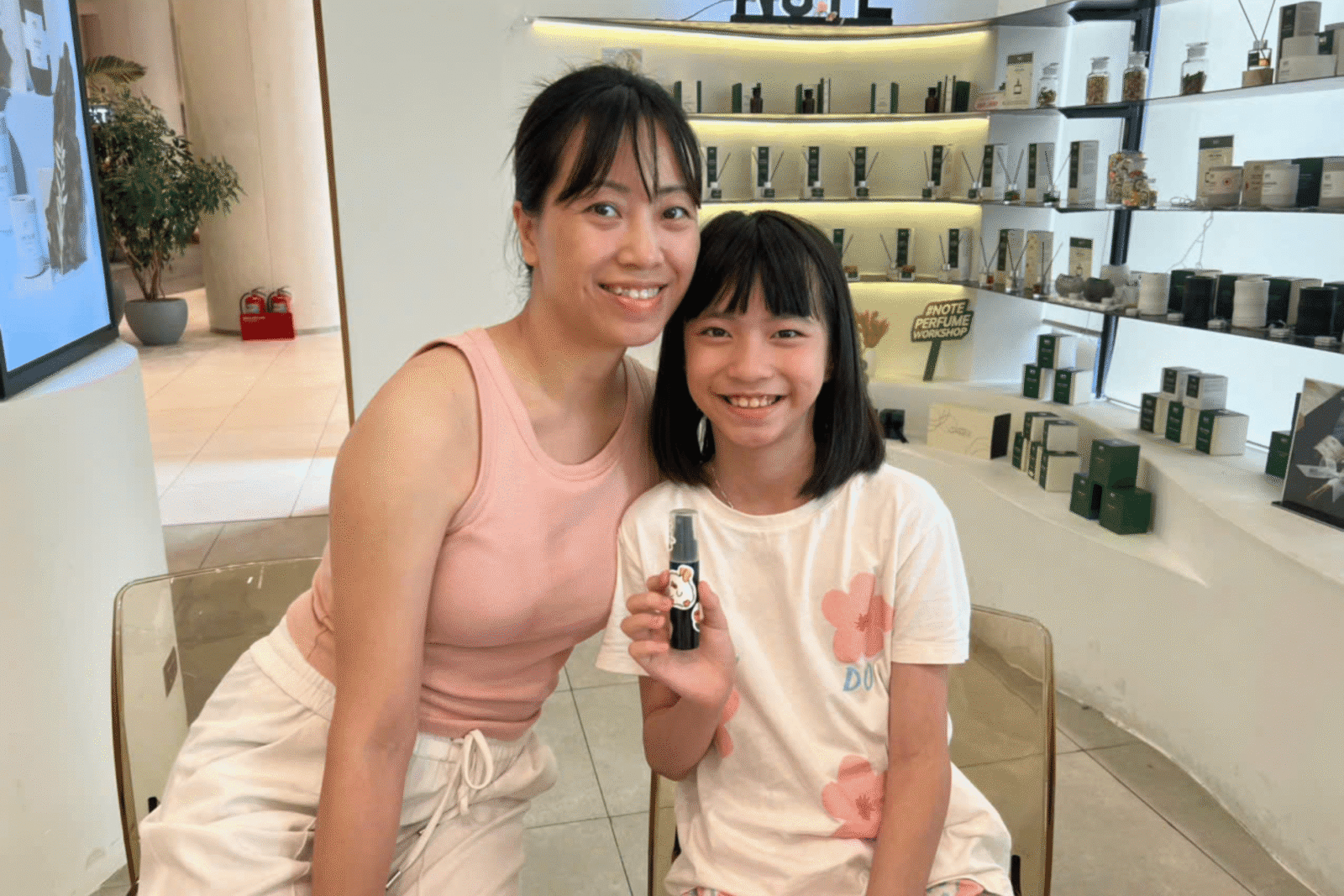
If you want to take the scent of Vietnam home in a wearable form, that is what our studio is for. A custom 30ml from a NOTE workshop is the most precise scent-souvenir we know how to make, because you, not a factory, decide what goes in the bottle. For ready-made options, our retail collection at thescentnote.biz includes pieces with Vietnamese ingredients that travelers reach for when a 120-minute workshop will not fit the itinerary.
For trips beyond the obvious city centers, our hidden gems Hanoi guide and our guide to the Jade Emperor Pagoda are good starting points: one for the cool-air North, one for the temple-incense South.
Frequently Asked Questions about the scent of Vietnam
What does Vietnam smell like overall?
The scent of Vietnam is best described as three regional accords stitched together. The North smells of jasmine, lotus tea, charcoal smoke, and cool dry mornings. The Center smells of cinnamon, sandalwood, vetiver, royal-cuisine spice, and humid wood. The South smells of citrus, frangipani, fish sauce, fig, white musk, and warm tropical humidity. There is no single Vietnam smell. There are three, and most travelers carry a personal blend home.
What is the most distinctive Vietnamese scent ingredient?
Lotus and Yên Bái cinnamon are the two most internationally recognized Vietnamese fragrance ingredients. Lotus is the country’s national flower and central to Hanoi tea culture. Yên Bái cinnamon, grown in the Northwest, is sharper and brighter than Indonesian cassia and is featured in both cuisine and incense. Other distinctive ingredients in our palette include jasmine, sandalwood, osmanthus, tuberose, and fig.
How can I capture the scent of Vietnam to take home?
The most precise option is a custom 30ml or 50ml perfume built at a workshop from notes like jasmine, sandalwood, cinnamon, fig, and osmanthus. Tea, incense, cinnamon bark, and lotus tea make good supporting souvenirs. Photography captures sights but not scent. The only way to carry a smell is to translate it into a wearable formula or a burnable medium like incense.
Where can I make a custom Vietnamese-inspired perfume?
NOTE – The Scent Lab runs perfume workshops at two studios in Ho Chi Minh City: 42 Nguyễn Huệ (District 1 HCMC), 34 Nguyễn Duy Hiệu (Thảo Điền). Sessions are 120 minutes, instructor-led, with 30+ IFRA-compliant notes spanning florals, warm spice and woods. Tiers start from $24 (10ml). Workshops are conducted in English. (Vietnamese also available for local guests.)
Do regions of Vietnam smell different from each other?
Yes, significantly. Climate, cuisine, and architecture differ across the three regions, and air carries scent differently in each. Cool dry Northern air thins and sharpens floral notes. Humid Central air holds spice and wood close to the ground. Warm Southern air keeps citrus and tropical florals lifted and bright. A traveler who has visited Hanoi, Hue, and Saigon will have smelled three different countries in a single trip.
What’s the best season to experience the scent of Vietnam?
For the North, October to April: cool dry air, jasmine and lotus in season, clearer fragrance impressions. For the Center, March to August: drier weather, lantern festivals at Hoi An on the 14th of each lunar month. For the South, the wet season (May to October) gives the city its richest air. The dry season (November to April) is more comfortable for walking. There is no off-season for fragrance, only different weights of air.
How does an instructor build a Vietnam-inspired perfume?
A workshop instructor at NOTE guides a traveler through five steps: a sniff-and-discuss quiz, a sampling round of 30+ notes, a build-on-skin trial with three to five candidates, a balance-and-adjust phase, and a final naming and bottling step. The instructor’s job is to translate a sensory memory into a workable formula. Most travelers leave with a bottle that surprises them.
Book Your Perfume Workshop in Vietnam →
Before you fly home
If you have a last day in either of our home cities, see what to do on your last day in Ho Chi Minh City for a fragrance-aware Saigon loop, or last day in Hanoi before your flight for the North. If scent itself brought you here, the natural next read is our companion piece on the Jade Emperor Pagoda and Saigon’s incense story, which goes deeper on the Southern temple-incense profile.
Follow our day-to-day on Instagram @note.workshop.
This article is provided for general informational and reference purposes only. Information was accurate at the time of writing (May 2026) but may change without notice. Opening hours, prices, transit schedules, and availability for venues outside NOTE – The Scent Lab can change without notice. Please verify with official websites, TripAdvisor, or Google Maps before your visit. We do not guarantee accuracy and are not responsible for outcomes based on outdated information.
Find NOTE – The Scent Lab
- 42 Nguyễn Huệ (Cafe Apartment, Floor 3, Vietnamese ‘Lầu 2’, 2 levels up from the ground floor), District 1, Ho Chi Minh City. Get directions → · TripAdvisor
- 34 Nguyễn Duy Hiệu (Thảo Điền, Thủ Đức), Ho Chi Minh City. Get directions → · TripAdvisor
How to find us:
- 📍 42 Nguyễn Huệ · Watch direction video on TikTok →
- 📍 34 Nguyễn Duy Hiệu · Watch direction video on YouTube →
- 📍 · Watch direction video on YouTube →
Some countries fit on a postcard. This one fits in a 30ml bottle, if you build it carefully. Even then, only three quarters of it. The rest is air. The rest is what you breathed when nobody was watching.
Ещё в этой серии
- Pad Thai Class vs Perfume Class — Which Asia Workshop Do Tourists Remember Longer?
- Vietnam vs Thailand — Which Country Smells Better? An Instructor’s Honest Verdict
- Jade Emperor Pagoda Saigon — What a Perfume Instructor Smells When Tourists Just See a Temple
- 7 уникальных впечатлений во Вьетнаме, которых нет больше нигде (2026)
- 15 необычных развлечений в Хошимине вдали от туристических маршрутов
Related Reading
- Hue Royal Cuisine — 5 Imperial Scent Stories 2026
- 越南的香气:一位香水工作坊老师的地域指南
- 베트남의 향: 한 워크숍 강사가 정리한 지역별 가이드