Pad Thai class vs perfume class is the workshop tourism question most travellers don’t think to ask until six months after the trip, when they’re trying to remember what their holiday smelled like. NOTE – The Scent Lab is a perfume workshop in Vietnam with two studios at 42 Nguyễn Huệ, Floor 3 (Vietnamese “Lầu 2” — 2 levels up from the ground floor) (Floor 3, Cafe Apartment, District 1, HCMC), 34 Nguyễn Duy Hiệu (Thảo Điền).9 by. After teaching at our bench for two years and visiting Bangkok and Chiang Mai cooking schools myself, I keep meeting guests who did one workshop in Thailand and one in Vietnam and have very different things to say about which one stayed with them. The honest answer to Pad Thai class vs perfume class isn’t about which is more fun on the day. It’s about which one your nose still remembers when you’re back at your kitchen sink in November.
I’m Linh. I teach perfume workshops at NOTE, mostly at 34 Nguyễn Duy Hiệu in Thảo Điền. I’ve also stood at a wok in a Chiang Mai cooking school, pounded curry paste in Bangkok, and walked home from both with a recipe card and a full belly. Both classes were excellent. Both were the right call for the day. But six months later, only one of them was still living on my skin. This guide is the honest, instructor-side comparison of Pad Thai class vs perfume class as the workshop tourism choice for your Asia trip — what each one actually delivers, and what the memory science says about why.
A note before you read: This guide is based on my own travel, our team’s research, and visits to Thai cooking schools as of May 2026. Prices, hours, schedules, and venue availability change. Treat the specifics as a starting point and verify with official sources before booking. The only thing we can vouch for absolutely is the perfume workshop at NOTE.
Names of NOTE guests in this story have been changed to protect their privacy. Workshop details — the perfumes made, the studio, the conversations — are authentic.
Why a Pad Thai class is the default Asia workshop tourism choice
Thailand owns workshop tourism in Asia. It has for two decades. Walk into any Bangkok hostel lobby and three of the five flyers on the wall are Thai cooking schools. Chiang Mai’s Old City has a cooking school every other lane inside the moat. The format is good and the volume is huge. If you ask a first-time Asia traveller “what hands-on thing should I book?” the answer that comes back fastest is “do a Thai cooking class.” Pad Thai class vs perfume class is rarely a fair fight, because most travellers have never heard of the second option.
The cooking class format is built for travel. Two to three hours. Around $30 to $50 per person, depending on city and tier. Market visit, demo, four to six dishes, eat what you cook, walk out with a printed recipe card. Pad thai is on every menu, because it’s the one Western travellers can name before they land. The class is fun, social, immediate. You’re sweating, laughing, holding chopsticks over a wok that’s hotter than your home stove will ever be. By 4pm you’ve eaten your own cooking and you have photos for the family group chat. That’s a real win.
Thailand has earned the crown. The cooking schools are well-organised, the instructors speak good English, and the supply chain (markets, fresh herbs, rented kitchens) supports a flow of fifteen to twenty travellers per session, multiple sessions per day, every day of the week. The model has scaled. It deserves its reputation. So when I say Pad Thai class vs perfume class, I am not pretending the cooking class is bad. It is not. It is excellent at what it does. The question is what it does, exactly, and how long the result lasts.
What you actually take home from a cooking class
You leave with three things. A folded recipe card. A photograph of your finished plate. A taste memory of the last bite, usually somewhere on the soi between the cooking school door and the BTS station. The recipe is honest. The photo is good. The taste fades by the time you’ve reached the airport.
This is not a knock on Thai cooking schools. It is the structural limit of any taste-based workshop. Taste lives in the mouth, and the mouth empties. The class produces a meal, not an object. That is the trade.
The thing nobody tells you about food workshops abroad
I’ll say the part most travel blogs skip. The recipe card from your Thai cooking class will probably not make pad thai again. Mine didn’t. I asked five guests last quarter. Three of them had done a cooking class somewhere in Asia in the last two years. None of them had actually cooked the dish at home more than twice. One had never cooked it at all. The card was on a fridge in Stockholm doing nothing.
The reason is logistical, not motivational. The Thai version of pad thai uses tamarind paste from a specific brand, palm sugar in disc form, fish sauce that smells correct (most international supermarket fish sauce has been adjusted), flat rice noodles that need to be soaked at exactly the right firmness, garlic chives, dried shrimp, and a wok that gets hot enough to actually char the noodles. Most home kitchens fail one of those tests. Tourists try once, the result is a wet, sweet pad thai that tastes nothing like the version in Chiang Mai, and the recipe card moves from the fridge to a drawer to a bin.
The smell of pad thai cooking, with its caramelising palm sugar, tamarind hitting hot oil, and garlic chives wilting at the last second, is a specific smell. It’s also a smell most travellers will never re-create at home. So the cooking class memory becomes a photograph and a story you tell at dinner parties for two years, then quietly stop telling. Pad Thai class vs perfume class is a question of memory storage, and the cooking class stores its memory in your phone.
A small data point from our bench
We’ve now hosted travellers from 38 countries at NOTE. A common pattern: guests who land in Vietnam after a Thai leg often arrive having already done one or two cooking classes. They tell us the class was great. They also tell us, almost without prompting, that they haven’t actually cooked the recipe again. They describe the food memory as “a thing I did in Bangkok,” past tense. Then they sit at our bench, build a perfume, and three weeks later they’re emailing me from a different time zone saying the bottle is now part of their morning. The verb tense changes. That’s the small data point. Pad Thai class vs perfume class is a question of present versus past tense, in the end.
“My daughter took a similar class in Singapore but this is at a different level. We learnt about sensory moods and smells. We will definitely come back!”
— Michael, TripAdvisor ★5
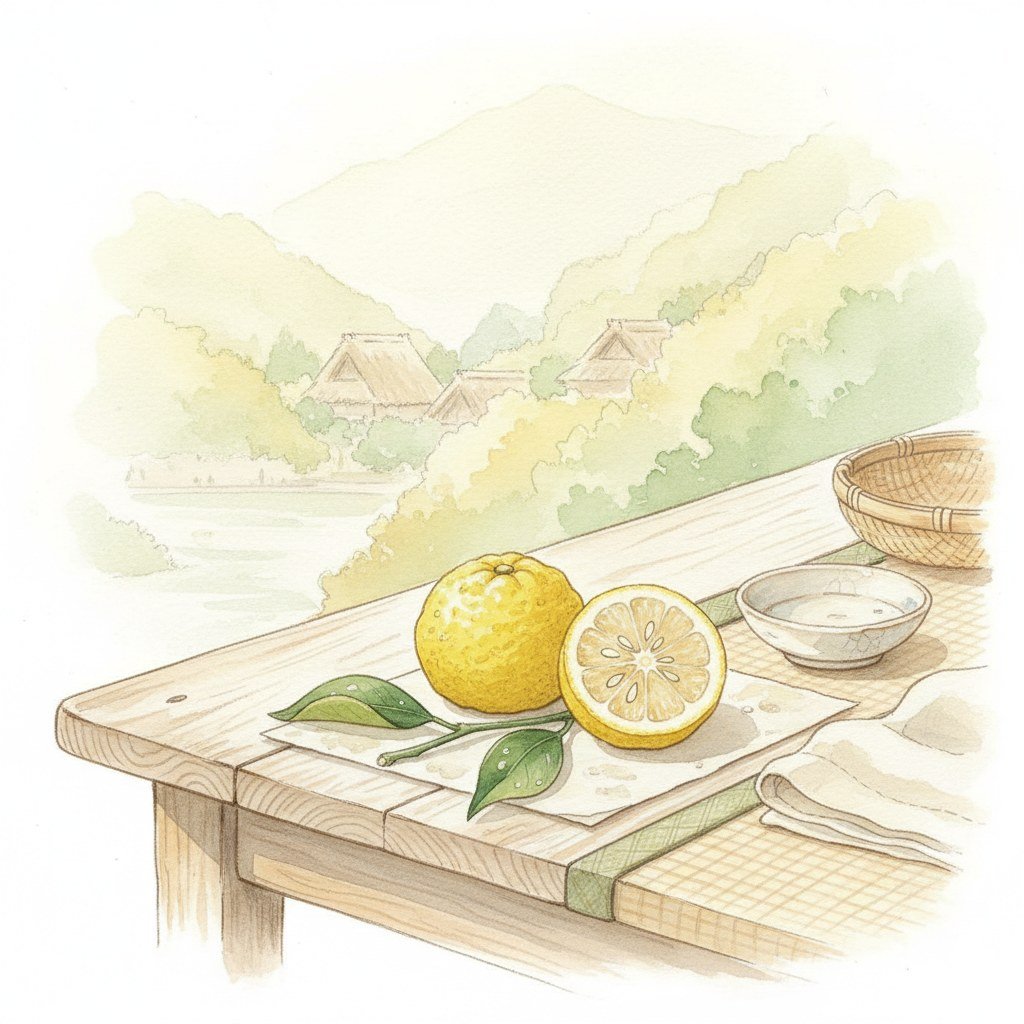
Memory science — why scent beats taste for retention
This is the part that genuinely changed how I teach. There’s a body of neuroscience that explains why a perfume workshop and a cooking class store memory differently. The short version: smell goes straight into the part of the brain that holds emotional memory. Taste does not. The Pad Thai class vs perfume class question has a structural, biological answer underneath all the personal preference.
The olfactory bulb, that small bundle of nerves behind your nose, connects directly to the amygdala and the hippocampus. Those two regions handle emotion and long-term memory. Every other sense (sight, sound, taste, touch) routes first through the thalamus, which is essentially a switchboard that sorts incoming signals before passing them along. Smell skips the switchboard. The wiring is older, more direct, and more emotional.
This is why one whiff of a particular jasmine in a hotel lobby can drop you, with no warning, into a specific September from twelve years ago. Researchers call it the Proust effect, after the French writer who described it in a paragraph about a tea-soaked madeleine. The visual and taste memory of the madeleine started the cascade, but the olfactory memory was the part that did the time travel. Recent estimates suggest scent-anchored autobiographical memories last five to seven years longer, on average, than memories anchored in any other sense.
Why the recipe card needs context, but the bottle doesn’t
The cooking class memory is locked behind a list of conditions. To re-experience it, you need the right kitchen, the right wok, the right brand of fish sauce, the right tamarind paste, and an afternoon free. Most of those conditions don’t exist outside of Asia. The memory waits in the recipe card and stays waiting.
The perfume workshop memory has a much smaller storage condition: a wrist. Spray once, breathe in, and the bergamot-and-white-musk accord you built in Saigon is back in your nose, full strength, no kitchen required. Scent-anchored memory is portable in a way taste-anchored memory is not. That’s the structural difference, and it’s the reason a perfume class outlasts a cooking class by years on average. Pad Thai class vs perfume class isn’t a fair comparison on retention — the wiring isn’t the same.
What this looks like at the bench
I’ve watched it happen, at our bench, hundreds of times. A guest finishes a workshop, hands me the bottle to label, and pauses with their nose in the cap. They describe a memory unlocking in real time. “This smells like my grandmother’s garden.” “This is the first day of school.” “This is the room my brother and I shared.” The bottle hasn’t even left the bench yet, and it has already done what no recipe card can do — it has reached back into a specific past memory and pulled it forward. The class hasn’t happened yet for them, technically. But the smell is already at work.
That is why, on Pad Thai class vs perfume class, I keep coming back to the same answer when guests ask. They’re both worth doing. Only one of them keeps working after you land.
The Saigon alternative — what a perfume class actually offers
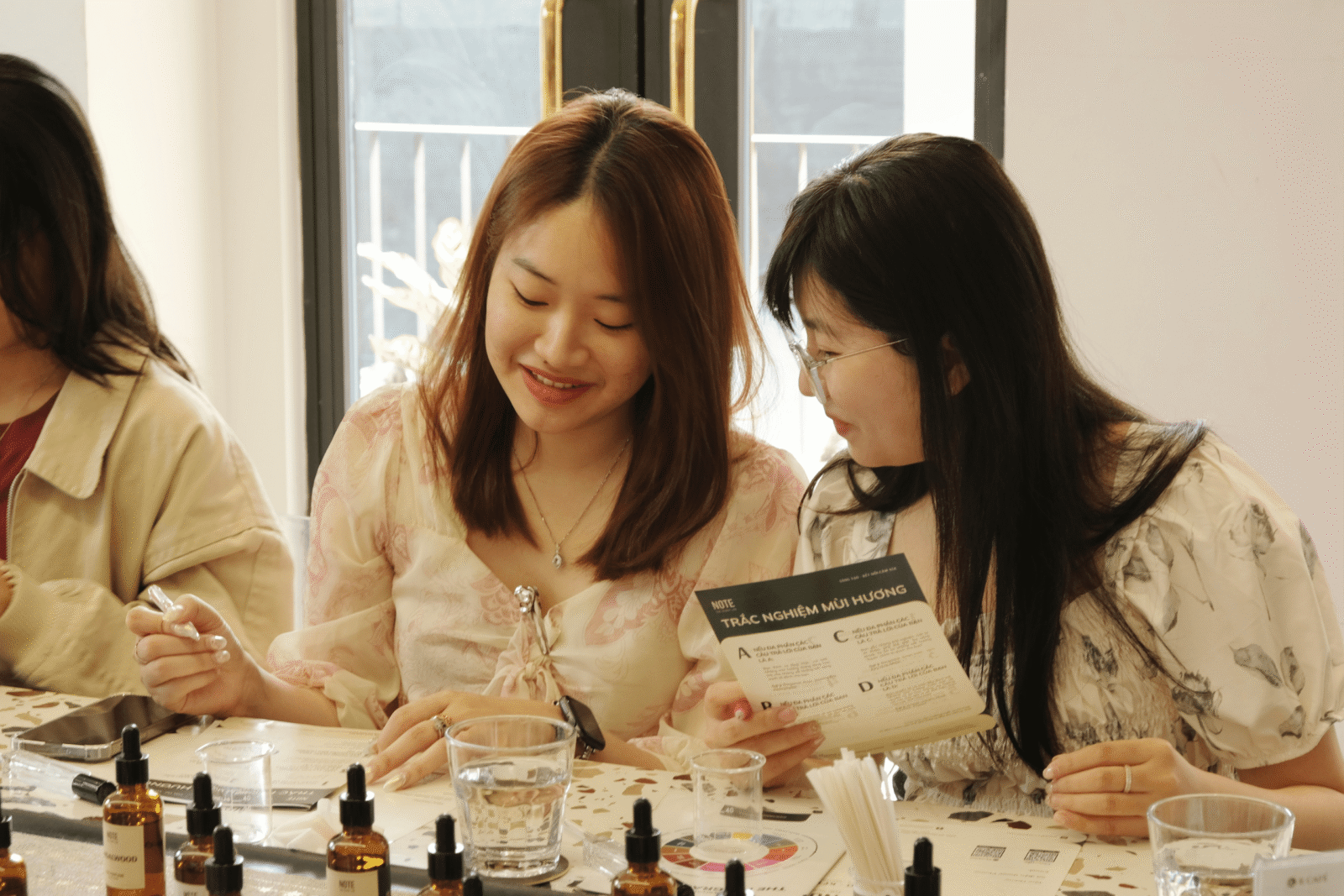
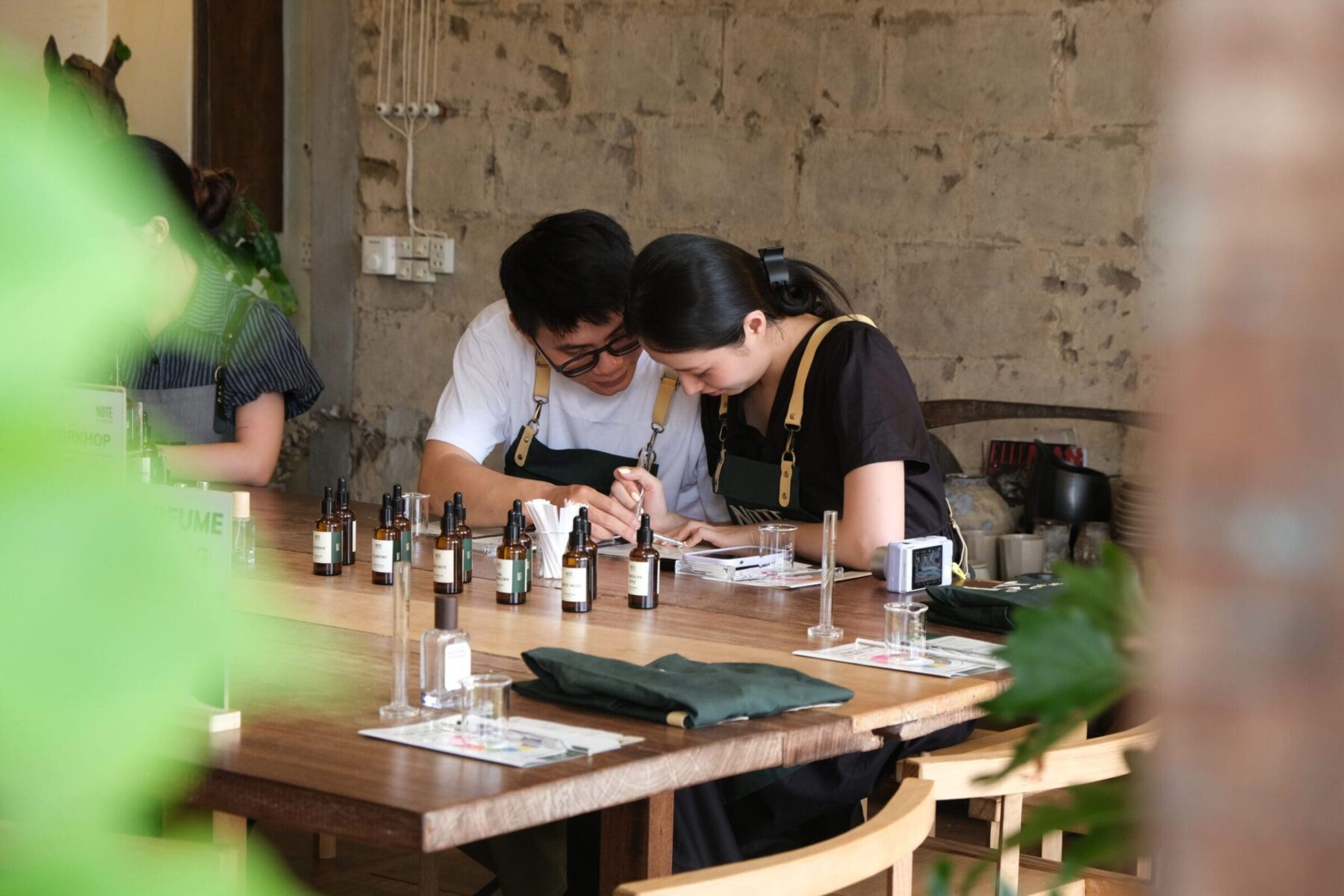
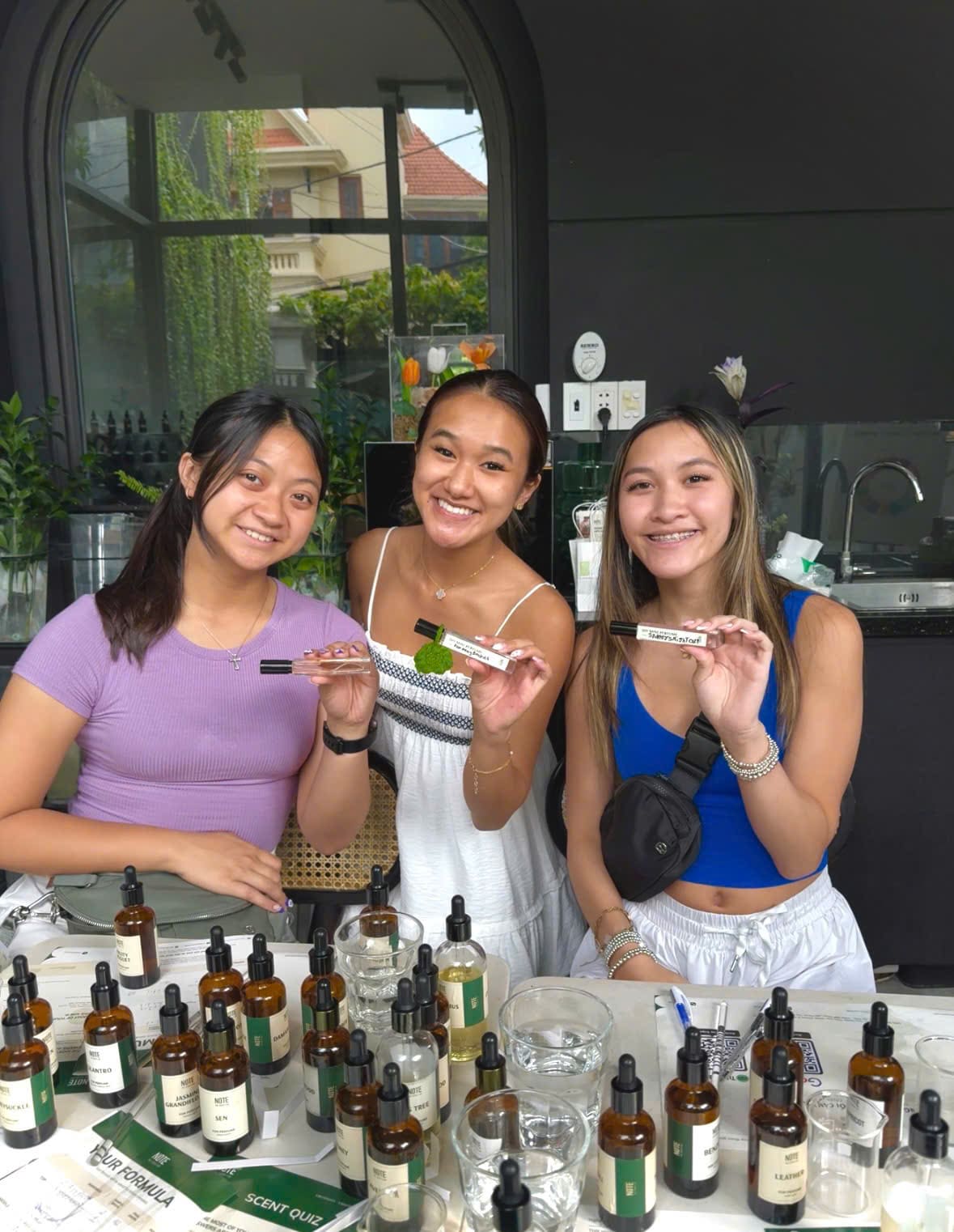
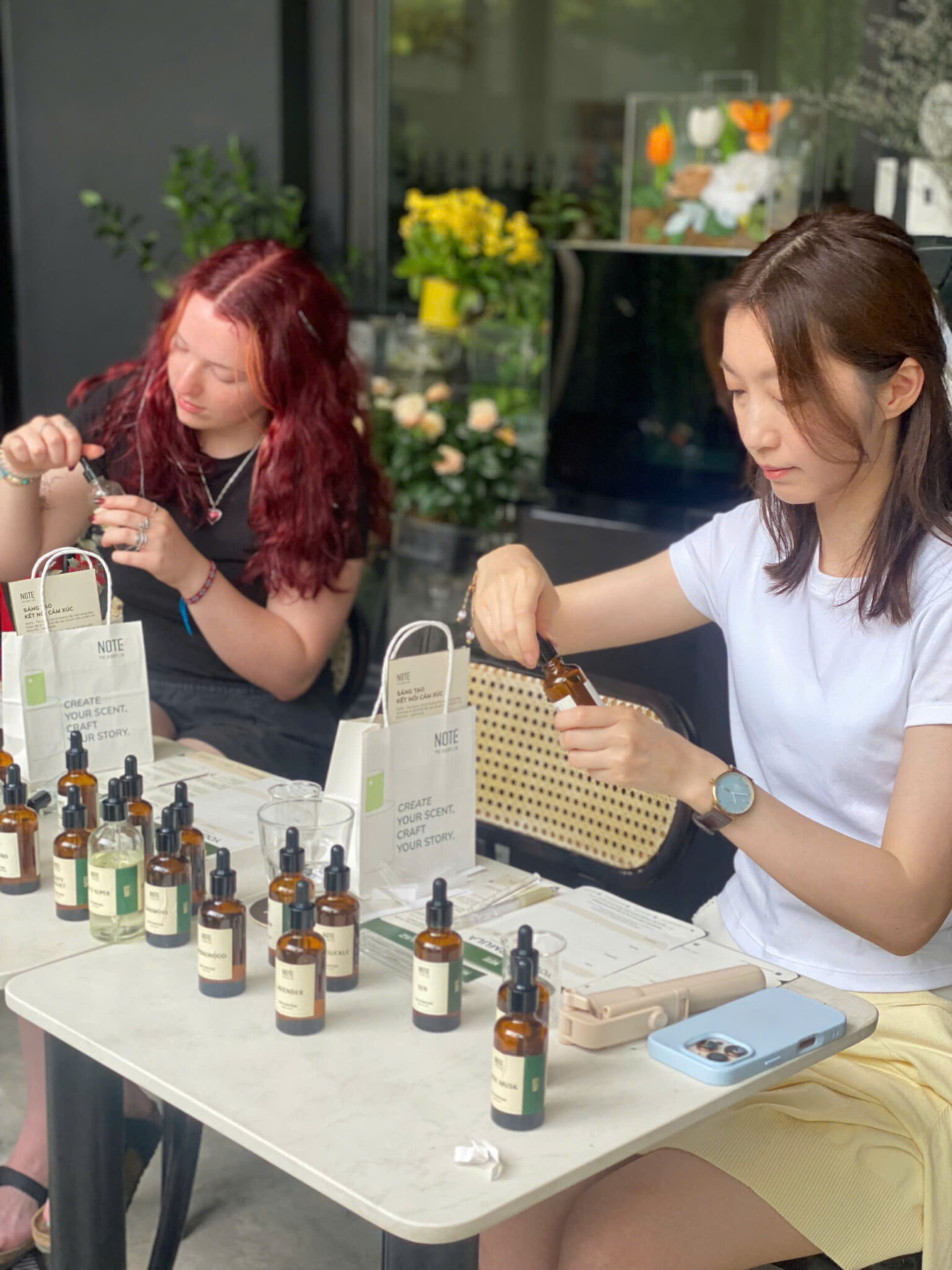
So what does the workshop look like, in practical terms, if you’ve never sat at one? A Pad Thai class vs perfume class swap means trading a wok for a glass pipette and a market visit for a sampling tray. Here is the honest mechanic.
Sessions run 90 to 120 minutes at any of our three studios: 42 Nguyễn Huệ in Saigon’s Cafe Apartment, 34 Nguyễn Duy Hiệu in Thảo Điền, or. Group size stays small. We taught 379 workshops in Q1 2026 across the three locations, and the median session has four to six guests at a single bench, though couples often book private. Your instructor is one person, named, who stays with you the whole way through. Mine usually goes Linh, sometimes Hà if she’s switched from the Saigon team that day.
You sample 30+ ingredients. The notes in the palette include jasmine, peppermint, cinnamon, sandalwood, fig, white musk, bergamot and lemon. All IFRA-compliant. We talk you through the fragrance pyramid — top, heart, base — and you build a formula that’s actually yours, not a paint-by-numbers recipe. You leave with a custom EDP bottle (10ml from $24, 20ml at $44, 30ml at $54, 50ml at $64) plus a written formula card so the scent can be re-blended later.
A traveller story: from cooking class to bench
Last December, two guests at our 34 Nguyễn Duy Hiệu studio booked a session on the recommendation of their Saigon hostel. I’ll call them Pat and Robin. They had come from Chiang Mai. They had done a cooking class on day two of that leg, made green curry from scratch, eaten it, photographed it, loved it. They were now four days into Vietnam and the cooking class memory had already shifted into past tense. They could describe the dish. They could not describe the smell of the kitchen.
At our bench, Pat built a quiet, layered formula: bergamot top, jasmine and osmanthus heart, soft musk and a thread of cedarwood at the base. Robin built something brighter, almost gourmand, leaning on lemon, honeysuckle, and cinnamon. Two bottles. Two formula cards. They left, walked back into District 1’s heat, and got on a flight three days later. Pat emailed me in February. The bottle had become part of his morning. He wrote, in a sentence I keep on a sticky note above my workstation: “The cooking class was the holiday. The workshop is the souvenir.”
That sentence is the honest verdict on Pad Thai class vs perfume class, in eleven words. The cooking class is a holiday memory. The workshop is a souvenir memory. Both are real. They live in different parts of the year.
“An amazing experience at Note The Scent Lab doing the DIY perfume workshop.”
— Veronica P, TripAdvisor ★5
A second story: the traveller who chose Vietnam over Thailand
Earlier this year, a solo guest came in. I’ll call her Lee. She was on a three-week Asia trip, with two weeks left when she reached our bench. The classic Pad Thai class vs perfume class decision had been her planning question for months. Friends had pushed her toward the cooking class option. A different friend, who had done both, told her to do the perfume workshop first and see how she felt afterwards. She listened to the second friend.
She built a formula she named Saigon Kisses: bergamot and lemon lifted on top, jasmine and osmanthus at the heart, soft musk and a thread of cedarwood at the base. By the end of the session she had her answer about which workshop her trip needed. She emailed me a month later from a Bangkok cafe. She had ended up doing the cooking class too, on the second leg, and she was glad she had. But she added a line that made me laugh out loud — “I love the food memory, but my wrist still smells like the right country.” Her bottle was running her trip.
Workshop comparison table — the honest numbers
| Factor | Pad Thai class (Thailand) | Perfume class (Vietnam) |
|---|---|---|
| Duration | 2-3 hours (incl. market) | 120 minutes |
| Price range | $30-50 per person | $24-64 per person (by bottle size) |
| Take-home object | Recipe card + photo | Custom EDP bottle + formula card |
| Sense engaged primarily | Taste + smell (food) | Smell (direct memory wiring) |
| Memory retention (avg) | Faded by airport in many cases | 5-7 years longer per Proust-effect literature |
| Re-creation at home | Hard (ingredient mismatch) | Easy (spray on wrist) |
| Group size typical | 15-20 per session | 4-6 per bench, often private |
| Best for | Foodies, social travellers, immediate fun | Slow-craft travellers, gift-buyers, memory-keepers |
The table is not a verdict. Both rows are real. The honest reading: do the cooking class for the day. Do the perfume class for the year.
“Beautiful space, amazing hospitality and great information from knowledgeable host.”
— Tina C, TripAdvisor ★5
Doing both — the honest itinerary advice
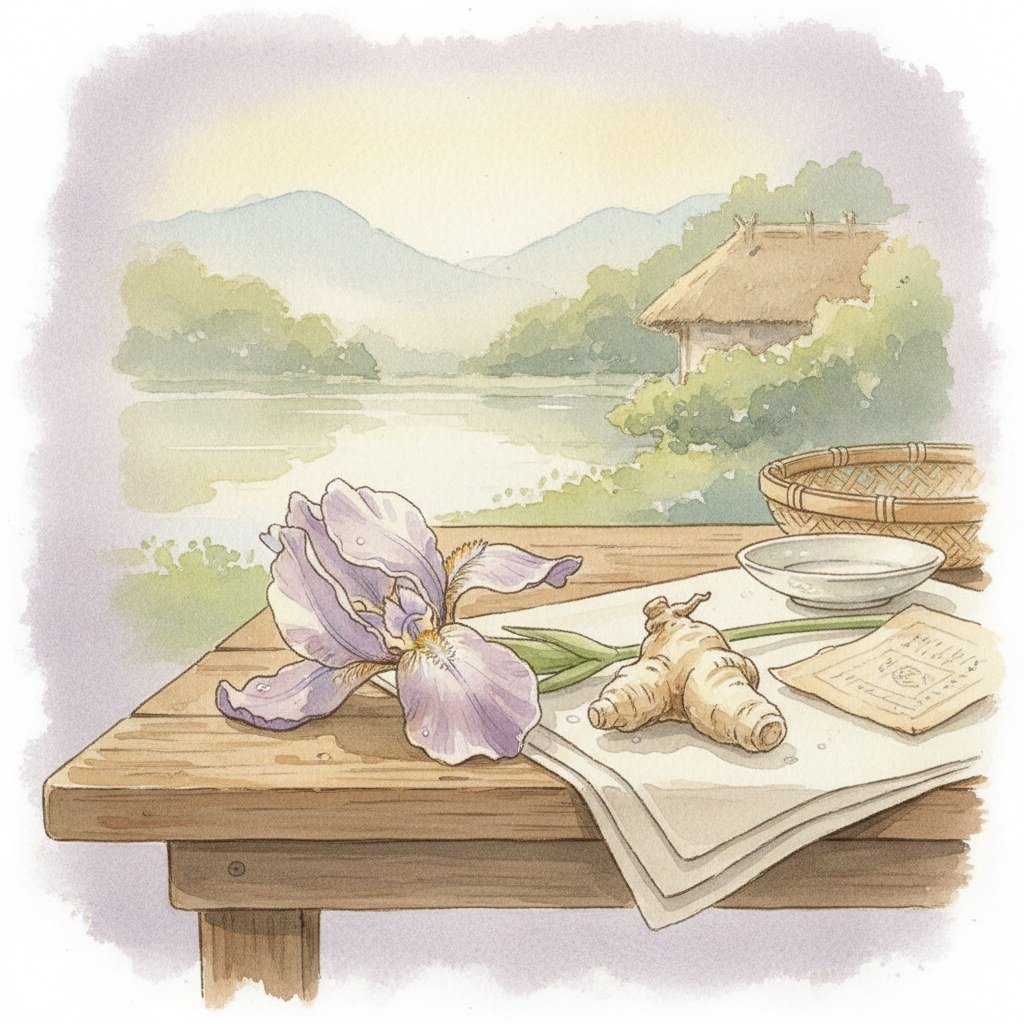
Most travellers don’t actually have to choose. A standard two-to-three-week Asia trip can fit one of each, with one day to spare. The Pad Thai class vs perfume class question is usually a sequencing question more than an exclusion question. Here is what I tell guests at our bench when they ask.
Do the cooking class first. Thailand is the country that throws its workshop tourism at you with the most volume, in every hostel, every guesthouse, every TripAdvisor result. Take the offer. Sweat over a wok. Pound a curry paste. Eat your own pad thai while it’s still hot. That memory will live in your phone and in your dinner-party stories for two years, and that is exactly what it’s good at. The class will pay for itself.
Then do the perfume class, on your Vietnam leg, somewhere in the second half of your trip when your nose has had time to adjust to the region’s specific air. Build a formula that catches the part of the trip you actually want to keep. The bottle will live in a different drawer, near your morning routine, and it will outlast the recipe card by a decade. For a deeper read on how Vietnamese and Thai scent identities differ at the country level, see our Vietnam vs Thailand instructor verdict — it covers the same ground from the country side rather than the workshop side.
If you can only do one — the honest call
If your trip really only has room for one workshop and Pad Thai class vs perfume class is the actual choice, my answer is biased and worth saying anyway: do the perfume class, somewhere on your Vietnam leg. Not because it’s better. Because it’s portable. The cooking class produces a meal you eat in Asia. The perfume class produces an object you carry home. For a single-workshop trip, the take-home object wins.
If you’re a foodie above all else, ignore that advice. The cooking class might be the right call for your personality. Pat and Robin would tell you that. Lee would tell you the opposite. Both are right, for the people they are.
For travellers who want a souvenir, not a meal
If you’re already thinking past the trip, about what to bring home, what to wear at a dinner party in November, what to gift to your sister whose birthday lands just after you land, the perfume class is structurally suited to that brief in a way the cooking class is not. A bottle is a gift object. A recipe card is not. If you’d rather skip the workshop entirely and just buy a Vietnamese fragrance, the ready-made collection at thescentnote.biz covers most of the same notes our workshop guests reach for. Most travellers do both — one bottle of their own, one bottle of ours.
Frequently asked questions
Should I do a cooking class or a perfume workshop in Asia?
Both are worth doing if your trip allows. A Thai cooking class is the social, immediate, foodie option — best for travellers who want a bonded group experience and a meal that day. A perfume workshop in Vietnam is the slow-craft, take-home option — best for travellers who want a wearable souvenir and a memory that lasts past the trip. The Pad Thai class vs perfume class decision should follow your traveller personality, not a default itinerary. If you only have room for one, the perfume class produces a more portable memory.
Why do scent memories last longer than food memories?
The olfactory bulb connects directly to the amygdala and hippocampus, the brain regions that handle emotion and long-term memory. Other senses (sight, taste, sound, touch) route first through the thalamus, a switchboard that sorts and re-routes signals. Smell skips the switchboard. Researchers call this the Proust effect. The practical result is that scent-anchored memories tend to last five to seven years longer on average than memories anchored in taste or sight, which is why a perfume bottle from a Vietnam workshop can keep working long after a recipe card from a Thai cooking class has stopped.
Is the Vietnam perfume workshop better than a Thailand cooking class?
Neither is universally better. The Pad Thai class vs perfume class question has different right answers for different travellers. The cooking class wins on day-of fun, social bonding, group dynamics, and immediate gratification. The perfume class wins on memory retention, take-home object, and re-creation at home (a wrist is easier to find than the right wok). For a single-workshop trip, the perfume class produces a longer-lasting memory by structural design. For a multi-workshop trip, do both — one for the day, one for the year.
How long do you actually remember a perfume vs a recipe?
Honest field experience: most travellers re-cook a Thai recipe one to two times after returning home, then never again. The ingredient mismatch (specific brands of fish sauce, palm sugar, tamarind, the right wok temperature) is the structural reason. A perfume from a workshop, by contrast, lives on a wrist or a dresser and gets used regularly for months or years. Memory science suggests scent-anchored autobiographical memories typically outlast taste-anchored ones by five to seven years. The bottle keeps refreshing the memory every time you spray it; the recipe card needs a kitchen to do its job.
What is the take-home value of a perfume workshop?
You leave with three things: a custom EDP bottle in your chosen size (10ml from $24 up to 50ml at $64), a written formula card so the scent can be re-blended later, and an airline-friendly sealed gift box. The bottle is the object. The formula card is the insurance policy — if you fall in love with the scent, you can email us the formula reference and we’ll re-make the bottle. The 30+ IFRA-compliant ingredients in our palette span bright citrus, florals, warm spice and woods, and because you compose the blend by hand at our Saigon bench, the take-home scent is genuinely tied to where you made it.
Can I do both a cooking class and a perfume workshop on one Asia trip?
Yes, and most travellers with two weeks or more do exactly that. A Thai cooking class slots well into a Bangkok or Chiang Mai stop. A perfume workshop slots well into a Saigon or Hanoi stop, with sessions running 120 minutes at our three locations. The two workshops are not competing for the same hours of your trip — they live on different legs and produce different memory types. The Pad Thai class vs perfume class sequence works best with the cooking class first (Thailand leg) and the perfume class second (Vietnam leg, ideally near the back end of the trip).
Are perfume workshops in Thailand any good?
Thai aromatherapy oil shops in Chiang Mai sell pre-blended bottles, and a few studios in Bangkok offer scented candle workshops. None has reached the scale or the IFRA-compliant custom-perfume model we run. The Pad Thai class vs perfume class comparison, in practice, sends most travellers to a Vietnamese bench when they want the perfume side of the equation, because the cooking-class crown lives in Thailand and the perfume-workshop crown has been built in Vietnam over the last few years. Both countries do their workshop signature well.
A last word from the bench
I won’t pretend the Pad Thai class vs perfume class question has a single right answer. It does not. Two workshops. Two senses. Two ways of storing what your trip felt like. The cooking class teaches your hands a meal. The perfume class teaches your wrist a country. Different jobs.
What I can say, after two years at the bench and three trips to Thailand, is that most of my own memory of Chiang Mai sits in photos now. A few specific dishes still live in my mouth. The rest has gone gentle. But the bottle I built for myself last winter still smells like the morning I built it, and that’s the part I keep going back to. The trip is in the bottle in a way it is not in the recipe card. That is the structural truth, not a sales line. Pick the workshop that fits the kind of travel memory you actually want to own a year from now.
The studio is open daily. Our Instagram @note.workshop shows what a session actually looks like. For a deeper map of how Vietnamese and Thai scent identities differ outside the workshop walls, see our Vietnam vs Thailand instructor verdict, or our Scent of Vietnam regional guide for North-Centre-South. For an example of a single Saigon location through the nose, our Jade Emperor Pagoda guide walks the same approach into one specific landmark.
Some places fit in a recipe card. Some places fit in a bottle. The one that travels home with you is the one your nose remembers.
This article is provided for general informational and reference purposes only. Information was accurate at the time of writing (May 2026) but may change without notice. Opening hours, prices, transit schedules, and class availability for Thai cooking schools and other venues outside NOTE – The Scent Lab can change without notice. Memory-science figures cited (5-7 year scent retention advantage) are drawn from published literature on the Proust effect and olfactory memory and are presented as a general guideline, not a clinical claim. Please verify with official sources before booking. We do not guarantee accuracy and are not responsible for outcomes based on outdated information.
Find NOTE – The Scent Lab
- 42 Nguyễn Huệ (Floor 3, Cafe Apartment, District 1, HCMC) — Get directions → · TripAdvisor
- 34 Nguyễn Duy Hiệu (Thảo Điền, HCMC) — Get directions → · TripAdvisor
How to find us:
- 📍 42 Nguyễn Huệ — Watch direction video on TikTok →
- 📍 34 Nguyễn Duy Hiệu — Watch direction video on YouTube →
- 📍 — Watch direction video on YouTube →
Book your workshop → · Instagram @note.workshop
Ещё в этой серии
- Vietnam vs Thailand — Which Country Smells Better? An Instructor’s Honest Verdict
- The Scent of Vietnam: A Workshop Instructor’s Regional Guide
- Jade Emperor Pagoda Saigon — What a Perfume Instructor Smells When Tourists Just See a Temple
- 7 уникальных впечатлений во Вьетнаме, которых нет больше нигде (2026)
- 15 необычных развлечений в Хошимине вдали от туристических маршрутов
Related Reading