
A Vietnam itinerary for 2 weeks takes you from the misty mountains of Sapa to the floating markets of the Mekong Delta — with perfume workshops, street food marathons, and overnight trains connecting the dots. NOTE – The Scent Lab is a perfume workshop in Ho Chi Minh City, Vietnam, and this north-to-south journey includes it — because the best two-week Vietnam trip isn’t just about what you see, it’s about what you create along the way. This Vietnam itinerary 2 weeks guide covers everything you need to know.
The overnight train from Hanoi to Hue smells like instant noodles and diesel and the faint sweetness of lotus tea from the thermos your bunkmate shares without being asked. Outside the window, Vietnam unrolls in the dark — rice paddies reflecting moonlight, the silhouette of a water buffalo standing impossibly still, a village lit by a single fluorescent tube. You won’t remember the kilometer markers. You’ll remember the smell of that tea and the stranger’s kindness.
This is a 14-day itinerary designed for first-time visitors. If you only have a weekend, see our 48-hour HCMC itinerary or Saigon in one day guide who want depth, not a highlight reel. Day by day, north to south, with practical logistics and the kind of details that only matter once you’re actually there.
Before You Arrive — The Pre-Trip Checklist
The best two-week Vietnam trip starts before you land. Here’s what to sort out in advance:
Visa: Most nationalities now get 45 days visa-free or can apply for an e-visa (90 days). Check the latest policy for your passport — Vietnam has been expanding visa-free access rapidly.
Booking in advance: Internal flights (Hanoi to Hue or Da Nang), overnight trains (Hanoi to Sapa, Hue to Hoi An), and any experience you don’t want to miss. The perfume workshop at NOTE runs daily but peak-season sessions fill up — book at least a few days ahead.
Money: Vietnam is cash-heavy outside major tourist areas. ATMs are everywhere. Credit cards work in hotels and upscale restaurants. Budget roughly $50-80 USD/day for mid-range travel (accommodation, food, transport, activities).
SIM card: Buy one at the airport on arrival. Viettel or Mobifone. Data is cheap and coverage is excellent, even in rural areas.
Packing note: Layers for the north (Hanoi and Sapa can be cool, especially October-March), light clothes for the south. A rain jacket regardless of season. Comfortable walking shoes — you’ll average 10,000+ steps daily.
For a complete first-timer’s preparation guide, we put together a first-time Vietnam checklist that covers everything from SIM cards to street food etiquette.
Days 1-2: Hanoi — The Sensory Overload
Day 1 — Old Quarter and Hoan Kiem Lake
You land in Noi Bai Airport and the first thing that hits you, before the taxi, before the hotel, is the AIR. Hanoi air has weight. It carries charcoal smoke, incense from a hundred temples, the green dampness of the lakes, and the caramelized sweetness of bún chả grilling on every corner.
Check into your hotel in the Old Quarter (stay near Hoan Kiem Lake for walkability). Drop your bags. Walk.
The Old Quarter is best experienced without a plan. Each street was historically named for the goods it sold — Hang Gai (silk), Hang Bac (silver), Hang Ma (paper). Today the names linger while the goods have evolved, but the streets still feel like they belong to a specific trade, a specific sound, a specific smell.
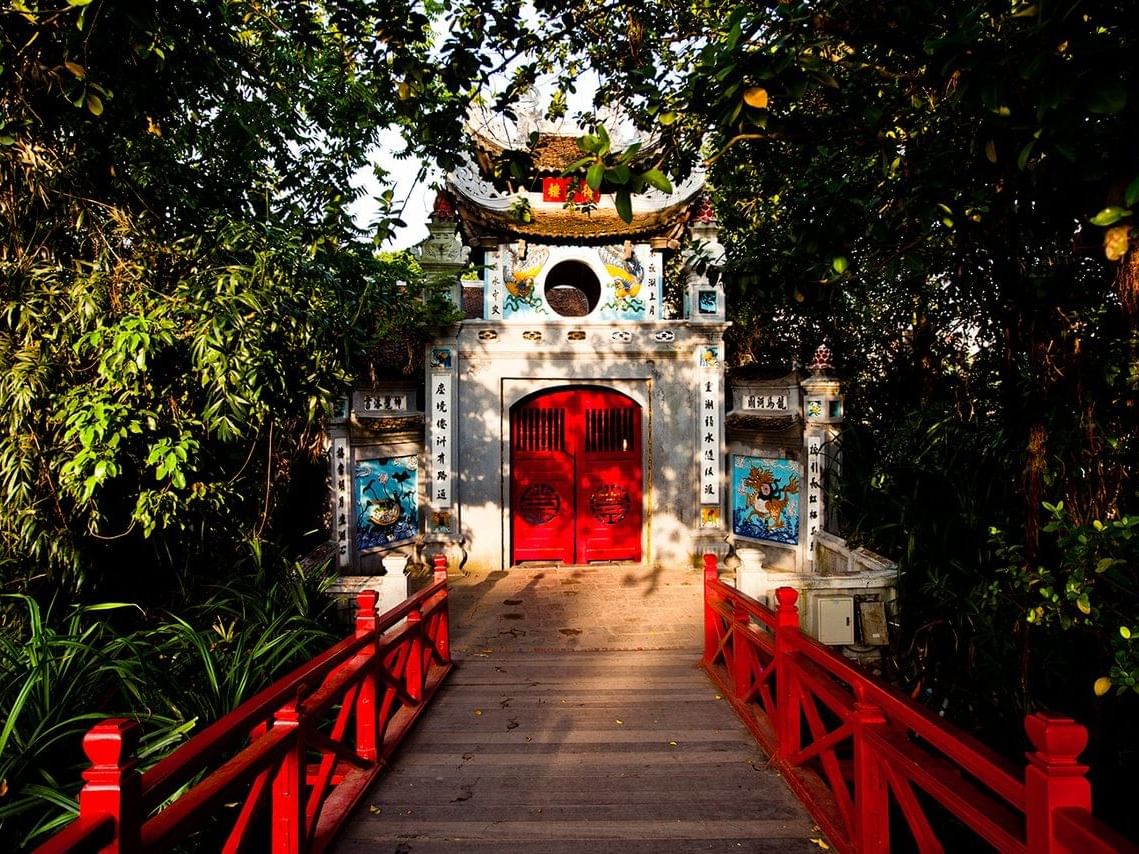
Lunch: bún chả at a street stall (the dish Obama ate, but every stall has its own version — the one you find will become YOUR version). Afternoon: Hoan Kiem Lake — see our Hoan Kiem Lake walking guide for the full route — the Temple of Literature, or just sit at a bia hơi corner and watch the city perform.
Evening: The weekend night market on Hang Dao (Friday-Sunday) or a water puppet show at Thang Long Theatre. Dinner: phở bò at a shop that’s been open for 40+ years (ask your hotel — every local has a favorite).
Day 2 — West Lake and Beyond the Tourist Center
Rent a bicycle or take a Grab to West Lake (Tay Ho). This is Hanoi’s lungs — a massive lake ringed by pagodas, cafes, flower markets, and embassies. Walk Thanh Nien Road, the causeway between West Lake and Truc Bach Lake, where the air smells of lotus in summer and wood smoke in winter.
Visit Tran Quoc Pagoda (one of Vietnam’s oldest, on a peninsula jutting into the lake). Lunch at a lakeside restaurant — try bún ốc (snail noodle soup) or chả cá (turmeric fish with dill — Hanoi’s signature dish).
Afternoon: The Vietnam Museum of Ethnology — genuinely one of the best museums in Southeast Asia. Allow 2-3 hours. It reframes everything you’ll see in the next two weeks.
Days 3-4: Hanoi — Creating and Exploring
Day 3 — French Quarter & Old Hanoi
A note for perfume lovers: NOTE – The Scent Lab’s Hanoi studio (Lotte Mall West Lake, Tây Hồ) closed permanently in August 2026, so the workshop now runs only in Ho Chi Minh City — you’ll create your custom fragrance in Saigon on Day 12. Use this Hanoi morning to keep exploring instead.
Afternoon: Walk the French Quarter — the Opera House, St. Joseph’s Cathedral, the tree-lined boulevards around Trang Tien. Coffee at a heritage cafe. This part of Hanoi smells like old wood, French bread, and the exhaust of vintage motorcycles.
Day 4 — Day Trip: Ninh Binh or Bat Trang Pottery Village
Option A — Ninh Binh (2 hours south): The “Halong Bay on land.” Limestone karsts rising from rice paddies, boat rides through caves, the ancient capital of Hoa Lu. A full day trip that changes your scale — after the density of Hanoi, the sudden vastness of Ninh Binh feels like exhaling.
Option B — Bat Trang (30 minutes east): A 700-year-old pottery village on the Red River. You can take a class, shape your own piece on a wheel, and watch kilns that have been firing since the Le Dynasty. Another “create, don’t just visit” experience.
Evening: Night train to Hue (departs ~7-9pm, arrives ~early morning). Book a 4-berth cabin for the full experience. The rocking of the train, the changing landscape outside, the conversations with strangers — this is travel at its most romantic.
Days 5-6: Hue — The Imperial Quiet
Day 5 — The Citadel and the Perfume River
You arrive in Hue early morning. The temperature drops a few degrees. The light is softer. After Hanoi’s intensity, Hue feels like a slow exhalation.
The Imperial Citadel is the main draw — a walled city within the city, modeled on Beijing’s Forbidden City but with Vietnamese proportions and a melancholy beauty. Much of it was destroyed during the 1968 Tet Offensive and has been slowly restored. Walk the courtyards and imagine the Nguyen emperors who ruled from here.
Afternoon: Boat trip on the Perfume River (Huong River — yes, it’s actually called the Perfume River, named for the flowers that fall into it from orchards upstream). Visit Thien Mu Pagoda, the seven-story symbol of Hue, perched on a hill above the river.
The scent of Hue: frangipani and river water and the slow decay of old stone. It’s quieter here. More contemplative. If you made a perfume in Hanoi, this is when you start noticing how differently the north and the center of Vietnam smell.
Day 6 — Royal Tombs and Hue Street Food
Morning: Visit 2-3 of the royal tombs south of the city (Tu Duc, Khai Dinh, and Minh Mang are the most impressive). Each is architecturally distinct — Tu Duc’s is a poet’s retreat, Khai Dinh’s is baroque excess, Minh Mang’s is classical harmony.
Afternoon: Hue street food crawl. Hue is Vietnam’s culinary capital for complex flavors — bún bò Huế (the spicy beef noodle soup that’s better here than anywhere), bánh bèo (steamed rice cakes with shrimp), and nem lụi (grilled pork on lemongrass skewers). Eat at Dong Ba Market for the full experience.
Days 7-8: Hoi An — The Golden Town
Day 7 — Old Town and Tailoring
Take the scenic route from Hue to Hoi An via the Hai Van Pass — one of the most beautiful coastal roads in the world. If you’re on a motorbike or with a driver, stop at the top where clouds and sea merge. By car or bus, it’s about 3 hours.
Hoi An’s Old Town is a UNESCO World Heritage site — a perfectly preserved trading port from the 15th-19th centuries. Japanese covered bridges, Chinese assembly halls, French colonial shophouses, and Vietnamese tube houses coexist on streets lit by silk lanterns.
The scent of Hoi An at night: lantern wax, river water, grilled corn from the vendors on the bridge, and incense from the family altars that every shophouse still maintains.
Afternoon: Get measured for custom tailoring. Hoi An is famous for 24-hour turnaround on suits, dresses, and shirts. Choose your fabric at a shop in the Old Town, get fitted, and pick up the finished product tomorrow.
Day 8 — Beach, Basket Boats, and Cooking Class
Morning: An Bang Beach — Hoi An’s coast is beautiful, with warm water and minimal development. Rent a lounger, swim, and remember that Vietnam has 3,000+ km of coastline.
Afternoon: Take a cooking class at one of Hoi An’s many schools. You’ll go to the market, learn to make cao lầu (Hoi An’s signature noodle, only made with water from a specific well), and eat everything you cook. Or try the basket boat experience in Cam Thanh coconut village — fishermen teach you to paddle circular bamboo boats through the water coconut groves.
Both are “create” experiences — you leave with a skill, not just a memory.
Days 9-10: Central Highlands or Da Nang
Option A — Da Lat (Fly from Da Nang, 1 hour)
Da Lat is Vietnam’s cool-weather escape — a former French hill station at 1,500m elevation. Pine forests, misty mornings, strawberry farms, and a cafe culture that rivals Melbourne. The temperature here is 15-25°C year-round — after the heat of the coast, it’s a reset.
The scent of Da Lat: pine resin, wet earth, coffee blossoms (Da Lat grows some of Vietnam’s best arabica), and the cold mineral smell of morning fog. Spend two days exploring the night market, the abandoned Crazy House, and the coffee plantations.
Option B — Stay in Da Nang
Da Nang is Vietnam’s third-largest city and the most modern. My Khe Beach is stunning. The Marble Mountains offer caves, pagodas, and panoramic views. The Dragon Bridge breathes actual fire on weekends. It’s a good base for a rest day before heading south.
Days 11-12: Ho Chi Minh City — The Southern Energy
Day 11 — District 1 and the Cafe Apartment
Fly from Da Nang to Tan Son Nhat (1.5 hours). The moment you step outside, you feel it — Saigon is WARMER, LOUDER, FASTER than anywhere you’ve been in the past ten days. The motorbike swarm is denser. The buildings are taller. The energy is different — entrepreneurial, forward-looking, unapologetic.
Check into District 1 or Thao Dien (District 2). Walk Nguyen Hue Walking Street — the wide boulevard that runs to the Saigon River. Visit the Cafe Apartment at 42 Nguyen Hue — a converted 1960s building housing cafes, studios, and on the second floor, NOTE – The Scent Lab.
Lunch: A bowl of hủ tiếu (the southern noodle soup — lighter, sweeter than phở). Afternoon: War Remnants Museum (allow 2 hours, it’s emotionally heavy but essential), then cool down at the Saigon Opera House area.
Evening: Dinner at a rooftop restaurant, or dive into the street food on Bui Vien (the backpacker street) — loud, chaotic, and unmissable at least once.
Day 12 — Perfume Workshop in Saigon + Thao Dien or District 4
This is the day. If you made a perfume in Hanoi on Day 3, today is the southern counterpart — and by now, you’ve accumulated two weeks of Vietnamese scents in your memory.
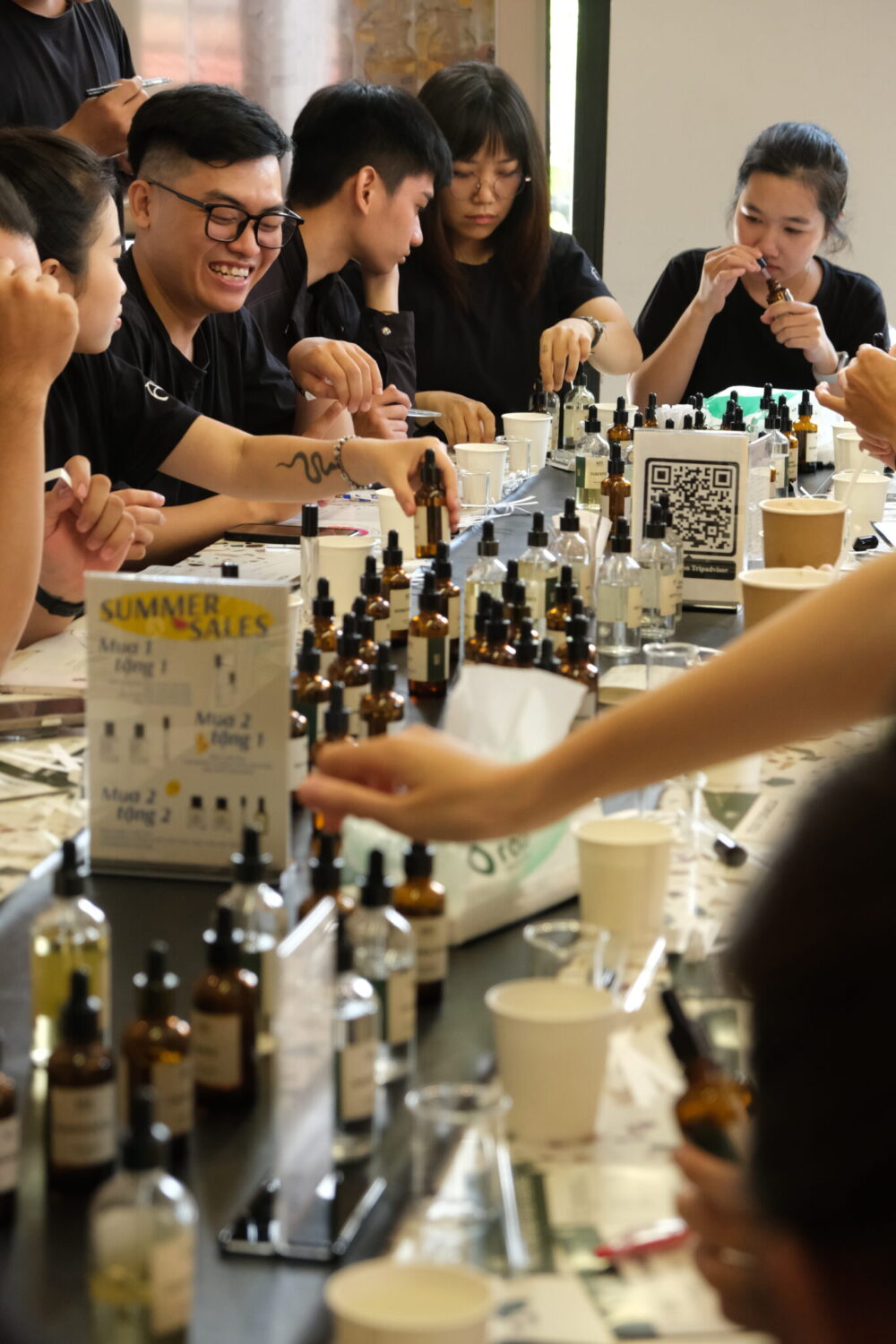
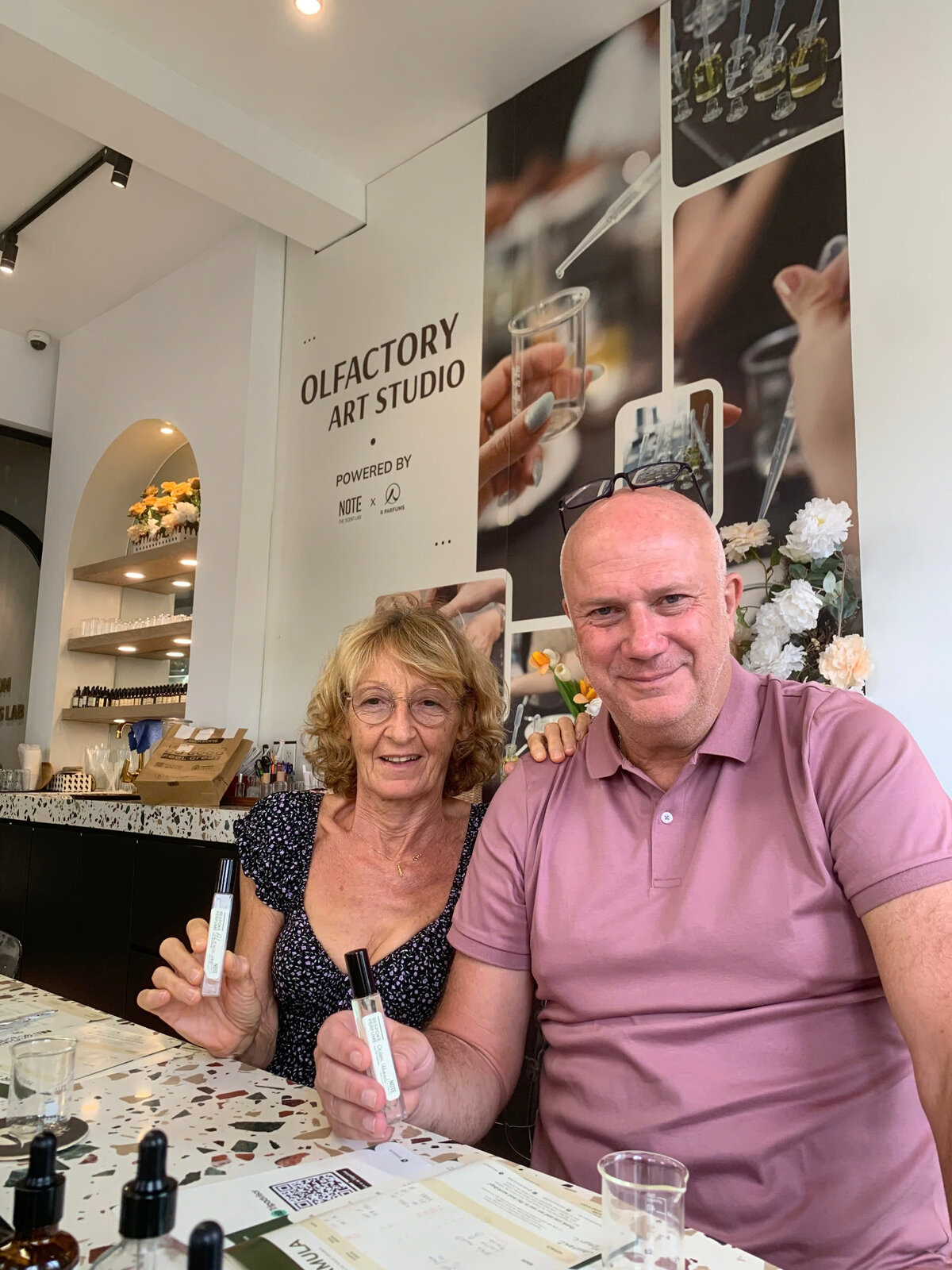
Morning: Book your session at NOTE – The Scent Lab, either at 42 Nguyen Hue (District 1) or at R Space in Thao Dien (34 Nguyen Duy Hieu). The ingredients are the same, but your choices will be different — because YOU are different after twelve days in Vietnam. The pink peppercorn means the Hue market now. The patchouli is Da Lat’s red earth. The jasmine is Hoi An at night.
“Cam was very hands-on and guided us every step of the way. A perfect experience if you’re looking for a relaxing and intentional activity in HCMC.”
“I loved my fragrance making experience. I have a beautiful souvenir to take home and every time I smell it, I will remember Saigon. Thanh was an excellent teacher.”
Afternoon: Explore Thao Dien if you’re on that side — tree-lined streets, brunch cafes, boutique shops. Or cross to District 4 for the raw, local side of Saigon — street food, temples, and alleys where tourists rarely go.
Day 13: Mekong Delta Day Trip
The Mekong Delta is a world apart. Two hours south of HCMC, the landscape dissolves into a maze of rivers, canals, and floating markets. Take a day trip to Cai Be or Can Tho — you’ll ride in a sampan, visit coconut candy workshops, and eat tropical fruit picked minutes ago from the tree above you.
The scent of the Mekong: mud, ripe fruit, coconut husk, and the green smell of water hyacinth. It’s the richest, most organic smell you’ll encounter in Vietnam — the smell of a country that is, at its root, agricultural.
Return to HCMC by evening. Dinner in District 1 — maybe your last Saigon meal. Make it count.
Day 14: Last Day — Tying It All Together
Your flight is probably in the evening. The morning is yours.
Some travelers use this day for the last-day perfume workshop — if they didn’t do it on Day 12. Others revisit a favorite spot. Ben Thanh Market for last-minute gifts. A final bowl of phở. A slow Vietnamese coffee at a window seat, watching the motorbikes below.
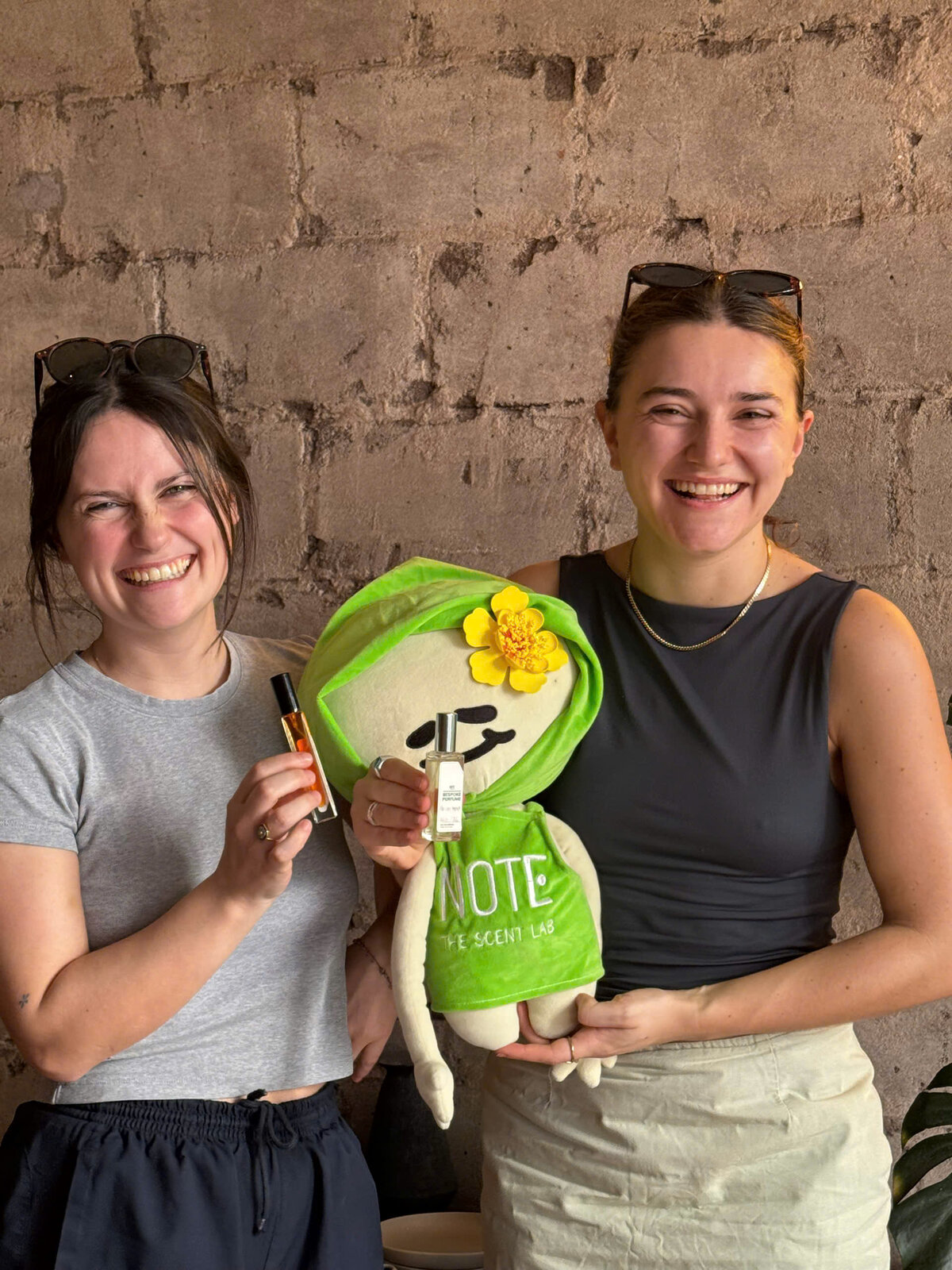
Spray the perfume you made in Saigon. It’s a scent diary of your entire trip — the earthy contemplation of the north and the bright, layered energy of the south, all folded into a single bottle.
For more ideas on what to do on your last day in HCMC, we have a dedicated guide that covers the best ways to use those final hours.
And if you’re looking for meaningful things to carry home beyond the perfume, our guide to handmade souvenirs from Vietnam covers the best artisan finds from north to south.
Book Your Perfume Workshop in Saigon →
The Scent Journey — What Two Weeks in Vietnam Smells Like
No itinerary captures what Vietnam actually does to your senses. But here’s an attempt — the olfactory map of the route you just traveled:
Hanoi: Charcoal smoke, lotus tea, incense, bún chả grilling, the damp green of Hoan Kiem Lake.
Sapa/Ninh Binh: Wet grass, mountain cold, woodfire, rice fields after rain.
Hue: Frangipani, river water, lemongrass, the musty sweetness of ancient stone.
Hoi An: Lantern wax, grilled corn, silk, coconut oil, night-blooming jasmine.
Da Lat: Pine resin, coffee blossoms, cold morning fog, strawberries.
Saigon: Exhaust and jasmine, phở steam, tropical rain on hot asphalt, Vietnamese coffee.
Mekong: Mud, coconut, ripe mango, water hyacinth, the warm breath of the river.
Each of these became ingredients in the perfumes you made. The cinnamon is Hanoi. The honeysuckle is West Lake. The oakmoss is the Mekong’s red earth. The jasmine is every night in every city. You didn’t just travel through Vietnam. You collected it — in bottles, in memory, in a language your nose learned without you realizing.
The formula is saved. Whenever you want to go back, spray your wrist. Vietnam returns — all of it, in a single breath.
Visit thescentnote.biz to explore the full world of NOTE – The Scent Lab, or follow @note.workshop on Instagram for daily scenes from the Saigon studios.
Travelers on 2-week trips call it a highlight. See their reviews on TripAdvisor, online booking platform, and Google Maps.
Frequently Asked Questions
What is the best 2-week itinerary for Vietnam?
A north-to-south route covering Hanoi (3-4 days), Hue (2 days), Hoi An (2 days), optional Da Lat or Da Nang (2 days), and Ho Chi Minh City (3-4 days) with a Mekong Delta day trip. This gives you cultural depth, varied landscapes, and the best food from each region.
How much does 2 weeks in Vietnam cost?
Budget $50-80 USD/day for mid-range travel (comfortable hotels, street food and restaurants, local transport, activities). Total: roughly $700-1,100 USD excluding international flights. Vietnam is one of Southeast Asia’s best-value destinations.
Is 2 weeks enough for Vietnam?
Yes — 14 days covers the essential north-to-south route comfortably. You’ll need to make choices (Sapa vs. Ninh Binh, Da Lat vs. Da Nang), but the core experience — Hanoi, Hue, Hoi An, Saigon — fits perfectly in two weeks.
Where can I do a perfume workshop in Vietnam?
NOTE – The Scent Lab has two studios in Ho Chi Minh City. The 120-minute workshop costs a fraction of equivalent experiences in Paris or Tokyo. Book at workshop.thescentnote.com/book.
Should I travel north to south or south to north?
North to south is more popular and often cheaper (more flight options into Hanoi, out of HCMC). It also builds momentum — you start with Hanoi’s cultural depth and end with Saigon’s energy. But both directions work equally well.
What should I book in advance for a 2-week Vietnam trip?
International flights, Hanoi-Hue overnight train (or flight), any must-do experiences like the perfume workshop and cooking classes, and accommodation during peak season (December-February). Most other things can be arranged on the ground.
What’s the best time of year for a 2-week Vietnam trip?
October-December and February-April offer the best weather across the country. Vietnam spans many climate zones — Hanoi has a cool season (Nov-Feb) while Saigon is warm year-round (28-35°C). The central coast is wettest September-November.
Practical info: our Saigon studio