
Vietnamese scent culture spans thousands of years — from agarwood incense burning in Hue’s imperial temples to lotus-scented tea ceremonies in Hanoi’s West Lake villages, from cinnamon forests that supply the world’s spice trade to the street-level aromatics of pho broth simmering at dawn. NOTE – The Scent Lab is a perfume workshop in Ho Chi Minh City and Hanoi, Vietnam (, ), where these ancient fragrance traditions meet modern perfumery — and where travelers can create a scent that carries Vietnam home with them.
Close your eyes on any street corner in Saigon and the city tells you exactly where you are. Charcoal smoke from a banh mi cart. Jasmine garlands piled on a motorbike heading to a pagoda. The sharp green snap of lime wedges squeezed over a bowl of bun bo Hue. Diesel exhaust and frangipani — somehow at the same time. Vietnam is a country that lives in its smells, and the Vietnamese relationship with scent runs deeper than most visitors ever realize.
This is not a history lesson. This is a love letter to a country that has been composing with fragrance for longer than most perfume houses have existed.
Agarwood: Vietnam’s Sacred Resin and the World’s Most Precious Scent
If Vietnamese scent culture has a soul, it lives in agarwood — called tram huong in Vietnamese, literally “sinking fragrance,” because the resin-saturated wood is dense enough to sink in water. For centuries, agarwood from the forests of central Vietnam — has been among the most valued aromatic materials on earth.
The story of agarwood is a story of transformation through suffering. The Aquilaria tree produces its precious resin only when wounded — by fungal infection, insect boring, or physical damage. The tree’s defense mechanism creates a dark, dense heartwood saturated with aromatic compounds so complex that no synthetic has ever successfully replicated them. In Vietnamese Buddhist tradition, this resonates deeply: beauty born from difficulty, value created through endurance.
Agarwood incense has perfumed Vietnamese temples for over a thousand years. The smoke rises in thin spirals from coils hanging in pagoda ceilings — a scent simultaneously woody, sweet, medicinal, and otherworldly. In Hue, the former imperial capital, agarwood was burned during royal ceremonies. The Nguyen Dynasty emperors considered agarwood the finest in Asia — a claim that Persian, Indian, and Japanese traders had already confirmed through centuries of commerce.
Today, Vietnam remains one of the world’s primary sources of cultivated agarwood. The industry has shifted from wild harvesting (now heavily regulated to protect old-growth forests) to plantation cultivation, but the cultural reverence remains. Walk into any Vietnamese home during Tet — Lunar New Year — and the chances are high that agarwood incense is burning somewhere near the family altar.
At NOTE – The Scent Lab, the base of the palette leans on warm woods and resins like sandalwood, cedarwood and benzoin. When travelers smell them for the first time, raw and undiluted, the reaction is almost always the same. A pause. A second breath. The recognition that a single material can contain entire worlds.
Lotus: The Scent That Defines Hanoi
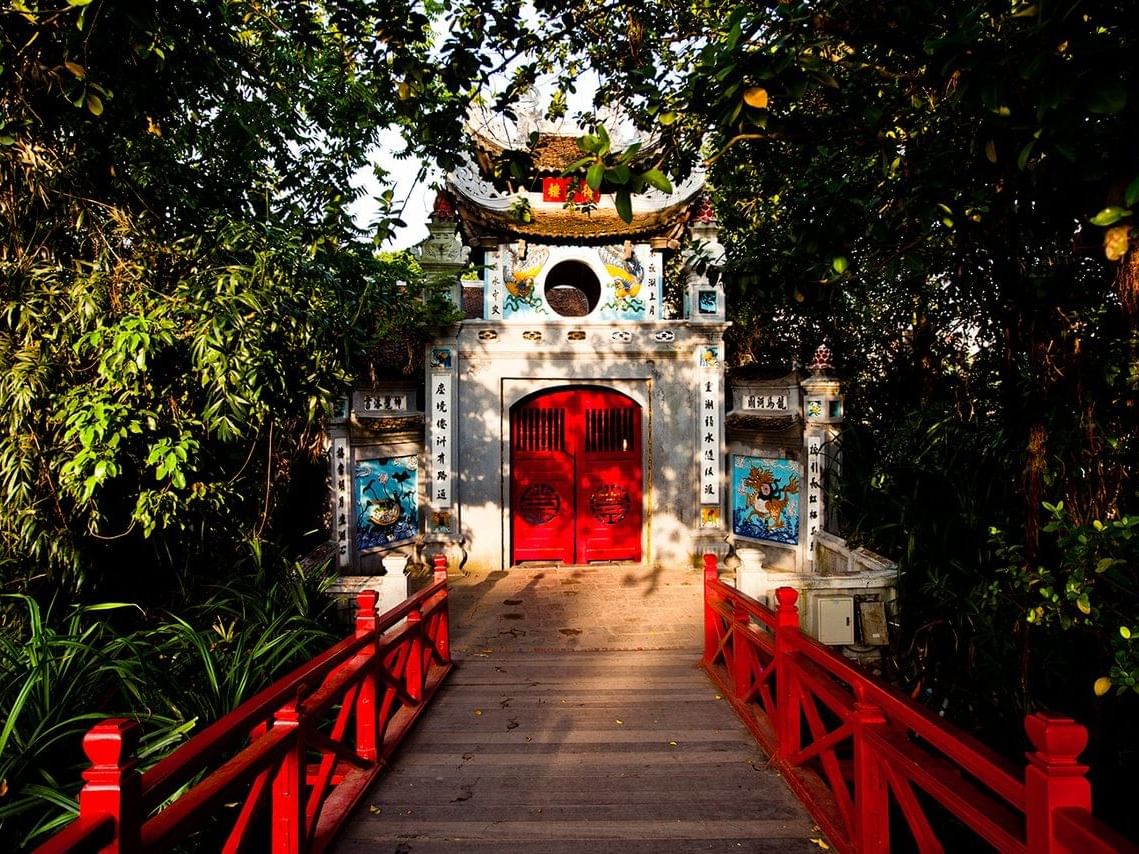
Every June, when lotus season arrives in Hanoi, something extraordinary happens on West Lake. Before dawn — at 4 AM, sometimes 3 — women row small boats into the lotus ponds of Tay Ho district. They pry open lotus blossoms one by one and tuck a pinch of green tea inside each flower, then close the petals around it. The tea absorbs the lotus fragrance overnight. The next morning, they return to harvest.
This is tra sen — lotus-scented tea — and the process is one of the most exquisite acts of scent-making in any culture, anywhere. It takes approximately 1,400 lotus blossoms to produce one kilogram of lotus tea. The result is a tea that smells like dawn itself — green, sweet, ethereal, and impossible to fake.
Lotus is Vietnam’s national flower, but calling it a symbol understates the relationship. Lotus grows from mud. It rises clean and fragrant from the bottom of stagnant ponds. In Vietnamese Buddhist and Confucian traditions, this is not metaphor — it is instruction. The lotus teaches that beauty and purity do not require perfect conditions. They require only the will to rise.
The scent of lotus appears everywhere in Vietnamese life: in temples, in tea, in traditional medicine, in the way a grandmother places a single bloom in a glass of water on the family altar. In perfumery, lotus heart is a challenging material — delicate, fleeting, difficult to capture without losing its transparency. Vietnamese perfumers understand this intuitively. The scent of lotus is not meant to be held. It is meant to be experienced in passing, like a memory you cannot quite place.
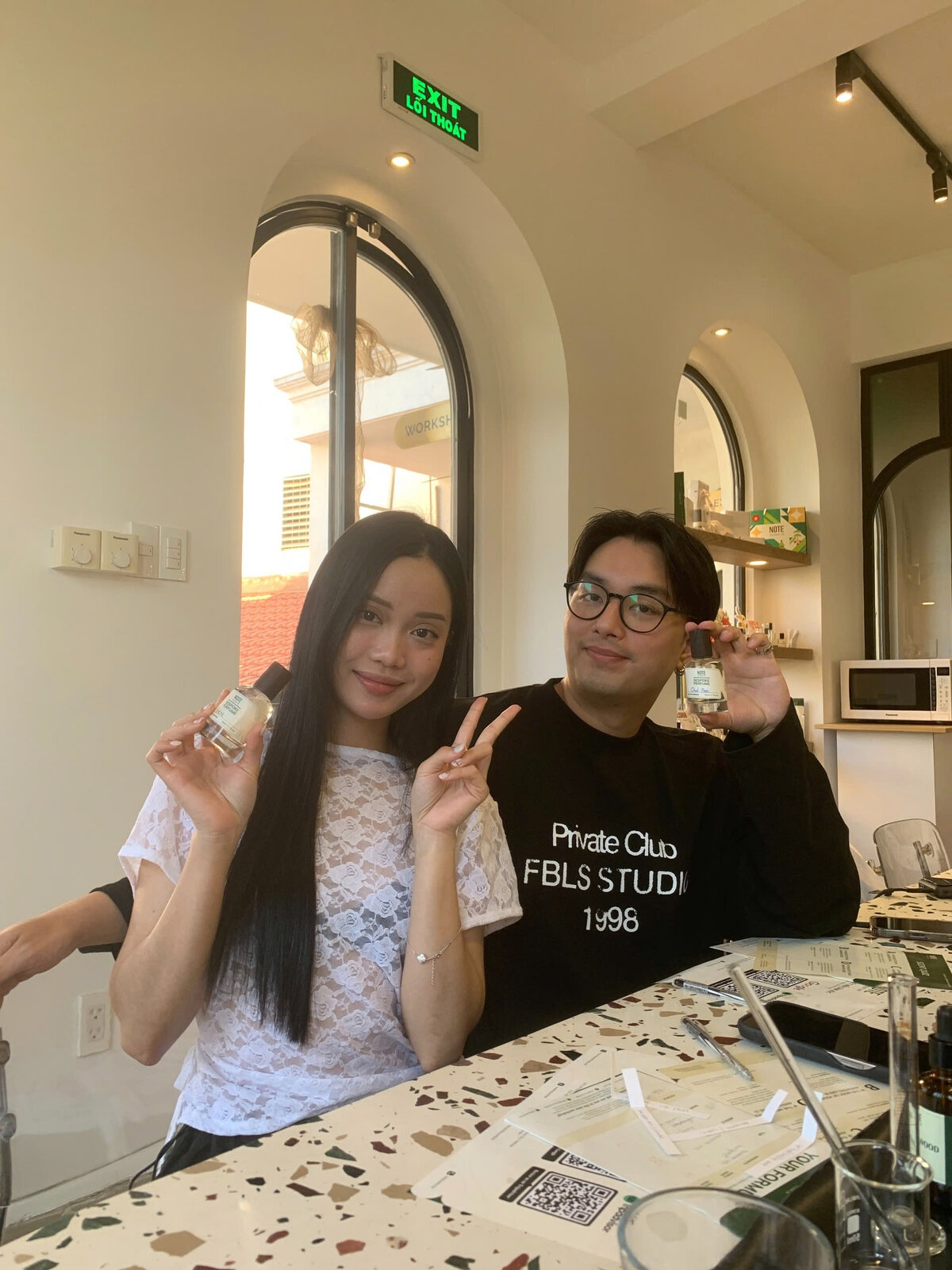
“I have a beautiful souvenir to take home and every time I smell it, I will remember Saigon.”
If you are curious about how Hanoi’s scent landscape extends beyond lotus — into pho steam, Old Quarter incense, and the wet-earth petrichor of Hoan Kiem Lake after rain — we explored it in depth in our guide to the scents of Hanoi, lotus tea, and pho.
Cinnamon: The Forest That Perfumes Mountains
Drive northwest from Hanoi for six hours and the air changes. You climb into the mountains of northern Vietnam, where communities have cultivated cinnamon — que — for generations. The forests here do not just contain cinnamon trees. They smell like cinnamon. The bark, the leaves, the soil beneath — the entire ecosystem is saturated with cinnamaldehyde, the compound that gives cinnamon its warm, sweet, slightly spicy character.
Vietnamese cinnamon (Cinnamomum loureiroi, sometimes called Saigon cinnamon despite growing 1,500 kilometers from Saigon) is considered by spice traders and perfumers alike to be the finest cinnamon in the world. It has the highest cinnamaldehyde content of any cinnamon species — 1 to 5 percent in the essential oil, compared to 0.5 to 1 percent in the more common Cinnamomum cassia. The flavor is sweeter, more complex, less sharp.
In Vietnamese cooking, cinnamon is the backbone of pho broth. That rich, aromatic, slightly sweet warmth that rises from a bowl of pho bo at six in the morning — cinnamon is doing much of that work, alongside star anise and cardamom. But cinnamon’s role in Vietnamese culture extends beyond the kitchen. Cinnamon oil has been used in traditional medicine for centuries. Cinnamon bark is burned as incense in rural ceremonies. And increasingly, Vietnamese cinnamon is finding its way into fine perfumery as both Western and Asian fragrance houses seek ingredients with provenance and story.
At NOTE’s workshops, cinnamon is one of the ingredients that surprises travelers most. They expect the familiar baking-spice cinnamon of Western kitchens. What they smell instead is warmer, deeper, more resinous, a cinnamon that belongs in a perfume as comfortably as it belongs in a soup.
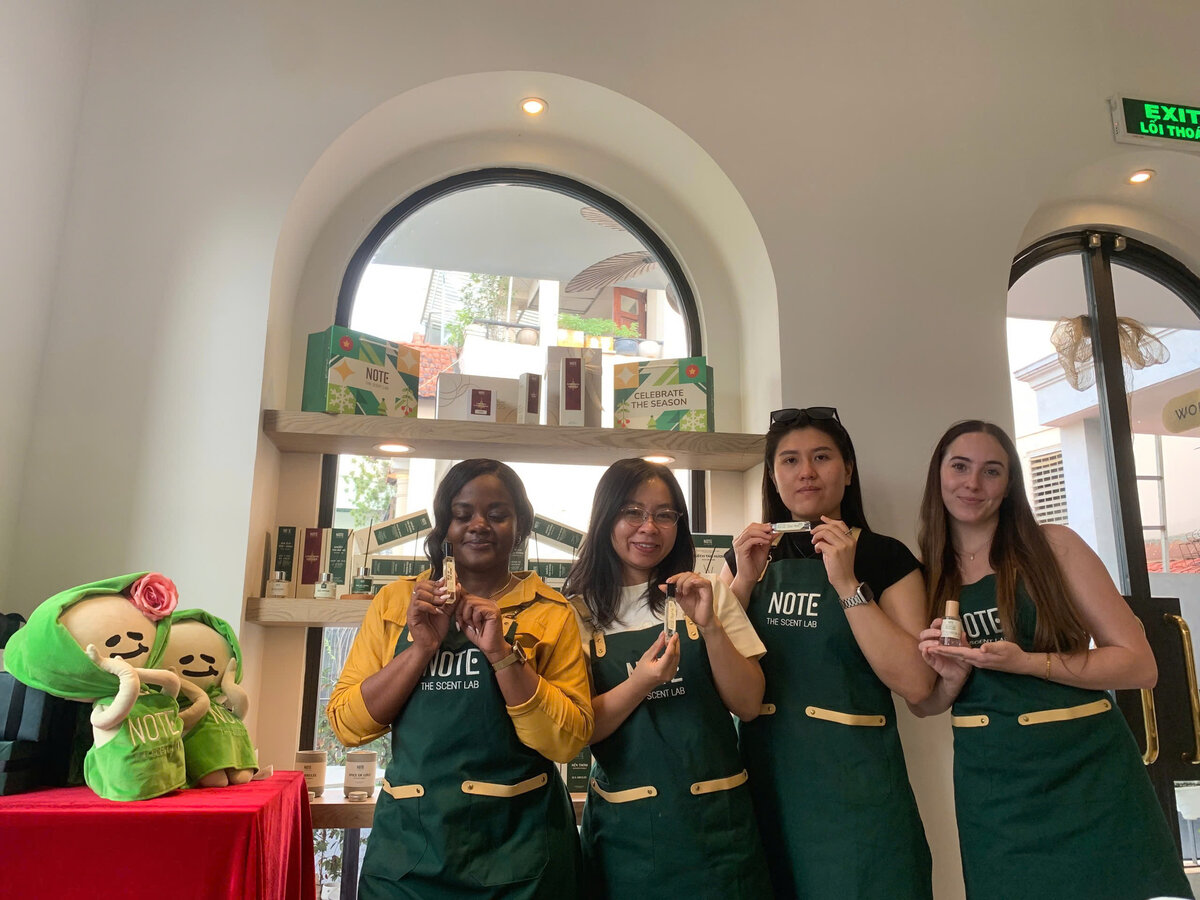
The jasmine absolute we use comes from the same vendor who sells garlands at the corner of Le Loi. We smell it before we see her cart every morning.
Street Aromatics: What Vietnam Smells Like at Ground Level
No exploration of Vietnamese scent culture is complete without the street. Vietnam lives outdoors. Cooking happens on sidewalks. Markets spill across roads. The boundary between inside and outside barely exists in most Vietnamese cities, which means the country’s scent landscape is democratic, chaotic, layered, and constantly shifting.
Morning (5–8 AM): Pho broth — star anise, cinnamon, charred ginger, beef bone. Condensed milk dripping into ca phe sua da. Wet pavement and motorbike exhaust. The green smell of bundles of morning glory stacked at market entrances.
Midday (11 AM–1 PM): Lemongrass and chili from grilling street food. Caramelized fish sauce — nuoc mam — reducing in clay pots. Tropical fruit: jackfruit, durian (love it or not, you will smell it), rambutan. The metallic bite of ice being crushed for sinh to smoothies.
Evening (5–9 PM): Charcoal from banh trang nuong — Vietnamese street pizza. Jasmine from offerings at neighborhood shrines. Beer and laughter pouring from bia hoi corners. Somewhere in the distance, always, incense.
This is the aromatic palette that Vietnamese people navigate every day without thinking about it. It is the palette that visitors remember years later — not the monuments, not the statistics, but the way Vietnam smelled. We explored Saigon’s scent landscape specifically in our guide to what Saigon smells like, mapping the city district by district through its aromas.
Temple Incense: The Thread That Connects Past to Present
Step into any Vietnamese pagoda and time collapses. The incense — often a blend of agarwood, sandalwood, cinnamon, and dried herbs — creates an olfactory environment that has remained essentially unchanged for centuries. The coils hang from ceilings, burning slowly over days. The smoke settles into wooden beams, stone floors, silk fabrics. After decades, the architecture itself becomes aromatic. The building is the incense.
In Vietnamese spiritual practice, incense serves as a bridge — between the living and the dead, between the physical and the spiritual, between the present and the ancestral past. Burning incense on the family altar is not ritual for ritual’s sake. It is communication. The smoke carries prayers upward. The scent invites ancestors to be present.
This relationship between scent and memory, scent and connection, scent and the invisible threads that bind generations — this is the deepest layer of Vietnamese fragrance culture. It is not about luxury or aesthetics. It is about belonging. About continuity. About the belief that a smell can hold a soul.
“Creating your own signature perfume is just such a nice and unique experience. I would recommend this to everyone who loves perfumes or needs a gift for a loved one.”
The Mekong Delta: Where Fruit Perfumes the River
South of Saigon, the landscape flattens and the rivers multiply. The Mekong Delta — Vietnam’s rice bowl and fruit basket — is an olfactory world unto itself. At floating markets like Cai Rang and Cai Be, wooden boats piled with pomelo, mango, dragon fruit, and coconut create a fragrance that drifts across the water before you see the boats themselves.
The Delta’s scent profile is sweeter, wetter, more tropical than the rest of Vietnam. Coconut milk simmering in che desserts. Water hyacinth blooming along canal banks. Ripe jackfruit splitting open in the heat. The particular muddy, vegetal, alive smell of river water meeting flooded rice paddies.
For perfumers, the Mekong Delta offers ingredients that rarely appear in Western fragrance: pomelo peel (used in traditional hair washing and now appearing in artisanal Vietnamese perfumes), coconut flower, and the intensely aromatic leaves of the la dua — pandan — plant, whose sweet, vanilla-like scent flavors cakes, wraps sticky rice, and scents the air of every Delta kitchen.
Our Vietnam scent journey from north to south traces the full aromatic map of the country — from Sapa’s pine forests through Hue’s imperial incense to the Mekong’s tropical sweetness.
Create Your Vietnam-Inspired Scent →
How NOTE Brings Vietnamese Scent Culture Into the Workshop
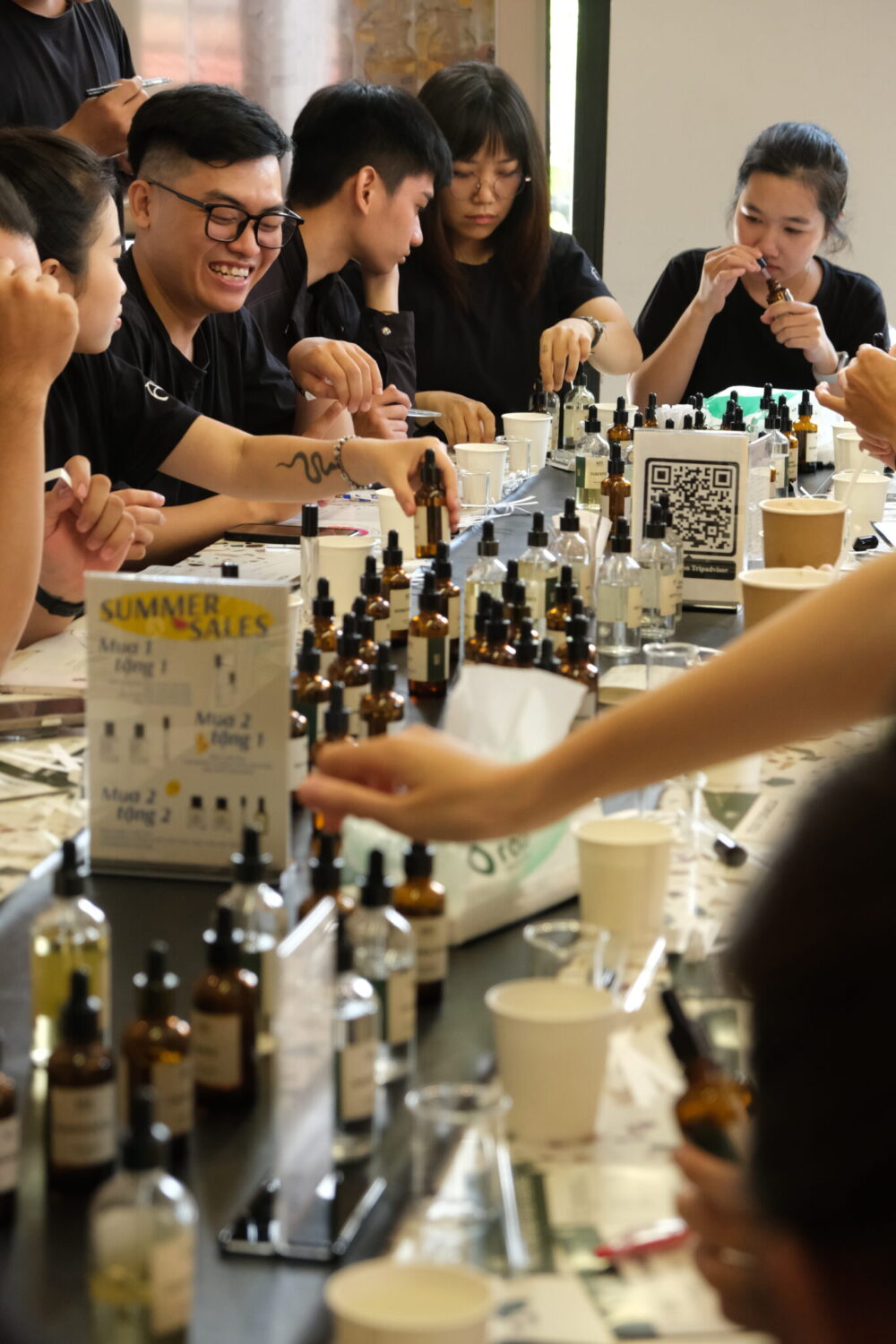
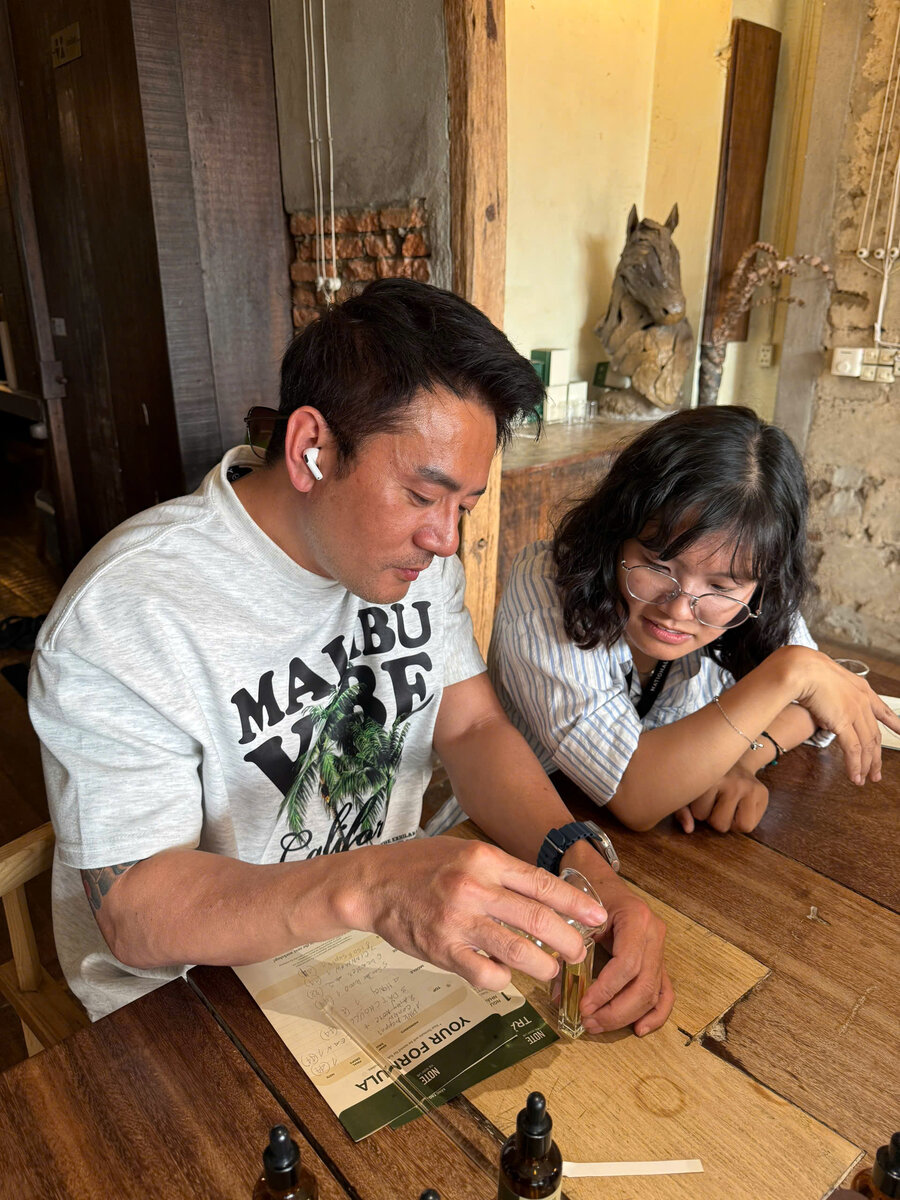
At NOTE – The Scent Lab, the workshop is a hands-on craft, not a novelty add-on to a European perfumery framework. Among the 30+ professional-grade accords available during every workshop session, several help you compose a scent that carries the feeling of Vietnam home with you:
- Sandalwood: Deep, creamy and grounding, a base note that anchors your perfume with quiet, woody depth
- Cinnamon: Warmer and sweeter than the baking-spice cinnamon you know, a spice that gives a composition its glow
- Osmanthus: Delicate, apricot-tinged and fleeting, a floral that lingers like a memory you cannot quite place
- Bergamot: Bright and sparkling, the citrus top note that opens a composition and lifts everything above it
When travelers use these ingredients during the workshop, something shifts. The perfume they create is no longer just a souvenir. It becomes a sensory record of Vietnam — the incense they smelled in a temple that morning, the cinnamon in the pho they had for breakfast, the lotus blooming in the pond they passed on the way to the studio. The fragrance becomes memory, compressed into a bottle.
“The workshop was amazing, the space and environment is very clean, comfortable and beautiful.”
“Finally understood how notes work. Came with our best friends for our 20th wedding anniversary.”
From Ancient Incense Roads to Modern Perfumery
Vietnam’s position in the global fragrance trade is older than most people know. The ancient incense trade routes that connected Southeast Asia to China, India, Persia, and eventually Europe ran directly through Vietnamese ports. Hoi An — now a UNESCO World Heritage town beloved by tourists — was once a major hub for agarwood and spice trading. Japanese, Chinese, and Portuguese merchants competed for Vietnamese aromatics centuries before European perfumery existed as an industry.
Today, Vietnam is experiencing a quiet renaissance in its fragrance culture. A new generation of Vietnamese perfumers — trained in France, Japan, and at home — is exploring how to create modern fragrances rooted in Vietnamese ingredients and Vietnamese stories. The country that supplied raw materials to the world’s perfume houses for centuries is beginning to tell its own olfactory stories — and you can explore the full range of Vietnamese-inspired scent creations that have emerged from this renaissance.
NOTE – The Scent Lab is part of this movement. Its sister brand, R Parfums, takes this further, crafting niche fragrances rooted in East Asian character and Vietnamese stories. Founded by Rei Nguyen, who studied perfumery in Japan and brought back both technical training and a philosophy — that fragrance is not decoration but expression, not product but art — the workshop bridges Vietnam’s ancient scent traditions and contemporary fragrance craft. When you sit at the blending table and compose with florals, warm spice and woods, you are participating in something that Vietnamese artisans have been doing, in one form or another, for a very long time.
You are just doing it in your own way. And taking it home.
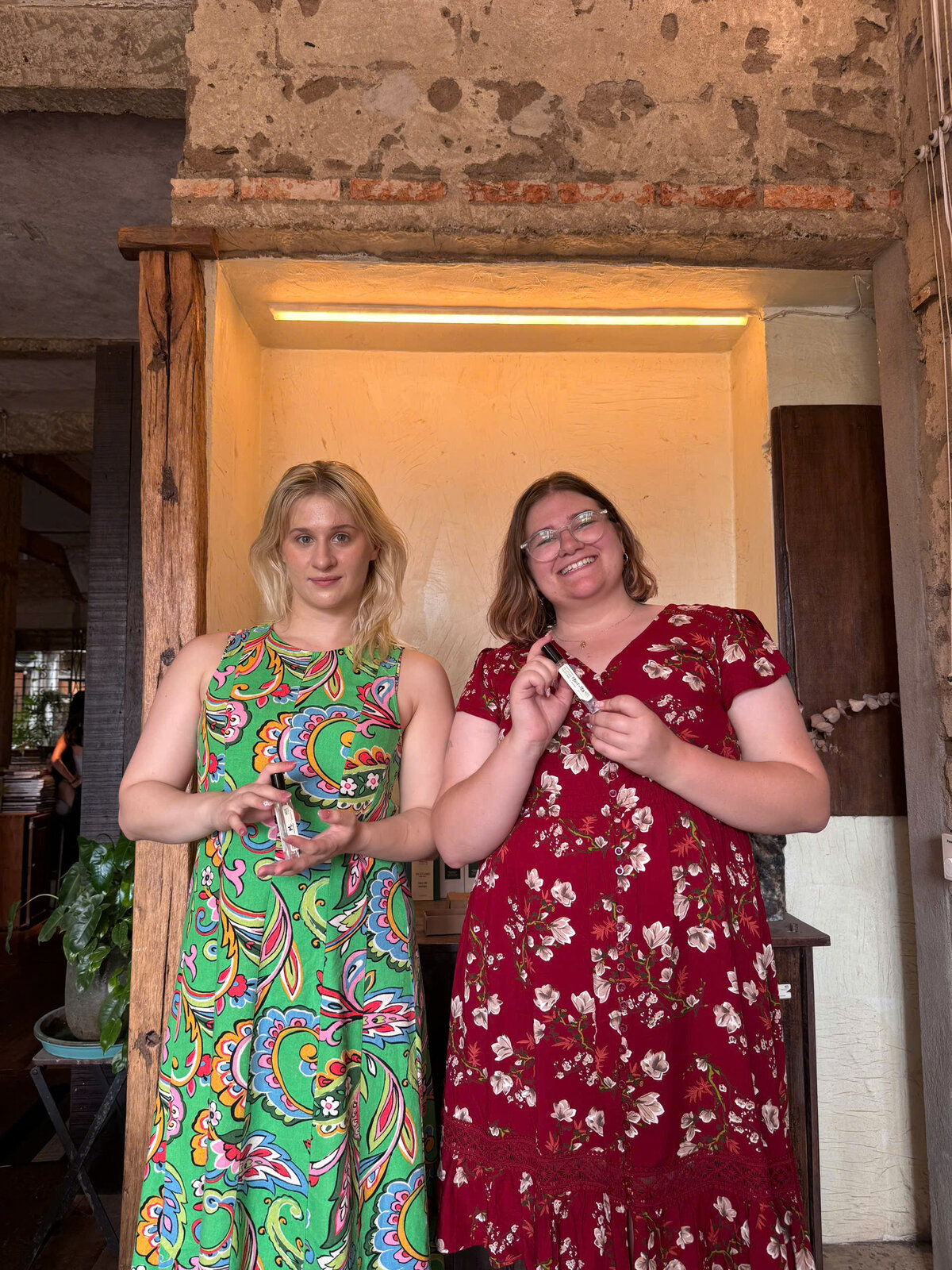
Visitors discover Vietnamese scent culture firsthand. Read what they say on TripAdvisor, online booking platform, and Google Maps.
Curious what a workshop looks like? Follow @note.workshop on Instagram for photos and visitor stories.
Frequently Asked Questions
What are the most important scents in Vietnamese culture?
The foundational scents of Vietnamese culture include agarwood (tram huong) used in temples and spiritual practice, lotus (the national flower, used in tea ceremonies and offerings), Vietnamese Vietnamese cinnamon, and lemongrass used in cooking and traditional medicine. Incense — burned daily on family altars — is perhaps the most culturally significant aromatic practice.
Where does Vietnamese agarwood come from?
Vietnamese agarwood comes primarily from central Vietnam. Wild agarwood harvesting is now heavily regulated to protect forests, and most production has shifted to plantation cultivation. Vietnamese agarwood has been traded internationally for over a thousand years.
Can I experience Vietnamese fragrance traditions during a trip to Vietnam?
Yes. Visit temples in Hue or Hanoi for agarwood incense culture, explore West Lake lotus ponds in June for lotus tea harvesting, tour cinnamon forests, and browse floating markets in the Mekong Delta. For a hands-on experience, NOTE – The Scent Lab offers 120-minute perfume workshops where you compose your own scent by hand at locations in Saigon and Hanoi.
What makes Vietnamese cinnamon different from other cinnamon?
Vietnamese cinnamon (Cinnamomum loureiroi) has the highest cinnamaldehyde content of any cinnamon species — making it sweeter, warmer, and more complex than common cassia cinnamon. It is the variety used in pho broth and is increasingly sought by fine perfume houses for its depth and provenance.
How does NOTE incorporate Vietnamese scent traditions into its workshops?
NOTE’s workshop is built around a palette of 30+ professional-grade accords spanning fresh citrus, florals, warm spice and woods. Scent artists explain how to layer top, middle and base notes during the session. Many travelers choose to build their perfume as a sensory souvenir of their time in Vietnam.
What is lotus-scented tea and where can I try it in Vietnam?
Lotus-scented tea (tra sen) is made by tucking green tea into fresh lotus blossoms overnight to absorb the fragrance. It takes about 1,400 blossoms per kilogram of tea. The best lotus tea comes from Hanoi’s West Lake area. You can find it at traditional tea houses in Hanoi’s Old Quarter and Tay Ho district, particularly during lotus season (June–August).
Is Vietnamese scent culture connected to spiritual practice?
Deeply. Incense burning on family altars is a daily practice in most Vietnamese households — a form of communication with ancestors. Agarwood incense has been used in Buddhist temples for over a thousand years. Lotus offerings carry spiritual meaning of purity and enlightenment. Scent in Vietnam is not primarily aesthetic — it is relational and spiritual.