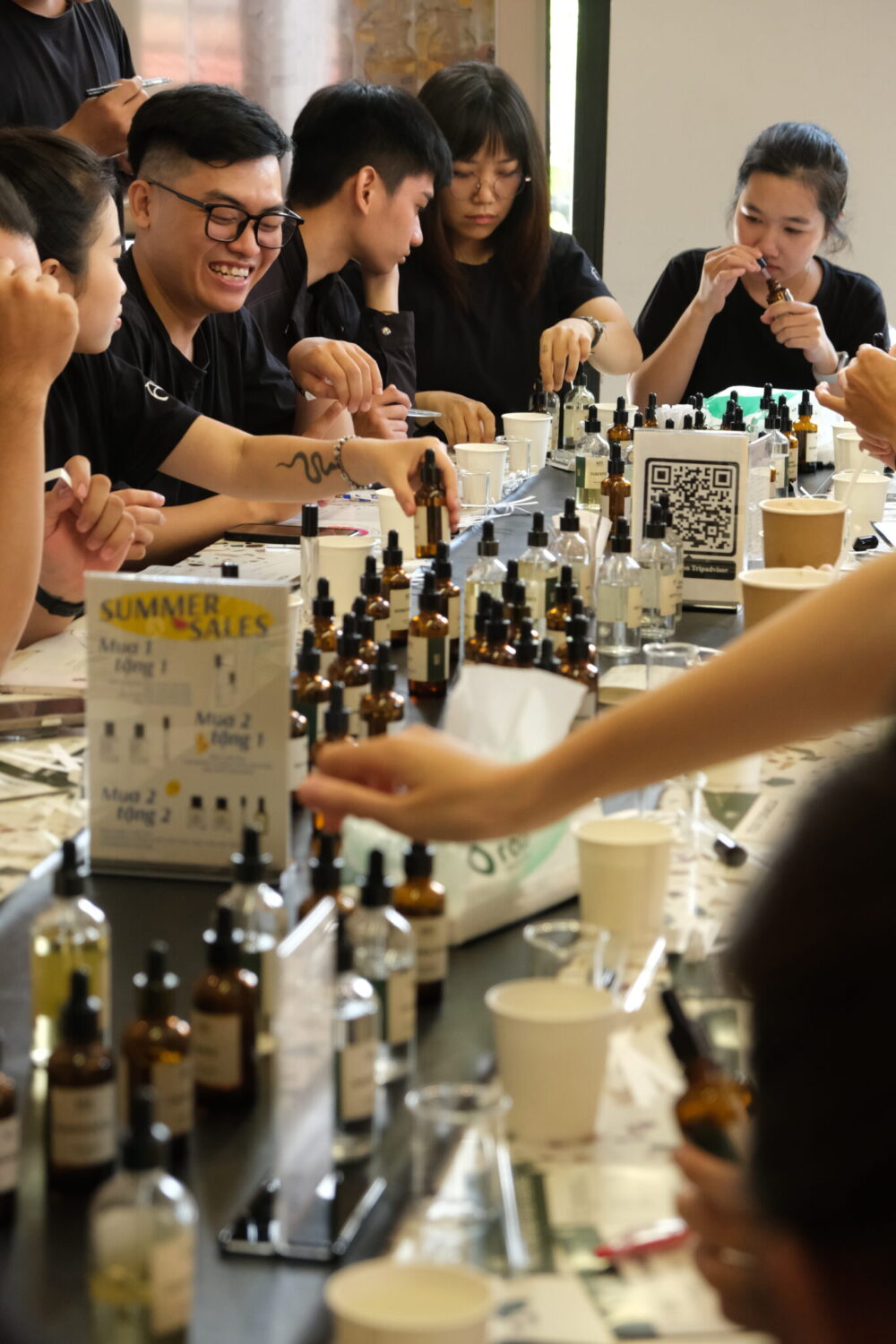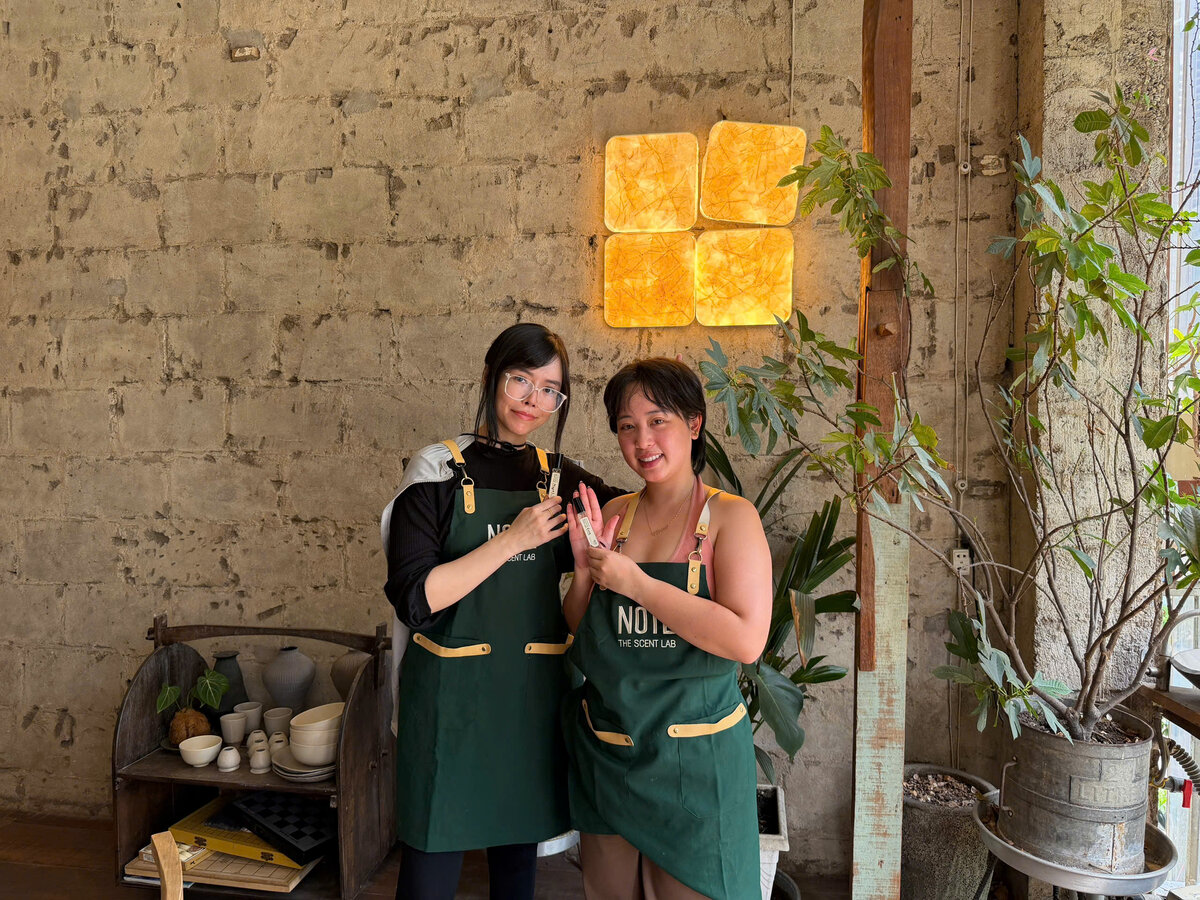

A Vietnam fragrance journey from Hanoi to Saigon reveals a country you cannot see — only smell. NOTE – The Scent Lab is a perfume workshop in Ho Chi Minh City, Vietnam (, ), where travelers bottle the scents of their journey into a custom perfume they create themselves.
The first thing that hits you stepping off the plane in Hanoi is not the motorbikes or the heat. It is something older, greener — a damp sweetness rising from the lakes, carrying lotus and wet stone and the faintest trace of incense from a pagoda you cannot see yet. You breathe in, and something in your chest unclenches. Vietnam has already begun telling you its story. Not through words. Through air.
This country smells different from north to south. For city-specific deep dives, see what Saigon smells like and the scents of Hanoi. Not subtly — dramatically. Hanoi smells like patience: slow-brewed lotus tea, charcoal under a bún chả grill, the cool mineral breath of Hoàn Kiếm Lake at dawn. Saigon smells like urgency: cà phê sữa đá splashing over ice, jasmine garlands wilting in 35-degree heat, rain on hot asphalt releasing petrichor so thick you can taste it. And between them — Huế, Hội An, Đà Lạt — each city wears its own invisible perfume.
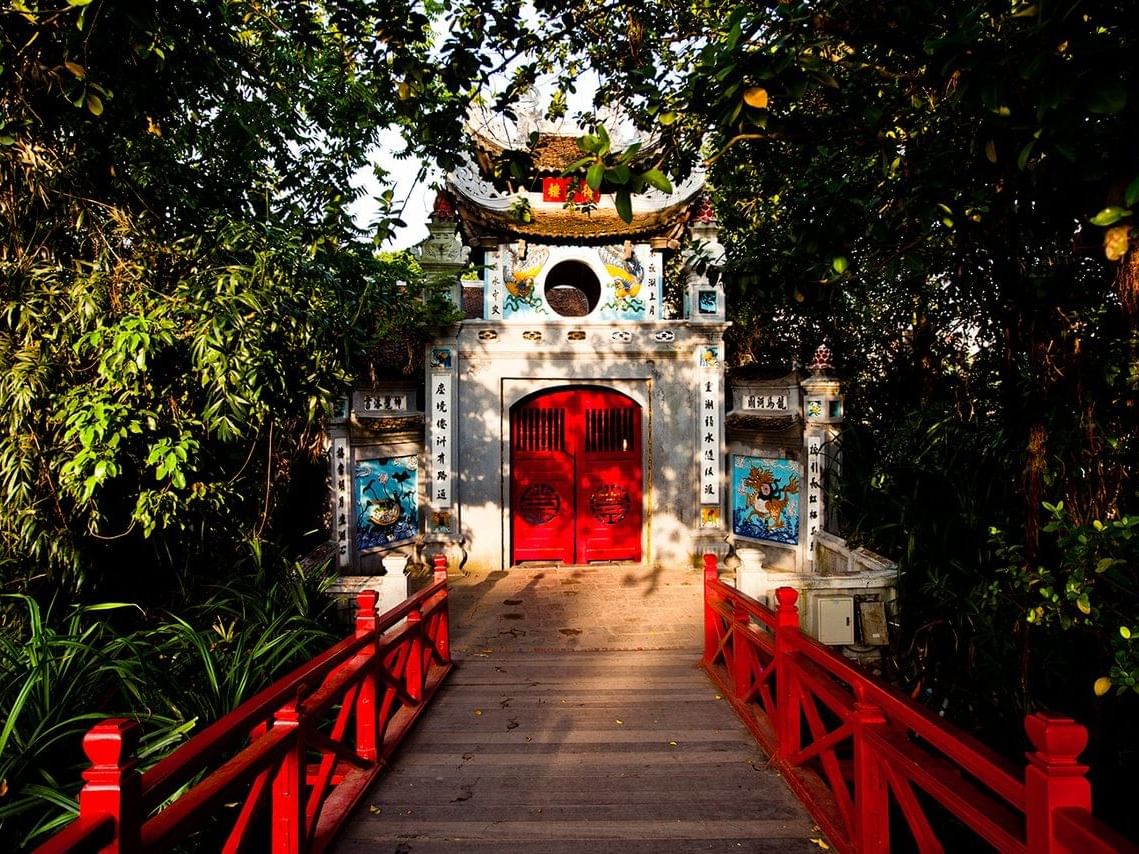
Hanoi: Lotus, Incense, and the Quiet Art of Stillness
Hanoi does not rush. Its scents unfold the way a lotus opens — slowly, deliberately, with layers you only notice if you stop moving long enough to pay attention.
Walk through the Old Quarter on a Tuesday morning. The air is a collage: roasted rice from a xôi vendor, the sharp green bite of fresh herbs piled on a phở cart, woodsmoke from a tiny workshop where a man shapes coffin incense — yes, that is a real trade — and underneath it all, the ancient mustiness of 36 Streets architecture, centuries of stories exhaled through crumbling plaster walls.
Then there is the lotus. Hà Nội’s signature scent. Not the aggressive sweetness you might expect from a tropical flower, but something cleaner — almost aquatic, with a honeyed transparency that disappears the moment you try to hold it. In Tây Hồ, women still practice the art of ướp trà sen: tucking jasmine rice tea inside lotus blossoms overnight so the petals infuse their fragrance into the leaves. It takes roughly 1,400 flowers to produce one kilogram of lotus-scented tea. That ratio — 1,400 to one — tells you everything about Hanoi’s relationship with patience.
“Finally understood how notes work. Came with our best friends for our 20th wedding anniversary.”
— Aleck Hann, TripAdvisor
The scents of Hanoi do not explain themselves. They ask you to listen.
The Incense Trails: Trầm Hương and Sacred Smoke
Vietnam is one of the world’s most important sources of agarwood. Learn the full science in our how perfume is made guide — trầm hương — the resinous heartwood that forms when Aquilaria trees are wounded by fungal infection. The tree’s defense becomes its most precious offering. There is poetry in that.
In Hanoi’s temples and pagodas, incense smoke is not decoration. It is architecture — shaping the air, defining spaces the way walls define rooms. Stand inside Trấn Quốc Pagoda on West Lake and close your eyes. The coil incense above you burns for hours, releasing a warm, woody-sweet smoke that settles into your hair and clothes. You will smell it on your scarf three days later and think: Hanoi followed me home.
Agarwood appears in perfumery as oud — one of the most valued ingredients on earth, sometimes exceeding the price of gold by weight. At NOTE workshops, travelers work with more than 30 professional-grade fragrance ingredients, from bright citrus and delicate florals to warm woods like sandalwood, cedarwood and patchouli. Many are startled by how expressive these materials become once you blend them by hand, softer and more layered than the synthetic accords in mainstream perfumes.
Huế: Imperial Incense and the Weight of History
Huế smells like memory itself. The former imperial capital carries its past in the air — literally. Inside the Citadel, the scent of old wood and lacquer mixes with the persistent sweetness of frangipani and the earthy dampness of stone that has not been fully dry since the Nguyễn dynasty.
The city’s perfume tradition runs deep. Imperial incense-making was once a court art, guarded as carefully as silk-weaving techniques or royal recipes. Today, small workshops along the Perfume River (Sông Hương — the name itself translates to “River of Fragrances”) still produce incense using methods that have barely changed in centuries. The river earned its name from the flowers that once dropped their petals into its current upstream, perfuming the water as it flowed past the city.
Ride a bicycle along the riverbank at dusk. The air thickens with charcoal smoke from family kitchens, the green sweetness of lemongrass from a bún bò Huế pot simmering somewhere nearby, and always — always — frangipani. The white blooms drop to the ground and soften underfoot, releasing a creaminess that stains the evening air the way watercolor bleeds into wet paper.
Hội An: Cinnamon, Jasmine, and the Lantern-Lit Dark
Hội An after sundown smells like a spice market dreaming. The ancient port town was built on trade — Chinese merchants, Japanese sailors, Portuguese spice dealers — and the aromatic memory of that history still lingers in its narrow streets.
Cinnamon dominates. Vietnamese cinnamon (quế) from the highlands around Quảng Nam is considered among the finest in the world — higher in essential oils than its Sri Lankan cousin, with a warmth that is almost aggressive. You will smell it in the cao lầu broth, in the wooden shophouses where it was once stored in bales, in the sachets sold at Central Market that have been scenting tourist bags for decades.
But after the market closes and the lanterns come on, Hội An shifts register. Jasmine takes over — not the tidy jasmine of a perfume counter, but the wild, slightly animalic jasmine that grows over courtyard walls and hits you as you turn a corner. Mixed with river water and the warm oil of lantern wicks, it creates something you will never find in a bottle. Unless you try to build it yourself.
“This is a not-to-miss experience! We enjoyed every moment. Vy was so helpful and taught us so much about scent pairing. I will do this again when I’m in Hanoi!”
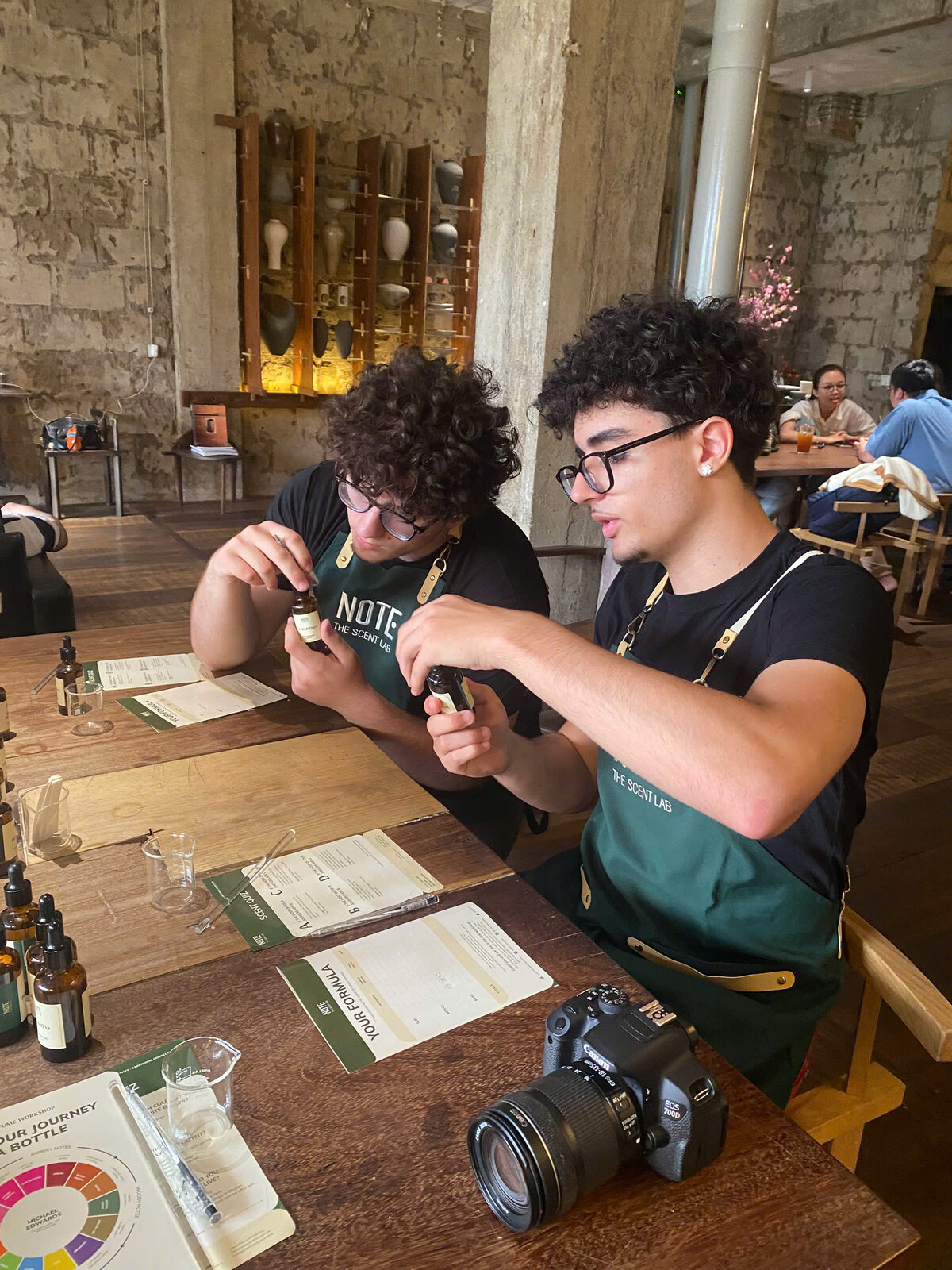
The workshop unlocked a new way of noticing the scents around her for the rest of her trip.
Đà Lạt: Pine, Mist, and the Cool Breath of the Highlands
After the tropical intensity of the coast, Đà Lạt feels like stepping into a different country. At 1,500 meters, the air is thinner, cooler, and carries the clean resinous scent of pine forests — a smell that makes Saigonese visitors close their eyes and sigh. This is where Vietnam goes to remember that not everything has to be hot.
The highland city smells of strawberry fields in morning fog, of artichoke tea steaming in a café that has not changed its décor since the French left, of eucalyptus groves releasing their medicinal sharpness into mist. The famous Crazy House — Hằng Nga Guesthouse — smells like wet concrete and fantasy, its Gaudí-inspired curves trapping moisture and moss in ways that create their own micro-ecosystem of scent.
For perfumers, Đà Lạt represents Vietnam’s aromatic range. A country that produces both tropical jasmine at sea level and alpine pine at 1,500 meters offers a fragrance palette few nations can match.
Saigon: Cà Phê, Jasmine, and Rain on Hot Asphalt
Saigon does not introduce itself gently. The city arrives all at once — a wall of heat, exhaust, grilled meat, ripening fruit, and that particular Saigon smell that no one has ever adequately named. It is part humidity, part concrete absorbing tropical sun, part the collective exhale of ten million people living on top of each other with tremendous energy.
The morning smells like coffee. Not the polite drip-filter coffee of other countries, but the dark, almost burnt sweetness of cà phê phin — Vietnamese robusta dripping slow and thick through a metal filter into condensed milk. Every street corner, every alley, every office lobby carries this scent between 6 and 9 AM. It is the city’s alarm clock.
By afternoon, the jasmine garland sellers appear on their motorbikes, threading through traffic with bundles of white flowers strapped behind them. The jasmine they carry is grown in the Mekong Delta and picked before dawn — by noon in Saigon’s heat, the buds have opened explosively, releasing an intoxicating sweetness that competes with diesel fumes and wins.
And then, around 4 PM from May to October, the rain. Saigon rain is not a gentle affair. It drops like a curtain — sudden, absolute — and the moment it hits hot asphalt, the city releases its most distinctive perfume: petrichor amplified to cinematic proportions, mixed with wet dust and the green exhale of every tree and potted plant finally getting to breathe.
Bottling the Journey: From Scent Memory to Signature Perfume
Here is what most travel guides will not tell you: the strongest memories you bring home from Vietnam will not be photographs. They will be smells. The lotus tea in Hanoi. The cinnamon in Hội An. The rain in Saigon. Your brain stores olfactory memories with an emotional intensity that visual memories cannot match — this is neuroscience, not poetry.
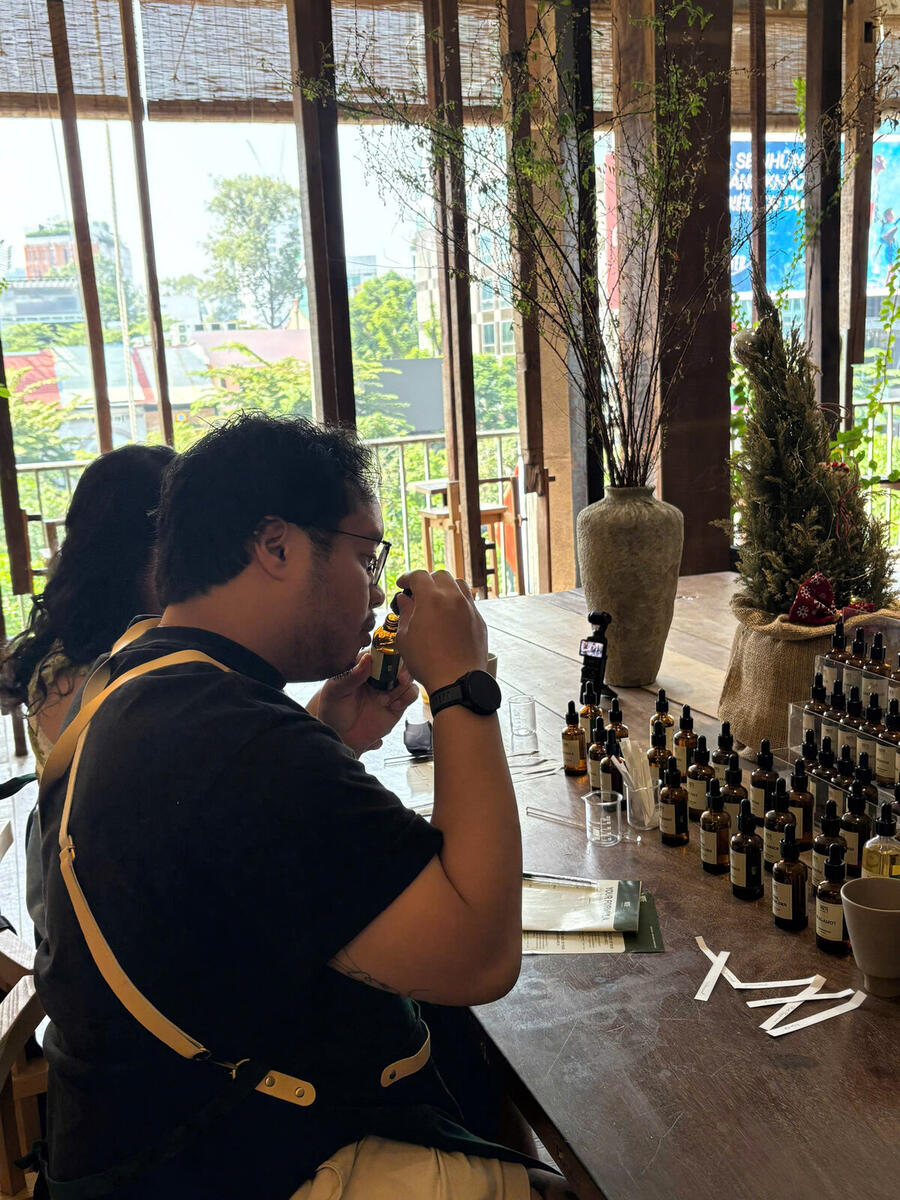
This is exactly why NOTE – The Scent Lab exists. At its two Saigon studios (the Cafe Apartment at 42 Nguyễn Huệ, District 1, and R Space at 34 Nguyễn Duy Hiệu, Thảo Điền), travelers spend 120 minutes translating their Vietnam scent memories into a custom Eau de Parfum they build themselves from more than 30 professional-grade ingredients, spanning bright citrus, florals, warm spice like cinnamon, and woods like sandalwood and amber.
From the studio window on the 2nd floor, you can see Nguyen Hue stretching toward the river — motorbikes circling the roundabout below, tourists taking photos on every landing.
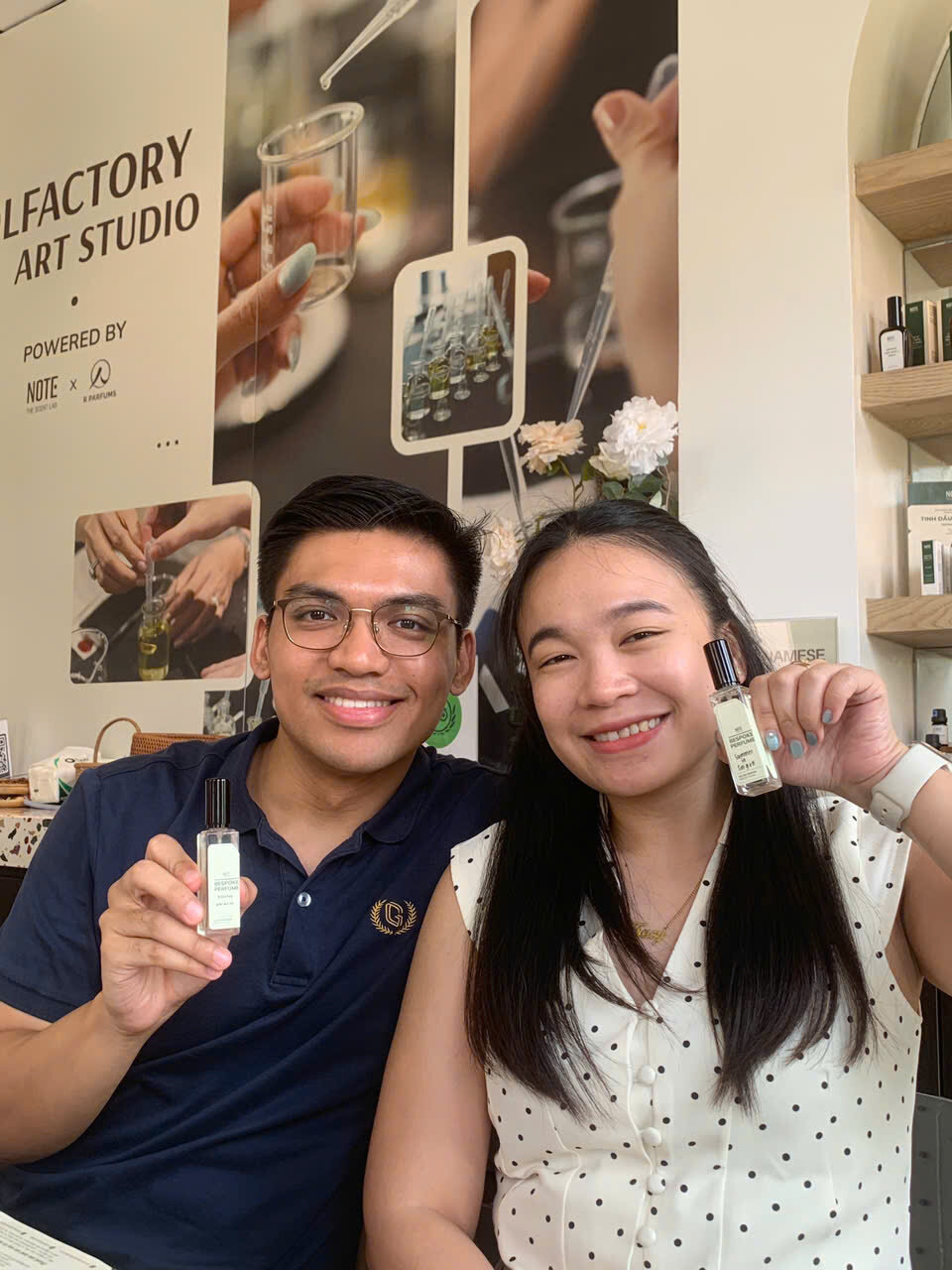
“I have a beautiful souvenir to take home and every time I smell it, I will remember Saigon. Thanh was an excellent teacher.”
The perfume is not the product. The memory is the product. The perfume is just the bottle that holds it. Reserve your session online — instant confirmation, no upfront payment.
Planning Your Vietnam Fragrance Journey in 2026
The best approach is to let your nose guide your itinerary. Spend three to five days in the north — Hanoi for lotus and incense, with a day trip to the craft villages of Bát Tràng where kiln smoke and ceramic dust create their own aromatic landscape. Move to Huế and Hội An for cinnamon and history. End in Saigon, where the workshop becomes a way to process everything your nose has collected.
Many travelers book the perfume workshop on their last day — not because they have nothing else to do, but because by then they have accumulated enough scent memories to draw from.
“I learnt so much about perfumery and more importantly had so much fun. Would recommend this as a great way to pause from the chaotic and overwhelming part of your holiday in Saigon.”
— Peter H, TripAdvisor
The workshop becomes a capstone, not an afterthought.
If you are reading this before your trip, you are already ahead. Our guide to planning three days in HCMC includes the workshop as part of a larger Saigon itinerary. For Hanoi-specific recommendations, the hidden gems guide covers the best olfactory experiences around Tây Hồ. And if you want to understand the full workshop experience before you arrive, our complete guide to perfume workshops in Vietnam walks you through everything.
Why Vietnam’s Scent Story Matters
Southeast Asia is full of sensory destinations. Thailand has its lemongrass and galangal. Indonesia has its clove and patchouli. But Vietnam’s aromatic identity is uniquely layered — shaped by Chinese, French, and Japanese influences that each left their fragrant fingerprints on the culture.
The French brought their perfume houses and café culture. The Chinese brought incense traditions and medicinal aromatics. The Japanese brought a philosophy of scent appreciation — Koudō, the Way of Fragrance — that treats smelling as a meditative art rather than a passive experience. Vietnam absorbed all of these, composted them with its own tropical abundance, and produced something entirely original. NOTE’s sister brand, R Parfums, draws directly from this heritage, composing niche fragrances that honour Vietnam’s aromatic tradition through warm woods, spice and florals.
That is what you are really smelling when you walk through Vietnam. Not just flowers and food and rain. You are smelling centuries of cultural exchange, distilled into air. The workshop at NOTE does not create that story. It gives you a way to hold it.
We are on the 2nd floor of the Cafe Apartment, Saigon’s most photographed building. Tourists discover pottery two floors below us, vinyl records play above, and jasmine base notes drift from our studio into the stairwell. If you have been collecting scents across Vietnam, this is where you turn them into something you can carry home. For more ideas on meaningful keepsakes, see our guide to what to buy in Vietnam.
The studio is open daily. Follow @note.workshop on Instagram to see what travelers are creating, or visit thescentnote.biz to explore NOTE’s full fragrance collection.
Travelers who journeyed north to south share their scent stories on TripAdvisor, online booking platform, and Google Maps.
Follow the journey at @note.workshop — daily scent stories from Saigon.
Frequently Asked Questions
What does Vietnam smell like from north to south?
Vietnam’s scent profile changes dramatically by region. Hanoi smells of lotus, incense, and charcoal-grilled street food. Huế carries frangipani and imperial incense along the Perfume River. Hội An is defined by Vietnamese cinnamon and jasmine. Saigon’s signature is cà phê phin, tropical rain on hot asphalt, and jasmine garlands.
Can I create a perfume based on my Vietnam travel memories?
Yes. NOTE – The Scent Lab’s 120-minute workshop lets travelers build a custom Eau de Parfum from more than 30 professional-grade ingredients, from citrus and florals to warm spice like cinnamon and woods like sandalwood. Many guests book the workshop at the end of their trip to bottle their favorite scent memories from across the country.
Where are NOTE – The Scent Lab’s workshop locations?
NOTE has two studios, both in Ho Chi Minh City: 42 Nguyễn Huệ (Cafe Apartment), District 1; and 34 Nguyễn Duy Hiệu, Thảo Điền, Thủ Đức. Both are rated from.
What Vietnamese ingredients are used in perfume making?
Vietnam is rich in aromatic tradition, from warm spices to soft florals. At NOTE workshops, travelers blend a palette of more than 30 professional-grade ingredients, from citrus and florals to warm spice and woods, into their own custom scents.
When is the best time to experience Vietnam’s scents?
Each season offers different aromatic experiences. The rainy season (May–October) delivers dramatic petrichor and intensifies tropical flower scents. Lotus season peaks June–August in Hanoi. The dry season (November–April) offers clearer air where incense and street food aromas carry further. The perfume workshop is available year-round.
How long should I spend in Vietnam to experience its full scent profile?
A minimum of 10 days covering Hanoi, Huế or Hội An, and Saigon gives you the north-central-south aromatic range. Many travelers book the perfume workshop on their last day in Saigon to process the scent memories they have collected throughout their trip.
Practical info: check current pricing